16 Experiments for Force and Motion Kids Can Do at Home

 Discover a Free Education Video App for Kids
Pastory uses AI to personalize educational video content based on your child’s interests and personality. Safe, engaging, and built for curious young minds. Sign up now to stay updated and enjoy early access with a free trial
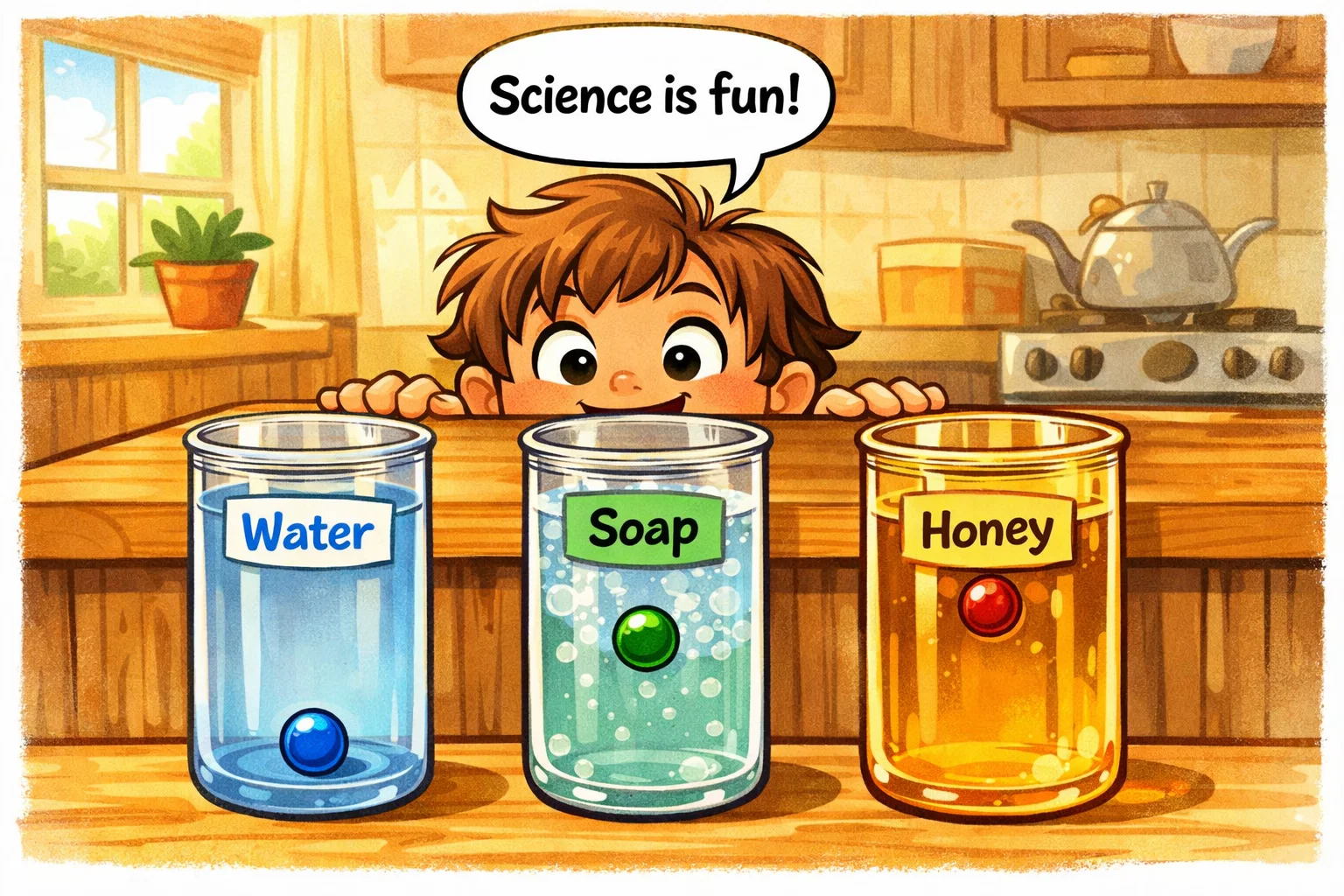
These 16 experiments for force and motion give kids a hands-on way to explore real physics at home. From balloon rockets and rubber band cars to buoyancy projects and domino chain reactions, each activity connects concepts like gravity, air resistance, and Newton’s laws to something children can see and touch.
The article organizes experiments across five topic areas, including aerodynamics, liquid motion, vehicle builds, and energy transfer. Most activities use everyday household items, so setup is straightforward without any special equipment or science background.
Key Takeaways
- The article covers 16 force and motion experiments organized across five hands-on topic areas.
- Experiments explore Newton’s laws, gravity, air resistance, buoyancy, and energy transfer through chain reactions.
- Most activities use common household items, so no special equipment is needed to get started.
- Vehicle builds like balloon-powered and rubber band cars make motion concepts easy and engaging to observe.
- A scientific core section and FAQ provide background context to support learning alongside the activities.
Rocket and Aerodynamics Challenges
Balloon Rocket Races
Run a string through a straw and tie the string tightly between two chairs. Inflate a balloon without tying it, tape it to the straw, and let go to watch it race down the line.
- Materials: A balloon, a drinking straw, a long string, and tape.
- Scientific Basis: This serves as a model for Newton’s Third Law, where the action of escaping air creates an equal and opposite reaction force that propels the balloon forward.
Bottle Rocket Construction
Fill a plastic bottle one-third full with water and fit a cork tightly into the opening. Use a pump to add air into the bottle until the pressure forces the cork out, launching the bottle into the air.
- Materials: A plastic bottle, water, a cork, and a bicycle pump with a needle.
- Scientific Basis: The weight of the water acts as a reaction mass, and propulsion is fundamentally a result of internal pressure imbalances created by the compressed air.
Paper Helicopter Design
Cut a strip of paper and fold the top into two blades and the bottom into a weighted stem. Drop the helicopter from a height and watch it spin as it descends to the floor.
- Materials: Paper, scissors, and a paperclip for weight.
- Scientific Basis: As the paper falls, the blades catch the air to create lift and rotation, demonstrating how gravity and air resistance interact.
Parachute Physics
Attach four strings to the corners of a square piece of light material and tie the other ends to a small toy. Drop the parachute from a high point to see how slowly it can land.
- Materials: A plastic bag or light fabric, string, and a toy figure.
- Scientific Basis: The large surface area maximizes air resistance (drag), which works against the force of gravity to slow the rate of descent.
Wind Powered Car
Build a simple car base with wheels and attach a large paper sail to the top. Use a handheld fan to blow air at the sail and move the car across a flat surface.
- Materials: A toy car base or cardboard with wheels, and a paper sail.
- Scientific Basis: This highlights how energy can be harvested from moving air molecules to create mechanical work and forward motion.
Forces and Motion Basics
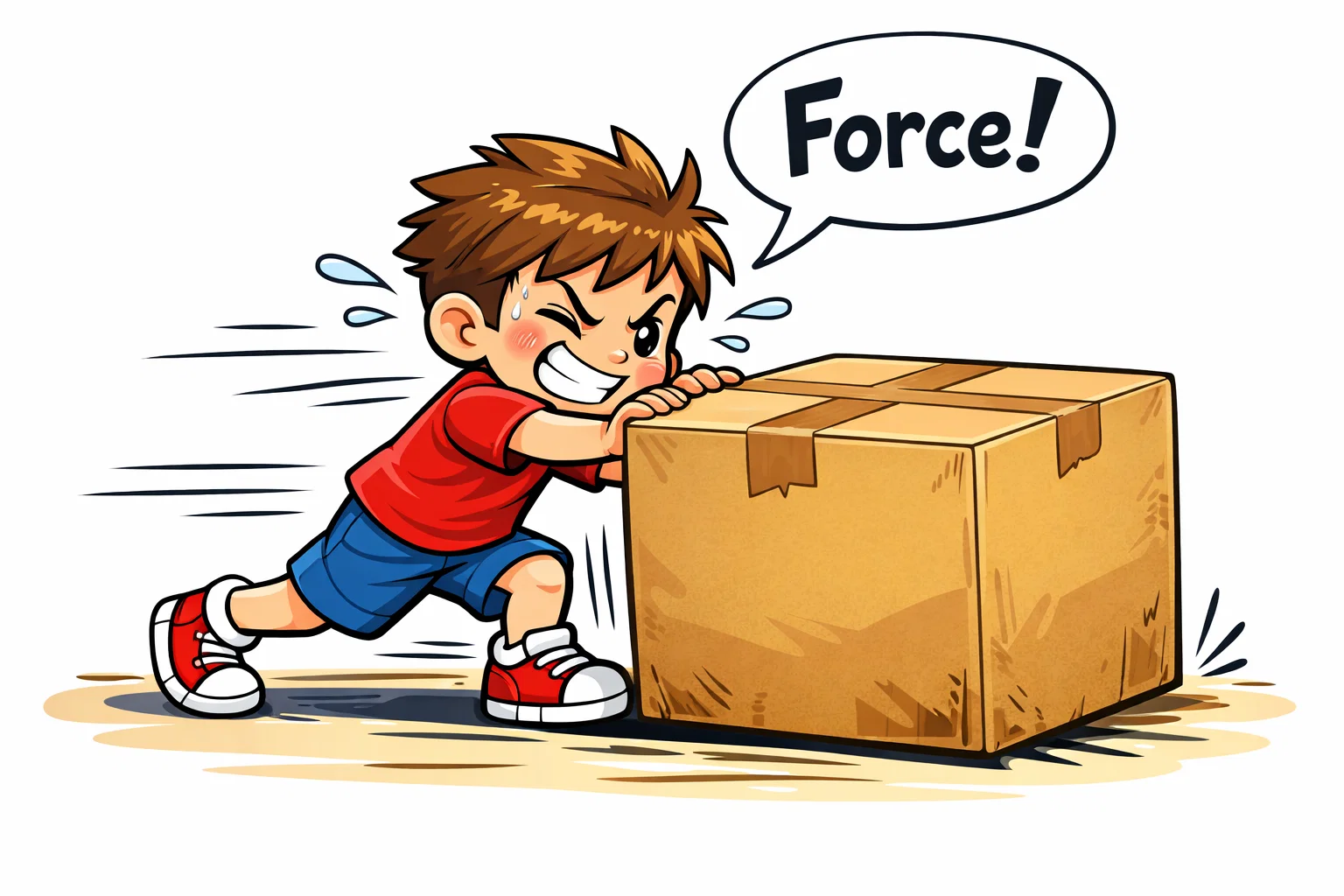
Defining Force
Try pushing a heavy box and then pulling it toward you. Observe how the box stays still until you apply enough energy to change its state.
- Materials: Any heavy household object or box.
- Scientific Basis: Motion cannot start or stop without an applied force, which is defined as any push or pull acting upon an object.
Gravity Experiments
Hold a heavy ball and a light crumpled piece of paper at the same height and drop them simultaneously to see which hits the ground first.
- Materials: Objects of varying weights but similar shapes.
- Scientific Basis: Gravity pulls all masses toward the Earth at the same rate, though air resistance can sometimes interfere with the observed acceleration.
Air Resistance Tests
Drop a flat sheet of paper and a crumpled ball of paper from the same height. Observe the difference in how they move through the air.
- Materials: Two identical sheets of paper.
- Scientific Basis: The flat sheet falls slower because its larger surface area must push more air molecules out of the way, creating more drag.
Air Pressure Can Experiment
Heat a tiny amount of water in an empty soda can, then quickly flip it upside down into a bowl of cold water. The can will collapse instantly.
- Materials: An empty soda can, a heat source (warm water is safer for kids), and cold water.
- Scientific Basis: Rapid cooling creates a drop in internal pressure, allowing the much higher external atmospheric pressure to crush the metal.
Water Displacement Mechanics
Fill a measuring cup halfway with water, then drop in a stone. Record how much the water level rises to find the object’s volume.
- Materials: A measuring cup, water, and various solid objects.
- Scientific Basis: An object placed in liquid pushes some of that liquid out of the way, creating a buoyant force that pushes back up on the object.
Simple Pulley Experiment
Loop a rope over a sturdy horizontal bar and attach a weight to one end. Pull down on the other end of the rope to lift the weight upward.
- Materials: A rope and a smooth bar or pulley wheel.
- Scientific Basis: This simple machine changes the direction of the force, allowing you to use your body weight to help lift a load through mechanical advantage.
Liquid Motion and Buoyancy Projects

Soap Powered Boat
Cut a small notch in the back of a light cardboard boat and place it on water. Put a drop of soap in the notch to watch the boat speed away.
- Materials: Thin cardboard or foam, scissors, and liquid soap.
- Scientific Basis: This uses the Marangoni effect, where a reduction in surface tension at the rear allows the higher tension at the front to pull the boat.
Saltwater Density Experiment
Fill a glass with fresh water and drop in an egg. Then, gradually stir in salt until the egg begins to rise and float.
- Materials: A glass of water, an egg, and a lot of table salt.
- Scientific Basis: Salt increases the density of the water, which in turn increases the upward buoyant force acting on the egg.
Floating Orange Science
Place a whole orange in a container of water and observe it float. Peel the orange and place it back in the water to see it sink.
- Materials: An orange and a deep bowl of water.
- Scientific Basis: The peel contains tiny air pockets that act like a life jacket, decreasing the average density of the fruit despite the added weight.
How Sharks Float
Fill one balloon with oil and another with water, then place them both in a tub of water to see which stays higher.
- Materials: Two balloons, water, and vegetable oil.
- Scientific Basis: Oil is less dense than water, providing a buoyant lift similar to how a shark’s oily liver helps it stay afloat without a mistake-prone swim bladder.
Rising Water Experiment
Place a short candle in a plate of water, light it, and cover it with a glass jar. Watch as the water is pulled up into the jar after the flame dies.
- Materials: A candle, a plate, water, and a glass jar.
- Scientific Basis: As the air inside the jar cools, its pressure drops, allowing external atmospheric pressure to push the water into the lower-pressure zone.
Motion Experiments with Vehicles
Balloon Powered Car
Attach a balloon to a straw and tape it to the top of a lightweight toy car. Inflate the balloon through the straw and release it on a smooth floor.
- Materials: A toy car or a cardboard box with wheels, a balloon, and a straw.
- Scientific Basis: The air expelled from the balloon provides the thrust required for jet propulsion, moving the vehicle forward.
Rubber Band Car
Wrap a rubber band around the axle of a small homemade car and twist it tightly. Release the axle to let the car drive forward on its own.
- Materials: A car chassis, wheels, an axle, and a sturdy rubber band.
- Scientific Basis: Elastic potential energy is stored in the twisted rubber band and converted into mechanical work as it unwinds.
Lego Rubber Band Car
Build a car frame using Lego bricks and integrate a rubber band to power the rear wheels. Experiment with different gear sizes to see which goes fastest.
- Materials: Lego bricks, Lego wheels, and a rubber band.
- Scientific Basis: This encourages iterative engineering to fix structural failures and optimize the transfer of stored energy into wheel rotation.
Lego Zip Line
Create a Lego figure carrier with a hook and slide it down a long piece of string tilted at an angle.
- Materials: Lego pieces and a long, smooth string.
- Scientific Basis: Gravity provides the pulling force, while the angle of the track determines how much potential energy is available for conversion into speed.
Marble Run Wall
Tape cardboard tubes to a wall at various angles to create a path for a marble to travel from top to bottom.
- Materials: Cardboard tubes, tape, and marbles.
- Scientific Basis: This demonstrates the transformation of potential energy at the top into kinetic energy as the marble overcomes static friction.
Energy and Chain Reactions

Domino Chain Reaction
Line up a series of dominoes on their short ends, spaced equally apart. Push the first one to start a wave of falling tiles.
- Materials: A set of dominoes or rectangular blocks.
- Scientific Basis: Each standing tile has potential energy; the initial push creates a chain reaction where energy is transferred from one tile to the next.
Coin Tower Stability
Stack a tall tower of identical coins. Use a plastic ruler to quickly flick the bottom coin out from under the stack without knocking the others over.
- Materials: A stack of coins and a thin ruler.
- Scientific Basis: Due to inertia, the rest of the tower tends to stay at rest and simply drops straight down when the bottom support is removed rapidly.
Pom Pom Shooter
Cut the bottom off a plastic cup and tie a knotted balloon over the opening. Place a pom pom inside, pull the balloon back, and release.
- Materials: A plastic cup, a balloon, and soft pom poms.
- Scientific Basis: The tension in the elastic balloon provides the force needed to launch the projectile into its flight arc.
Static Electricity Butterfly
Cut wings out of tissue paper and glue the body to a piece of cardboard. Rub a balloon on your hair and hold it over the wings to make them flap.
- Materials: Tissue paper, cardboard, and a balloon.
- Scientific Basis: Static electricity creates a negative charge on the balloon, which exerts an electromagnetic force that attracts the opposite charges in the paper.
Homopolar Motor
Place a neodymium magnet on the bottom of a battery and shape a copper wire so it touches both the top of the battery and the magnet.
- Materials: A AA battery, a neodymium magnet, and copper wire.
- Scientific Basis: The interaction between the magnetic field and the electric current creates a Lorentz force that pushes the wire into a circular motion.
Scientific Core and Research Insights
The foundational principles governing motion experiments at home are predominantly derived from Newton’s Three Laws of Motion:
- Newton’s Third Law: The balloon rocket serves as the primary model. For every action, there is an equal and opposite reaction. The rapid expulsion of pressurized air from the nozzle creates a force that propels the balloon forward.
- Newton’s Second Law: This is expressed as F=ma (Force equals mass times acceleration). In domestic settings, the thrust is the force, while the balloon and straw make up the mass. Adding weights leads to a observable decrease in velocity.
- Energy Conservation: Potential energy stored in tension (rubber bands) or height (ramps) is consistently transformed into kinetic energy, showing that energy cannot be destroyed, only changed in form.
Recent empirical evidence from the last three years confirms the superiority of hands-on learning over traditional methods. A 2024 study conducted by Engageli revealed that active learning sessions generate 13 times more “learner talk time” and a 62.7% participation rate, compared to a baseline of only 5% in lecture-based formats. You can explore more about these metrics in the Engageli Active Learning Report.
FAQ
How can you reliably measure the velocity of a home-built vehicle during these experiments?
To calculate average velocity, you should divide the total distance traveled by the time of flight recorded with a stopwatch. Using a standardized track length of 10 to 15 meters allows for more precise observations of acceleration and deceleration phases.
What specific modifications can reduce drag in aerodynamics challenges?
Minimizing the surface area facing the direction of motion and ensuring all components like nozzles and straws are perfectly aligned will significantly reduce air resistance. Transitioning from textured strings to smooth materials like fishing line also lowers the coefficient of friction.
Why is the impulse-momentum theorem critical for protecting payloads in motion?
This theorem explains that increasing the duration of a collision decreases the peak force exerted on an object. By designing “crumple zones” using straws or soft cups, you can ensure that the impact force stays below the threshold required to fracture delicate materials like eggshells.
In what ways do temperature changes affect the behavior of pressurized gas in balloons?
According to Charles’ Law, the volume of a gas is directly proportional to its absolute temperature when pressure remains constant. Manipulating air temperature within a balloon can alter its potential energy and the duration of the thrust generated during propulsion.
How do domestic science activities impact long-term vocational preparation for students?
Hands-on experimentation focuses on problem framing and experimental design, which are identified by the World Economic Forum as essential human skills for high-growth STEM fields. Early exposure to these concepts builds the critical thinking required for careers in engineering and robotics.

Take a short quiz to find out what your everyday choices say about your parenting style
When your child is curious about something new, what’s your instinct?
Take a short quiz to find out what your everyday choices say about your parenting style
“Can I download this app?” What happens next?
Take a short quiz to find out what your everyday choices say about your parenting style
When it comes to rules at home, which sounds most like you?
Take a short quiz to find out what your everyday choices say about your parenting style
If you could give your child one life skill today, what would you pick?
Take a short quiz to find out what your everyday choices say about your parenting style
Your child gets to choose what to watch. What would your ideal setup look like?
Take a short quiz to find out what your everyday choices say about your parenting style
Pick your parenting superpower ✨