Evaporation Experiment Guide for Kids

 Discover a Free Education Video App for Kids
Pastory uses AI to personalize educational video content based on your child’s interests and personality. Safe, engaging, and built for curious young minds. Sign up now to stay updated and enjoy early access with a free trial

Have you ever noticed a puddle on the sidewalk after a rainstorm and wondered where it went just a few hours later? It seems as though the water simply performed a disappearing act. In reality, you are witnessing one of the most fundamental processes of our planet: the transition of liquid into vapor. For parents and educators, these moments are perfect opportunities to introduce children to the wonders of physical science through a simple evaporation experiment. By exploring how this fluid moves and changes, kids develop a foundational understanding of the world around them.
Introduction to Science of Disappearing Water
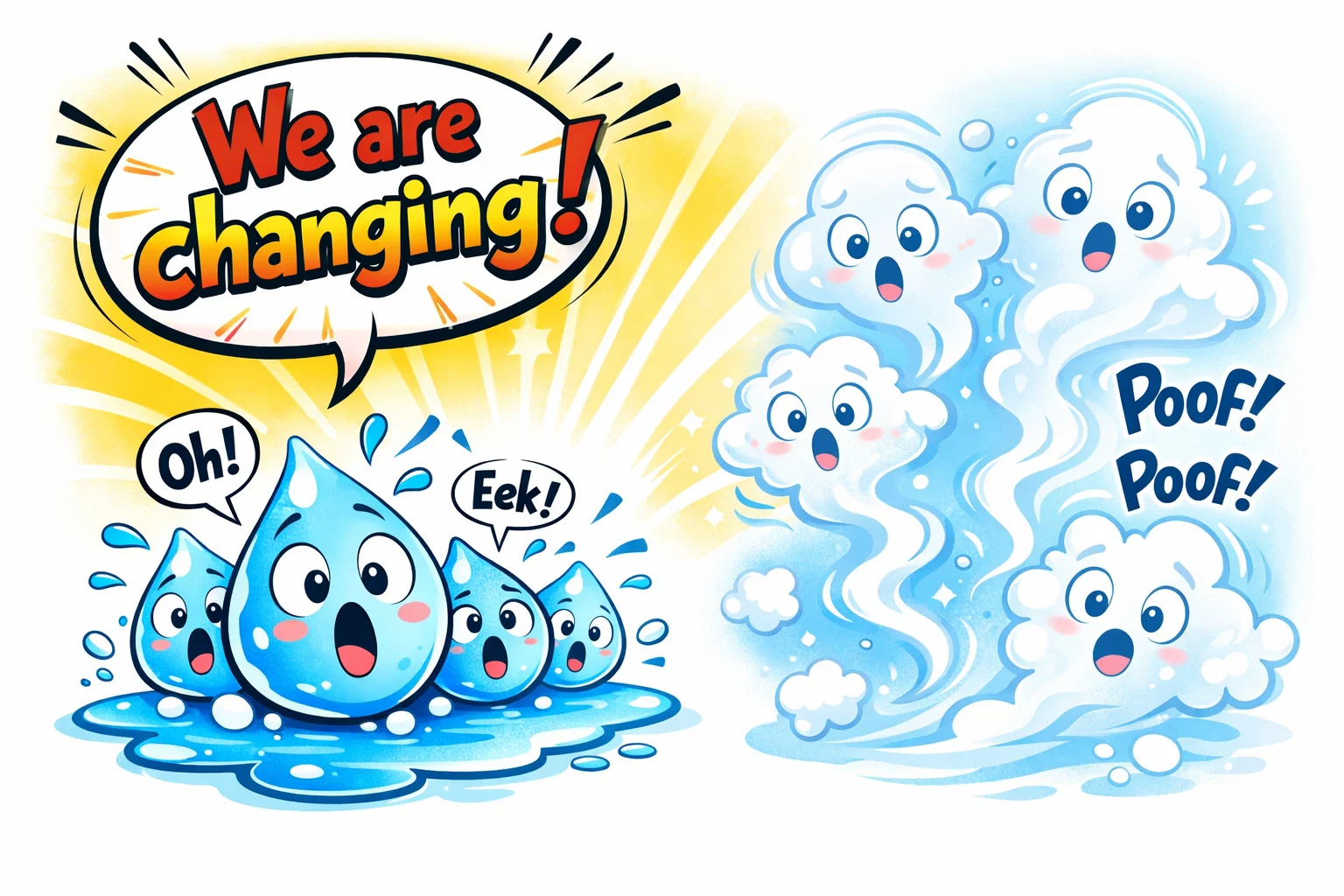
At its core, the phenomenon of moisture vanishing into thin air is a change of state. Everything in the environment is made of matter, and matter likes to change its form depending on the energy it receives. When talking about water “disappearing,” the description actually refers to a process where molecules move from the surface of a liquid into the atmosphere. This happens every day, from the drying of skin after a bath to the massive shifts in global weather patterns.
States of Matter Refresher
To help children grasp this concept, it is useful to revisit the three primary states of matter: solids, liquids, and gases.
- Solid: Water as ice, where molecules are packed tightly together and move very little.
- Liquid: The substance in its fluid form, where molecules slide past each other but stay close.
- Gas: Water as vapor, where molecules move rapidly and spread out far apart.
Evaporation is the specific journey the liquid takes as it moves from the liquid state to become a gas. While boiling also turns liquid into gas, evaporation is unique because it occurs at the surface and happens at temperatures well below the boiling point.
Water Cycle Essentials
The cycle is nature’s way of recycling. It is a continuous loop where the sun provides the necessary heat to turn water from oceans, lakes, and even small puddles into vapor. This invisible mist rises into the sky, cools down to form clouds, and eventually falls back to Earth as rain or snow. Understanding the role of the sun in this cycle helps kids realize that the “disappearing” water isn’t gone forever; it is just moving to the next stage of its journey.
Why Teach Evaporation to Children
Every child is entitled to scientific learning regardless of age, gender, and socioeconomic status. Kids are natural scientists who constantly conduct experiments on their surrounding environment. Scientific learning can be part of an everyday routine by taking advantage of ordinary experimental opportunities. This perspective is shared by Daryl Greenfield, a leading professor of psychology and pediatrics at the University of Miami.
Teaching these concepts early fosters critical thinking. When a child asks why a juice spill is gone the next day, natural inquiry is engaged. By providing a structured way to observe these changes, curiosity is satisfied and a framework for logical reasoning is built to last a lifetime.
Classic Water Evaporation Experiment
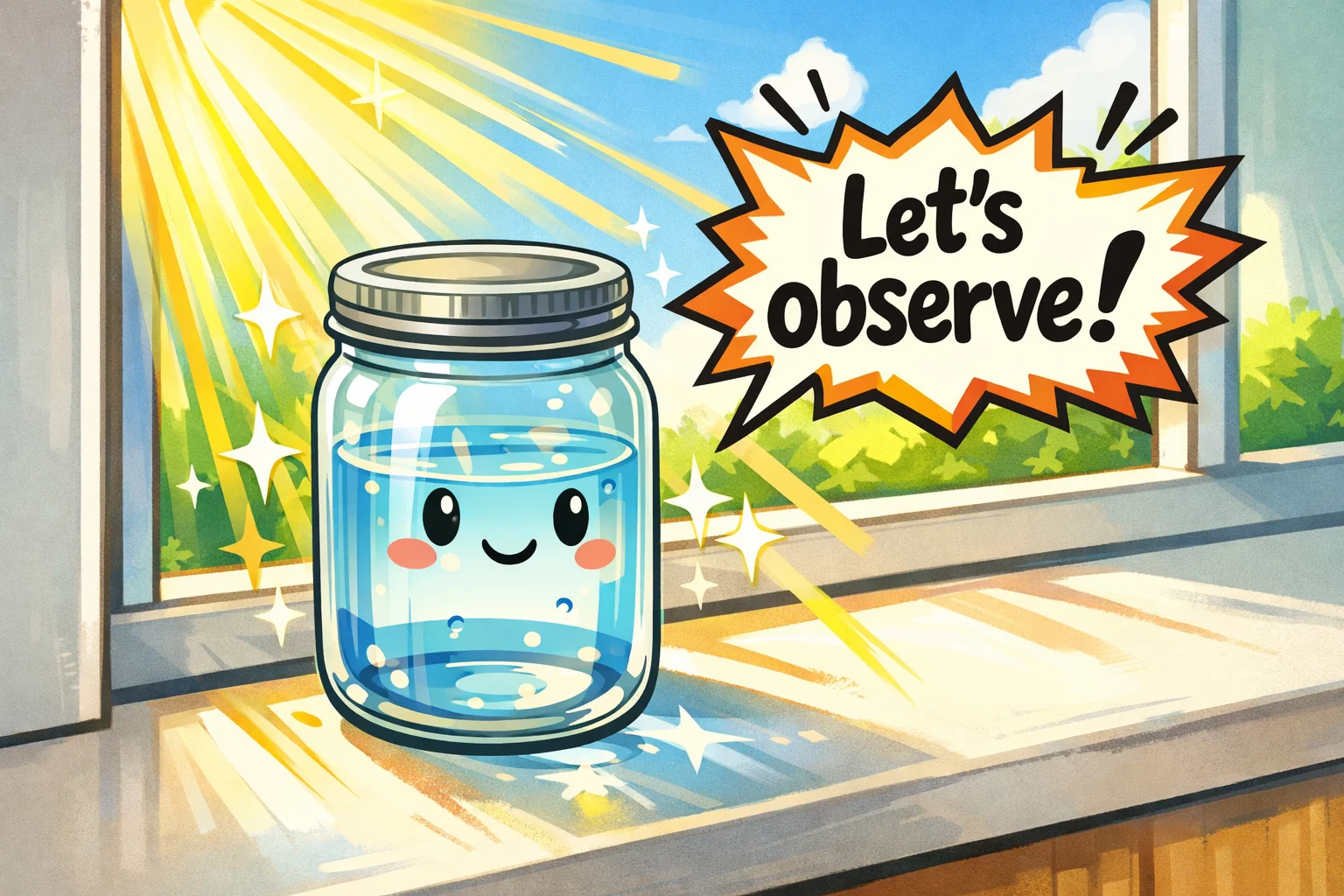
Setting up a home laboratory does not require expensive equipment. The power of the sun and the movement of molecules can be demonstrated using simple household items. This hands-on approach follows Maria Montessori’s foundational observation: “What the hand does, the mind remembers,” highlighting the neurological link between tactile manipulation and long-term memory.
Required Supplies and Recycled Materials
To begin an investigation, gather the following items. Using recycled materials is a great way to teach sustainability alongside science:
- Clear glass jars or stainless steel bowls (plastic should be avoided for better results).
- Water.
- A permanent marker or masking tape.
- A sunny windowsill.
- An eye-dropper for precise measurement.
- Uniodized salt (for the secondary salt water experiment).
Step-by-Step Activity Instructions
- Measure: Use an eye-dropper to add exactly 10 ml of the liquid to a container. Keeping the volume constant ensures the integrity of the data.
- Mark: Use a piece of tape or a marker to indicate the starting water level on the side of the container.
- Place: Move the vessel to a location where it will receive direct heat from the sun.
- Observe: Check the container at the same time every day.
- Record: Note how much the water level drops and how many days it takes to disappear completely.
Printable Experiment Recording Forms
Creating a simple chart helps kids visualize observations. A table can be drawn with columns for “Day,” “Liquid Level (cm),” and “Weather Conditions.” Recording data teaches children that science is about patience and consistent monitoring. This transforms a simple activity into a formal “scientific experiment,” boosting confidence for young researchers.
Safety Tips for Indoor Science
While water experiments are generally very safe, there are a few things to keep in mind. If glass containers are used, they must be placed on a stable surface where they won’t be knocked over. If exploring the effects of heat, remind children that the containers themselves might become warm to the touch. Adult supervision is necessary for younger children to ensure they don’t ingest the materials used, especially when working with concentrated salt solutions later on.
Factors Affecting Rate of Evaporation
Not all water evaporates at the same speed. The rate at which molecules escape into the air is governed by five primary factors: temperature, surface area, airflow, humidity, and atmospheric pressure. By changing one variable at a time, a basic observation can be turned into a complex study of physics. This multidimensional process is supported by Research posted on National Library of Medicine.
The Impact of Materials and Environment
| Factor | Influence on Evaporation | Scientific Reason |
| Temperature | Increases rate | Molecules move faster with more heat energy. |
| Surface Area | Increases rate | More molecules are exposed at the surface to escape. |
| Airflow | Increases rate | Wind moves vapor away, leaving room for more molecules. |
| Humidity | Decreases rate | Air that is already full of moisture cannot hold much more. |
| Container Material | Varies | Stainless steel has a thermal conductivity of 16.95 W/m · K, much higher than plastic at 0.15 W/m · K. |
Temperature Experiments with Warmth
To test the effect of heat, place one container in a dark closet and another on a sunny porch. The container under the sun will show a much faster net loss of liquid volume. According to the Kinetic Molecular Theory, heat provides kinetic energy to the molecules. When this energy exceeds the intermolecular forces holding the liquid together, the molecules break free and become a gas.
Surface Area and Container Shapes
Try pouring the same amount of water into a tall, narrow glass and a wide, flat pie plate. Even though the volume is the same, the liquid in the pie plate will disappear much faster. This is because evaporation is a surface phenomenon. A larger surface area means more molecules are “at the exit door” ready to leap into the air at the same time.
Airflow and Wind Speed Variables
Wind can be simulated by placing a small fan near one of the water samples. The moving air sweeps away the water vapor that sits just above the surface. This prevents the air from becoming “saturated” locally, allowing the evaporation process to continue at a higher speed. This is the same reason why people blow on a hot bowl of soup to cool it down or why laundry dries faster on a breezy day.
Salty Secret: Evaporation with Solutions
When substances like salt are dissolved in water, the evaporation process changes. Salt molecules take up space at the surface and also hold onto the moisture molecules more tightly. This makes it harder for the water to escape into the air. In a comparative study, plain liquid disappears faster than salt water.
Salt Water Evaporation Investigation
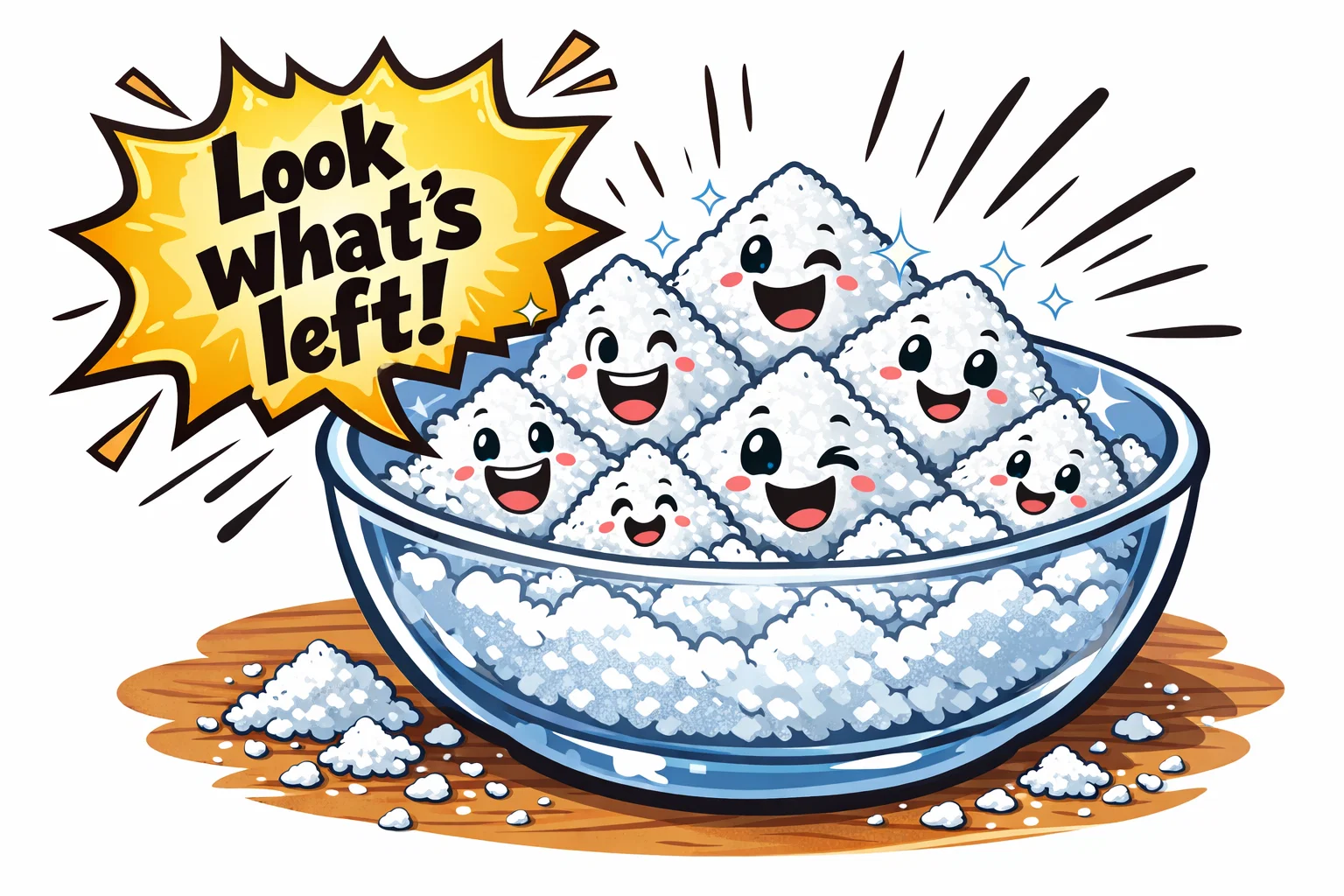
This specific experiment is a favorite because it leaves behind a physical “ghost”: salt crystals. It serves as a perfect bridge between chemistry and earth science.
Creating Ice Crystals from Seawater
For a successful crystal growth experiment, a saturated solution is needed. A reliable ratio is 40 g of uniodized salt to 100 ml of hot water (where the temperature is above 60 degrees Celsius). Stir the salt into the hot liquid until no more will dissolve. As the water begins to evaporate over several days, the salt will begin to recrystallize on the bottom and sides of the glass, often forming beautiful, square-shaped structures.
Observations of Residue and Minerals
Once the liquid has completely vanished, examine what is left behind. The white, crusty residue is the salt that was previously invisible. This teaches kids that just because something cannot be seen (like dissolved salt or water vapor), it doesn’t mean it isn’t there. These observations help build a more sophisticated understanding of matter and mixtures.
Ancient Practices of Harvesting Salt
This experiment mimics how humans have collected salt for thousands of years. In many parts of the world, large “evaporation ponds” are filled with seawater. The sun does the work of removing the liquid, leaving behind salt that can be harvested for cooking and preserving food. It is an excellent way to show how a simple science concept has massive real-world utility.
Measuring Results Over Time
Encourage children to weigh the container each day if a kitchen scale is available. The weight will decrease as the water leaves, but once the liquid is gone, the weight will stop changing. The remaining weight is the mass of the salt. This provides a clear, mathematical way to track the transition from a liquid solution to a solid residue.
Real-World Connections and Observations
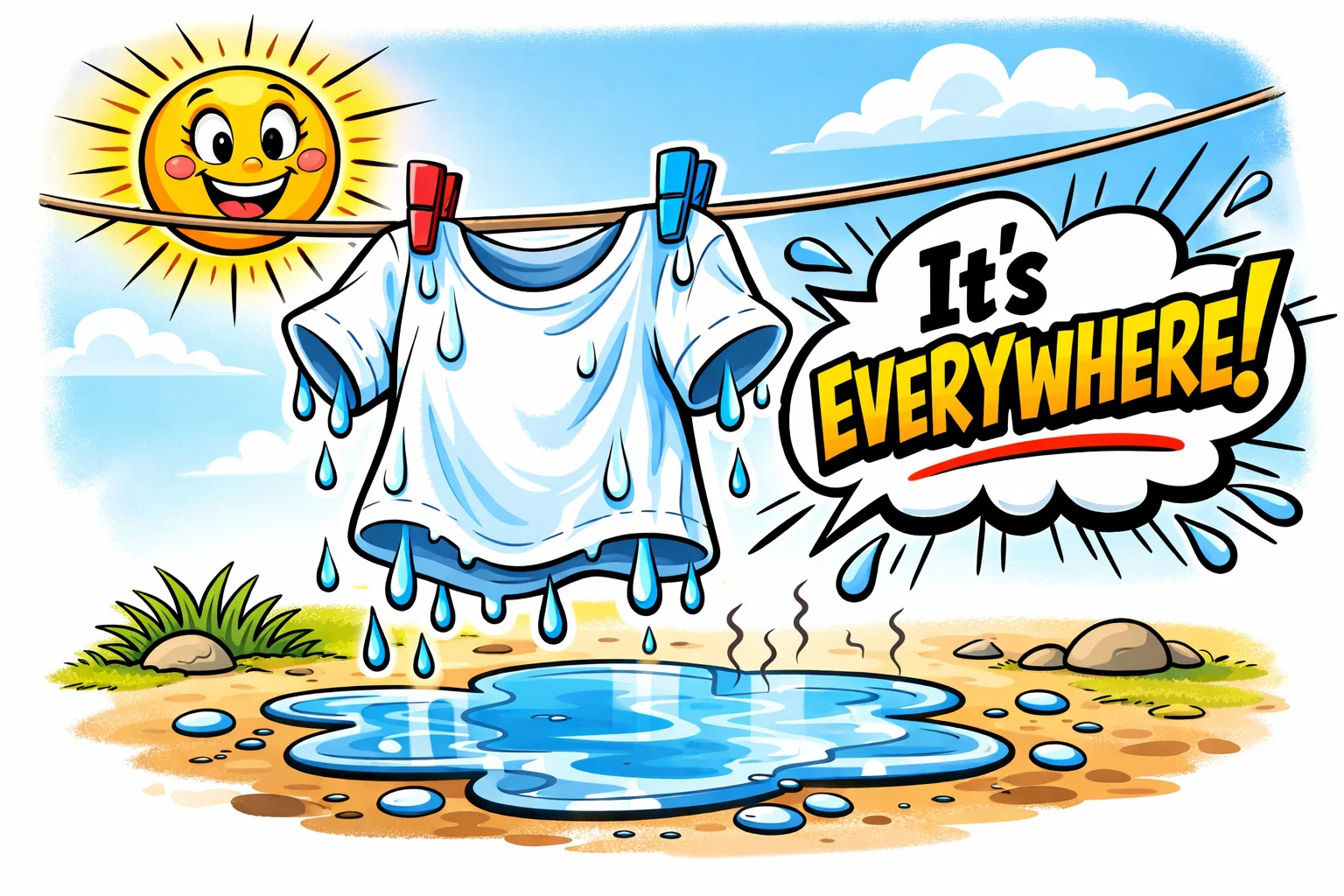
Science is most effective when children can see it happening in daily lives. Beyond the jars on the windowsill, evaporation is happening everywhere, often performing helpful tasks.
Disappearing Rain Puddles
The most common observation for a child is the disappearance of rain. Suggesting a chalk circle be drawn around a puddle on a sunny day allows for checks every hour. This real-world case shows how the sun provides energy for the water cycle on a local scale.
Science of Drying Clothes
Whether using a clothesline or a machine dryer, the principle is the same. In a dryer, heat and airflow (tumbling) are used to maximize the rate of evaporation. On a clothesline, the sun and wind are used. This is a great “everyday routine” opportunity to explain that doing laundry is actually a big physics experiment.
Human Body Cooling Systems and Sweat
A fascinating example involves “evaporative cooling.” When bodies get hot, sweat is produced. As that liquid evaporates from the skin, the most energetic (hottest) molecules leave first, taking heat away and providing a cooler sensation.
A similar sensory-based lesson involves hand sanitizer. Alcohol-based sanitizers evaporate much faster than water because they have weaker intermolecular forces and a higher vapor pressure. When applied, an immediate chill is felt on the skin—this is thermodynamics in action, connecting chemistry to daily hygiene.
Energy Transfer in Hot Drinks
Steam rising from a cup of cocoa is water vapor rapidly leaving the hot liquid. As those high-energy molecules escape, the average temperature of the remaining drink is reduced. This is why a cup of tea eventually reaches room temperature; it is constantly losing heat through the process of evaporation.
FAQ: Common Evaporation Questions Answered
What happens to water molecules when they turn into gas?
Molecules do not change what they are; they just change how they move. In liquid, they are close together. When they gain enough heat, they start moving so fast that they break away from neighbors and fly off into the air as vapor, becoming invisible.
Why does salt stay behind after liquid vanishes?
Salt has a much higher boiling and evaporation point than water. While the heat from the sun is enough to give molecules the energy to turn into gas, it is not enough to turn salt into a gas. Therefore, salt is “left behind” as the liquid exits.
Can humidity in room slow down results?
Yes, it certainly can. Humidity is a measure of how much vapor is already in the air. If the air is very humid (like on a rainy day or in a bathroom after a shower), it is like a sponge that is already soaked. It cannot hold much more moisture, so the fluid in an experiment will evaporate much more slowly.
Which household locations provide fastest drying times?
The best spots are usually those that combine heat and airflow. A sunny windowsill is effective because of the light, but a spot near a heater vent or a drafty window might work faster because the air is constantly moving, preventing vapor from hovering over the container.
How do clouds form from evaporated moisture?
As vapor rises higher into the sky, the air gets colder. When the vapor cools down, the molecules slow down and start to stick together again around tiny bits of dust in the air. This process is called condensation, and it is how millions of tiny water droplets come together to form clouds.

Take a short quiz to find out what your everyday choices say about your parenting style
When your child is curious about something new, what’s your instinct?
Take a short quiz to find out what your everyday choices say about your parenting style
“Can I download this app?” What happens next?
Take a short quiz to find out what your everyday choices say about your parenting style
When it comes to rules at home, which sounds most like you?
Take a short quiz to find out what your everyday choices say about your parenting style
If you could give your child one life skill today, what would you pick?
Take a short quiz to find out what your everyday choices say about your parenting style
Your child gets to choose what to watch. What would your ideal setup look like?
Take a short quiz to find out what your everyday choices say about your parenting style
Pick your parenting superpower ✨