Warm Up Activities for Kids: The Ultimate Guide to Movement and Focus

 Discover a Free Education Video App for Kids
Pastory uses AI to personalize educational video content based on your child’s interests and personality. Safe, engaging, and built for curious young minds. Sign up now to stay updated and enjoy early access with a free trial
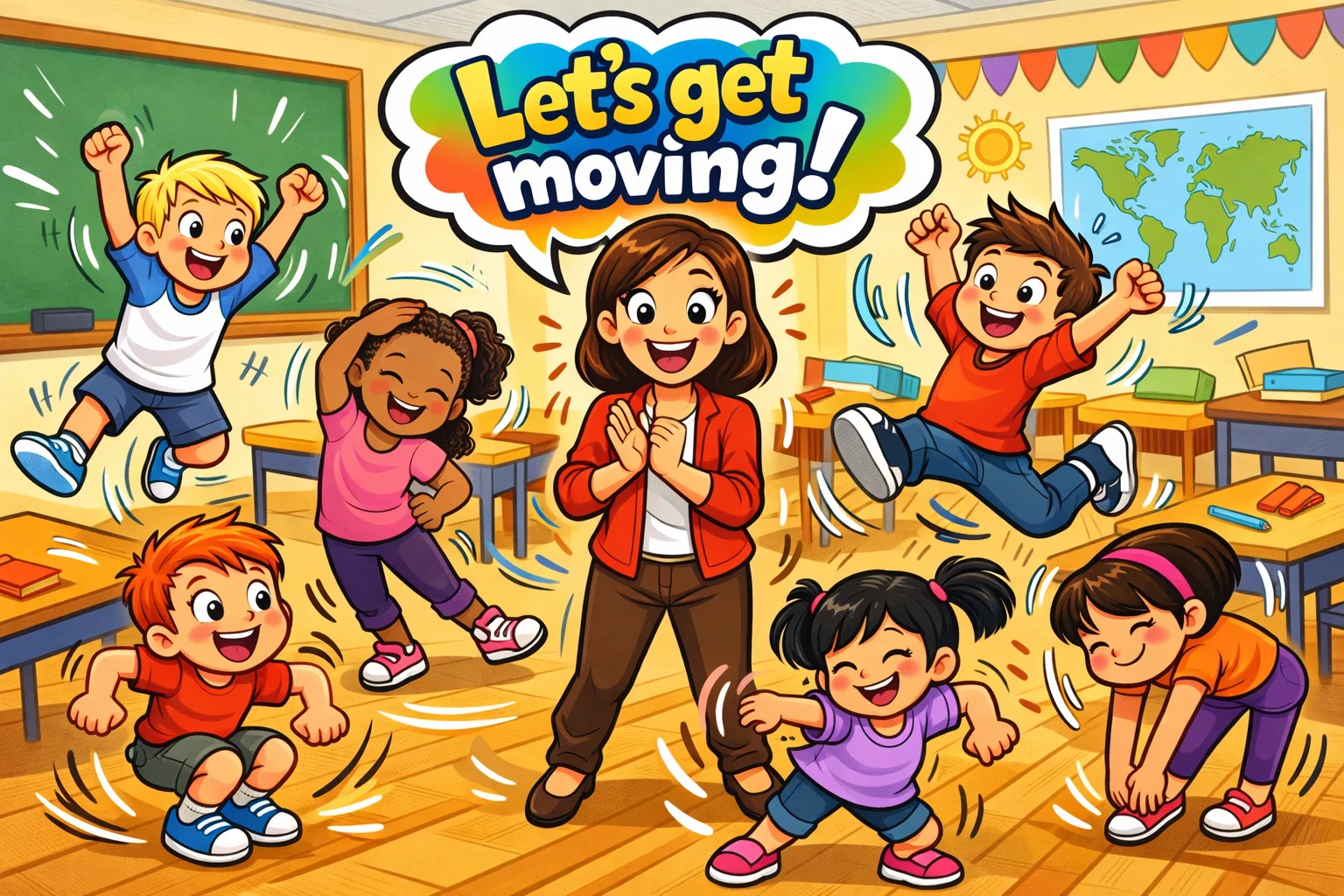
Getting kids ready for physical activity or a day of learning is about more than just preventing muscle strain; it is about “waking up” the brain and body in unison. Whether you are a teacher leading a PE class, a coach on the soccer field, or a parent supporting a restless online class at home, incorporating the right warm up games can make the difference between a sluggish start and a high-energy, productive session.
In this guide, you will find a comprehensive collection of warm-up activities designed to gradually increase heart rate, improve focus, and ensure active participation. From classic physical education staples like jumping jacks to creative activities for ESL students, these strategies are tailored for young learners across various age groups and environments.
Benefits of Warm Up Activities for Kids
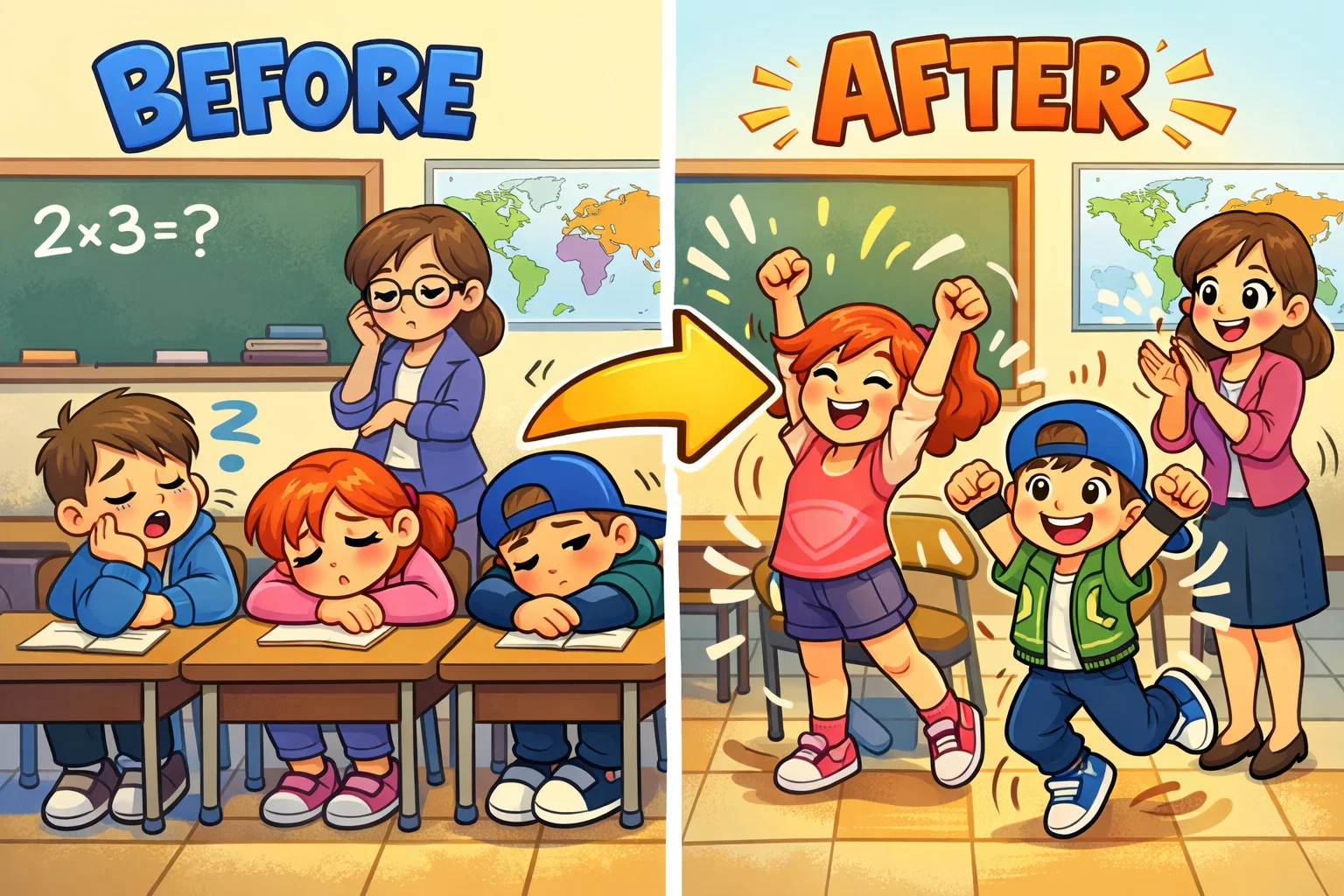
A structured warm-up serves as both a physiological and psychological bridge. Guidance from the American Council on Exercise (ACE) explains that a proper warm-up increases the temperature of the blood and muscles, which allows for more efficient energy production and muscle contraction.
Physical readiness and mobility
A full-body warm-up prepares the musculoskeletal system for the demands of play. By engaging in physical activities like arm circles or a light squat, kids improve their range of motion. This gradual joint mobilisation helps ensure that when they transition to high-intensity games and activities, their bodies move with greater fluidity.
Focus and energy activation
Movement is a powerful tool for cognitive engagement. For young learners, a quick warm-up of 2-3 minutes can help activate attention and mental alertness that improve focus. In a classroom or online class setting, these warm-up activities can function as a short “brain break” clearing mental fog and preparing the mind for complex tasks.
Injury prevention during play
While kids are naturally resilient, a sudden sprint without preparation can lead to a sprain or muscle strain. A warm-up exercise ensures that oxygen and nutrients are delivered to the muscles before they are under heavy load. This gradual transition supports safe participation and sustained engagement.
Positive habits for active routines
Teaching warm-up routines early on fosters a lifelong appreciation for physical health. When fun warm-up sessions become a standard part of the day, kids begin to view preparation as an essential component of any successful endeavor, whether in sports or academics.
How to Start PE Class Warm Ups
Starting a physical education session requires a balance of authority and excitement. A disorganized start can lead to a loss of student engagement that is hard to recover.
Rules review before movement
Before anyone does a single squat, establish the boundaries. Clearly define the “stop” signal (like a whistle or a raised hand) and specify the movement area. Keeping this review under 60 seconds prevents boredom while ensuring safety.
Start simple with basic motions
Begin with movements that require zero explanation. Walking in place, gentle arm circles, or light side-steps allow the body to start waking up while you observe the group’s energy levels.
Transition from calm to active
The goal is to gradually increase heart rate. Start with low-impact movements and slowly introduce fun warm games that involve jogging or light jumping. This prevents early fatigue where kids lose energy before the main lesson even begins.
Time management for short warm ups
A great warm-up doesn’t need to be long. Aim for 6-8 minutes in a standard PE block. If you are in a classroom, even 3 minutes of warm-up games for kids can be effective for resetting their internal clocks.
| Phase | Duration | Activity Type |
| Pulse Raiser | 2-3 Mins | Walking, Jogging, Jumping Jacks |
| Mobility | 2 Mins | Arm Circles, Leg Swings, Torso Twists |
| Skill/Game | 3-5 Mins | Tag games, “Simon Says,” Coordination drills |
Warm Up Games for Kids
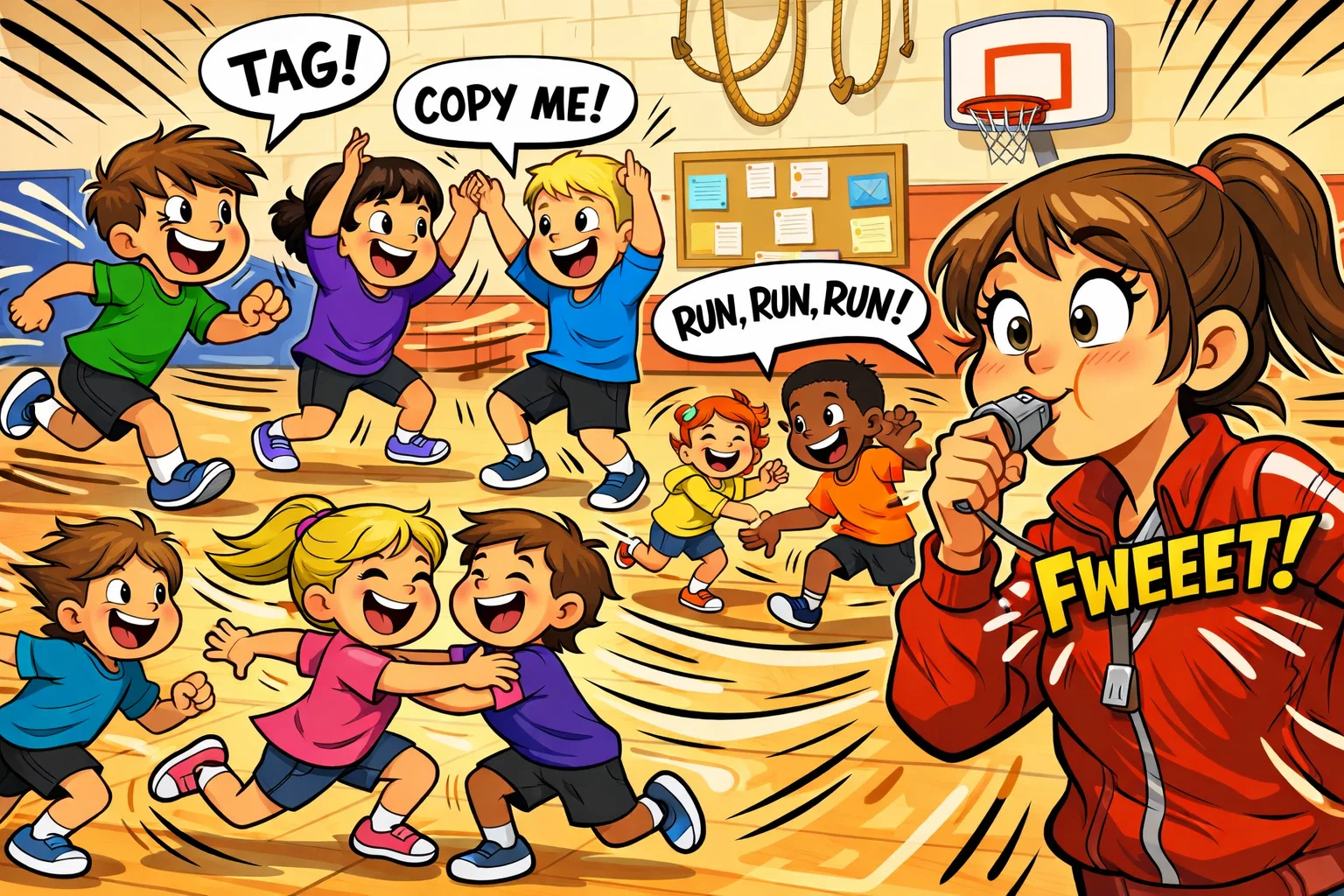
Game-based warm-ups are often the most effective because kids forget they are “exercising.”
Atom Game
In this game, kids jog around the space. When the leader calls out a number (e.g., “Atom 4!”), students must quickly form groups of that size. This encourages spatial awareness and social interaction.
Do This, Do That
Similar to “Simon Says,” but faster. If the leader says “Do this” while performing a movement (like jumping jacks), the kids follow. If the leader says “Do that,” the kids must remain still. It is excellent for hand-eye coordination and reaction time.
Dodgeball Tag
Give a few students soft foam balls. They try to tag others by touching them with the ball (not throwing). Once tagged, a student might have to perform 5 squats to re-enter the game.
Sharky Sharky
One kid is the “Shark” in the middle of the “ocean.” The other kids (“minnows”) try to cross to the other side. If caught, they become seaweed (staying in one spot but able to tag others). This gets kids moving quickly.
Mirror and Reflection
Partners stand facing each other. One is the “actor” and the other is the “reflection.” The reflection must mimic the actor’s movements—such as slow arm circles or balancing on one leg—as accurately as possible.
Skills Circuit Warm Up Activities
For older kids or K–5 students needing more structure, circuits provide a variety of movement patterns and skill development.
- Balance and coordination stations: Use floor tape or low beams. Have kids walk heel-to-toe or hop on one foot to build stability.
- Speed and agility drills: Set up cones for a zigzag run. This focuses on quick direction changes and footwork.
- Throwing and catching practice: Use beanbags or soft balls. This light activity wakes up the small muscles in the hands and improves hand-eye coordination.
- Rotation flow between stations: Keep the music playing. Every 60 seconds, blow the whistle for kids to move to the next station, ensuring no downtime.
Fun Quick Warm Up Activities
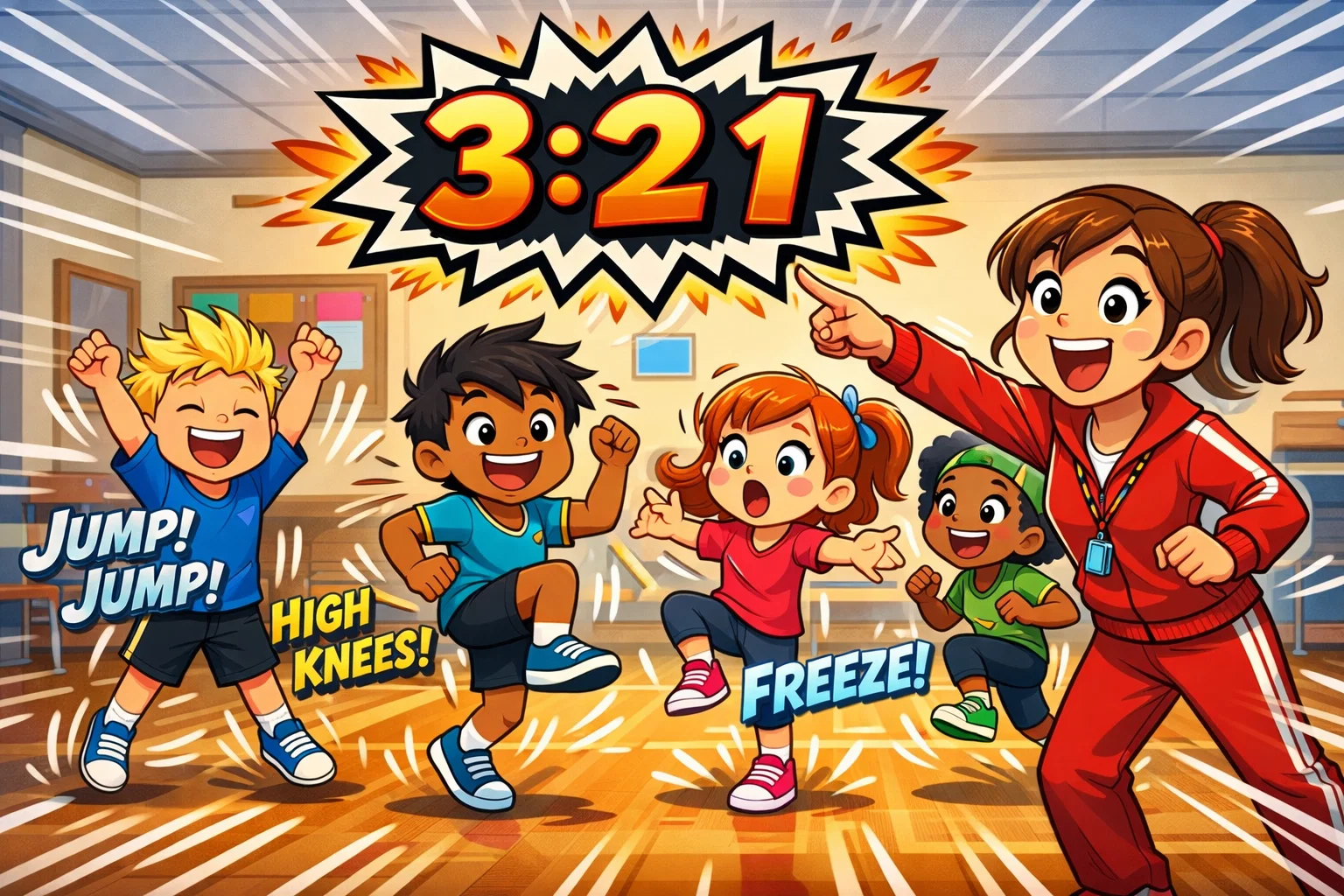
When time is tight, these quick warm-up ideas are effective transition warm-up activities.
- Red Light, Green Light: Classic stop-and-go movement. It teaches kids to control their momentum.
- Simon Says: Focuses on auditory processing and motor control.
- Freeze Dance: Play upbeat music and have kids dance; when it stops, they must freeze in a squat or a balance pose.
- Follow the Leader: The leader performs jumping jacks, crawls, or hops, and the “train” of kids mimics them.
Warm Up Exercises for Kids
Sometimes, a direct warm-up exercise routine is the best way to ensure every muscle group is reached.
Jumping jacks
A classic full-body warm-up move. Ensure kids are landing softly on the balls of their feet to protect their knees. Aim for 15–20 repetitions.
High knees
Have kids bring their knees up to waist height while jogging in place. This gets kids moving and significantly boosts the heart rate in under 60 seconds.
Arm and shoulder stretch
Gentle arm circles (starting small and getting larger) help loosen the rotator cuff. Follow this with “huggers,” where kids swing their arms wide and then wrap them around their chests.
Simple stretching routines
Focus on dynamic stretching rather than static. Instead of holding a reach for 30 seconds, use “leg swings” or “caterpillar walks” to keep the oxygen and nutrients flowing.
Animal Movement Warm Ups
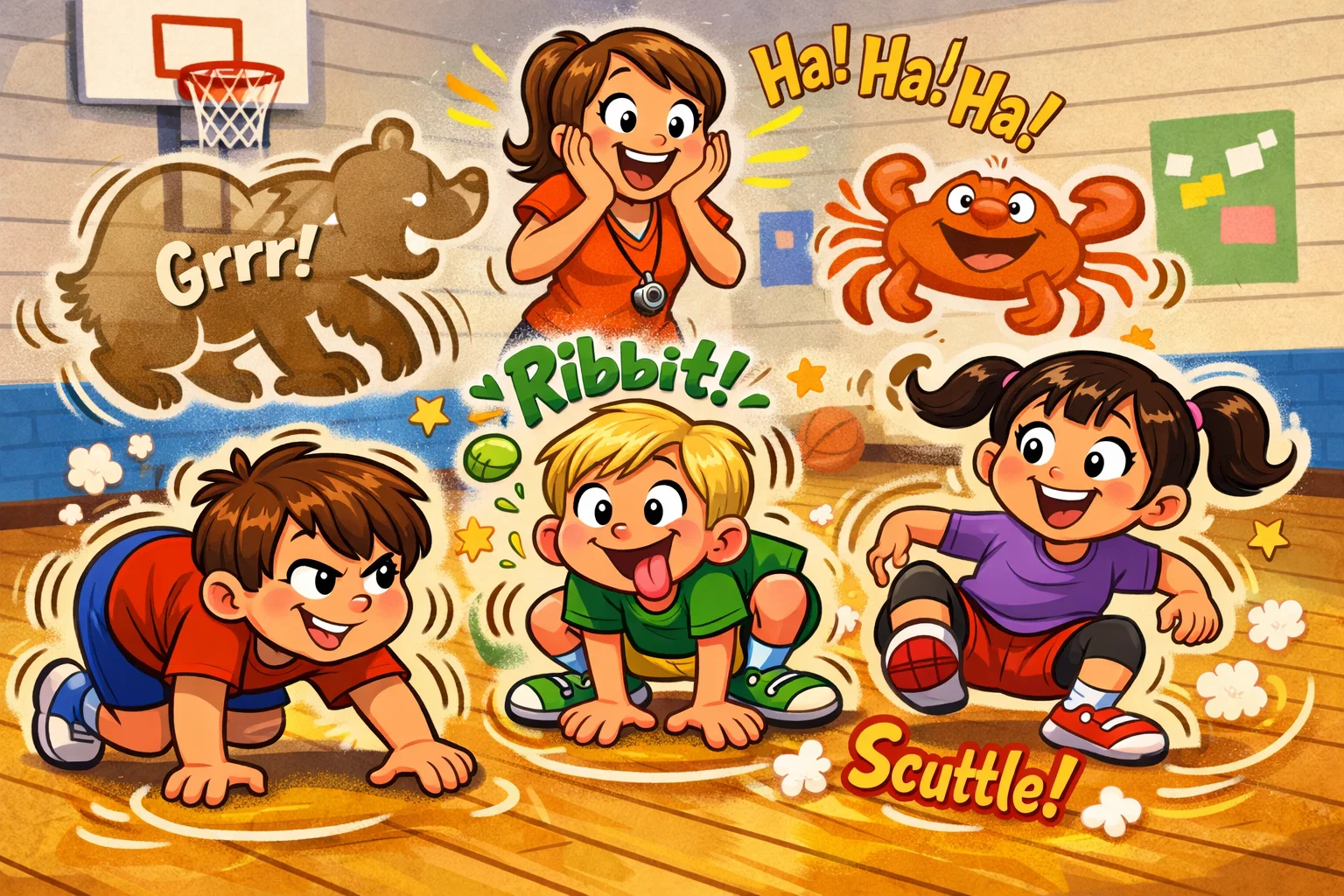
Young learners respond incredibly well to imaginative play. Using animal movements is a fantastic way to build functional strength.
- Bear Crawls: Moving on hands and feet (knees off the ground) builds shoulder strength and core stability.
- Frog Jumps: Deep squats followed by an explosive jump forward. This is a high-energy warmup for leg power.
- Crab Walk: Sitting on the floor, lifting the hips, and moving using hands and feet. This targets the triceps and core.
- Animal Races: Set up a short track where kids must race using only one specific animal movement.
Warm Up Activities for Online Classes
Teaching virtually presents unique challenges, but online class warmups are vital for breaking the “screen stare.”
Movement and counting
Have kids stand up and perform a movement (like a squat) while counting to ten in a second language—perfect as activities for ESL students.
Quick draw challenge
Give them 60 seconds to find something blue in their house and bring it back, or draw a specific shape in the air using their nose or elbows.
One-word check-in
While doing light arm circles, each student shares one word about how they feel. This builds community and student engagement.
Mindful minutes
Sometimes a warm-up needs to be calming. Use 3 minutes of deep breathing or slow “starfish” stretches to ground the students before a seated lesson.
Warm Ups by Age Group
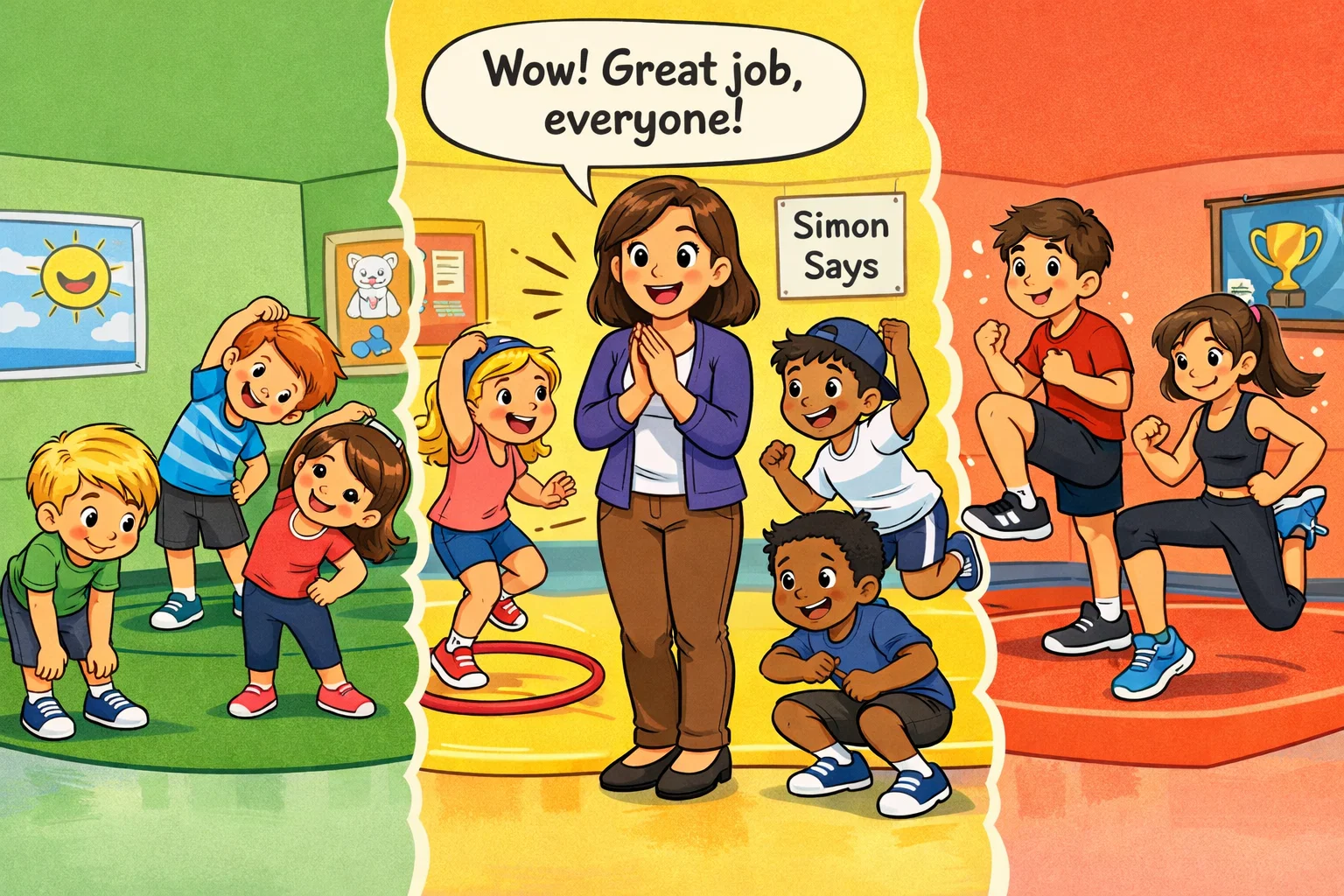
| Age Group | Focus Area | Recommended Activity |
| Elementary (K-5) | Imagination & Play | Animal Crawls, Freeze Dance |
| Middle School | Coordination & Social | Atom Game, Skill Circuits |
| High School | Sport-Specific & Intensity | Dynamic Stretches, Agility Drills |
Cross-grade warm up ideas
If you have a mixed age group, “Follow the Leader” works wonders. Older kids can take turns being the leader, which promotes leadership and peer-mentoring skills, while younger kids enjoy the imitation.
Warm Up Safety Tips for Kids
- Space and equipment checks: Ensure the floor is dry and free of tripping hazards like loose classroom materials.
- Appropriate intensity levels: Watch for heavy panting or red faces. The goal is a warm-up, not an exhausting workout.
- Weather and indoor adjustments: If it’s cold, the warm-up should be longer to properly thaw out stiff muscles.
- Hydration reminders: Always allow for a quick water break after the warmup and before the main activity.
Frequently Asked Questions
How long should a warm up be for kids?
For most physical education settings, 6-8 minutes is the sweet spot. For a classroom “brain break,” 2-3 minutes is usually sufficient.
Is a daily warm up necessary?
Yes. Consistent warm ups prevent injury and signal to the brain that it is time to transition from rest to “work” mode.
What are the best warm ups for small spaces?
In tight spots, focus on stationary movements: jumping jacks, arm circles, high knees, and “running in place.”
Should warm ups be sport-specific?
If you are preparing for a specific sport like basketball, include hand-eye coordination drills with a ball. For general play, stick to full-body warm-up movements.

Take a short quiz to find out what your everyday choices say about your parenting style
When your child is curious about something new, what’s your instinct?
Take a short quiz to find out what your everyday choices say about your parenting style
“Can I download this app?” What happens next?
Take a short quiz to find out what your everyday choices say about your parenting style
When it comes to rules at home, which sounds most like you?
Take a short quiz to find out what your everyday choices say about your parenting style
If you could give your child one life skill today, what would you pick?
Take a short quiz to find out what your everyday choices say about your parenting style
Your child gets to choose what to watch. What would your ideal setup look like?
Take a short quiz to find out what your everyday choices say about your parenting style
Pick your parenting superpower ✨