
39 Easy Activities for Kids: Indoor, Outdoor & Creative Ideas

 Discover a Free Education Video App for Kids
Pastory uses AI to personalize educational video content based on your child’s interests and personality. Safe, engaging, and built for curious young minds. Sign up now to stay updated and enjoy early access with a free trial
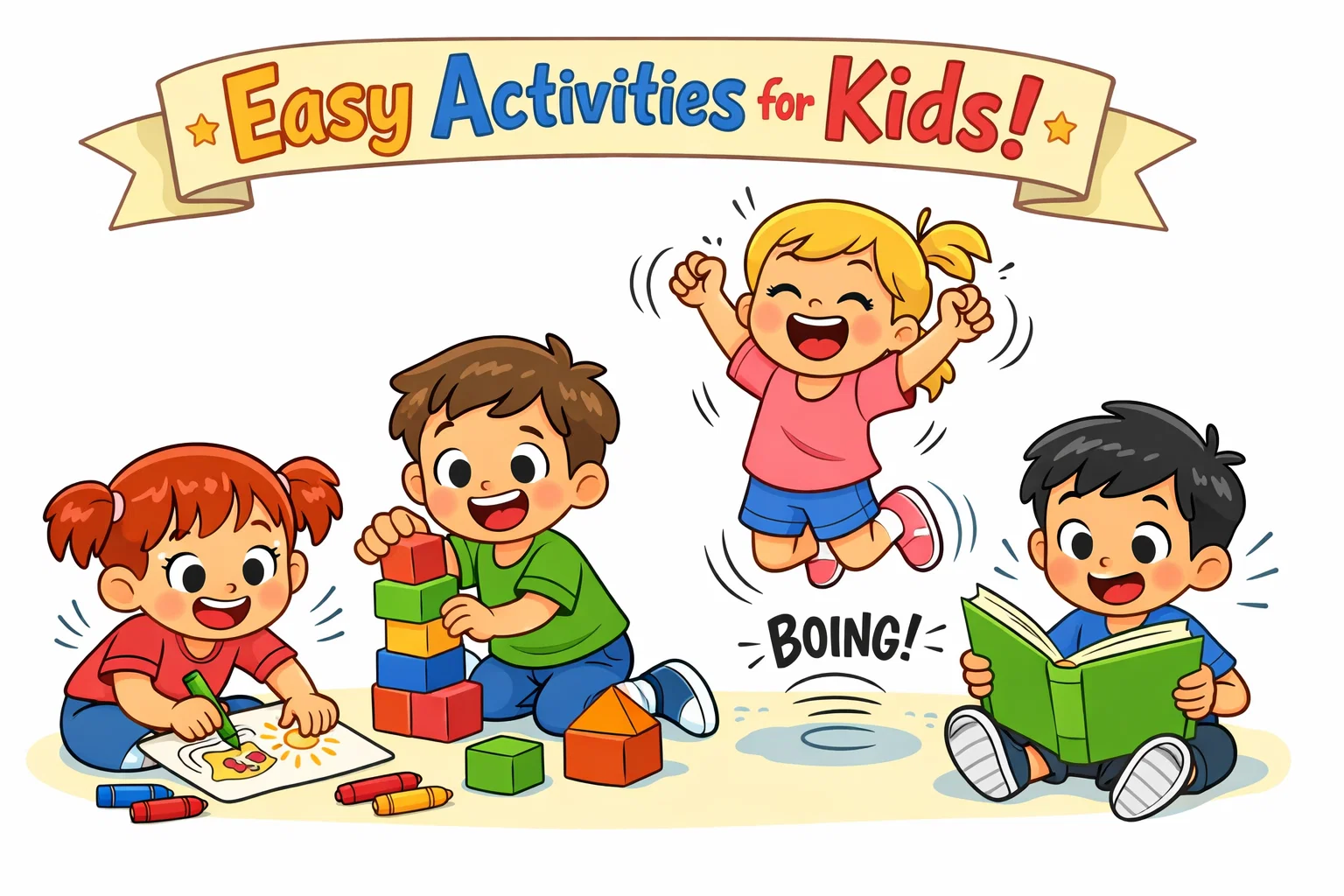
Easy activities for kids don’t have to mean complicated setups or expensive supplies. This collection of 39 ideas covers indoor play, outdoor fun, creative projects, toddler-friendly picks, and seasonal activities — all chosen for being low-prep, screen-free, and genuinely engaging for a range of ages.
Activities are grouped by setting, energy level, and age so you can quickly find something that fits the moment, whether it’s a quiet afternoon at home, a rainy day indoors, or a free hour in the backyard.
Key Takeaways
- This article covers 39 easy activities for kids across indoor, outdoor, creative, and seasonal settings.
- All ideas are low-prep and screen-free, requiring minimal supplies or advance planning.
- Activities are organized by setting, age group, and energy level to help parents choose quickly.
- Sections include toddler activities, learning games, sensory play, and simple backyard ideas.
- A practical guide at the end helps parents rotate activities and involve kids in choosing what to do.
Easy Activities at Home
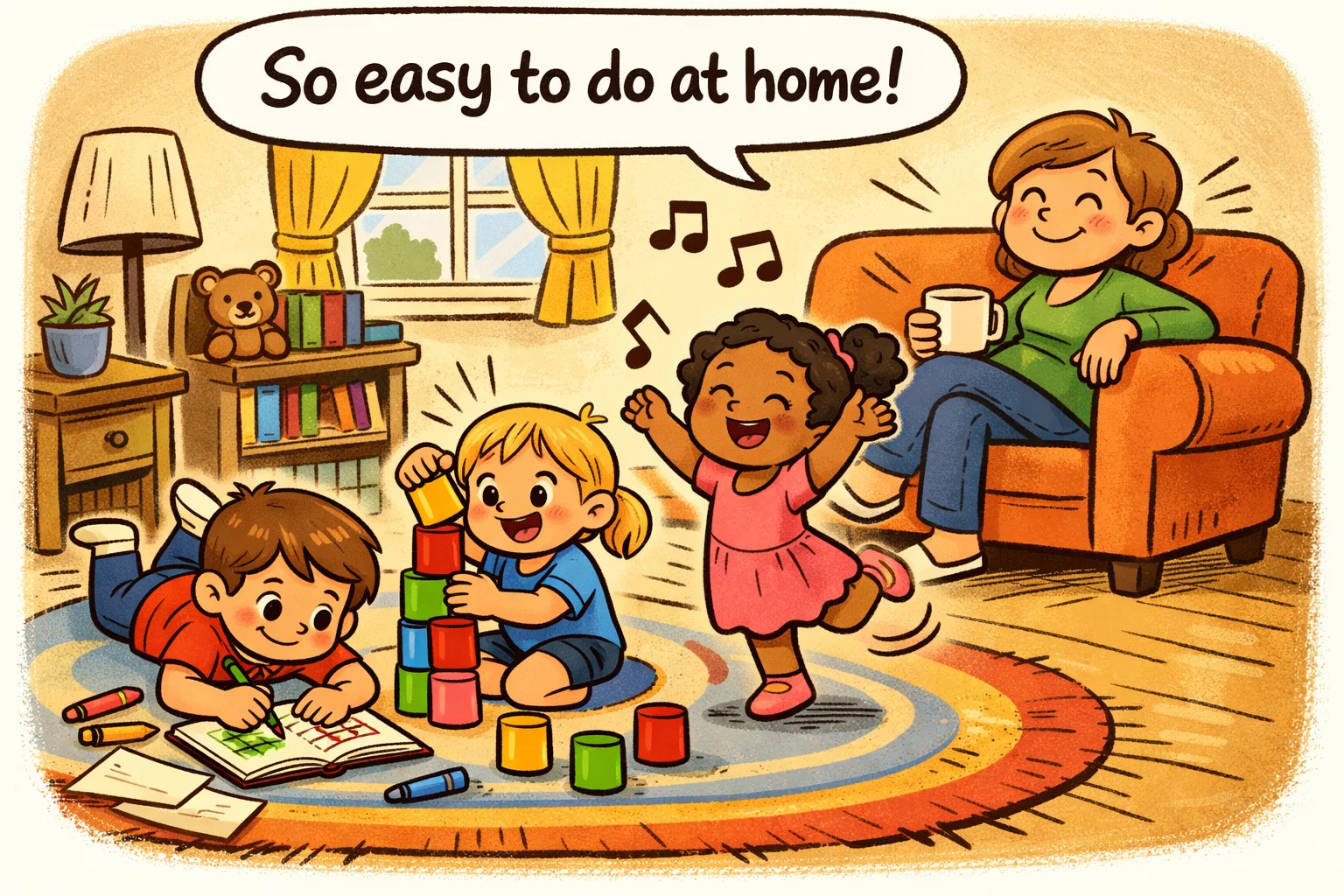
The home is a natural laboratory for learning and play. You don’t need a dedicated playroom to facilitate learning activities; your living room, kitchen, and even the laundry area are full of potential. The key to successful activities at home is flexibility. Lowering the barrier to entry makes it easier to engage in play more frequently, which strengthens the parent-child bond.
Low prep activities using everyday items
A simple cardboard box can spark hours of imaginative play. A large box can become a spaceship, a castle, or a cozy reading nook. Other at-home staples like a laundry basket can be used for a “basketball” game with rolled-up socks.
- Plastic Cup Stacking: Use kitchen cups to build towers.
- Pillow Obstacle Course: Lay cushions on the floor to practice balance.
- Kitchen Band: Use wooden spoons and pots to explore rhythm.
Quick activities for short attention spans
Sometimes there are only ten minutes available while dinner is in the oven. For these moments, fun and easy activities like a “Micro-Scavenger Hunt” work best. Ask your little ones to find “something red,” “something soft,” and “something that makes noise.” This keeps kids entertained without a massive setup.
Calm activities for quiet time
Quiet time is essential for emotional regulation. Options like “Sticky Note Art” (drawing on post-its and sticking them to a window) or listening to an audiobook while coloring provide a mental reset. These easy activities help children transition from high-energy play to a more relaxed state, which can be especially helpful before naptime or bedtime.
High energy activities indoors
When kids are bouncing off the walls, they often benefit from a “heavy work” outlet. A bean bag toss using folded socks and a target made of tape on the floor is an excellent way to burn energy. You can also try “Animal Races”—have them crawl like a bear, hop like a frog, or waddle like a penguin from one side of the room to the other.
Screen-Free Easy Activities
In an increasingly digital world, screen-free activities are vital for developing a child’s fine motor skills and social intelligence. Excessive screen time is often associated with disrupted sleep and shorter attention spans in young children. Replacing a tablet with imaginative play encourages kids to think critically and solve problems independently.
Creative screen-free play ideas
Storytelling is a powerful tool. Try “Story Stones”—collect rocks outdoors and paint simple icons on them (a sun, a dog, a car). Have your child pick three stones and tell a story connecting them. This type of creative and engaging play builds vocabulary and narrative skills.
Hands-on activities for independent play
Sensory bins are the gold standard for independent play. A bin filled with dried rice or beans and a few small shovels can keep a toddler occupied for thirty minutes. For older kids, give them a stack of construction paper and a glue stick and challenge them to “build a city.”
Family screen-free activities
Group games like “Freeze Dance” or “Charades” are fun things the whole family can enjoy. These games to play together build a sense of belonging.
Indoor Easy Activities for Kids
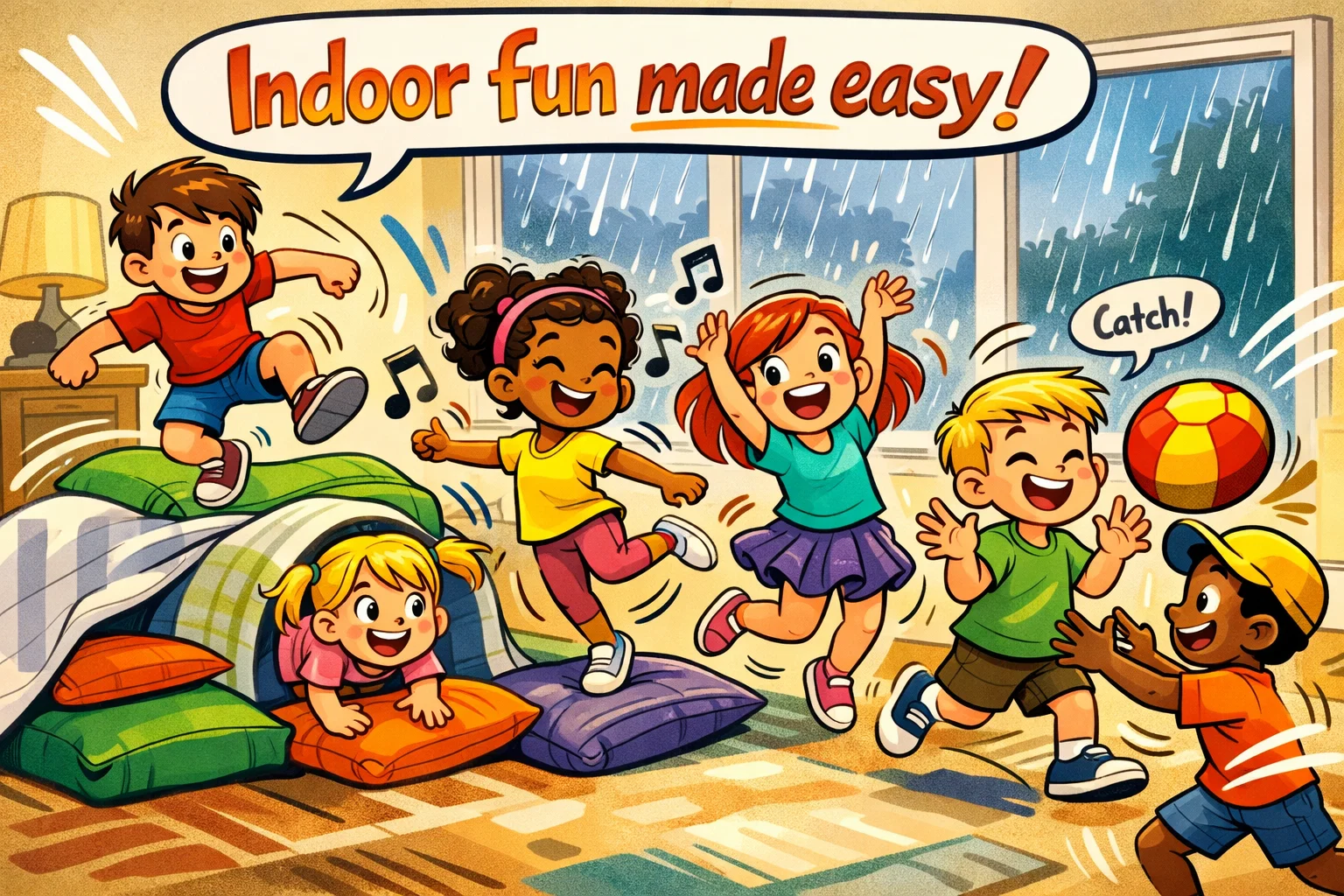
When the weather turns or you’re stuck indoors, the walls can feel like they’re closing in. Having a library of indoor games is a lifesaver. Indoor play does not have to be loud or messy to be effective.
Indoor movement games
If you have hula hoops, you can lay them out for indoor hopscotch. No hoops? Use tape on the floor to create a grid. This develops gross motor skills and coordination without requiring a backyard.
Easy indoor games with rules
Hide and seek is a classic for a reason—it teaches patience and spatial awareness. For a variation, try “Sardines,” where one person hides and everyone else joins them in the hiding spot as they find them.
Accessible indoor activities
For families in smaller living spaces, “Tabletop Soccer” using a paper straw to blow a pom-pom across a table is a great way to pass the time. These activities can be easily adapted for different mobility levels and space constraints.
| Project | Materials Needed | Skill Focused |
| Tape Maze | Masking Tape | Gross Motor |
| Sorting Station | Muffin Tin + Buttons | Fine Motor |
| Shadow Puppets | Flashlight + Hands | Imagination |
| Paper Planes | Scrap Paper | Engineering |
Easy Outdoor Activities
Fresh air is a natural mood booster. Outdoor play often allows for “bigger” movement that isn’t possible indoors. Encouraging kids to get messy outdoors reduces the stress of cleaning up indoor spaces.
Simple backyard activities
Nature provides the best activity ideas. Kids can use leaves and flowers to create “Nature Potions” in a bucket of water. Using sidewalk chalk to draw targets for a water balloon toss is another fun and free way to spend an afternoon.
Outdoor activities that double as chores
Children often love to feel helpful. Watering the garden with a small watering can or helping “wash” the car (even just scrubbing the wheels with a sponge) are fun activities for toddlers that teach responsibility.
Free places to go with kids
Don’t forget local resources. Public libraries often have great resources and free programming. A simple walk in a local park to look for different types of birds or insects is a high-value science experiment in disguise.
Easy Creative Activities

Creativity is about the process, not the final product. When you get creative with your kids, focus on exploration rather than “making it look perfect.”
Arts and crafts with minimal supplies
You don’t need a professional studio. Crafts for kids can be as simple as making paper chains or using paint brushes to “paint” the side of the house with plain water (it disappears as it dries!).
Sensory play activities
Sensory play is crucial for brain development. Kids love the squishy texture of slime or homemade playdough. To make your own at home, mix cornstarch and hair conditioner for a “cloud dough” that feels incredibly soft.
- Sensory Bins: Use oats, water beads, or even shaving cream.
- Color Mixing: Use jars of water and drops of food colouring to see how colors change.
Dramatic and pretend play
A simple sheet draped over two chairs becomes a cave. Encourage kids to make their own costumes using old clothes. This type of imaginative play is where tweens and teens might even join in if the “world-building” is complex enough.
Easy Learning Activities
Education doesn’t have to happen at a desk. Learning activities are most effective when they feel like fun things to do.
Simple counting and sorting games
Use a laundry basket of clean clothes and ask your child to sort socks by color or size. This is a functional way to practice categorization and fine motor skills.
Language and storytelling activities
Play “I Spy” using phonics: “I spy something that starts with the ‘Buh’ sound.” This helps with early literacy and keeps kids entertained during car rides or grocery trips.
Science play with everyday objects
An at-home science classic is the “Sink or Float” test. Fill a tub with water and gather various household items. Making predictions helps introduce basic scientific thinking.
Easy Activities for Toddlers
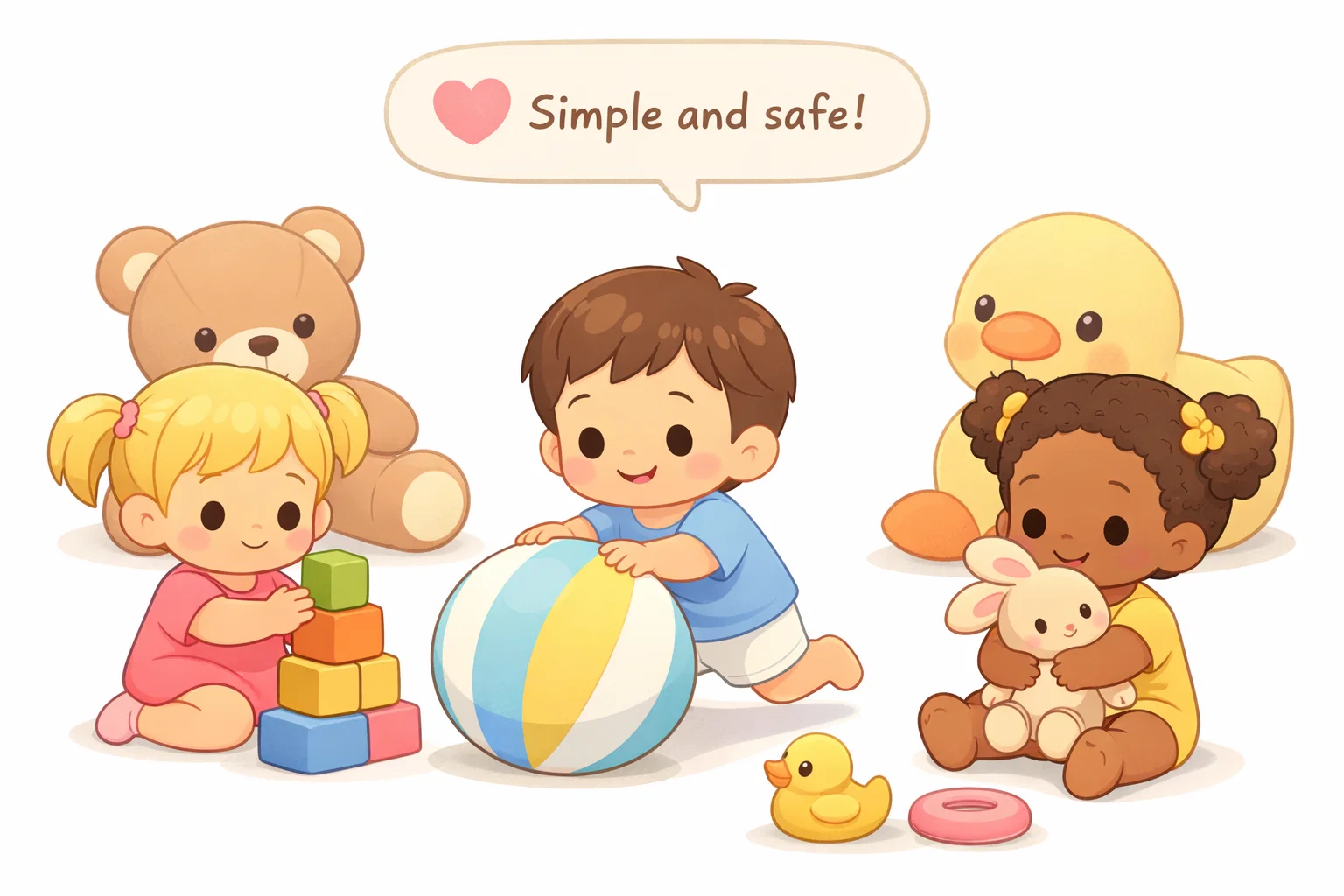
Activities for toddlers require a focus on motor skill development and safety. At this age, the “play” is often about cause and effect.
Short toddler activities
Toddlers have notoriously short attention spans. “Post-it Pick-up” (sticking notes to a wall and letting them pull them off) is a fun and easy way to practice the pincer grasp.
Fine motor activities for toddlers
Threading large pasta shells onto a piece of yarn or pushing pom-poms through a hole in a shoe box lid are excellent activities for developing fine motor control. These simple activities prepare them for writing later in life.
Movement activities for toddlers
Simple “Follow the Leader” through the house or an egg and spoon race (using a large plastic egg) helps with balance. These fun activities for toddlers are great for building confidence in their physical abilities.
Seasonal Easy Activities
The time of year often shapes indoor and outdoor activity choices. Adapting to the seasons keeps things fresh.
Easy winter activities indoors
During the cold months, winter activities like “Indoor Camping” can be a highlight. Set up a tent (or a blanket fort) and have a picnic inside. It’s one of those indoor activities kids will love because it breaks the normal routine.
Easy summer activities outdoors
Water is the ultimate summer tool. A sprinkler or a simple “Car Wash” for plastic toy trucks provides plenty of fun while keeping everyone cool.
Rainy day activity ideas
On a rainy day, lean into the indoor vibe. A “Hallway Bowling” alley using empty plastic bottles and a tennis ball is a great way to keep kids moving when they can’t go outside.
How to Choose Easy Activities for Kids
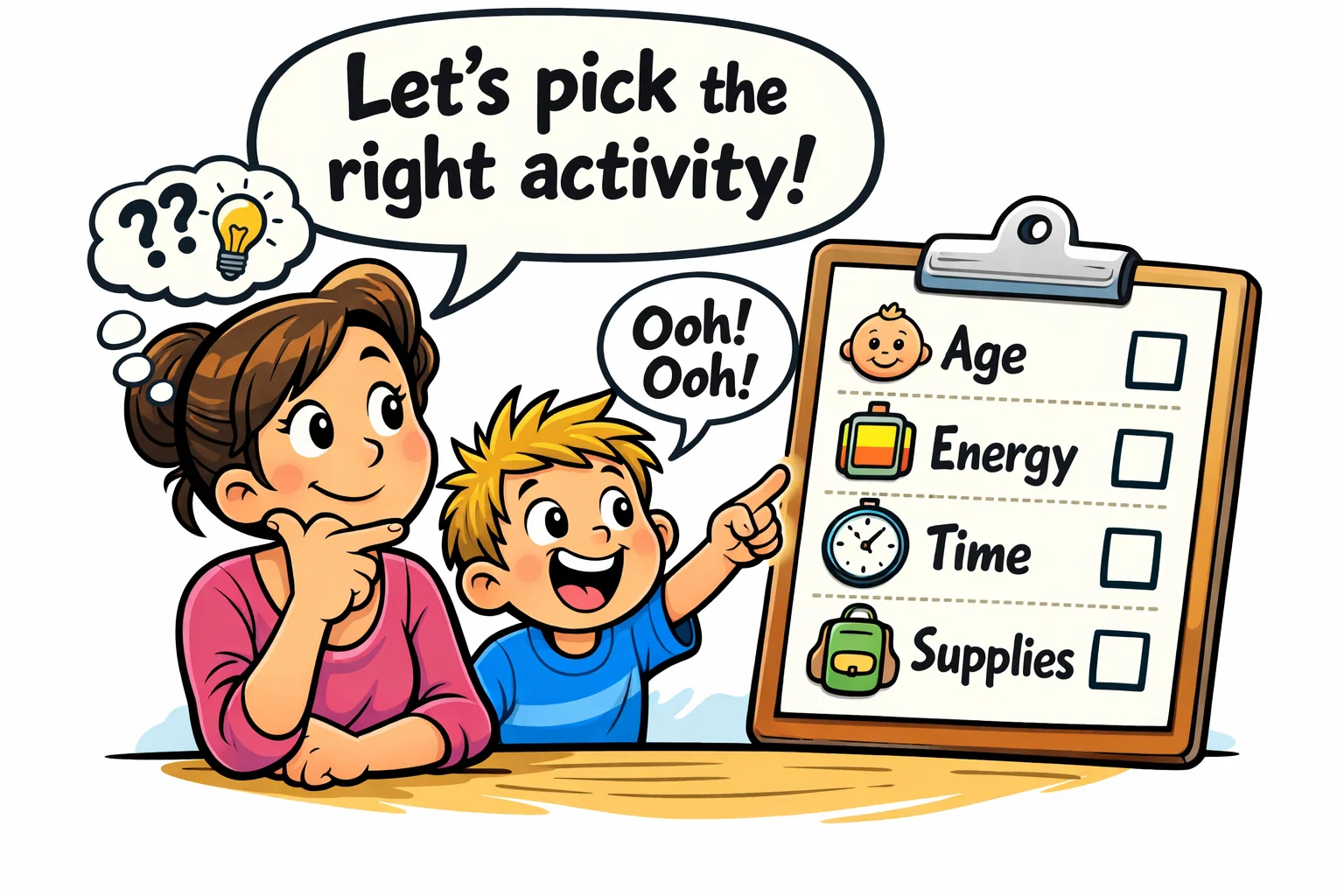
Selecting the right activity ideas depends on the context of the day.
Choosing activities by age
What works for a toddler won’t work for a ten-year-old. For different age groups, try to find “scalable” options. For example, while a toddler sorts blocks by color, an older child can use those blocks to build a bridge that supports a certain weight.
Choosing activities by energy level
If your child is overstimulated, avoid gross motor games and opt for sensory play or reading. If they are sluggish, a quick “Dance Party” can boost their mood.
Keeping activities simple and stress-free
The most important rule: Creativity matters, but activities work best when they remain simple. If a setup requires more than 5 minutes of prep, it might not be “easy” for that specific moment. Focus on fun and free options that use what you already have.
Keep Activities Going
Consistency is better than intensity. You don’t need a new “wow” factor every day.
Rotating easy activities
Don’t put all the toys out at once. Kids can take part in a “Toy Rotation.” By putting some items away for a few weeks, they feel brand new when they are brought back out. This is a great way to keep kids entertained without buying anything new.
Preparing a simple activity list
Keep a list of indoor activities and outdoor ideas in your fridge. When the “I’m bored” complaints start, a ready-made menu of activity ideas is always available.
Involving kids in choosing activities
Giving children a choice between two options (e.g., “Do you want to do a science experiment or arts and crafts?”) increases their buy-in and makes them more likely to stay engaged.

Take a short quiz to find out what your everyday choices say about your parenting style
When your child is curious about something new, what’s your instinct?
Take a short quiz to find out what your everyday choices say about your parenting style
“Can I download this app?” What happens next?
Take a short quiz to find out what your everyday choices say about your parenting style
When it comes to rules at home, which sounds most like you?
Take a short quiz to find out what your everyday choices say about your parenting style
If you could give your child one life skill today, what would you pick?
Take a short quiz to find out what your everyday choices say about your parenting style
Your child gets to choose what to watch. What would your ideal setup look like?
Take a short quiz to find out what your everyday choices say about your parenting style
Pick your parenting superpower ✨



