36 Activities for Autistic Children: Play, Learning & Support

 Discover a Free Education Video App for Kids
Pastory uses AI to personalize educational video content based on your child’s interests and personality. Safe, engaging, and built for curious young minds. Sign up now to stay updated and enjoy early access with a free trial
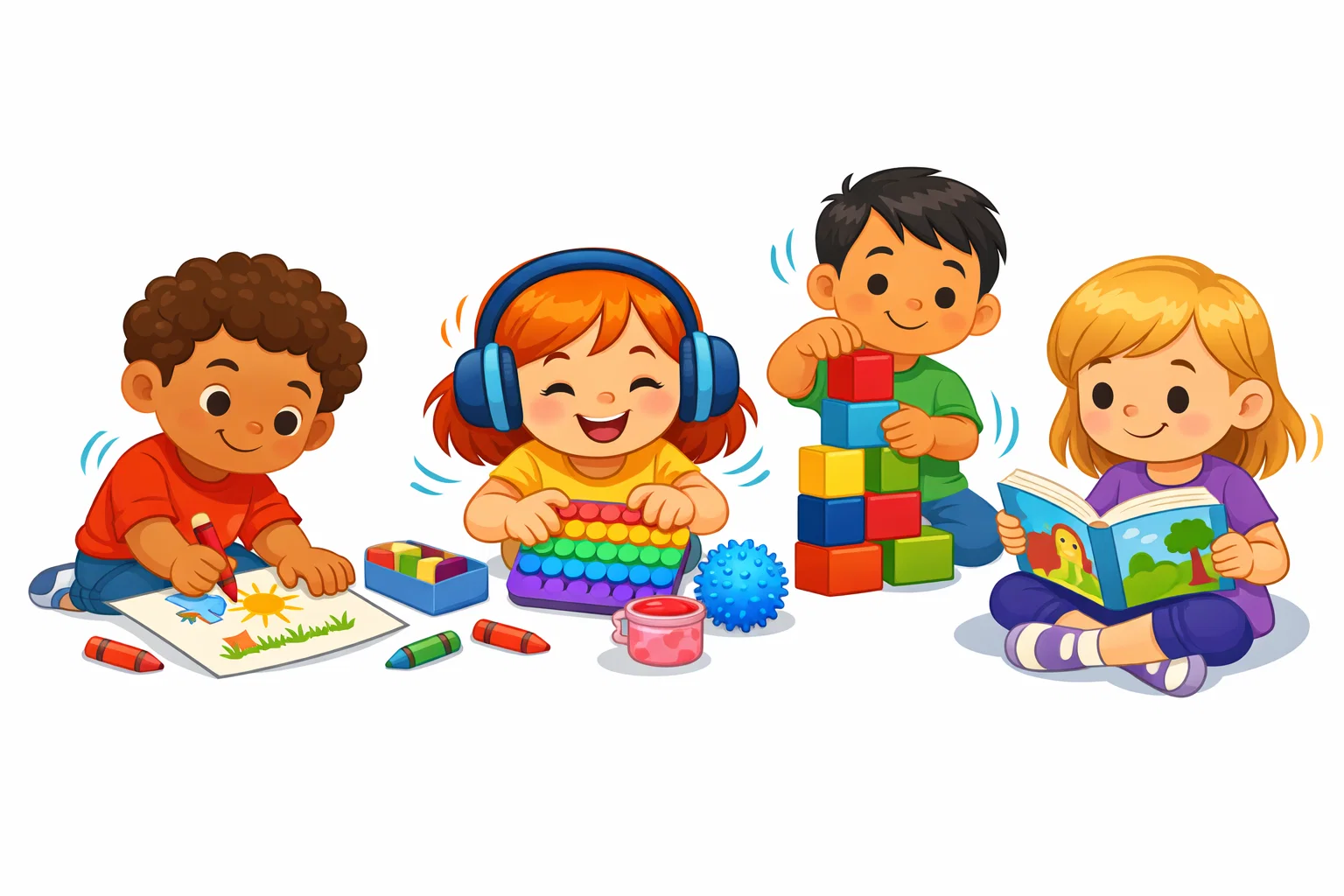
Finding the right activities for autistic children can make a real difference in how they build confidence, process sensory input, and connect with the world around them. This guide brings together 36 structured, adaptable ideas organized across six areas: social skills, sensory play, emotional regulation, indoor play, outdoor movement, and daily life skills.
Each activity is designed to meet children where they are, respecting individual needs and preferences rather than applying a one-size-fits-all approach. Whether you are supporting a child at home or in a classroom, these ideas offer practical starting points for learning, self-expression, and everyday development.
Key Takeaways
- This article covers 36 activities for autistic children organized across six practical areas of development.
- Activities span social skills, sensory play, emotional regulation, indoor play, outdoor movement, and daily life skills.
- Each idea is designed to be adaptable to individual sensory needs and preferences, not a single fixed approach.
- A dedicated section covers age-appropriate activities for autistic toddlers and preschoolers, including simple cause-and-effect play and parallel play ideas.
- Educational games and structured learning activities are included to support children where the page already performs well for this topic.
- Activities are suitable for use at home, in classrooms, or during structured support sessions — including a section with ideas specifically for teachers and school settings.
- A dedicated section covers activities for Autism Acceptance Month, including classroom awareness and book recommendations.
Social Skills Activities for Autistic Kids
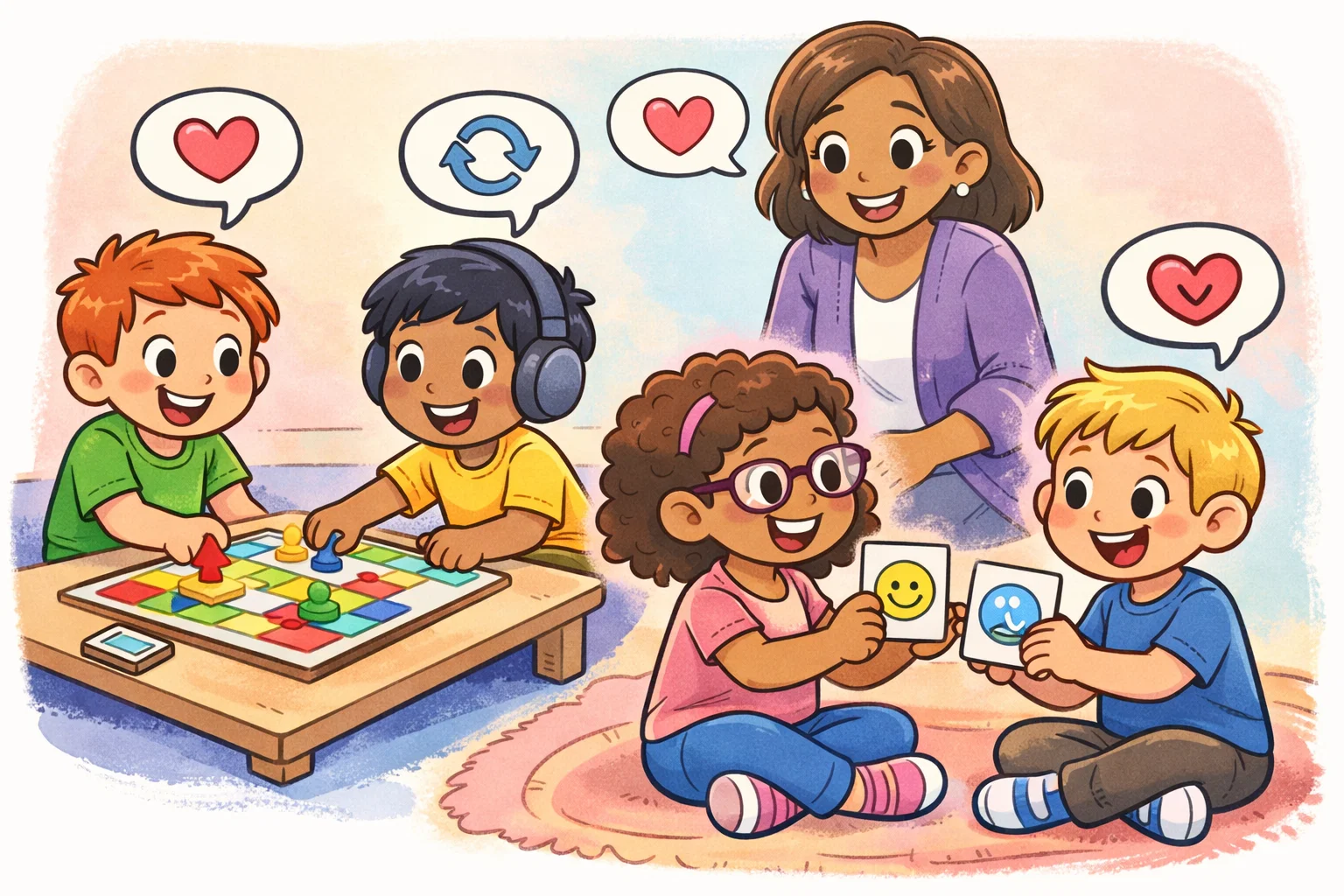
Developing social skills is a core focus for many parents and educators. For people with autism, navigating social situations and interpreting social cues can be challenging. Structured games for autistic kids can help bridge this gap by providing a low-pressure environment to practice interaction.
Emotion cards activities
Using visual aids like emotion cards or a worksheet with various facial expressions is highly beneficial for autistic children. These tools allow a child with autism to identify and name feelings – such as happy, sad, or frustrated – without the pressure of immediate face-to-face interaction. You can play matching games where the child pairs a card with a specific scenario, helping them connect internal feelings to external expressions.
Turn-taking games
Learning to wait is a vital life skill. Simple games and activities like rolling a ball back and forth, building a tower together with different shapes, or playing basic board games for autistic kids encourage cooperation. These activities like “My Turn, Your Turn” help reduce anxiety regarding sharing and teach the rhythm of social exchange.
Role play scenarios
Guided role play allows a child with autism to practice everyday encounters. You might set up a “pretend shop” to practice greetings or use picture books to act out how to ask for help. Repetitive practice in a safe, predictable setting helps strengthen communication skills and build confidence for real-world interactions.
Name and greeting games
Structured name games, such as “Who is under the blanket?” or “Passing the ball to [Name],” support peer recognition. While some autistic children may find direct eye contact difficult, these games offer autism-friendly alternatives, such as looking at a person’s shoulder or gesturing, to acknowledge others during socialization.
Sensory Activities for Autistic Kids
Many children with special needs experience the world with heightened sensitivity. Sensory play is not just fun; it provides essential sensory stimulation that can help a child self-regulate.
Sensory bins and tactile play
A sensory bin is a staple sensory activity. Fill a container with tactile materials like dried beans, rice, or kinetic sand. You can hide small items like plastic dinosaurs inside, encouraging the child to use a pair of tweezers to find them. This not only provides a rich sensory experience but also helps develop fine motor skills.
Fidget tools and sensory toys
For many people with autism, fidget tools are essential for focus. Items like textured stress balls, weighted lap pads, or infinity cubes provide the sensory input needed to stay calm during structured tasks or storytime.
Sound and music exploration
Musical instruments offer a wonderful way to make music and explore cause and effect. Simple items like maracas or drums allow a child to control the volume and rhythm. Music-based activities can support language development and auditory awareness in autistic children.
Slime and texture experiments
Creating “oobleck” (cornstarch and water) or safe slime provides a unique fun sensory experience. Feeling different textures – from sticky to smooth – helps autistic children gradually adapt to different physical sensations, reducing tactile defensiveness over time.
Calming Activities for Emotional Regulation
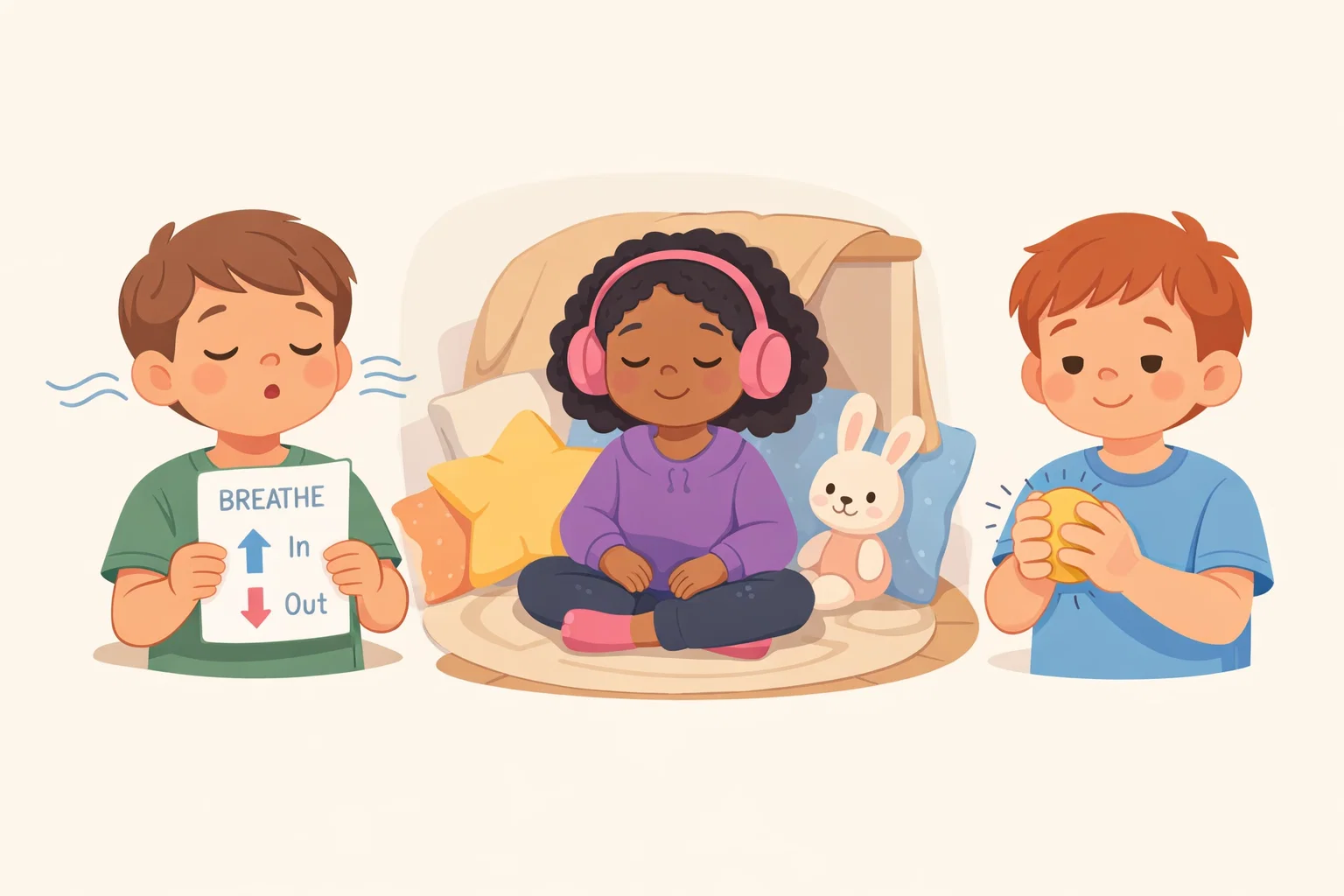
Self-regulation is the ability to manage emotions and bodily states. For an autistic child, having a toolkit of calming strategies is essential for preventing meltdowns and managing sensory overload.
| Activity Type | Benefit | Tools Needed |
| Deep Breathing | Reduces heart rate/anxiety | Visual prompts, bubbles |
| Weighted Pressure | Provides grounding input | Weighted vest or blanket |
| Proprioceptive Play | Organizes the nervous system | Yoga ball, “heavy work” tasks |
| Visual Tracking | Supports focus and attention | Glitter jars, lava lamps |
Calm-down cards and visuals
Visual prompts that guide a child through a “cool down” process are incredibly effective. These printable cards might show a sequence: “Stop, Breathe, Count to 5, Ask for a Hug.” This removes the need for verbal processing when the child is already overwhelmed.
Mindfulness and breathing exercises
Teaching a child with autism to “breathe like a dragon” or “smell the flower, blow out the candle” provides a concrete way to practice self-regulation. These activities for kids with autism are portable and can be used anywhere, from the car to the classroom.
Grounding techniques
Grounding helps a child with autism reconnect with the present moment. The “5-4-3-2-1” technique – naming 5 things they can see, 4 they can touch, etc. – is a classic example. For younger children, simply holding a heavy object or feeling a specific tactile texture can provide immediate calm.
Quiet retreat space activities
Creating a “calm corner” with soft pillows, brightly coloured but dim lighting, and favorite picture books provides a necessary sanctuary. This autism-friendly space allows the child to retreat and self-regulate before returning to group activities.
Learning Activities, Educational Games, and Teaching Strategies
Education for children on the autism spectrum often requires a “visual first” approach. Using visual learning aids helps children understand expectations and master basic math or literacy. Structured educational games are one of the most effective ways to make this learning feel natural and engaging rather than pressured.
- Visual Schedules: Use images to show the order of the day.
- Choice Boards: Allow the child to choose between two activities for autism.
- Color Coding: Use colors to categorize different shapes or subjects.
Educational games for autistic children
Games that combine clear rules with a predictable outcome tend to work well as educational tools for autistic children. Matching games — pairing picture cards to words or numbers — build literacy and numeracy in a low-pressure format. Puzzle-based games that require sequencing (such as ordering the steps of a story or a daily routine) support logical thinking and language comprehension. Memory card games using a child’s special interest theme can increase motivation while practicing concentration and recall. The key is choosing games with simple, consistent rules and a clear endpoint so the child always knows what to expect.
Education for children on the autism spectrum often requires a “visual first” approach. Using visual learning aids helps children understand expectations and master basic math or literacy.
- Visual Schedules: Use images to show the order of the day.
- Choice Boards: Allow the child to choose between two activities for autism.
- Color Coding: Use colors to categorize different shapes or subjects.
Daily routine activities
Predictability is key. Using a printable schedule for morning or school routines helps reduce anxiety. When a child with autism knows exactly what comes next, they are more likely to engage and succeed.
Special interest integration
If your child with autism is obsessed with trains, use trains to teach basic math (counting carriages) or language skills (writing a story about a station). Learning and development are most effective when they tap into a child’s natural passions.
Object sorting and categorizing games
Sorting small objects by color, size, or function is a fantastic sensory activity that also builds cognitive pathways. Using a pair of tweezers to sort smaller items into cups is a great way to develop fine motor skills while learning logic.
Safe Indoor Play Activities
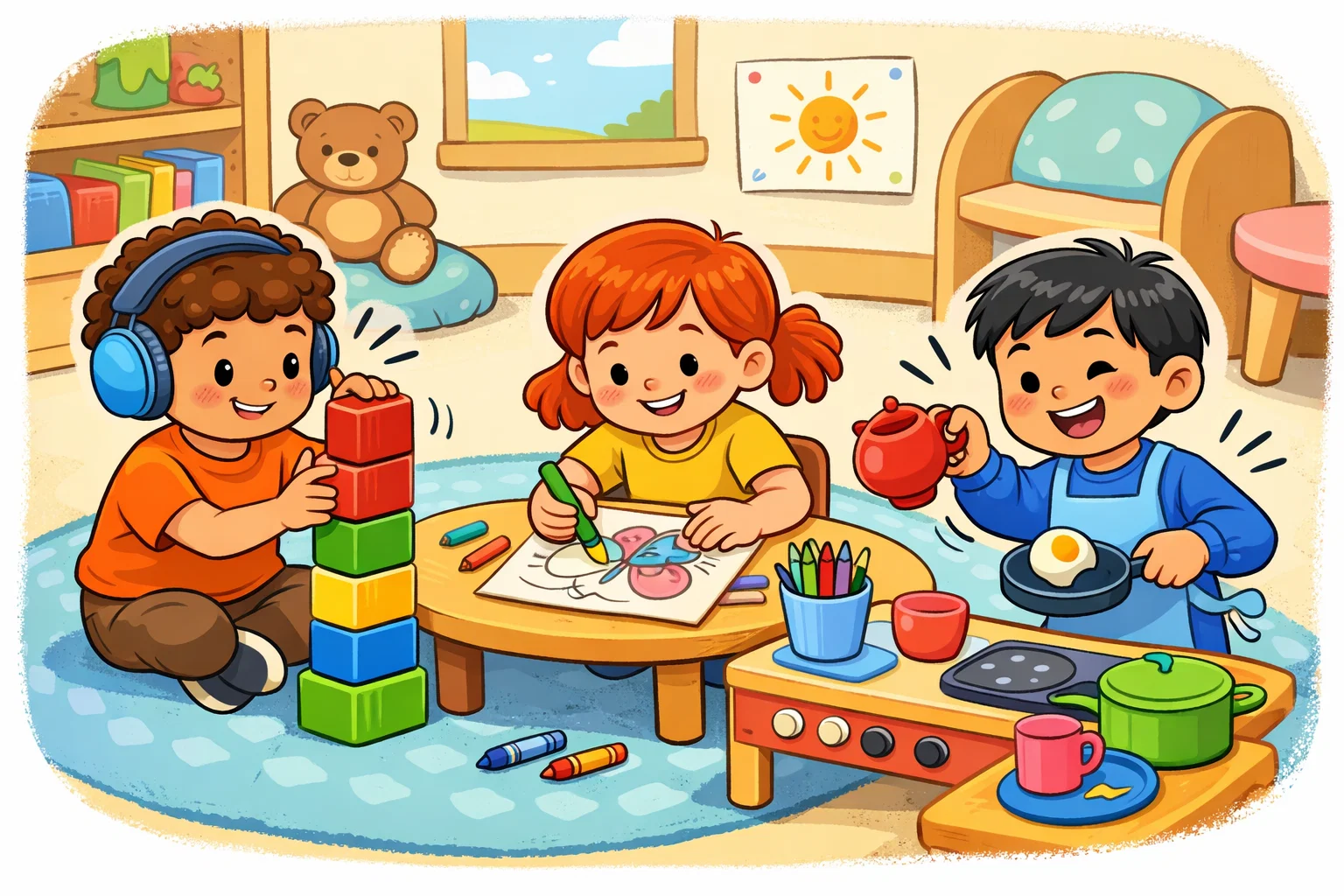
Indoor games for autistic kids should be structured and predictable to ensure the child feels safe while exploring new concepts.
Pretend play activities
While autistic children may play differently than neurotypical peers, pretend play is still vital. Start with “functional play” – like pretending to cook in a play kitchen – before moving to more abstract “symbolic play.” This helps build life skills and understanding of social roles.
Drawing and coloring activities
Creative expression doesn’t always need words. Providing a variety of textures – crayons, markers, finger paints – allows for a rich sensory experience. For kids working on fine motor skills, try having them use their less dominant hand for simple strokes to support brain development, or use tracing worksheets.
Board games for autistic kids
Games like Candyland or Chutes and Ladders (with simplified rules) are excellent activities for autism. They provide a clear beginning, middle, and end, which is comforting for many children with autism.
Story time activities
Interactive storytime using picture books with “lift-the-flap” features or textures helps engage children. Reading together also fosters communication skills as you discuss what the characters are doing or feeling.
Outdoor Activities and Movement Play
Outdoor activities are essential for physical health and provide “big” sensory input that helps autistic children feel grounded in their bodies.
Playground movement activities
Climbing and sliding provide “proprioceptive” and “vestibular” input. These activities like climbing a ladder require coordination and help develop gross motor strength and coordination.
Swinging and rhythmic motion
The repetitive, rhythmic motion of a swing is incredibly calm for many people with autism. It can help a child self-regulate after a long day at school.
Water play activities
A water table with cups and funnels is a classic sensory activity. Water play is often a “high interest” area for children with autism, providing a soothing sensory experience while teaching concepts of volume and cause and effect.
Daily Life Skill Activities
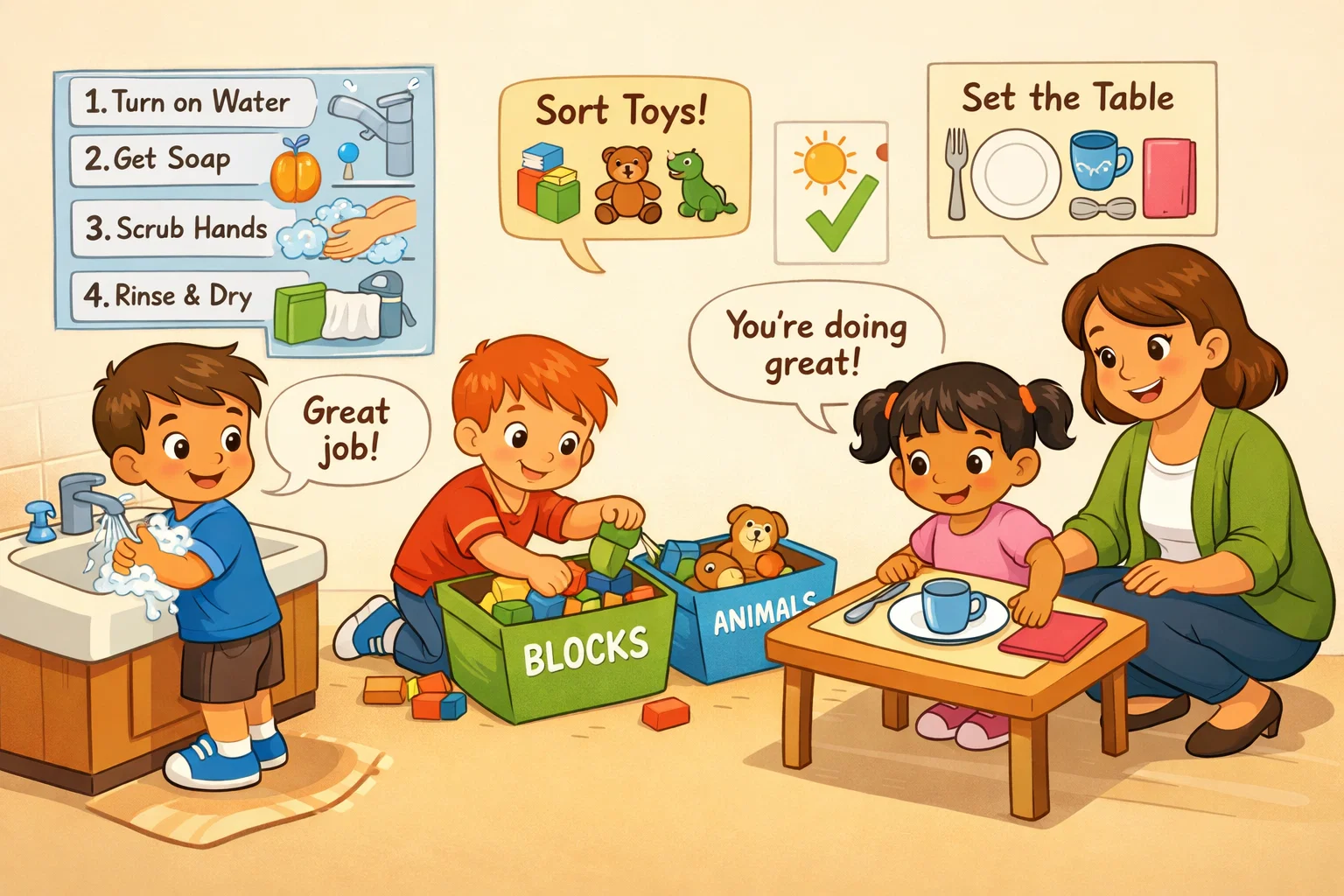
The ultimate goal of many activities for autistic children is to foster independence. Integrating life skills into daily life makes them feel less like “work” and more like part of the family routine.
- Mealtime Prep: Have the child help stir or pour under close supervision.
- Dressing: Use printable checklists for the steps of putting on clothes.
- Hygiene: Make brushing teeth a “game” with a favorite song or timer.
Health and body care activities
Using a worksheet or visual schedule for hand washing or tooth brushing helps a child with autism master these life skills. Making it a fun sensory experience – like using “foaming” soap – can increase participation.
Activities for Autistic Toddlers and Preschoolers
Very young autistic children — toddlers and preschoolers aged roughly 2 to 5 — benefit most from activities that are simple, repetitive, and sensory-rich. At this age, the goal is not formal learning but building comfort with the world through play. The ideas below are designed to be low-demand and easy to adapt based on how a child is feeling on any given day.
Cause-and-effect toys and play
Simple cause-and-effect toys — such as pop-up toys, light-up buttons, or containers with lids that snap open — are ideal for autistic toddlers. They provide immediate, predictable feedback, which is both satisfying and calming. Repeating the same action many times is not a problem; it is how young autistic children often explore and learn. You can extend this naturally by introducing a second step, such as dropping a ball into a tube and watching it roll out the other end.
Parallel play activities
Many autistic toddlers and preschoolers engage in parallel play — playing alongside another child or adult rather than directly with them. This is a healthy and valid stage of social development. You can support it by sitting nearby and doing a similar activity (such as building with blocks or drawing) without requiring interaction. Over time, brief moments of shared attention — pointing at something, handing over a piece — can be gently encouraged without pressure.
Picture book interaction
Board books with bold images, simple text, and interactive features such as lift-the-flap or touch-and-feel pages are well suited to autistic toddlers. Rather than reading every word, try pointing to pictures and naming them, pausing to let the child respond in whatever way feels natural — a look, a gesture, a sound, or a word. Books that follow a predictable repeated pattern (such as the same phrase on every page) are particularly engaging for children who find comfort in repetition.
Simple sorting and stacking for preschoolers
Sorting objects by color or size, stacking rings on a post, or nesting cups inside each other are classic preschool activities that work especially well for autistic children. They are self-contained, have a clear goal, and can be repeated as many times as the child wishes. For 3-year-olds with autism, starting with just two categories (big and small, red and blue) keeps the task manageable and builds early cognitive skills without overwhelming.
Activities for Autistic Kids at School and in the Classroom
Teachers and school support staff often need activities that work within a structured classroom environment — activities that can be adapted for different ability levels, completed alongside neurotypical peers, and integrated into an existing school day. The ideas below are designed with that context in mind.
Structured classroom stations
Rotating activity stations with a clear visual label for each area help autistic students understand what is expected at each point in the day. A sensory station (with fidget tools or a tactile tray), a quiet reading corner, and a hands-on building area give children predictable choices. Knowing what each station involves reduces transition anxiety and supports independent engagement.
Kindergarten-friendly group activities
For kindergarten-aged autistic children, whole-class activities work best when they have a clear role for every participant. Circle time with a visual schedule, simple call-and-response songs, or a shared sorting task (where each child contributes one object) give autistic students a defined part to play without requiring spontaneous social interaction. Keeping group sizes small and instructions brief also helps.
Visual task cards and work systems
A work system — a set of visual task cards that show a student exactly what to do, in what order, and what happens when they finish — is one of the most effective classroom tools for autistic students. Each card shows a single step using a picture and a short word label. When the student completes a card, they move it to a “finished” pocket. This approach reduces the need for repeated verbal instructions and builds independence over time.
Sensory breaks during the school day
Building short, scheduled sensory breaks into the school day helps autistic students stay regulated and ready to learn. A two-minute movement break (jumping, wall push-ups, or carrying a heavy object to another room) provides the proprioceptive input many autistic children need to refocus. Scheduling these breaks proactively — rather than only after a child becomes dysregulated — makes them far more effective.
Activities for Autism Acceptance Month
April is Autism Awareness and Acceptance Month. It’s a wonderful time to celebrate neurodiversity and help children understand that being autistic is just one way of experiencing the world.
Classroom awareness activities
Educators can use this time to teach all students about sensitivity to light and sound. Fun group activities like “The Silent Disco” (dancing with headphones) can help neurotypical children understand the sensory needs of their autistic peers.
Books featuring autistic characters
Reading stories that feature people with autism as heroes helps normalize the experience. This builds empathy and helps the autistic child see themselves reflected in literature.
Autism can be understood as a different way of experiencing and interacting with the world.
Famous autistic figures activities
Learning about well-known autistic individuals and creators can be highly beneficial for autistic children. It shows them that their unique way of thinking can lead to incredible achievements, fostering a sense of pride and autism awareness.
Managing autism spectrum disorder involves a lot of trial and error, but by focusing on sensory play, social skills, and life skills, these activities help provide children with a strong foundation for growth. Keeping activities flexible and child-led supports engagement and positive experiences.

Take a short quiz to find out what your everyday choices say about your parenting style
When your child is curious about something new, what’s your instinct?
Take a short quiz to find out what your everyday choices say about your parenting style
“Can I download this app?” What happens next?
Take a short quiz to find out what your everyday choices say about your parenting style
When it comes to rules at home, which sounds most like you?
Take a short quiz to find out what your everyday choices say about your parenting style
If you could give your child one life skill today, what would you pick?
Take a short quiz to find out what your everyday choices say about your parenting style
Your child gets to choose what to watch. What would your ideal setup look like?
Take a short quiz to find out what your everyday choices say about your parenting style
Pick your parenting superpower ✨