Football Activities for Kids: Building Skills and Having Fun

 Discover a Free Education Video App for Kids
Pastory uses AI to personalize educational video content based on your child’s interests and personality. Safe, engaging, and built for curious young minds. Sign up now to stay updated and enjoy early access with a free trial
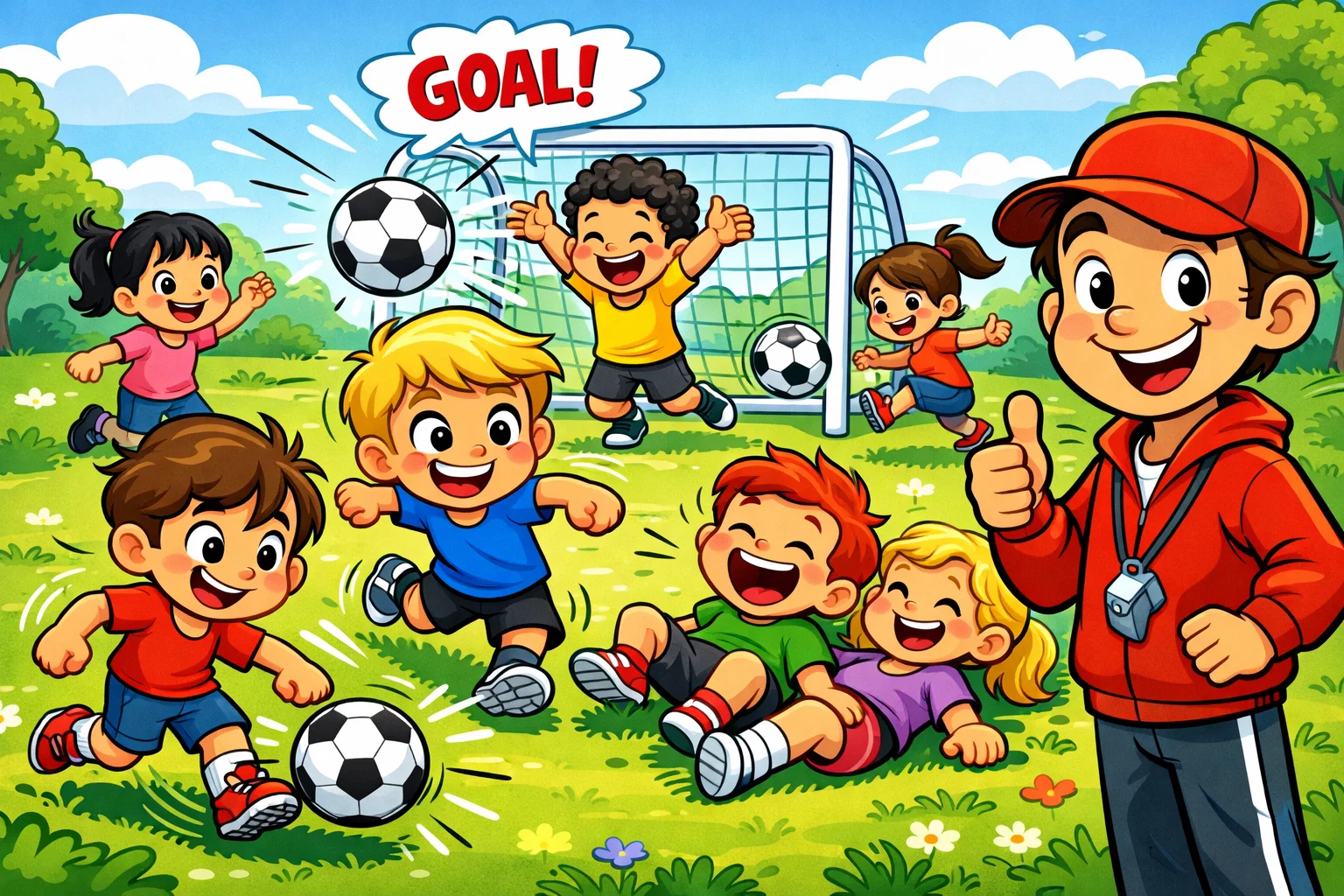
Football is often called a beautiful game, and for good reason. It is a universal language that transcends cultures, bringing people together through simple joy and movement. For children, football activities are far more than just a way to burn off energy; they are a vital component of holistic development. Whether your child is part of a local youth football club, participating in a training session at school, or simply practicing in the garden, these games provide a unique environment where physical coordination meets social growth.
The beauty of football games for kids lies in their accessibility. You don’t need a professional football pitch or expensive gear to get started – a football, a few markers, and some enthusiasm are all it takes. These activities are suitable for kids of all ages, from five-year-olds taking their first touches to older players refining their decision-making on the field. By focusing on fun football games, we can foster a lifelong love for the sport while ensuring that children learn essential life skills in a pressure-free environment.
Benefits of Football Activities
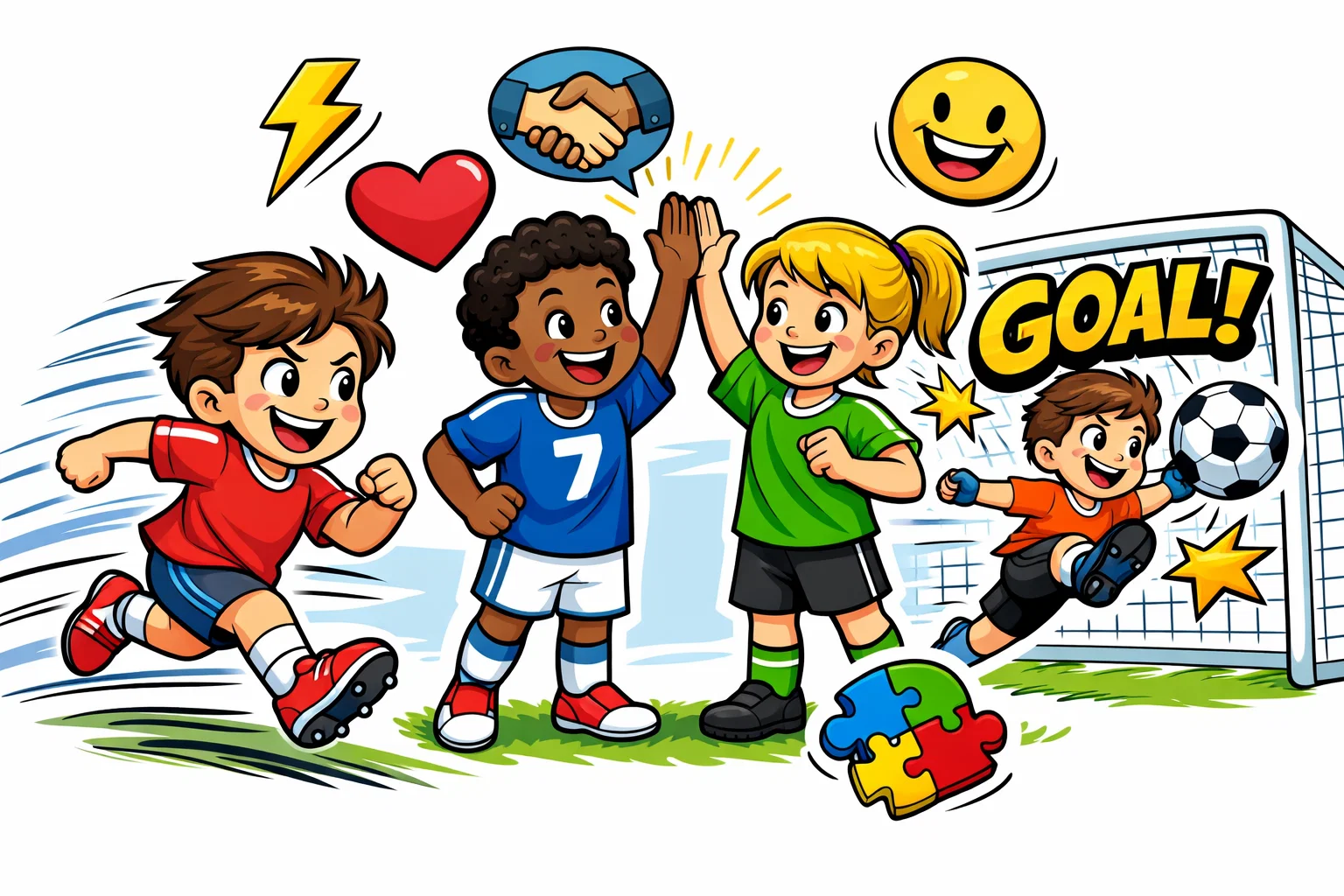
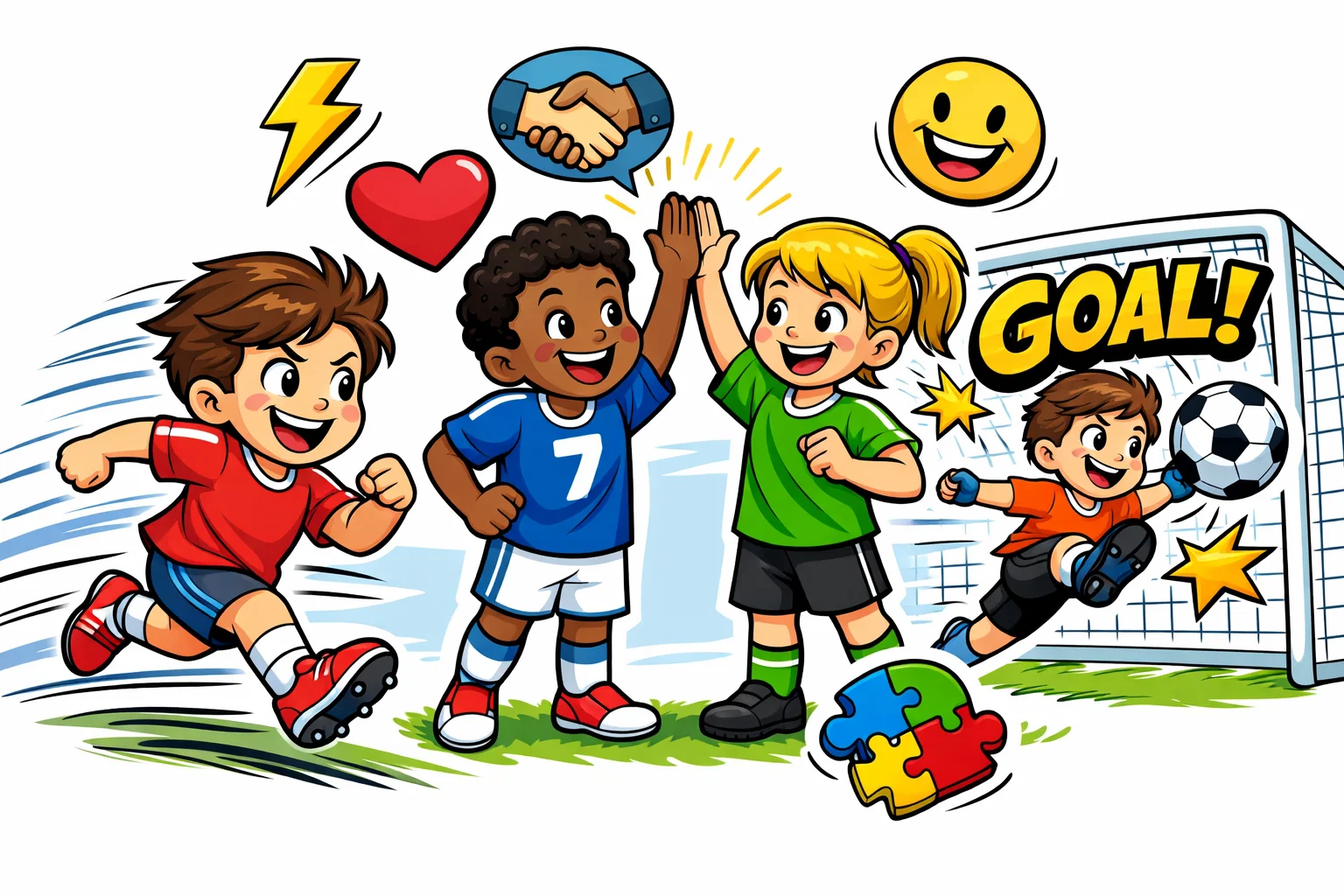
Engaging in football activities provides a multi-faceted developmental boost. Research suggests that participation in team sports, such as youth football, can support a child’s psychological well-being. Studies show that participation in youth sports in general is associated with positive mental health outcomes such as higher self-esteem and lower levels of anxiety.
Physical fitness development
A football game functions as a full-body workout disguised as play. It helps improve:
- Coordination and Balance: Learning to dribble the ball while moving requires high-level motor skills.
- Stamina and Agility: The stop-start nature of the game builds cardiovascular health.
- Bone Strength: Weight-bearing activities like running and jumping promote healthy bone density.
Teamwork and cooperation
No player wins a football game alone. Even in small-sided games, children must learn to collaborate. This involves sharing the ball, supporting teammates during a drill, and understanding that the team’s success depends on collective effort. Teamwork on the pitch translates directly to better collaboration in the classroom.
Social interaction skills
The football pitch is a social hub. Kids learn to communicate under pressure, respect the coach, and follow established rules. It provides a platform for making friends outside of their usual circles and teaches them how to handle both victory and defeat with grace.
Problem-solving skills
Football is a fast-paced environment where decision making happens in seconds. A player must decide: Should I pass? Should I dribble? Should I kick the ball toward the goal? These micro-decisions help develop cognitive flexibility and strategic thinking.
Confidence building
As young players master a new drill or successfully stop the ball during a match, their self-belief grows. Small wins, such as completing a difficult warm-up or helping their team stay competitive, provide the “evidence” children need to feel capable and confident in their own abilities.
| Benefit Area | Key Developmental Outcome |
| Physical | Improved motor skills and cardiovascular health |
| Social | Better communication and peer bonding |
| Cognitive | Enhanced strategic thinking and focus |
| Emotional | Increased resilience and self-confidence |
Fun Football Games for Kids
To keep youth football engaging, the focus should always be on enjoyment. Fun football games for kids should be easy to set up and high in “reps,” meaning every child gets plenty of time with the ball.
Sharks and Minnows game
This is a classic game for kids that focuses on dribbling and awareness.
- Setup: Mark out a square “ocean.”
- Rules: Most players (Minnows) start on one side with a ball. One or two players (Sharks) start in the centre without a ball.
- Gameplay: Minnows try to dribble the ball to the other side without a Shark stealing it or kicking it out. If a Minnow loses their ball, they become a Shark.
- Skills: Focuses on close control and looking up while moving.
Piggy in the Middle game
An excellent way to teach kids the basics of passing skills.
- Setup: Three players – two on the outside, one in the middle.
- Gameplay: The outside players try to pass the ball to each other while the “Piggy” tries to intercept it.
- Adaptation: For older players, you can limit them to two touches to increase the speed of the game.
Musical Balls game
Inspired by musical chairs, this game improves listening and reaction speed.
- Gameplay: Kids dribble around an area while music plays. When the music stops, the coach shouts a command (e.g., “Left foot on the ball!” or “Sit on the ball!”).
- Goal: It’s a great warm-up that keeps kids moving and laughing.
Aliens football game (themed activity)
Themed games spark imagination. In this version, the coach is an “Alien” trying to “zap” the players’ balls with a cone or another ball. Players must protect their ball while navigating the “space station” (the pitch).
Cops and Robbers football game
Divide the group into two teams. The “Robbers” try to dribble their “treasure” (balls) from one side to the other, while the “Cops” try to tackle (fairly) or intercept the balls to put them back in the “jail” (a central square).
First to the Ball game
This builds reaction speed. Two players stand back-to-back. The coach throws a ball into space and yells “Go!” The first player to reach and stop the ball wins a point for their team.
Football Golf game
Set up “holes” using cones, buckets, or even trees. Players must kick the ball to hit the target in as few strikes as possible. This is a brilliant football practice activity for improving long-range accuracy.
Football Drills for Young Kids
For five-year-olds and preschoolers, football drills need to be imaginative. At this age, the goal is simply to get them comfortable having the ball at their feet.
- Red Light, Green Light: A staple drill for ball control. Green means go, yellow means slow dribble, and red means stop the ball immediately with the sole of the foot.
- Follow the Leader: The coach moves around the pitch performing different actions – hopping, dribbling fast, or circling a cone. The young players must mimic every move.
- Animal Farm: Assign an animal to different actions. “Cheetah” means run fast with the ball; “Elephant” means slow, heavy touches; “Flamingo” means balancing on one leg with the other foot on the ball.
- Car Races: Each child “drives” their car (the ball). They must stay in their “lane” and avoid “crashing” into other players. It teaches spatial awareness and close control.
- Kick the Cones: Line up several cones. The children must try to knock them down by passing the ball accurately. It’s a simple but effective way to make football practice feel like a carnival game.
Indoor Football Activities
When the weather doesn’t permit outdoor play, you can still keep the football training going indoors with a few adjustments. Use a soft sponge ball or a futsal-style ball that doesn’t bounce as high.
- Bouncing and Dribbling: In a hallway or large room, have the child dribble through a “minefield” of cushions or toys.
- Tic-Tac-Toe Football: Create a grid on the floor using masking tape. Players must pass the ball into a square to “claim” it with their marker. It combines physical skill with strategy.
- Simon Says: Use football actions. “Simon says: dribble with your laces.” “Simon says: stop the ball with your knee.” This keeps kids of all ages sharp and attentive.
Football Activities for School PE Lessons
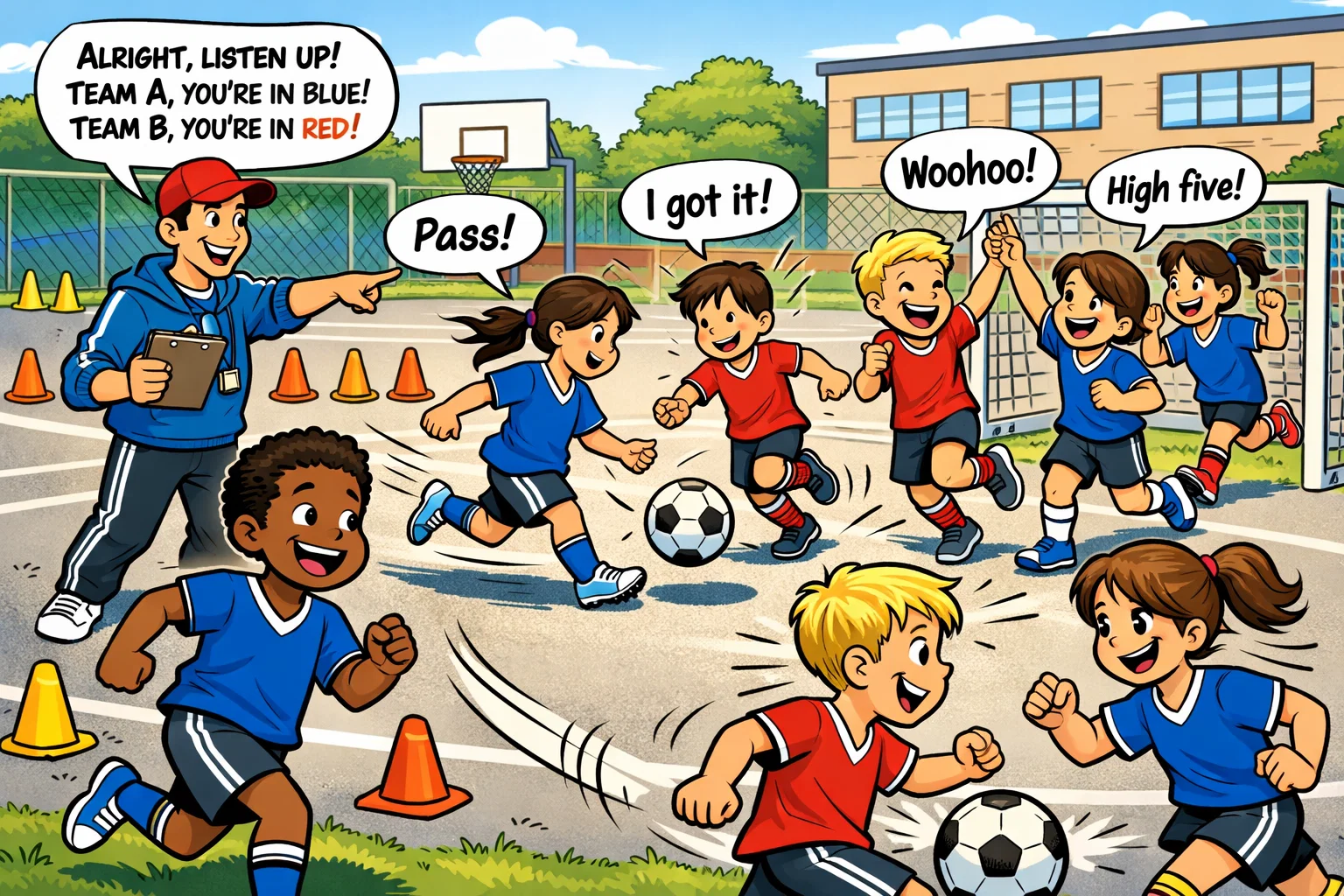
For primary school teachers, football activities should maximize participation. Avoid games where kids “get out” and sit on the sidelines for long periods.
- Warm-up Games: Start with “Tail Tag” where kids dribble while trying to grab a bib tucked into a teammate’s shorts. It gets the heart rate up and improves agility.
- Small-Sided Games: Research and coaching guidelines from the Football Association suggest that small-sided games (2v2 or 3v3) allow children to have significantly more touches of the ball compared to 11-a-side formats. This leads to faster skill acquisition.
- Rotation Stations: Set up four corners: one for shooting, one for dribbling through cones, one for passing through “gates,” and one for a 1v1 tackle practice. Rotate every 8 minutes to keep engagement high.
Parent and Child Football Activities
You don’t need to be a professional coach to help your child improve. In fact, some of the most meaningful progress happens during a short, 15-minute football training session in the backyard.
Cooperative passing games
Instead of competing, work together. See how many passes you can complete without the ball stopping or going out of a designated area. This builds passing skills and trust.
Backyard football challenges
Create a “crossbar challenge” (hitting the top of a small goal) or a “target practice” by hanging a hula hoop from a tree branch. These football activities are low-pressure and high-fun.
Skill-based mini competitions
Set a timer for 60 seconds and see who can do the most “toe-taps” or “foundation” (passing the ball between the insides of the feet). Keep it lighthearted – the goal is to make football a bonding experience.
Tips for Organizing Football Activities
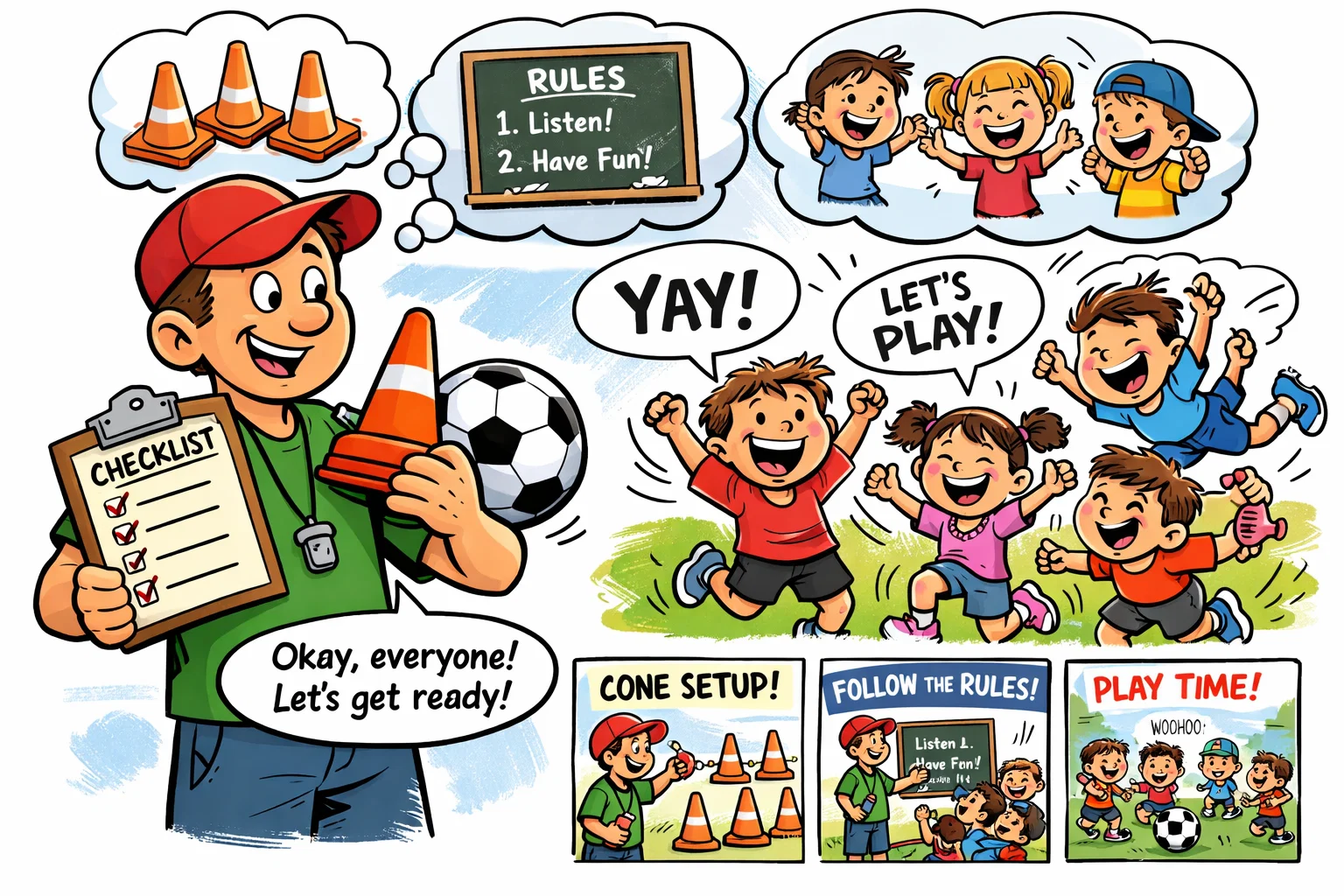
Running a successful training session requires a bit of foresight. Here are some “pro tips” to ensure the game continues smoothly:
- Keep Things Simple: Don’t spend ten minutes explaining rules. Show, don’t just tell. Kids have a short attention span; get them moving as quickly as possible.
- Age-Appropriate Rules: For younger kids, don’t worry about “throw-ins” or “offsides.” Focus on the flow of the football game.
- Safety First: Ensure the area is clear of sharp objects. Check that shoes are tied and that the football is the correct size (Size 3 for younger children, Size 4 for primary school age).
- Positive Reinforcement: “The way we talk to children becomes their inner voice.” Use plenty of praise for effort, not just for scoring goals.
Final Thoughts on Football Activities for Kids
Ultimately, football activities are a gateway to a healthier, more social, and more confident life for children. By focusing on fun football games for kids, we remove the “fear of failure” and replace it with the thrill of discovery. Whether they grow up to be football fans watching the professional game or become football players themselves, the lessons learned on the grassroots level will stay with them forever.
The next time you head to the park, grab a ball and remember: the simple game is often the best. Keep it fun, keep it active, and let the children play.
“The more kids have fun, the more they play. The more they play, the better they get.” — A common mantra in youth soccer coaching.

Take a short quiz to find out what your everyday choices say about your parenting style
When your child is curious about something new, what’s your instinct?
Take a short quiz to find out what your everyday choices say about your parenting style
“Can I download this app?” What happens next?
Take a short quiz to find out what your everyday choices say about your parenting style
When it comes to rules at home, which sounds most like you?
Take a short quiz to find out what your everyday choices say about your parenting style
If you could give your child one life skill today, what would you pick?
Take a short quiz to find out what your everyday choices say about your parenting style
Your child gets to choose what to watch. What would your ideal setup look like?
Take a short quiz to find out what your everyday choices say about your parenting style
Pick your parenting superpower ✨