29 Spy Activities for Kids: Games, Crafts, and Secret Missions

 Discover a Free Education Video App for Kids
Pastory uses AI to personalize educational video content based on your child’s interests and personality. Safe, engaging, and built for curious young minds. Sign up now to stay updated and enjoy early access with a free trial
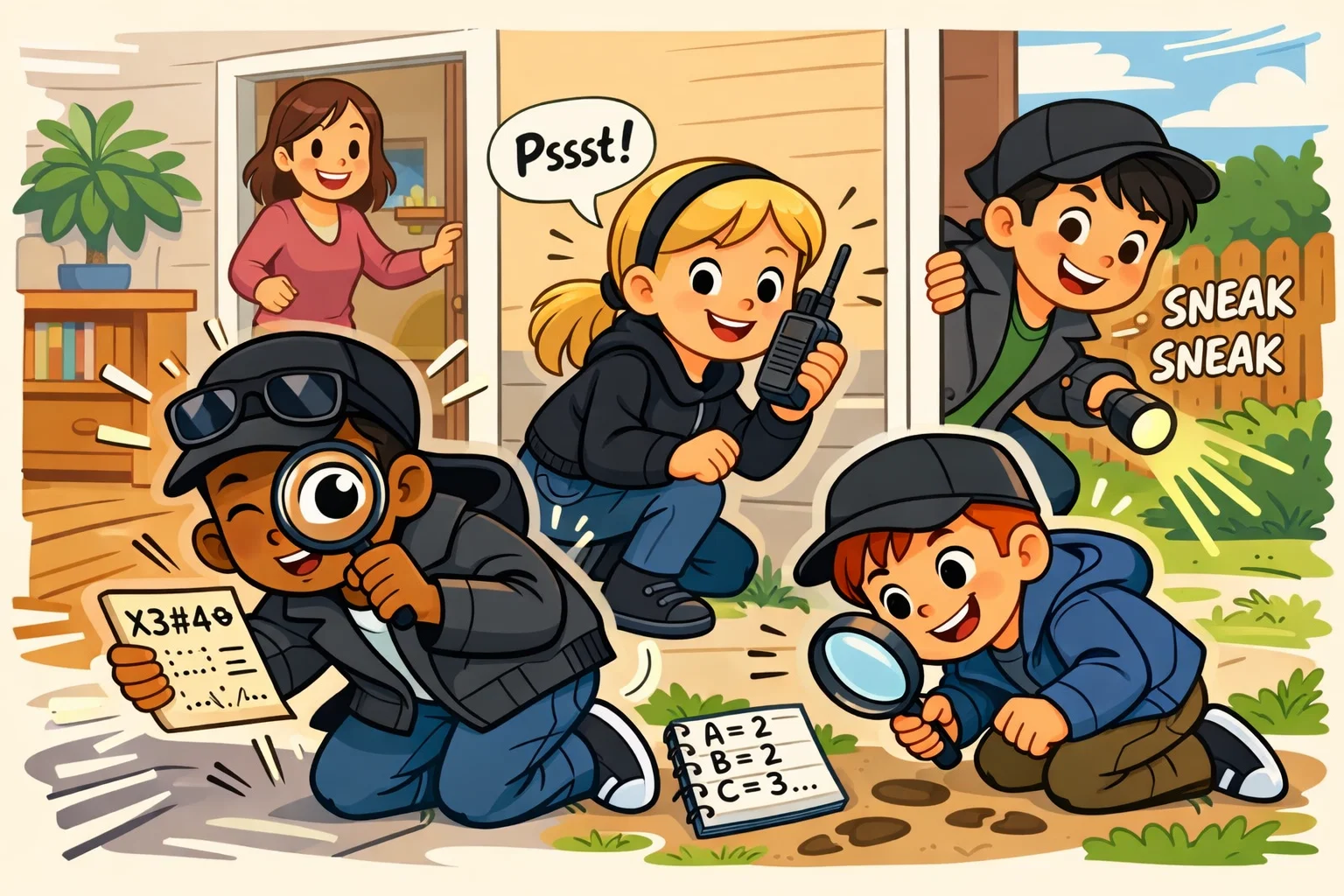
Spy activities for kids combine problem-solving, creativity, and physical play in a way that keeps children genuinely engaged. From cracking secret codes and writing invisible ink messages to building DIY gadgets and running outdoor missions, these 29 ideas cover everything a young secret agent needs — whether you are planning a spy-themed birthday party or looking for screen-free fun at home.
This guide covers five main areas: types of spy activities, physical spy games, group and party games, outdoor missions, and age-appropriate safety tips. Each section is designed to be easy to set up with everyday materials, making it simple to turn any space into a spy training ground.
Key Takeaways
- This guide covers 29 spy activities for kids across five categories, from indoor stealth games to outdoor missions.
- Activities include secret codes, invisible ink, cipher writing, memory training, and DIY spy gadgets kids can build themselves.
- Many ideas work equally well for spy-themed birthday parties, classroom settings, or everyday play at home.
- A dedicated section on spy party games and group activities makes planning a themed event straightforward.
- Age-appropriate safety guidelines are included to help parents choose the right activities for different age groups.
Types of Spy Activities for Kids
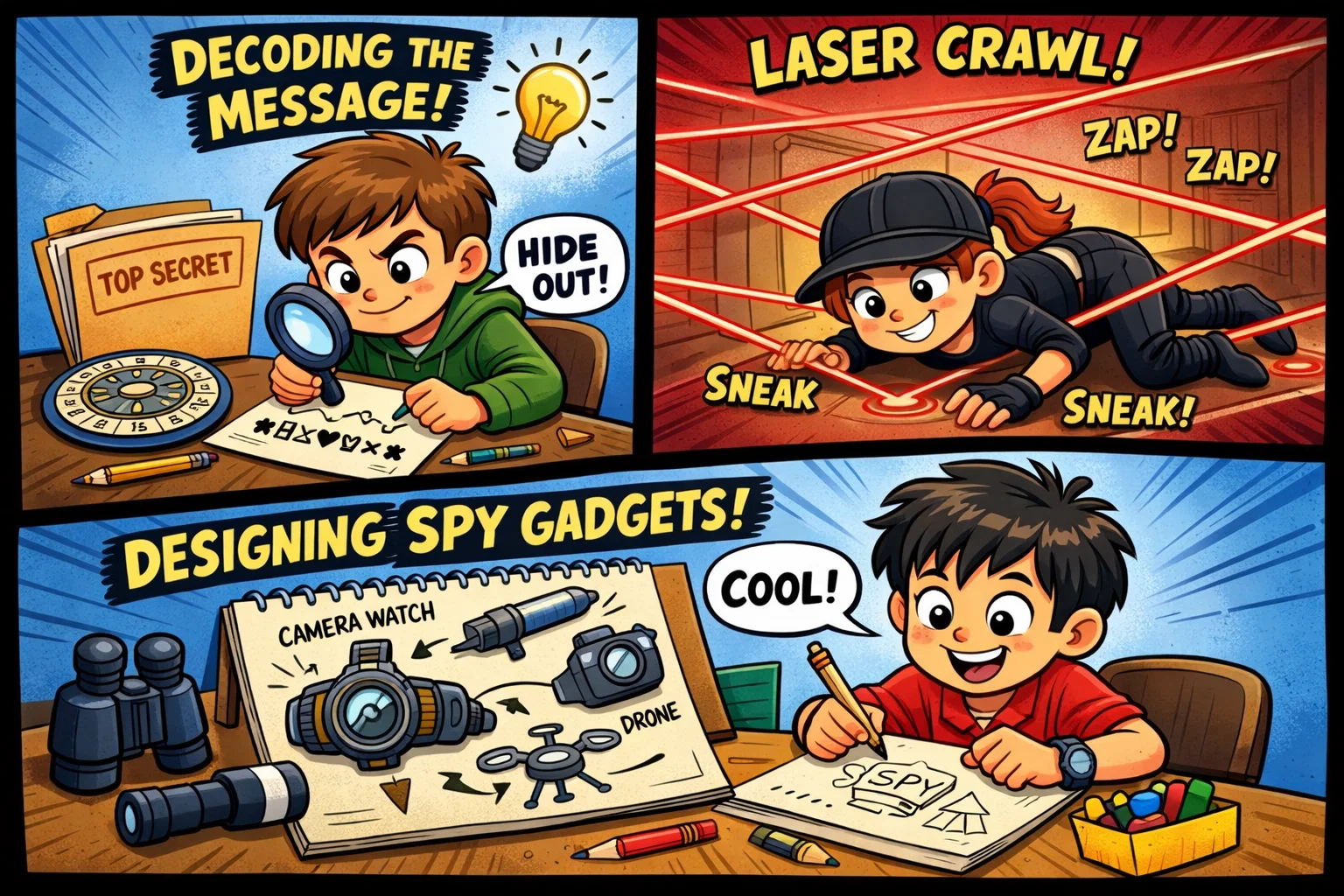
Before launching your first spy mission, it helps to understand the different categories of spy games for kids. A well-rounded spy activity plan balances intellectual challenges with physical movement.
- Cognitive Challenges: These focus on memory skills, logic, and linguistics. Think riddle solving and deciphering complex patterns.
- Physical Stealth: Activities that require stealth, balance, and agility, such as navigating a “laser” obstacle course.
- Creative Construction: Building spy tools, from simple periscopes to invisible ink kits.
- Social & Roleplay: Developing a disguise, creating a spy persona, and working in teams to uncover a plot.
| Activity Type | Primary Skill Developed | Best Environment |
| Secret Code | Logic & Literacy | Indoor / Quiet |
| Obstacle Course | Motor Skills & Agility | Outdoor / Large Room |
| Observation Missions | Focus & Attention to Detail | Public Spaces / Parks |
| Gadget DIY | Creativity & Engineering | Kitchen / Craft Table |
Code and Cipher Activities
At the heart of every great spy or detective story is a secret message that needs to be read. Coded messages allow children to practice literacy and pattern recognition without it feeling like schoolwork. You can start with a simple letter-substitution cipher, where each letter of the alphabet is replaced by a number or a symbol.
For a more historical spy twist, introduce Morse code. Using a flashlight or a series of short and long taps, young agents can communicate across a room. This introduces basic communication systems and requires concentration to encrypt and decrypt messages accurately.
Physical Spy Games
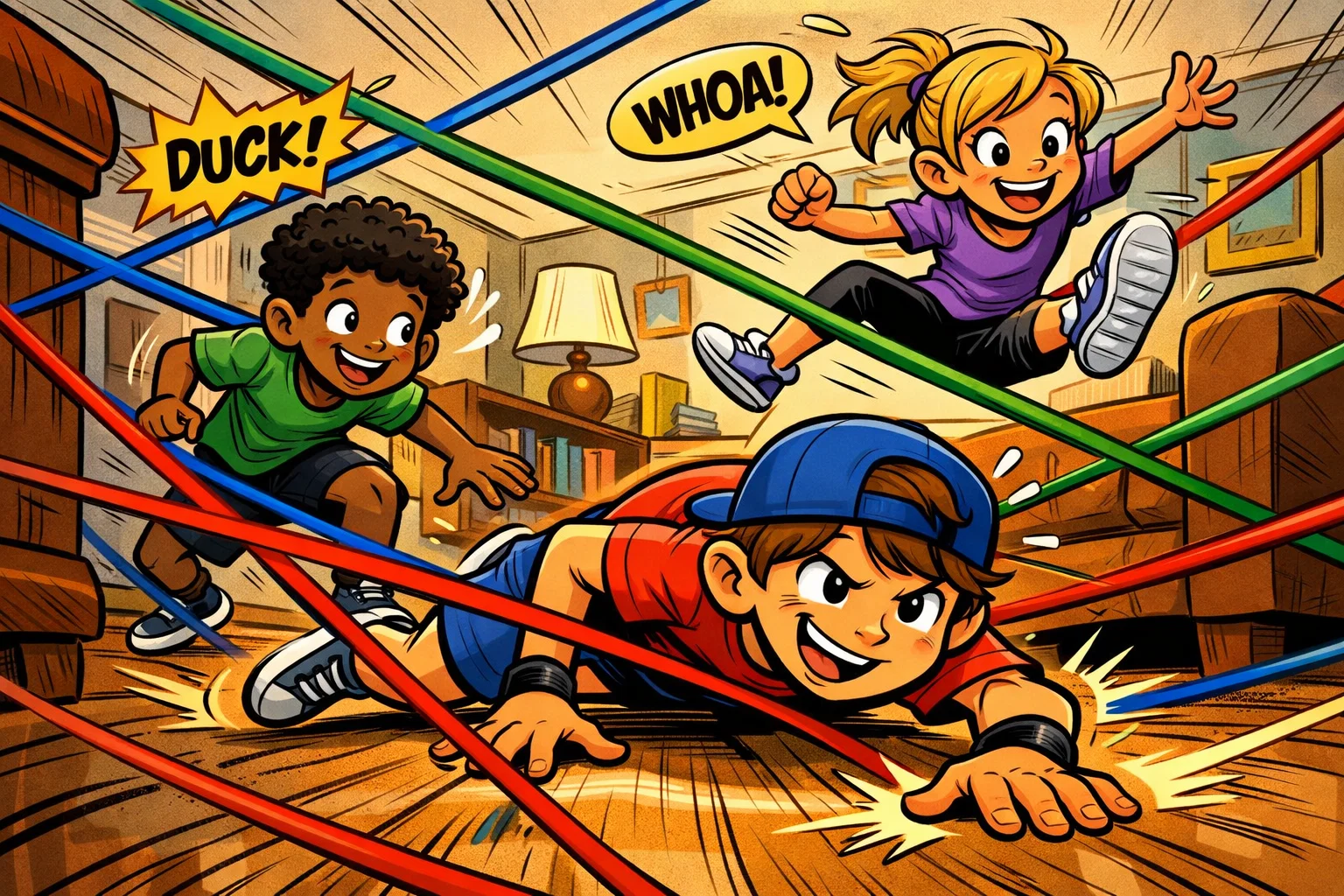
A good spy needs to be as agile as they are observant. Fun spy games often involve staying out of sight and moving quietly.
Indoor Stealth Games
In a house, stealth is key. You can play “Shadow the Target,” where one person (the target) walks through the house, and the spy must follow them without being seen or heard. If the target turns around and spots the spy, the mission is compromised!
Outdoor Spy Missions
The outdoors offers more room for an obstacle course. Use trees, bushes, and garden furniture to create a path that must be completed without touching the ground or entering “searchlight” zones (areas where a parent is watching). This builds physical coordination and spatial awareness.
Creative Spy Crafts
Every super spy needs their gear. Activities for kids that involve making things provide a tangible connection to the roleplay.
- The Spy Kit: Use an old shoebox to store a magnifying glass, a small notebook, a pen, and sunglasses for stealth missions.
- Prop Gadgets: Using cardboard tubes and mirrors to see around corners (the classic periscope).
- Disguise Station: Provide old hats, glasses, and jackets. A disguise is essential for any undercover work.
Secret Code and Message Activities
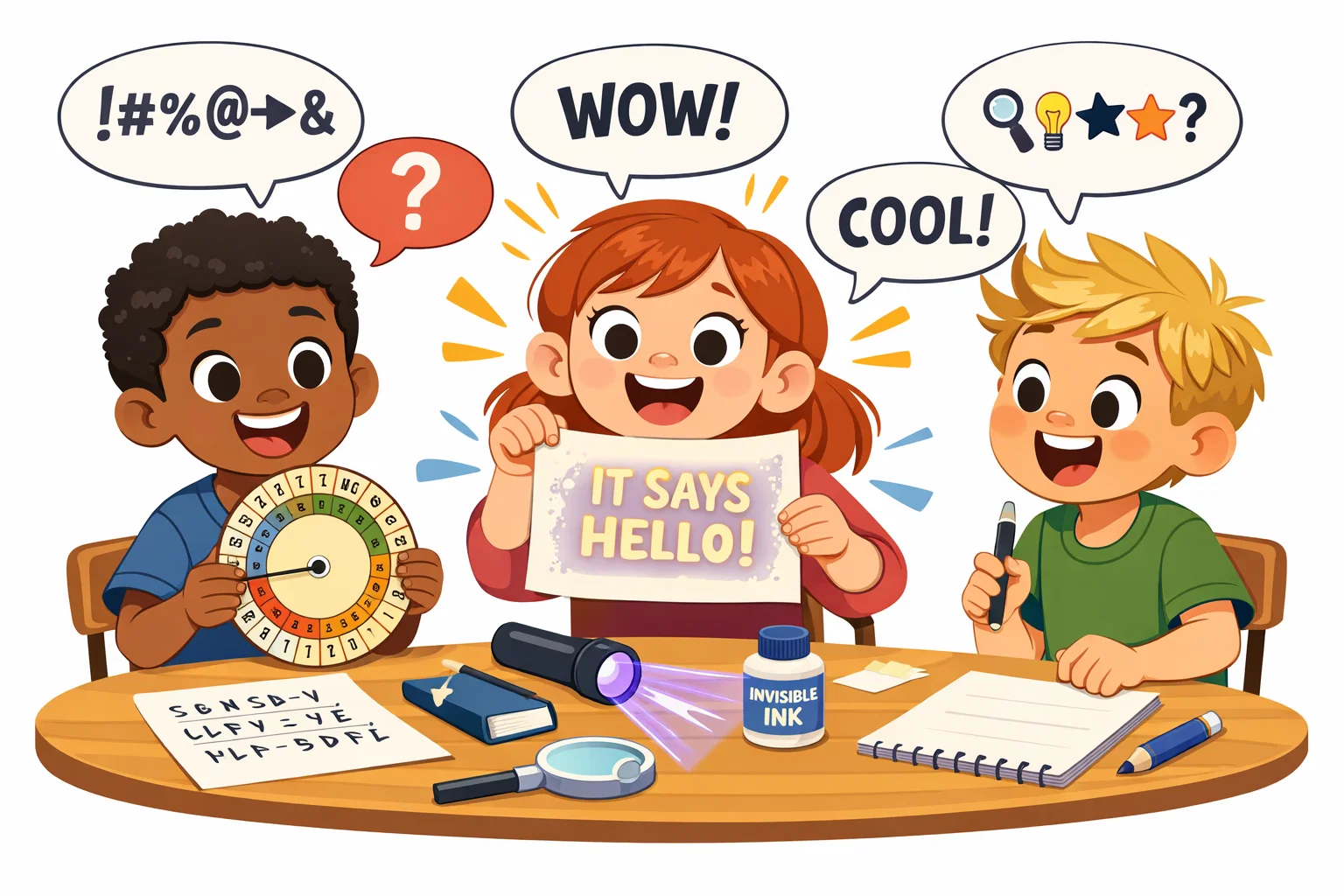
According to the International Spy Museum, ciphers have been used for thousands of years to protect sensitive information. Teaching kids to create a code connects them to history while sharpening their minds.
Sliding Decoder Creation
You can create your own secret sliding decoder using two strips of paper. Write the alphabet on both strips. By sliding one strip against the other, you change which letters represent each other. This is a simplified version of the Caesar cipher, a method used by historical figures.
Symbol and Cipher Writing
Introducing the Pigpen Cipher. This geometric grid-based cipher is a favorite in spy games because it looks like a completely alien language.
Pro Tip: Have your child write a clue using symbols and hide it inside a book. The “payoff” for the riddle could be the location of a small treat.
Code Cracking Challenges
Set a timer for five minutes. Give the young agents a message on a piece of paper that is heavily encrypted. The pressure of the clock mimics a real spy mission, encouraging quick thinking and focus.
Invisible Ink Spy Activities
The “wow” factor of invisible ink is unmatched. It’s a classic fun spy activity that introduces basic chemistry concepts.
Lemon Juice Invisible Ink
This is the most famous method.
- Squeeze some lemon juice into a bowl.
- Use a cotton swab or a small brush as a pen to write a message on a piece of paper.
- Let it dry completely until the paper looks blank.
- To uncover the message, an adult should hold it near a heat source like a light bulb or use an iron. The acid in the juice reacts to heat, turning brown before the paper burns.
Baking Soda Secret Messages
Mix equal parts baking soda and water. Write your message and let it dry. To reveal it, paint over the paper with grape juice. The juice acts as a pH indicator, changing color where the baking soda was applied. Using lemon juice or baking soda offers two different “tech levels” for your spy academy.
Invisible Ink Pens and Markers
For a cleaner version, especially at a fun spy party, you can buy commercial invisible ink pens. These usually come with a small black light built into the cap. The ink is only visible under UV light, making it perfect for a modern spy themed adventure.
Observation and Memory Spy Skills
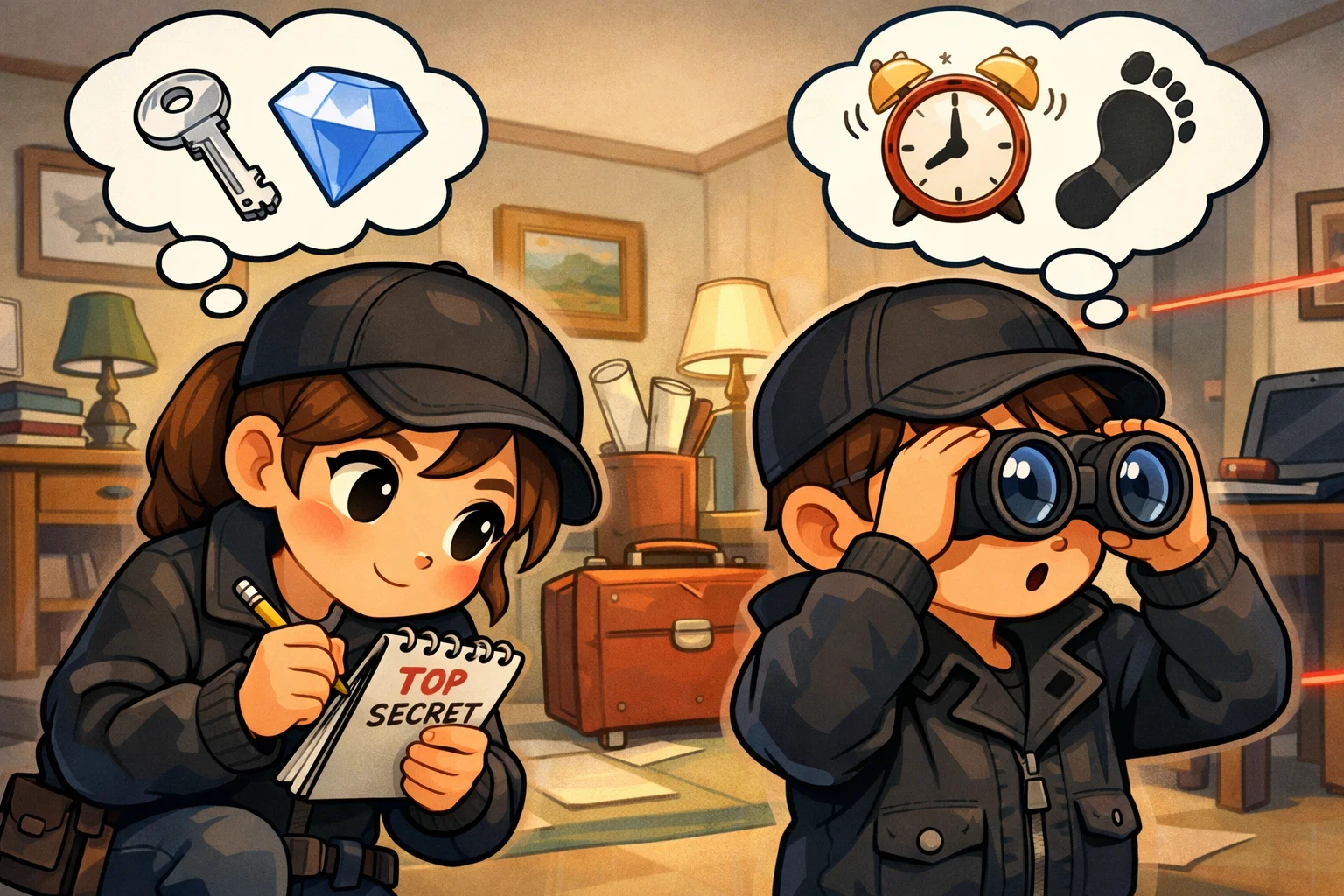
A secret agent must notice what others miss. Training memory skills is vital for reporting back after an undercover mission.
Memory Training Games
Place 10 spy-related items on a tray (a key, a magnifying glass, sunglasses, etc.). Let the children look at them for 30 seconds, then cover the tray. Ask them to list as many items as they can remember. This activity, known as “Kim’s Game” in scouting, can help improve short-term memory.
Observation Missions
Give your child a checklist of things to find in the neighborhood or at the park:
- A blue car with a specific digit in the license plate.
- A person wearing a red hat.
- The number of windows on a specific building.
Spy Journals
Encourage kids to keep a journal of their “findings.” They can draw maps of the “enemy base” (the backyard) or record “suspect” movements (the family dog).
Spy Gadgets and Equipment DIY
Building gear is a core part of the spy or detective experience. It encourages maker skills and basic engineering thinking.
DIY Spy Gadgets
You can create a “laser” tripwire using red yarn strung across a hallway. Attach small bells to the yarn. If the spy hits the yarn, the bells ring, and the alarm is triggered!
Detective Kits for Kids
A professional-looking kit increases immersion. Include:
- Spy ID cards (with a code name like “Agent Falcon”).
- A small magnifying glass.
- A printable map of the house.
- A few invisible ink pens.
Build Your Own Periscope
Using two small mirrors and a long cardboard box (like a milk carton or a shipping tube), you can teach kids about the laws of reflection. This is a classic spy mission tool that allows them to see over fences or around corners without being seen.
Spy Party Games and Group Activities

If you are hosting a fun spy party, you need activities that keep a group engaged and moving.
- Code Breaker Challenge: Divide the kids into two teams. Each team must decipher a secret message to find the location of the next clue.
- Laser Maze Game: Use the red yarn trick mentioned above. The kids must go through one by one. Use a stopwatch to see who is the fastest and most stealthy.
- Disguise Relay Race: Teams must run to a trunk, put on a full disguise (trench coat, sunglasses, hat), run back, and pass it to the next teammate.
- Spy Obstacle Course: This is the final mission. Combine crawling under “lasers,” solving a quick puzzle, and identifying a “target” from a photo.
Outdoor Spy Games for Kids
Taking the spy game outside adds a layer of realism.
- Scavenger Hunt Espionage: Instead of just finding items, kids must solve a riddle at each station to find the next clue.
- Spy vs. Spy Hide and Seek: The “Hider” is the double agent, and the “Seekers” are the investigators. The double agent must reach a “safe zone” without being tagged.
- Secret Message Relay: One teammate has the cipher key, and the other has the encrypted message. They are stationed at opposite ends of the park and must use signals to communicate the text.
Spy Academy Setup at Home
To create a truly fun game experience, frame the activities as “Spy Academy.”
- Training Program: Create a printable certificate or spy ID cards. For every task they complete (invisible ink using lemon juice, the obstacle course, or a puzzle), they get a sticker or a stamp.
- Secret Spy Hideout: Help them build a “base” using blankets and pillows. This is where they go to decipher messages and plan their next final mission.
- Mission Planning: Tailor the missions. If your child loves drawing, have them draw a disguise for a “target.” If they love math, give them a secret code based on addition and subtraction.
Safety and Age Guidelines for Spy Activities
While the world of espionage is exciting, safety is the priority for any game for kids.
Age Appropriate Activity Selection
- Ages 4-6: Focus on stealth, simple disguise play, and basic observation.
- Ages 7-10: Introduce invisible ink, Morse code, and more complex riddle solving.
- Ages 11+: Complex cipher systems, simple electronics-based gadgets, and elaborate scavenger hunt scenarios.
Indoor and Outdoor Safety Tips
Always supervise the use of a heat source like a light bulb when revealing lemon juice messages. Ensure that “laser” mazes (yarn) are taped securely so they don’t create tripping hazards. When playing outdoor spy games, set clear boundaries so young agents don’t wander too far undercover.
Frequently Asked Questions About Spy Activities for Kids
What is the best age for spy activities?
While children as young as four enjoy the “hide and seek” aspects, the sweet spot for a full spy mission is between 7 and 12 years old. At this age, their problem-solving and literacy skills allow for complex coded messages.
Can I do spy activities in a small apartment?
Absolutely. Focusing on secret code cracking, memory skills, and “desk-based” espionage like making invisible ink using lemon juice works perfectly in small spaces.
Are spy games good for birthday parties?
Yes! A spy party is one of the most engaging themes because it involves a narrative. Instead of just playing random games, the kids are on a collective “mission” to save the day.
What are the educational benefits?
Spy games promote problem-solving, enhance memory skills, and encourage teamwork. They also provide a fun way to practice reading, writing, and even basic chemistry and physics through gadget building.

Take a short quiz to find out what your everyday choices say about your parenting style
When your child is curious about something new, what’s your instinct?
Take a short quiz to find out what your everyday choices say about your parenting style
“Can I download this app?” What happens next?
Take a short quiz to find out what your everyday choices say about your parenting style
When it comes to rules at home, which sounds most like you?
Take a short quiz to find out what your everyday choices say about your parenting style
If you could give your child one life skill today, what would you pick?
Take a short quiz to find out what your everyday choices say about your parenting style
Your child gets to choose what to watch. What would your ideal setup look like?
Take a short quiz to find out what your everyday choices say about your parenting style
Pick your parenting superpower ✨