Early Years Foundation Stage Statutory Framework: A Parent and Provider Guide

 Discover a Free Education Video App for Kids
Pastory uses AI to personalize educational video content based on your child’s interests and personality. Safe, engaging, and built for curious young minds. Sign up now to stay updated and enjoy early access with a free trial
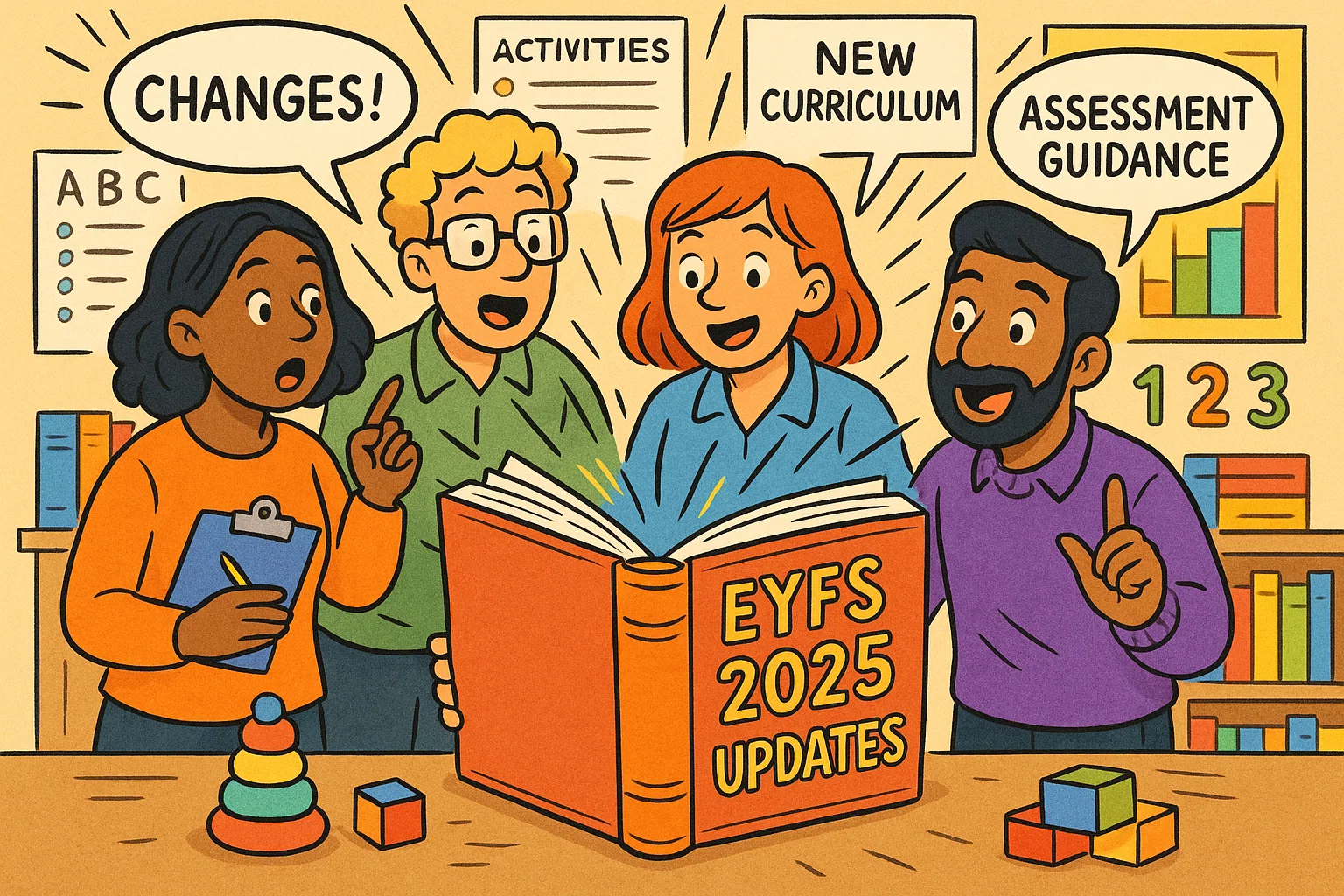
The early years foundation stage statutory framework sets the legal standards for education and care of children from birth to age 5 in England. All early years providers — including childminders and school-based settings — are required by law to follow this framework to keep children safe, healthy, and supported in their development.
This guide covers what the framework requires, how the areas of learning are structured, what recent updates mean for providers, and what parents and carers need to know to support learning at home.
Key Takeaways
- The early years foundation stage statutory framework is a legal requirement for all early years providers in England, covering children from birth to age 5.
- The framework addresses safeguarding, welfare requirements, early learning goals, and assessment practices.
- Learning and development is organized into prime areas and specific areas, each with defined goals for young children.
- The framework applies differently to childminders and school-based providers, with tailored responsibilities for each setting.
- Parents and carers can access guidance and resources to support their child’s EYFS learning at home.
What is the EYFS Statutory Framework?
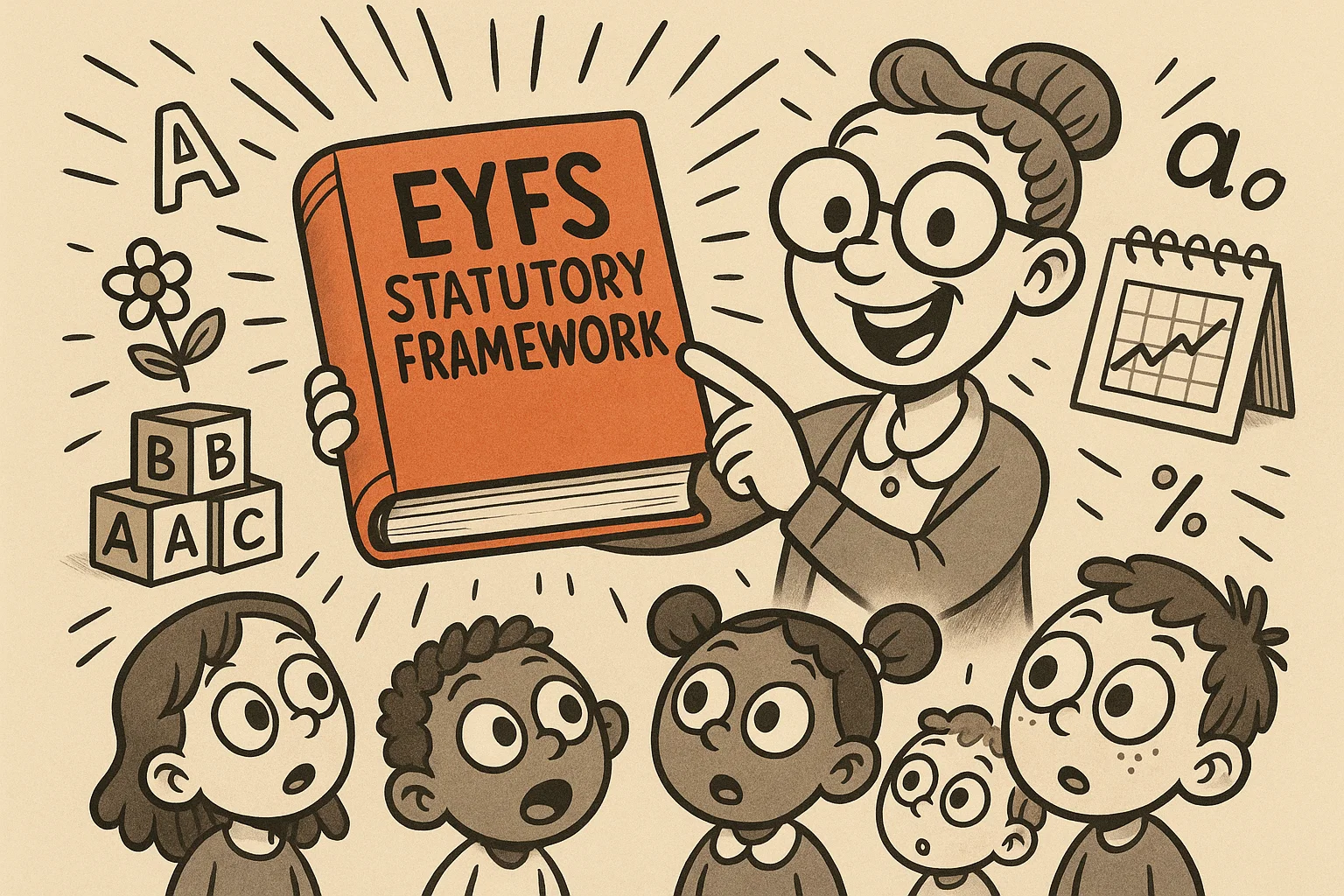
The EYFS statutory framework is mandatory for all early years settings and sets the standards for the development and care of children up to the age of five. Its key purpose is to ensure consistency and quality across all provisions so that every child, regardless of their background or setting, has the best possible start in life. It acts as the legal guide for early years educators and leaders, outlining everything from curriculum and assessment to safeguarding policies and procedures.
This framework is instrumental in shaping educational practices, emphasizing a holistic, child-centred approach. It promotes the idea that children learn best through play and exploration, encouraging early years providers to create rich, stimulating early years settings where children learn and develop well. The framework gives educators the structure they need, while still allowing the professional freedom to design a curriculum that meets the needs of the children in their care. Non-statutory guidance, such as ‘Birth to 5 Matters,’ provides valuable information to support the delivery of educational programs.
Key Components of the EYFS Statutory Framework
The statutory framework for the early years is structured into three distinct, yet interconnected, sections. These sections collectively detail the legal requirements that early years providers must meet to ensure a high-quality experience for every child.
- Learning and Development Requirements: This section outlines the three prime areas and four specific areas of learning that must shape the educational programmes. It details the early learning goals (ELGs) that children should be supported to achieve by the end of the Early Years Foundation Stage Profile in the Reception year.
- Assessment Requirements: This sets out the expectations for reviewing and recording children’s progress, including the Progress check at age two and the final Early Years Foundation Stage Profile assessment at the end of Reception. The focus is on practitioners using their professional judgment, moving away from unnecessary physical evidence collection that was common before the 2021 reforms.
- Safeguarding and Welfare Requirements: This is arguably the most critical section, detailing the policies and procedures required to keep children safe and promote their welfare. This covers everything from suitability of staff and staff-to-child ratios to paediatric first aid (PFA), food safety, and maintaining records.
Legal Requirements and Responsibilities
For anyone running an early years setting in England, the EYFS statutory framework is a legal obligation. The statutory framework for the early sector is published by the DfE, and compliance is monitored by Ofsted or a registered childminder agency.
Providers must meet the following obligations:
- Ensure Staff Suitability: All staff must be checked for suitability, including robust reference and disclosure and barring service (DBS) checks.
- Maintain Ratios: Adhere to the specified staff-to-child ratios based on the children’s ages and the provider type.
- Designated Safeguarding Lead (DSL): Appoint a DSL to take lead responsibility for safeguarding policies and child protection, ensuring all staff are aware of safeguarding policies and procedures.
- Paediatric First Aid: Ensure that at least one member of staff with a valid and current paediatric first aid certificate is on the premises and available at all times when children are present.
- Documentation: Maintain accurate records, including accident logs, children’s files, and all required policies and procedures.
Updates and Changes to the EYFS Statutory Framework
The framework is a living document, updated to reflect best practice and the evolving needs of the children. While the overarching structure remained stable after the September 2021 reforms, the current version of the framework includes important minor changes in the 2024 edition and, most significantly, the new requirements coming into force on 1 September 2025. These updates primarily focus on strengthening the crucial area of child protection.
Strengthened Safeguarding and Welfare Requirements
The upcoming EYFS statutory framework 2025 sees a significant focus on strengthening the measures providers must take to keep children safe and promote their welfare. These new requirements are a direct result of the DfE’s commitment to continuous improvement in child safety.
| Area of Change | New 2025 Statutory Requirement | Why the Change Matters |
| Safer Recruitment | Providers must obtain a reference (not open or from a family member) and verify its contents before a new staff member starts employment. | Closes a potential loophole and aligns the early years sector with safer recruitment practices in schools. |
| Whistleblowing | All early years providers must have a clear, written whistleblowing policy that staff, students, and volunteers are aware of. | Formalises a critical process, ensuring staff feel confident and safe to raise concerns about poor practice. |
| Child Absences | Providers must follow up on unexplained or prolonged child absences in a timely manner and hold at least two emergency contacts per child. | Strengthens early intervention and flags potential safeguarding concerns linked to non-attendance. |
| Safeguarding Training | Policies must include an annex detailing how safeguarding training is delivered and how staff apply their learning in practice. DSLs must now have mandatory updated training every two years. | Shifts the focus from simply “attending a course” to demonstrating practical application and competence in the daily routine. |
| Paediatric First Aid (PFA) | Students and trainees must hold a valid PFA certificate before they can be counted in staff-to-child ratios at the level below their study level. | Ensures a higher level of immediate emergency response capability across all staffing levels, including those in training. |
This renewed focus ensures that early years safeguarding standards are robust and consistently applied across all settings.
Revised Early Learning Goals
The 2021 reforms brought a comprehensive overhaul of the Early Learning Goals (ELGs), aiming to reduce unnecessary paperwork and focus on the key knowledge and skills children from birth need for school readiness. While the statutory framework 2025 focuses heavily on safeguarding, the core learning and development ELGs remain as revised in 2021, reinforcing the importance of the educational programmes.
The revised ELGs emphasise:
- Language and Literacy: Greater focus on vocabulary development and early reading skills like phonics.
- Mathematics: Stronger emphasis on number sense, including the ability to count accurately and compare quantities.
- PSED (Personal, Social and Emotional Development): Clarity on developing self-regulation skills, managing feelings, and building healthy relationships.
Changes in Assessment Practices
Assessment in the EYFS should be ongoing, observation-based, and focused on using professional judgment to plan the next steps, rather than collecting reams of “evidence.” The 2021 early years changes confirmed that practitioners are not required to collect physical evidence to ‘prove’ a child is meeting an expected level of development.
The statutory framework for the early years continues to outline two formal assessment points:
- Progress Check at Age Two: A statutory assessment between the ages of two and three to review the child’s development in the three prime areas and identify any areas where support may be needed.
- The Early Years Foundation Stage Profile (EYFSP): Completed at the end of the Reception year to summarise a child’s attainment against the early learning goals, indicating whether they are ‘Emerging’ or ‘Expected’ in each area.
Areas of Learning and Development in EYFS
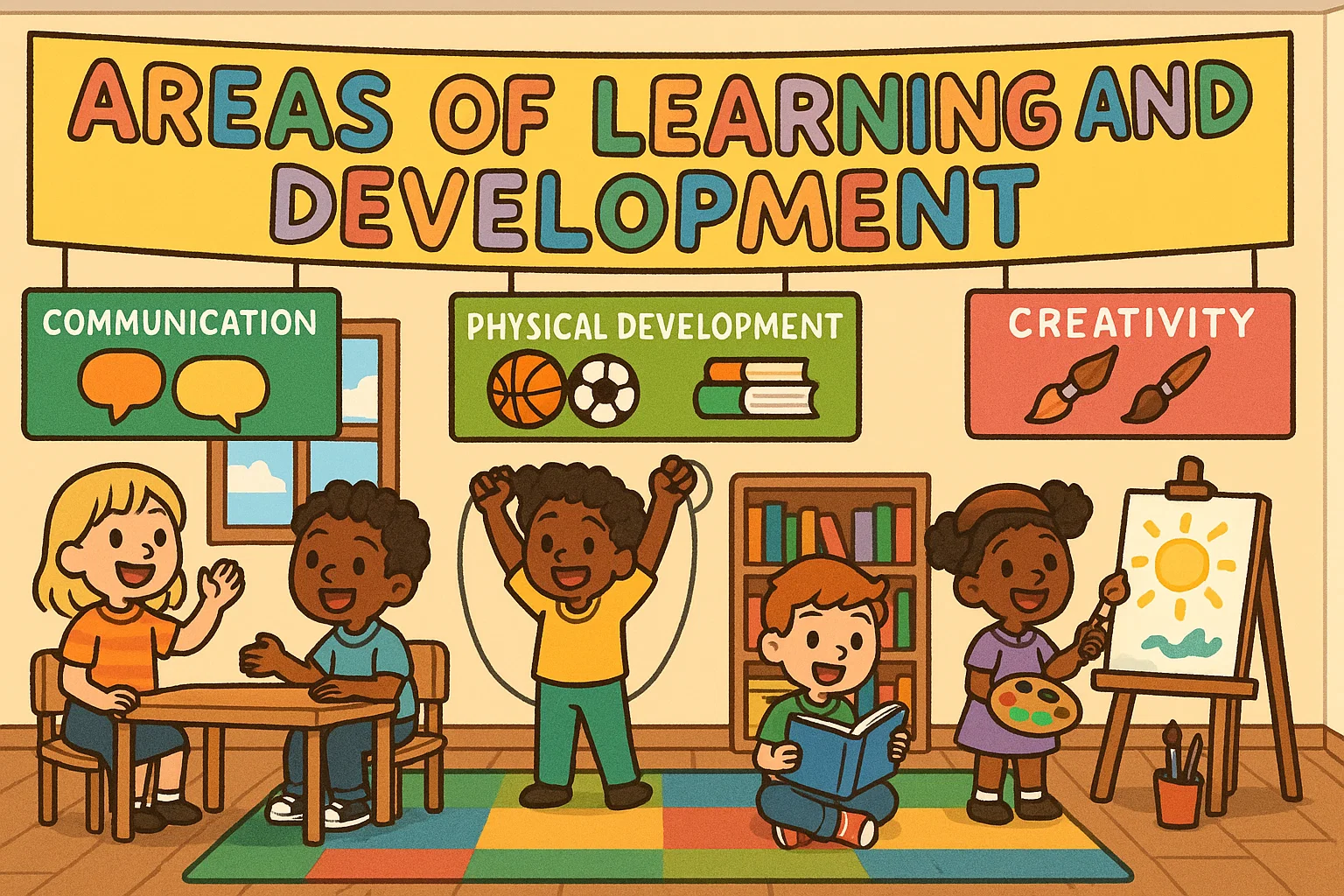
The EYFS framework outlines seven areas of learning and development that must shape the educational experiences provided for children from birth to 5. These areas are equally important and are interconnected, meaning learning in one area supports progress in the others.
Prime Areas of Learning
The three prime areas are fundamental, working together to ignite children’s curiosity and enthusiasm for learning, form relationships, and thrive. They are the essential building blocks.
- Communication and Language (CL): Focuses on providing a rich language environment. Practitioners must give children opportunities to experience a rich language environment, develop their confidence and skill in expressing themselves, and speak and listen in a range of situations.
- Physical Development (PD): Emphasises movement, control, and object manipulation, as well as providing opportunities to be active and interactive. This also covers healthy eating and making healthy choices, which is reinforced by the latest focus on food safety in the statutory framework 2025.
- Personal, Social and Emotional Development (PSED): Helps children aged birth to five develop a positive sense of themselves, form positive relationships, develop social skills, and learn how to manage their feelings. This area is vital for emotional well-being and self-regulation.
Specific Areas of Learning
Once children are secure in the prime areas, the four specific areas of learning help them strengthen their application of skills and knowledge.
- Literacy: Focuses on comprehension, word reading, and writing.
- Mathematics: Concerned with number, numerical patterns, and shape, space, and measure.
- Understanding the World: Helps children make sense of their physical world and community through opportunities to explore, observe, and find out about people, places, technology, and the environment.
- Expressive Arts and Design (EAD): Enables children to explore and play with a wide range of media and materials, as well as providing opportunities and encouragement for sharing their thoughts, ideas, and feelings through a variety of activities.
EYFS Statutory Framework for Different Providers
A key clarification introduced in January 2024 was the formal split of the EYFS statutory framework into two separate, tailored documents: one for childminders and one for group and school-based providers. While the core learning and development and safeguarding principles are shared, the practical requirements are adjusted to suit the provider type.
EYFS for Childminders
The statutory framework for childminders acknowledges the unique, often home-based, nature of the provision. Childminder settings typically offer a more familial environment with mixed-age groups.
Key considerations for childminders:
- Ratio Flexibility: Childminder EYFS has different ratio expectations compared to group settings, allowing for a mix of ages provided the individual needs of the children are met.
- Written Policies: While the EYFS framework has historically offered childminders more flexibility regarding written policies and procedures, it is highly recommended to have them in writing. The 1 September 2025 changes, such as the mandatory written whistleblowing policy, formalise this requirement.
- Safer Recruitment: Childminders employing an assistant must obtain a reference before employment begins, reflecting the same strengthened requirement as in larger settings.
EYFS for School-Based Providers
The framework for group and school-based providers, such as nurseries, pre-schools, and Reception classes, is designed for larger settings. It contains more detailed rules on staffing levels, qualification requirements, and management structures.
Key areas of focus for group and school-based providers:
- Staff-to-Child Ratios: Adherence to strict ratios, for example, the change in 2023 that allowed for 1:5 ratio for two-year-olds (though many providers choose to retain 1:4), and qualifications for staff counting in those ratios.
- DSL and Leadership: Clear responsibility for the Designated Safeguarding Lead and the role of the manager in ensuring staff have the necessary support and skills to deliver the EYFS curriculum effectively.
- Premises and Equipment: Detailed requirements for the safety and suitability of the larger indoor and outdoor environments.
Related Resources and Support
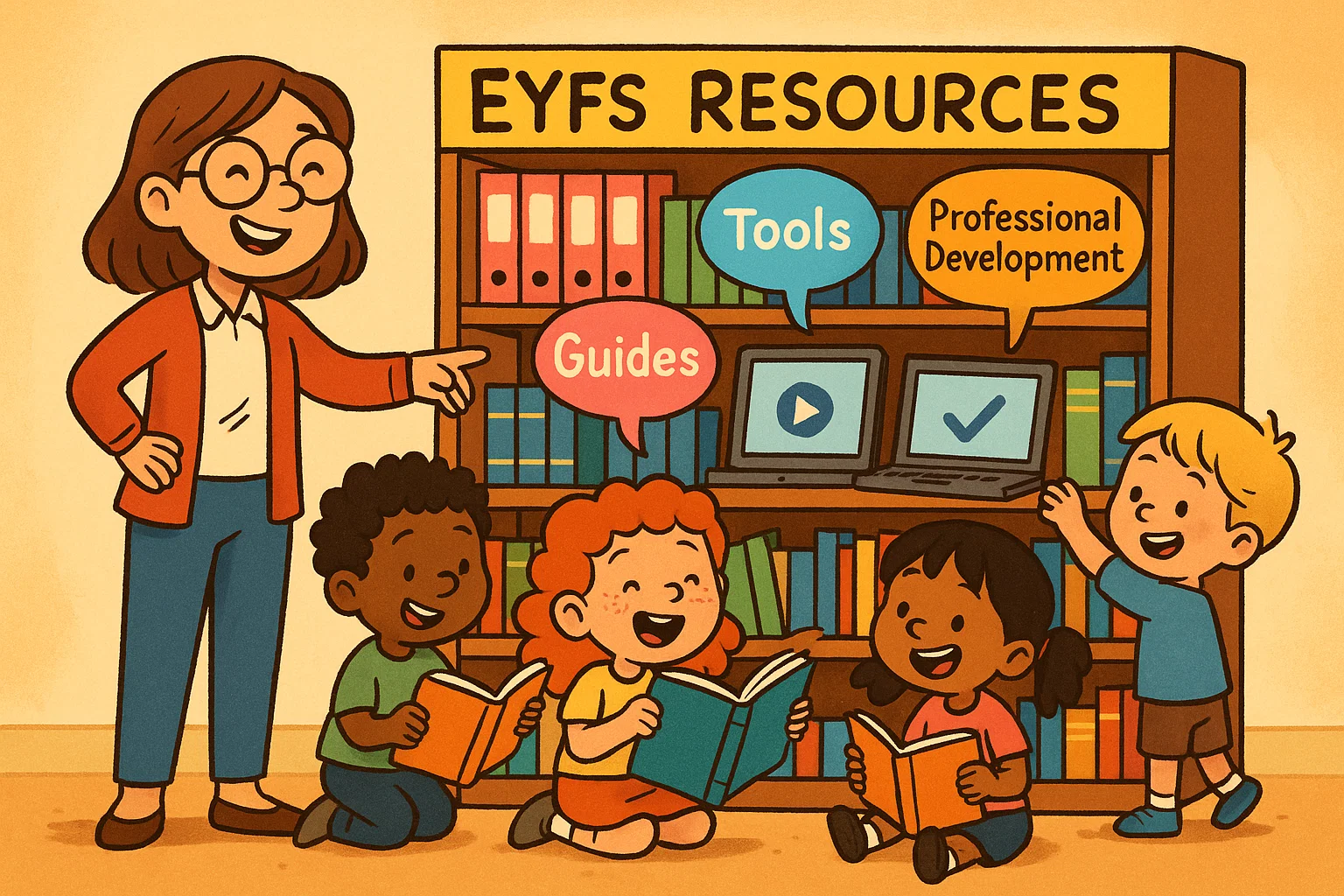
To successfully follow the current statutory requirements, practitioners and leaders need reliable, high-quality resources and continuous professional development.
Downloadable Guidance and Resources
The DfE and organisations like the Early Years Alliance provide essential documents that help settings follow the current version of the statutory framework.
| Resource Name | Purpose | Authority |
| EYFS Statutory Framework 2025 | The mandatory for all early years legal document detailing all legal requirements. | Department for Education (DfE) |
| Birth to 5 Matters (Non-Statutory) | Detailed guidance for practitioners on how children learn and develop well and how to design the curriculum. | Early Years Coalition |
| What to Expect in the Early Years (Non-Statutory) | A helpful guide to share with parents and carers on how children learn and develop well within the EYFS. | DfE |
Professional Development in Early Years Education
The early years foundation stage statutory requirements demand that all staff have the support and skills they need. Practitioners are responsible for ensuring they keep up to date with legislative changes and pedagogical best practice.
- Mandatory Training: Ensure all staff safeguarding training is renewed at least every two years and aligns with the new requirements detailed in the Annex of the framework.
- Paediatric First Aid (PFA): Regular refresher training on paediatric first aid is vital to maintain a valid certificate.
- Specialist CPD: Invest in training on key areas of the EYFS, such as developing communication and language skills, supporting self-regulation, or managing children’s behaviour positively.
EYFS Framework for Parents and Carers
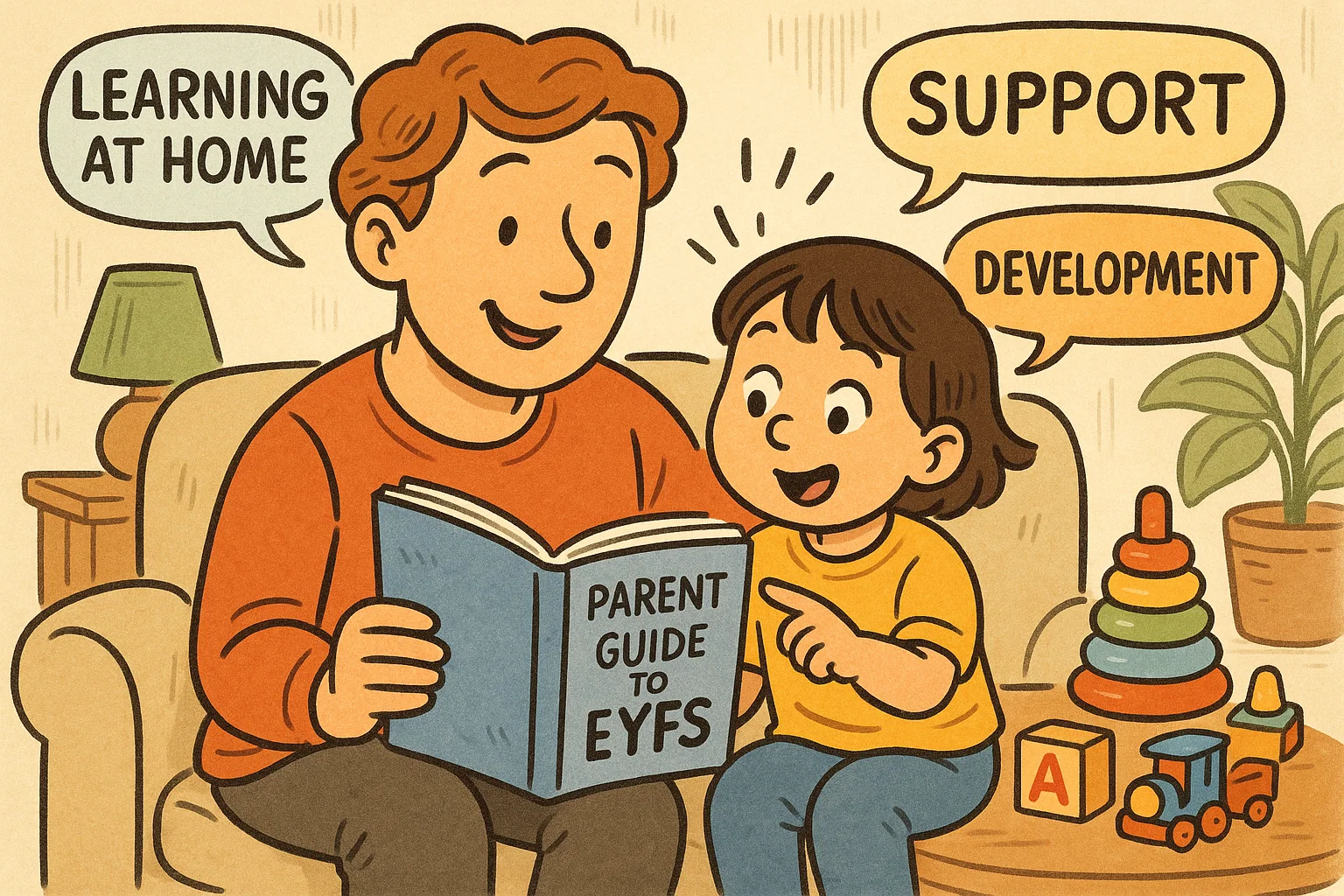
The EYFS foundation stage statutory framework 2025 is not just for professionals; it is also highly relevant for parents and carers. It assures you that your child is receiving a high standard of childcare and education in a safe environment. The framework offers transparency about the curriculum, helping you to understand the journey your children aged birth to 5 are on.
How Parents Can Support EYFS Learning at Home
The partnership between parents and carers and early years settings is crucial for maximising a child’s progress. The home environment plays a massive role in helping children learn and develop well.
Here are some practical tips to enhance your child’s learning at home in line with EYFS principles:
- Communication and Language: Read together every day, talk to your child about everything you see and do, and encourage them to express their feelings and ideas. Communication and language is a prime area for a reason.
- Physical Development: Encourage active play, whether outdoors or in. Simple activities like running, climbing, and throwing a ball strengthen their physical development.
- Literacy and Maths: Count stairs or grapes, sing nursery rhymes, and point out letters and words in the environment (e.g., on cereal boxes, signs).
Parent Resources and Guidance
The DfE’s What to Expect in the Early Years Foundation Stage: A Guide for Parents is the most authoritative resource for families. It provides a simple breakdown of the areas of learning and development and age-appropriate milestones. Many early years settings also share home learning and development bags, online journals, and activity ideas linked directly to the learning happening in the setting.
FAQs about the EYFS Statutory Framework
How Do the EYFS Requirements Affect My Setting?
The EYFS requirements and standards document applies differently depending on your provider type:
- Group and School-Based Providers: You must adhere to the framework for group and school-based settings, including stricter rules on staff qualifications, staff-to-child ratios, and a more formal management structure.
- Childminders: You must follow the current version of the statutory framework for childminders. While the core requirements are the same, the practical application often allows for more flexibility, particularly regarding staff ratios and how some policies and procedures are documented. In all cases, early years providers must meet the core safeguarding and welfare requirements.
When Will the Next Changes to EYFS Be Implemented?
The most significant and recent changes were made in the 2024 edition and the safeguarding updates effective from 1 September 2025. The DfE continually reviews the framework, often introducing minor changes annually. Early years providers should monitor official DfE and Ofsted channels to keep up to date with any new statutory guidance or non-statutory support materials. The best way to prepare is to view a summary of the changes and proactively review your setting’s safeguarding policies and recruitment procedures against the new statutory framework 2025 requirements.

Take a short quiz to find out what your everyday choices say about your parenting style
When your child is curious about something new, what’s your instinct?
Take a short quiz to find out what your everyday choices say about your parenting style
“Can I download this app?” What happens next?
Take a short quiz to find out what your everyday choices say about your parenting style
When it comes to rules at home, which sounds most like you?
Take a short quiz to find out what your everyday choices say about your parenting style
If you could give your child one life skill today, what would you pick?
Take a short quiz to find out what your everyday choices say about your parenting style
Your child gets to choose what to watch. What would your ideal setup look like?
Take a short quiz to find out what your everyday choices say about your parenting style
Pick your parenting superpower ✨