Fun Life Lessons: 14 Life Skills Activities for Kids

 Discover a Free Education Video App for Kids
Pastory uses AI to personalize educational video content based on your child’s interests and personality. Safe, engaging, and built for curious young minds. Sign up now to stay updated and enjoy early access with a free trial
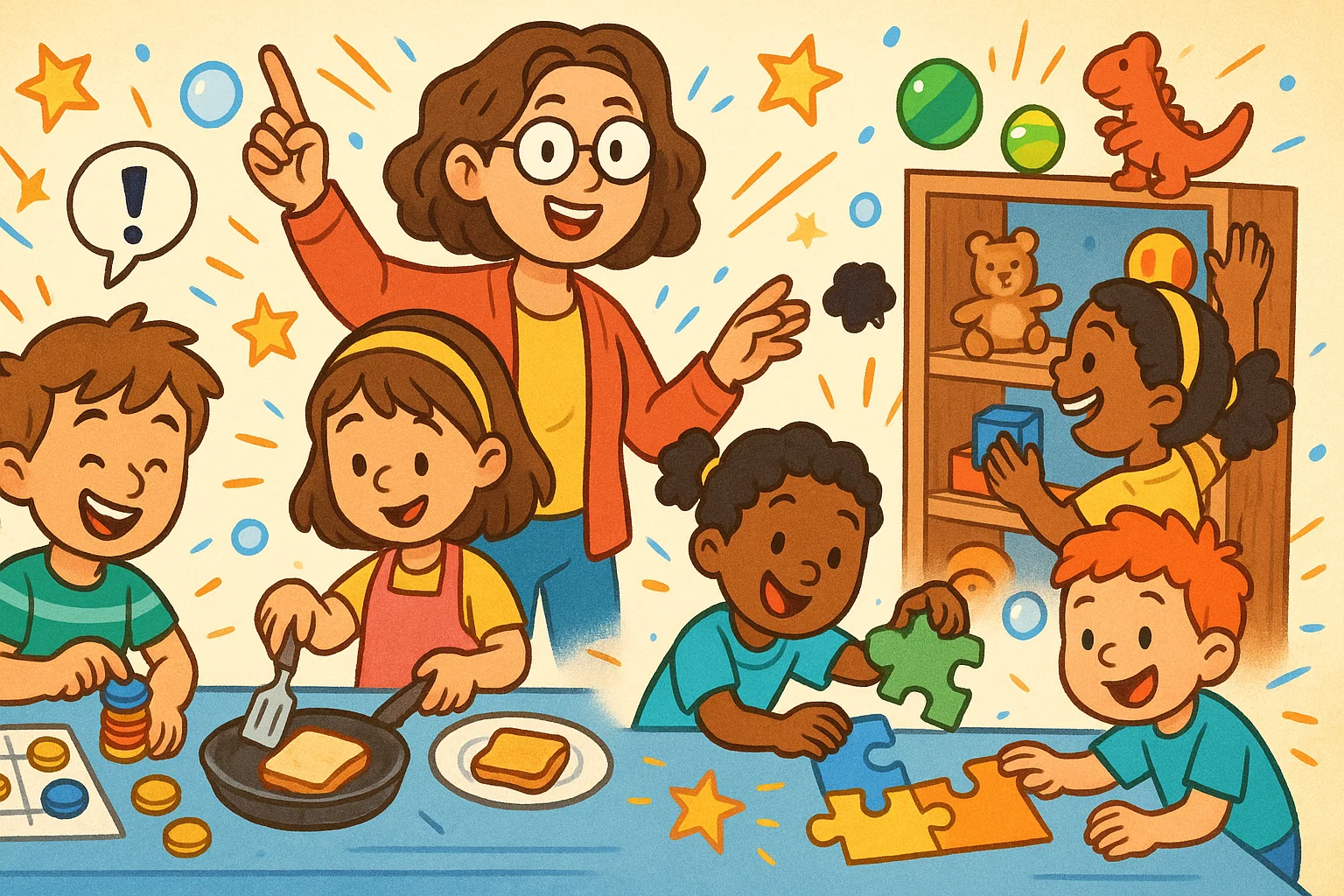
Teaching children essential life skills does not have to feel like a list of rigid chores. Parents, teachers, homeschoolers, and special education professionals can use this practical, playful guide to turn daily routines into engaging learning opportunities. This guide shows how to turn everyday life lessons into fun life skills activities for kids, so learning feels practical and enjoyable. By adding hands-on activities to everyday routines, adults can teach life skills that support children’s long-term growth.
Intentional life skills activities help kids develop the foundational habits they need for future independence. These structured activities help children build essential skills, including hygiene, money management, household responsibilities, and emotional regulation. When adults teach kids these practical tasks early, they help kids develop valuable life skills that foster self-reliance and build confidence. The following sections provide actionable strategies and playful methods to help kids learn how to navigate real-world challenges successfully.
Key Takeaways
- Targeted Growth: Hands-on activities build confidence, independence, and responsibility in children of different ages.
- Structured Progress: Using visual supports and step-by-step checklists reduces frustration and reinforces daily learning.
- Playful Learning: Turning routine household chores into interactive games increases child engagement and skill retention.
- Holistic Development: Core skills include financial literacy, emotional intelligence, and basic safety.
Kids Learn Best Through Play
Child development experts widely recognize that play supports healthy development, including cognitive, physical, social, and emotional well-being. Games, pretend play, role-play, crafts, and outdoor challenges allow kids to practice real-world scenarios without the pressure of failure. These interactive experiences help kids learn behavioral boundaries, social cues, and creative problem-solving naturally. By building learning goals into play, parents and educators make new skills easier to understand and remember.
Integrating skills into daily routines through playful methods transforms abstract concepts into tangible actions. For example, preparing meals together can turn fractions, measuring, and basic science concepts into hands-on learning. Children are naturally curious, and channeling that energy into structured games helps them absorb valuable lessons more willingly. This playful approach shifts the focus from strict instruction to collaborative, hands-on participation.
Life Skills Build Confidence, Independence, and Responsibility
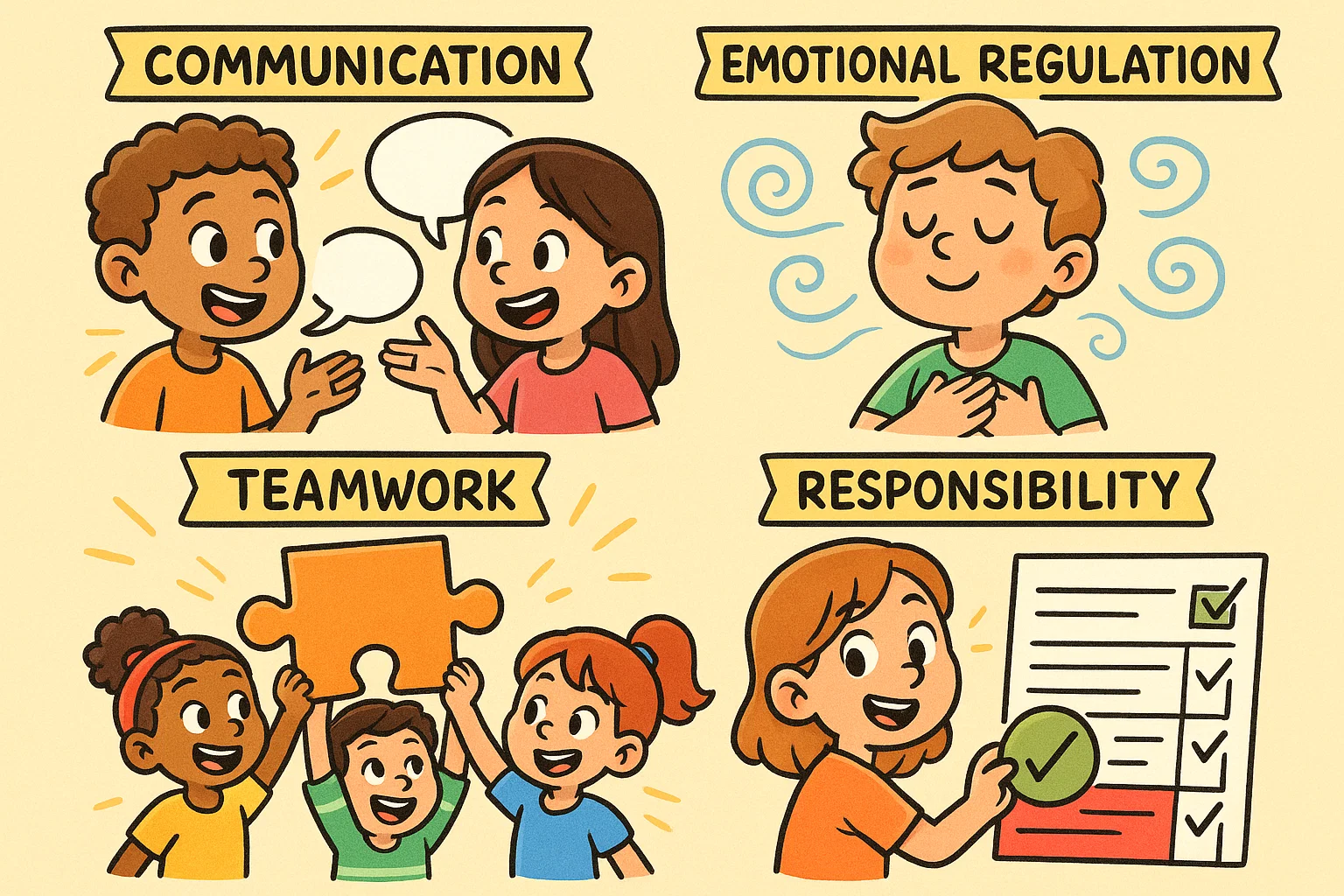
Developing essential life skills can strengthen a child’s self-esteem and independence. When children complete a task independently, they often feel proud and more capable, which encourages them to try again. Mastering daily routines reduces the need for adult reminders and helps children become more self-sufficient over time. These activities teach accountability, time management, and safe decision-making in a controlled environment.
Fostering independence and responsibility prepares young learners for peer socialization and school environments. Children who regularly practice self-care and problem-solving are often better prepared to handle school-related challenges. Teaching these skills helps kids manage their personal belongings, resolve interpersonal conflicts, and follow multi-step instructions. These foundational habits serve as the building blocks for an organized, goal-oriented lifestyle.
Activities Can Be Adapted Across Ages, Needs, and Settings
The life skills activities in this guide are flexible enough for different ages, needs, and learning environments. Parents can implement these routines at home, while teachers can integrate them into classroom centers or specialized therapy sessions. The underlying principles can be adapted for toddlers, preschoolers, school-aged kids, teenagers, and kids with disabilities or additional learning needs. Adjusting the difficulty of each task helps every child work at a level that feels achievable and appropriately challenging.
For neurodivergent learners or younger kids, tasks can be broken down using visual schedules and simplified prompts to match their developmental stages. Older kids can tackle advanced variations that require critical thinking, financial literacy, and community awareness. This flexible approach helps make the activities useful across settings and responsive to each child’s needs. By adapting each activity, caregivers can create a supportive environment that matches each child’s pace.
Daily Living Skills by Age Group
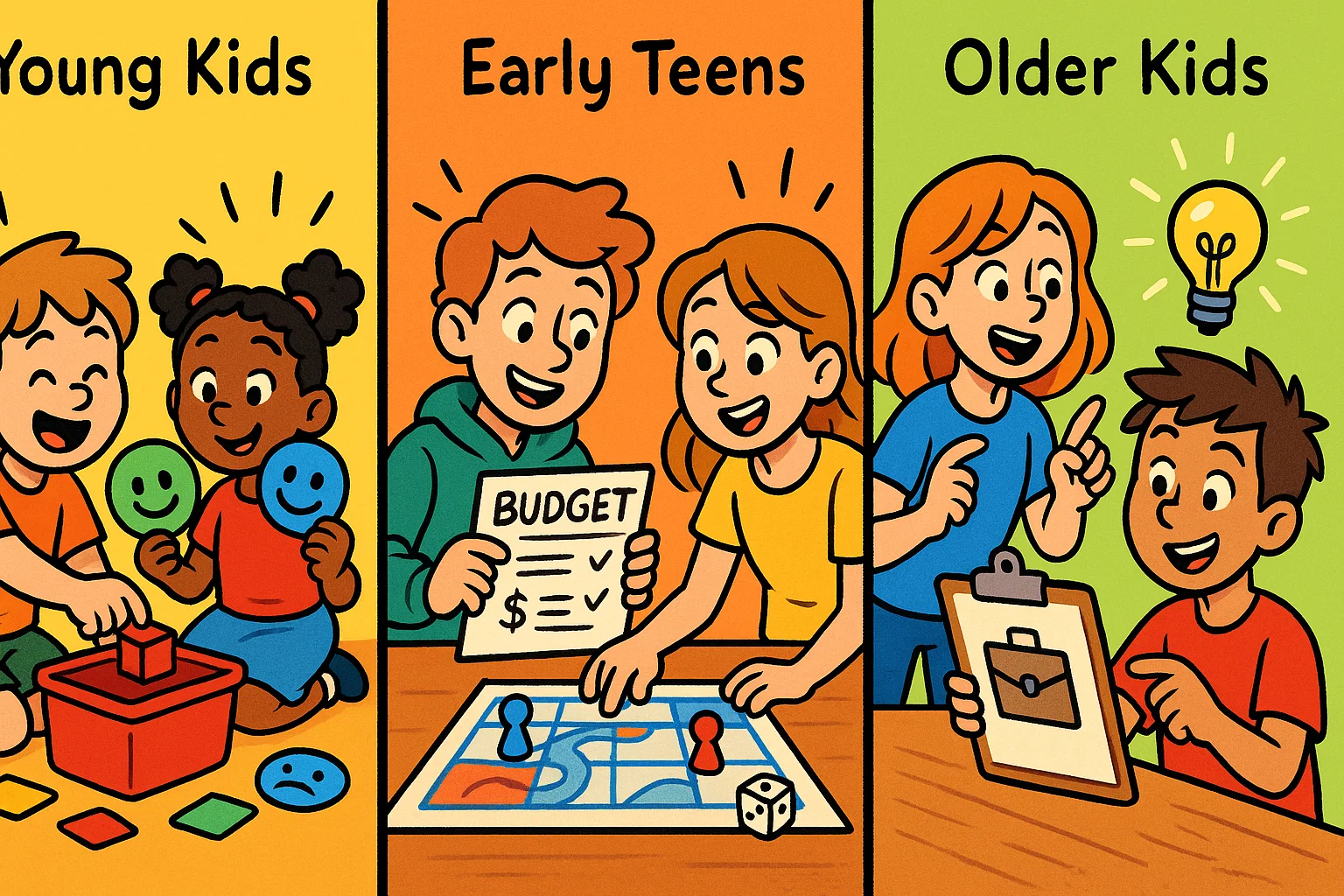
Toddlers Ages 1–3
Toddlers are rapidly developing basic motor skills and expressive language, making this a good time to introduce simple daily routines. At this stage, kids learn through imitation and respond well to simple, repeated actions.
- Toy Cleanup: Sorting oversized blocks into color-coded bins to develop spatial awareness.
- Handwashing: Washing hands with soap and water for about twenty seconds to build basic hygiene habits.
- Laundry Help: Placing dirty clothes in a designated laundry basket.
- Emotional Literacy: Pointing to facial expression charts to name basic feelings like happy, sad, or frustrated.
- Motor Control: Pouring water from a small, child-safe pitcher into a cup with adult supervision.
Preschoolers Ages 4–5
Preschoolers have improved finger dexterity and can follow simple multi-step instructions, which allows for more complex life skills activities. This age group benefits from structured tasks that encourage sorting, independence, and problem-solving.
- Independent Dressing: Practicing large buttons, elastic waistbands, and hook-and-loop shoe straps.
- Oral Hygiene: Brushing teeth for two full minutes using a visual sand timer as a guide.
- Snack Preparation: Spreading cream cheese or butter onto crackers using a blunt, child-safe plastic knife.
- Social Etiquette: Practicing conversational turn-taking and using polite phrases during family mealtime.
- Household Help: Sorting laundry into light and dark piles to practice basic categorization.
School-Aged Kids Ages 6–12
Children ages 6–12 are developing logical thinking and basic math skills, so they can take on more household responsibilities. Activities for this group should emphasize time management and independent problem-solving.
- Household Chores: Using a vacuum cleaner, dusting shelves, and emptying small trash cans.
- Financial Practice: Counting physical currency, calculating basic change, and budgeting a small allowance.
- Culinary Basics: Preparing a simple meal, such as a sandwich or a bowl of cereal, with minimal help when appropriate.
- Academic Organization: Packing a school bag nightly using a checklist to ensure all homework is included.
- Safety Awareness: Applying basic first aid, such as cleaning a minor cut and applying an adhesive bandage safely.
Teens Ages 13–18
Teenagers need practical, real-world skills that prepare them for greater independence. Activities should focus on long-term planning, organization, and safely navigating public spaces.
- Financial Literacy: Tracking spending, learning how bank accounts work, and creating a simple monthly budget.
- Advanced Laundering: Operating a washing machine and dryer, selecting appropriate cycles, and ironing garments.
- Meal Planning: Planning a weekly menu, making a grocery list, and cooking a complete dinner safely.
- Systems Navigation: Practicing how to schedule appointments, read transit maps, and ask for help or clarification.
- Digital Responsibility: Managing screen time limits, identifying online scams, and maintaining respectful digital communication.
Games for Younger Children
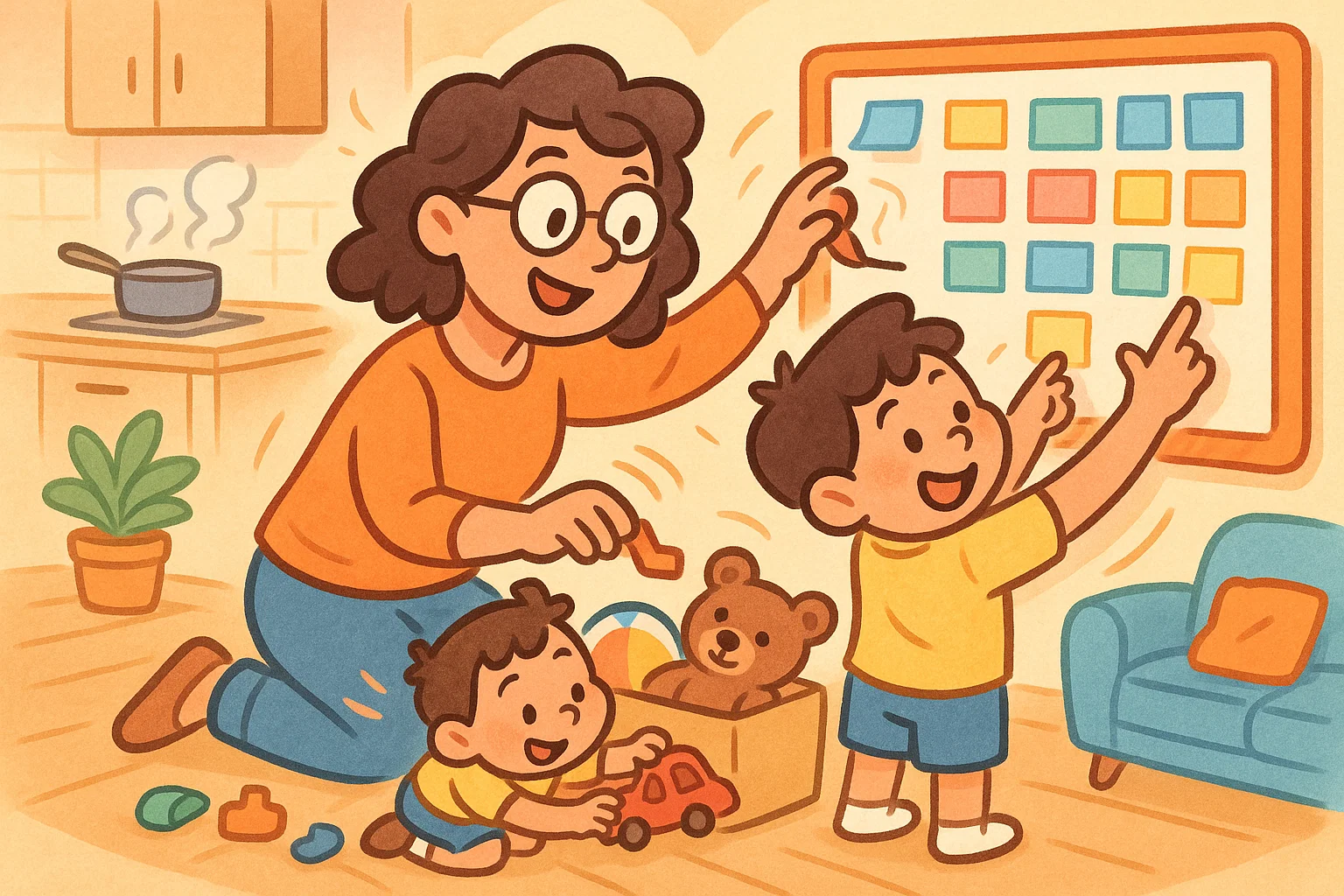
Pretend Shop Game
The Pretend Shop Game turns basic money concepts into an interactive, hands-on learning experience for younger kids. By setting up a mock store using toys, household items, and labeled price tags, parents create a low-pressure way to practice new skills.
During this activity, kids use play money to purchase goods, requiring them to practice basic counting and deciding how to spend their play money. This role-play scenario also reinforces vital social skills, such as waiting patiently in line, greeting a cashier, and making polite requests. Caregivers can gradually make the game harder by adding higher prices or asking kids to make changes.
Emotion Cards Game
The Emotion Cards Game is a structured activity designed to enhance emotional intelligence and perspective-taking in early childhood. This game uses cards with clear photos or illustrations of different facial expressions.
Children match each visual card to a specific named emotion, such as anger, surprise, or anxiety, and discuss what circumstances might cause that feeling. After the child identifies the emotion, an adult can help them choose an appropriate coping strategy from visual prompts. This exercise normalizes complex feelings and builds a practical vocabulary for healthy emotional expression.
Cleanup Race
The Cleanup Race reframes a repetitive daily chore into an exciting, high-energy challenge that minimizes task avoidance. Parents can use a favorite upbeat song or a five-minute visual timer to make quick tidying feel more motivating.
To maximize cognitive engagement, adults can introduce specific sorting rules, such as instructing the child to “collect only blue items first” or “find five stuffed animals.” This method keeps cleanup brief and lighthearted, which can help prevent overwhelm. The music gives kids a clear endpoint, so they know exactly when the task is finished.
Games for Older Children
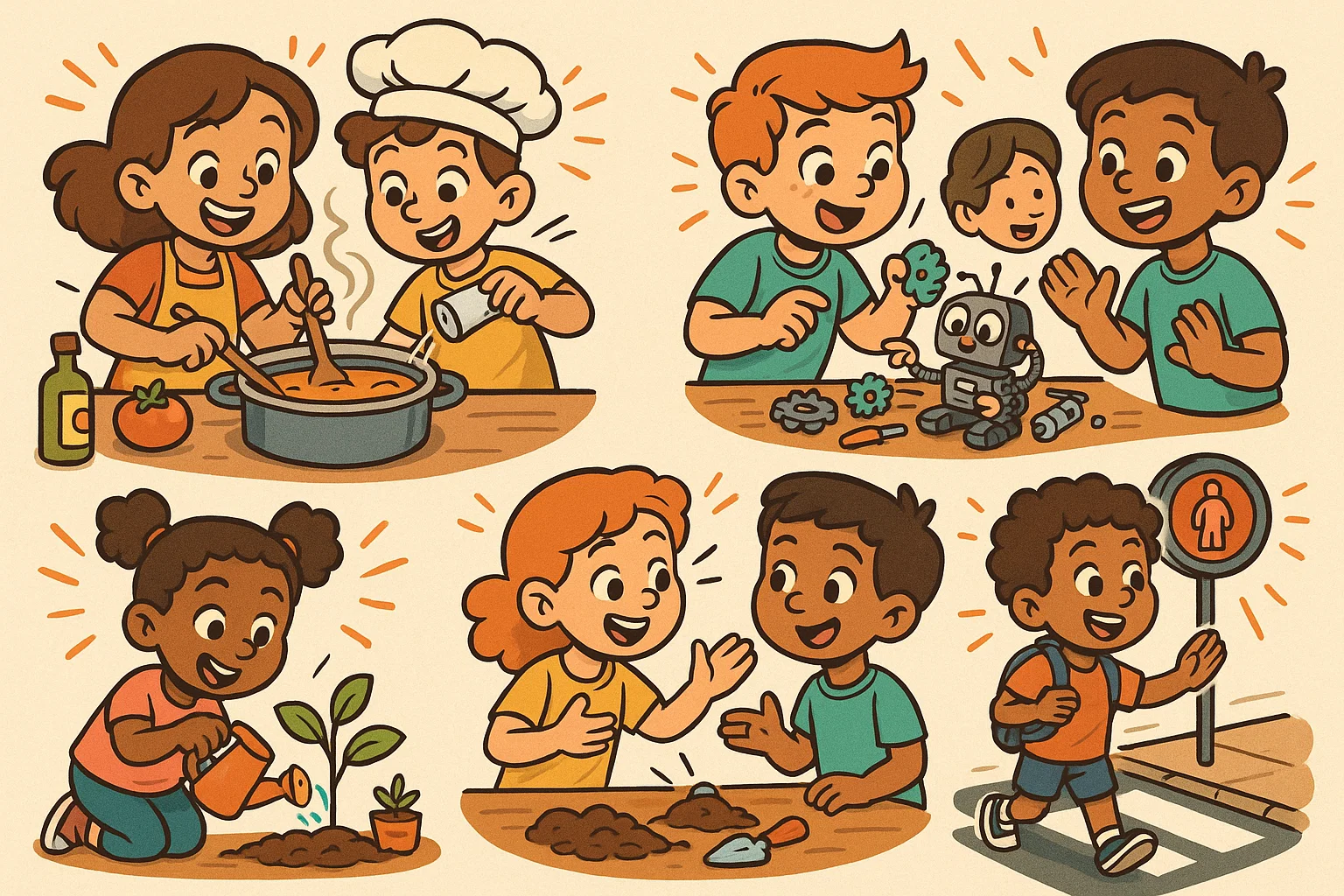
Team Challenge Games
Team Challenge Games help school-aged kids practice cooperation, planning, and clear communication. Activities such as building the tallest tower out of raw spaghetti and marshmallows or navigating an outdoor obstacle course require teamwork.
Participants practice sharing tasks, using limited materials, and adjusting their plan when something does not work. These games encourage kids to explain their ideas clearly and listen to their peers. A post-game reflection session led by an adult helps children analyze what communication strategies contributed to their team’s success.
Budget Shopping Game
The Budget Shopping Game applies math concepts directly to real-world shopping scenarios, building essential financial literacy. Parents give the child a fixed budget and a short grocery list before going into the store.
The child walks through the aisles, compares prices across brands, and makes choices between needs and wants. If the total cost exceeds the allocated budget, the child must decide which non-essential items to remove from the basket. This hands-on exercise teaches budgeting, trade-offs, and the value of comparing prices in a practical way.
Time Management Challenge
The Time Management Challenge teaches kids how to prioritize competing tasks and understand the passage of time more clearly. Children receive priority cards for daily tasks such as homework, music practice, bedroom cleanup, and free time.
Using a calendar and visual timer, the child creates an afternoon schedule that includes homework, chores, and free time. The game can include unexpected changes, such as a pretend bus delay, so the child can practice adjusting their plan. This exercise helps reduce transition anxiety by teaching kids how to plan their days intentionally.
Games for Teenagers
Real-World Scenario Cards
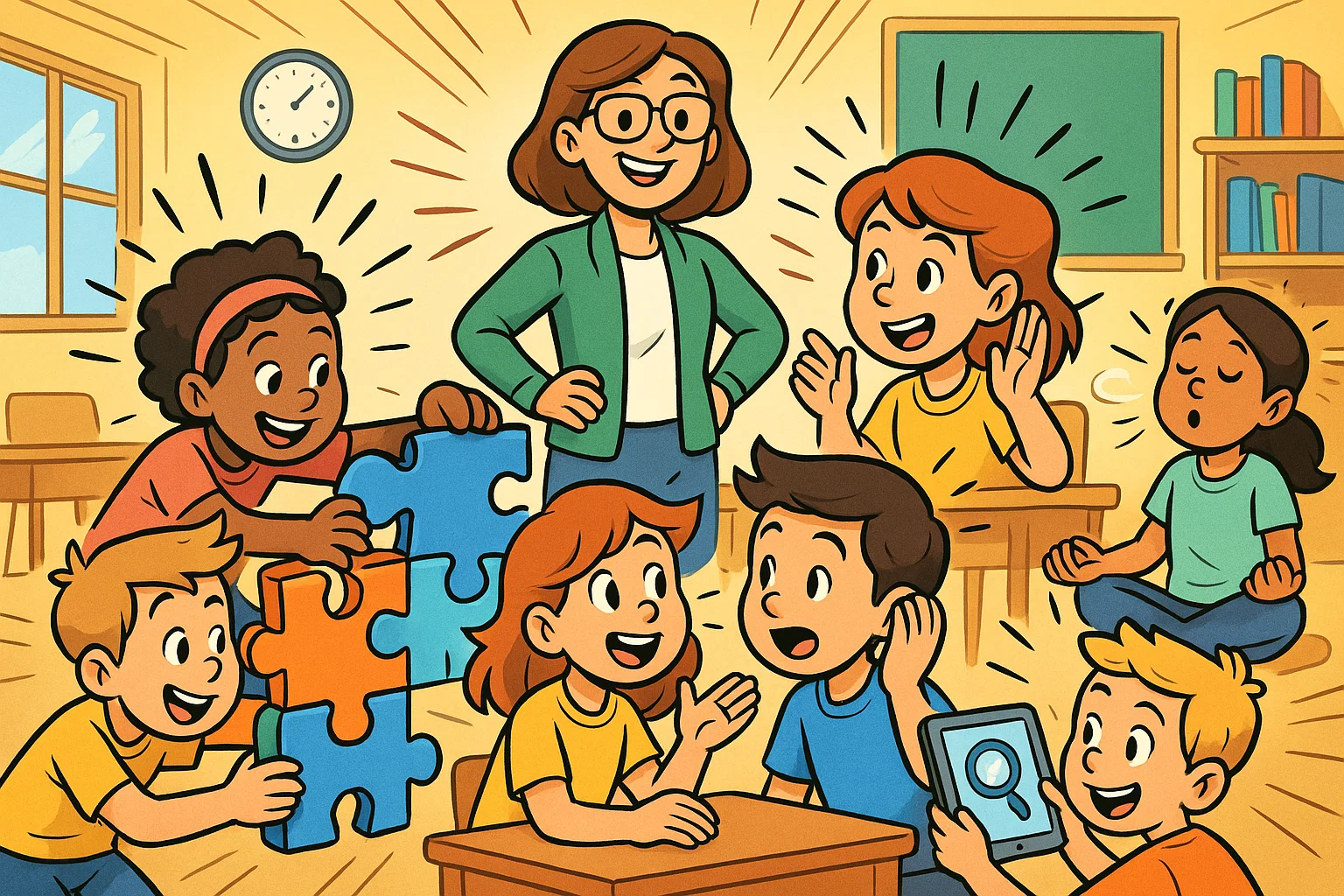
Real-World Scenario Cards help teenagers safely role-play everyday social and logistical challenges. Caregivers present cards with challenging situations, such as missing a bus, being charged the wrong amount, or facing unsafe peer pressure.
The teenager explains or acts out a step-by-step plan, including who to contact and what to say. This practice can reduce anxiety in real-life situations by helping teens prepare step-by-step responses in advance. Using this method encourages critical thinking, risk assessment, and self-advocacy without real-world consequences.
Meal Planning Challenge
The Meal Planning Challenge is an immersive, multi-day activity designed to evaluate a teenager’s independence at home and cooking skills. The teen is responsible for managing one family dinner, from planning and shopping to cooking and cleanup.
| Phase | Operational Steps | Targeted Competency |
| Phase 1: Planning | Inventory pantry, write list, calculate estimated costs | Resource management |
| Phase 2: Execution | Select ingredients at store, adhere to budget, apply kitchen skills | Practical math and safety |
| Phase 3: Cleanup | Wash cooking utensils, wipe surfaces, store leftovers safely | Household responsibility |
This activity shows teenagers that even one family meal takes planning, effort, and follow-through. Successfully preparing the meal builds confidence in the kitchen and gives them practice for more independent living .
Community Skills Practice
Community Skills Practice helps teenagers step outside familiar home routines and navigate public spaces more independently. Activities might include planning a round trip on public transit, volunteering at a local charity, or doing an informational interview with a professional.
Teenagers practice interacting politely with transit staff, reading public schedules, and handling unexpected delays. These real-world experiences build direction skills, confidence, and comfort when interacting with unfamiliar adults. As a result, these activities help adolescents feel more comfortable using and navigating public spaces responsibly.
1. Cooking Together
Measuring, Mixing, and Following Steps
Cooking is an excellent practical activity for teaching mathematics, literacy, and fine motor skills to kids. Reading a recipe helps kids practice reading comprehension and understand why steps need to happen in order. Measuring wet and dry ingredients gives children hands-on practice with volume, weight, fractions, and ratios.
Children learn to pay attention to details, such as heat levels and timers, to help the recipe turn out well. Pouring liquids, stirring thick batter, and leveling measuring cups can strengthen hand-eye coordination and spatial awareness. This hands-on process transforms abstract textbook math into an enjoyable, rewarding experience.
Kitchen Safety Rules
Teaching clear kitchen safety rules is an important part of helping children learn to cook. Caregivers should establish explicit behavioral boundaries before any food preparation begins to help prevent physical injury.
- Hygiene Prerequisite: Scrubbing hands thoroughly with warm water and soap for twenty seconds before handling food items.
- Heat Safety: Identifying hot surfaces, such as stove burners and oven doors, and using oven mitts consistently.
- Sharp Tool Safety: Using child-safe nylon knives with younger children and teaching the “claw grip” technique to older kids.
- Cross-Contamination Prevention: Keeping raw meat separate from ready-to-eat produce and sanitizing cutting boards immediately after use.
Confidence Boost Idea
To build a child’s confidence, give them age-appropriate creative control over one family meal or snack. Let the child choose a simple recipe, gather the ingredients, and lead the preparation while an adult steps in only for safety. Serving the final product to the family provides the child with immediate positive reinforcement and a deep sense of pride in their work.
2. Table Setting
Plate, Cup, and Napkin Placement
Table setting is a useful life skill that teaches spatial reasoning, patterns, and household responsibility. Educators and parents can simplify this sequencing task by using a visual placemat guide or a step-by-step picture card.
Children learn to center the dinner plate, position the fork to the left, and place the knife and spoon to the right with the blade facing inward. Practicing this arrangement supports working memory and fine motor control. This routine task helps kids understand that an organized environment contributes directly to functional daily living.
Counting Skills During Setup
Integrating basic math prompts into the table-setting routine reinforces numerical literacy naturally. Caregivers can ask the child to count how many people are eating and match that number to the needed plates, cups, and utensils. For example, “If four people are eating dinner, how many forks and plates do we need in total?” This application of arithmetic makes counting a practical tool rather than an isolated academic exercise.
Manners Practice
An organized table setting serves as an ideal framework for teaching kids essential social manners and emotional intelligence. Once seated, kids can practice patient turn-taking, passing platters safely, and using polite phrases such as “please” and “thank you.” This intentional mealtime structure encourages active listening and respectful family conversation, helping children learn how to socialize comfortably in formal settings.
3. Money Management
Coin Sorting Activity
Coin sorting is a hands-on financial literacy activity that introduces kids to coin values and categorization. Children gather an assortment of coins and sort them into distinct containers based on size, color, value, or country of origin.
An adult can help the child connect each pile of coins to what it could buy by placing simple price tags nearby. This exercise strengthens visual discrimination skills and helps kids understand that money has distinct units of value. Connecting physical attributes to mathematical values forms the basis for more advanced mental arithmetic and economic understanding.
Pretend Store Setup
Transforming a living room corner into a functioning marketplace allows children to apply financial skills in a realistic simulation. Kids gather toys, books, or snacks, assign them realistic play-money values, and act as either the customer or the merchant. This interactive exercise requires children to calculate totals, complete transactions, and provide accurate change. Exchanging play money for goods helps children understand that money is limited and connected to choices.
Save, Spend, Share Jars
Introducing a three-jar system gives children a simple visual way to practice saving, spending, and sharing. Whenever a child receives an allowance or monetary gift, they divide the total funds across three labeled transparent jars:
- Spend Jar: Used for small, immediate purchases like treats or small toys.
- Save Jar: Used for larger, long-term goals that require money to build up over time.
- Share Jar: Used for donations, helping others, or buying gifts for friends.
4. Shopping Practice
Picture Shopping List
A picture shopping list allows preliterate or neurodivergent children to take an active part in grocery shopping. Caregivers print out or sketch clear visual icons of required items, such as milk, apples, or bread, which the child carries through the store. The child is responsible for scanning the shelves, matching the visual icon to the real-world product, and placing it safely in the cart. This activity supports visual memory and helps kids stay focused, which may reduce wandering, overwhelm, or meltdowns in the store.
Price Comparison Game
For older children, the grocery store serves as a practical laboratory for learning cost-benefit analysis and math skills. Parents can challenge the child to compare alternative options for a single item on the shopping list, evaluating name brands against generic alternatives.
The child finds the unit price on the shelf label and compares which size offers the best value per ounce or gram. This exercise teaches children to look past bright marketing designs and focus instead on quantifiable data to make informed financial choices.
Store Manners
Public retail spaces provide an excellent environment for children to refine their situational awareness and communication skills. Caregivers can encourage kids to practice greeting store employees, waiting patiently in checkout lines, and asking for help politely. Teaching children to say “thank you” to cashiers reinforces respect and polite public behavior. These small interactions build social confidence and demystify public spaces for developing minds.
5. Cleaning Up
Toy Sorting Stations
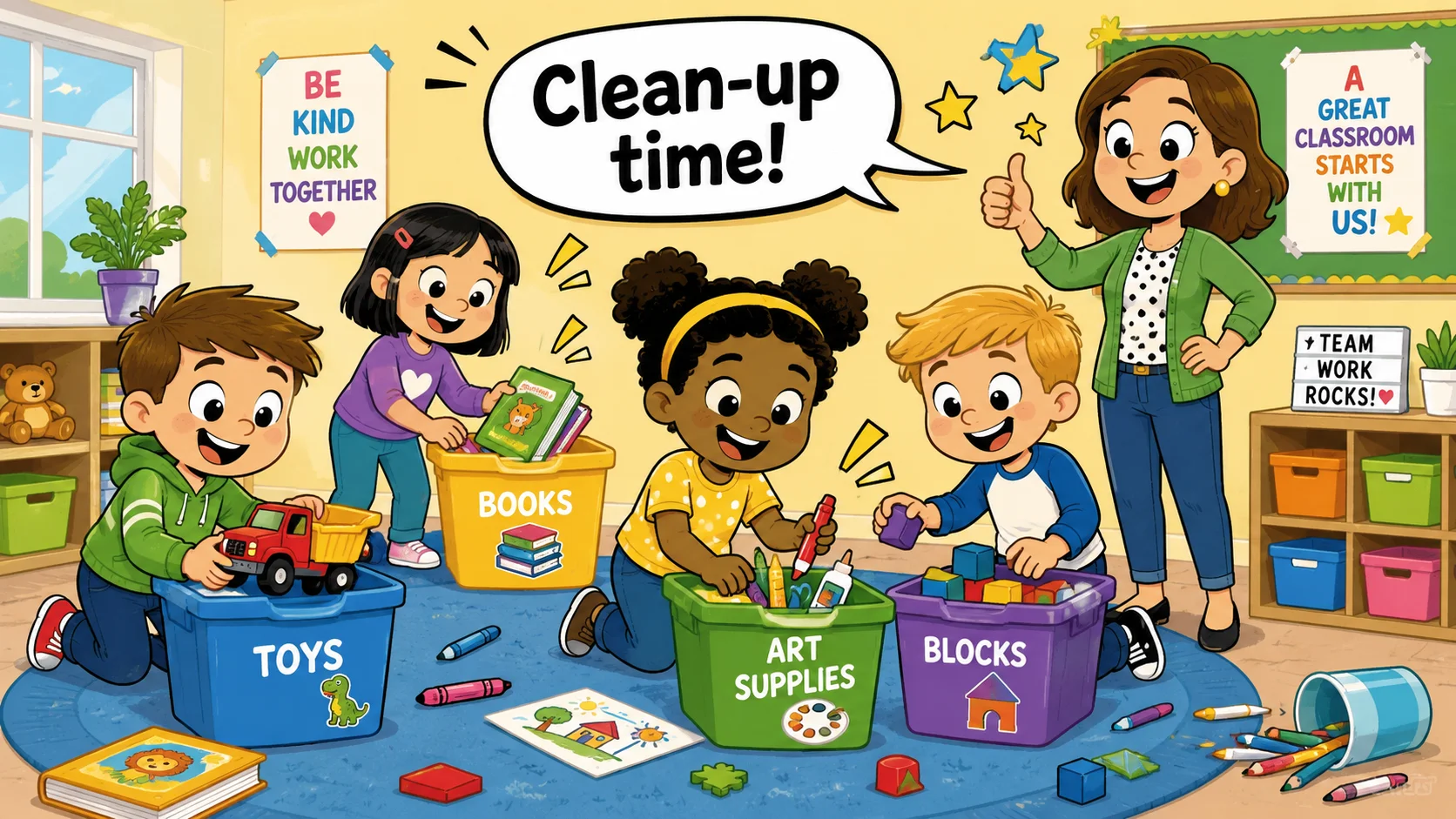
Creating dedicated toy-sorting stations in a bedroom or classroom makes cleanup easier and supports executive functioning. Bins should feature clear, color-coded visual labels or illustrations indicating exactly which items belong inside.
Children categorize their toys by type, separating action figures, building blocks, and art supplies into their respective containers. This approach helps kids feel less overwhelmed by a large mess because the chore is broken into smaller steps. Maintaining an organized space teaches kids to care for their belongings and shared spaces.
Room Reset Routine
A Room Reset Routine replaces vague instructions like “clean your room” with a clear three-step plan. Caregivers teach kids to address three specific categories sequentially:
- Trash: Collect and discard all wrappers, scraps, and disposable items first.
- Clothes: Gather all loose garments and place them directly into the laundry hamper.
- Toys: Return all remaining play items to their designated sorting bins.
This structured breakdown ensures that children can approach environmental organization systematically without requiring constant adult supervision.
Music Timer Cleanup
Using music as a behavioral pacing tool can turn a potentially tedious chore into an engaging game. Parents select a favorite upbeat song lasting approximately three to five minutes and challenge the child to complete a specific task before the music stops. This auditory boundary creates a sense of playful urgency and prevents the cleanup process from dragging out. Because the task has a clear and positive ending, children may be more willing to help tidy up again later.
6. Dishwashing Skills
Scrape, Rinse, Wash, and Dry
Dishwashing is a functional multi-step life skill that teaches sequencing, hygiene, and household cooperation. Caregivers should break the process down into four distinct, age-appropriate roles that can be shared among family members.
First, children learn to scrape food scraps into the trash or compost bin before rinsing dishes. Next, children rinse the dishes with warm water and scrub them with a soapy sponge. Finally, the cleaned dishes are placed carefully on a drying rack or wiped dry with a clean towel. This structured sequence supports cleanliness and establishes an efficient kitchen routine.
Sink Safety
Prioritizing physical safety at the kitchen sink helps prevent accidental injuries and broken dishes or glassware during the cleaning process. Caregivers should test the water first to make sure it is warm, not hot enough to scald. Children must be instructed never to submerge sharp utensils or knives in opaque, soapy water where they cannot be seen. Using non-slip step stools and teaching kids how to handle wet, slippery glassware minimizes accidental breakage and keeps the workspace safe.
Loading the Dishwasher
For older children, learning to load a dishwasher efficiently requires spatial reasoning and an understanding of how the appliance works. Kids should be taught to face dirty surfaces downward and inward toward the rotating spray arms to maximize water exposure. Grouping forks, spoons, and knives safely in the utensil basket teaches categorization and helps the dishwasher work efficiently. Mastering this mechanical skill reduces household energy waste and encourages kids to maintain kitchen organization independently.
7. Laundry Practice
Color Sorting Game
The Color Sorting Game introduces young kids to basic laundry care through a simple sorting activity. Children gather family laundry and separate garments into distinct physical piles based on fabric color and wash requirements.
Kids sort whites, darks, and bright colors into separate laundry baskets to help prevent dye transfer in the wash. This sorting exercise strengthens visual identification skills and helps children understand that different materials require unique care. Turning a standard household chore into a playful sorting race keeps young minds engaged while contributing to family routines.
Folding Challenge
The Folding Challenge improves fine motor control and spatial precision by teaching children how to organize clean textiles neatly. Caregivers can show simple ways to fold towels into rectangles and roll T-shirts to save drawer space. Matching socks into pairs works like a visual memory game and supports household organization. Children can track their progress using a checklist, turning the mastery of clothing storage into an enjoyable skill-building challenge.
Laundry Routine Checklist
A laundry routine checklist gives kids a reusable step-by-step guide posted near the washing machine. This card guides the child through collecting hampers, measuring detergent, selecting the correct wash cycle, and moving clothes to the dryer.
Following a written or illustrated checklist helps prevent common mistakes, such as using too much detergent or choosing heat settings that may damage clothing. This system allows adolescents to manage their personal wardrobe care independently, building long-term self-sufficiency.
8. Getting Dressed
Weather Clothing Choices
Learning to select appropriate clothing based on changing weather conditions builds critical thinking and environmental awareness in young children. Caregivers can encourage children to look out the window or check a digital thermometer before choosing their outfit for the day.
Children learn that rainy days call for waterproof jackets and boots, while cold winter days require warm layers, gloves, and hats. This decision-making process helps kids connect environmental data directly to personal comfort and safety. Encouraging autonomy in clothing selection minimizes morning arguments and fosters practical reasoning skills.
Buttons, Zippers, and Laces
Mastering complex garment fasteners is a major physical milestone that requires advanced bilateral coordination and finger dexterity. Caregivers can support this development by providing dedicated practice boards, dressing dolls, or oversized old jackets with large fasteners.
Teaching children simple phrases, such as “pinch the base and pull the zipper,” can make tricky movements easier to remember. Consistent practice with buttons, zippers, and shoelaces prevents school morning delays and reduces the need for constant adult assistance. Overcoming these physical challenges builds patience and reinforces the value of persistence in early childhood.
Morning Routine Support
Integrating self-dressing into a broader morning routine minimizes transition anxiety and keeps children organized before school. Parents can implement pre-arranged outfit baskets containing an entire week’s worth of coordinated clothing to simplify morning decisions. Visual schedule boards with a “first-then” structure show that dressing comes before preferred activities, such as breakfast or playtime. This predictable structure helps children move through the morning more independently and start the day feeling focused and calm.
9. Personal Hygiene
Handwashing Song
A handwashing song is a simple, evidence-informed way to teach children hygiene habits that help reduce the spread of germs. Caregivers teach children a specific twenty-second song, such as “Happy Birthday” or an interactive scrubbing rhyme, to time the handwashing process accurately.
Children follow a structured physical sequence: wetting hands, applying soap, scrubbing palms, cleaning between fingers, rinsing thoroughly, and drying completely with a clean towel. This routine reinforces healthy habits and helps children understand that proper hygiene takes time and attention.
Toothbrushing Timer
Good oral hygiene includes brushing for two full minutes, which can feel abstract to children without visual support. Parents can introduce colorful sand timers, illuminated toothbrushes, or interactive mobile apps to make this timeframe concrete. A visual chart placed near the bathroom mirror outlines the proper brushing angles for upper, lower, front, and back teeth. This structured approach prevents hurried, ineffective brushing habits and helps children maintain dental health more independently.
Grooming Checklist
A grooming checklist outlines daily personal care habits for older children and supports self-respect and body awareness. This visual or written chart covers essential steps such as brushing hair, washing the face, applying sunscreen, and using deodorant.
Checking off each item daily helps children develop consistent self-care habits as they enter adolescence. This checklist gradually shifts responsibility for daily grooming from the parent to the child and supports self-reliance.
10. Toileting Routines
Bathroom Sequence Cards
Toileting routines require the execution of complex physical and hygienic steps that can be challenging for younger children or neurodivergent learners. Displaying laminated bathroom sequence cards near the toilet provides clear visual reminders for every stage of the process.
The cards illustrate an explicit sequence: lowering undergarments, sitting comfortably, wiping thoroughly, replacing clothing, flushing the toilet, and washing hands with soap. This visual structure can reduce confusion and limit the need for adult reminders, which helps protect the child’s privacy and dignity.
Privacy Rules
Teaching clear privacy rules helps children understand personal boundaries, body safety, and social expectations. Caregivers teach children to close the bathroom door when using the toilet and to knock before entering a restroom that someone else is using. Children learn how to ask for physical assistance appropriately using clear, specific vocabulary if they encounter difficulties with clothing or hygiene. Respecting these boundaries helps children develop a healthy understanding of personal space and mutual respect within the household.
Calm Support Plan
Implementing a calm support plan is essential for navigating toileting accidents without causing emotional distress or behavioral regression. Caregivers should use neutral, matter-of-fact language when accidents occur, prioritizing emotional reassurance and collaborative cleanup over punishment. Maintaining a predictable bathroom schedule can reduce anxiety and support body awareness. Collaborating closely with teachers and therapy support staff ensures that the child experiences consistent expectations across all learning environments.
11. Food Prep
Healthy Snack Station
A healthy snack station encourages healthy eating habits by letting children choose from nutritious, pre-portioned snacks. Parents designate an accessible lower shelf in the refrigerator or pantry and stock it with wholesome, pre-portioned options.
Children can independently choose items such as sliced fruit, whole-grain crackers, string cheese, and pre-washed vegetables when they feel hungry. This setup can reduce constant snack requests and teach children to choose more nutritious foods. Providing controlled options empowers children to listen to their body’s hunger cues responsibly.
Spreading, Pouring, and Peeling
Practicing basic food preparation techniques refines a child’s fine motor control and safety awareness in the kitchen. Caregivers can introduce child-safe, ergonomic tools such as dull nylon spreaders, small silicone pitchers, and plastic vegetable peelers.
Children practice spreading condiments evenly onto bread, pouring liquids carefully without spilling, and peeling bananas or boiled eggs. These physical tasks build muscle memory, spatial precision, and focus. Engaging in these simple food preparation activities serves as an excellent introduction to advanced culinary skills.
Cleanup After Snack
Connecting food preparation to cleanup teaches children that tidying up is part of the routine. After enjoying their snack, children can wipe their spot at the table, wash their dishes, and close food packages properly. This comprehensive habit prevents household messes and teaches children to take responsibility for their personal dining space.
12. Kitchen Safety Visuals
Hot, Sharp, and Slippery Signs
Kitchen safety visuals use clear, easy-to-understand symbols to warn children of immediate environmental hazards. Laminated icons with bright colors or clear warning patterns can be placed near potentially dangerous areas in the kitchen.
- Hot Surfaces: Red flame icons affixed to oven doors, stovetops, and toaster exteriors.
- Sharp Objects: Yellow caution triangles placed near knife blocks and food processor storage areas.
- Slippery Zones: Blue water-droplet symbols displayed near sink basins and floor cleaning areas.
These visual reminders help children recognize potential dangers quickly, encouraging safer behavior throughout the kitchen.
Safe Food Handling
Teaching safe food handling procedures helps prevent foodborne illnesses and instills an understanding of basic food safety. Children learn to wash their hands thoroughly before touching any food items and after handling raw ingredients or packaging. Caregivers teach kids to use separate cutting boards for raw meats and fresh produce to avoid dangerous cross-contamination. Checking expiration dates and cleaning surfaces before and after cooking reinforces the importance of a clean workspace.
Emergency Steps
Establishing clear emergency protocols ensures that children can respond calmly and effectively to unexpected kitchen accidents. Caregivers can display a visible contact card with emergency numbers, family phone numbers, and the home address.
Children learn where the household first aid kit is and practice basic responses, such as cooling a minor burn with cool running water and telling an adult. Teaching kids when to handle a situation independently and when to seek adult help immediately builds confidence and safety awareness.
13. Basic First Aid
Small Cut Care
Teaching children basic first aid skills empowers them to handle minor physical injuries calmly and responsibly. Caregivers guide children through a simple, memorable four-step response process when dealing with a minor scratch or scrape:
- Wash: Rinse the injured area gently under clean running water to remove dirt.
- Dry: Pat the surrounding skin dry with clean gauze or a clean towel.
- Protect: Apply an adhesive bandage to help keep the wound clean.
- Report: Inform an adult about the injury to ensure it receives proper evaluation.
This straightforward routine minimizes panic and teaches children how to take care of their physical well-being.
Emergency Contact Practice
Memorizing personal identification and emergency contact information is a crucial safety skill for all children. Caregivers help children learn their full name, home address, parent phone numbers, and how to dial emergency services correctly.
Using role-play with a pretend or disconnected phone lets children practice speaking clearly in an emergency. This safety preparation ensures that children can provide essential details to authorities if a crisis occurs outside the home.
Safety Role-Play
Safety role-play exercises allow children to practice emergency decision-making in a controlled, supportive environment. Caregivers simulate common scenarios, such as a peer falling on the playground, a family member feeling suddenly ill, or encountering an unfamiliar animal. Children practice evaluating the environment for danger, checking on the individual, and calling for adult assistance using clear language. This practice helps children replace fear with simple actions they can remember in real situations.
14. Time Management With Visual Schedule
Morning Routine Board
A morning routine board turns abstract time expectations into a clear visual sequence for children. This scheduling tool displays a vertical or horizontal progression of icons representing essential morning tasks.
Children move a marker or flip a tab after completing each task, such as waking up, getting dressed, brushing teeth, and packing their school bag. This visual structure allows children to monitor their own progress without requiring constant reminders from parents. Establishing this predictable routine reduces morning stress and helps children start their day focused and organized.
Timer-Based Tasks
Using physical or visual countdown timers makes the passage of time concrete and measurable for young learners. When children can see time ticking down, they learn to pace themselves during activities like reading, chores, or screen time. Timers create clear boundaries and can reduce arguments during transitions between tasks. This structure helps children stay focused on completing their work within an allotted timeframe, improving their overall time management skills.
Weekly Planner Practice
For older children, introducing a weekly planner helps develop long-term organization and goal-setting habits. Kids learn to map out their week by scheduling fixed commitments like school, sports, chores, and music lessons alongside free time.
Tracking deadlines and balancing responsibilities teaches children how to prioritize tasks and prevent last-minute procrastination. This planning practice helps adolescents develop the executive functioning skills required to manage complex academic and personal schedules independently.
Frequently Asked Questions
How Do You Make Learning Life Skills Fun for Kids?
The best way to make learning life skills feel natural is to connect lessons to everyday tasks children already see at home. Instead of presenting chores as obligations, parents can make it fun by turning simple routines into games, challenges, or shared family activities. For example, sorting laundry, setting the table, or helping prepare a snack can become a fun activity that builds confidence and independence.
What Are the Best Ways to Teach Life Skills to Children?
Teaching life skills to kids works best when adults model the task first, practice it together with the child, and then give the child a chance to try independently. A hands-on way to introduce life skills to children is to use visual steps, short routines, and real-life practice rather than long explanations. Activities like cooking, shopping, cleaning, and organizing provide an opportunity to teach valuable skills in a practical and memorable way.
How Can a Life Skills Checklist Help Children Build Independence?
A life skills checklist gives children a clear structure for learning everyday routines step by step. It can include skills like brushing teeth, getting dressed, packing a school bag, cleaning up toys, and helping cook a meal. When children can see what comes next, they are more likely to develop life skills with less frustration and more confidence.

Take a short quiz to find out what your everyday choices say about your parenting style
When your child is curious about something new, what’s your instinct?
Take a short quiz to find out what your everyday choices say about your parenting style
“Can I download this app?” What happens next?
Take a short quiz to find out what your everyday choices say about your parenting style
When it comes to rules at home, which sounds most like you?
Take a short quiz to find out what your everyday choices say about your parenting style
If you could give your child one life skill today, what would you pick?
Take a short quiz to find out what your everyday choices say about your parenting style
Your child gets to choose what to watch. What would your ideal setup look like?
Take a short quiz to find out what your everyday choices say about your parenting style
Pick your parenting superpower ✨