
41 Kindness Activities for Kids: Simple Ideas for Home, School, and Community

 Discover a Free Education Video App for Kids
Pastory uses AI to personalize educational video content based on your child’s interests and personality. Safe, engaging, and built for curious young minds. Sign up now to stay updated and enjoy early access with a free trial
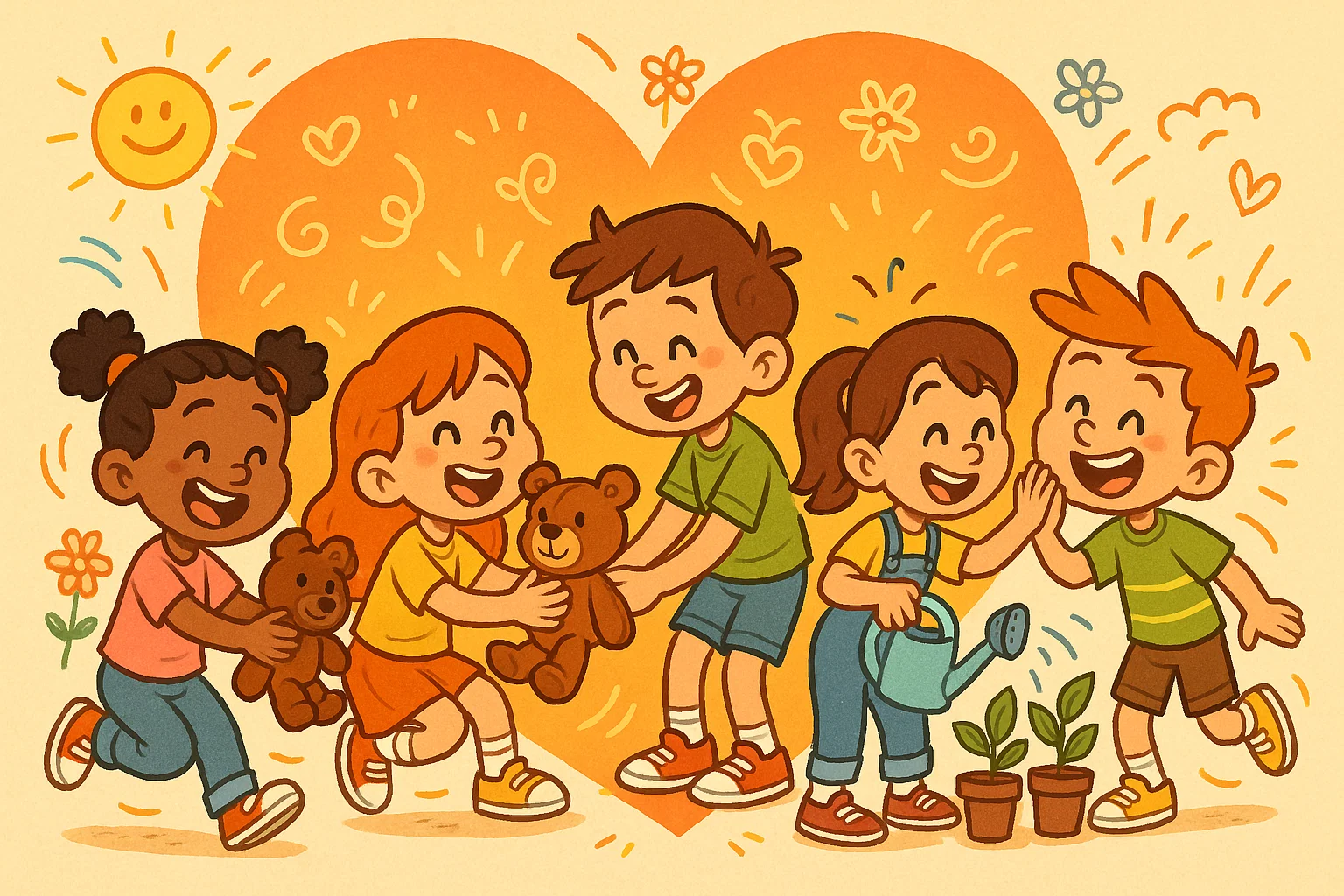
Kindness activities are one of the most effective ways to help children build empathy, emotional intelligence, and social awareness as they grow. This guide offers practical, age-adaptable activities for toddlers, preschoolers, elementary school children, families, and classrooms.
With kindness-themed crafts, worksheets, cooperative games, service projects, inspiring books, songs, calendars, and daily reflection prompts, parents and teachers can make compassion part of children’s everyday routines. These ideas can be used as a 41-day kindness challenge or chosen one at a time whenever you need a meaningful activity.
Key Takeaways
- Continuous Practice: Kindness grows through repeated, small daily interactions rather than isolated lessons.
- Developmental Alignment: Tailoring activities to a child’s age, setting, and energy level helps keep them engaged.
- Reflective Processing: Ending activities with guided questions helps children understand emotions and the impact of their actions.
- Comprehensive Toolkits: Using structured resources – such as calendars, crafts, and games – helps create a lasting culture of kindness.
Kindness Activities Work Best Through Practice
Research on child development suggests that children learn kindness through repeated small actions, not one-time lectures. Habits related to prosocial behavior develop when kind actions are practiced regularly at home, in the classroom, on the playground, and in the community.
When children regularly practice small acts of kindness, such as sharing a toy on the playground or helping school staff, the behavior is more likely to become a habit rather than just a rule they follow.
Activities Should Match Age, Setting, and Energy Level
A strong kindness lesson should be adapted to a child’s developmental stage and current setting. For example, some kindness activities are quiet and reflective, making them ideal for home, independent work, or post-recess cool-downs.
Active, creative, or service-based tasks often work best in larger classrooms, where children’s energy can be channeled into collaborative group projects.
Best Results Come From Reflection
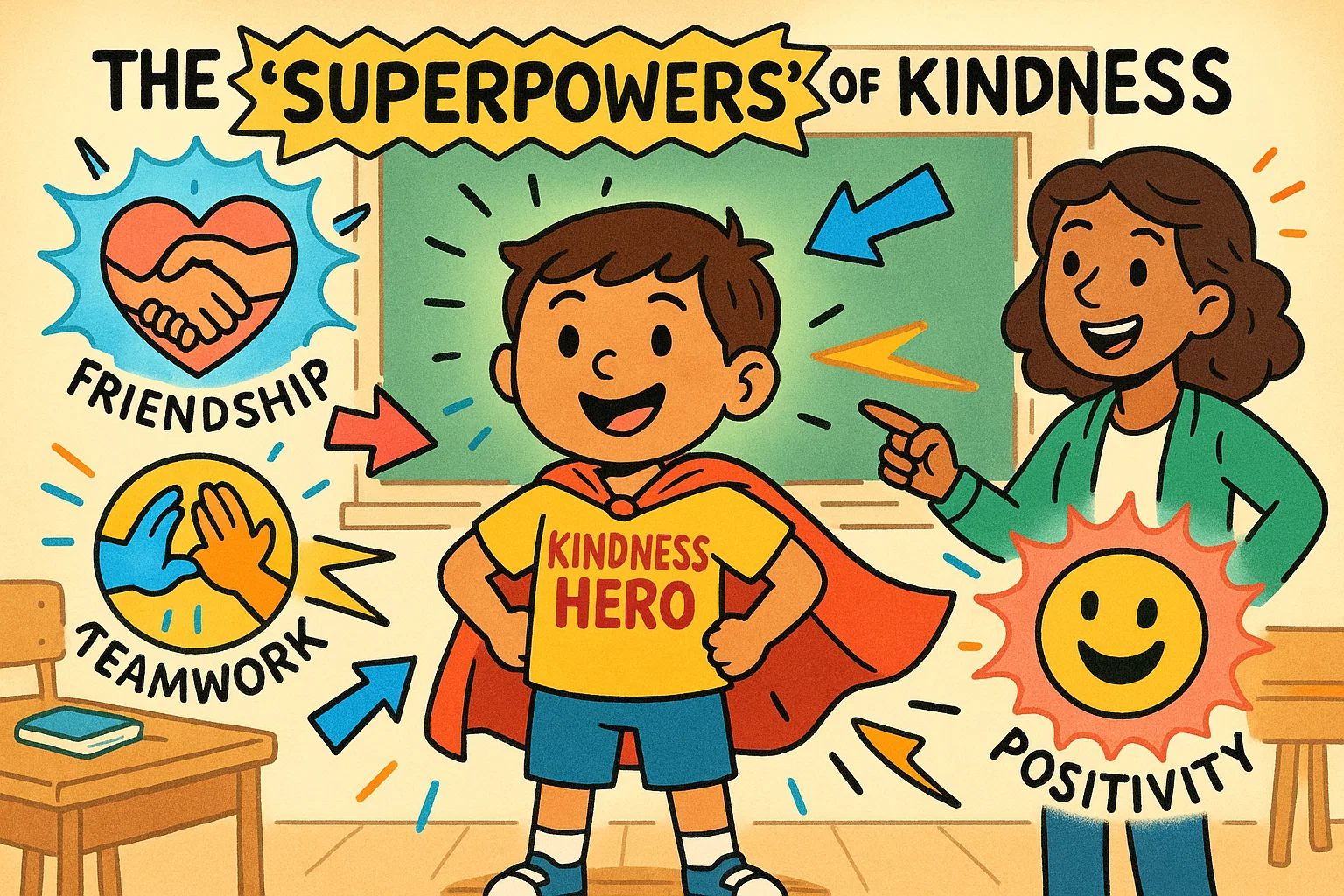
To help kindness shape long-term behavior, each activity should end with a short guided reflection. A quick question, kindness journal entry, or family check-in can help children connect what they did with how someone else may have felt.
This reflective step helps children understand the emotional impact of their actions and reinforces the true value of being kind to others.
How to Teach Kindness
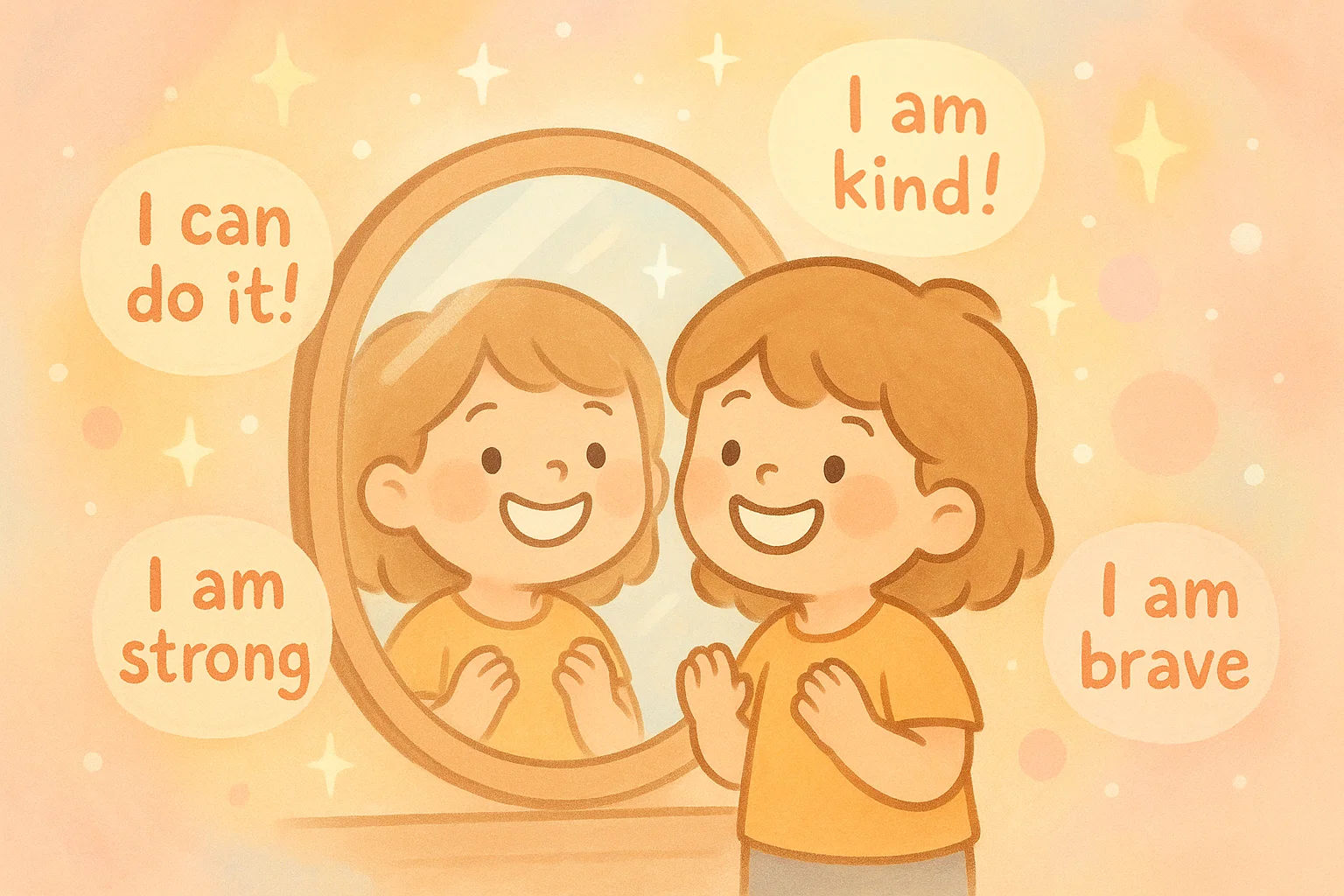
Children learn to show kindness when adults model it, name kind behavior clearly, and give them time to talk about what happened. Parents and teachers are the main role models children look to as they learn how to treat others.
Model Kind Actions Daily
Adults can help children build empathy by talking through their own kind choices throughout the day. When a parent or teacher explains why they help a neighbor, thank a service worker, check on a lonely classmate, or speak gently when frustrated, they make empathy easier for children to understand.
Praise Specific Kind Behavior
Instead of using general praise, give children specific feedback that names the exact kind act you noticed and want to encourage.
Example of behavioral praise:
“You noticed your friend was sitting by themselves and looked sad, so you invited them to play with blocks with you.”
Use Questions Kids Can Answer
To help kids practice kindness, replace lectures with reflective questions that encourage them to think. Ask child-friendly questions during transitions or mealtimes to keep social awareness part of everyday conversation.
- “Who needed help or a friend at school today?”
- “What action did you take that made someone smile?”
- “What kind choice could we try together next time?”
What Kindness Means for Kids
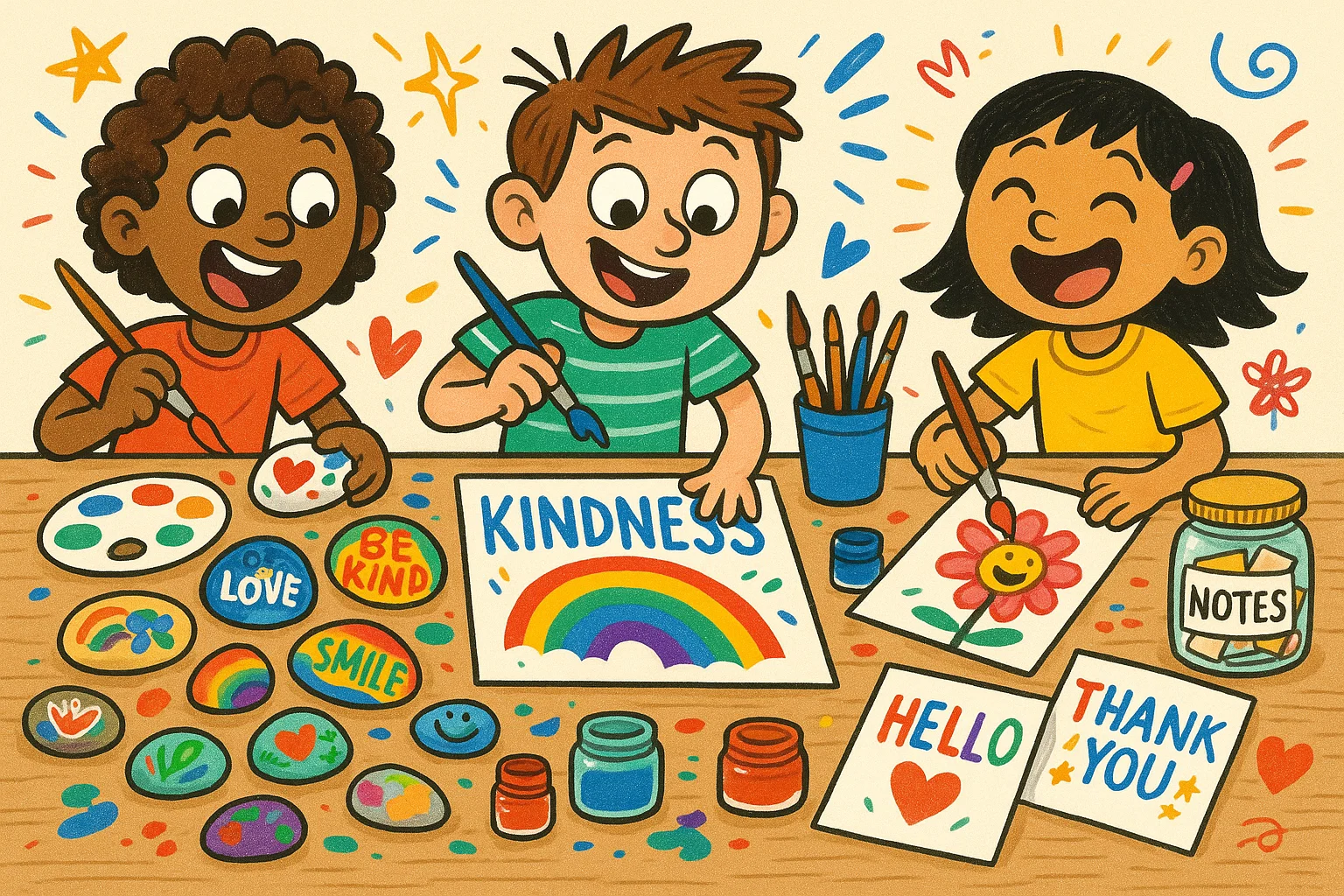
To help kids navigate social situations, explain compassion in simple, everyday terms.
Simple Definition for Children
For younger kids, kindness means noticing other people, caring about their feelings, and choosing helpful words or actions. It means understanding that our choices can affect how the people around us feel.
Examples Kids Recognize
Children understand kindness best when they see clear, everyday examples in familiar places.
| Environment | Recognizable Example of Kindness |
| Classroom | Sharing crayons, inviting a new student to sit at a table, helping a peer clean a spill. |
| Home | Helping a sibling with a difficult task, cleaning up toys without being asked. |
| Community | Writing a thank-you note to a mail carrier, holding the door open for a stroller. |
Common Mistakes Kids Make
As children grow, they often need gentle coaching when well-meant behavior causes social challenges. These may include being bossy while trying to help, offering unwanted help, people-pleasing, or ignoring their own boundaries and needs to keep others happy.
Kindness Chain
A kindness chain is a classic visual activity used at home and in classrooms to show how individual actions contribute to a larger community.
Materials Needed
- Construction paper strips in assorted colors
- Washable markers or crayons
- Clear tape, glue sticks, or a handheld stapler
- A wall space or bulletin board for display
How to Run the Activity
Every time a child performs or notices an act of kindness, the child or teacher writes the action on a slip of paper. The child then loops the paper strip through the previous link and secures it with tape or staples, so the chain grows visibly over time.
Reflection Prompt
“What happens to our room and our community when many small acts of kindness connect?”
Bucket Fillers
Based on popular children’s books and classroom SEL resources, the “bucket filling” concept uses a simple metaphor: in the story, everyone carries an invisible bucket that represents how they feel.
Bucket Filler Examples
Children can fill someone else’s bucket by:
- Giving sincere compliments
- Offering help
- Listening without interrupting
- Sharing materials
- Inviting left-out peers to join group activities
Classroom Display Idea
Teachers can create a classroom display with small paper cups or pockets labeled with each child’s name, along with a central “kindness bucket.”
Children can write kind notes on slips of paper and place them in the bucket. At a set time each day or week, an adult reviews the notes and places them in each child’s cup or pocket.
Discussion Angle
Lead a group discussion about how positive actions fill someone’s bucket, while unkind words or exclusion can dip into it and lower someone’s emotional reserve.
Wrinkled Heart Activity
The Wrinkled Heart activity is a powerful hands-on visual lesson that shows the lasting impact hurtful words can have on someone’s feelings.
Activity Setup
Give each child a clean, smooth paper heart. Ask children to fold, crumple, or wrinkle the paper heart whenever they hear an unkind phrase during a role-play scenario, then try to smooth it flat again.
Teaching Point
This exercise teaches children that apologies matter, but hurtful words can leave lasting marks, which is why careful speech is important.
Follow-Up Writing
To move into a constructive phase, ask kids to write or draw soothing, encouraging phrases on the creases of the paper heart to symbolize repair and support.
T.H.I.N.K. Before Speaking
The T.H.I.N.K. acronym gives older kids a simple filter for checking their words before speaking or posting online.
Meaning of T.H.I.N.K.
- T — Is it True?
- H — Is it Helpful?
- I — Is it Inspiring?
- N — Is it Necessary?
- K — Is it Kind?
Practice Scenarios
Introduce common social scenarios – such as teasing, playground gossip, correcting a classmate’s mistake, making a sarcastic joke, or giving feedback – and ask children whether each statement passes the filter.
Classroom Poster Idea
Have students design kindness posters with examples of phrases that pass all five parts of the T.H.I.N.K. test.
Letter to Someone
Writing a heartfelt letter or making an appreciation card helps children focus on others and notice the people who support them.
Who Kids Can Write To
Children can write meaningful messages to:
- Grandparents
- Teachers
- Classmates
- Neighbors
- Cafeteria workers
- Librarians
- Family members
Letter Prompts
Provide sentence starters to help children express appreciation in a specific and meaningful way:
- “Thank you so much for helping me with…”
- “I especially like it when you choose to…”
- “You made a big difference for me when you…”
Delivery Ideas
Choose a clear way to deliver the letters, such as hand delivery, a classroom mailbox, a family mail basket, or a supervised community card drop-off.
Empathy Role-Play
Empathy role-play helps children imagine how others might feel and practice responding with care.
Simple Scenarios
Use realistic, age-appropriate scenarios to build social skills:
- A new student sits alone on their first day of school.
- A close friend loses a cherished toy on the playground.
- A younger sibling feels excluded from an older child’s game.
- A sports teammate makes a mistake during a game.
Feeling Words Practice
Build emotional vocabulary into the role-play to expand children’s social-emotional skills. Focus on precise terms such as:
- Disappointed
- Nervous
- Proud
- Lonely
- Embarrassed
- Excited
- Calm
Kind Response Practice
Ask children to brainstorm and practice helpful words or actions that match the feelings in each scenario.
Volunteer Project
Structured volunteer work gives classrooms and families a practical way to care for their community.
Volunteer Ideas by Age
For younger kids, focus on accessible tasks such as sorting donation bins or creating handmade seasonal cards.
For older kids, try more active projects, including organizing neighborhood food drives, participating in local environmental cleanups, or establishing peer tutoring networks.
Community Partner Ideas
Partner with local organizations, such as:
- Homeless shelters and family support centers
- Public libraries
- Senior living centers
- Animal rescue shelters
- Local children’s hospitals
Reflection After Volunteering
“What needs did you notice during our service project, who did we help, and what should we plan next?”
Kindness to Workers
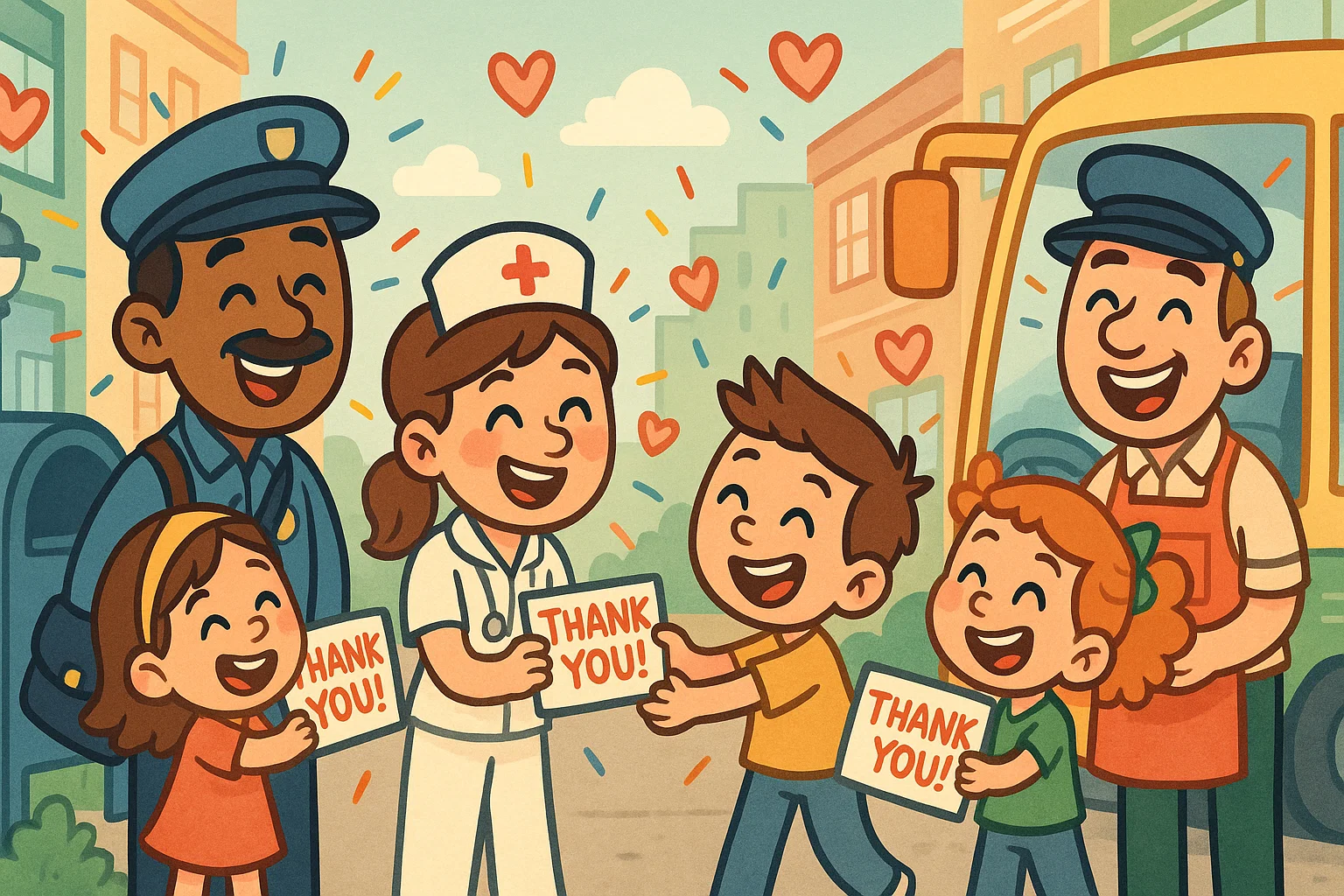
This activity helps children notice and thank the service workers who keep their communities safe, clean, and running smoothly.
Workers Kids Can Thank
Children can thank:
- School bus drivers
- Crossing guards
- School nurses
- Custodians
- Delivery drivers
- Grocery store employees
- Local firefighters
- School office staff
Appreciation Card Activity
Ask children to make personalized appreciation cards with artwork and specific thank-you messages that explain how that worker helps the community.
Respectful Behavior Link
Connect this craft to daily actions by teaching children that kindness includes waiting patiently in line, offering warm greetings, making polite eye contact, and using polite phrases when asking for help.
Help Other Kids
Focusing on peer-to-peer interactions helps students create a more inclusive and welcoming environment at school and in their neighborhoods.
Playground Inclusion Ideas
Encourage children to:
- Look for peers sitting alone
- Share recess equipment
- Help peers understand game rules
- Switch teams to make play fairer
School Support Ideas
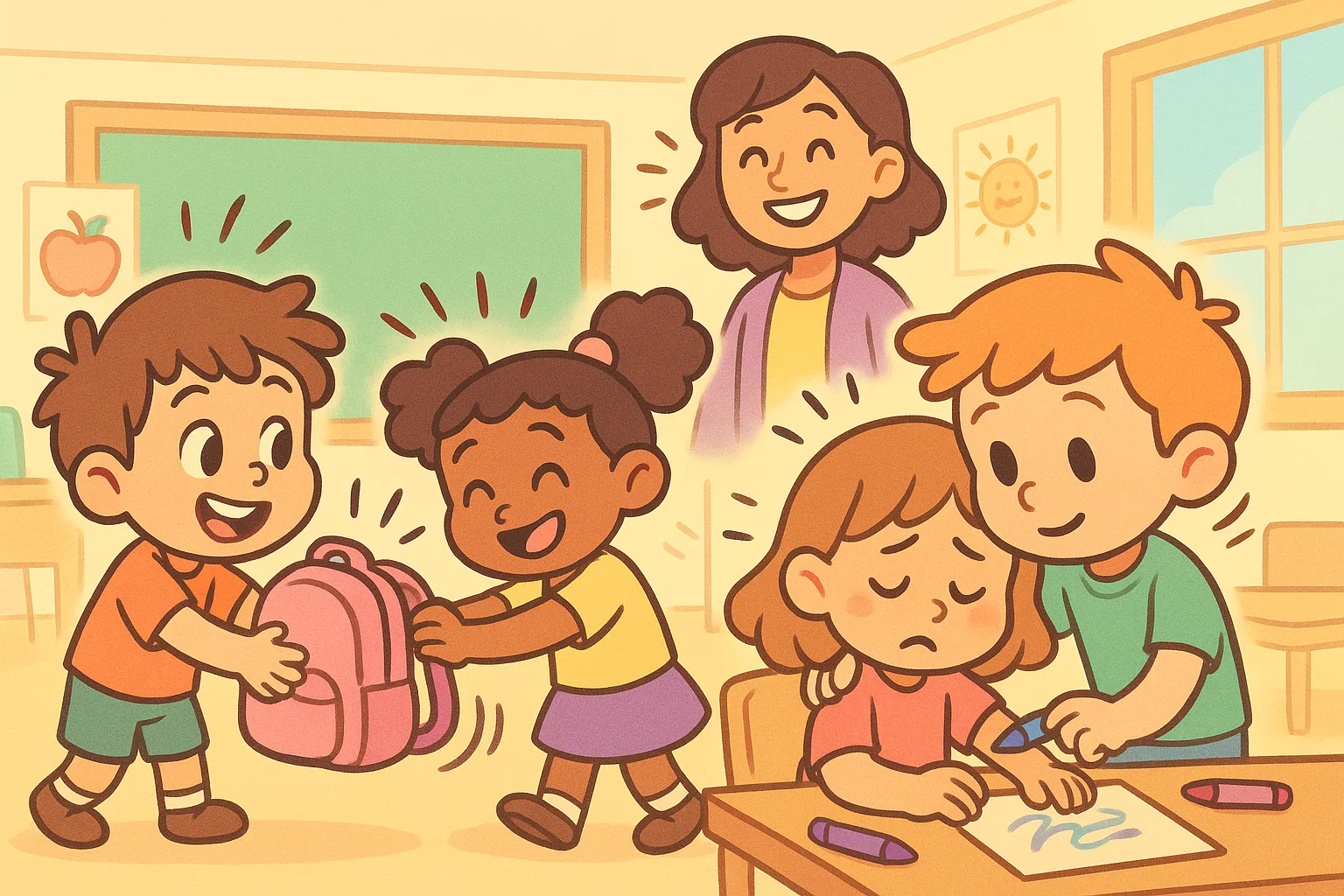
Students can support peers by helping find misplaced supplies, explaining confusing assignment directions, welcoming new classmates, or being a supportive partner during group work.
Anti-Exclusion Discussion
Lead an open discussion about how it feels to be left out, and give children clear ways to respond when they see exclusion happening.
Kindness Through Stories
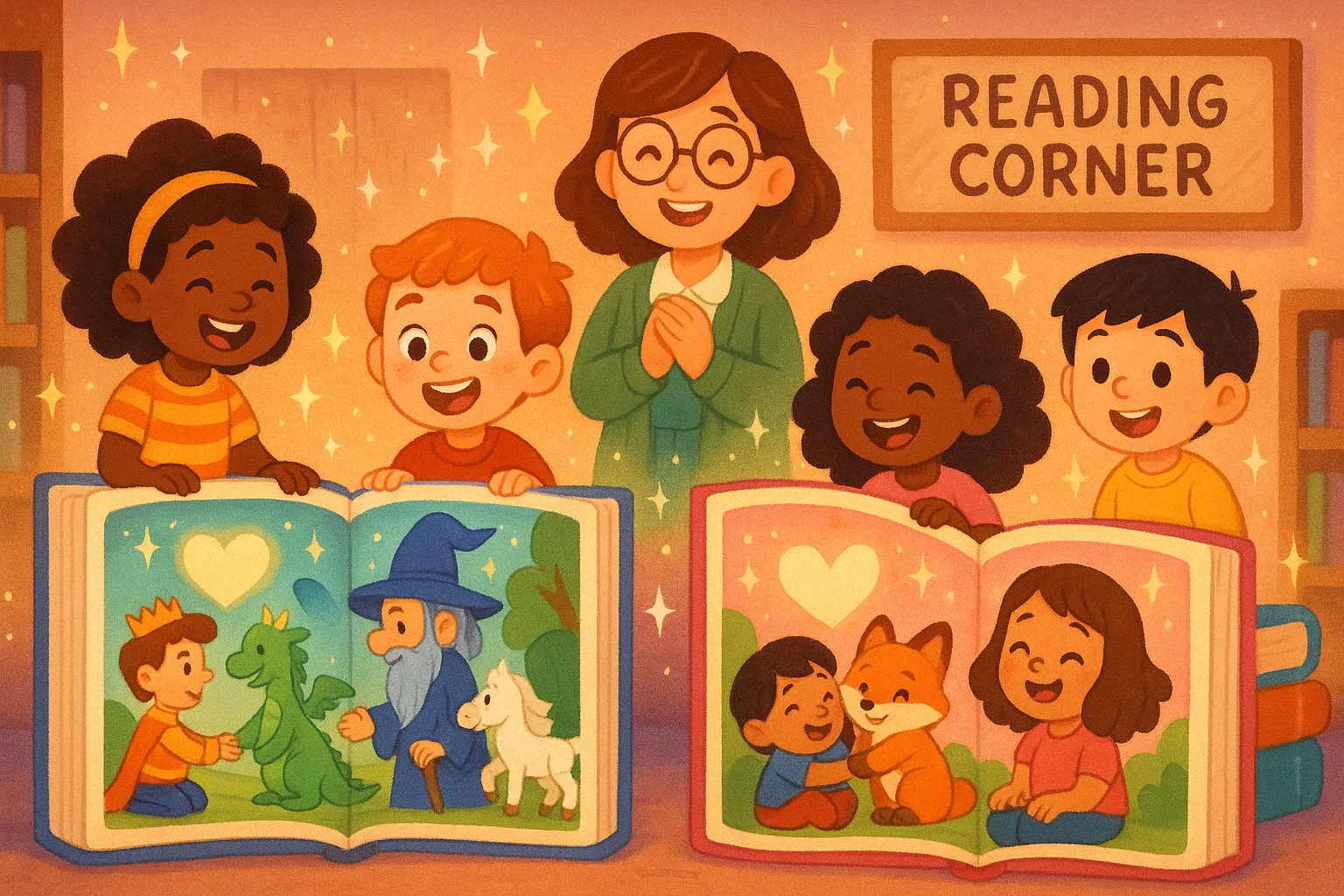
Stories help parents and teachers show children what perspective-taking and emotional intelligence look like in real situations.
Kindness Books
Choose high-quality picture books and chapter books about diverse characters who face social challenges and choose empathy, compassion, and friendship over peer pressure.
Story Discussion Questions
- “Who in the story showed compassion?”
- “How did someone’s feelings change because of that choice?”
- “Who in the story needed support, and what alternative choice could have been made?”
Skit Activity
Have children work in small groups to act out key scenes from a kindness story and create alternative endings that show kind conflict resolution.
Kindness Songs
Adding songs about kindness to daily routines can help reinforce positive habits and make classroom transitions smoother.
Song Circle
Incorporate simple, rhythmic kindness songs into morning meetings, preschool circle times, or daily classroom transition periods to set a positive, collaborative tone.
Lyric Rewrite Activity
Invite children to rewrite the lyrics of well-known children’s songs, such as “Twinkle, Twinkle, Little Star,” to include helpful actions, kind words, and friendship themes.
Movement Add-On
Add hand claps, gestures, partner movements, or call-and-response lines to make the songs more engaging and memorable.
Kindness Movie Moment
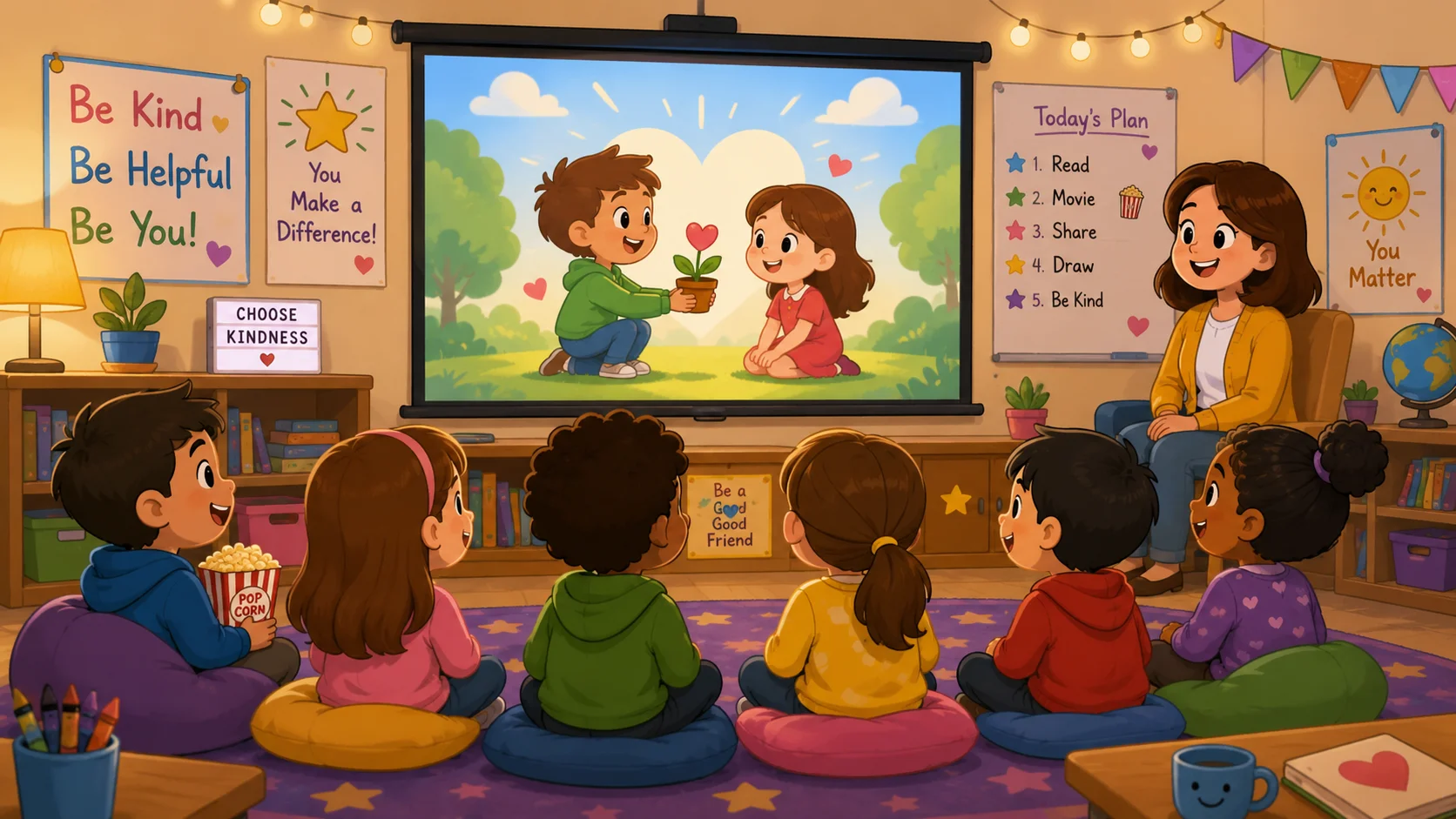
Short video clips give children a visual way to talk about social situations and character choices.
Clip Selection Tips
Choose video clips that are age-appropriate, 3–5 minutes long, and focused on one clear kindness lesson.
Discussion Prompts
- “What social or emotional problem appeared in this scene?”
- “Who stepped forward to help the character in need?”
- “What choice changed the outcome?”
Creative Response
Ask children to draw their favorite supportive moment from the clip or write a short scene showing a new kind interaction between the characters.
Plant Something
Planting seeds helps children see that relationships, like plants, need patience, daily attention, and consistent care.
Seed Planting Activity
Give children small pots, soil, and fast-growing seeds. Ask them to plant the seeds and take responsibility for watering and checking on them each day.
Kindness Seeds Metaphor
Use the plant’s growth as a metaphor: a kind act can start small, like a seed, and grow into a stronger relationship when cared for over time.
Nature Care Link
Tie daily plant care to broader environmental empathy, helping children understand that kindness extends to caring for all living things and practicing planet-friendly habits.
Kindness to the Planet
Environmental activities help children turn big ideas about caring for the planet into simple daily responsibilities.
Recycling Sorting Challenge
Set up a classroom challenge where children learn to correctly sort paper, plastic, and compostable materials, building respect for shared spaces.
Cleanup Walk
Organize an adult-supervised litter cleanup walk around the school grounds, a local park, or neighborhood streets to show children how collective action can improve a community.
Water and Energy Habits
Create a checklist of daily conservation habits children can practice at home and school:
- Turning off the faucet while brushing teeth.
- Turning off lights when leaving empty rooms.
- Reusing scrap paper and art supplies before throwing them away.
Compliment Board
A compliment board gives children a visible place to practice noticing and naming their peers’ efforts, character strengths, and kind actions.
Compliment Rules
To keep compliments meaningful, set clear guidelines: each compliment should be specific, sincere, and focused on a person’s effort, character, or helpful actions rather than appearance or belongings.
Board Setup
Create the board using colorful sticky notes, student name cards, sentence starters, or a rotating daily student spotlight.
Anti-Comparison Tip
To keep the display from becoming a popularity contest, teachers can use a private tracking sheet to make sure every child receives supportive notes.
Growth Mindset Rocks
Kindness rocks combine art with a tangible reminder of encouraging, resilient language.
Rock Painting Instructions
- Collect smooth stones and wash them with soap and water.
- Apply a base coat of non-toxic acrylic paint, or use outdoor paint markers to add designs.
- Write an encouraging, growth-mindset phrase across the surface of the stone.
- Seal the finished stone with a clear, non-toxic waterproof sealer to protect the message.
Message Ideas
- “Keep trying, you are learning!”
- “You matter to our community.”
- “You can do hard things.”
- “Choose kindness daily.”
Placement Ideas
Children can place their finished stones on classroom display shelves, along outdoor garden paths, inside a school kindness corner, or give them as take-home gifts for loved ones.
Cooperative Game
Cooperative games help children succeed by supporting and communicating with their peers.
Game Examples
Try structured group games such as:
- Collaborative parachute challenges
- Timed group puzzle races
- Giant block tower building
- Team scavenger hunts
- Group obstacle courses
Cooperation Skills
These activities build prosocial skills such as turn-taking, active listening, offering help, collaborative problem-solving, and celebrating group progress instead of individual wins.
Debrief Questions
“What communication choices made teamwork easier for us, and what kind action helped our group overcome a challenge?”
Competitive Game With Kind Rules
Adding kind rules to competitive games helps children practice sportsmanship, emotional self-regulation, and self-control.
Kind Competition Rules
Set clear expectations:
- Shake hands before and after the game.
- Cheer for opponents’ good plays.
- Take fair turns.
- Handle disappointment calmly.
- Win modestly.
Role of Mistakes
Coach children on how to respond with empathy when a peer loses a point, drops an item, or breaks a rule, turning mistakes into opportunities for reassurance instead of blame.
Post-Game Reflection
“How did practicing these kind sportsmanship rules change the mood and enjoyment of the game?”
Kindness Bingo
Kindness Bingo turns prosocial behavior into an engaging, structured challenge that children can track over several days.
Bingo Square Ideas
Create a custom 5-by-5 grid with clear kindness tasks, such as:
- Smile at three people.
- Help clean up a mess you did not make.
- Thank a staff member.
- Write a supportive note.
Home Version
Add family-focused squares to the board:
- Help prepare dinner.
- Call a relative to check in.
- Feed a family pet.
- Tidy a shared living room.
Classroom Version
Design peer-focused squares for the school day:
- Help a classmate carry heavy books.
- Thank the teacher at dismissal.
- Include a classmate who is sitting alone at lunch.
- Share limited art supplies during a project.
Random Acts of Kindness Mailbox
A kindness mailbox gives children a safe, structured way to send encouraging notes to classmates and staff.
Mailbox Setup
Decorate a durable cardboard box with a secure slot. Provide envelopes and slips of paper, add student name labels in alphabetical order, and set a weekly delivery schedule.
Message Starters
- “I noticed that you chose to…”
- “Thank you for helping me when…”
- “You were kind to our community when you…”
Privacy and Safety
To keep the activity emotionally safe, an adult should review notes before delivery to make sure each message is positive, appropriate, and constructive.
Kindness Journal
A kindness journal helps children turn daily experiences into a habit of reflection and gratitude.
Daily Journal Prompts
Provide a consistent, three-part framework for writing:
- “What is one kind thing I did for someone today?”
- “What is one kind thing someone else did for me?”
- “What is one new kind of choice I will try tomorrow?”
Drawing Option
For younger kids who are still developing literacy skills, let them draw detailed illustrations of their kind actions instead of writing full sentences.
Weekly Review
At the end of each week, ask children to review their entries, notice patterns in their kind choices, celebrate their growth, and set one new social goal.
Gratitude Jar
The gratitude jar combines visual tracking with a shared ritual to build appreciation within a family or classroom.
Jar Setup
Place a large clear jar in an easy-to-reach spot. Keep writing utensils and small slips of paper nearby.
Gratitude Prompts
Encourage children to write down specific things from their day that they appreciate, such as encouraging people, helpful community members, safe places, joyful moments, or personal strengths they noticed.
Family or Classroom Ritual
Create a simple ritual, such as reading a few gratitude notes aloud every Friday afternoon, during family dinner, or at the start of a morning meeting.
Kindness Coupons
Kindness coupons allow children to create tangible “service vouchers” that promise practical help to family members or classmates.
Coupon Ideas
- “I will help wash the dinner dishes.”
- “I will happily read a favorite book with you.”
- “I will share my favorite toy for an afternoon.”
- “I will help carry groceries or school bags.”
Design Activity
Provide art supplies, stamps, and markers so children can decorate their coupons with drawings and personalized messages tailored to the recipient.
Responsibility Follow-Through
Use this activity as a lesson in personal responsibility. Explain to children that they should only offer actions they can realistically complete when the coupon is redeemed.
Kindness Coloring Pages
Low-prep kindness coloring pages offer a calm, quiet activity that helps children decompress while focusing on positive images.
Printable Page Themes
Choose high-quality pages that show:
- Diverse friendships
- Sharing
- Helping hands
- Community helpers
- Caring for animals
- Short, bold kindness phrases
Writing Add-On
To increase the educational value, ask children to write at least one complete sentence beneath their finished picture explaining the kind action shown.
Display Option
Collect the completed coloring pages and assemble them into a hallway gallery or classroom “kindness wall” to reinforce these concepts visually.
Kindness Bookmark
This practical craft project combines art and literacy by helping children create bookmarks they can use or give as gifts.
Bookmark Design
Children can use cardstock, colored pencils, and ribbons to create durable bookmarks with positive slogans, illustrations of helpful acts, or reminders to use gentle words.
Book Pairing
Pair the craft with a visit to the local library, a reading buddy session, or a new picture book focused on empathy and compassion.
Gift Option
Encourage children to give their bookmarks anonymously or directly by leaving them as surprises for friends, siblings, teachers, or local library visitors.
Kindness Menu
A kindness menu gives children choices and helps them feel ownership over their prosocial decisions.
Menu Categories
Organize the menu into clear categories:
- Appetizers: Kind words and compliments
- Main Courses: Helpful actions and chores
- Desserts: Community care and shared resources
Choice-Based Learning
Letting children choose their own actions from a list can increase motivation. They feel empowered when they choose how they want to make a positive impact.
Weekly Challenge
Challenge children to look at the menu each Monday and choose one substantial “main course” action and one light “dessert” action to complete by the end of the week.
Kindness Scavenger Hunt
This active game turns kindness into a fun observation challenge and helps children notice positive behaviors around them.
Things to Find
Ask children to look around and cross off items when they see them:
- A peer sharing
- Someone waiting patiently in line
- Someone including others
- A person using polite words
Things to Do
Add action steps to the hunt by asking children to complete small tasks, such as:
- Holding a door open
- Picking up a piece of trash
- Giving a sincere compliment to a staff member
Group Reflection
After the hunt, gather the group to discuss which kind actions were easiest to spot and which ones took the most effort to do.
Kindness Tree
A kindness tree is a visual display that grows over time and shows how helpful actions can make a community flourish.
Tree Setup
Make a large tree trunk and branches from brown butcher paper and place them on a prominent wall. Cut out leaf shapes from green or seasonal colored paper and keep them in a nearby basket.
Leaf Prompts
Whenever a child does, sees, or receives a kind act, they write it on a paper leaf and tape it to the branches. Over time, the bare tree grows into a full canopy of compassion.
Seasonal Variation
Keep the display engaging throughout the year by shifting the theme according to the season. Use spring flowers, summer leaves, autumn leaves, or winter snowflakes.
Kindness Train
The kindness train activity helps younger children understand how positive actions connect people at home or school.
Kindness Train Car Activity
Give each child a template of a blank train car. Ask them to decorate their train car with drawings or words that show a helpful action they are good at.
Connection Message
Link all the decorated paper cars together in a long line. Use the visual to show children how one person’s kind choices can encourage others and keep the community moving forward.
Hallway Display
Display the connected train on a classroom wall or school hallway, and let it grow longer as new actions and train cars are added throughout the month.
Kindness Dominoes
This hands-on demonstration uses a physical activity to show children how one positive choice can create a powerful chain reaction.
Domino Demonstration
Set up a long row of dominoes on a flat surface. Let a child push over the first domino and watch how one movement creates a chain reaction.
Kindness Sequence
Have children map out a kindness chain reaction on paper. For example:
- You smile at a tired teacher.
- The teacher speaks gently to a frustrated student.
- The student includes a lonely peer at recess.
Writing Extension
Ask children to write a short “because of kindness” story that shows how one small choice helped a whole group of people.
Kindness Quilt
This collaborative art project shows children how individual contributions can come together to create a strong, beautiful, and supportive community.
Quilt Square Design
Give each child a square piece of heavy paper or fabric. Ask them to design their square to show one kind word, a helpful action, or an inspiring person in their life.
Community Message
Assemble the squares into a large quilt display to show how everyone’s choices help make the classroom feel safe and welcoming.
Display and Sharing
Display the finished quilt in a shared space and give each child an opportunity to explain the meaning behind their square to the group.
Kindness Ninjas
Turning kindness into a fun game encourages children to perform helpful actions for the joy of helping, without expecting public praise or rewards.
Secret Mission Cards
Give children “secret mission cards” with quiet tasks, such as:
- Tidy a messy shelf.
- Leave an encouraging note on a desk.
- Help clean up a space without being asked.
Mystery Kindness Rules
Teach children the rules of being a kindness ninja: the actions should stay secret, but children should never hide unsafe behavior or go into unsupervised areas.
Mission Reflection
“How did it feel to help someone in secret, without waiting to be praised or rewarded?”
Sprinkle Kindness Everywhere
This fun, lighthearted theme encourages children to look for small ways to spread joy throughout the day.
Sprinkle Jar
Keep a jar of tiny, colorful paper sprinkles. Every time a child completes a small act of kindness, they get to drop a paper sprinkle into the jar.
Sprinkle Cards
Have children create pocket-sized “sprinkle cards” with cheerful drawings or short kind phrases they can hand out to brighten someone’s day.
Celebration Idea
When the sprinkle jar is full, celebrate the community’s effort with a fun reward, such as a favorite group game, an extra storytime session, or a special family activity.
Rainbow in Someone Else’s Cloud Activity
This artistic activity teaches children perspective-taking and helps them think about how to offer support to someone going through a difficult emotional moment.
Cloud and Rainbow Craft
Have children draw a gray cloud on a piece of paper and write a common problem inside it. Then, ask them to attach a bright rainbow underneath and write kind ways to ease that worry.
Real-Life Examples
Use realistic examples to help children brainstorm:
- A classmate feels nervous about a big presentation.
- A family member is home sick in bed.
- A sibling feels sad after losing a game.
Helpful Care Tip
Teach children an important rule about empathy: cheering someone up starts with quiet listening to see what they need, rather than trying to force them to feel happy right away.
I in Kind Display
This school display board focuses on personal responsibility and shows children that a supportive environment depends on their choices.
Photo Display Setup
Create a large wall display with the letters K, N, and D, leaving space for children to become the missing “I.” Have each child pose with their arms straight up to form the letter I, becoming the missing letter in KIND.
Personal Kindness Statement
Print each child’s photo and place it in the middle of the word. Ask them to write a personal statement underneath it, such as:
“I can be kind to others by…”
Classroom Culture Link
Use the display as a daily reminder that a caring culture does not happen on its own – each child has a role in being the “I” in kind.
Kindness Campaign Posters
This project combines persuasive writing and art, encouraging children to promote kindness across their school community.
Poster Themes
Have children choose poster themes such as:
- Stopping playground bullying
- Including lonely peers
- Practicing daily gratitude
- Caring for the planet
Slogan Ideas
Encourage children to brainstorm short, catchy slogans that stay in people’s minds:
- “Kind words grow strong friendships.”
- “Include everyone, exclude no one.”
- “Helpfulness is contagious!”
School Display
Hang the finished posters in high-traffic spots, such as hallways, cafeteria walls, library doors, or a community bulletin board.
Kindness Recipes
This creative writing exercise uses a familiar recipe format to help children break down the emotional ingredients needed to build healthy relationships.
Recipe Ingredients
Ask children to list the “ingredients” needed for a kind community, such as three cups of active listening, a scoop of patience, and a dash of courage.
Recipe Steps
Have them write the steps using clear, action-focused language:
- Notice when someone near you is struggling or feeling left out.
- Ask them gently what you can do to support them.
- Help them using kind words and careful actions.
- Reflect on how your choice helped the group feel safe.
Creative Extension
Collect the finished recipe cards and bind them into a collaborative classroom cookbook or a special family kindness recipe book.
Talk About Differences
True kindness includes learning to respect different cultures, abilities, family structures, languages, and personal interests.
Similarities and Differences Activity
Have children work in pairs to compare their experiences, listing things they have in common and things that make each of them unique, such as foods, traditions, interests, and talents.
Inclusion Examples
Teach children that compassion means making room for different communication styles, physical needs, and backgrounds without judgment.
Book or Event Link
Connect this conversation to real-world experiences, such as cultural celebrations, diverse storybooks, classroom visitors, or community events.
Cultural Event Kindness
Attending cultural events gives children a meaningful opportunity to practice respect, curiosity, and open-mindedness toward traditions that may be new to them.
Event Ideas
Encourage families and classrooms to attend community programs such as:
- International fairs at school
- Library cultural events
- Neighborhood festivals
- Museum heritage days
Respectful Participation
Teach children clear rules for being respectful guests:
- Listen quietly to performers.
- Ask polite questions.
- Avoid making fun of unfamiliar customs or objects.
- Look for something new to learn.
After-Event Reflection
“What new tradition did you discover today, and how does practicing respect at these events connect to showing kindness?”
Pen Pal Project
A pen pal project helps children build communication skills and form friendships with people outside their immediate circle.
Pen Pal Setup
Set up a safe letter exchange by partnering with a classroom in another city, arranging exchanges through trusted family friends with adult supervision, or using a verified educational program.
Letter Topics
Give children engaging letter topics, such as:
- Favorite hobbies
- Favorite books
- School routines
- Family traditions
- Pets
- Thoughtful questions about their pen pal’s life
Safety Rules
Set clear safety rules: have an adult review all letters, avoid sharing private details such as home addresses, and keep all communication polite and respectful.
First Aid and Helping Safely
This final lesson teaches children how to help safely during minor accidents, manage their own anxiety, and act responsibly in emergencies.
Basic Helping Rules
Teach children three simple rules for handling emergencies:
- Get an adult immediately, and do not try to treat the injury yourself.
- Stay calm and take deep breaths to keep your head clear.
- Give the injured person space so they can breathe and stay calm.
Comforting Words
Practice reassuring phrases children can say to a peer while waiting for help to arrive:
- “I am right here with you.”
- “An adult is coming to help us right now.”
- “You are safe, and I am staying nearby.”
Classroom Safety Practice
Use simple role-play scenarios to practice safe, calm responses to everyday minor accidents, such as a peer falling on the playground or someone spilling their lunch tray.
FAQ
What are some easy kindness activities for kids?
Easy kindness ideas include asking children to do something kind for a family member, make a compliment card, help clean up a shared space, or write a thank-you note. Simple acts of kindness work best when they are small, specific, and easy for kids to repeat in everyday situations.
How can teachers teach kids to be kind in the classroom?
Teachers can teach kids to be kind by modeling respectful behavior, using classroom activities that build empathy, and giving children time to reflect on kindness they have seen. Role-play, kindness journals, cooperative games, and group discussions are all effective activities for teaching kindness in a natural classroom setting.
How can parents teach their child kindness at home?
To teach your child kindness at home, start with daily kindness habits: thank people out loud, notice helpful behavior, talk about kindness during meals, and invite your child to help with small family tasks. Children learn best when kindness is part of normal family life rather than a one-time lesson.
What is a kindness calendar?
A kindness calendar is a simple tool that gives children one kind action to try each day. It may include tasks such as helping a sibling, drawing a picture for a neighbor, sharing a toy, or saying something kind to a classmate. A calendar is a great way for kids to practice daily kindness without feeling overwhelmed.

Take a short quiz to find out what your everyday choices say about your parenting style
When your child is curious about something new, what’s your instinct?
Take a short quiz to find out what your everyday choices say about your parenting style
“Can I download this app?” What happens next?
Take a short quiz to find out what your everyday choices say about your parenting style
When it comes to rules at home, which sounds most like you?
Take a short quiz to find out what your everyday choices say about your parenting style
If you could give your child one life skill today, what would you pick?
Take a short quiz to find out what your everyday choices say about your parenting style
Your child gets to choose what to watch. What would your ideal setup look like?
Take a short quiz to find out what your everyday choices say about your parenting style
Pick your parenting superpower ✨



