44 Educational Activities for 10 Year Olds

 Discover a Free Education Video App for Kids
Pastory uses AI to personalize educational video content based on your child’s interests and personality. Safe, engaging, and built for curious young minds. Sign up now to stay updated and enjoy early access with a free trial
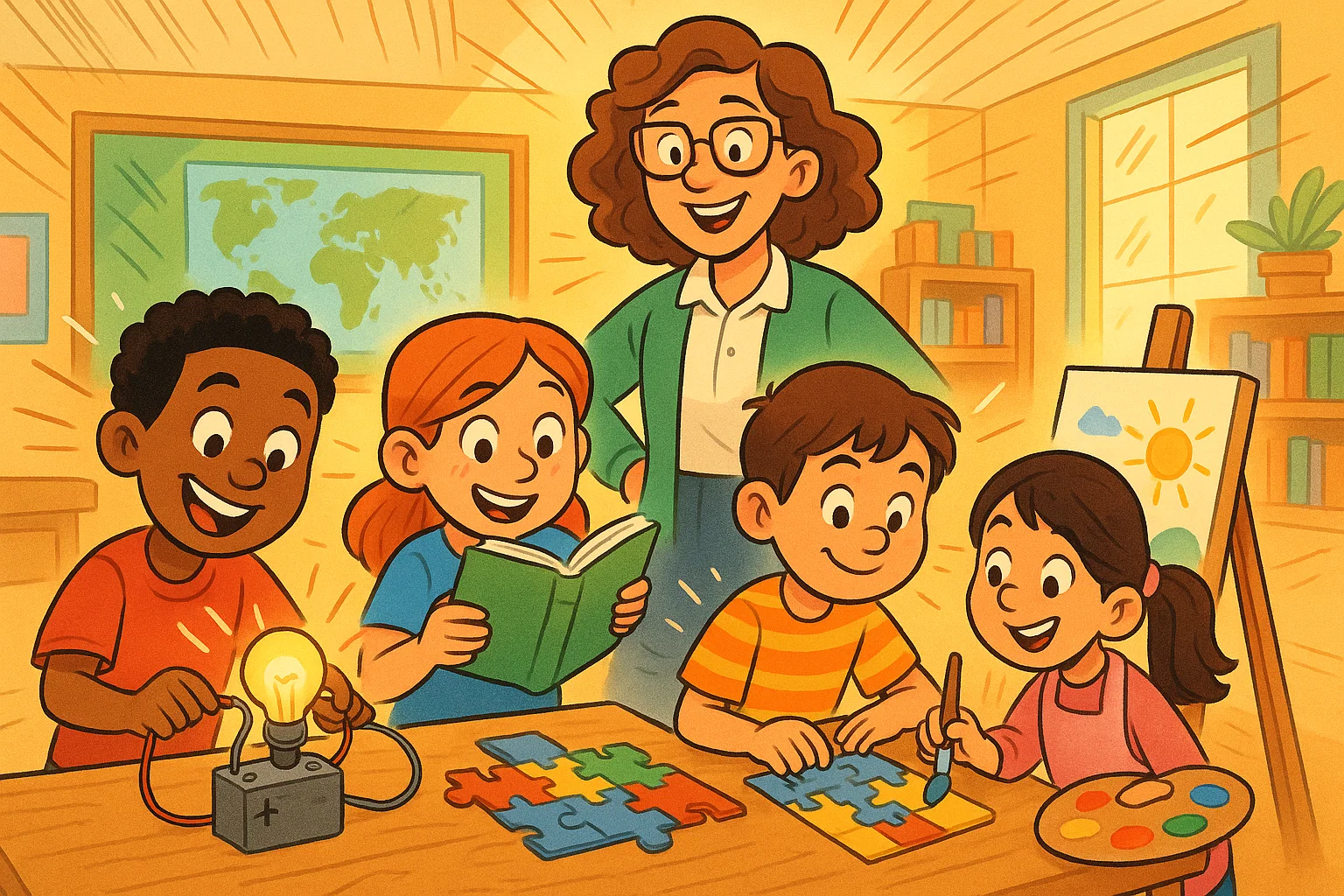
Finding the right educational activities for 10-year-olds requires a balance between academic rigour and genuine engagement. At age 10, children are transitioning toward more complex abstract thinking and require learning activities that challenge their logic while offering immediate, satisfying results. Whether you are looking for at-home learning activities for 10-year-olds to supplement schoolwork or fun educational activities for a rainy weekend, the most effective tasks are those that seamlessly integrate into daily life.
This comprehensive guide provides a curated selection of 44 learning activities for 10-year-olds across several key categories. We will explore high-impact strategies for literacy, maths, STEM, money skills, and independent play. By focusing on interactive resources and fun learning, parents can support their child’s learning journey without the friction of traditional homework power struggles.
Games and Activities

At age 10, the bridge between play and learning is critical for long-term retention. Research in developmental psychology suggests that gamified educational activities can boost engagement and support memory formation and executive function. At this stage, 10-year-olds enjoy competition, clear rules, and the opportunity to demonstrate mastery.
1. Word Games
Word games are essential for expanding vocabulary and refining spelling without the monotony of rote memorization. Children in this age group benefit from word ladders, where they change one letter at a time to reach a target word, or synonym swaps, which challenge them to replace common verbs with more precise alternatives. These activities improve reading fluency and quick thinking by encouraging children to move quickly between related words and meanings.
2. Board Games
Strategic board games are an excellent way to develop planning and problem-solving skills. Games that require resource management or tactical movement encourage older children to anticipate several moves ahead, a key milestone in cognitive development. Look for games that last 30–45 minutes to maintain focus while still offering enough complexity to entertain and challenge older children.
3. Screen Games
Digital learning activities can be highly effective when they focus on specific learning objectives rather than passive consumption. Maths apps, spelling challenges, and quiz platforms provide instant feedback, which is vital for practice. To ensure your child’s screen time remains productive, screen-based games and activities should be limited to 15–20 minutes and focused on a single learning goal, such as geometry or spelling.
4. Action Games
For children who find it difficult to sit still, action games provide a way to practise academic concepts through physical movement. Scavenger hunts with maths clues or relay races in which participants must solve an anagram before passing the baton are engaging learning options. These activities draw on the idea of embodied cognition, in which physical movement can help children internalise and recall information more effectively.
Activities for Age 10 at Home
Home-based learning activities should make use of the home environment to make education feel relevant. Utilizing items around the house allows parents to provide hours of fun without requiring specialized printable materials or expensive kits.
5. Mystery Shopper
The Mystery Shopper activity is a practical resource for teaching money skills and mental maths. Give your 10-year-old a hypothetical budget and a shopping list of items found in the pantry or in an online shop. The child must compare prices, calculate discounts, and decide which brands offer the best value, effectively helping your child understand budgeting and decision-making.
6. Cook Together
Cooking is a practical STEM activity that naturally incorporates maths and basic science. When children follow a recipe, they must practise measuring volumes, converting units, and estimating cooking times. To make the activity more challenging for older children, ask them to halve or double a recipe, which requires a firm grasp of fractions and multiplication.
7. Around House Maths Hunt
Transform your living space into a geometry lab with an around-the-house maths hunt. Ask your child to identify angles (acute, obtuse, and right), find examples of symmetry, or calculate the perimeter of a rug. This activity bridges the gap between abstract maths concepts and the physical world, making it an easy way to support your child’s school curriculum.
8. Indoor Games
On days when outdoor play isn’t possible, activities like card games, puzzles, and storytelling dice help keep the mind sharp. A dedicated puzzle station allows for independent play, while mini quiz rounds can involve the whole family. These easy activities help develop cognitive flexibility and are perfect for school holidays or quiet evenings.
Interactive Learning Resources
Interactive learning activities move beyond passive reading by requiring the child to interact with information and make choices. This kind of active engagement is central to deeper learning.
9. Interactive Reading Tasks
Digital or physical interactive reading tasks involve more than just decoding text; they require problem-solving. Examples include sequencing events in a scrambled story or matching vocabulary words to their contextual meanings. These educational activities ensure the child is actively processing information rather than just skimming.
10. Interactive Puzzles and Games
Logic grids, crosswords, and digital escape rooms are powerful games and activities for 10-year-olds. These puzzles require deductive reasoning and persistence. By working through a challenge, children learn that learning is a process of trial and error, which builds emotional resilience alongside academic skill.
11. Digital Learning Challenges
Many educational activities now come in the form of “mini-missions” or weekly challenges. These often include timed quizzes or subject-based badges that encourage regular practice. For a 10-year-old, earning a badge can be a strong motivator, encouraging them to engage with more difficult subjects such as grammar or maths.
12. Printable Learning Packs
For parents seeking screen-free options, printable learning packs are an invaluable resource. These downloadable materials – such as scavenger hunt sheets, worksheets, and mini-booklets – provide structured activities that a child can complete at their own pace.
| Resource Type | Best Use Case | Key Benefit |
| Printable Worksheets | Independent Practice | Builds stamina and focus |
| Interactive Quizzes | Knowledge Gaps | Provides instant correction |
| Logic Puzzles | Critical Thinking | Develops reasoning skills |
STEAM Projects You Can Do Today

STEM (Science, Technology, Engineering, and Maths) can be even more engaging when it includes the “A” for Arts, becoming STEAM. These hands-on projects encourage children to invent and experiment.
13. Battle of Robots
Using recycled materials, duct tape, and cardboard, children can invent their own “robots.” While these robots are not electronic, the goal is to design a machine for a specific task, such as a cleaning robot or a security bot. This activity focuses on the engineering design process: identify a problem, build a prototype, test, and improve.
14. Paper Aeroplane Experiments
Creating paper planes is a classic activity that teaches aerodynamics and measurement. Encourage your child to test different designs (long and thin vs. short and wide) and track the distance of each flight. Using a printable log to record data helps them practise scientific observation and prediction.
15. Design Something
Give your child a “design brief,” such as building a bridge out of straws or a tower using rubber bands and sticks. The challenge is to work within constraints (e.g., “must hold a bag of flour”). This type of strategic play is fundamental for developing problem-solving skills in older kids.
16. Science Build Challenge
Simple builds like a bottle rocket, a balloon-powered race car, or a marshmallow catapult provide a tangible link to physics. These fun learning activities demonstrate laws of motion and energy transfer in a way that a worksheet cannot.
Writing and Grammar Activities

By age 10, literacy shifts from “learning to read” to “reading to learn” and “writing to persuade.” Activities should focus on structure and sophisticated vocabulary.
17. How to Write Your Best Story Yet
A well-structured story requires more than just imagination; it needs a narrative arc. Teach your child to use a “Story Mountain”: Introduction, Rising Action, Climax, Falling Action, and Resolution. Encourage your child to focus on a strong opening to hook the reader, which is a key storytelling skill.
18. Writing Ideas Jar
Eliminate “writer’s block” with a Writing Ideas Jar. Fill it with prompts like “The door that only opens once every hundred years” or “The cat who could speak five languages.” These fun and easy ideas make writing feel like a creative game rather than a chore.
19. Grammar: Modal Verbs
Teaching grammar doesn’t have to be dry. Focus on modal verbs (can, could, should, must, might) by creating “Rule Lists” for an imaginary planet. For example: “On Planet Zorg, you must wear green shoes, but you might see a flying cow.” This activity helps the child understand how these words change the certainty or necessity of a sentence.
20. Word Patterns Brain Training
Focus on word patterns such as prefixes (un-, re-, pre-) and suffixes (-tion, -ly, -ness). Understanding these patterns allows a child to read and decode unfamiliar vocabulary more efficiently. Set a mini challenge in which they have two minutes to write as many words as possible using a specific suffix.
Maths Games and Number Puzzles

Maths games provide a meaningful context for developing mathematical understanding. For 10-year-olds, the focus should be on fluency and logical reasoning.
21. Number Puzzles
Number puzzles like Sudoku, magic squares, and logic chains require strategic thinking and high levels of accuracy. These puzzles are excellent educational activities for morning “brain warm-ups” before school or as a challenge for older children who finish their homework early.
22. Times Tables Race
Fluency in times tables is non-negotiable for higher-level math. Use flashcards or a timed grid to create a Times Tables Race. The goal is to beat their own previous time, which focuses on personal growth rather than stressful competition.
23. Maths on the Go
Turn a car journey or a walk into a learning opportunity. Ask your child to add the digits on car number plates, estimate the total of a restaurant bill, or estimate the angle of a roofline. These fun activities show that maths is a tool people use constantly in the real world.
24. Cards and Dice Maths
A simple deck of cards can be used for dozens of maths games and activities. In “Multiplication War,” two players flip a card, and the first to shout the product of the two numbers wins the pair. These simple game formats are easy to set up and provide high-frequency practice.
Money Activities
Financial literacy is a life skill that applies maths to real-world scenarios.
25. At Shops
Involve your child in the weekly shop. Ask them to find the unit price of items (for example, the price per 100g) to see which pack size is truly cheaper. This activity develops estimation and comparison skills that are essential for savvy consumers.
26. Spending Money Challenge
Give your child a hypothetical $50 budget for a “Dream Picnic.” They must use a worksheet to list the items, their prices, and make sure the total stays under the limit. This challenge teaches prioritisation and budgeting.
27. Travelling Budget Game
Before a family trip, have your child help plan the travel budget. They can research the cost of fuel, snacks, and tickets. Calculating the total cost and estimating the time left until arrival based on speed and distance makes this a multifaceted maths and logic task.
28. Bank Account Basics
Explain the concepts of saving, spending, and interest. Using a simple printable tracker, show them how small amounts of money grow over time. Discussing digital payments and “invisible money” helps them understand modern financial systems.
Books and Reading Activities for Age 10
Reading for pleasure is linked to higher academic achievement. At 10, children are ready for more deliberate reading habits and deeper analysis.
29. Funny Fiction and Adventure Books
At this age, humour and adventure are the primary drivers for independent reading. Books such as Diary of a Wimpy Kid and Wings of Fire engage children and keep them turning the pages. The goal is to build hours of fun through storytelling.
30. Books That Build Vocabulary
Choose books with rich, descriptive language to naturally enhance vocabulary. Encourage your child to keep a word bank or a sketchbook where they can draw and label new concepts they encounter. This activity turns reading into a multi-sensory learning experience.
31. Reading Comprehension Workbook Practice
While long-form reading is great, workbook practice helps with specific test-taking skills. Focus on “Retrieval” (finding facts) and “Inference” (reading between the lines). A 15-minute session once a week is an easy way to support their classroom performance.
32. Television and Film Tie-In Activities
After watching a film based on a book, ask your child to complete a compare-and-contrast activity. How did the film adaptation differ from the book? Which version of the dinosaur or hero was better? This develops critical thinking and media literacy.
Independent Activities for 10 Year Olds

Fostering independence is a key developmental goal for children in the double digits. These tasks require minimal adult supervision.
33. Independent Reading Challenge
Create a “Reading Bingo” card with categories like “A book set in the future,” “A book with a blue cover,” or “A book about biology.” This independent activity gives the child agency over their learning and makes the process a fun game.
34. Independent STEM Box
Keep a box filled with duct tape, scissors, straws, paper clips, and cardboard. Provide a set of “Challenge Cards” (e.g., “Build a boat that floats”). The child can build and create during their downtime without needing step-by-step guidance.
35. Independent Art and Doodle Tasks
Art can be a powerful resource for literacy. Ask your child to create a comic strip of their day or a poster design for a fictional product. This activity requires sequencing and presentation skills while allowing for creative expression.
36. Independent Journal Prompts
Journaling helps with emotional regulation and writing fluency. Provide prompts like “If I could invent one law for the whole world, it would be…” or “The best thing I learned in science this week was…”
Outdoor, Holiday and On-the-Go Activities
Learning shouldn’t stop because you’ve left the house. Outdoor and travel activities provide a change of pace that can reinvigorate a child’s interest.
37. Out and About Maths
While walking, ask your child to estimate how many flower pots they can see or work out the percentage of red cars in a car park. These easy activities help develop spatial awareness and maths fluency and are perfect for 10-year-olds.
38. Sport Score Challenges
If your child likes sport, use real-time data for maths. Calculate the “average” points per game or the “points difference” needed to win. This strategic use of data makes learning activities feel relevant to their interests.
39. Holiday Activity Calendar
During long breaks, a Holiday Activity Calendar provides structure. Each day features one fun activity – a STEM build on Monday, a reading session on Tuesday, and a craft project on Wednesday, for example. This ensures a balanced “learning diet.”
40. Phone-Based Learning Tasks
With adult supervision, a smartphone can be a powerful learning resource. Children can use the camera for a nature scavenger hunt, the stopwatch for math races, or quiz apps for a family competition.
More Educational Resources to Explore

To maintain momentum, it is helpful to have a variety of resources on hand.
41. Books, Workbooks and Dictionaries
A well-stocked home library should include a child-friendly dictionary, a thesaurus, and subject-specific workbooks. These are useful tools for helping your child become an independent learner.
42. STEM Kits Delivered to Your Door
For families who want high-quality STEM projects without the hassle of gathering materials, subscription kits are an excellent resource. These often include a full tutorial, all the necessary materials and components, and a science-based explanation of the project.
43. Monthly Enrichment Subscriptions
Whether it is a coding club, an art box, or a reading subscription, monthly kits add an element of surprise that helps keep learning fresh. They are particularly useful for older kids who are starting to develop niche interests in robotics or astronomy.
44. Skills Your Child Is Practising
Every activity in this guide is designed to target specific developmental areas. By varying the games and activities you offer, you ensure your child is consistently practising:
- Literacy: Reading, Writing, Spelling, Grammar
- Numeracy: Maths Fluency, Logic, Money Sense
- Cognitive: Problem-solving, Strategic Thinking, Independence
- Creative: Inventing, Designing, Crafting
In summary, the best educational activities for 10-year-olds are those that blend academic challenge with genuine interest. By making use of your home environment, interactive resources, and a bit of strategic play, you can create plenty of fun while helping your child reach their full potential.

Take a short quiz to find out what your everyday choices say about your parenting style
When your child is curious about something new, what’s your instinct?
Take a short quiz to find out what your everyday choices say about your parenting style
“Can I download this app?” What happens next?
Take a short quiz to find out what your everyday choices say about your parenting style
When it comes to rules at home, which sounds most like you?
Take a short quiz to find out what your everyday choices say about your parenting style
If you could give your child one life skill today, what would you pick?
Take a short quiz to find out what your everyday choices say about your parenting style
Your child gets to choose what to watch. What would your ideal setup look like?
Take a short quiz to find out what your everyday choices say about your parenting style
Pick your parenting superpower ✨