
Educational Activities for Kids Age 12 at Home, Outdoors, on Rainy Days

 Discover a Free Education Video App for Kids
Pastory uses AI to personalize educational video content based on your child’s interests and personality. Safe, engaging, and built for curious young minds. Sign up now to stay updated and enjoy early access with a free trial
Engaging 12-year-olds – often referred to as tweens – in productive learning can be a rewarding challenge. This article provides a comprehensive guide to educational activities for 12-year-olds, focusing on low-cost, screen-free, STEAM, creative, and arts-and-crafts ideas. These learning activities help children develop critical thinking, problem-solving skills, and a genuine love for learning without needing expensive equipment or constant supervision. They are especially useful for families with different age groups, including siblings, and for homes with tweens and teens who need meaningful ways to stay engaged. Whether you are looking for a fun activity for the summer break, a way to combat boredom on a rainy day, or hands-on projects kids genuinely enjoy, the ideas below offer structure, spark curiosity, and help families reduce screen time. These ideas also encourage children to take ownership of their learning and build valuable life skills.
Educational Activities for Kids with Household Items
Parents often overlook the potential for learning within their own cupboards. Educational activities for children do not require specialized kits; often, common household items are the most effective tools to spark curiosity and demonstrate complex concepts. By using recycled items and basic craft supplies, families can turn a typical afternoon into a fun, engaging session that teaches children the value of repurposing and upcycling. It is also a great way to be creative without spending much.
DIY Rain Gauge
A DIY rain gauge uses a clear, straight-sided plastic bottle and a permanent marker to measure precipitation. To make one, cut the top off a plastic bottle, turn it upside down to create a funnel, and mark a measurement scale on the side with a ruler. This easy tutorial allows students to track daily rainfall, log the data in a notebook, and calculate weekly averages, effectively teaching weather tracking, measurement accuracy, and data analysis.
Homemade Sundial
A homemade sundial uses a stationary object (like a pencil or stick) and a flat surface to track the Earth’s rotation through shadow movement. By marking the position of the shadow every hour on a paper plate or sidewalk, 12-year-olds can observe how the angle of the sun changes throughout the day. This simple project provides a practical demonstration of timekeeping, the Earth’s rotation, and the fundamental principles of astronomy.
DIY Pinhole Camera
A DIY pinhole camera uses a cardboard box, aluminum foil, and a needle to demonstrate how light passes through a small opening. By creating a small hole in the foil and observing the image projected inside the darkened box, children can see how light travels in straight lines and why images appear inverted. This project effectively explains concepts related to light, optics, photography basics, and observational science.
Rubber Stamp Storytelling
Rubber stamp storytelling uses ink pads, rubber stamps, and paper to support creative writing and narrative development. By stamping a sequence of images and adding text to describe the action, students practice sequencing, vocabulary expansion, and creative expression. This activity is particularly effective for helping children create structured stories while improving their literacy skills, and it can easily be extended into a short comic strip.
Rainy Day Educational Activities for 12-Year-Olds
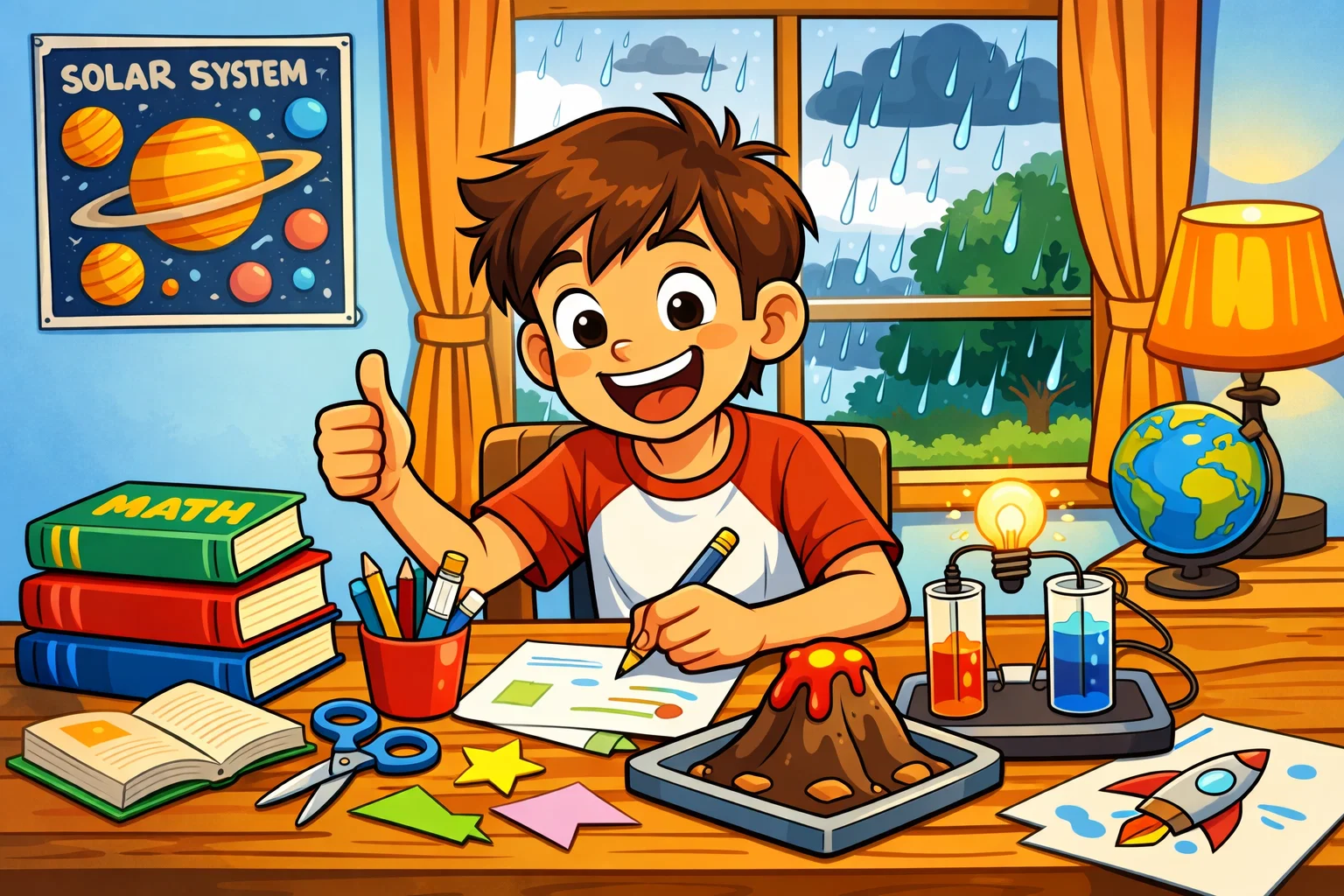
When the weather prevents outdoor play, the challenge shifts to finding screen-free activities that maintain focus for more than 15 minutes. On rainy days, the home can become a self-contained laboratory for exploration. These tasks are designed to be fun and engaging, turning boredom into productive, creative activity.
Build a Mini Ecosystem
To build a mini ecosystem, children place a layer of gravel, charcoal, soil, and small plants into a sealed glass jar. This self-contained environment requires minimal intervention and allows for long-term observation of the water cycle, condensation, and plant growth. This project serves as a practical lesson in ecological processes, closed systems, and environmental science.
Create a Family Tree
To create a family tree, children collect historical information including names, birth dates, countries of origin, and professions of extended family members. This project often involves conducting interviews with older relatives, which fosters communication and research skills. It provides a tangible connection to history, identity, and personal heritage while practicing organizational techniques.
Compose a Family Song
To compose a family song, children can choose a topic, develop a rhythmic structure, and write lyrics that incorporate rhyme and meter. This creative process encourages kids to focus on language patterns, auditory processing, and musical structure. It is a highly personalized activity that builds confidence through artistic expression and collaboration.
Logic Puzzle Tournament
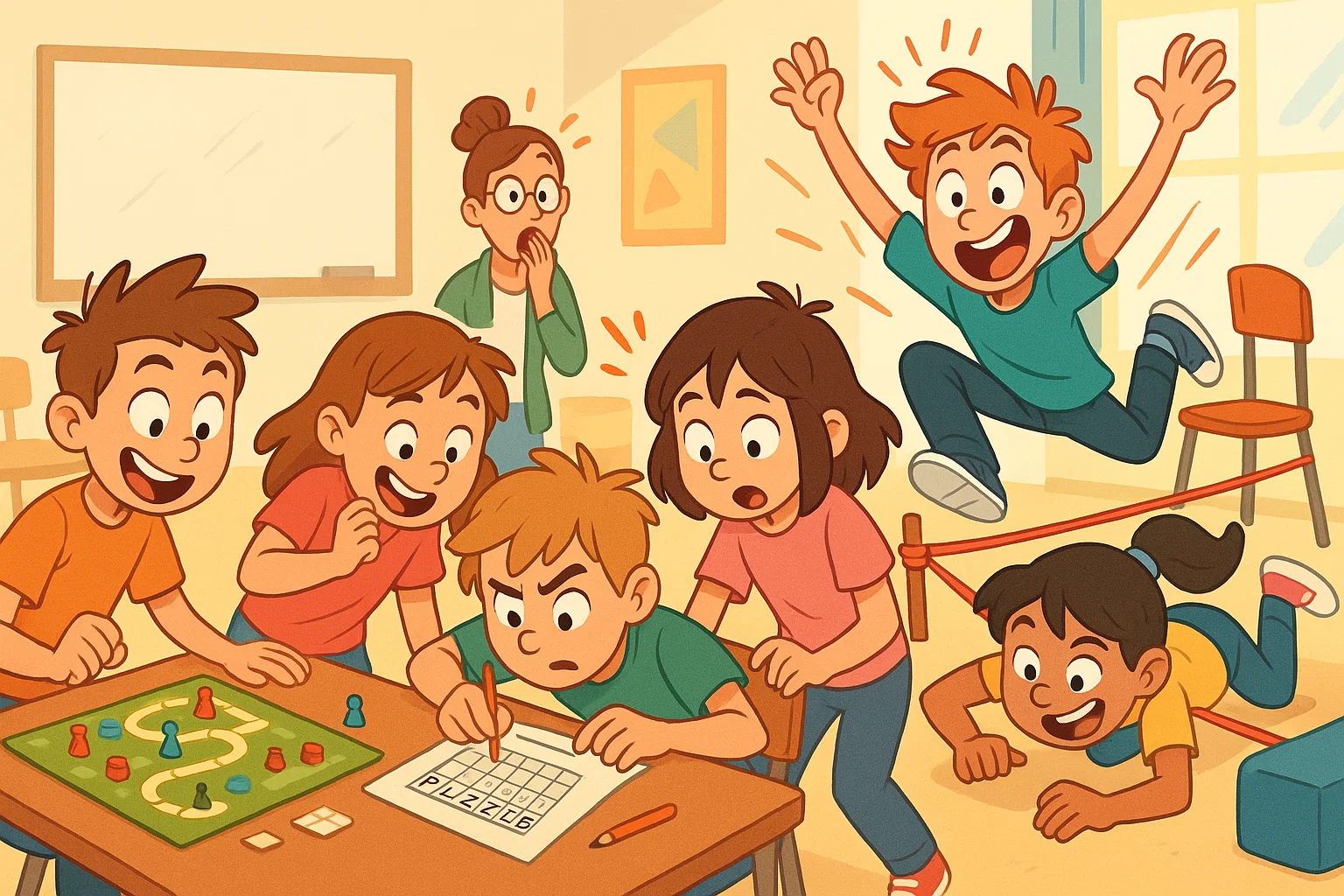
A logic puzzle tournament can include sudoku, word searches, mathematical riddles, ciphers, crosswords, and even printable jigsaw-style puzzles. Organizing it as a family competition encourages participants to solve problems against the clock, which builds persistence and strategic thinking. This activity promotes cognitive development, specifically in the areas of logic, pattern recognition, and complex problem-solving.
Outdoor Educational Activities for 12-Year-Olds
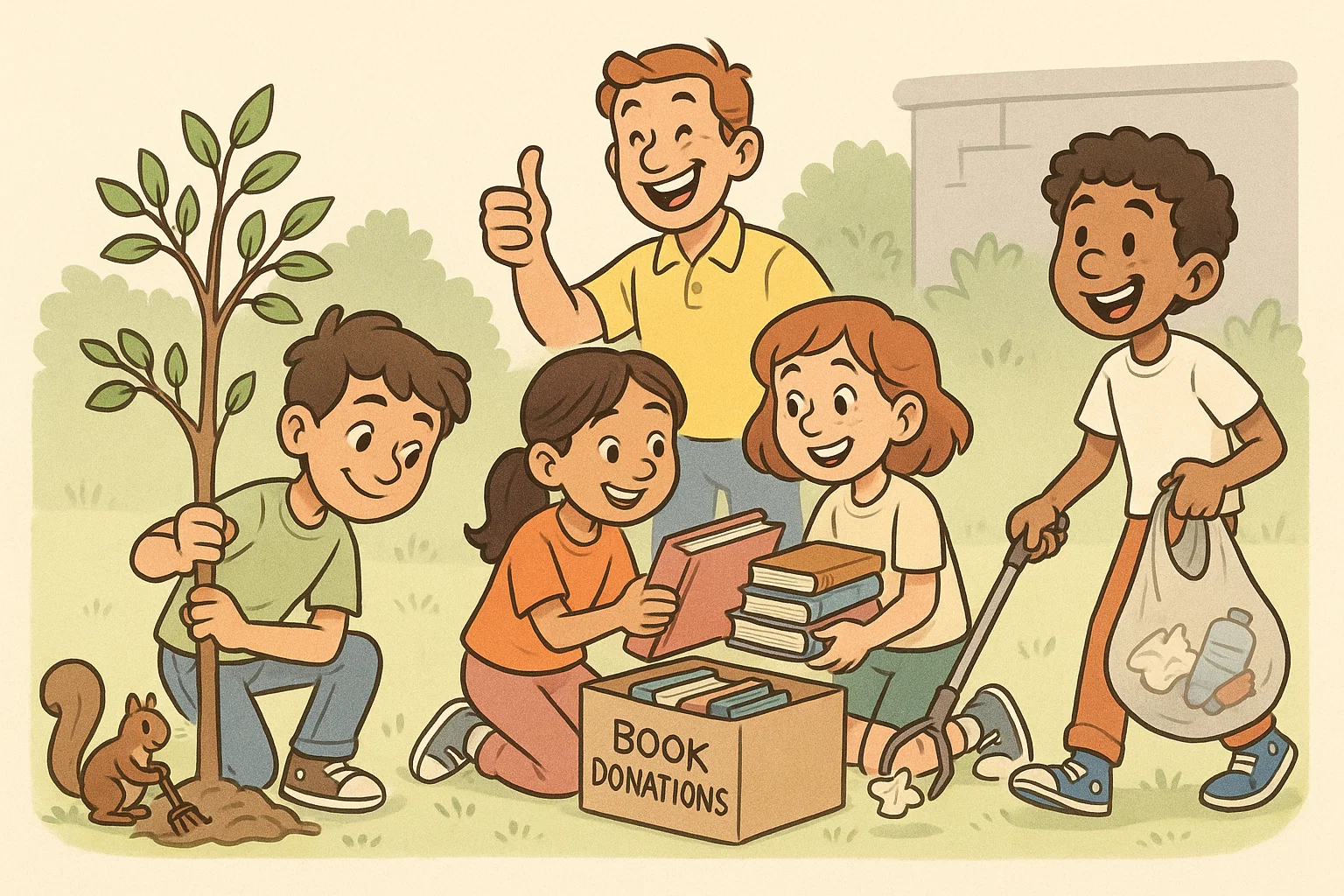
The outdoors can serve as an expansive classroom where older children apply academic concepts in real-world settings. Exploring the outdoors transforms a standard walk into a field trip, helping children develop a deeper appreciation for their local environment. These activities are designed to be fun, physically active, and intellectually stimulating.
Geocaching Treasure Hunt
Geocaching is a real-world outdoor treasure hunt where participants use a GPS-enabled device or smartphone to find hidden containers at specific coordinates. This activity requires the use of spatial reasoning, map reading, and navigation, turning a hike into a geography and observation lesson. It is highly engaging, often leading children to local landmarks they might otherwise overlook, and families can add a simple reward at the end to make the experience even more motivating.
Nature Photography Scavenger Hunt
A nature photography scavenger hunt tasks children with capturing specific elements like textures, leaf patterns, insect habitats, or shifting shadows using a camera. This project focuses on attention to detail, visual composition, and scientific observation. It encourages students to slow down and view the natural world as a set of biological and physical data points.
Edible Plant Identification Walk
An edible plant identification walk involves using a field guide or local expert to safely identify edible plants in a park or forest. By recording findings in a notebook, participants practice botany, classification, and safety awareness regarding native flora. This activity helps bridge the gap between classroom biology and real-world observation while reinforcing safe foraging practices.
Backyard Archaeology Dig
A backyard archaeology dig simulates a professional excavation by burying “artifacts” in a designated patch of soil for the child to uncover. Using brushes, trowels, and a documentation journal, children learn how to categorize findings, record the soil layer in which each item was found, and infer history from objects. This fosters skills in historical inquiry, evidence gathering, and meticulous documentation.
STEAM Projects for Home Learning
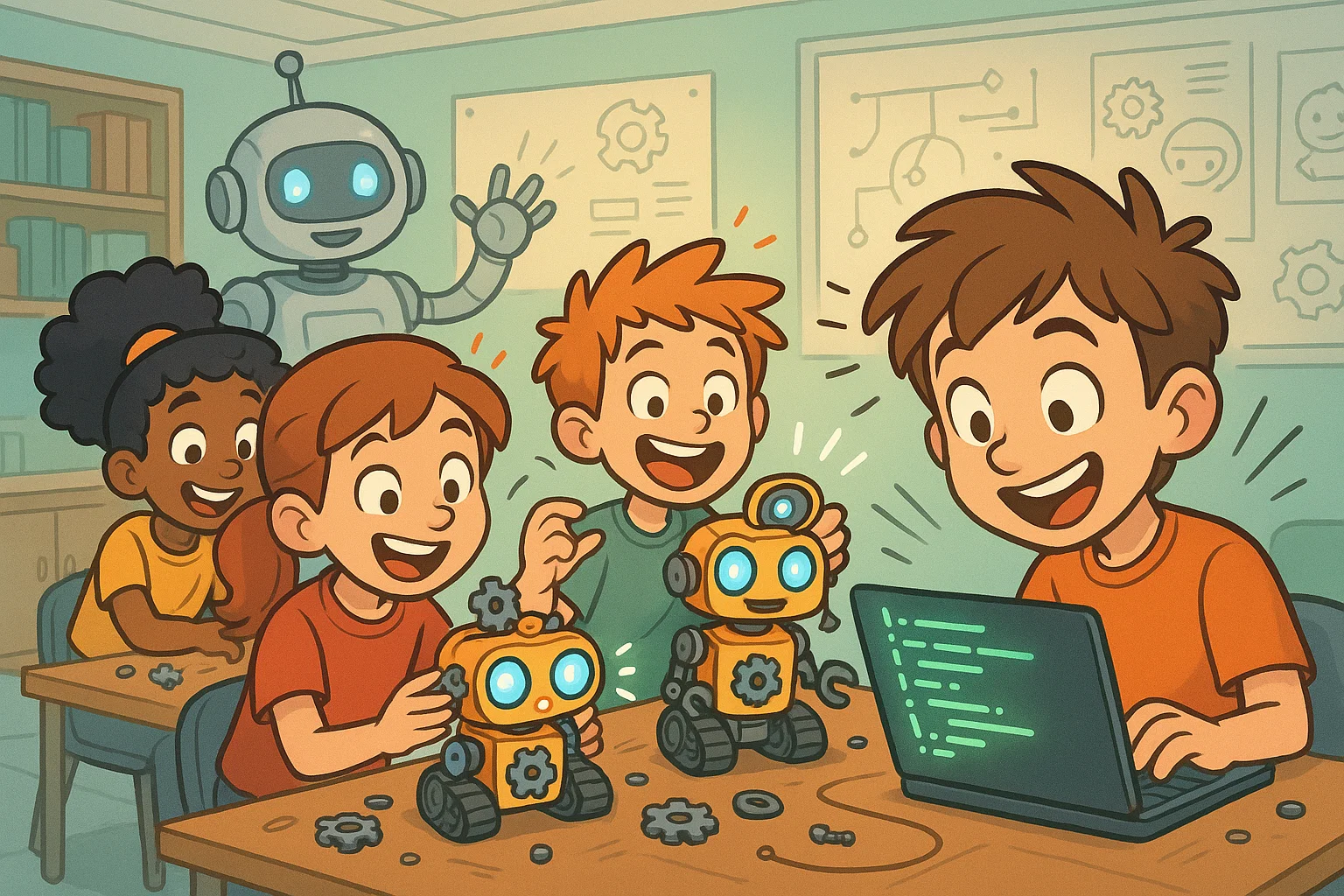
STEAM (Science, Technology, Engineering, Arts, and Math) projects provide the most robust opportunities for hands-on learning. These activities encourage older kids to apply problem-solving skills to tangible challenges, and many of them work especially well as safe, home-based science experiments.
| Project | Core Subject | Primary Outcome |
| Solar Oven | Physics/Energy | Understanding heat transfer and insulation |
| Bottle Rocket | Physics/Math | Calculating trajectory and force |
| Recycled Bridge | Engineering | Iterative design and weight testing |
| Coding Challenge | Technology | Sequencing and debugging |
Solar Oven Cooking
A solar oven uses a cardboard box lined with aluminum foil to trap heat and cook simple foods like s’mores with a marshmallow. By manipulating the angle of the lid to catch sunlight, children learn about reflection, thermal energy, and solar power. It is a memorable way to observe heat transfer in a controlled, home-based setting while learning how sunlight can warm simple foods safely with supervision.
Bottle Rocket Launch
A bottle rocket launch utilizes a 2-liter plastic bottle, water, and an air pump to demonstrate Newton’s Third Law of Motion. By adjusting the water-to-air ratio and the launch angle, students experiment with variables to achieve maximum height or distance. This is a classic experiment that turns abstract physics into an exciting, visible demonstration of force and trajectory.
Recycled Bridge Build
A recycled bridge build challenges students to construct a load-bearing structure using only paper, cardboard, tape, and other simple craft materials. The goal is to maximize how much weight the bridge can hold relative to the materials used, which requires iteration, structural planning, and testing. This activity teaches core engineering principles, such as compression, tension, and the importance of refining designs based on test results.
Simple Coding Challenge
A simple coding challenge involves using platforms like Scratch to create a basic logic puzzle, animation, or interactive quiz. By breaking a problem down into small, logical steps, children practice computational thinking and debugging. This type of digital creativity is essential for developing the analytical skills needed in future technology-focused careers.
Unusual Educational Activities for Summer and Weekends
For families looking to break the routine, these unusual educational activities provide fresh perspectives on familiar environments. These projects offer high-level engagement and are perfect for summer holidays when students have more time to dedicate to long-form projects.
Map Reading Adventure
A map reading adventure requires the use of a traditional paper map to navigate a pre-planned route through a neighborhood or park. Children must interpret symbols, understand scale, and identify terrain features, which enhances spatial thinking and geography vocabulary. This manual navigation skill helps children better understand space, distance, and direction, and you can add simple physical challenges at marked checkpoints to keep the activity active.
Neighborhood Architecture Survey
A neighborhood architecture survey invites students to document the structural styles, roofing materials, and geometric shapes present in their local area. This project links math (shapes and proportions) with history and local culture, encouraging a deeper visual analysis of the human-built environment. It transforms a simple walk into an exercise in urban design and historical appreciation.
Weather Data Tracking
Weather data tracking involves maintaining a consistent log of temperature, wind speed, cloud cover, and precipitation over an extended period. At the end of the observation period, the student creates a graph to identify trends and patterns. This promotes scientific observation and data literacy, skills that are highly transferable to any field of study. For added interest, families can include evening observations to compare daytime and nighttime conditions.
Kitchen Chemistry Lab
A kitchen chemistry lab utilizes items like vinegar, baking soda, and vegetable oil to conduct safe, observable chemical reactions. By experimenting with variables like acidity (pH levels), density (the classic lava lamp experiment), and crystallization, children practice the scientific method. They develop hypotheses, record results, and explain the chemical interactions they observe. You can also include homemade slime as an optional extension, using it to explore polymers and texture through supervised, hands-on experimentation.
Educational Activities for Bored Tweens
When 12-year-olds complain of boredom, they are often signaling a need for autonomy and more complex, challenging tasks. The key is to offer activities that provide a sense of agency and do not feel “childish.”
Debate Club at Home
A debate club at home uses a structured format where family members rotate as moderators, proponents, and opponents on various topics. By preparing arguments and countering opposing points, children practice public speaking, critical thinking, and logical persuasion. Before each session, families can brainstorm topics together to increase ownership and participation.
Budget Planning Challenge
A budget planning challenge involves a real-world scenario, such as planning a birthday party, a picnic, or a room makeover within a set financial limit. The student must research prices, prioritize expenses, and make trade-offs, which provides practical financial education. This bridges the gap between abstract math and real-world money management.
Book-to-Movie Comparison

A book-to-movie comparison requires a student to read a book and then watch its screen adaptation, writing an analysis of the differences in plot, character depth, and thematic delivery. This activity enhances reading comprehension, literary analysis, and opinion writing. It encourages students to look beyond the surface level of entertainment.
Stop-Motion Story Project
A stop-motion story project uses a smartphone or tablet to create a film by taking hundreds of photos of stationary objects (like Lego bricks or figurines) moved incrementally. This requires significant planning, patience, and attention to detail. It is an excellent way to combine storytelling, artistic design, and technical sequencing. Before filming, students can create a storyboard and brainstorm ideas for scenes, characters, and transitions, especially if they enjoy building with LEGO.
STEAM Subscriptions and Monthly Enrichment
For families seeking a structured, ongoing approach, monthly enrichment programs provide high-quality, curated resources. While subscription services are convenient, parents can also create DIY versions using free online tools and local resources.
Science Kit Challenges
Science kit challenges are curated boxes that arrive monthly, containing all the components for complex experiments in chemistry, robotics, or biology. These provide a structured way to teach children advanced concepts through experimentation. If subscriptions are beyond your budget, you can find similar experiments on reputable educational websites and assemble your own kits.
Art and Design Challenge Calendar
An art and design challenge calendar keeps kids engaged by providing a new prompt for every day or week, such as “typography study,” “digital collage,” or “architectural sketch.” This fosters long-term creative development and provides a steady outlet for artistic expression. Encouraging students to customize these prompts helps ensure they remain invested in the process.
Geography Passport Project
A geography passport project involves choosing one country per month to “visit” through research. The student creates a “passport” and fills it with facts about the local language, famous landmarks, traditional food recipes, and historical events. This provides a deep-dive learning experience that fosters global awareness and curiosity. As an extension, students can cook a recipe from that country or practice a few useful phrases in its language.
Book and Documentary Club
A book and documentary club pairs a specific non-fiction book with a related documentary, followed by a family discussion. This approach helps children explore complex topics from multiple perspectives. It is a fantastic way to develop note-taking skills and practice academic dialogue in a comfortable, home-based setting.
Get Inspired with Quick-Pick Learning Ideas
Sometimes, you need an activity that is ready in minutes. These suggestions are optimized for busy parents and students who need a fast, effective way to pivot away from passive entertainment.
- 10-Minute Educational Activities: Try quick tasks such as a “memory sprint” (identifying 20 items in a room), a mini-quiz on a favorite subject, or an estimation task (predicting how many pages are in a book).
- Low-Mess Educational Activities: These can include storytelling prompts, family interviews, logic puzzles, or comparing two news articles for bias.
- Low-Budget Educational Activities: Use public library resources, free tools such as Duolingo to practice a new language, or educational documentaries on public broadcasting channels.
- Screen-Free Educational Activities: Focus on tactile projects such as writing letters to relatives, building with LEGO, playing traditional logic-based games such as chess or checkers, and trying simple arts-and-crafts challenges.
FAQ about Educational Activities for 12-Year-Olds
What are the best educational activities for 12-year-olds at home?
The best activities for this age group allow for autonomy and complexity, such as building a solar oven, coding a small game, or engaging in a family debate. These tasks cater to the emerging desire for independence while reinforcing academic concepts.
What are the best rainy day educational activities for tweens?
Indoor-focused tasks like building a family tree, creating a stop-motion video, or organizing a logic puzzle tournament are highly effective for rainy days. These require little space but provide high levels of intellectual engagement.
What are the best screen-free learning ideas for 12-year-olds?
Screen-free ideas include hands-on building (such as recycled bridge engineering), creative writing (such as composing a family song), and outdoor exploration (such as map reading or nature journaling). These activities directly support the development of problem-solving skills, focus, and physical coordination.
How can I keep 12-year-olds interested in educational activities?
To maintain interest, it is vital to offer a choice between activities, add an element of competition (like a timer or scoring system), and tie the activities to the child’s specific interests. Providing a clear end goal or a tangible result, such as a finished model or a completed data chart, significantly increases long-term commitment.

Take a short quiz to find out what your everyday choices say about your parenting style
When your child is curious about something new, what’s your instinct?
Take a short quiz to find out what your everyday choices say about your parenting style
“Can I download this app?” What happens next?
Take a short quiz to find out what your everyday choices say about your parenting style
When it comes to rules at home, which sounds most like you?
Take a short quiz to find out what your everyday choices say about your parenting style
If you could give your child one life skill today, what would you pick?
Take a short quiz to find out what your everyday choices say about your parenting style
Your child gets to choose what to watch. What would your ideal setup look like?
Take a short quiz to find out what your everyday choices say about your parenting style
Pick your parenting superpower ✨



