

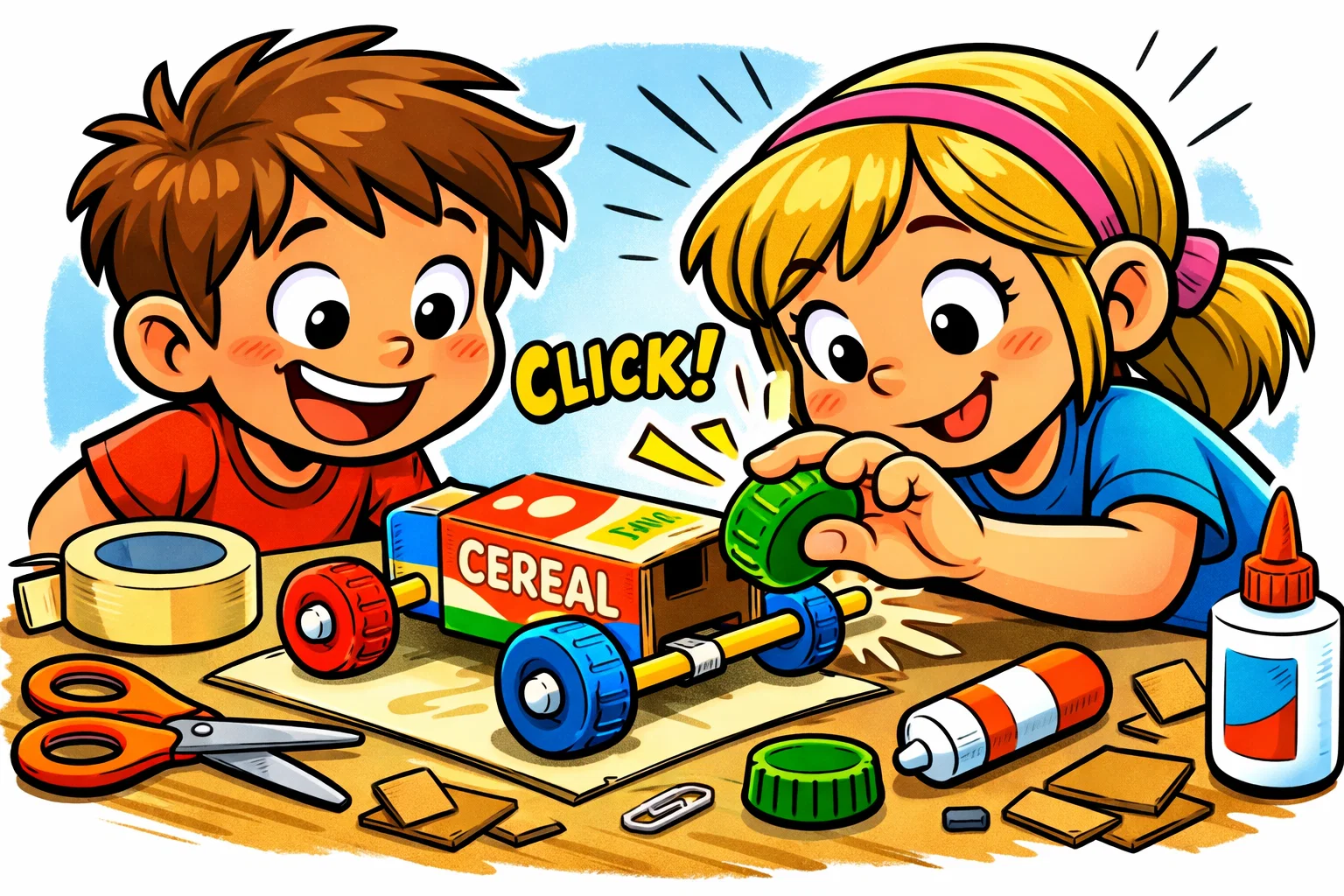
Engaging children in mechanical engineering often starts with the most fundamental components of our physical world. Among the six simple machines, this specific combination stands out as perhaps the most recognizable and essential for modern life. By observing how these parts work together, kids can begin to grasp how humans have historically simplified the task of moving heavy objects across long distances. This lesson focuses on hands-on activities that turn abstract physics into tangible experiences.
Wheel and Axle Basics

Before diving into construction, it is necessary to establish what this machine actually represents in a functional sense. While a lone circular wheel might seem like a simple object, its integration with a central rod—the axle—transforms it into a power-multiplying tool.
Simple Machine Definition for Students
A wheel and axle is a simple machine consisting of a circular wheel attached to a central rod. These two parts rotate together. When you turn the larger component, the rod also turns, and vice versa. This setup serves two primary purposes: it can increase the force applied to an object or increase the speed at which an object moves. In a typical lesson, students learn that this machine is effectively a continuous lever that rotates 360 degrees around a central point.
Real World Examples of Wheel and Axle Systems
Children interact with this technology daily without realizing it. A doorknob is a classic example; the large handle makes it easy to turn the narrow spindle (axle) inside the door mechanism. Screwdrivers, bicycle gears, and even the steering of a car operate on these exact principles. By identifying these items in the home or classroom, children can clearly visualize how a small effort on the outer rim translates into significant work at the center:
- Doorknobs in every room
- Steering components of cars and toys
- Screwdrivers and wrenches
- Mechanisms in kitchen mixers
- Tires on bicycles and skateboards
Physics Behind Rotating Motion
The core of this system is the transfer of energy through rotation. When force is applied to the outer edge of the wheel, it travels a longer distance than the surface of the rod. Because the two components are locked together, they complete a rotation at the same time. However, because the primary wheel is larger, its rim moves much faster and covers more ground. This relationship allows the machine to amplify force or speed, depending on where the initial force is applied.
Materials for Cardboard Wheel and Axle Projects
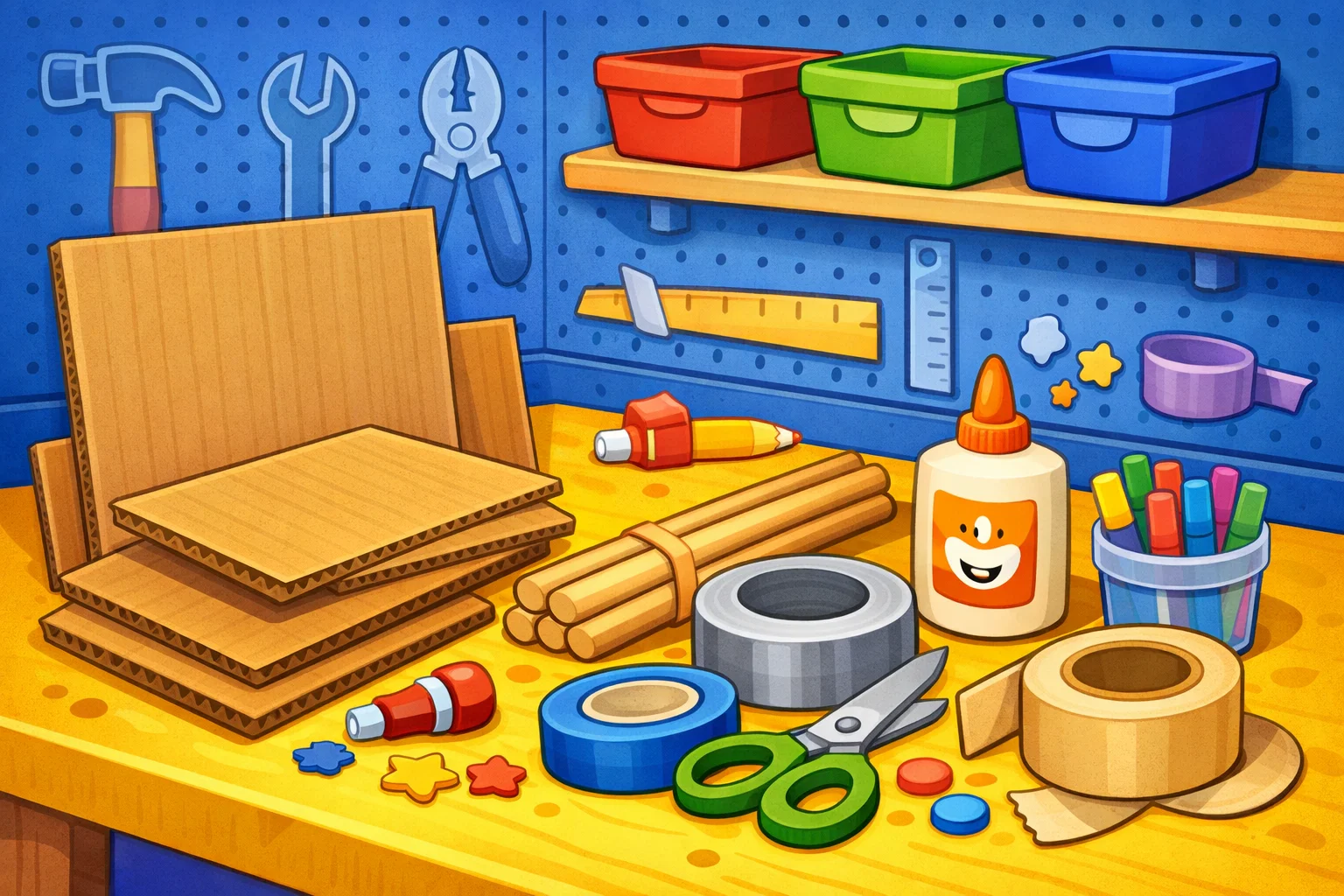
Creating a working model requires specific materials that offer a balance between ease of use and structural stability. Using household items allows students to experiment through trial and error in a safe environment.
Essential Items for DIY Simple Machines
To create a reliable model, you will need several key components. Observations indicate that using fragile fasteners often leads to mechanical failure. Therefore, the following items are recommended:
- Axles: 25 cm wooden dowels or unsharpened pencils provide the necessary rigidity.
- Wheels: Corrugated cardboard is ideal for its strength-to-weight ratio.
- Connectors: Hot glue (with adult supervision) or strong masking tape.
- Spacers: Small plastic beads or sections of a drinking straw.
Safety Equipment for Science Experiments
While these activities are generally low-risk, maintaining professional safety standards is a vital part of STEM education. Eye protection should be followed, especially when using elastic bands or when components are under high stress. Educators note that small parts can unexpectedly fly off during high-speed tests, so protective glasses are a mandatory requirement.
Step by Step Wheel and Axle Activity
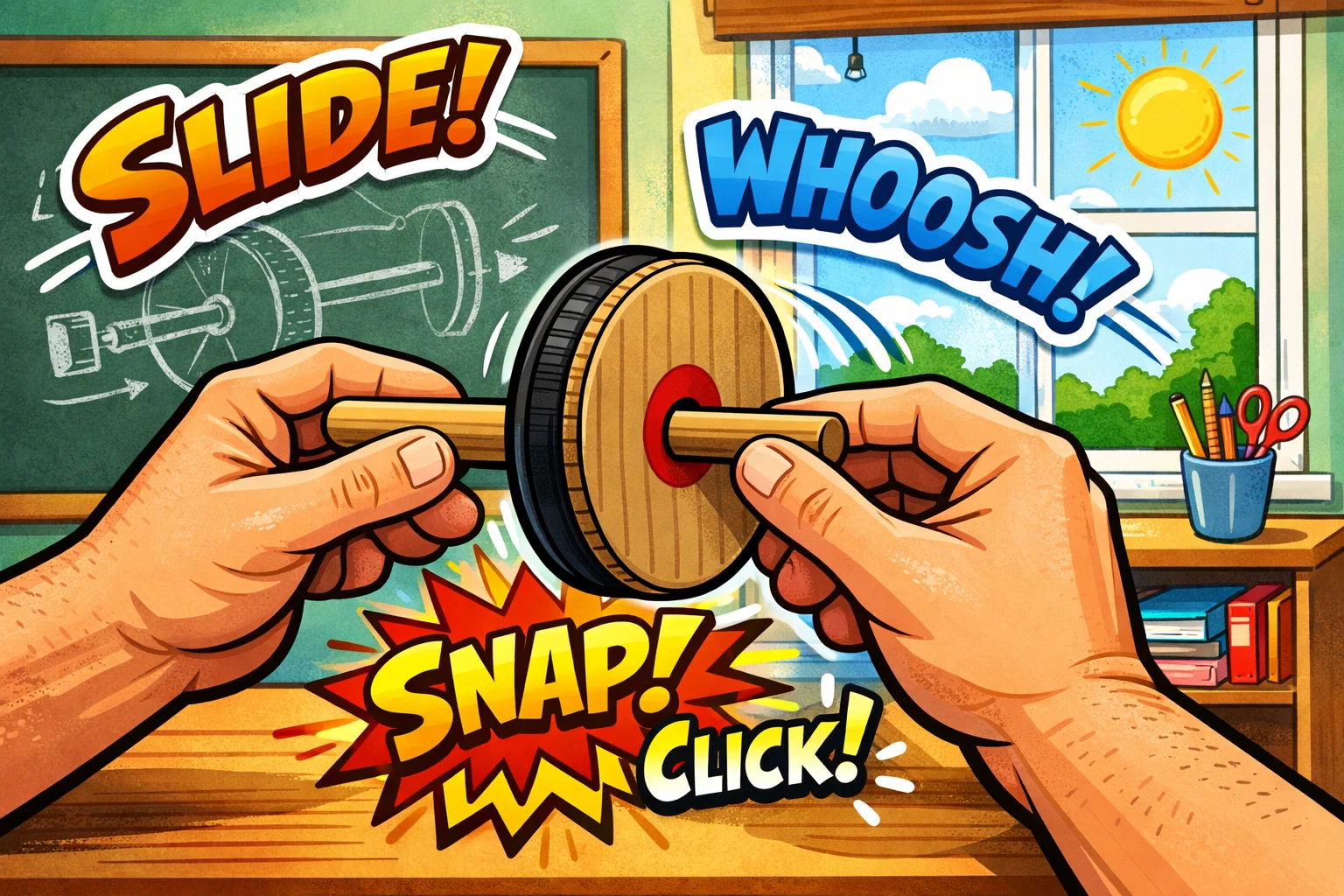
Practical application is the most effective way to reinforce mechanical concepts. The following procedure is designed for elementary-aged children to build their first functional vehicle.
Building Base with Wooden Dowels
Start by creating a stable frame. Cut a piece of cardboard into a rectangle, approximately 15 cm by 20 cm. This serves as the chassis. To attach the axles, you should not stick the wooden dowels directly to the cardboard, or they won’t spin. Instead, secure two sections of a drinking straw across the bottom of the chassis and thread the wooden rods through them.
Attaching Wheels for Maximum Efficiency
Cut four identical circles from corrugated cardboard. Finding the exact center is critical; a wobbly wheel creates uneven friction and slows the vehicle down. The assembly process includes the following steps:
- Find the geometric center using a ruler
- Make a small hole exactly in the center
- Slide the circular part onto the end of the wooden rod
- Secure the connection with glue or a rubber band
Testing Different Wheel Sizes and Ratios
Once the basic car is built, it is time for the experimental phase. Technical parameters for students aged 8–10 suggest aiming for an ideal ratio: a radius of the outer wheel to the radius of the rod of at least 5:1. This makes the mechanical advantage physically obvious. Encourage children to replace the circular parts with larger ones and observe changes in movement.
Physics Principles of Wheel and Axle Operation
The machine functions essentially as a continuous lever. In this system, the central axis serves as a fulcrum. By applying the Law of Torque (Torque = Radius x Force), we can see how force is manipulated. When you apply force to the larger wheel, you create a rotational force that is amplified at the smaller rod.
Mechanical Advantage in Circular Motion
Mechanical Advantage (MA) is a measure of how much a machine multiplies the input force. You can calculate the MA by dividing the radius of the larger wheel by the radius of the rod. Key factors of mechanical advantage include:
- The ratio of the wheel radius to the axle radius
- The total distance traveled by the rim
- The amount of input force applied to the system
- The amount of energy conserved during rotation
Force Distribution Between Radius and Center
The distribution of force is what defines the utility of the machine. In a doorknob, the force is distributed across the wide circumference of the handle. As the handle turns, that energy is concentrated into the much smaller surface area of the central rod. This allows the resistance of the door latch to be overcome. Conversely, in a bicycle’s rear tires, force is applied to the small axle to make the large wheel rotate faster.
Relationship Between Torque and Distance
Torque is the “turning version” of force—increasing the distance from the fulcrum amplifies it without extra effort. Physical builds help students connect formulas to reality. Education Week reports consistently show hands-on science activities boost student engagement and interest compared to traditional methods.
| Component | Role in Physics | Engineering Requirement |
| Wheel | Force/Distance Input | Must be centered for balance |
| Axle | Force Output/Pivot | Must have high structural integrity |
| Fulcrum | Center of Rotation | Must minimize internal friction |
| Torque | Rotational Power | Dependent on radius ratio |
Real Life Examples of Wheel and Axle Systems
Understanding these machines helps children decode the world around them. As experts from the Sphero Team argue, introducing simple machines not only as concepts but as practical devices helps reinforce comprehension and master the basics of mechanics.
Transportation Tools and Vehicle Parts
Every vehicle on the road is a complex collection of these mechanical systems. Beyond the obvious tires, consider the drivetrain. The engine applies force to the rod, which then rotates the circular wheels.
Everyday Household Gadgets and Knobs
You can find these machines in almost every room of a house. Many tools operate on this principle:
- Manual pencil sharpeners (handle and blades)
- Pizza cutters (handle and cutting wheel)
- Screwdrivers (handle and shaft)
- Faucet valves and mixers
- Pepper mills
Industrial Machinery and Heavy Equipment
In factories and construction sites, these systems are scaled up to move tons of material. Windlasses used to lift water from wells or heavy anchors on ships are high-torque machines.
Fun Science Experiments for Kids
Once the basic concepts are mastered, you can introduce variables to see how the machine reacts to different environments.
Measuring Distance and Friction
Friction is the “enemy” of motion in these experiments. Ask students to roll their cardboard cars across different surfaces:
- Smooth tile floor (minimal friction)
- Soft rug or carpet (increased resistance)
- Tray of sand or gravel (maximum friction)
- Inclined wooden board (gravity testing)
Comparing Fixed vs Moving Axles
There are two ways to set up this machine. In a “fixed axle” system, the rod remains stationary while the wheel rotates around it. In a “moving axle” system, the two parts are locked together and rotate as one unit. Children will quickly find that a moving rod is much more efficient for land transport.