

As a parent, you naturally want to give your little one the best possible start in life, and few skills are as foundational as the ability to read. This often leads to the burning question: what is the best age to start phonics? With the rise of early learning apps and competitive preschool environments, many families feel a sense of urgency to ensure their child starts this literacy journey at just the right moment to ensure long-term academic success.
Determining when a child should learn phonics isn’t just about picking a date on a calendar; it’s about aligning instruction with their unique developmental milestones. While some toddlers recognise letters early, others may not show a true interest in reading until they are closer to school age. Understanding the nuances of literacy development helps you provide the right support your child needs without placing unnecessary pressure on them.
Introduction
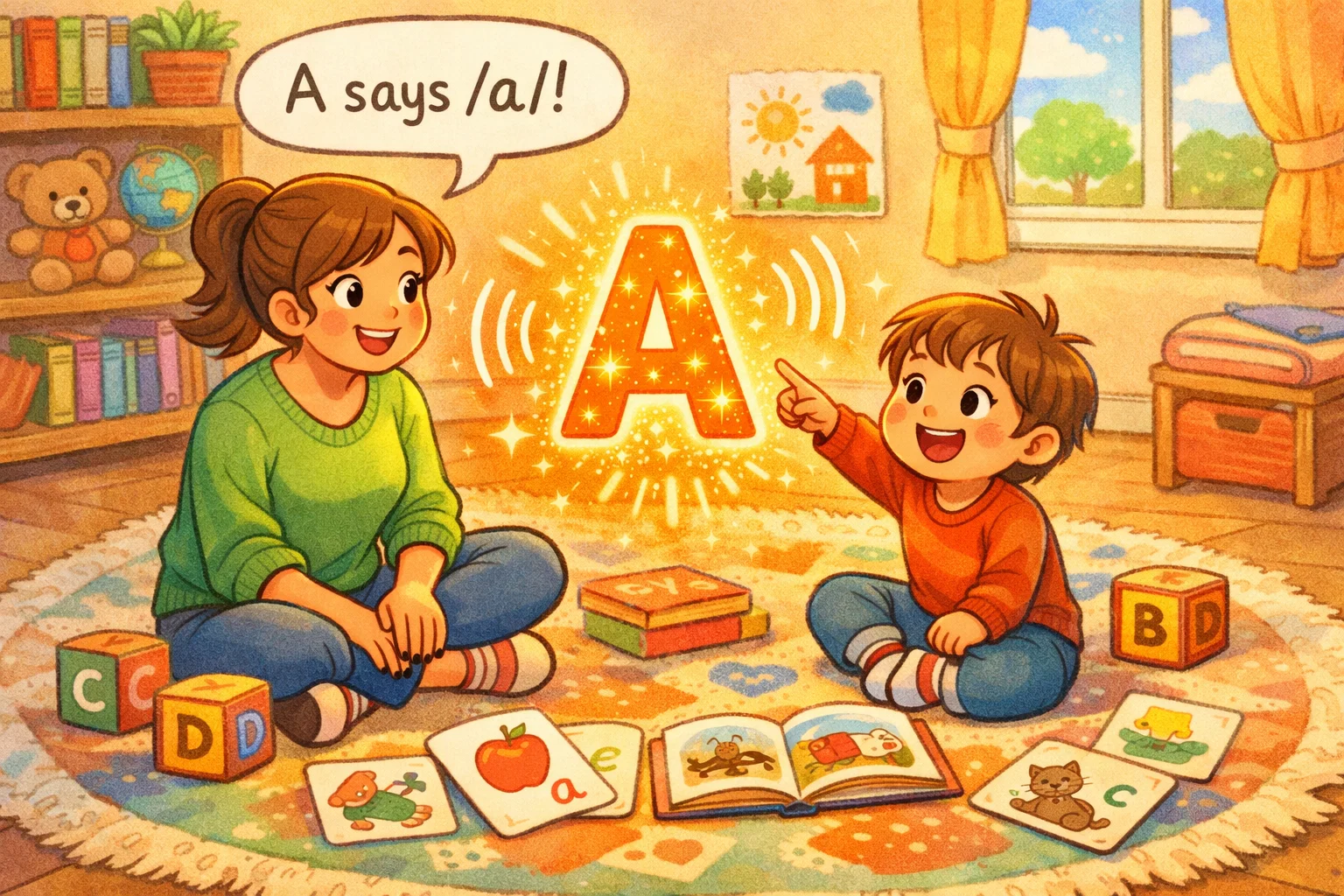
This method of teaching is the bedrock of the modern English curriculum. However, the “right” time to start teaching can be a moving target. Research into early literacy suggests that while there are age ranges that serve as helpful benchmarks, readiness is often influenced by environment, oral language skills, and cognitive maturity.
Whether a child is ready at age 3 or age 5, the goal of phonics instruction remains the same: to provide the tools needed to decode words and ultimately achieve strong reading comprehension. This guide will explore how children learn to read, the significance of phonics education, and how you can help your child navigate this reading journey with confidence.
What Is Phonics?
At its simplest, this method teaches the relationship between the individual sounds (phonemes) of spoken language and the letters (graphemes) used to represent them in writing. It is a systematic approach used to help children learn how to read and write by breaking words down into their component parts.
Instead of memorizing thousands of words by sight, phonics allows a learner to “crack the code” of the English language. By learning how sounds and letters work together, a young reader gains the ability to tackle unfamiliar words independently.
How Phonics Is Taught
Phonics teaching typically follows a logical progression. It begins with individual letter sounds and progresses to blending those sounds together to form words. The process involves:
- Decoding: Translating printed words into sounds.
- Encoding: Translating spoken sounds into written letters (spelling).
- Blending: Running individual sounds together to say a whole word (e.g., /c/-/a/-/t/ becomes cat).
- Segmenting: Breaking a word down into its individual sounds to help with spelling.
What Is Synthetic Phonics?
This specific approach is widely considered the “gold standard” in instruction, particularly for children in the UK and many parts of the US. In this model, students start by learning a small group of letter sounds and immediately learn to blend them to decode simple words. For example, once they know ‘s’, ‘a’, ‘t’, ‘p’, ‘i’, and ‘n’, they can already read “sat,” “pin,” and “tap.”
Phonics vs. Phonological Awareness
It is a common misconception that these two terms are identical. Phonological awareness is an umbrella term that includes the ability to hear and manipulate sounds in spoken language—like rhyming or clapping out syllables. Phonics, on the other hand, specifically focuses on the relationship between sounds and written letters. A learner usually needs a foundation in phonemic awareness (hearing the smallest units of sound) before formal phonics can truly take root.
Significance of Phonics Education in Early Years
This method of teaching is the bedrock of the modern English curriculum. However, the “right” time to start teaching can be a moving target. Research into early literacy suggests that while there are age ranges that serve as helpful benchmarks, readiness is often influenced by environment, oral language skills, and cognitive maturity.
Whether a child is ready at age 3 or age 5, the goal of phonics instruction remains the same: to provide the tools needed to decode words and ultimately achieve strong reading comprehension. This guide will explore how children learn to read, the significance of phonics education, and how you can help your child navigate this reading journey with confidence.
What Is Phonics?
At its simplest, this method teaches the relationship between the individual sounds (phonemes) of spoken language and the letters (graphemes) used to represent them in writing. It is a systematic approach used to help children learn how to read and write by breaking words down into their component parts.
Instead of memorizing thousands of words by sight, phonics allows a learner to “crack the code” of the English language. By learning how sounds and letters work together, a young reader gains the ability to tackle unfamiliar words independently.
How Phonics Is Taught
Phonics teaching typically follows a logical progression. It begins with individual letter sounds and progresses to blending those sounds together to form words. The process involves:
- Decoding: Translating printed words into sounds.
- Encoding: Translating spoken sounds into written letters (spelling).
- Blending: Running individual sounds together to say a whole word (e.g., /c/-/a/-/t/ becomes cat).
- Segmenting: Breaking a word down into its individual sounds to help with spelling.
What Is Synthetic Phonics?
This specific approach is widely considered the “gold standard” in instruction, particularly for children in the UK and many parts of the US. In this model, students start by learning a small group of letter sounds and immediately learn to blend them to decode simple words. For example, once they know ‘s’, ‘a’, ‘t’, ‘p’, ‘i’, and ‘n’, they can already read “sat,” “pin,” and “tap.”
Phonics vs. Phonological Awareness
It is a common misconception that these two terms are identical. Phonological awareness is an umbrella term that includes the ability to hear and manipulate sounds in spoken language—like rhyming or clapping out syllables. Phonics, on the other hand, specifically focuses on the relationship between sounds and written letters. A learner usually needs a foundation in phonemic awareness (hearing the smallest units of sound) before formal phonics can truly take root.
Significance of Phonics Education in Early Years
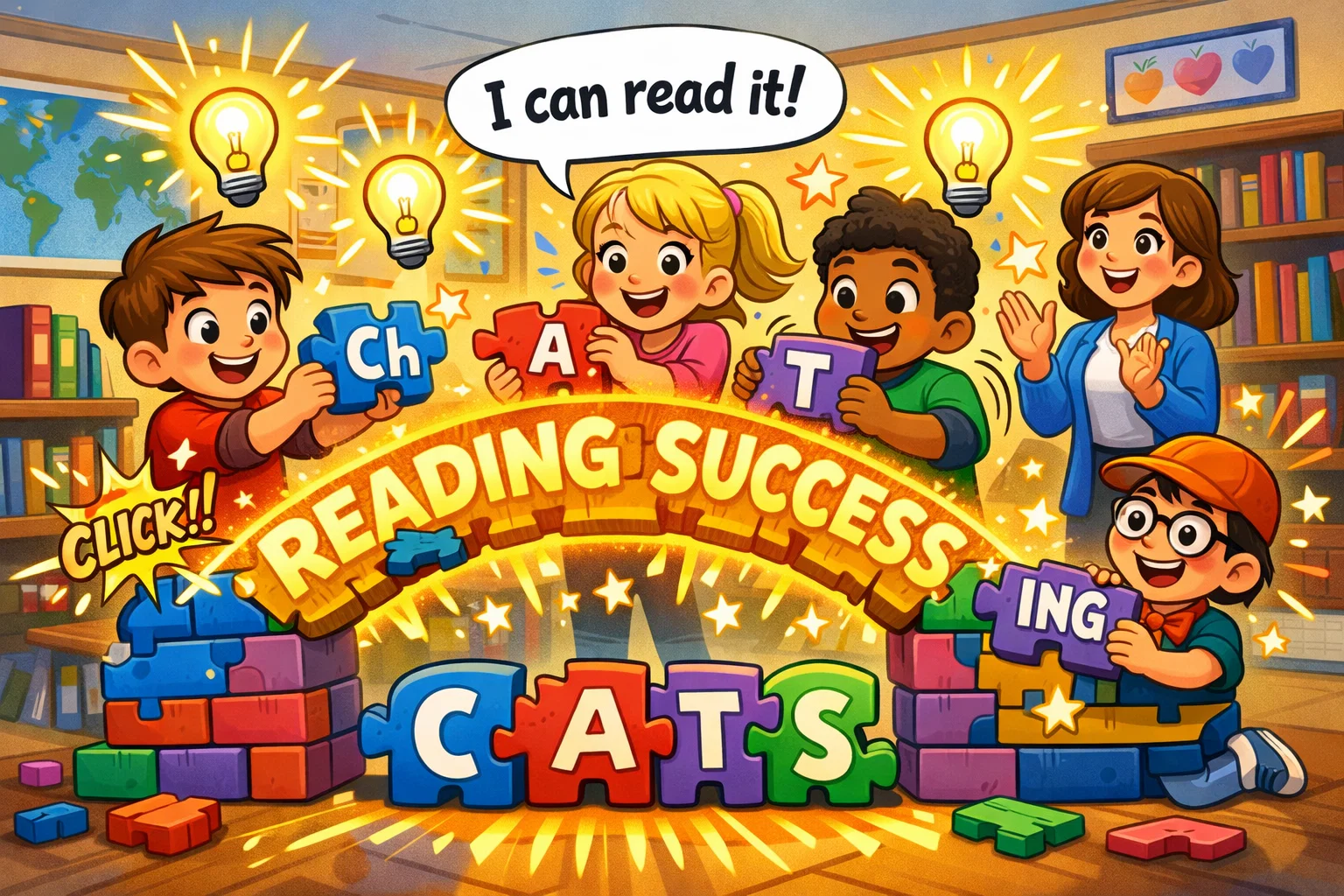
Why do educators place such a heavy emphasis on this development? It is because reading skills are the primary gateway to all other learning. Without the ability to decode, a student will struggle in history, science, and even math word problems.
Cognitive Development
Learning phonics rules is a workout for the brain. It strengthens neural pathways associated with auditory processing and visual memory. When children learn to map sounds to symbols, they engage in complex cognitive “mapping” that builds the mental stamina required for later academic challenges.
Creative Development
It might seem counterintuitive, but structure breeds creativity. When a student is able to read fluently, their passion for reading grows. This opens the door to storytelling, complex vocabulary, and the ability to explore imaginary worlds. An individual who isn’t struggling to decode can focus their mental energy on the plot and characters of a story.
Develop Spelling Skills
This knowledge isn’t just useful for reading; it is essential for writing as well. By understanding various phonics rules, students can predict how a word should be spelled. Instead of guessing, they use their knowledge of vowel patterns and consonant blends to construct words accurately.
Improve Reading Fluency
The ultimate goal is to reach a point where decoding becomes automatic. This is known as fluency. As a child’s reading progresses, they move from choppy, sound-by-sound efforts to smooth, expressive reading, which is essential for deep reading comprehension.
Overcome Reading Difficulties
Formal phonics instruction typically acts as a preventative measure. According to the National Reading Panel, systematic instruction is the most effective way to teach children to read, especially those at risk for reading delays. Early intervention through age-appropriate phonics can close the gap before it becomes a significant hurdle.
| Benefit | Description |
| Independence | Students can read words they have never seen before. |
| Confidence | Success in decoding builds a positive attitude toward school. |
| Vocabulary | Exposure to a wider range of words than in everyday speech. |
| Spelling | Provides a logical framework for writing. |
Factors to Consider When Determining Best Age for Phonics Instruction
While ages 4 to 5 are common for starting school, the best age to start phonics varies. Forced instruction before a learner is ready can lead to frustration and a lack of interest in reading.
Child Readiness Signs
You might wonder if your little one is ready. Look for these indicators:
- They can recognize some letters of the alphabet.
- They show a clear interest in books (e.g., holding them, asking what signs say).
- They can identify words that rhyme.
- They can listen to a short story without becoming restless.
Language Exposure at Home
The amount of oral language a toddler hears at home is a huge predictor of literacy success. Supporting phonics starts with conversation. The more words they hear in context, the easier it will be to decode those words later.
Developmental Milestones
Early development involves more than just cognitive skills. A student needs enough fine motor control to eventually read and write, and enough speech clarity to distinguish between individual sounds.
Learning Environment
Whether in preschool or at home, the environment should be rich in print. Teaching children in a high-pressure, “flashcard-only” environment is often less effective than a play-based approach that introduces letters and sounds naturally.
Recommended Age Ranges for Phonics Instruction
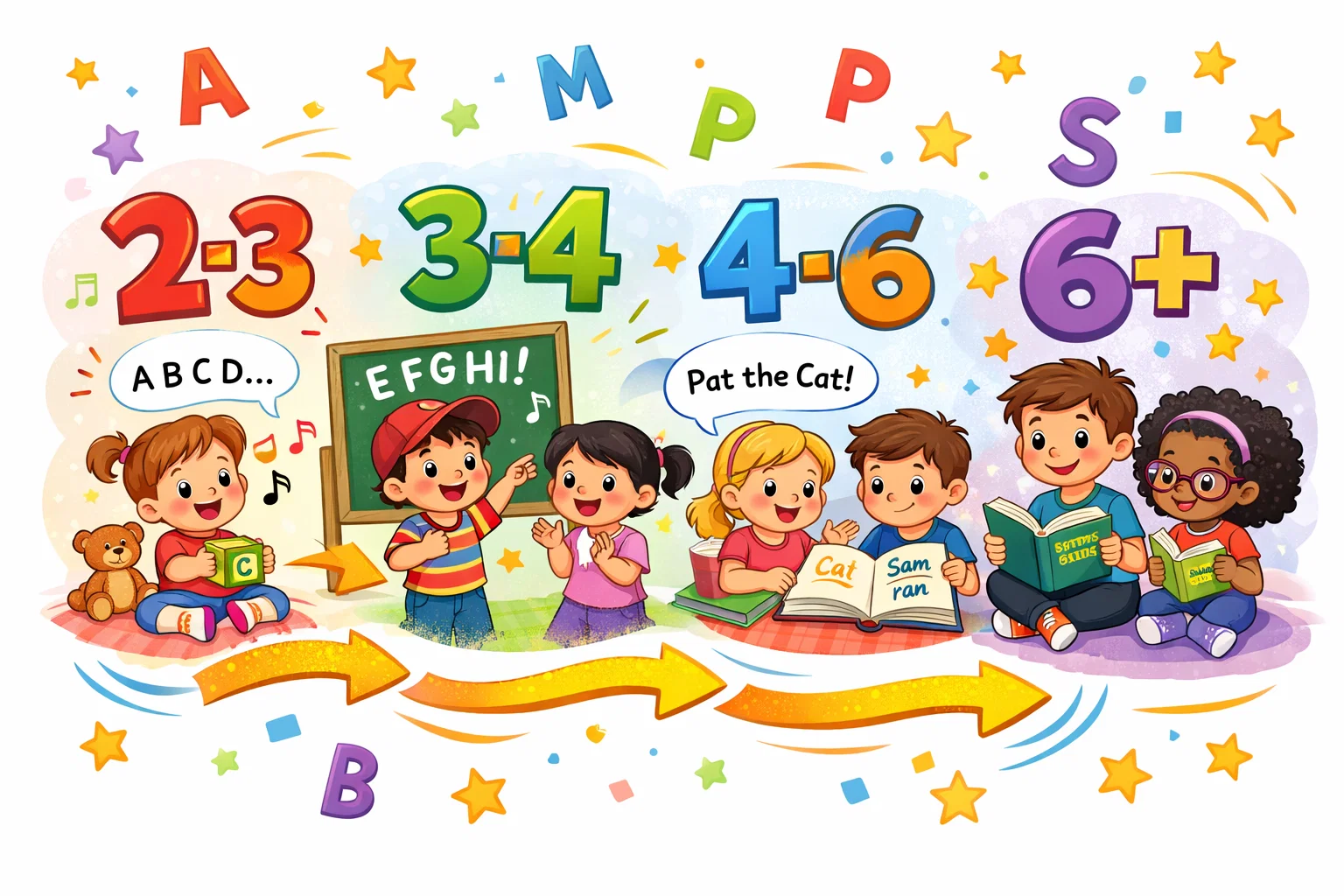
Ages 2–3: Early Sound Awareness
At this stage, formal phonics is generally not recommended. Instead, focus on beginning phonics through play. Sing nursery rhymes, play “I Spy” with sounds, and read rhythmic books. The goal is to develop an ear for the sounds of spoken language.
Ages 3–4: Building Foundations
In preschool, many start Phase 1 phonics. This focuses on environmental sounds, instrumental sounds, and body percussion. They might begin to recognise the first letter of their name and experiment with letter sounds.
Ages 4–5: Early Phonics Concepts
This is typically the age when formal phonics instruction begins in kindergarten in the U.S. (or Reception and Year 1 in the UK). Students learn Phase 2 and Phase 3, where they start to blend CVC (consonant-vowel-consonant) words like “dog” or “run.”
Ages 5–6: Core Phonics Skills
By Grade 1 and into Grade 2, the focus shifts to digraphs (two letters making one sound, like ‘sh’ or ‘ch’) and longer words. This is also when many children in the UK sit the phonics screening check.
Ages 6–7: Advanced Beginning Phonics
In Grade 2 and Grade 3, children begin tackling vowel teams (like ‘ai’ in rain) and learn more complex spelling rules. Their reading journey moves toward longer chapter books.
Ages 7–8: Complex Phonics Rules
By Grade 3 and Grade 4, most children learn to decode multisyllabic words and suffixes/prefixes. They are moving from “learning to read” to “reading to learn.”
What Phonics Rules Should Children Know by Age?
Use the table below as a general guide, but remember that literacy development is not a race.
| Age / Grade | Key Skills |
| Ages 4-5 (K / Year 1) | Single letter sounds, blending CVC words, basic sight words. |
| Ages 5-6 (Grade 1) | Digraphs (sh, ch, th), consonant blends (st, fl), long vowels. |
| Ages 6-7 (Grade 2) | Alternative spellings (e.g., ‘ay’ and ‘ai’), soft c and g. |
| Ages 7+ (Grade 3+) | Prefixes, suffixes, Greek and Latin roots, multisyllabic decoding. |
Practical Strategies for Supporting Phonics Learning at Home
You are your child’s first teacher. You don’t need a degree to support your child at home; you just need consistency and a little bit of creativity.
Supporting Phonics at Home
Keep reading sessions short and sweet. Ten minutes of focused, happy practice is better than thirty minutes of boredom. Support your child by pointing out letters on cereal boxes or street signs.
Sharing Stories Is Powerful
Never stop reading to your little one, even after they are able to read themselves. Hearing you read allows them to focus on reading comprehension and vocabulary while you handle the decoding.
Go With Their Interests
Does your learner love dinosaurs? Find books about “Dino-Letters.” Tapping into their natural interests makes reading feel like a hobby rather than a chore.
Phonics Activities and Games
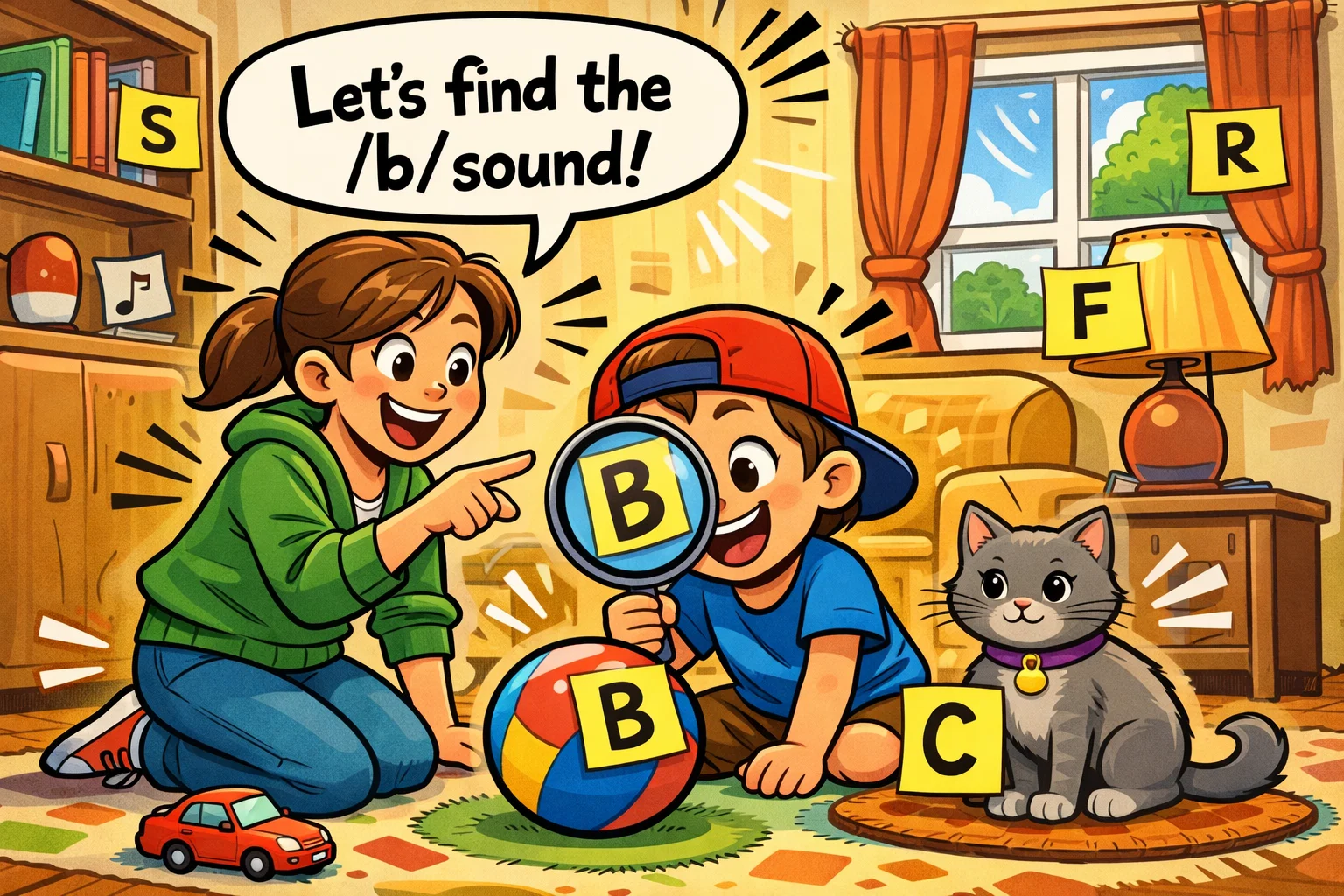
- Sound Scavenger Hunt: “Find something in the room that starts with the /b/ sound.”
- Bath Time Letters: Use foam letters to build words they learn in school.
- Jump on the Sound: Write letters on the sidewalk in chalk and have them jump on the sound you call out.
Phonics Schemes and Programmes
Many schools use specific frameworks. Understanding which one is used locally can help you provide consistent support.
- Letters and Sounds: A popular UK framework divided into six phases.
- Read Write Inc. for Parents: A systematic program that uses specific phrases (like “Mountain” for the letter ‘m’) to help learners remember letter sounds.
- Digital Learning Tools: Apps like Reading Eggs or Teach Your Monster to Read can be excellent for phonics learning, provided they are used as a supplement.
Supporting Continuous Development
As children move into Grades 2, 3, and 4 and beyond, the focus gradually shifts. They will encounter more complex vowel patterns and syllable patterns. These lessons don’t “end”—they just become more sophisticated.
Transition From Phonics to Fluent Reading
Once they can decode words effortlessly, encourage reading for meaning. Ask questions like, “Why do you think the character did that?” This bridges the gap between literacy skills and true fluency.
When to Start Phonics Classes?
If you feel your child is falling behind or would benefit from extra support, a small group class can provide both targeted instruction and social motivation. However, for a child early in their development, one-to-one support is often more effective as it can be tailored to their specific pace.
Ultimately, the best age to start phonics is when the learner is curious, engaged, and ready to explore the magic of words. By fostering a passion for reading today, you are setting them up for a lifetime of learning.