

Atmospheric changes are one of the first ways children connect with the natural world. From the moment a toddler notices a droplet on a windowpane to a preschooler chasing their shadow on a sunny day, the environment provides a constant, ever-changing laboratory for exploration. Engaging in these fun weather activities for kids isn’t just about passing the time; it’s a vital way for kids to learn about cause and effect, physics, and the environment. By participating in hands-on projects, young learners develop problem-solving and observation skills and a deep-seated curiosity about how the elements affect their daily lives.
Many educators and parents have noticed that learning through play helps children feel more comfortable with changes in the environment. Whether it is a rainy day spent indoors or a windy day perfect for flying a kite, these crafts and activities offer sensory-rich experiences that support cognitive milestones. This guide provides a comprehensive list of weather activities designed to turn every thunderstorm, rainbow, or breeze into a fun way for kids to learn about the world around them.
Science activities for kids
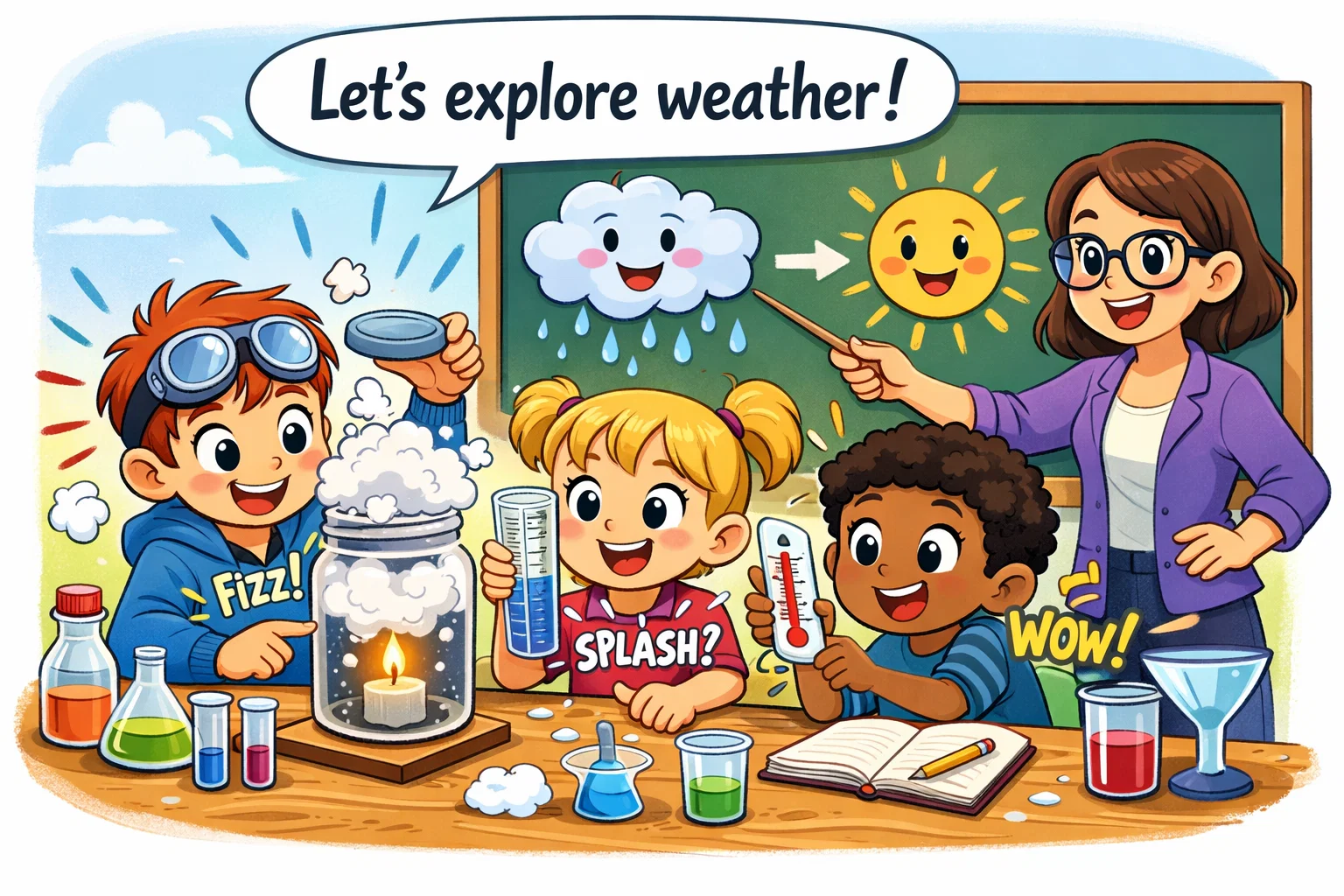
Science isn’t just for textbooks; it is a hands-on adventure. These experiments allow children to visualize invisible forces like air pressure and evaporation. Using simple tools made from household items, you can help kids of all ages grasp complex science concepts in a fun and easy way.
Water cycle in bag
The water cycle for kids can feel abstract until they see it in action. To create this experiment, draw a rainbow and a cloud on a plastic zip-top bag. Fill it with an inch of blue-tinted water and tape it to a sunny window. Within hours, preschoolers will see droplets forming on the sides – this is a simple and fun way to show evaporation and precipitation.
Rain in jar
This is a classic project that kids love. Fill a clear glass with water and top it with a “cloud” of shaving cream. Use a dropper to add blue food coloring. As the “cloud” becomes heavy, the color will “rain” down into the water. This science experiment perfectly illustrates how clouds release moisture when they become saturated.
Cloud in jar
To demonstrate how different patterns form, use a small amount of warm steam and let it condense inside the jar containing warm water and quickly place ice on the lid. The temperature difference causes the water vapor to condense around the hairspray particles, creating a visible cloud.
DIY thermometer
You can help kids learn how temperature changes affect the environment by making a basic thermometer. Use a plastic bottle filled with equal parts water and rubbing alcohol, plus a few drops of red food coloring. Insert a straw and seal the top with modeling clay. Watch the liquid rise and fall as you move it from a warm spot to a cold one.
Rain gauge
A rain gauge is an essential part of any home observation post. Cut the top off a plastic bottle, flip it upside down to act as a funnel, and mark a scale in centimeters on the side. This activity for kids encourages them to track the daily conditions and compare data week to week.
Barometer project
To track shifting patterns, stretch a balloon over a jar and secure it with a rubber band. Tape a straw to the top so it acts as a pointer. As air pressure shifts, the balloon will bulge or sink, moving the straw. This is a fantastic tool for showing how air pressure changes before different weather conditions.
Sensory activities
Sensory play is crucial for preschool development. It allows children to process different types of weather through touch, sound, and sight.
Thunderstorm sensory bin
Create a thunderstorm in a tub! Use dyed blue rice or water beads, small plastic umbrellas, and metal spoons to create “thunder” sounds. This sensory experience helps children become more familiar with the sounds of storms.
Rain sensory bottles
For a calming indoor activity, fill bottles with water, blue glitter, and small silver beads. When shaken, the beads create a sound similar to rain hitting a roof, making it a fun tool for quiet time.
Wind sensory play
On a windy day, head outside with ribbons tied to sticks or simple pinwheels. If you are indoors, use a small fan to see how different objects – like feathers versus pebbles – react to air movement. This is a way for kids to “see” the wind.
Snow texture tray
Even if you don’t live in a cold climate, you can simulate snow using a mix of cornstarch and shaving cream. This “fake snow” is cold to the touch and moldable, providing hours of sensory activities for preschoolers.
Cloud dough
Mix flour and a small amount of vegetable oil (an 8:1 ratio) to create “cloud dough.” It is soft, crumbly, and white, perfectly mimicking the fluffiness of clouds. It’s a simple and fun activity for kids that strengthens hand muscles.
Weather arts and crafts
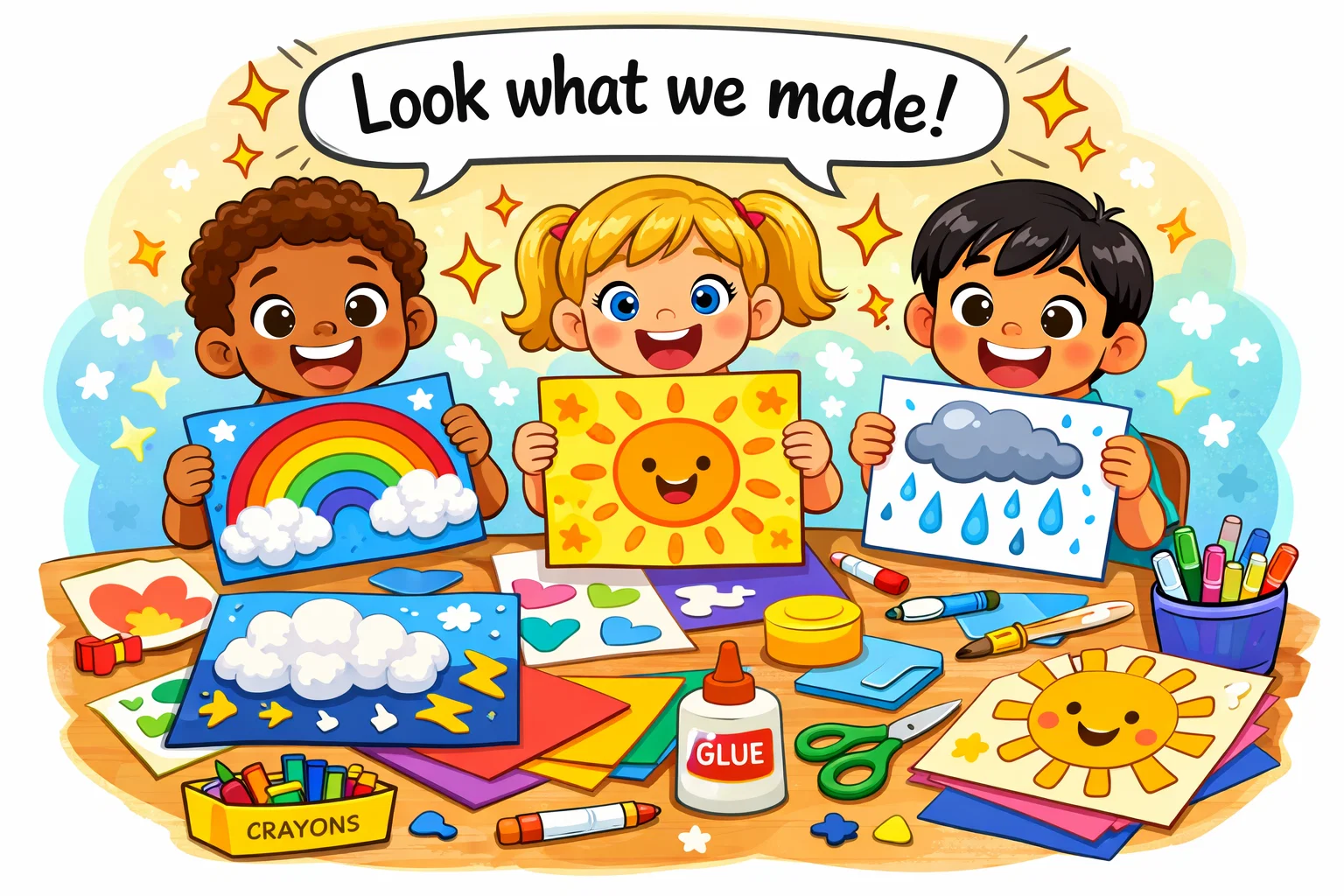
Creative projects inspired by rain, clouds, sun, wind, and storms help children express their observations. These weather crafts turn a simple weather report into a masterpiece.
Rain painting
Place drops of watercolor paint or food coloring on a piece of thick paper. If it’s a rainy day, set the paper outside for a few seconds. The natural elements will smear and splatter the paint, creating a unique “rain-made” piece of art.
Sun prints
Use construction paper and various backyard objects like leaves or keys. Place them near a sunny window for a short time. The sun will fade the exposed paper, leaving a dark “print” where the objects were. This is a fun way for kids to see the power of UV rays.
Rainbow collage
A rainbow is a favorite subject for kids. Provide scraps of red, orange, yellow, green, blue, and violet paper. Having preschoolers sort and glue these into an arch is a great learning activity for color recognition.
Storm art
Give children black construction paper and white chalk or silver glitter. Ask them to draw what a thunderstorm looks like to them. This often leads to fun playing with “lightning” bolts and swirling wind patterns.
Cloud cotton craft
This project involves gluing cotton balls onto blue paper to represent different types of clouds (cumulus, stratus, etc.). It’s a simple craft that even the youngest toddlers can enjoy.
Fine motor activities
Fine motor activities help kids develop the coordination needed for writing.
- Storm cloud threading: Punch holes in a cardboard cloud and have kids thread blue yarn through them to represent “falling rain.”
- Lacing cards: Use free printable cards featuring suns and snowflakes to practice lacing skills.
- Snowflake cutting: Folding and cutting paper to make snowflakes is a classic way to practice scissor safety.
- Rainbow beading: Stringing beads in rainbow order on a pipe cleaner creates a beautiful sun-catcher.
- Sun playdough: Use yellow dough to create a sun, adding “rays” made of pasta or toothpicks.
Games and movement
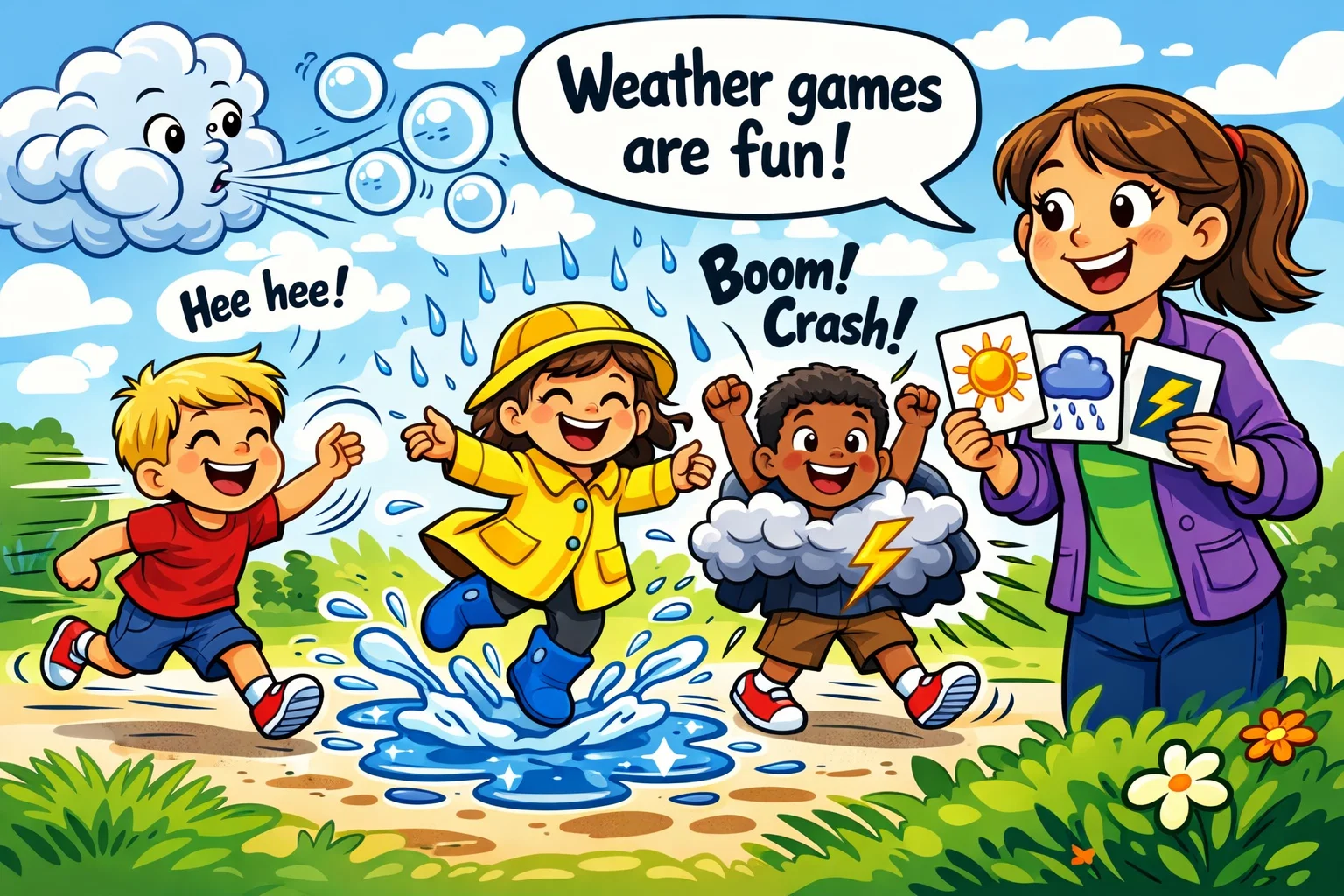
| Game Name | Type of Activity | Description |
| Charades | Movement | Acting like a “tornado” “melting snowman,” or “opening an umbrella.” |
| Bingo | Visual/Social | Using a weather spinner to mark symbols on a card. |
| Wind Chase | Physical | Chasing bubbles or feathers carried by the wind. |
| Storm Sound Game | Auditory | Using hands to clap (thunder) and fingers to tap (rain). |
| Scavenger Hunt | Exploration | Finding a puddle, a gray cloud, and a wind-blown leaf. |
Outdoor activities
Nothing beats the real thing. Outdoor weather play encourages children to engage with the elements directly.
- Cloud spotting: Lay on a blanket and describe the shapes seen in the sky. This builds vocabulary.
- Shadow drawing: Place a toy on a piece of paper and trace its shadow at 10 AM, 12 PM, and 2 PM to see how the sun’s position changes.
- Wind vane: Use a straw, a pin, and a paper triangle to create a wind direction tool. Place it on a fence post to see which way the air is moving.
- Pinwheel testing: Run with a pinwheel to see how speed affects rotation, then stand still and let the natural wind do the work.
Learning through books and stories
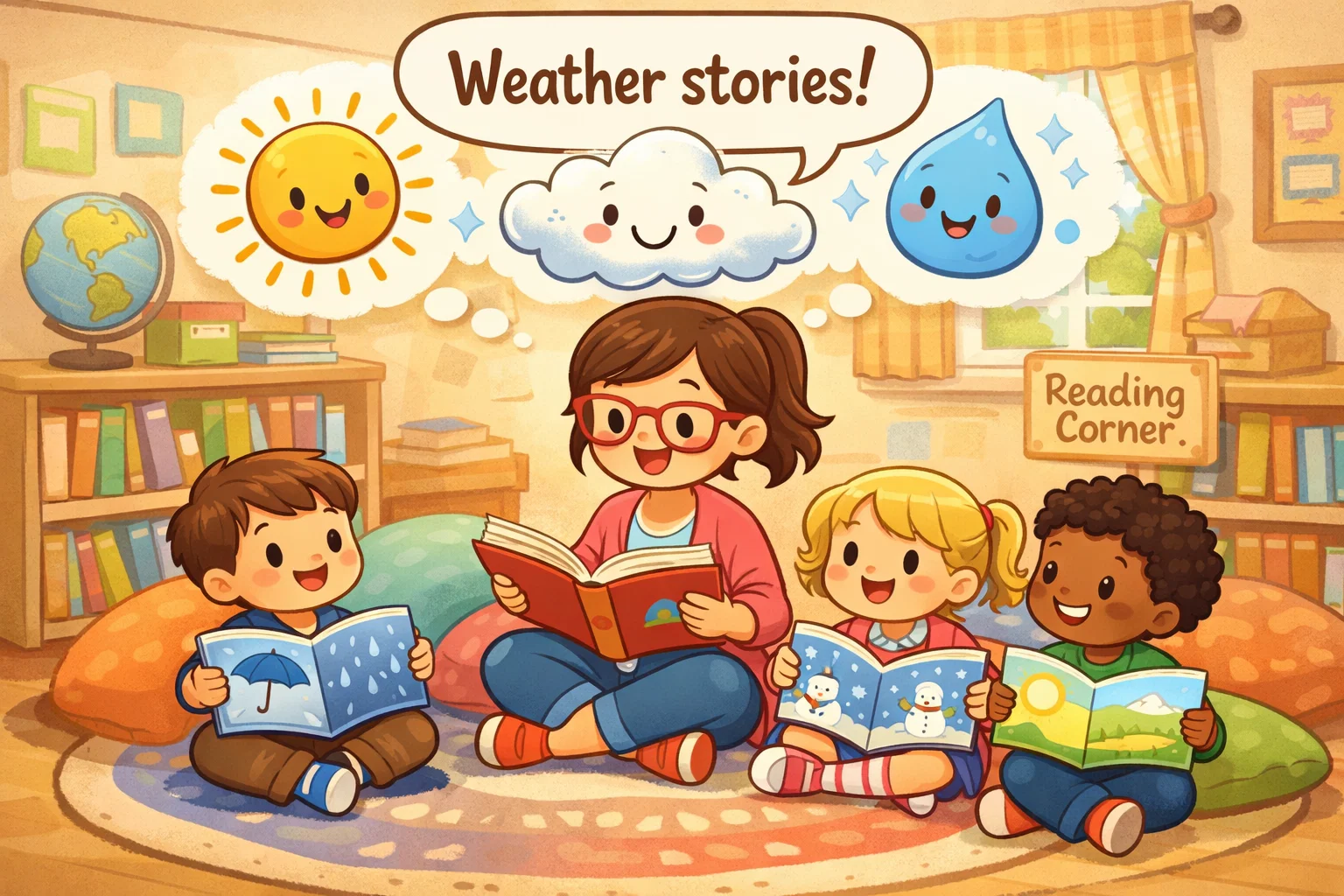
Literature is a way for kids to learn the “why” behind the “what.”
Books about weather, such as The Snowy Day by Ezra Jack Keats or Cloudy with a Chance of Meatballs, are titles kids will love. After reading, encourage storytelling. Ask, “What would you do if it rained marshmallows?” or “How would you stay warm in a blizzard?” You can even introduce poetry by writing simple acrostic rhymes using words like “SNOW” or “SUN.”
Printables and worksheets
For structured learning ideas, printables are incredibly helpful. A weather chart or calendar helps a child track the conditions each day.
- Weather wheel: A circular craft where an arrow points to the current status (Sunny, Cloudy, Rainy).
- Weather log: A journal where kids can draw the sky and record the temperature.
- Weather spinner: Use it for a weather report game in the classroom.
Rain, Wind, and Snow Specific Play
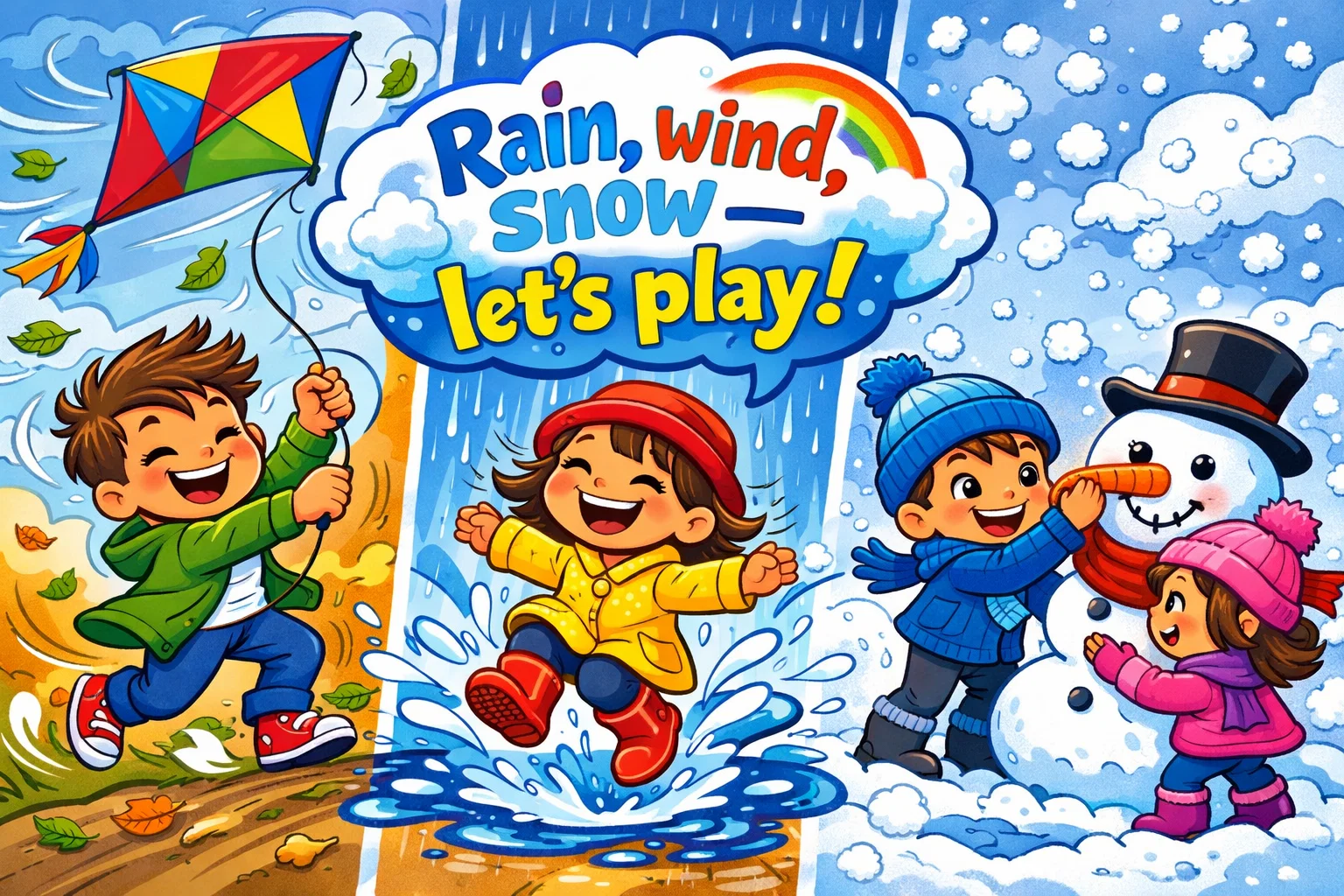
“There’s no bad weather, only the wrong clothes.”
Rainy Day Fun
When the clouds open up, don’t stay indoors the whole time! Puddle jumping is a quintessential childhood experience. If you must stay inside, try making rain sticks using cardboard tubes and dried beans to mimic the sound of a downpour.
Windy Day Adventures
Make wind socks using paper cylinders and streamers. Hanging these outside is a fun and easy way to see the strength of the breeze. Bubble blowing is also a great windy day activity for kids, as they can track the air currents by watching where the bubbles float.
Snow Science
If you have real snow, try snowball science by bringing a bowl of snow inside and comparing how snow melts in warm and cool areas of the house. For those without snow, snowflake crafts and snow sensory play with “ice excavations” (freezing toys in blocks of ice) provide a similar thrill.
Preschool weather activities
For the youngest learners, keep things simple and fun. These adaptations should focus on basic concepts.
- Indoor play: Build a “fort” to hide from a pretend thunderstorm.
- Outdoor play: Use a spray bottle to make “rain” on the sidewalk and watch it disappear in the sun.
- Sensory tubs: Fill a bin with “sun” (yellow pom-poms), “clouds” (cotton), and “rain” (blue beads).
This collection of weather activities ensures that no matter what it’s like outside, there is always a way for kids to explore. By incorporating these learning activities, these activities help children build a lifelong appreciation for the natural world.