50 Unique Classroom Bulletin Board Ideas for Teachers

 Discover a Free Education Video App for Kids
Pastory uses AI to personalize educational video content based on your child’s interests and personality. Safe, engaging, and built for curious young minds. Sign up now to stay updated and enjoy early access with a free trial
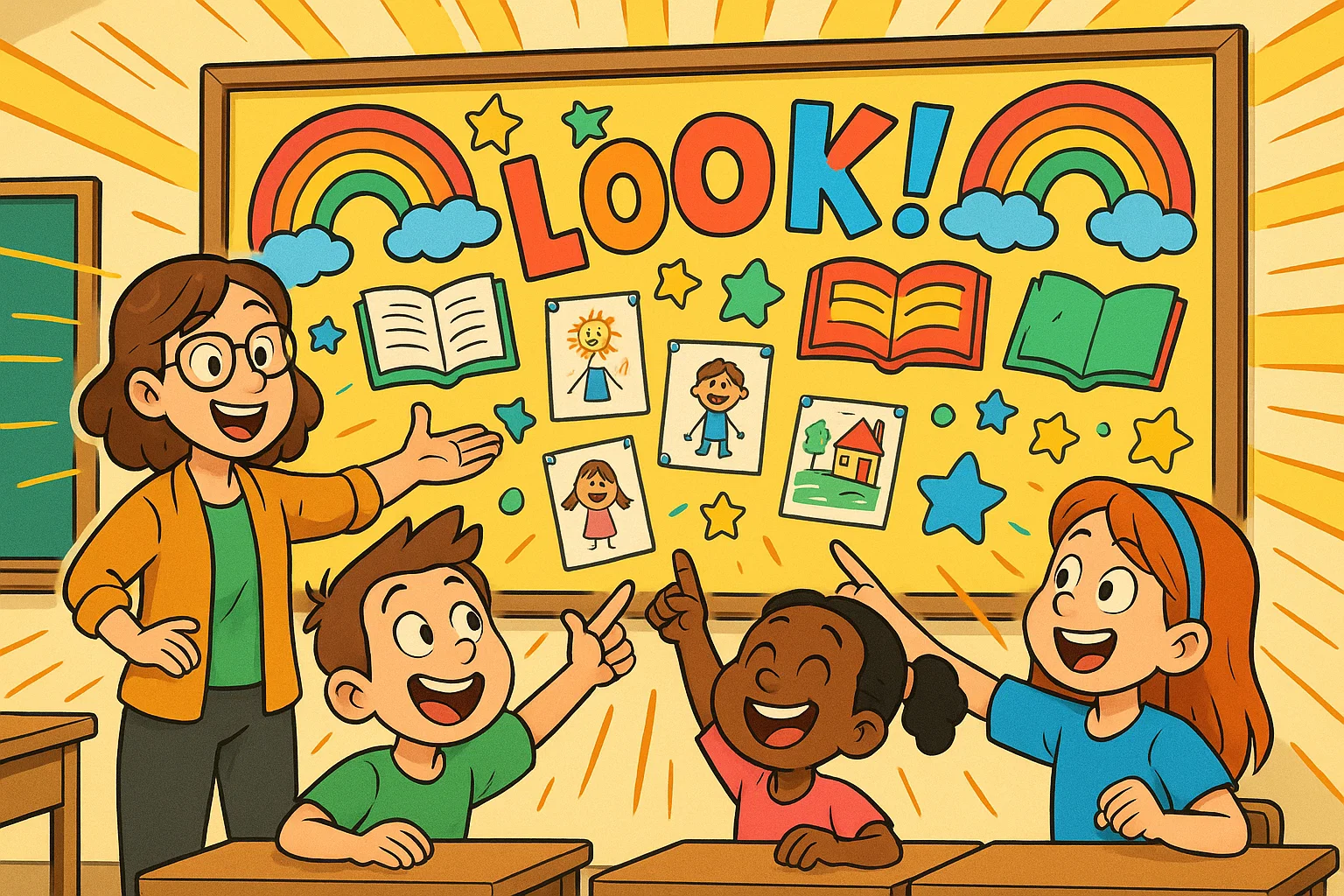
Bulletin boards can support classroom communication, community building, and visual learning. A well-designed bulletin board can improve the classroom environment while reinforcing curricular goals and social-emotional learning. This guide presents 50 versatile bulletin board ideas for preschool, elementary, middle school, and high school classrooms. Teachers will find practical ideas for welcome displays, interactive learning, kindness and belonging, growth mindset, goal setting, and student work showcases—all designed to keep preparation manageable while adding educational value.
Key Takeaways
- Idea Variety for Different Classroom Goals: The list includes welcome, motivational, interactive, kindness-focused, goal-setting, and age-adaptable displays for use throughout the school year.
- Fast Options for Busy Teachers: Simple ideas use pre-cut letters, durable borders, student work, fabric backings, sticky notes, and reusable components to create high-impact displays with minimal prep.
- Student-Centered Displays with Learning Value: Student-focused classroom decor can encourage learners to set goals, contribute ideas, track progress, and display original work, increasing their sense of ownership and engagement.
Welcome and Back-to-School Bulletin Board Ideas
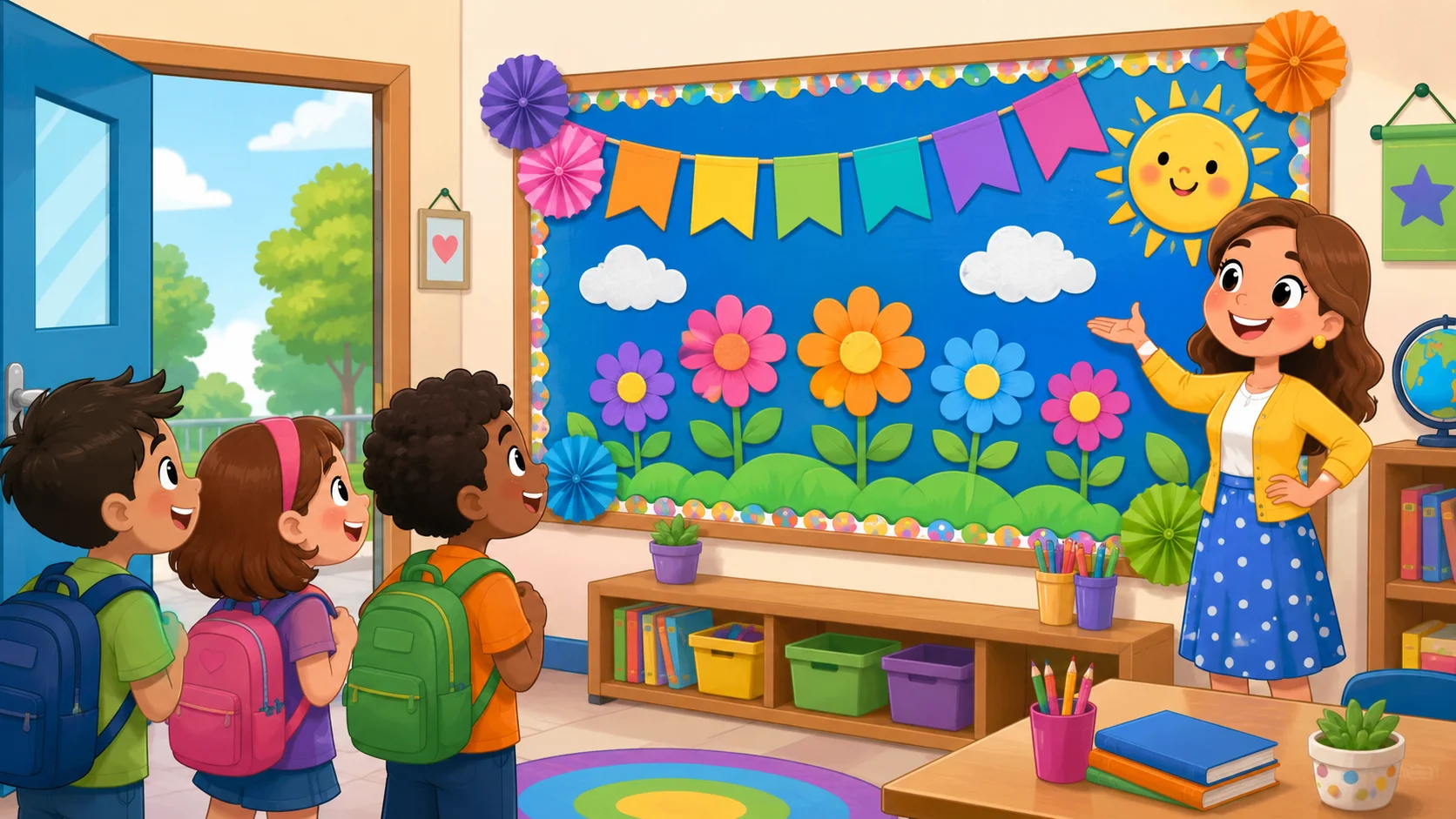
The start of the school year is a natural time to introduce a classroom theme, foster a sense of belonging, and create an engaging backdrop for first-day-of-school photos. A welcoming, inclusive display can help communicate that every student is a valued member of the classroom community. Before displaying student names, photos, or identifiable work, follow school privacy policies and obtain any required family consent.
1. All Are Welcome
The “All Are Welcome” bulletin board idea focuses on inclusion by displaying student names, painted handprints, self-portraits, or multilingual greetings. Use paper in a range of skin tones and student-approved cultural details to help create a welcoming display in which every child can feel represented.
2. Bright Bunch
The “Bright Bunch” concept uses a cheerful lightbulb or sunshine theme in which every student receives a personalized paper lightbulb, sunray, or star cutout. Teachers add each student’s name and a few personal interests, helping classmates find common ground at the start of the school year.
3. Learning Is So Sweet
Teachers can build a candy-themed welcome display with colorful candy, cupcake, lollipop, or ice-cream cutouts personalized for each student. A cheerful, easy-to-read color palette makes the display especially suitable for preschool and early elementary classrooms.
4. School Just Got Brighter
This back-to-school bulletin board features student names printed on stylized neon stars, reflective light rays, or large glowing bulbs. A dark fabric background, such as black denim or navy cotton, creates strong contrast and helps each student’s name stand out.
5. Bee Brave, Bee You
Bee imagery can introduce themes of confidence, individuality, and shared classroom values. The board features honeycomb-shaped student profiles in which children list their strengths, creating a shared display that encourages self-awareness and confidence.
6. Welcome to Our Hive
The “Welcome to Our Hive” display uses a collaborative hive design in which each student decorates one hexagonal cell. Students or teachers can add names, photos, and personal learning goals to each cell, showing how individual contributions form a class community.
7. We All Bee-Long
This inclusive board uses individual bee cutouts to represent every class member and reinforce a sense of belonging. During the first week of school, students decorate their bee wings with personal patterns so the display visibly reflects the class itself.
8. Glad to Sea You
An ocean-themed welcome board uses paper fish, waves, bubbles, and coral to display student names. This versatile concept works well in preschool and elementary classrooms, especially when the color palette is consistent and the layout is not overcrowded.
9. O-Fish-ally Ready to Learn
This design combines ocean imagery with classroom expectations and early learning goals written on individual fish cutouts. Pairing the visual theme with clear classroom expectations can help students understand routines from the first day of school.
10. Kickin’ It in [Grade]
The “Kickin’ It” theme uses sneakers, soccer balls, or other sports imagery and can be adapted for middle and high school students. Display student names on athletic shoes, soccer balls, jerseys, or varsity pennants to connect the classroom theme with familiar interests.
11. Gear Up for a Great Year
A mechanical, STEM-focused theme uses interlocking paper gears to represent students, academic subjects, or daily routines. Because each gear depends on the others, the display offers a simple visual metaphor for teamwork and shared responsibility.
12. Ride Into Learning
This transportation-themed display features a school bus, train, bicycle, or road-trip route, with student photos placed in windows or vehicle frames. Teachers use the route to mark upcoming learning milestones, helping students visualize their academic journey throughout the school year.
13. Welcome to the Team
Using sports jerseys, team pennants, or collectible player cards, this board frames the class as a team. The display can include sections for student strengths and shared classroom commitments, emphasizing team spirit and shared responsibility.
14. Step into a New Year
This staircase-themed board uses a series of paper steps, each representing an academic goal, organizational habit, or behavioral milestone. Students move their markers upward, turning the board into a long-term visual progress tracker.
15. Smart Cookie Crew
The “Smart Cookie Crew” board features student names printed on individual paper chocolate-chip cookies inside a large cookie-jar graphic. The display can also include space for peer compliments, academic milestones, or weekly class celebrations.
Creative Beginning-of-Year Bulletin Board Ideas
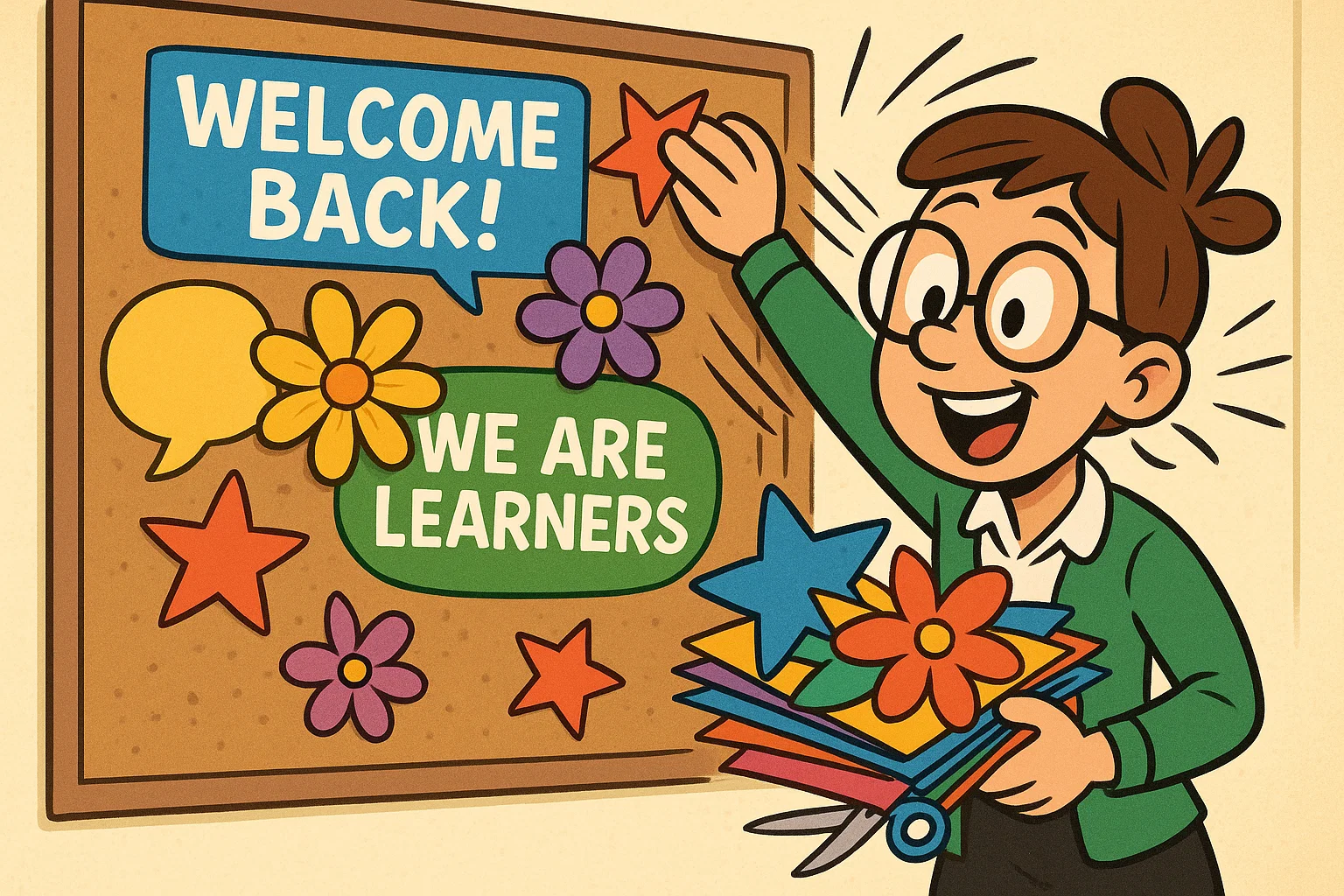
Teachers who want to move beyond standard welcome phrases can use visually distinctive designs to establish a theme for the school year. These creative ideas invite student contributions and can spark curiosity about the year ahead.
16. Get in the Groove
A retro-themed display with vinyl records, disco balls, smiley faces, and bold typography creates a look that can appeal to middle and high school students. Students contribute by writing their favorite songs, hobbies, or learning goals on the circular record labels.
17. S’more Learning Starts Here
This camping-themed layout uses paper tents, campfires, evergreen trees, and other forest elements to set an adventurous tone. Teachers print each student’s name on a paper s’more and create a central campfire graphic that presents key learning skills as “survival gear.”
18. The Sky’s the Limit
This motivational display uses clouds, stars, airplanes, or hot-air balloons as symbols of academic ambition. Students write long-term goals on their balloons and place them at different heights to represent progress toward those goals throughout the school year.
19. Soar Into Learning
Students move class or team pieces along a marked path toward shared learning targets. For individual goals, use noncomparative milestones and avoid displaying grades or ranking students by position.
20. Out-of-This-World School Year
A space theme with planets, astronauts, rockets, and constellations creates a natural connection to science lessons. The board pairs mission goals with student crew-member profiles, linking the classroom theme to space exploration and science.
21. Wild About Learning
A safari or jungle display can feature animals chosen by individual students. Pair each student’s name card with an interesting fact about the chosen animal to connect the display with life science.
22. Learning Journey
This travel-themed board uses a world map, paper passports, and vintage-style suitcases. Different academic units or textbook chapters are displayed as geographic destinations, allowing teachers to mark off locations as the class navigates the curriculum throughout the school year.
23. Colorful Possibilities
Using rainbow arcs, oversized crayons, paint splashes, or colored pencils, this design symbolizes creativity and personal potential. The board offers a visual reminder that different perspectives contribute to a richer learning community.
24. Curious Creatures, Wild Minds
This playful, monster-themed board celebrates student questions, critical thinking, and intellectual curiosity. It features blank speech bubbles where students post handwritten questions about upcoming topics, encouraging inquiry before a new unit begins.
25. Groovy Classroom Vibes
A vintage-inspired board with floral patterns, wavy lines, checkered borders, and motivational phrases creates a relaxed retro look. Keep the display readable by using clean sans-serif lettering against a neutral, uncluttered background.
Kindness and Belonging Bulletin Board Ideas
Displays focused on kindness and belonging can reinforce social-emotional learning, respectful behavior, and inclusion. Kindness-focused displays give students regular opportunities to notice supportive behavior, contribute positive messages, and help shape a welcoming classroom culture.
26. Be the I in Kind
This interactive board features oversized letters spelling “K_ND,” with an open space for the letter “I.” Students stand in the open space to become the “I,” creating an interactive photo display that reminds them that kindness begins with individual choices.
27. Kindness Confetti
This interactive bulletin board invites students to add small, colorful paper dots to a clear container graphic whenever they notice an act of kindness. When the confetti reaches a marked line, the class can celebrate with a shared activity.
28. Plant Kindness, Help Everyone Grow
Using paper flowers, potted plants, watering cans, and garden beds, this board symbolizes acts of care and cooperation. Students write down specific acts of kindness they notice on green leaf cutouts, then add the leaves to plant stems over time.
29. Kindness Makes Us Bloom
In this collaborative flower garden display, each student contributes a bloom containing a specific compliment or prosocial promise. As the paper garden grows, it shows how small supportive actions can strengthen classroom culture.
30. Everyone Matters, Everyone Belongs
Featuring illustrated self-portraits, interlocking puzzle pieces, or connected handprints, this board highlights belonging and inclusion. Teachers can add multilingual welcome messages that reflect the languages represented in the classroom.
31. Linked by Love and Kindness
This design uses a paper chain in which each link represents an act of kindness or support. Students write helpful actions on colored paper strips and join them into a chain, creating a visual reminder that individual actions build community.
32. Add Sunshine to Someone’s Day
This sun-themed compliment station invites students to write positive notes and clip them onto paper sunrays. Teachers review the notes to make sure they are kind and appropriate before distributing them to the recipients.
33. Bee Kind
A minimalist bee-themed board provides weekly kindness prompts within large, clear honeycomb cells. Prompts focus on concrete, observable actions, such as “Invite someone new to join your lunch table” or “Help a classmate organize their desk.”
34. Friendship Bracelet Community
This board uses oversized paper bracelets or loops of yarn linked together to represent class values. To avoid popularity contests, focus the board on shared values and group achievements rather than individual rankings.
35. Together We Create a Masterpiece
This collaborative art board features a giant mosaic or puzzle made from individual pieces decorated by each student. Combining varied artistic styles into one cohesive image highlights the value of individuality within a unified group.
36. Happy Place
Using a calm color palette, photos of positive group memories, and student-signed classroom promises, this board can serve as a visual reminder of shared routines and support. It can also help students re-center their attention during busy or stressful periods.
37. Teaching Comes from the Heart
A heart-themed display celebrates the contributions of teachers, instructional assistants, student helpers, and peer mentors. The board includes a pocket where students can leave appreciation notes for staff throughout the year.
Positive Bulletin Board Ideas
Positive bulletin boards can reinforce a growth mindset, resilience, emotional awareness, and constructive self-talk when they go beyond generic slogans.
38. Positive Vibes, Real Strategies
A retro-themed display can pair bright visuals with short, realistic affirmations and practical coping reminders. To avoid toxic positivity, pair encouraging messages with practical strategies for handling academic challenges.
39. Positivi-Tea Station
This cozy display features paper teacups, mugs, and tea-bag-shaped pockets holding affirmations, coping strategies, and encouraging quotes. Students can visit the board independently to choose a note when they need encouragement.
40. Today Is a Chance To…
Students complete this open-ended prompt each week with action-oriented goals such as learn, help, improve, create, or try again. This routine shifts the focus from fixed ability to daily effort and choices.
41. Changing Our Mindset
This growth-mindset bulletin board contrasts fixed-mindset statements with growth-oriented alternatives. Students identify discouraging academic thoughts and use a simple guide to rewrite them as constructive statements.
| Fixed Mindset Statement | Growth Mindset Alternative |
| “I am not good at math.” | “I have not mastered this math skill yet, but practice can help.” |
| “This feels too hard right now.” | “I can try a different strategy or ask for help.” |
| “I made a mistake.” | “Mistakes can show me what to improve next time.” |
42. The Power of Yet
This display centers on the phrase “I cannot do this yet” and pairs it with specific classroom examples of skills students are still developing. Linking the word yet to specific daily tasks makes the idea of continued growth concrete and actionable.
43. Growth Balloons
Students update their balloon’s position as they complete steps toward a personal writing or math goal. Use separate tracks or private goal cards so the display does not invite comparisons between students.
44. BOUNCE Back
This resilience-focused display uses a custom B.O.U.N.C.E. acrostic—Breathe, Observe, Understand, Name the next step, Choose a strategy, Engage—to prompt students to pause and decide what to do when they feel frustrated.
45. LEARN Acrostic
A custom, class-created LEARN acrostic can define successful learning behaviors: Listen, Engage, Ask, Respond, Navigate. Involving students in choosing the words can increase their investment in following the shared expectations.
46. WELCOME Acrostic
This board uses each letter in WELCOME to introduce a daily routine or value—for example: Work safely, Encourage others, Listen actively, Come prepared, Own your choices, Make an effort, and Engage respectfully. Short text and simple illustrations make the information easier for students to scan and remember.
47. THINK Before You Speak or Post
This communication board presents a THINK checklist: True, Helpful, Inspiring, Necessary, and Kind. Age-appropriate examples can help students pause before speaking, messaging, or posting online.
48. Bee Values and Expectations
This display organizes key classroom expectations in a clear honeycomb structure. Phrasing expectations positively—for example, “Walk safely” instead of “Don’t run”—clearly communicates desired behaviors to students.
49. Ready, Set, Goal
Students move a class, team, or project marker along the lanes to track progress on a long-term research project.
50. Spread Your Wings
This display features large paper butterfly or bird wings divided into sections, with one section for each student. Each student adds a current learning strength to one side of the display and a future learning goal to the other, creating a visual picture of growth over time.
Simple and Creative Bulletin Board Design Tips
subject-themed-bulletin-board-ideas.webp Alt attribute: Subject themed bulletin board ideas showing math, science, reading, and history boards.
Turning an idea into a polished, durable display requires a little planning. These design tips help educators create clean, professional layouts that are easier to maintain.
Start with a Solid Foundation
Before attaching materials, measure the board and sketch a rough layout on paper to identify the main focal point. Place main headings where both students and adults can see them easily, and keep interactive elements within students’ reach.
Use Fabric, Not Paper
Fade-resistant fabric backgrounds often last longer than traditional butcher paper. Lightweight canvas, denim, or cotton bed sheets can hide staple holes, resist tearing, and be washed and reused across multiple school years.
Use Painter’s Tape
Test the visual layout by taping components to the board with low-tack painter’s tape before stapling them down. This step helps keep text straight and spacing balanced without damaging the background material.
Outline with a Dark Marker
Outlining hand-cut letters or student illustrations with a dark marker can improve contrast and readability from across the room. This technique helps the elements stand out against vibrant or busy backgrounds.
Choose Cohesive Borders
Borders should frame the display content rather than compete with it. As a simple rule, pair a solid-colored border with a patterned background—or vice versa—and keep the border narrow enough that it does not crowd the content.
Pull Everything Together
Establish a clear visual hierarchy by keeping typography consistent across the display. Limit the palette to two or three main colors, and use consistent spacing between text blocks to make the board easy to scan.
Think Outside the Bulletin Board
Extend the theme to classroom doors, storage bins, or nearby hallway display areas, but first check school policy and local fire-safety rules. This approach can create a more cohesive classroom look.
Invite Student Help
Involve students in maintaining the display by assigning age-appropriate tasks such as cutting out shapes, writing labels, or updating interactive sections. Delegating these duties can save preparation time while increasing students’ sense of ownership.
Laminate Reusable Pieces
Laminate frequently handled elements such as header letters, border segments, calendar grids, and blank name cards. This helps preserve the pieces for future classes, saving time and money over the long term.
Keep the Design Manageable
Avoid cluttered layouts by focusing each board on a single clear message or interactive activity. Update components on a realistic monthly, unit-based, or thematic schedule so the content stays relevant without creating unnecessary work.
How Can Bulletin Boards Help Students?
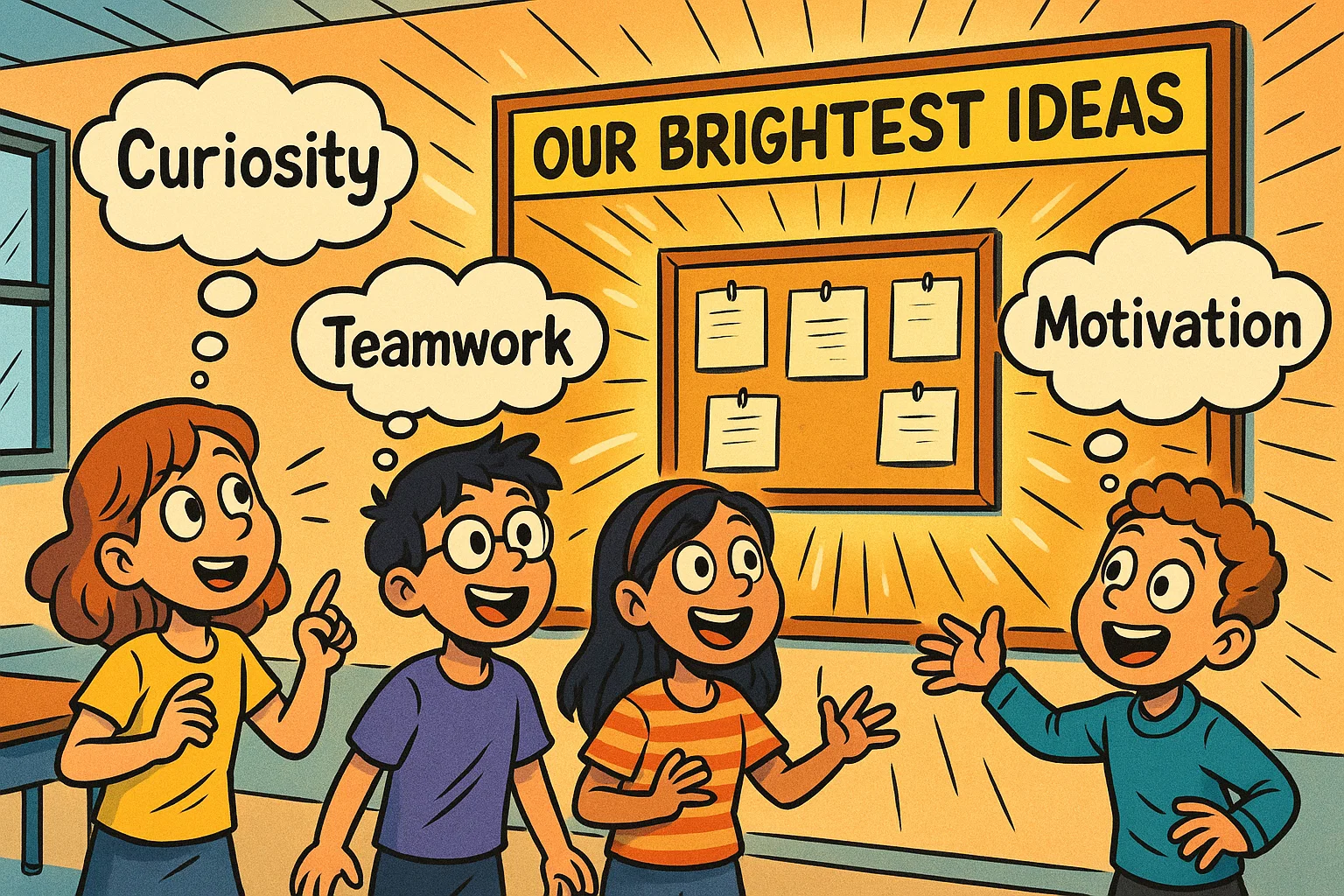
A thoughtfully designed bulletin board can do more than decorate a classroom. It can introduce new topics, invite participation, highlight student work, and make important information easier to notice and understand.
- Stimulate Interest: Visual questions, colorful diagrams, and changing displays can attract attention and spark curiosity about upcoming topics.
- Support Active Learning: Interactive features can turn a static wall into a hands-on learning tool, prompting students to sort categories, solve math problems, or cast votes.
- Increase Student Ownership: Displaying co-created artwork can give students a sense of ownership and make the room reflect their collective ideas and effort.
- Build Classroom Belonging: Including every student’s name or self-portrait—and inviting students to share cultural or linguistic elements they choose—can help learners feel seen and valued.
- Connect Families: Hallway and open-house boards can use project summaries and school-approved QR codes to share student learning with parents and guardians.
- Showcase Progress: Goal trackers and rotating portfolios can show growth over time and celebrate individual effort without publicly ranking students.
Bulletin Board Planning Guide
Follow this step-by-step checklist to design a balanced, purposeful board before purchasing materials or printing components.
- Choose a Clear Purpose: Pinpoint the board’s main job: will it welcome students, teach a concept, celebrate wins, organize schedules, or invite hands-on practice? Focusing on one primary goal keeps the final layout clean and intentional.
- Match Student Age: Tailor the design to the grade level. Preschoolers often benefit from large, simple graphics and tactile elements, while middle and high school students may prefer practical information, more mature layouts, and space to contribute their own work.
- Measure the Space: Record the exact width and height of the board, noting nearby outlets, door swings, or frames. Sketch the layout to make sure header text and core elements fit comfortably without crowding.
- Select a Focused Color Palette: Use two or three main colors against a neutral background, such as gray, tan, or black fabric. This contrast helps keep the text easy to read and allows student work to take center stage.
- Plan Student Interaction: For interactive boards, decide how students will participate, where loose pieces will be stored, and how to keep involvement fair and accessible for all learners.
- Create a Maintenance Schedule: Map out a realistic update timeline—whether monthly, quarterly, or by curriculum unit. Regular updates can help the board remain useful and engaging throughout the school year.
Frequently Asked Questions
What are the best bulletin board ideas for teachers?
The best bulletin board ideas for teachers have a clear purpose and are easy to maintain. Choose classroom bulletin board ideas that welcome students, reinforce a lesson, display student work, or support classroom routines. A good bulletin board should be attractive, readable, and useful rather than decorative alone.
How can I create a unique back-to-school bulletin board?
To create a unique back-to-school bulletin board, start with a familiar theme and add student-made elements. Personalized name cards, self-portraits, goals, or short introductions can turn standard school bulletin board ideas into unique bulletin boards that reflect the class. It is also a fun way to welcome students back to school and help them feel included from the beginning of the school year.
Are bulletin board kits worth using?
A bulletin board kit or coordinated bulletin board set can save time, especially when it includes reusable borders, bulletin board letters, and pre-cut decorations. However, a kit works best as a starting point. Adding student work, handwritten notes, or interactive pieces can make your bulletin board feel more personal and connected to the class.
What are some easy seasonal bulletin board ideas?
Simple bulletin board ideas can be adapted throughout the year without replacing the entire display. Fall bulletin board ideas might feature leaves, goals, or gratitude notes, while winter bulletin board ideas can use snowflakes, books, or acts of kindness. Spring bulletin board ideas may focus on growth, and summer bulletin board ideas can celebrate memories or plans for the end of the school year. If your school celebrates specific holidays, a Halloween bulletin board or Christmas bulletin board can be included as part of a broader seasonal display. Make sure holiday content reflects school policy and the backgrounds of the students in your classroom.
What makes a good growth mindset bulletin board?
A growth mindset bulletin board should give students practical language they can use when learning feels difficult. Pair phrases such as “I cannot do this yet” with specific strategies, including trying a different approach, asking for help, or practicing one step at a time. This type of bulletin board display can encourage your students without relying on vague motivational slogans.
How can I make a math bulletin board useful?
A math bulletin board is most effective when students can refer to it during lessons. Include visual models, vocabulary, worked examples, problem-solving steps, or rotating challenges. You can also turn a bulletin board into an interactive activity by adding movable number cards, puzzles, or a simple game board.
How often should I create a new bulletin board?
You do not need a new bulletin board every month. A durable display can remain in place for a full term or school year if the student work, examples, or interactive elements are updated regularly. Creating bulletin boards with reusable backgrounds and movable pieces makes these updates faster and more affordable.
Take a short quiz to find out what your everyday choices say about your parenting style
When your child is curious about something new, what’s your instinct?
Take a short quiz to find out what your everyday choices say about your parenting style
“Can I download this app?” What happens next?
Take a short quiz to find out what your everyday choices say about your parenting style
When it comes to rules at home, which sounds most like you?
Take a short quiz to find out what your everyday choices say about your parenting style
If you could give your child one life skill today, what would you pick?
Take a short quiz to find out what your everyday choices say about your parenting style
Your child gets to choose what to watch. What would your ideal setup look like?
Take a short quiz to find out what your everyday choices say about your parenting style
Pick your parenting superpower ✨