

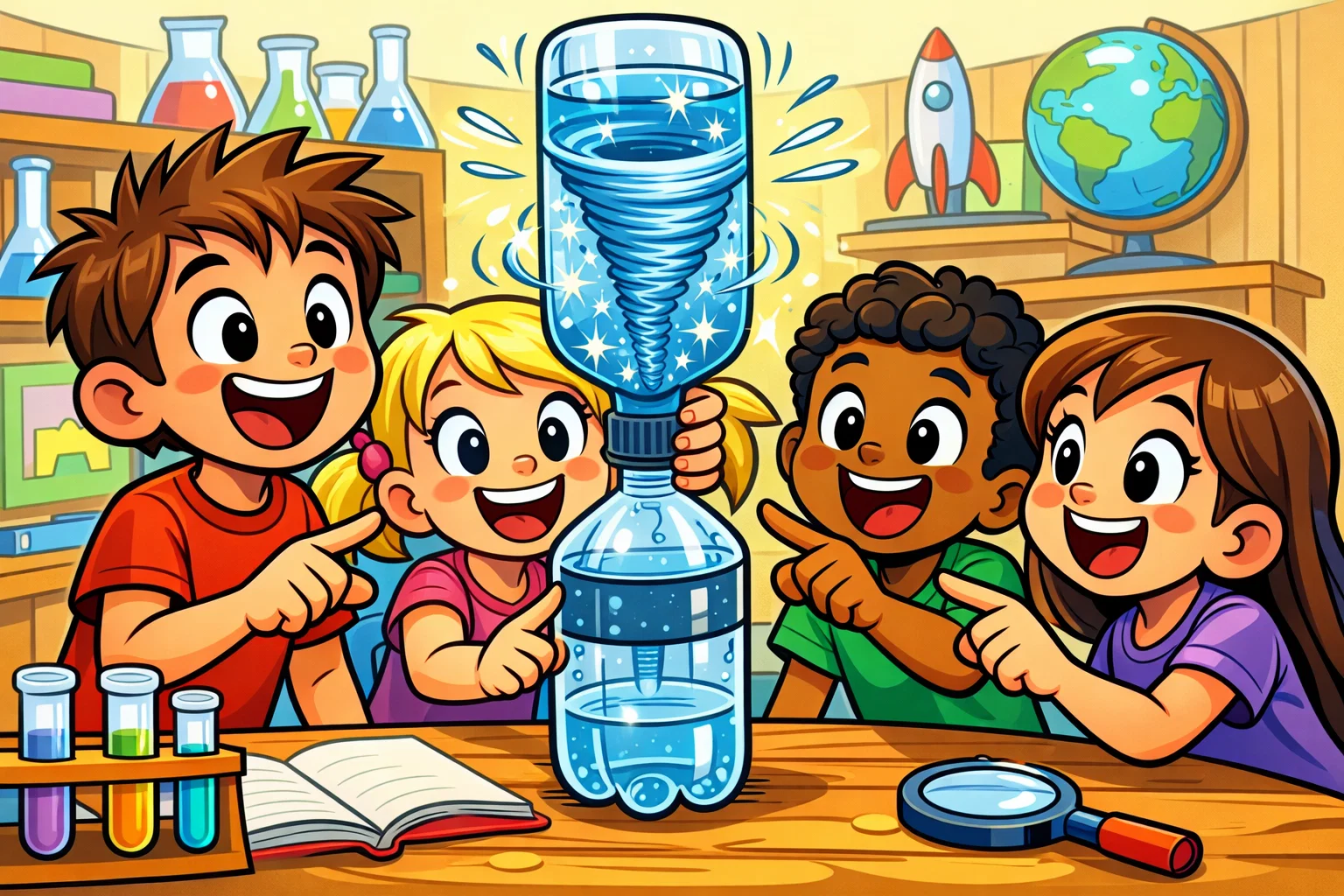
If you are looking for a way to spark a child’s curiosity about the natural world while keeping them entertained with just a few household items, you may have come across this classic DIY weather project. This activity is a staple in classrooms and living rooms alike because it perfectly balances the “wow” factor with fundamental scientific principles. Whether you are a parent trying to fill a rainy afternoon or a teacher explaining the mechanics of weather, this experiment is a gold standard for hands-on learning.
The beauty of this project lies in its simplicity. By using two plastic containers and a bit of circular motion, you can create a tornado right in your hands. It is suitable for children as young as preschool – with a little help – all the way up to middle schoolers who can dive into the complex physics of fluid dynamics. It’s safe, easy, and provides a mesmerizing visual of a vortex that mimics the power of a real tornado.
Tornado in a Bottle Experiment Overview
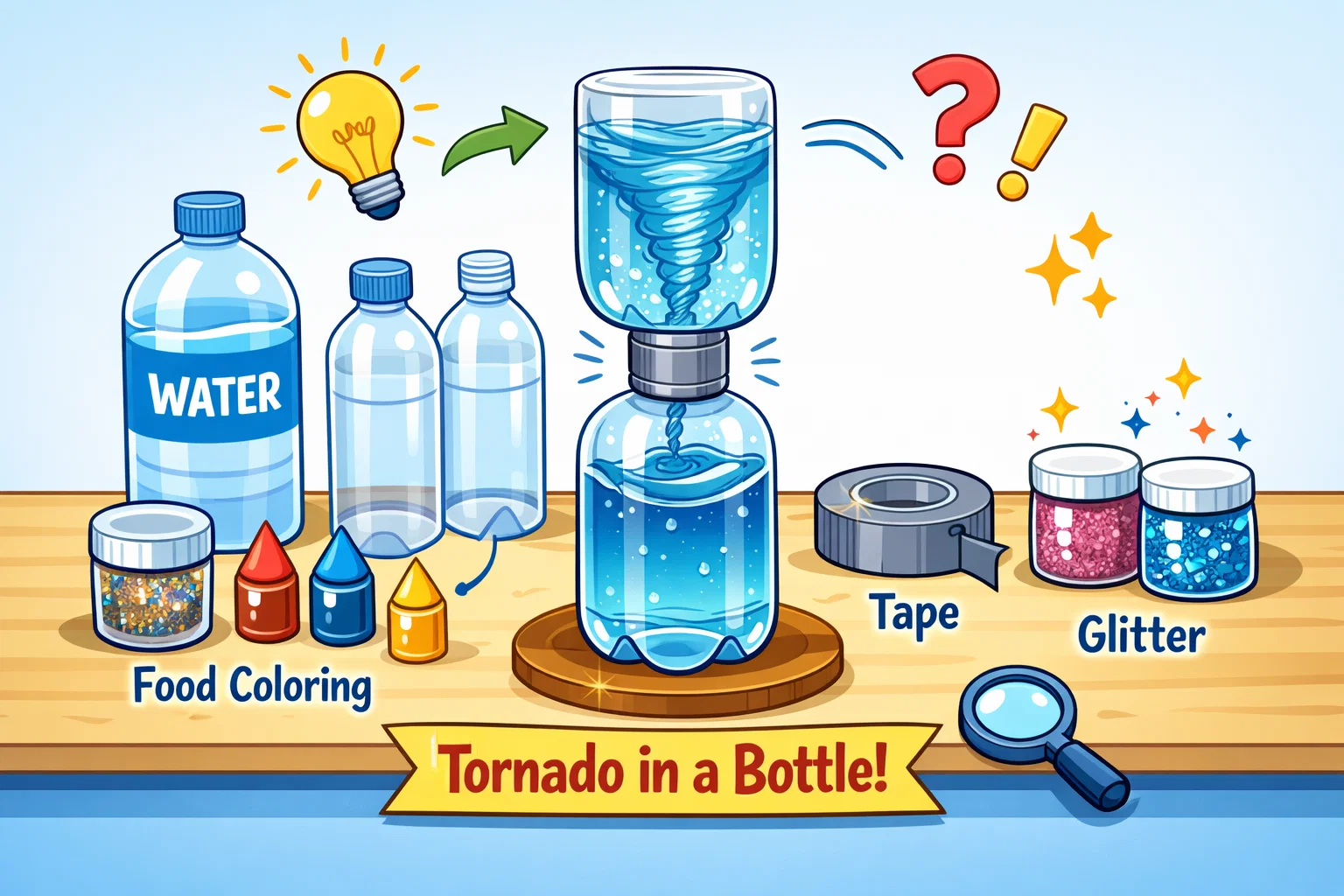
The tornado in a bottle is more than just a toy; it is a scaled-down model of one of nature’s most intense weather patterns. In this activity, two bottles are connected together – one full of water and one empty bottle – to demonstrate how fluids move when they are forced into a circular path.
What kids will create
Using a water-filled bottle and a bit of physics, kids will make the vortex appear. As the water moves from the top bottle to the bottom bottle, it creates a vortex that looks like a miniature cyclone. The swirling water spins around a central axis, creating a hollow center of the vortex that allows air to pass through, resulting in a rotating column of water with air moving through the center.
Why the Experiment Is Popular with Kids
Children are naturally drawn to movement and cause-and-effect. This fun science project provides instant gratification. When you spin the bottle, the reaction is immediate. It’s also highly tactile; the physical sensation of the bottle in a circular motion helps kinesthetic learners grasp concepts that might feel too abstract in a textbook.
Skills experiment helps develop
- Fine Motor Skills: Gripping and flipping the bottles helps younger children develop coordination, grip strength, and spatial awareness.
- Observation: Kids watch the water to see how speed affects the vortex, learning to notice subtle changes in fluid behavior and flow patterns.
- Critical Thinking: Encourages children to ask why the liquid doesn’t just fall straight down through the narrow neck of the bottle.
- Scientific Method: It allows older kids to hypothesize, test different swirl speeds, and record results systematically over multiple trials.
- Patience and Focus: Setting up the apparatus and waiting for the perfect funnel to form teaches children the value of methodical preparation.
Supplies Needed for Tornado in a Bottle Experiment
One of the best things about this fun and easy science experiment is that you likely have everything you need in your recycling bin and kitchen pantry. Gathering these materials is the first step in a child’s journey into the world of science.
Basic materials list
To learn how to make your own vortex, gather the following:
- Two plastic bottles (identical sizes work best; large bottles like 2-liter soda containers are ideal for a longer-lasting effect).
- Water (tap water is perfectly fine).
- A tornado tube connector (available at hobby stores) or strong, waterproof duct tape.
- A funnel (to prevent messy spills when preparing the water bottle).
Optional flying debris additions
To make the tornado science experiment more visual and exciting, you can add “debris” to the water-filled bottle. This helps children track the movement of the liquid:
- Glitter (this is the most popular choice as it represents dust and light debris caught in the storm’s path).
- Small plastic beads or small plastic toy houses (such as Monopoly-style pieces) to simulate a miniature town being affected by the storm.
- A few drops of food coloring (blue or green are popular to give the storm an “atmospheric” look).
- A squirt of dish soap (the surfactants in the soap help create bubbles that make the edges of the vortex much more defined).
Safety notes for materials
While this is a fun science experiment, adult supervision is recommended. Using duct tape to secure the plastic components requires some strength to ensure a leak-proof seal. If you are handling food coloring, be mindful that it can stain clothing and countertops. Ensure the bottles are tightly secured together to avoid a mini-flood in your kitchen or classroom!
How to Make Tornado in a Bottle
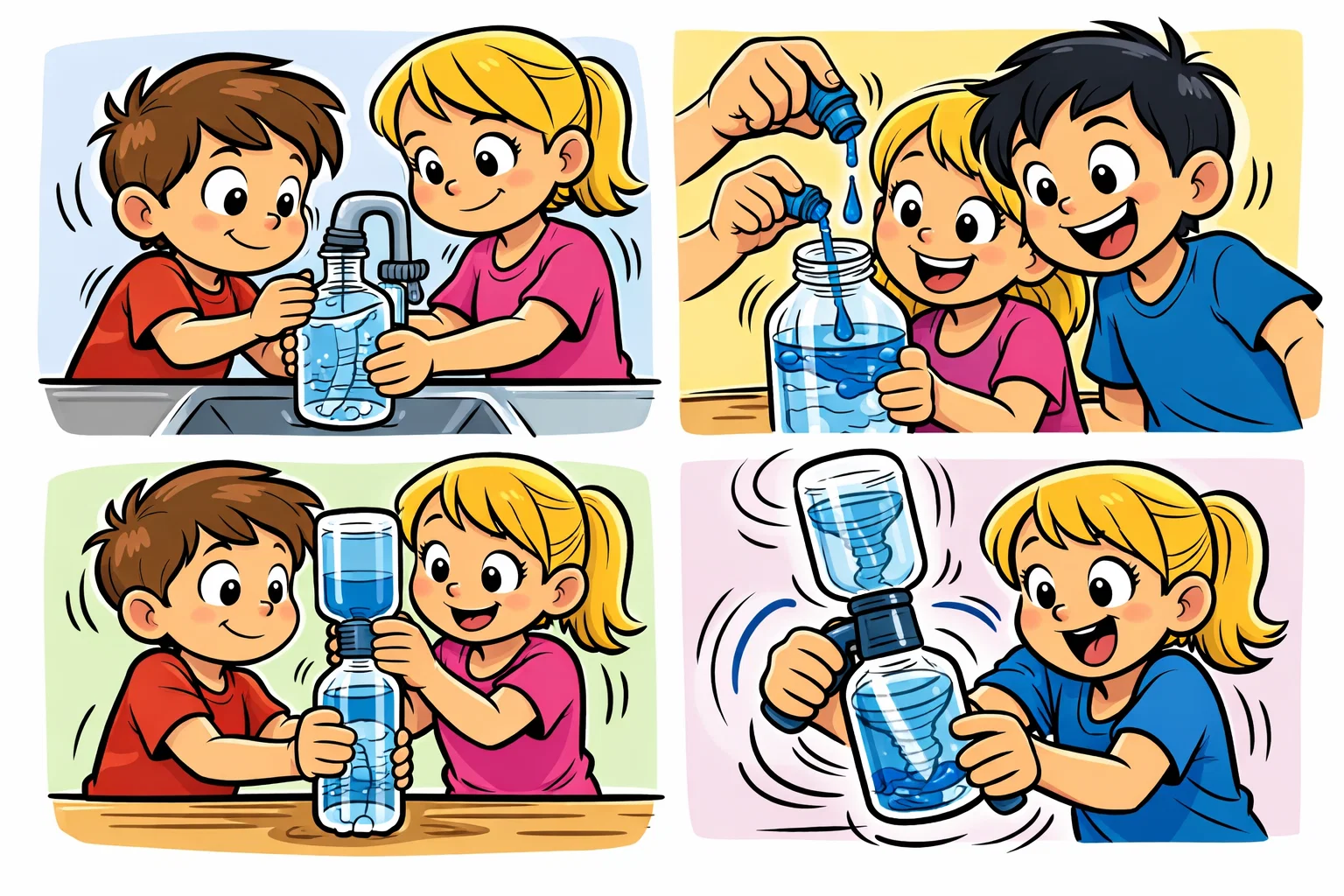
Ready to dive into a hands-on physics lesson? Follow these general principles to get started with your liquid cyclone.
Preparing bottles and water
Start by cleaning your water bottle thoroughly, removing any labels. You want the plastic to be as clear as possible so you can see the tornado clearly. Fill one bottle about two-thirds full with water. Leaving that extra third of air is absolutely crucial – without air, the vortex cannot form because the displaced liquid has no room to move upward as it drains.
Adding color and motion enhancers
Now is the time to customize. Add your glitter and a tiny bit of dish soap. The soap reduces surface tension, which often creates a water vortex that is smoother and more defined. You might suggest that your students or children experiment with different colors to see which makes the funnel easiest to track.
Connecting bottles securely
Place the empty bottle on top of the full bottle, aligning the openings perfectly. If you don’t have a plastic tornado tube, use a generous amount of duct tape. Wrap it tightly around the necks of the two bottles to ensure no water leaks out during the vigorous circular motion. A tight, structural seal is the difference between a successful scientific trial and a wet floor.
Creating tornado motion
Turn the bottle upside down so the water is spinning in the top bottle. Now, the secret technique: don’t just let it sit there. You must move in a circular motion or shake the bottle in a steady, rapid circular path. This initial physical agitation provides the angular momentum required for the vortex to form within the vessel.
Watching funnel form
As you stop the manual shaking and hold the device steady, you will see the water begin to spiral. A vortex will form in the center of the bottle, and the liquid will begin to drain into the lower bottle in a beautiful, funnel-shaped spiral that mimics the real-world weather event.
Step-by-Step Tornado Bottle Instructions
For parents and educators who prefer a structured, numbered guide, here are the expanded instructions for the easy tornado in a bottle.
- Bottle Setup: Take a single bottle and fill it 3/4 full with room-temperature water. Ensure the exterior of the container is dry so the tape can stick.
- Water Coloring and Debris: Add two drops of food coloring and a squirt of soap. Sprinkle in a teaspoon of glitter.
- Bottle Connection: Place the bottom of the empty bottle (the opening) against the opening of the full bottle. Secure them with a tornado tube or wrap duct tape around the joint at least 5-6 times.
- Swirling Motion: Flip the bottles so the liquid is on top. Hold the bottom bottle for stability and move the top bottle in a quick, firm circular motion.
- Funnel Observation: Stop swirling and hold the apparatus vertically. Watch the water create a vortex that looks like a funnel as it rushes toward the bottom.
- Repeating Experiment: Once the liquid has drained into the lower bottle, simply turn the bottle upside down and repeat the process! This repeatability is what makes it such a high-value learning tool.
How Tornado in a Bottle Works
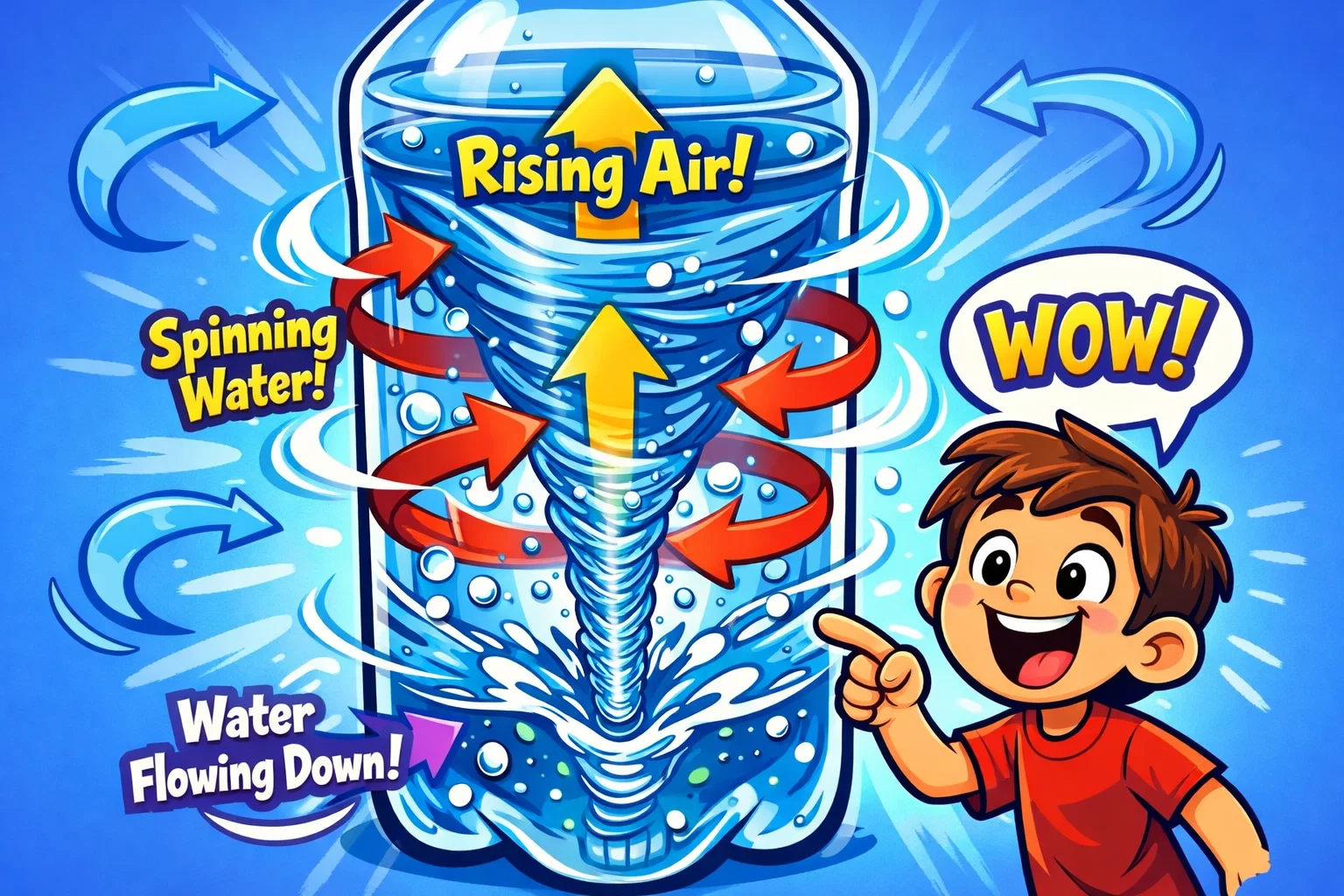
The science behind this is truly fascinating and involves several laws of physics. When you spin the bottle, you are demonstrating centripetal force and fluid dynamics.
| Concept | Description |
| Vortex | A mass of whirling fluid or air that creates a low-pressure region in its center. |
| Centripetal Force | An inward force that pulls the water toward the center of its circular path. |
| Air Pressure | As liquid falls, air must move up to replace it, creating the hollow core we see. |
| Gravity | The force pulling the liquid downward through the opening of the vessel. |
As the water spins, it moves toward the outside of the container due to inertia, but the shape of the plastic walls forces it into a circle. This circular motion creates a water vortex. Gravity pulls the water down, but the centripetal force keeps it spinning around the center of the vortex. This balance of forces is what maintains the funnel’s shape until the liquid runs out.
Tornado Science for Kids
To teach kids effectively, it is vital to bridge the gap between this small-scale model and the terrifying beauty of real-world weather. 🌦️
What tornadoes are
In nature, a tornado is a violently rotating column of air that extends from a thunderstorm to the ground. While our model uses liquid to show the shape, a real tornado is made of rotating air, moisture, and debris.
How tornadoes form in nature
While our bottle with water uses gravity and manual spinning, a real tornado uses atmospheric energy. They usually form during severe thunderstorms called supercells. When warm, moist air from the south meets cold, dry air from the north, it creates massive instability. If there is “wind shear” – a change in wind direction and speed at different heights – it can start the air spinning horizontally. If a powerful updraft then tips this spinning air vertically, a tornado is born.
Where tornadoes usually happen
In the United States, “Tornado Alley” is the most famous region for these events. This area, spanning the central plains, sees the perfect collision of air masses. This is why a tornado warning is a common and serious part of life for people living in those states.
Fun Variations of Tornado in a Bottle Experiment
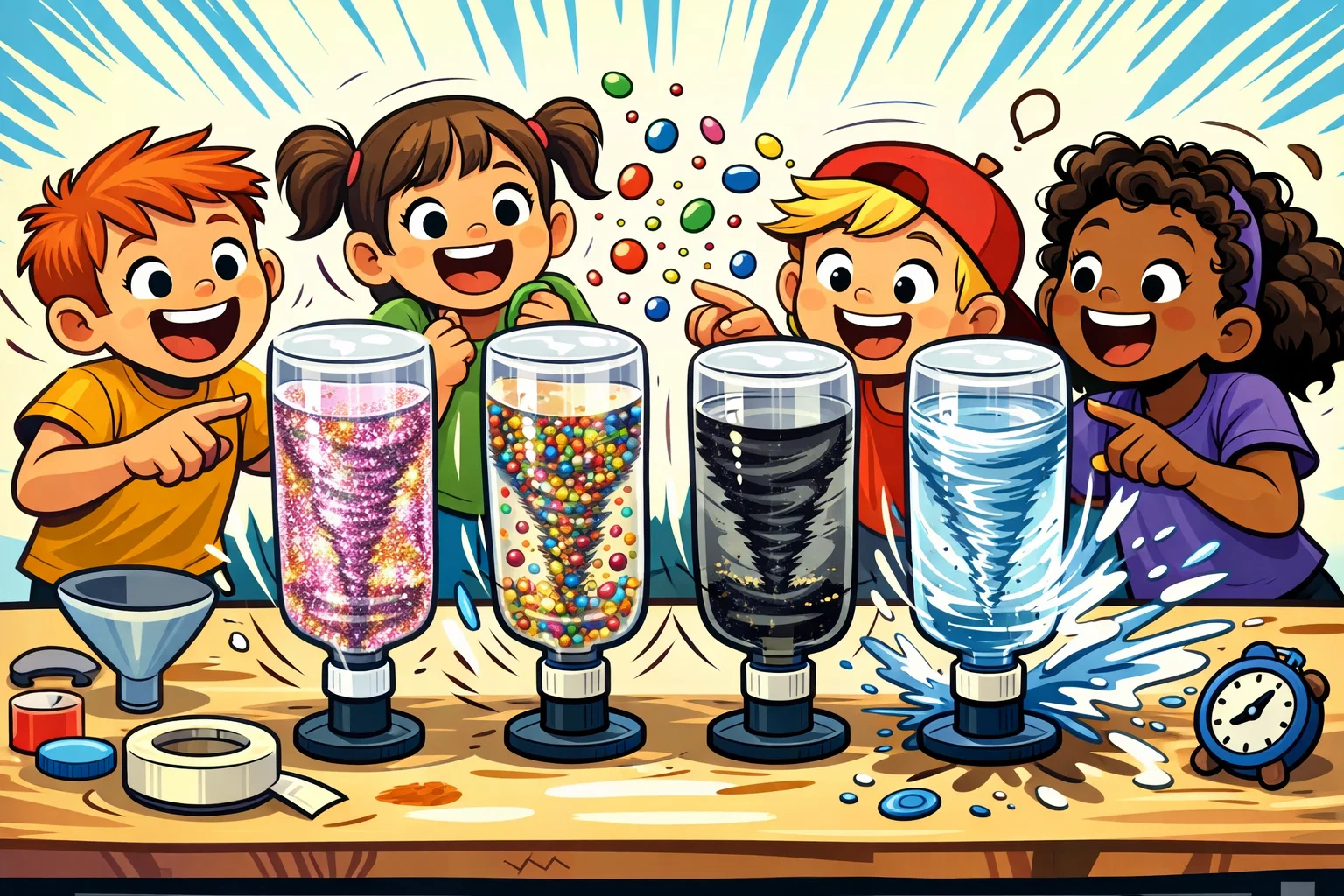
Once you have mastered the basic science experiment, it’s time to take it further. Experimentation is the heart of the world of science!
- Changing Water Amount: Does a container full of water create a longer-lasting vortex than one that is only half full? Interestingly, having more air space often allows the air-water exchange to happen more efficiently, creating a faster spin.
- Testing Different Swirl Speed: Try a slow circular motion versus a very fast one. Does the vortex get skinnier or wider? What happens if you swirl it in the opposite direction?
- Adding Different Debris Types: Use heavy beads versus light glitter. Which one gets “sucked” into the center of the vortex faster? This is a great way to talk about mass and inertia and outward motion of the water.
- The Soap Factor: Try one trial with a lot of dish soap and one with none. Which one looks more like a real tornado? The bubbles can often make the “walls” of the storm look more opaque and realistic.
STEAM Learning Connections
The tornado in a bottle experiment is a perfect example of integrated learning, hitting every pillar of STEAM (Science, Technology, Engineering, Arts, and Math).
- Science: Children explore fluid dynamics, weather science, and the forces such as gravity and air pressure.
- Technology: While simple, the use of connectors or waterproof tapes represents a basic form of material technology used to solve a problem.
- Engineering: Designing a seal that doesn’t leak is a major engineering challenge for kids! If the duct tape fails, they must iterate and improve their design.
- Art: By choosing colors, adding glitter, and observing the aesthetic of the spinning liquid, children engage their creative side.
- Math: You can add a mathematical layer by timing the trials. How many seconds does the vortex last? Does it drain faster if the circular motion is more intense? Create a graph to visualize the data.
Did You Know Tornado Facts for Kids
Here are some surprising facts to keep young minds engaged:
- The Tri-State Tornado: The deadliest tornado in U.S. history occurred in 1925 and traveled through three states!
- Invisible Winds: You can’t actually see a tornado’s wind. You only see the “condensation funnel” made of water droplets and the debris/dust the storm has picked up.
- Water Spouts: A tornado over the ocean is called a waterspout – it looks exactly like your tornado in a bottle!
- Fujita Scale: Scientists use the “Enhanced Fujita Scale” to rate tornadoes from EF0 to EF5 based on the damage they cause.
Tornado Safety: If you ever hear a tornado warning, the best place to be is in a basement or an interior room without windows, like a closet. Remember: “Get In, Get Down, and Cover Up!”
More Weather Science Experiments for Kids
If your little scientist enjoyed this activity, they might want to explore the rest of the atmosphere with these easy science activities:
- Rain Cloud in a Jar: Use shaving cream and blue food coloring to show how clouds become saturated before it rains.
- Homemade Barometer: Use a jar and a balloon to track changes in air pressure.
- Wind Vane: Build a simple device to see which way the wind is blowing in your backyard.
- Solar Oven: Use a pizza box and aluminum foil to see how the sun’s energy can be captured to cook food!
These activities are perfect for older kids looking for a weekend project or younger children who just love to see science in action.
Safety Notes for Tornado Bottle Experiment
Every fun and easy science experiment should be a positive experience for the whole family.
Adult supervision tips
While the materials are safe, an adult should always be present to help with the duct tape or when using scissors. Large bottles can become quite heavy when full of water, so younger children may need assistance.
Spill and cleanup tips
Expect a few drips! It is best to perform the initial spin of the bottle phase over a kitchen sink or a tiled floor. Keep a towel handy. If the seal of the two bottles together isn’t perfect, the colored water can leave a small mess, but it is all part of the learning process.
Want to Do More Science Experiments
The journey into the world of science is infinite. Once your child sees that they can create a tornado with their own hands, they will want to know what else is possible.
Exploring earth science topics
From volcanoes to earthquakes, earth science is full of dramatic events that can be modeled at home. Encourage your child to look at the sky and ask questions about why clouds form or why the wind blows.
Trying hands-on experiments
The best way to learn is to do. Don’t be afraid to let your kids take the lead. If they want to shake the bottle in a new way or add a different material to the water, let them! Trial and error is the foundation of every great discovery.