

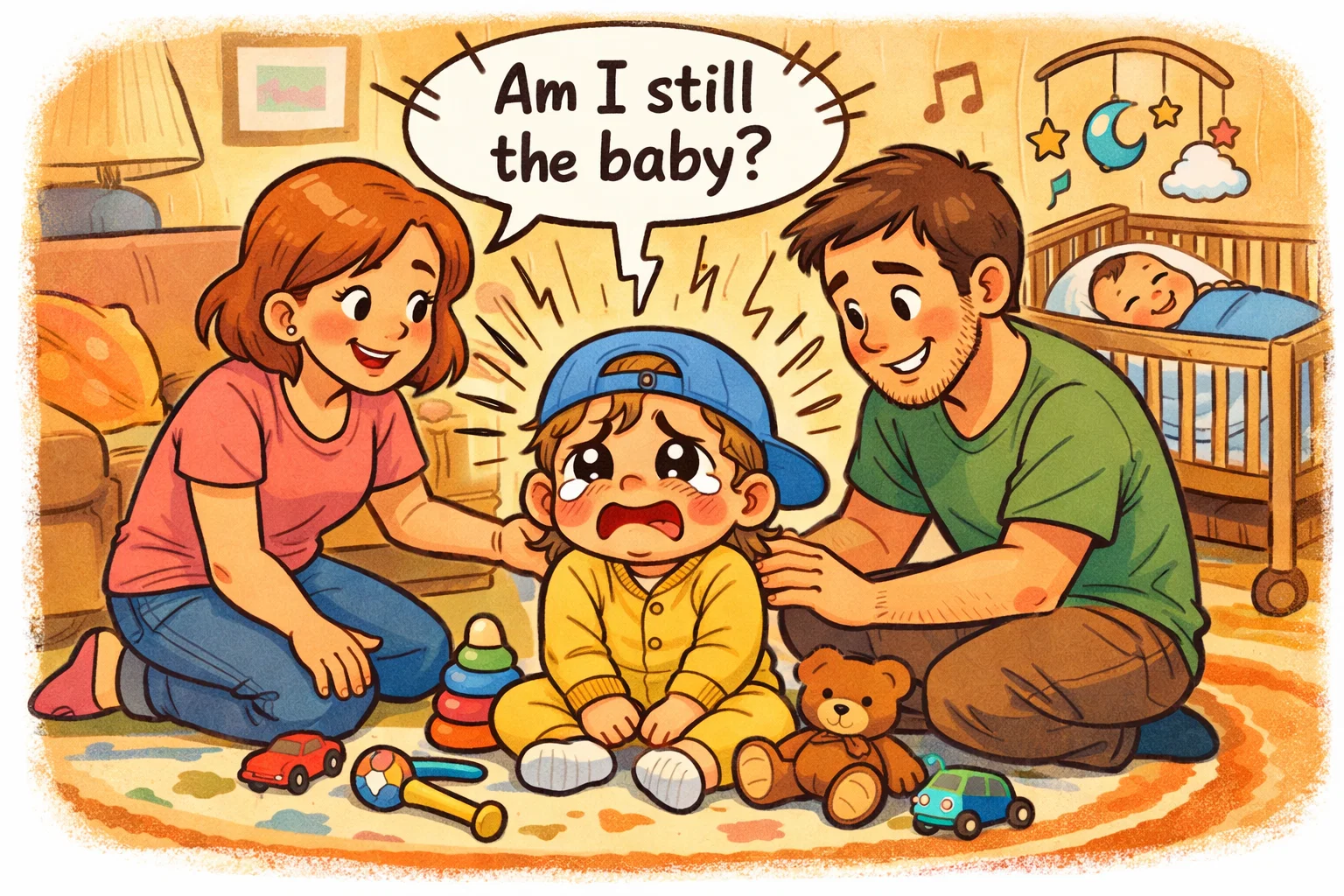
The arrival of a new baby is a monumental milestone for any family, but for a young child, it represents a perceived “dethronement” from their status as the sole focus of your world. While you are navigating the haze of newborn care, you might notice your once-independent child suddenly wanting a bottle, having accidents, or waking up multiple times a night. This shift is known as regression, and it is one of the most common challenges parents face when a new sibling arrives.
It’s completely normal to feel a mix of confusion, guilt, and exhaustion when your child starts acting like a baby just as your hands are full caring for a newborn. You may wonder if you’ve done something wrong or if the older child feels unloved. Rest assured, this behavior is rarely a sign of a permanent developmental setback; rather, it is a natural stress response and a way for your child to communicate their need for security during a period of massive change. Understanding the “why” behind these shifts is the first step in helping your child adjust to their new role in the new family.
Toddler Regression Meaning and Core Characteristics
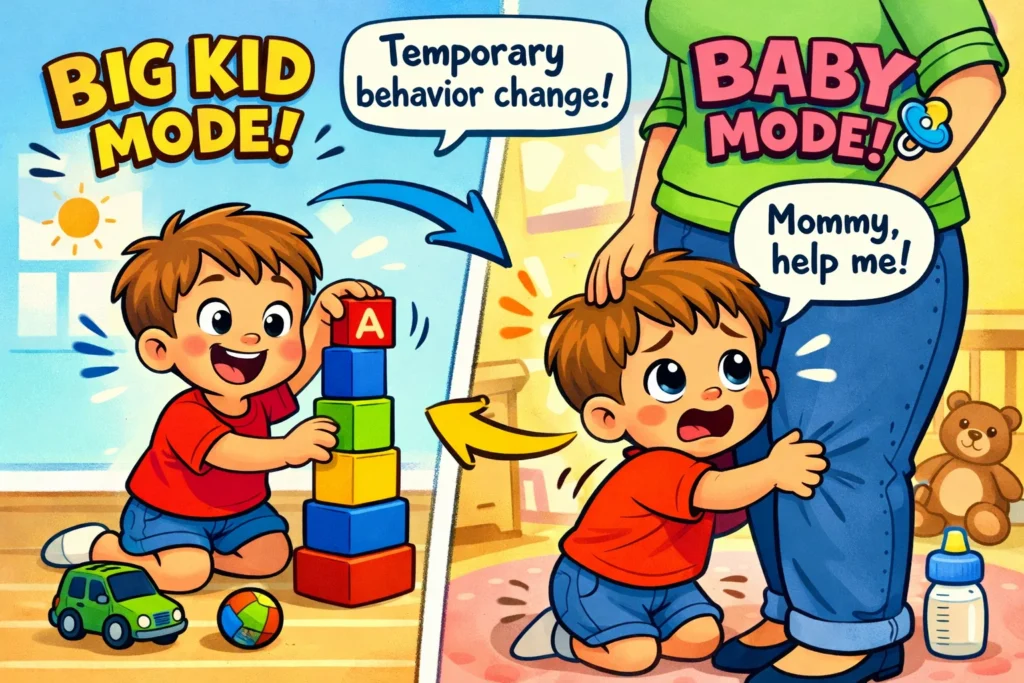
Toddler regression definition in family transition
In the context of a new sibling, regression is defined as a temporary return to earlier behaviors or a temporary “pause” in recently acquired skills. It is an emotional survival mechanism triggered by the stress of a changing environment. When the arrival of a new baby disrupts the status quo, a child may retreat to an earlier stage where they feel more secure or where they see the new baby receiving the most attention.
From a neurobiological perspective, regression isn’t a choice. When a child’s world feels unstable, their brain prioritizes “emotional survival” over the refinement of complex skills. This means that a brain that was previously focused on learning to use the potty or speak in full sentences suddenly redirects that energy toward seeking proximity to the primary caregiver. It is, in essence, a developmental holding pattern.
Difference between regression and normal toddler behavior
It is important to distinguish between regression and typical “terrible twos” behavior. While normal development involves testing boundaries and asserting independence (autonomy), regression is a move away from independence.
- Normal Behavior: A tantrum because they want to wear the “wrong” shoes.
- Regression: A child who is already potty trained suddenly insisting on wearing diapers or using baby talk to communicate.
Normal age-appropriate behavior is characterized by a “pushing away” as the child tries to do things “all by myself.” Regression is a “pulling toward” response—a desperate attempt to be cared for as intensely as they see the infant being cared for. Understanding this distinction helps parents respond with empathy rather than discipline.
Why regression often appears after sibling birth
This shift is a response to emotional displacement. Your child observes the new sibling getting constant physical touch, feeding, and soothing. In their logic, if they act like a baby, they might reclaim that exclusive level of care. Additionally, the new baby in the house often leads to sleep disruptions and altered routines, which taxes a young child’s limited cognitive bandwidth.
Furthermore, the introduction of a second baby fundamentally changes the family architecture. The child has transitioned from a three-person family system to a more complex four-person system. This requires a complete internal reorganization of their identity. They are no longer just “the child”; they are now the older sibling, a role they didn’t ask for and may not yet understand.
Toddler Regression Signs After Baby Arrival
If your child turned into a different person overnight, you are likely seeing one or more of the following common signs of regression:
Sleep regression after sibling birth
Nighttime rest is often the first thing to go. Even a child who previously slept through the night may begin experiencing night wakings or refusal to sleep alone. This disruption is often a bid for confirmation that you are still there. When they hear the baby crying and see you responding at 2 AM, they may seek that same reassurance.
Beyond simple waking, you may notice:
- Increased fear of the dark or “monsters.”
- Intense separation anxiety at the bedroom door.
- Frequent requests for water, extra hugs, or “one more story” to delay the separation of sleep.
Potty training setbacks
Potty training regression is perhaps the most frustrating for parents. You might find your child acting like they have forgotten how to use the toilet entirely. This type of regression is often a subconscious call for connection—diaper changes provide focused, one-on-one physical proximity that the child craves. It is also physically linked to stress; the muscles required for bowel and bladder control are sensitive to the “fight or flight” response, making accidents more likely during times of high family tension.
Language and communication regression
Some toddlers may suddenly use baby talk or stop using the advanced vocabulary they recently mastered. This speech regression is a way of imitating the new baby’s communication style to elicit the same “cooing” and affectionate response from parents. You might hear them use a high-pitched voice or pointing at things instead of asking for them by name.
Behavioral changes and emotional outbursts
You may notice increased:
- Clinginess: Not letting you out of their sight, even to go to the bathroom.
- Aggression: Aimed at the new baby or the parents (hitting, biting, or pushing).
- Tantrums: Lowered frustration tolerance over minor issues, like the color of a plate or the way a sock feels.
Reverting to younger physical habits
It’s common to see an older child request a bottle, start sucking their thumb, or insist on being carried like a new baby. They are essentially trying on the new baby’s lifestyle to see if it feels safer than being a “big kid.” Some children may even start crawling again or refuse to feed themselves, preferring to be spoon-fed by a parent.
Causes of Toddler Regression After New Baby Is Born
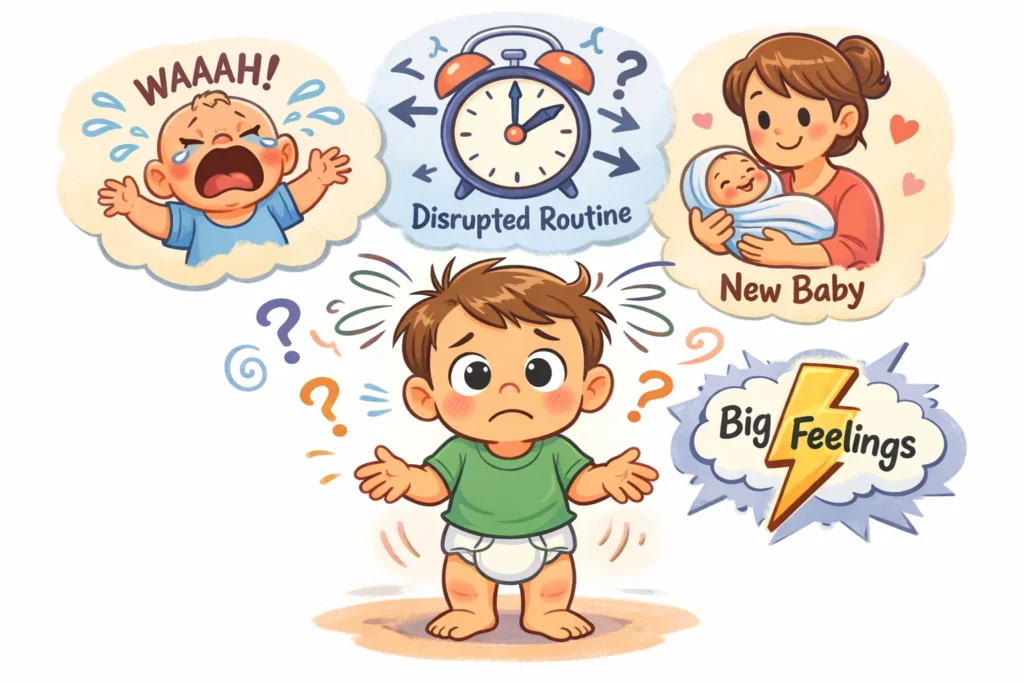
To effectively help your toddler, you must understand the underlying triggers. Regression is rarely about one single event; it is a combination of environmental and internal factors.
| Cause | Impact on Child |
| Attention Shift | Perceived competition for parental attention and emotional resources. |
| Separation Anxiety | Fear that the arrival of their new sibling means they are being replaced. |
| Schedule Disruption | Loss of predictability leads to a “hyper-reactive” nervous system. |
| Cognitive Overload | Energy is spent processing emotions rather than practicing new skills. |
| Sensory Overload | New smells, sounds (crying), and clutter create a state of high alert. |
Arrival of new sibling and attention shift
The most obvious cause is the shift in focus. Before the baby came home, the firstborn was the center of the universe. Now, they must wait while the baby is fed, changed, and rocked. This “waiting” is a high-level executive function that many young children haven’t fully mastered yet.
Separation anxiety increase
When a new baby joins the family, the older child often fears that your “love tank” is limited. If you are pouring love into the baby, they worry there won’t be enough left for them. This manifests as an intense need to be physically near you at all times.
Developmental leaps overlapping with family change
Sometimes, the arrival of a new baby coincides with a natural developmental leap (like the 2-year-old brain expansion). When a massive internal change meets a massive external change, the child’s system simply “overloads,” leading to a temporary shutdown of advanced behaviors.
Toddler Regression Duration and Typical Timeline
Average duration of regression phase
For most children, regression after a new baby lasts anywhere from two to six weeks. This is the time it usually takes for the new situation to become the “new normal” and for the child to feel secure in their new role. If the family remains stable and routines are maintained, most children naturally return to their previous developmental level as they realize the baby isn’t going anywhere and neither is your love.
Factors that extend regression period
The phase may last longer if:
- Sleep or eating routines remain chaotic for several months.
- Parents respond with punishment, yelling, or shaming (which increases the child’s stress).
- Major life changes (moving house, starting preschool) happen simultaneously.
- There is a lack of consistent one-on-one time with the older child.
Signs regression is resolving naturally
You will know the “storm” is passing when your child starts acting like their old self—showing interest in their own toys again, having fewer accidents, and perhaps even showing gentle behavior toward the baby without being prompted. You might notice them “teaching” the baby things or showing off their “big kid” skills with pride rather than resentment.
Toddler Sleep Regression After Baby Is Born
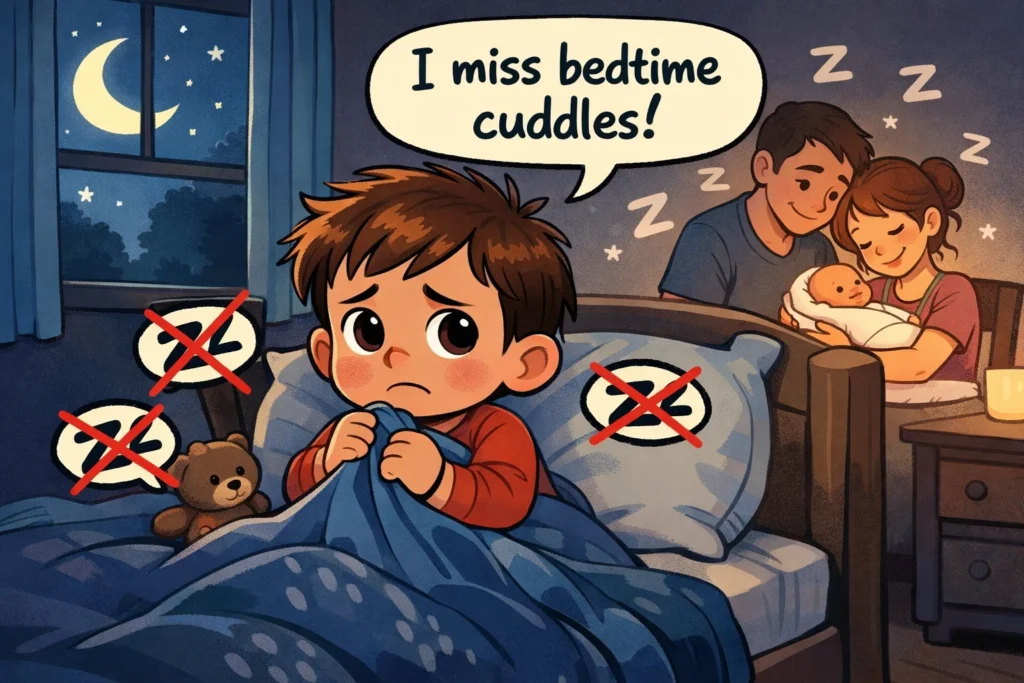
Sleep as it used to be can feel like a distant memory when you have a newborn and a toddler. Changes in sleep are often the most taxing for the new family.
Why sleep is affected first
Sleep requires a child to feel safe enough to “let go” of their surroundings. When the arrival of their new sibling creates a sense of competition or insecurity, the child’s nervous system stays in a state of “vigilance.” They are essentially staying awake to make sure they aren’t being excluded from the family action.
Daytime habits influencing nighttime
If the child is overstimulated during the day—perhaps because of the baby cries or a lack of structured naps—they enter a state of “overtiredness.” This leads to a spike in cortisol, which makes it even harder for them to fall and stay asleep at night.
Pro-tip: Try to keep the older child’s routine identical to how it was before the baby comes home. If the “second parent” or a grandparent can take over the bedtime routine, it provides a stable “emotional anchor.” This ensures the child doesn’t associate the baby’s arrival with the “loss” of their bedtime cuddles.
Helping Toddler Cope with New Baby Transition
Preparing toddler before baby arrival
Don’t wait until the baby is born to start the transition. You can prepare your toddler by:
- Reading books about becoming an older sibling.
- Talking about the “realities” of babies (they cry, they sleep, they don’t play with toys yet).
- Finishing any major changes (like moving to a “big kid bed” or starting preschool) months before the baby comes.
- Using a doll to show how to be gentle with the baby.
Introducing toddler to new sibling
When the new baby arrives, the first meeting is crucial. Try to have the infant in a bassinet rather than your arms when the child first enters the room. This allows you to give your firstborn a big hug first, reinforcing that they are still your priority. Have a small “gift” from the baby to the older sibling ready to help build an immediate positive association.
Interaction strategies during early weeks
Invite your toddler to help, but don’t force it. Let them hold the baby (with support) if they want, but if they are uninterested, that’s okay too. Avoid saying “be careful” or “no” constantly; instead, use positive framing like “hands are for gentle patting.”
Support Strategies for Toddler Regression
Acknowledge feelings without reinforcing regression
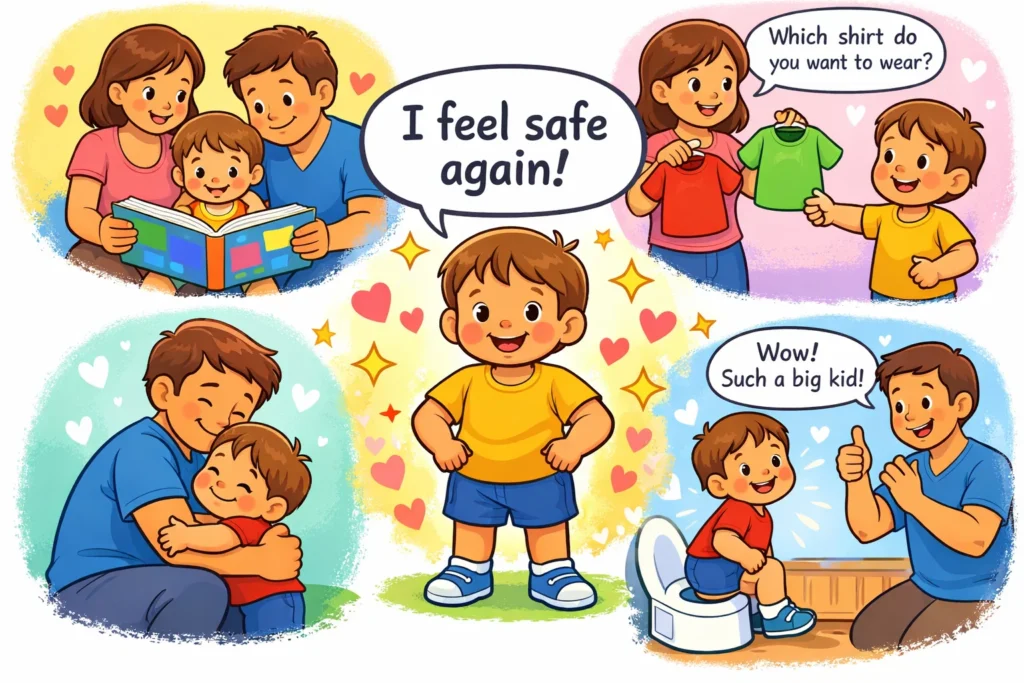
If the child starts acting like a baby, validate the emotion: “I see you want to be small like the baby today. It’s hard being the big brother sometimes.” This makes them feel seen. However, avoid reverting to diapers or bottles when possible—instead, offer the closeness they are seeking through a long hug or a story.
Practice new skills during daytime
To boost their confidence, encourage the child to show off things only “big kids” can do, like jumping, coloring, or choosing their own clothes. This reminds them of the benefits of growing up.
Parent self-care impact
Children are emotional sponges. If you are stressed, exhausted, and overwhelmed by caring for the new baby, your older child will pick up on that anxiety and reflect it through their own behavior. Taking even five minutes for deep breathing or a cup of tea can help you maintain the “calm presence” your child needs to feel safe.
Managing Toddler During Baby Care Moments
The hardest moments are when you are physically occupied caring for the new baby.
- During Feeding: Keep a “special basket” of toys (puzzles, stickers, new books) that only comes out when you are breastfeeding or bottle-feeding the newborn. This keeps the older sibling happy and occupied.
- Safe Involvement: Let your toddler “help” by fetching a diaper, picking out a blanket, or “singing” to the baby. Use phrases like, “Thank you, you’re such a great helper!” to encourage them and build their self-esteem.
- One-on-One Time: It is better to give 10 minutes of undivided attention (no phones, no baby) than an hour of distracted time. This “fills their cup” and reduces the need for attention-seeking behaviors later in the day.
When Professional Help Is Needed
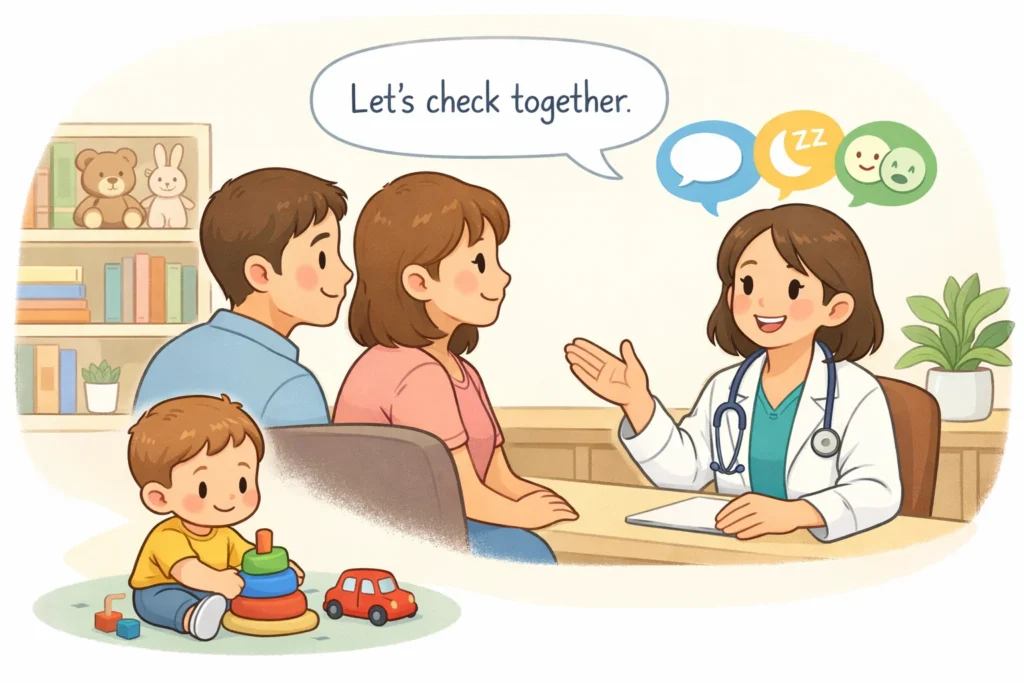
While most regression after a new baby is a normal phase, there are times to seek guidance. Consult your pediatrician if the regression:
- Involves a total loss of language (not just baby talk, but stopping speech entirely).
- Includes extreme aggression that puts the baby’s safety at risk despite redirection.
- Lasts longer than 8 weeks without any signs of improvement.
- Is accompanied by a complete withdrawal from social interaction or eye contact.
- Involves a loss of motor skills (like suddenly being unable to walk or hold a spoon).
A professional can help determine the difference between regression and developmental delay or other underlying issues like hearing loss or neurological concerns that might have been masked by the family transition.
Frequently Asked Questions
Yes, it’s common for nearly every firstborn to experience some form of regression. It is a sign of a healthy attachment—they care enough about your bond to be affected by the change. It shows they are processing the shift in their social environment.
Not necessarily. It usually means they are adjusting to a new dynamic and are unsure of their place. They don’t lack love; they lack certainty. Focusing on one-on-one time is the best way to reassure them that while the family has grown, your love for them hasn’t shrunk.
Yes. You might see a “re-regression” when the baby starts crawling (invading the child’s space) or taking the older child’s toys. Each new developmental milestone for the infant—like starting solids or walking—can trigger a new “wave” of adjustment for the older sibling.
When a new baby comes home, many toddlers and preschoolers struggle to adjust. To help your toddler adjust to a new sibling, tell your toddler what is happening in simple words, give your toddler extra reassurance, and show your toddler that your relationship with your toddler is still secure. One-on-one time with your toddler, even short moments, helps your toddler feel safe during the first few weeks when parents are busy with the baby.