

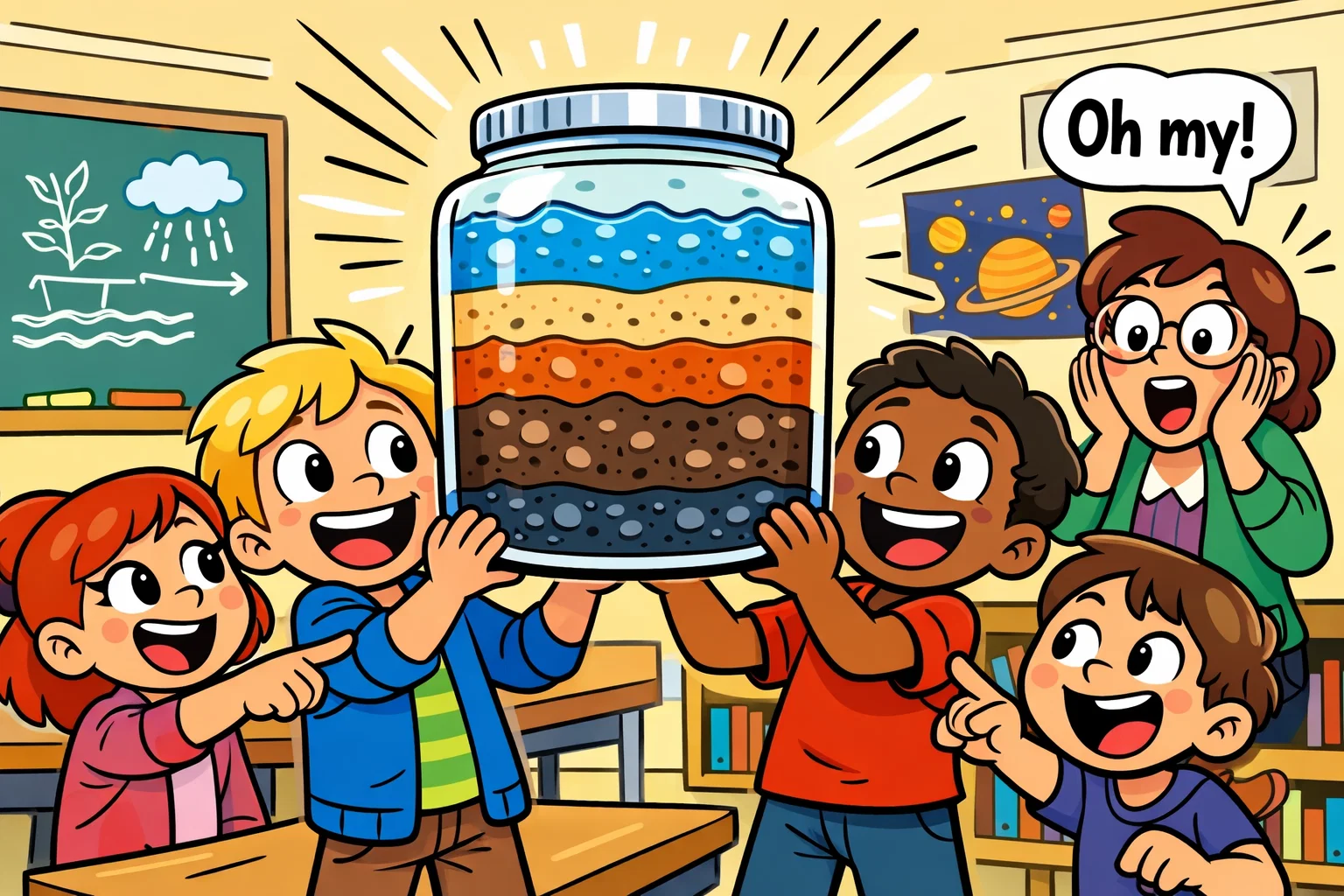
Have you ever wondered what exactly is hiding beneath your feet when you dig in the garden? To a child, dirt might just look like a brown mess that ruins clean clothes, but to a young scientist, it is a complex world teeming with history and life. The soil layers experiment is a classic science staple that transforms a simple yard chore into a fascinating hands-on activity. By using a clear jar, some water, and a bit of curiosity, kids can literally see the hidden components of the Earth separate right before their eyes.
This experiment works so well for children because it provides immediate visual feedback. Instead of just reading about soil particles in a textbook, they get to shake a jar and watch basic physical processes in action. It’s a perfect introduction to soil science, helping kids understand how different materials like sand, silt, and clay settle based on their size and weight. Whether you are a parent looking for a weekend science project or a teacher needing a mess-free way to explore geology, this jar test is a simple gateway to understanding the foundation of our planet.
Soil Jar Science Experiment Overview
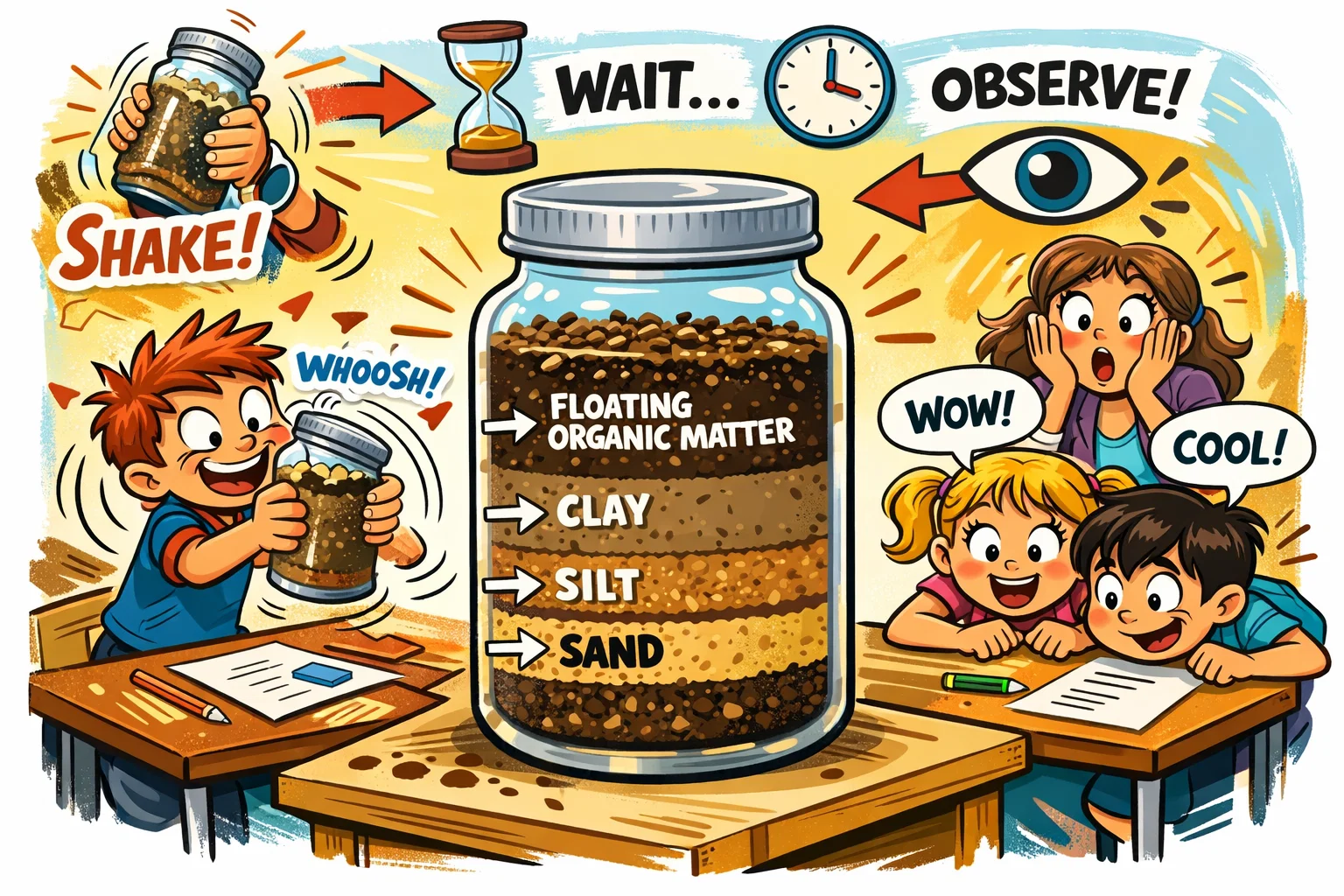
The soil jar science experiment – often called the “settling test” – is a simple method used to determine soil texture. The basic idea is to mix a soil sample with water in a transparent container. Because different soil particles have different sizes and densities, they won’t stay mixed forever. Once you set the jar down and let the liquid settle, gravity takes over.
Over a period of a few hours to a few days, the material inside the jar will separate into distinct horizontal bands. The heaviest pieces sink to the bottom of the jar, while the lightest particles remain suspended near the top of the water. This visual activity allows children to see the “ingredients” of their local dirt without needing a microscope or a sieve. It’s a foundational science lesson that proves even something as common as mud is made of many different things!
Learning Goals for Kids
This activity isn’t just about making a muddy jar; it’s designed to build specific developmental and academic skills:
- Observation: Kids learn to look for subtle differences in color and texture.
- Comparison: By taking samples from different areas, they can see why one plant grows better in the garden than another.
- Patience: Science isn’t always instant! Waiting for the clay layer to settle teaches kids that nature works on its own timeline.
- Data Recording: Using a worksheet or notebook to measure and record the heights of the layers introduces basic mathematical concepts.
Age Range and Difficulty Level
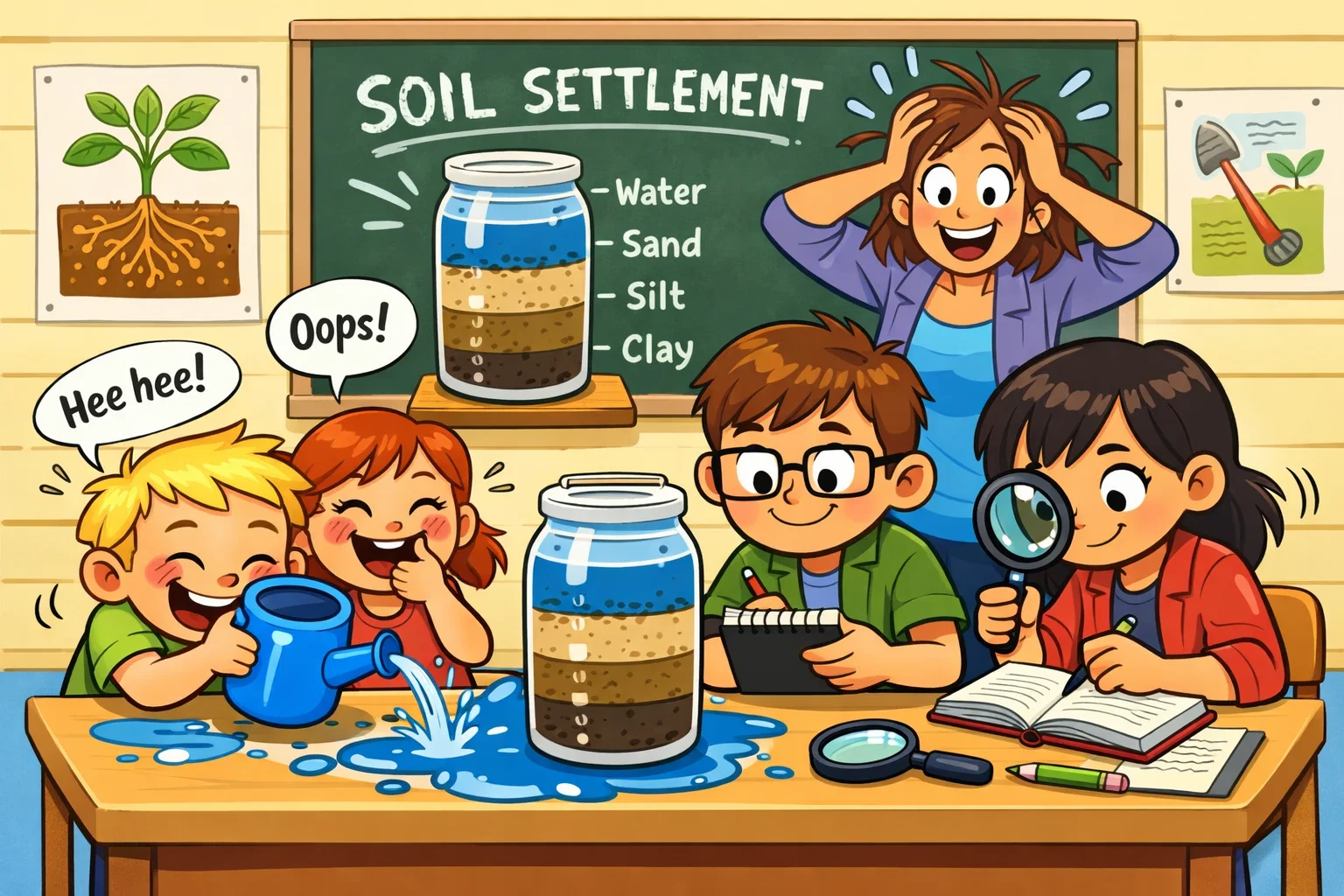
The soil layers experiment is incredibly versatile.
- Preschool (Ages 3-5): Focus on the “messy” fun of shaking the jar and looking at the stuff floating on top. High adult supervision is needed for handling glass jars.
- Elementary (Ages 6-10): This is the “sweet spot.” Kids can label their jars, use a ruler, and identify sand, silt, and clay.
- Middle School (Ages 11+): Students can calculate the exact percentages of sand, silt, and clay to use the soil texture triangle for classification.
Difficulty: Easy. If you can fill a jar with water, you can do this!
Science Concepts Covered
The magic of this experiment lies in three main concepts:
- Gravity: The force pulling everything toward the center of the Earth.
- Density: Heavier, denser material (like rock and sand) falls faster than lighter material.
- Particle Size: Soil particles are categorized by how big they are. Coarse particles (sand) settle quickly, while tiny particles (clay) act more like dust in the air, staying suspended in the liquid for a long time.
Materials Needed for Soil Layers Jar Experiment
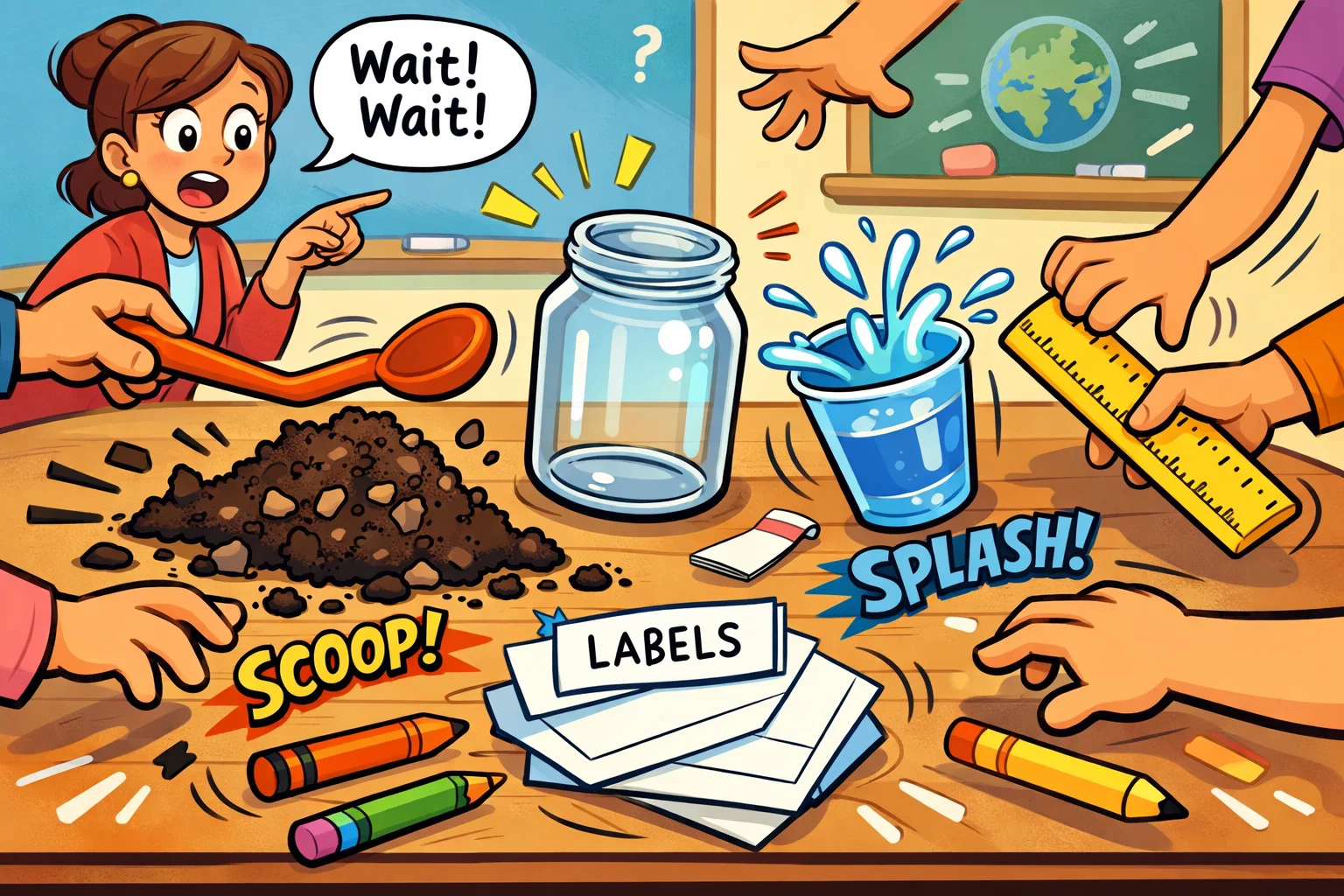
You don’t need a fancy laboratory to be a scientist. Most of these items are already in your kitchen or yard.
Household Materials List
| Item | Purpose |
| Clear Jar | A mason jar or recycled spaghetti sauce jar works best. |
| Soil Sample | About 1–2 cups of dirt from your garden or yard. |
| Water | To act as the medium that allows particles to separate. |
| Liquid dish soap | Just a drop! It helps the soil particles separate and prevents them from sticking together. |
| Permanent Marker | To label the jar or mark the top of each layer. |
Soil Collection Tips
When you go out to dig, try to find “real” soil. Avoid buying bags of sterilized potting mix, as these often contain mostly compost and peat moss rather than the mineral components like clay or silt found in the ground. Dig down about 6 inches to get past the surface leaves and root systems to reach the mineral soil layer.
Optional Tools for Extended Activity
- Ruler: To measure and record the thickness of each layer.
- Magnifying Glass: To inspect the sand layer for tiny bits of rock or hidden bugs.
- Sieve: To remove large sticks and dead leaves before putting the soil in the jar.
Step-by-Step Soil Layers Jar Procedure
Ready to get your hands a little dirty? Follow this procedure for the best results.
Jar Preparation Steps
- Fill your jar about one-third full with your soil sample.
- Remove any large rocks, sticks, or visible insects (unless observing floating organic material is part of the activity).
- Add water until the jar is nearly full, leaving about an inch of air at the top.
- Add one small drop of dish soap. This helps reduce surface tension and helps the clay separate from the sand.
Mixing and Shaking Process
Screw the lid on tightly! This is the most important step for a mess-free experiment. Hold the jar with both hands and shake it vigorously for at least two to five minutes. You want to make sure all the clumps are broken up and every component is moving.
Settling and Waiting Time
Set the jar on a flat surface (like a table or counter) where it won’t be bumped.
- 1 Minute: You will see the bottom of the jar fill up quickly.
- 2 Hours: The middle layers start to settle.
- 24–48 Hours: The water finally begins to clear as the smallest particles finish falling.
Soil Layers Observation Process
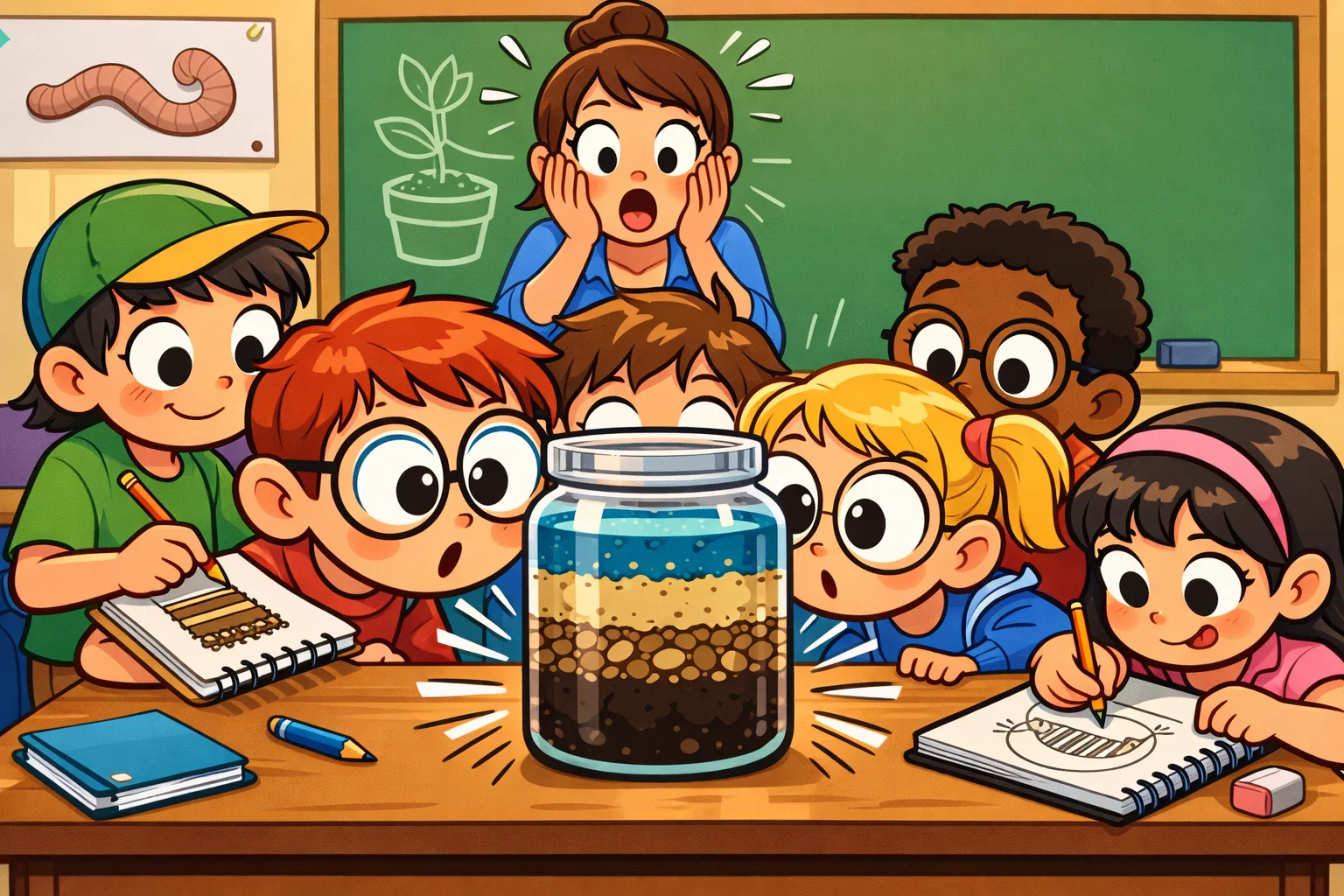
Now comes the “thinking” part of science. Careful observation is key.
What to Look for After Settling
After the liquid has had time to settle, you will notice distinct bands. At the very bottom of the jar is the sand. Above that is the silt. The very top mineral layer is the clay. You might also see a darker layer of organic matter (like old leaves or compost) sitting on the very top of the water.
Color and Texture Changes
The color of each layer tells a story. Sandy layers are often lighter or tan. The silt layer might be a chocolate brown, while the clay layer can be reddish or grey. Notice how the water transitions from muddy to clear.
Recording Observations
Using your permanent marker or ruler, label the heights of each layer. This is a great time to use a worksheet to draw what you see. This can indicate higher moisture retention in garden soil.
Sand Layer in Soil Jar
The sand layer is always the easiest to spot. Because sand particles are coarse and heavy, gravity pulls them down immediately.
Sand Particle Size and Weight
In soil science, sand is defined as particles between 0.05 mm and 2.0 mm. Because they are the “giants” of the soil world, they have no chance of staying afloat once the shake stops.
Appearance in Jar
You will see the sand layer at the very bottom. It often looks gritty, and you can sometimes see individual tiny rock fragments within it. There is usually a very separate and distinct line where the sand ends and the next layer begins.
Common Places Sand Comes From
Sandy soil is common near beaches or in areas where ancient rivers used to flow. If your garden has a lot of sand, it will drain water very quickly – great for some plants, but others might get thirsty!
Silt Layer in Soil Jar
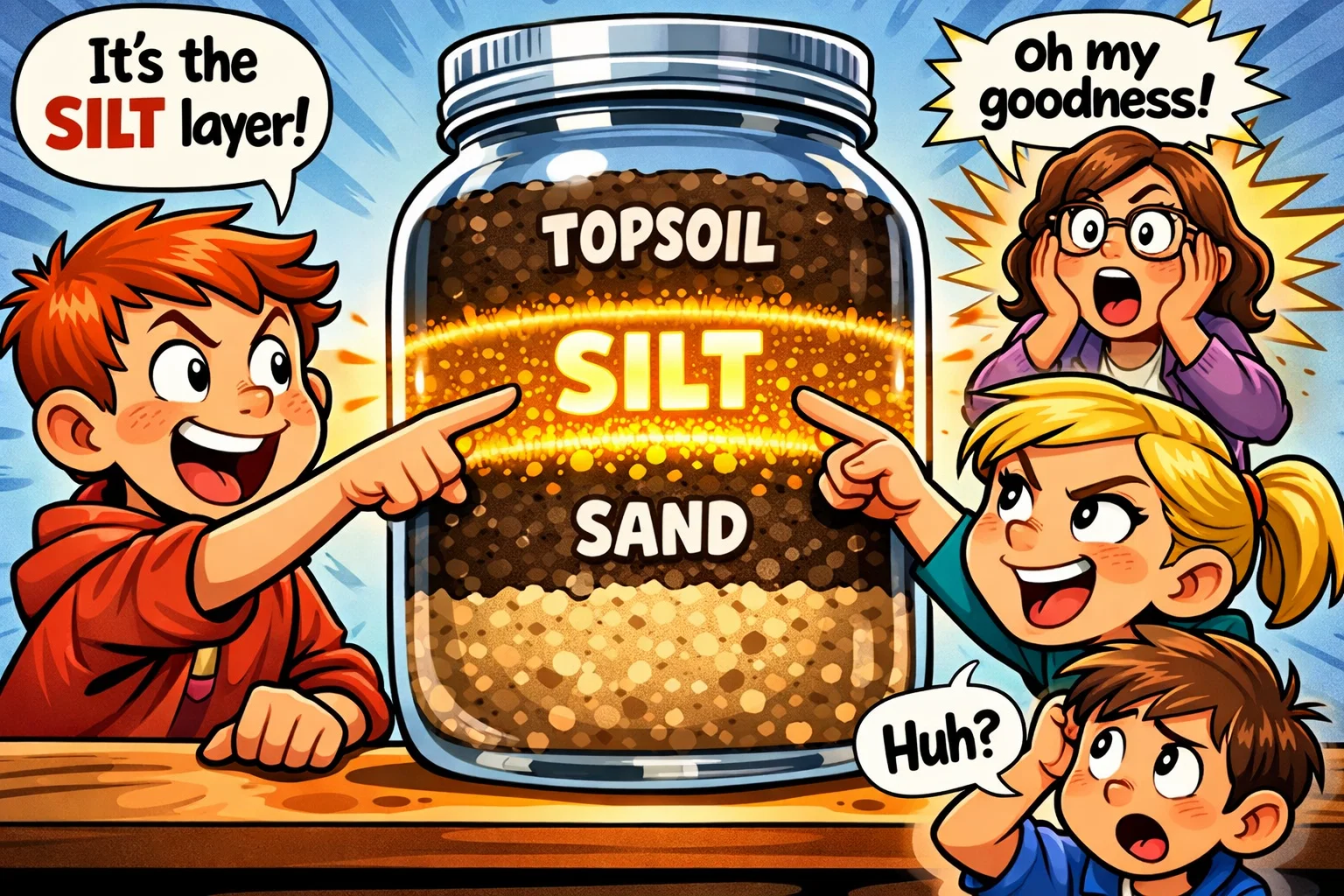
If sand is the “big brother” and clay is the “baby,” silt is the “middle child” of the soil family.
Silt Texture Characteristics
Silt feels smooth and powdery when dry (like flour) and slippery when wet. It is much smaller than sand but larger than clay.
Position Between Sand and Clay
In your jar test, the silt will settle right on top of the sand. It usually takes about 30 minutes to 2 hours to fully form. It is often a darker brown than the sand below it.
Role of Silt in Plant Growth
Silt is a well-balanced material. It helps soil hold onto just enough water for a root to drink without becoming a swamp. Loamy soil – the ideal dirt for most gardeners – contains a good portion of silt.
Clay Layer in Soil Jar
The clay layer is the ultimate test of your patience. These soil particles are so tiny that they can barely be seen with a regular microscope.
Clay Particle Size
Clay particles are microscopic and flat, like tiny plates. Because they are so light, they stay suspended in the water for a very long time.
Cloudy Water Layer Explanation
Is your water still cloudy after four hours? That’s the clay! It can take 24 to 48 hours for the clay layer to fully settle. If the water stays cloudy forever, it means the particles are so small they are interacting with minerals dissolved in the water.
Clay Uses in Nature and Crafts
Clay is what makes dirt “sticky.” If you can form a ball with your mud, you have high clay content. It’s the same material used for pottery and bricks because it packs together so tightly.
Soil Texture Analysis Jar Test
Once the layers have settled, you can actually determine your soil’s texture type.
Soil Texture Comparison
| Soil Type | Primary Characteristic | Behavior in Jar |
| Sandy | Large particles, high drainage. | The big layer at the bottom clears quickly. |
| Silty | Smooth texture, holds moisture. | Thick middle layer. |
| Clay | Tiny particles hold water tightly. | Thick top layer, water stays cloudy. |
| Loam | A well-balanced mix. | Even balance of all three layers. |
Percentage Estimation Method
To get the percentages of sand, silt, and clay:
- Measure the total height of all soil layers (not the water).
- Measure each individual layer.
- Divide the layer height by the total height. (Example: 2 cm clay / 10 cm total = 20% clay).
Simple Soil Type Classification
Most gardeners want loamy soil, which is roughly a 40-40-20 mix of sand, silt, and clay. If your jar is 80% sand, you might need to add compost to help plants retain moisture during hot conditions!
Reflection Questions for Kids
To turn this into a true science lesson, ask these questions:
- Which layer formed first? (Usually sand!)
- Why did the leaves float? (They are organic matter and less dense than water.)
- Is the water clear or dirty? (Cloudy water suggests that fine clay is still settling.)
- Would a bug prefer to live in the sand or the loam?
Science Extensions and Variations
Comparing Soil from Different Locations
Don’t stop at one jar! Dig a hole in the front yard, one in the vegetable garden, and maybe take a soil sample from a local park. Compare the color and layer sizes. You’ll discover that soil composition can change even within a few feet.
Time-Based Experiment Variations
Use a permanent marker to mark the top of the settling pile at 1 minute, 10 minutes, and 1 hour. This shows the “speed” of gravity!
Classroom or Group Activity Ideas
In a group, have each child bring a jar of dirt from their home. Create a “Soil Map” of the neighborhood based on who has the most clay versus who has the most sand.
Safety Tips for Soil Science Activities
Hygiene and Hand Washing
Always wash hands thoroughly after the activity. Soil is a living ecosystem and can contain bacteria or tiny fungi.
Safe Soil Collection Guidelines
Avoid collecting soil near busy roads (where there may be lead or oil) or in areas where pets frequently go to the bathroom. Always ask an adult before you dig a hole!
Adult Supervision Notes
Adults should handle the tightly sealed lids if they are glass and help with any calculations involving the ruler.
Related Earth Science Activities for Kids
If your little scientist loved this, try these next:
- Rock Identification: Sort rocks by color and hardness.
- Water Filtration: Use a sieve and layers of sand and rock to see how the ground cleans our water.
- Pollinator Garden: Explore how loamy soil helps flowers grow for bees and butterflies.