

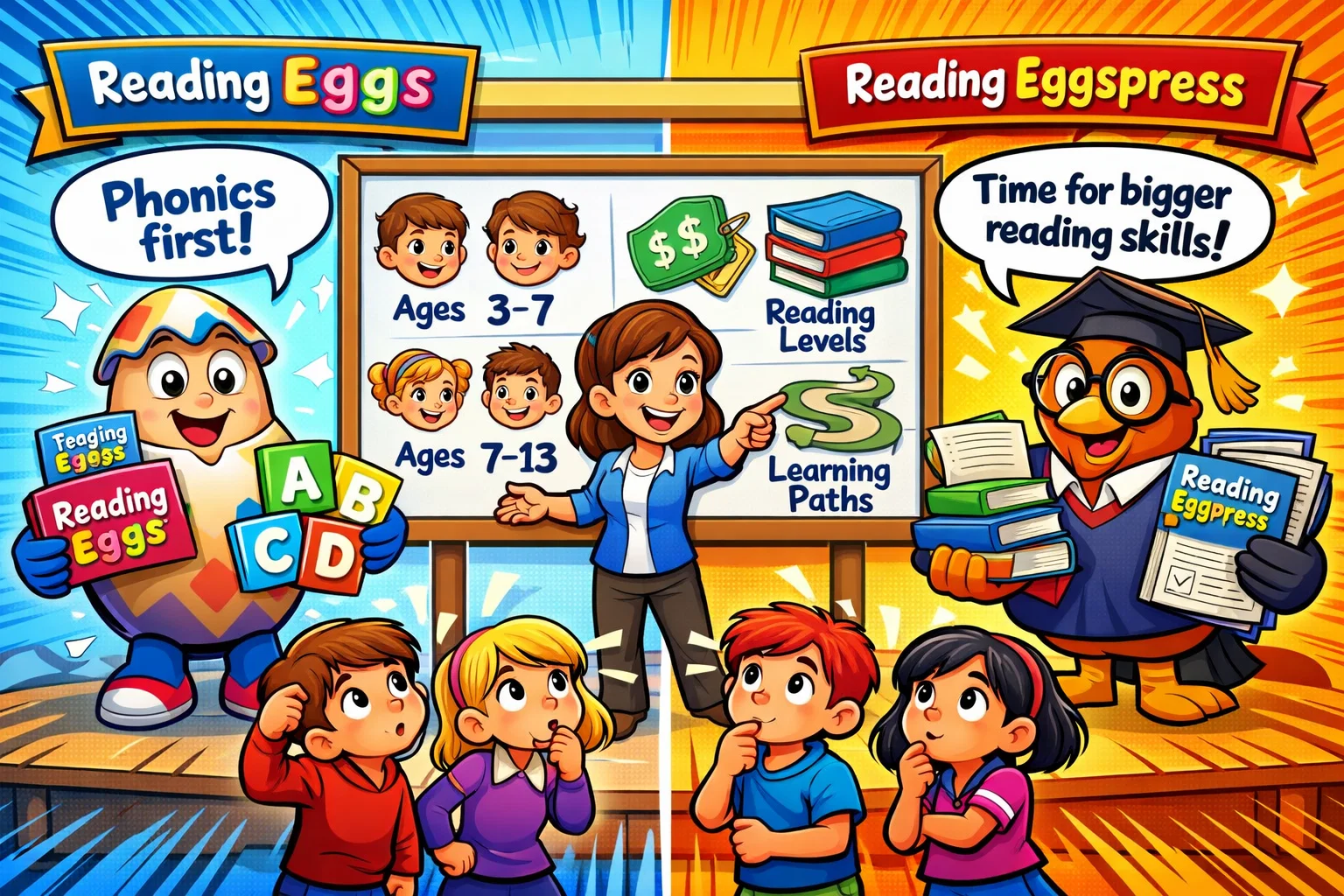
Choosing the right digital learning tool for your child can feel confusing given the number of available options. Parents often compare these two platforms because both help children develop early literacy through interactive lessons and phonics-based activities. While they share the goal of building foundational skills, their approaches to literacy differ significantly in structure, cost, and overall “vibe.”
This guide provides a neutral evaluation of both platforms. This guide examines the teaching methods, subscription models, and age suitability of these two popular educational platforms.
Overview of Reading Eggs and Starfall Learning Platforms
Both platforms are widely used in classrooms and homes around the world to support early literacy development. They are designed to help children move from recognizing letters to reading simple words and sentences independently. While both emphasize systematic phonics instruction, they cater to different learning styles and household needs.
Reading Eggs platform overview
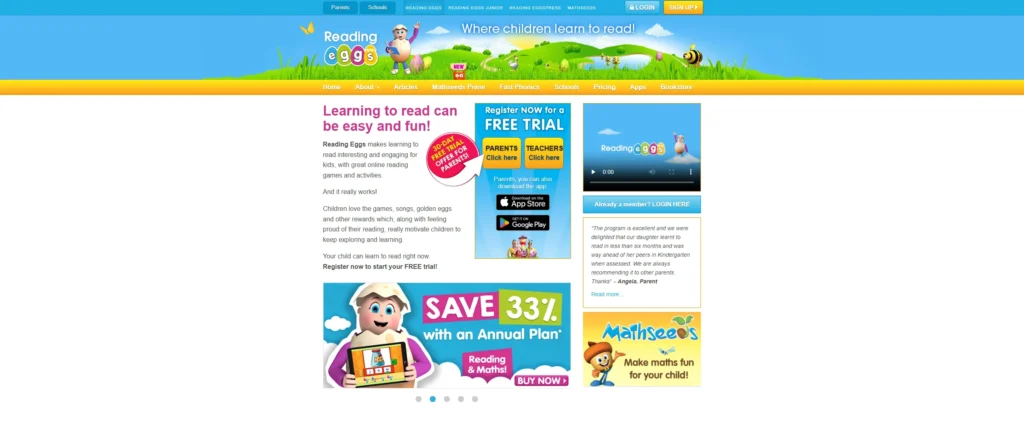
This is a highly structured online program focused on phonics, vocabulary, and comprehension. It uses a map-based progression where lessons are presented as a series of structured activities. The platform is actually a suite: Reading Eggs Junior for toddlers, the core lessons for ages 3–7, Fast Phonics for intensive decoding, and Reading Eggspress for older kids (ages 7–13). A key feature is a reward system in which children earn “golden eggs” that can be used to decorate an avatar or a virtual house.
Starfall platform overview
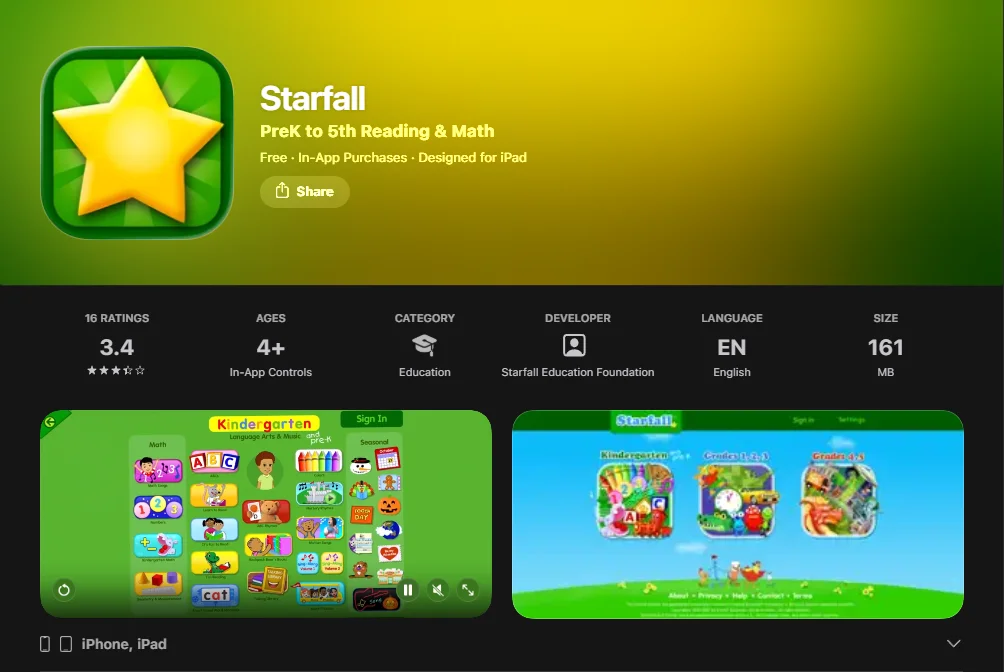
Starfall began as a non-profit public service in 2002 and remains a staple for young kids starting their literacy journey. It is widely known for its simplicity and the famous “Learn to Read” sequence. Unlike many heavily gamified apps, Starfall offers a simpler experience focused on animations, songs, and read-aloud stories. Many parents use Starfall as an introductory phonics tool because a significant portion of the web content is available for free.
Core learning philosophy of both apps
Both apps are built on the foundation of phonics instruction, but they organize the experience differently:
- The Structured Path: One uses a systematic phonics approach with a linear, adaptive path. It locks levels until the current one is completed, helping ensure that foundational steps are practiced before moving forward.
- The Exploratory Path: Starfall encourages exploration. While it has a suggested sequence, kids can use almost any part of the site at any time. It emphasizes “learning through play” and multisensory reinforcement without the pressure of a strict path.
Target Age Groups and Learning Levels
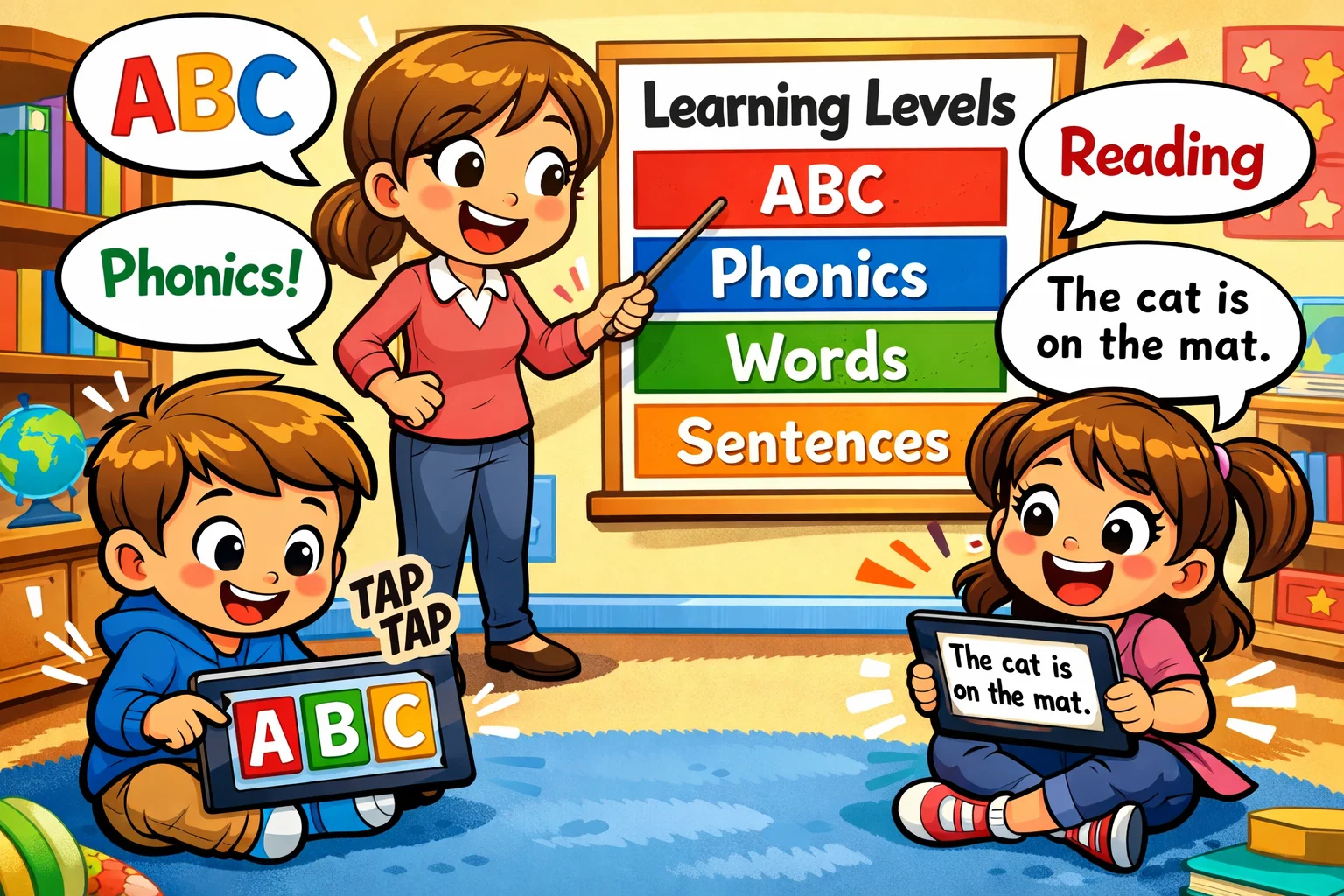
Identifying the right level for your child is crucial to preventing frustration. Both apps cover a wide age range but tend to be most effective for slightly different groups of learners.
Age range recommended for Reading Eggs
The system is designed to help a broad spectrum, covering kids ages 2 to 13.
- Junior (Ages 2–4): Focuses on alphabet knowledge and phonemic awareness.
- Core Program (Ages 3–7): The main learn to read curriculum.
- Eggspress (Ages 7–13): Moves into comprehension and advanced literacy for fluent students.
Age range recommended for Starfall
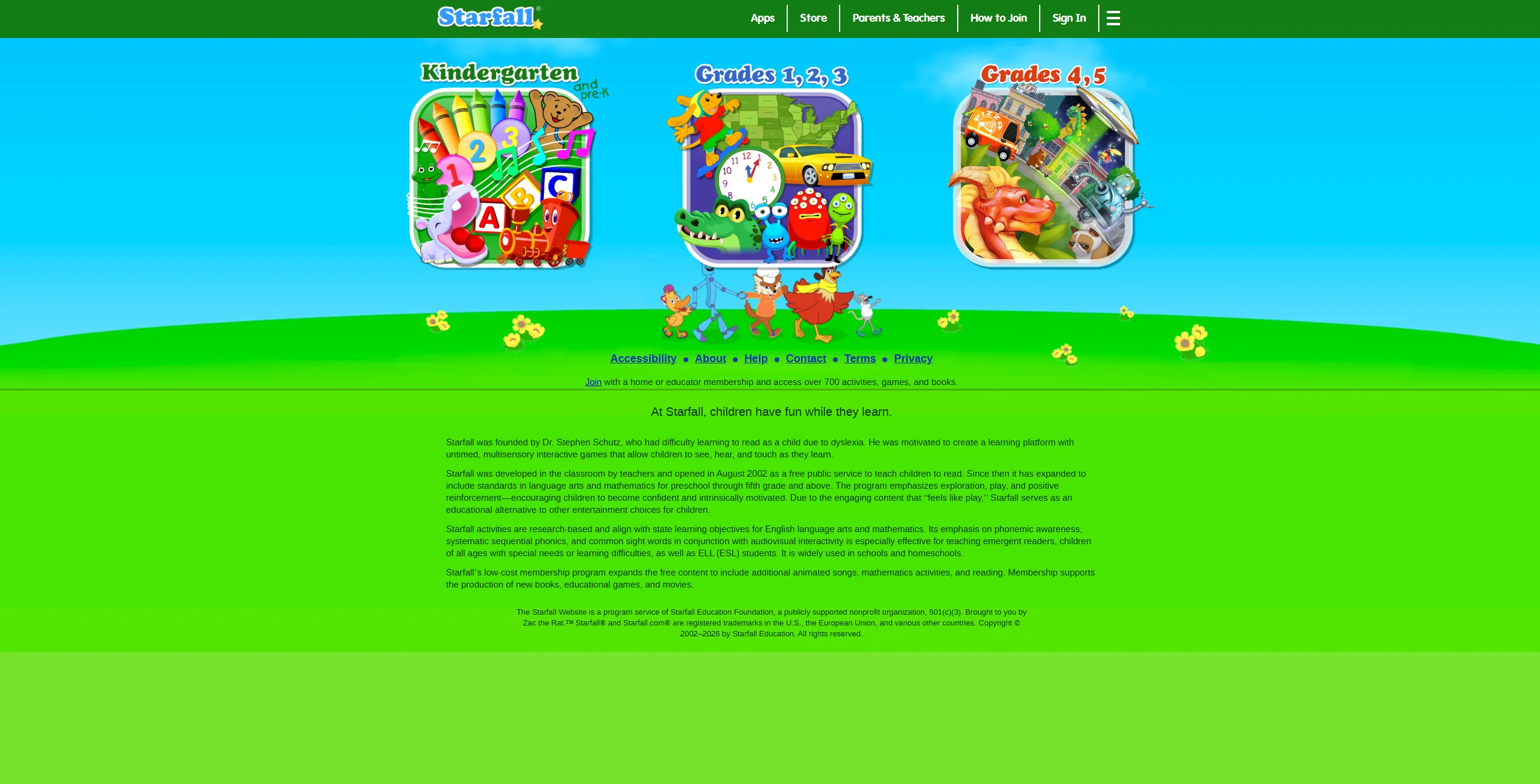
This platform primarily targets Pre-K through 2nd–3rd grade learners, with some additional content extending toward upper elementary levels. It is most effective for younger kids (ages 3–6) who are just beginning to learn letters and basic phonics skills. Its interface remains very simple and child-oriented, which may feel too young for many fourth-grade students.
Differences in learning progression by age
| Feature | Reading Eggs | Starfall |
| Progression Style | Linear, map-based “Journey” | Open-ended exploration |
| Adaptive Placement | Yes, via a placement test | No, parent/child selects level |
| Skill Depth | High (with reading content extending through upper elementary levels, roughly comparable to Grade 6). | Moderate (focused on K-2) |
| Content Updates | Frequent new digital books | Occasional new activities |
Teaching Methods and Curriculum Structure
At the heart of both programs is phonics, but how they teach children to decode words varies.
Phonics instruction approach
One program uses a blended approach of synthetic phonics and sight word recognition. Lessons are highly repetitive—a child learns a sound, identifies it in words, and then accesses a “decodable” book at the end of the module.
Starfall focuses on a traditional phonics approach. Each letter or vowel team has a dedicated animation and song. It emphasizes the “multisensory” aspect, where the child sees the letter, hears the sound, and interacts with a playful character.
Lesson structure and progression
In the structured program, lessons are sequential games and activities that lead to a final quiz. The reading journey is very clear; you can see exactly where your child is on the map.
Starfall functions more like an open digital library of phonics activities, songs, and early reading materials rather than a strictly structured curriculum. A child might do a phonics game about the letter “A,” then jump over to a story about a tin man, and then practice a math skill. For some children this flexibility is helpful, while others may become distracted without a structured sequence.
Reading comprehension and vocabulary development
As children progress, Reading Eggspress offers a large digital library of more than 4,000 fiction and non-fiction books. Each title includes a quiz, which is excellent for building literacy beyond just decoding.
Starfall includes a “Talking Library” and “It’s Fun to Read” sections. These are great for shared reading, but the tracking of comprehension is less robust.
Interactive Features and Learning Activities
Games and gamification elements
This is where the structured program leads. The “Golden Eggs” system and the ability to “buy” items for a digital house mimic the feel of modern video games. This can help keep many children engaged, especially those who might otherwise resist formal reading lessons.
Starfall is “playful” but not “gamified.” There are no points, levels, or leaderboards. The “reward” is the fun animation or the satisfaction of finishing a task. This makes it a great choice for parents concerned about “dopamine loops” in learning apps.
Songs, animations, and storytelling
Both platforms use music effectively. Starfall’s songs are legendary in the teaching community for their “earworm” quality, helping children remember rules. The other app uses high-quality animation and a variety of quirky characters to teach children how to read.
Progress tracking and learning feedback
Reading Eggs offers a detailed parent dashboard. You receive weekly emails showing which phonics lessons were completed and where your child stands relative to their level.
Starfall’s tracking is minimal. In the home version, activity completion is visible, but the platform provides significantly less detailed progress tracking compared with more structured literacy programs.
User Experience
Interface design and navigation
The app interface for the structured program is bright and busy. While it’s generally easy to navigate, the sheer amount of options can sometimes overwhelm a young learner.
Starfall’s design is more “Web 1.0″—simpler, with larger buttons and a cleaner layout. This often makes it easier for very young kids to use independently on a tablet.
Ease of setup
Setting up the structured app involves a placement test, which is a fantastic feature. It ensures your child starts at exactly the right spot. Starfall is “plug and play”—you can open the website and start a phonics game in seconds without even creating an account.
Pricing and Subscription Comparison
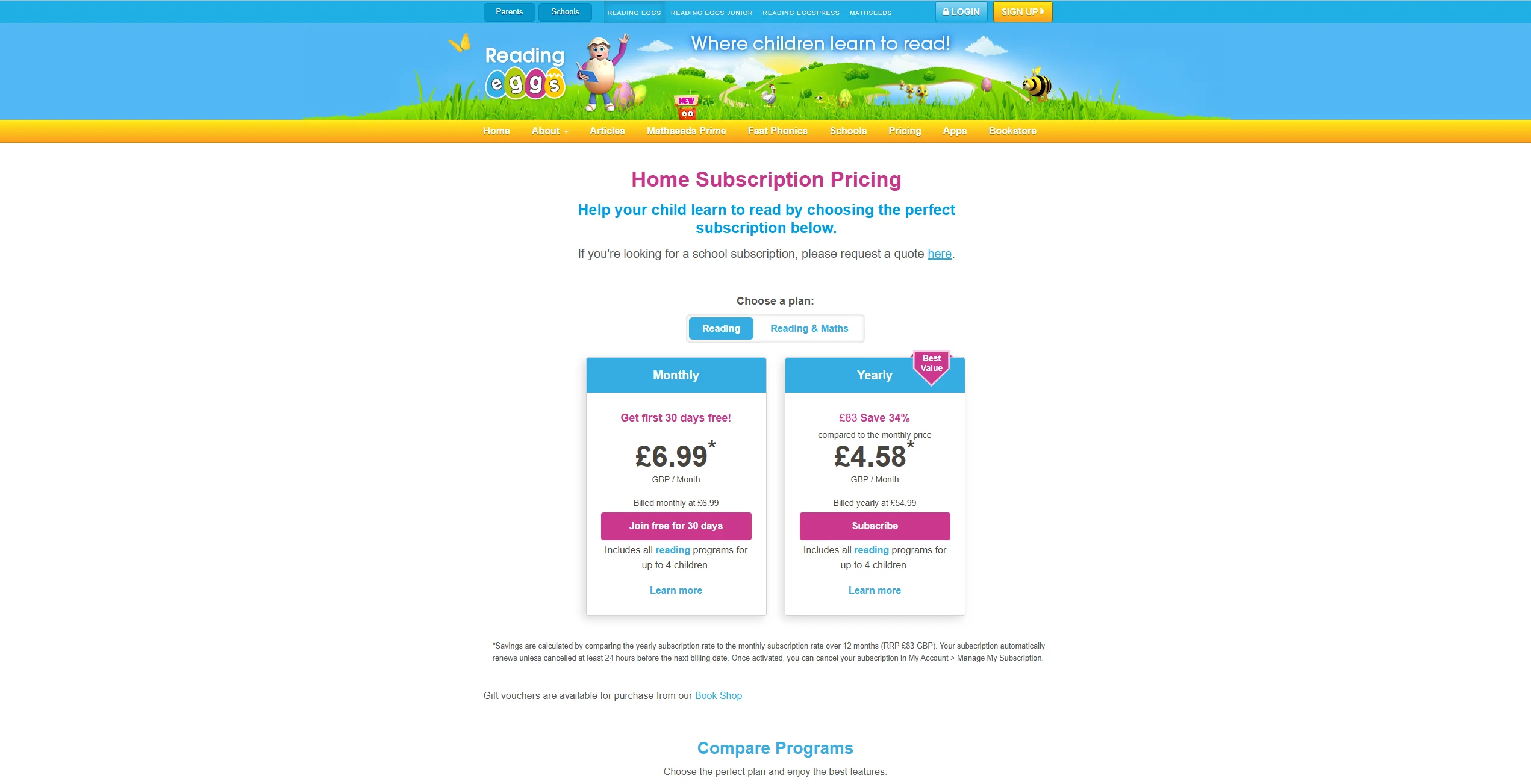
| Feature | Reading Eggs | Starfall |
| Free Version | 30-day free trial | Extensive free web content |
| Monthly Cost | ~$9.99 – $13.99 (with an additional Homeschool Max plan available at a higher price point). | Monthly cost is about $5.99 via mobile app subscriptions, while the main website membership costs about $35 per year. |
| Yearly Cost | ~$69.96 – $99.99 | ~$35.00 (Home Membership) |
| Multiple Children | Up to 4 children (some plans) | One household login |
Advantages and Limitations of Each App
Strengths of Reading Eggs
- Structure: A highly systematic phonics program presented in an app format.
- Longevity: Grows with the child from age 2 up to age 13.
- Motivation: The reward system is highly effective for reluctant students.
- Comprehensive: Includes a massive library and reading worksheets.
Strengths of Starfall
- Affordability: One of the most cost-effective options on the market.
- Simplicity: No “fluff”—just direct, multisensory phonics and reading practice.
- Special Needs: Sometimes recommended by educators for children with dyslexia because activities are not timed.
- Access: Much of the core content is free.
Potential drawbacks to consider
The structured program can be relatively expensive, and some parents feel the games may distract from reading practice. Starfall’s graphics can feel dated, and the lack of a “locked” path means children might skip around too much to build a solid foundation.
Reading Eggs vs Starfall Key Differences
- Curriculum depth: One is a full literacy curriculum that could technically replace a traditional program in a homeschool setting. The other is a powerful supplement.
- Learning style: If your child loves “leveling up,” they will thrive in the structured app. If they prefer a calm, “story-time” feel, they will likely prefer the other.
- Suitability: Starfall is excellent for the “gentle introduction.” The other is better for the “serious push” toward fluency.
Alternatives to Reading Eggs and Starfall
- Khan Academy Kids: A completely free version of a comprehensive curriculum for kids ages 2–8.
- Hooked on Phonics: A traditional, effective system with a physical book component.
- Teach Your Monster to Read: A highly engaging, game-based tool.
- ABCmouse: Similar in scope but covers a broader range of subjects.