

Choosing the right digital tool for your child’s early education has become an increasingly important decision for many families. With the science of reading receiving increased attention in recent years, parents are increasingly looking for platforms that provide a strong foundation in early literacy skills rather than simple entertainment. Two well-known names consistently appear among the most downloaded education apps in the App Store and Google Play.
While both are top-tier educational apps, they serve different purposes. Reading Eggs is a highly structured, systematic program focused on mastery of phonics and literacy, while Khan Academy Kids offers a broader, playful, and completely free curriculum covering everything from math skills to social-emotional development. This guide provides a neutral, in-depth comparison to help you decide which learning app for kids aligns with your family’s goals.
Should learning apps for kids be part of early literacy in 2026?
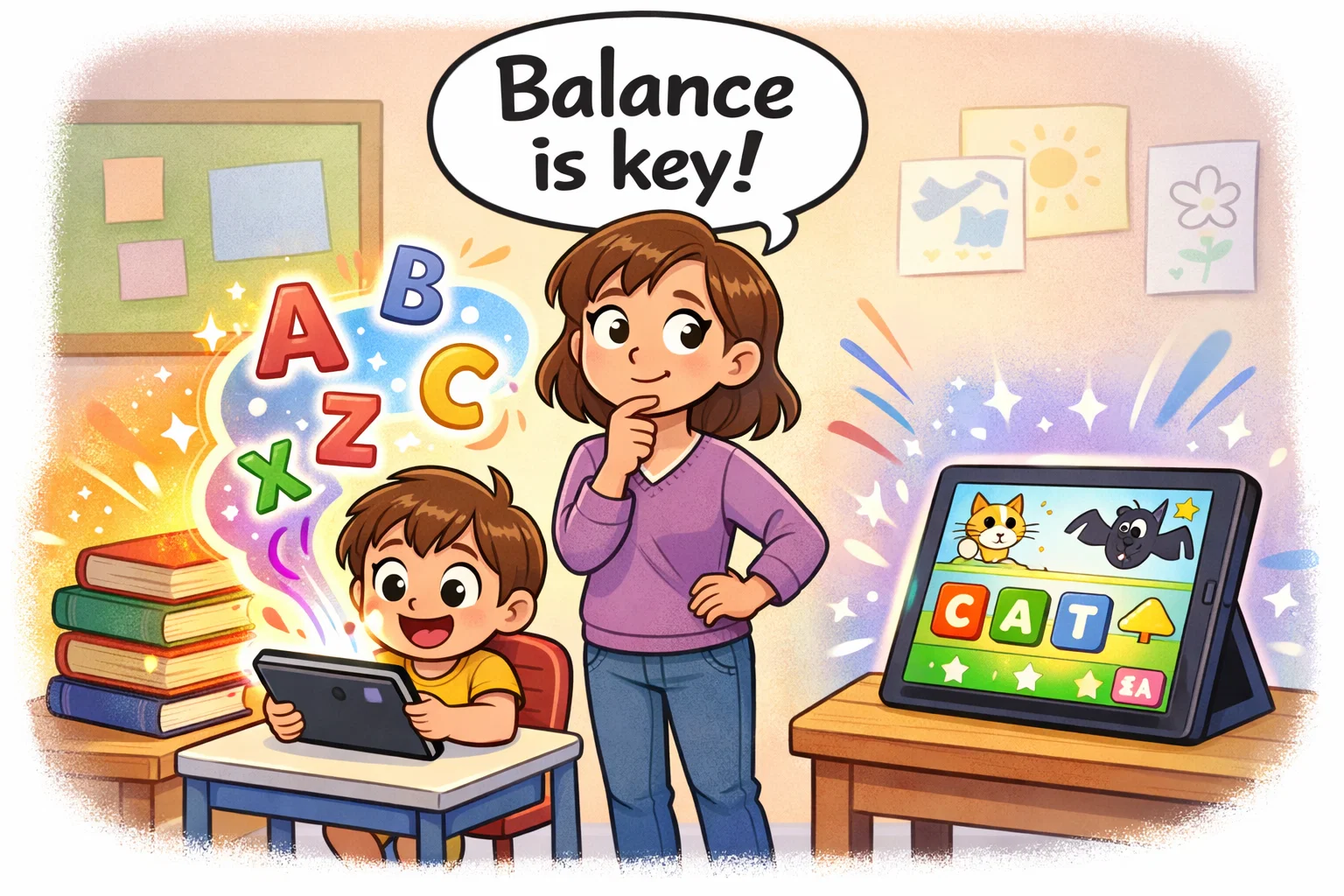
In 2026, the question is no longer if kids should use apps, but how they use them. High-quality early learning software can support progress when integrated thoughtfully into a child’s routine. However, as child development experts often note, an educational app is a supplement, not a replacement, for human interaction.
Benefits of structured reading apps
Many modern learn-to-read apps utilize systematic phonics, introducing letter sounds in a structured sequence.
- Personalized Learning: Adaptive algorithms identify where a child learns best and adjust the difficulty accordingly.
- Gamification: Learning games and rewards (like “Golden Eggs”) keep motivation high.
- Immediate Feedback: Unlike a workbook, an app can tell a child instantly if they’ve matched the correct letter to its sound.
Potential downsides of overreliance on apps
Overreliance on digital tools can lead to “passive consumption.” If an app is too flashy, children might focus more on the games and activities than the actual text comprehension. Furthermore, excessive screen time can sometimes lead to a dependency on digital rewards rather than the intrinsic joy of engaging with a physical book.
Blending apps with offline activities
A hybrid approach can be an effective way to support children’s learning. Experts recommend:
- Co-playing: Sit with your child during their learning path to discuss the stories and characters they encounter.
- Physical Reinforcement: Use printable activities in the app to practice handwriting and letter formation.
- Real-world Phonics: Point out the phonics sounds on grocery labels or street signs during daily errands.
Reading Eggs overview: Gamified phonics platform
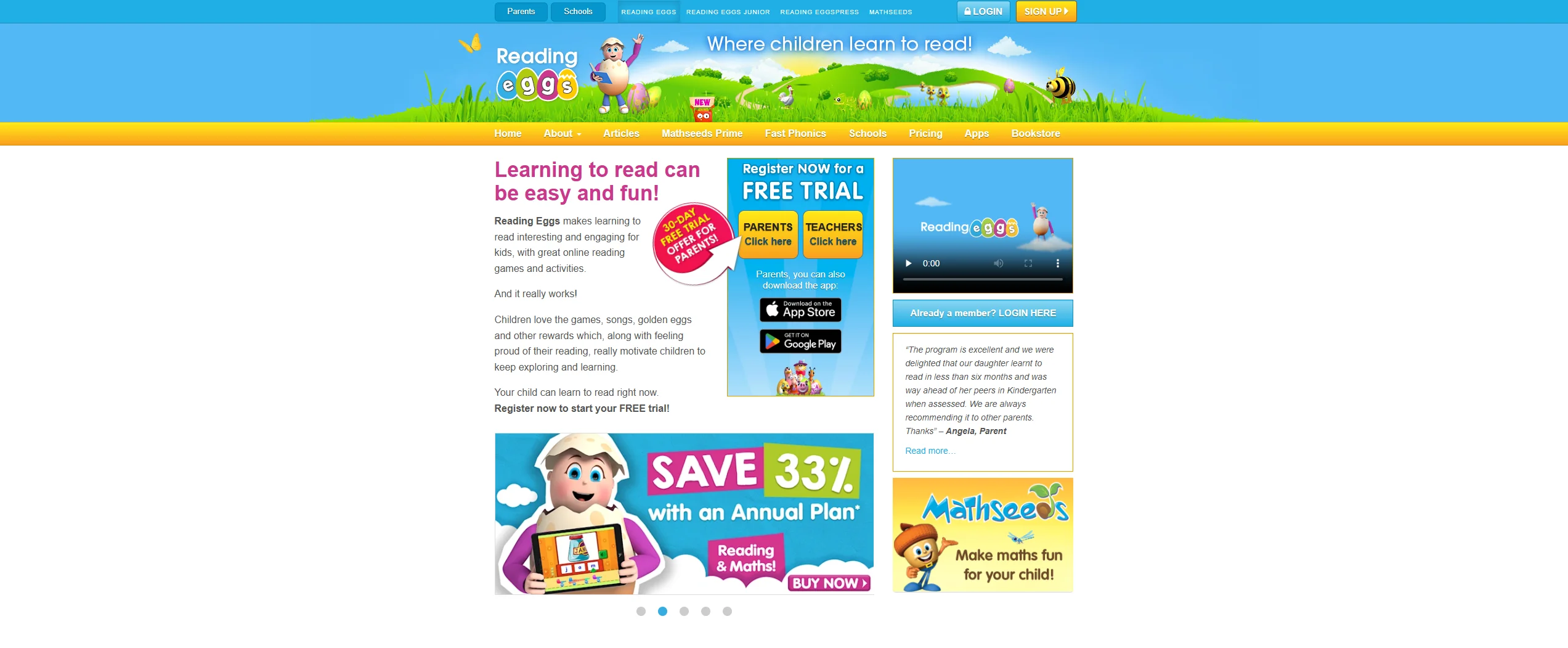
Reading Eggs is a comprehensive early learning program designed by educators to teach literacy through a step-by-step learning journey. It is known for its structured approach to systematic phonics instruction.
How Reading Eggs works
The program typically starts with an in-app assessment to help place the child at an appropriate starting level. The app is divided into different sections based on children’s age groups:
- Reading Eggs Junior (Ages 2–4): Focuses on pre-literacy skills and alphabet sounds.
- Reading Eggs (Ages 3–7): The core program covering foundational reading and phonics skills.
- Reading Eggspress (Ages 7–13): Focused on prose comprehension and vocabulary for older kids.
Core features and learning approach
The app uses a “map” system where children complete lessons to move forward. Each lesson includes educational videos, animations, and learning games that focus on one specific sound or word family. This repetition helps reinforce the connection between sounds and letters over time.
Strengths for different learners
This educational tool is ideal for children who thrive on structure and clear goals. The high-repetition model is particularly effective for early literacy and for children who may be struggling to keep up with school-based phonics.
Limitations parents should consider
The primary hurdle is the subscription cost. While it offers a 30-day free trial, it is not a free app. Additionally, it is very language-heavy; while it includes math skills through the “Mathseeds” add-on, its primary identity is a literacy app.
Khan Academy Kids overview: Early learning multi-subject platform
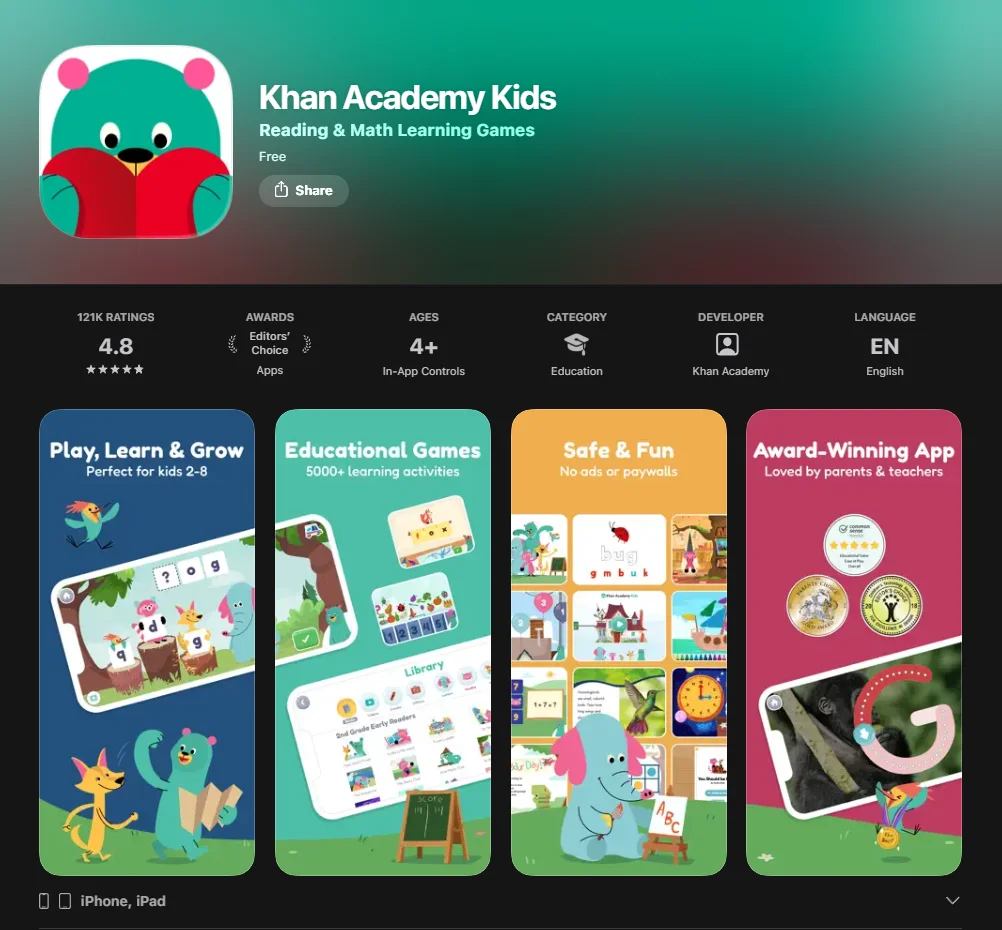
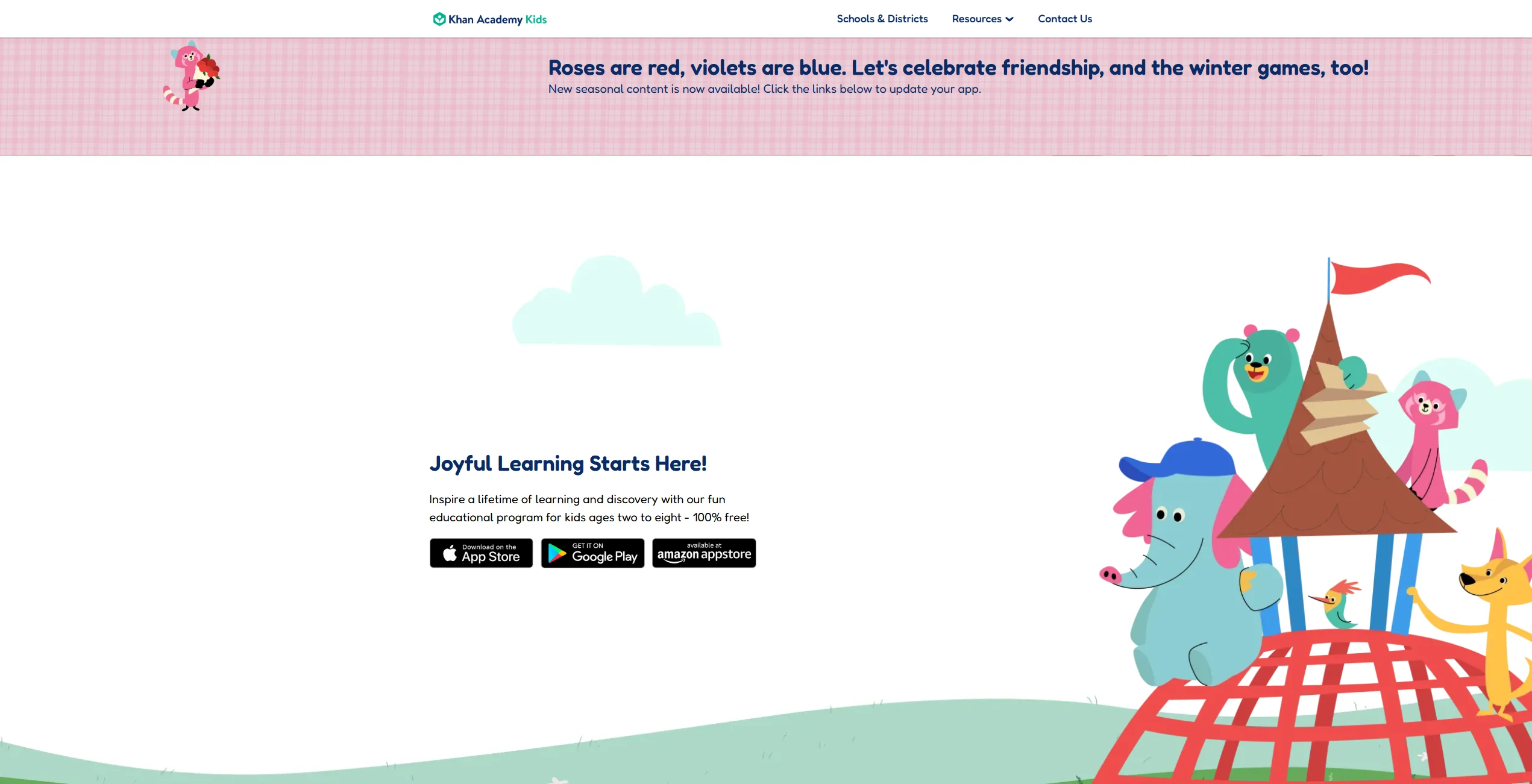
Khan Academy Kids is one of the most widely recognized free educational apps. Developed with input from early childhood education experts, including researchers affiliated with Stanford University, it is a completely free app with no ads, making it a favorite for parents who want quality without a monthly bill.
How Khan Academy Kids works
The app uses five charming characters to guide younger kids through an adaptive learning path. Children can either follow the “Learning Path” button for a curated experience or explore the “Library” to choose their own activities for kids.
Core features and content areas
- Multi-subject: Covers early literacy, math, logic, and social-emotional learning.
- Creative Tools: Includes drawing, storytelling, and educational games.
- Extensive Library: A large in-app library that includes nonfiction books from National Geographic and texts created in collaboration with Bellwether Media.
Strengths for preschool and kindergarten
The app aligns well with a “whole child” approach to early learning. It doesn’t just help children decode words; it encourages them to think critically and express themselves. Because it is free and widely available, it’s an accessible entry point for any family regardless of budget.
Limitations parents should consider
While it teaches phonics, the sequence is often felt to be less intensive than its competitors. Some children may get distracted by the wide variety of games designed for fun, potentially spending more time in the “Create” section than on basic literacy practice.
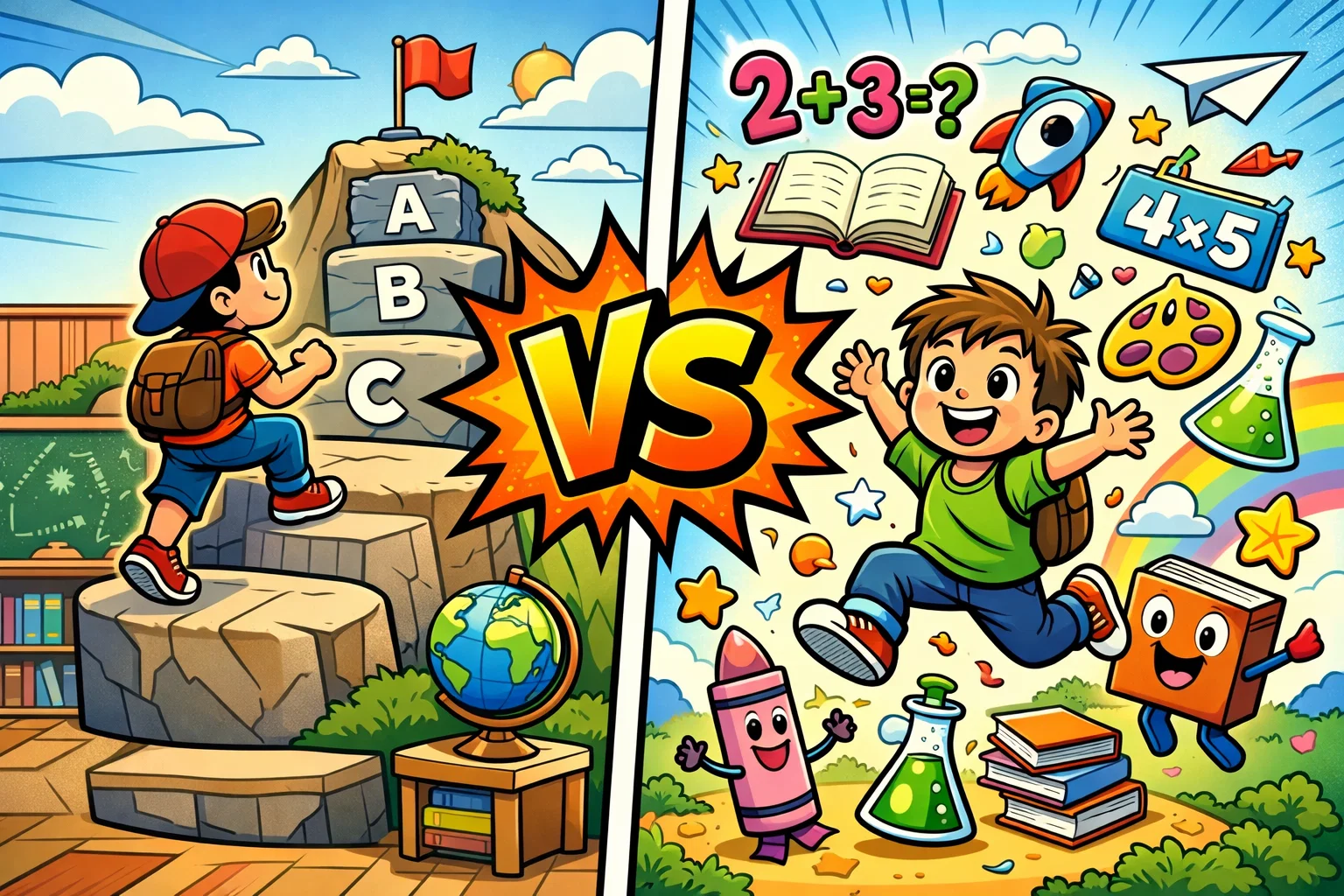
Direct comparison: Reading Eggs vs Khan Academy Kids
| Feature | Reading Eggs | Khan Academy Kids |
| Primary Focus | Intensive Phonics & Literacy | Well-rounded Early Learning |
| Cost (2026) | Pricing varies by plan and region; Reading-only is often listed at $9.99/month or $69.99/year, while Reading & Math is listed at $13.99/month or $99.99/year in US pricing. | 100% free with no ads and no subscriptions. |
| Ages | 2–13 years | Designed for children ages 2–8. |
| Subjects | Language Arts (Math via Mathseeds) | Literacy, Math, Logic, Social-Emotional |
| Ads | None (Subscription-based) | None (Non-profit) |
| Offline Mode | Limited in-app functionality; printable worksheets available separately. | Offline access is available for downloaded books and games. |
Phonics depth and reading progression
Reading Eggs may be a strong option for families seeking a “school-like” progression. It requires mastery before moving to the next level. Khan Academy Kids teaches phonics in a more exploratory way, which is great for exposure but may move too quickly for a child who needs more repetition to master word recognition.
Subject coverage beyond reading
If you want a learning app for kids ages 2 to 8 that covers everything, Khan Academy Kids may be the stronger choice for families seeking a broader curriculum. It includes a robust math skills section and lessons on “big feelings.” Reading Eggs is a specialized literacy app, though its companion app, Mathseeds, is excellent for numeracy.
Engagement style and motivation
Reading Eggs uses a “reward-store” economy where kids buy items for their avatars with earned eggs. Khan Academy Kids relies on character interaction and the intrinsic fun of the learning games to keep the child learning.
Age suitability comparison
Preschool children (Ages 2–4)
Khan Academy Kids is often a suitable choice for this age group. Its interface is highly intuitive, and the “Super Simple Songs” integration keeps younger kids engaged without feeling pressured to demonstrate advanced skills.
Kindergarten (Ages 5–6)
At this stage, Reading Eggs becomes a strong contender. This age range is typically when children begin formal phonics instruction. The structured lessons help bridge the gap between home and the classroom literacy expectations.
Early elementary (Ages 7–8)
For older kids who are already fluent but need to improve text comprehension, Reading Eggs (specifically the Reading Eggspress section) provides more depth than Khan Academy Kids, which caps its content around the 2nd-grade level.
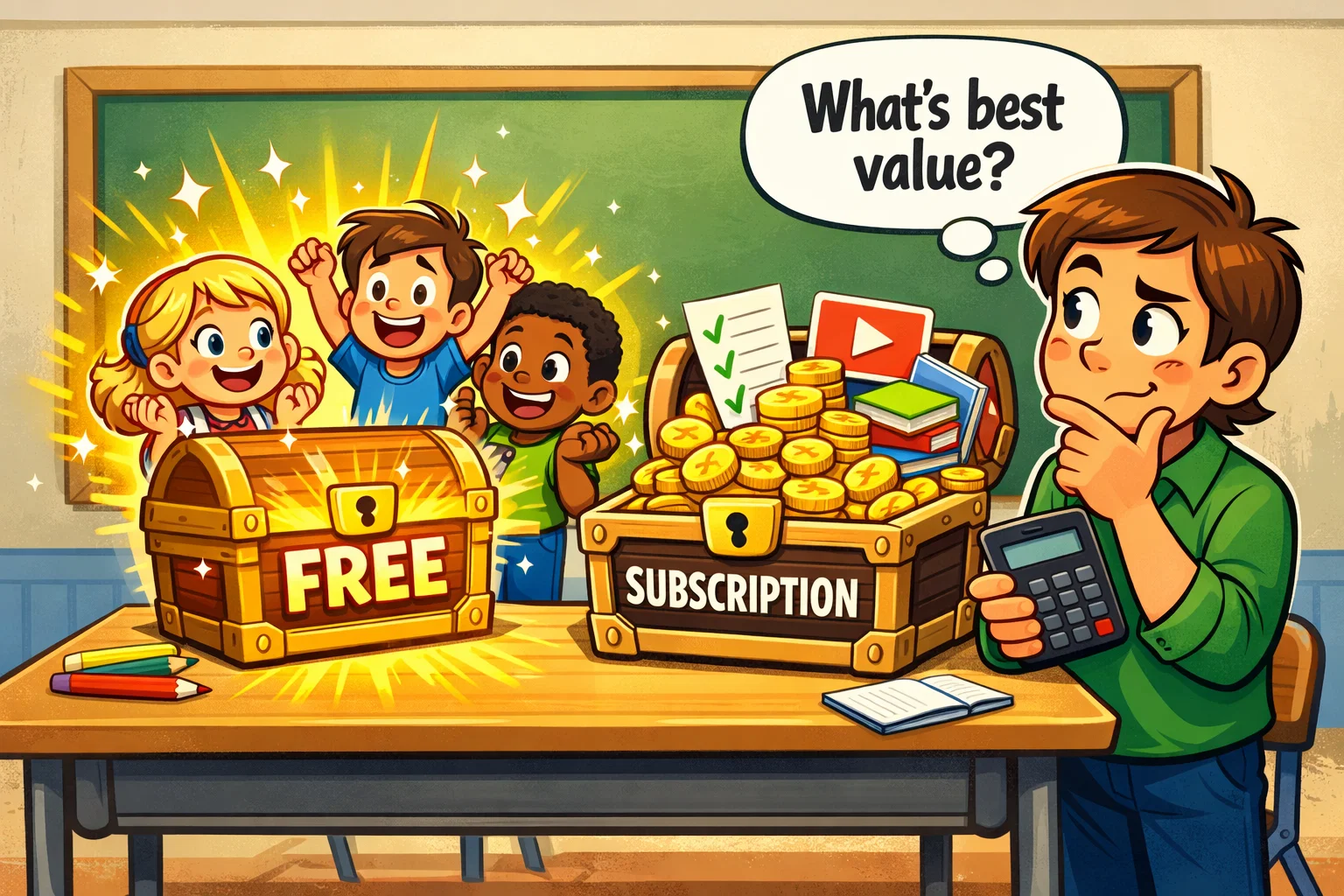
Pricing comparison 2026
Reading Eggs subscription cost
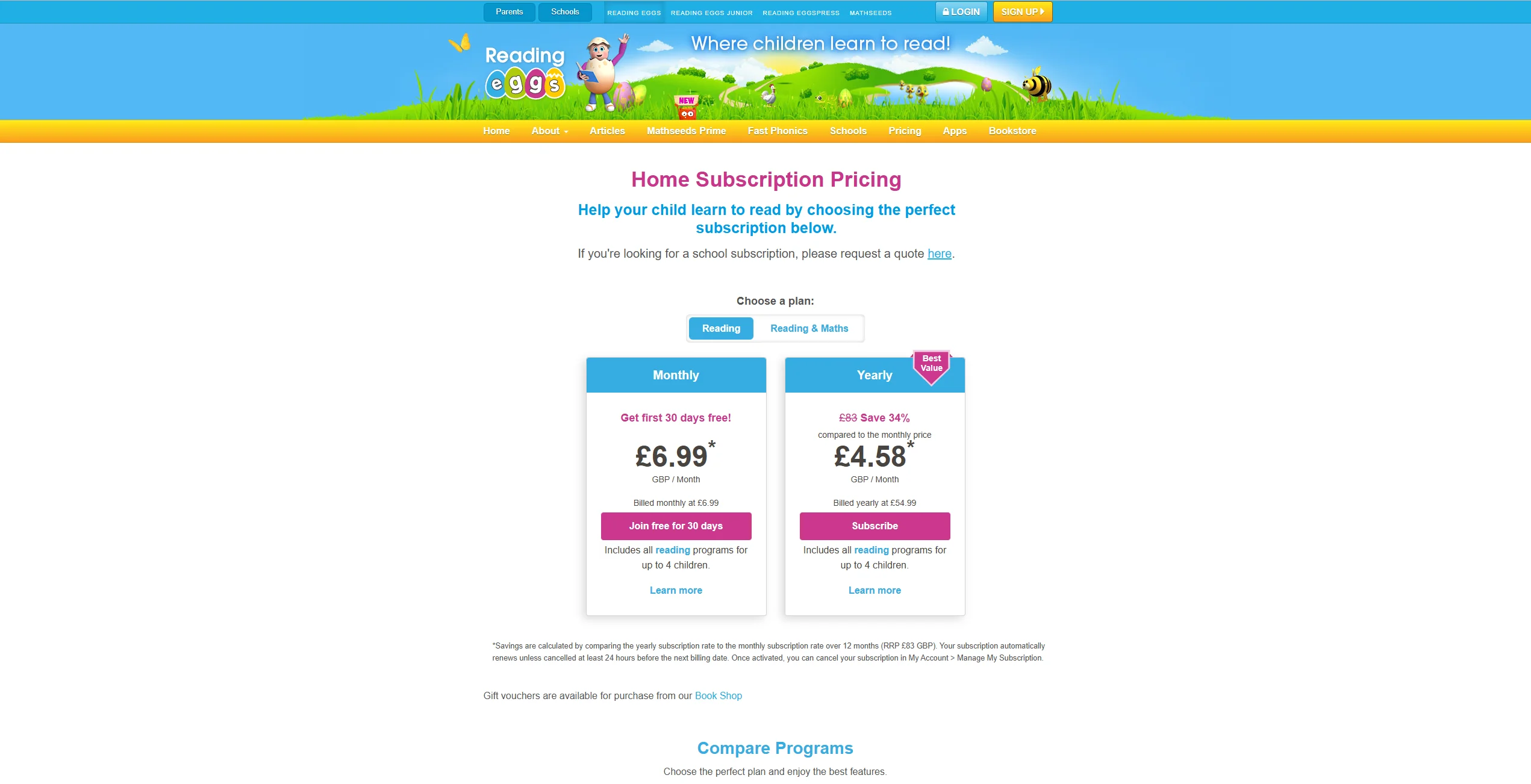
In 2026, Reading Eggs remains a premium service.
- Monthly Plan: Typically around $9.99.
- Annual Plan: Pricing varies by plan and region, with the Reading-only annual plan often listed at $69.99/year and the Reading & Math plan billed yearly at $99.99/year in US pricing.
- Free Trial: Reading Eggs offers a 30-day free trial for new customers, and the subscription auto-renews unless cancelled before the renewal window.
Khan Academy Kids pricing model
The app remains completely free with no hidden fees or in-app purchases. The app is provided by Khan Academy (a nonprofit), which lists the Bill & Melinda Gates Foundation among its supporters.
Safety considerations and parental controls
Both apps are designed to help keep children safe in the digital world. Both platforms state that they comply with COPPA regulations and provide a parent-controlled section.
- Reading Eggs: Home subscriptions include access for up to four children under one account (separate child profiles). It contains no third-party ads.
- Khan Academy Kids: Requires an adult to set up the account via email, but thereafter, it is an app with no ads and no external links that a child could accidentally click.
Pros and cons summary
Reading Eggs
- Pros: Highly structured systematic phonics; detailed progress reports; covers ages up to 13.
- Cons: Monthly subscription required; can feel “repetitive” to some children who prefer exploration.
Khan Academy Kids
- Pros: Free to use; broad curriculum (math, logic, ELA); high-quality animations; kids can use it offline.
- Cons: Less intensive for those needing targeted literacy support; content ends at age 8.
Which app fits different family needs?
Best for focused reading improvement: If your goal is to specifically teach your child to read and you want a proven, step-by-step path to fluency, Reading Eggs is worth the investment.
Best for well-rounded early learning: If you want a variety of educational videos and a broad introduction to school topics for a preschooler, Khan Academy Kids is unbeatable—especially since it’s completely free.
Using both apps together: Many parents find that apps like Khan Academy Kids provide the fun and variety, while Reading Eggs provides the “heavy lifting” for decoding skills. Using them together for 15 minutes each day can be a powerful combination for long-term academic success.
How parents can support children using reading apps
Technology is most effective when it is a bridge to real-world experience. Even the most advanced learning app for kids cannot replace the value of a parent’s voice or the tactile feel of a paper book.
Setting realistic learning routines
Consistency beats intensity. Instead of one long hour per week, aim for short 15-minute daily sessions. This keeps the foundational reading skills fresh without causing digital fatigue.
Tracking progress effectively
Use the parent dashboards to see where your child might be stalling. If a report shows they are struggling with letter sounds, you can reinforce that specific concept during dinner or playtime.
Encouraging real-world reading practice
Digital learning journeys should lead back to the library. Once your child masters a level in the app, celebrate by finding a physical book on a similar topic. This demonstrates that reading skills have value far beyond the screen.