

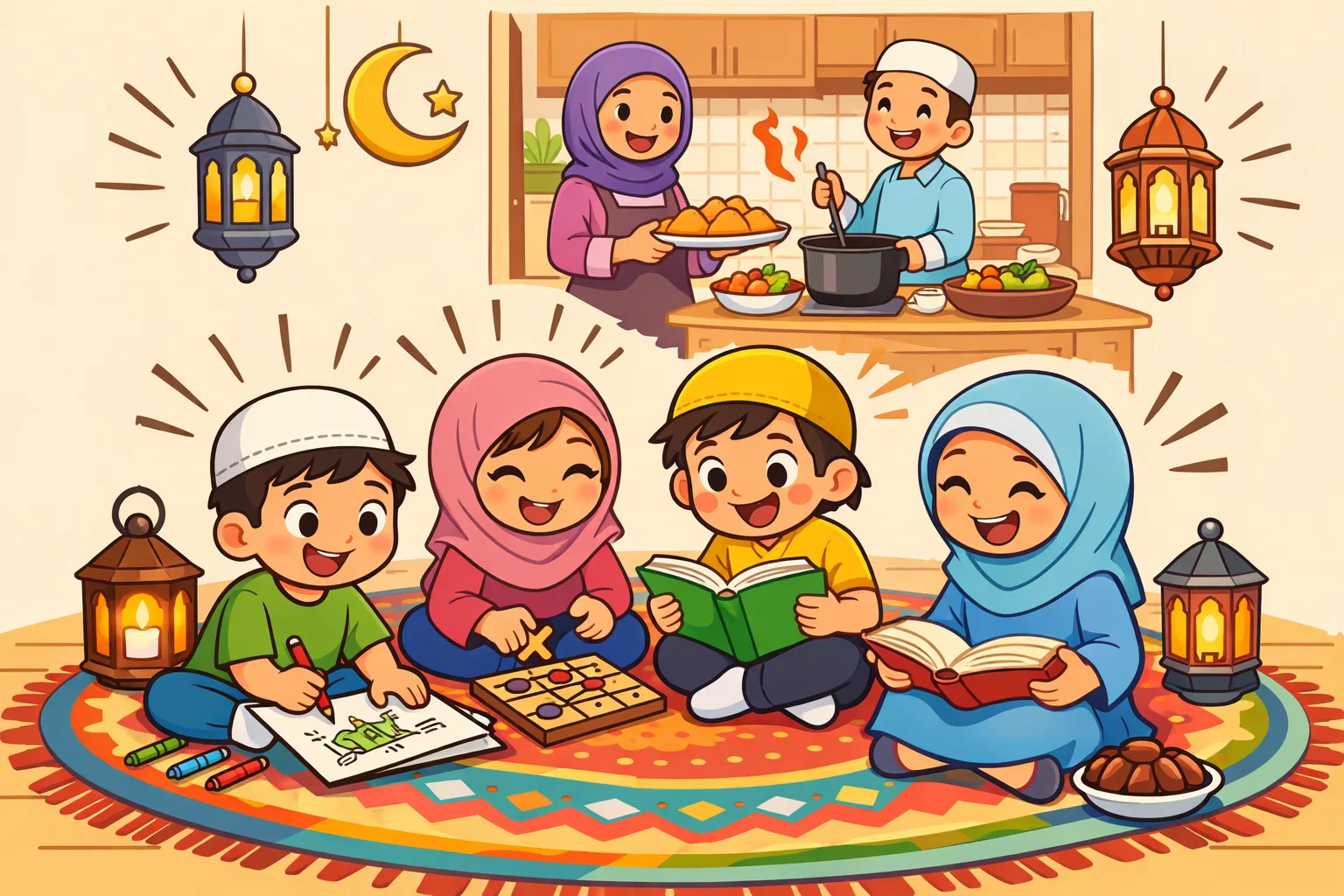
Ramadan is a sacred time that brings families together through fasting, prayer, and reflection. For children, this holy month can feel especially meaningful when they’re actively involved in age-appropriate activities that connect them to its spiritual essence. Engaging kids with hands-on Ramadan activities helps them understand the values of patience, gratitude, and community while creating lasting memories they will cherish for years to come.
This guide provides parents and educators with practical craft ideas, printable resources, daily routines, and creative projects designed to make the month of Ramadan accessible and enjoyable for kids of all ages. From simple Ramadan crafts for younger kids to more complex projects for older children, you’ll find activities that blend learning with fun while honoring the spirit of Ramadan.
Printable Ramadan Activities for Kids
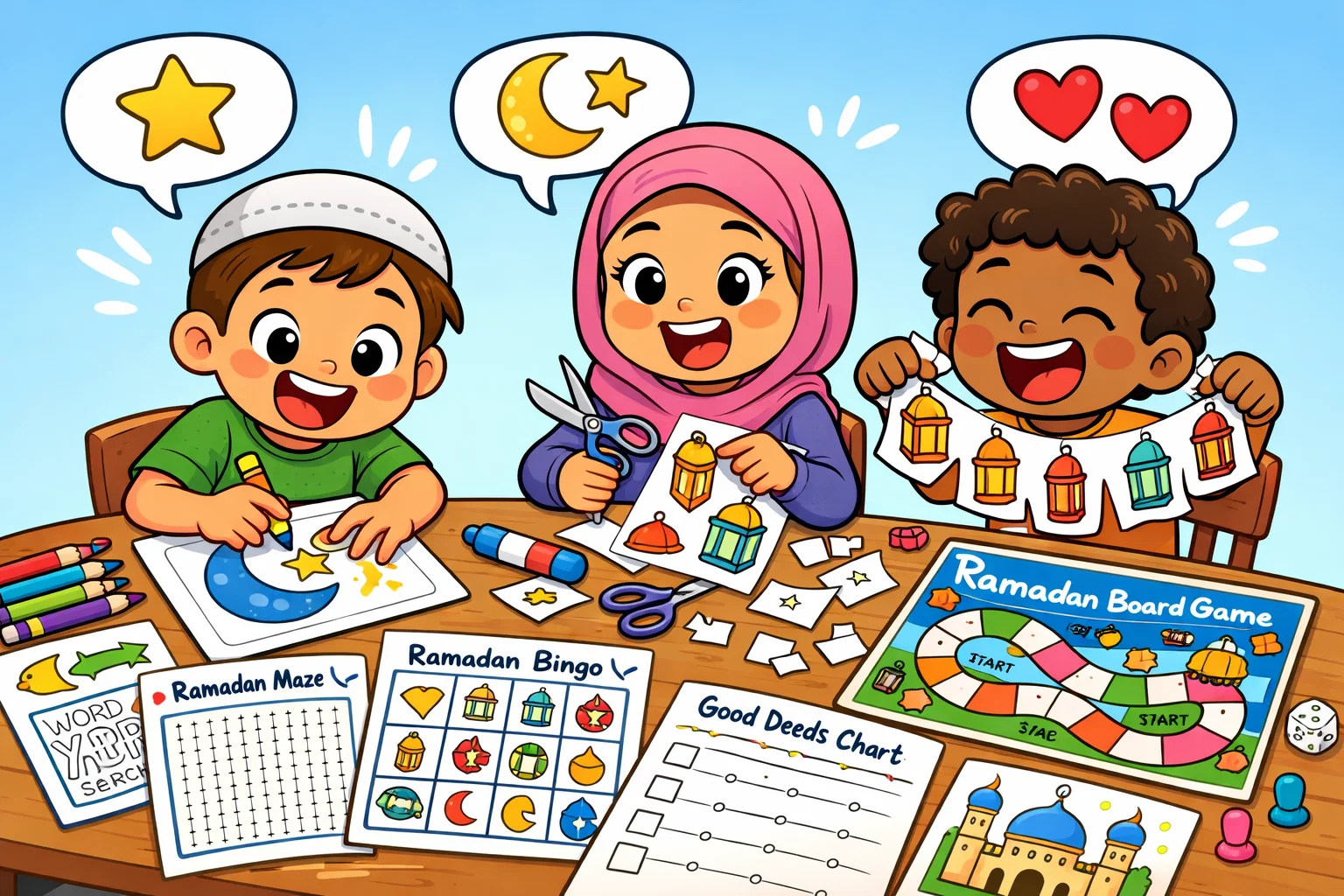
Free printable resources offer busy parents an accessible way to keep children engaged during the month of Ramadan without extensive preparation. These ready-to-use materials support learning while allowing kids to explore Islamic themes at their own pace.
Free Printable Ramadan Worksheets
Printable worksheets serve multiple educational purposes throughout the holy month of Ramadan. Young learners benefit from tracing Arabic letters and Islamic words like “Ramadan Mubarak” or “Bismillah,” which introduces them to the language in a tangible way. Matching activities can pair crescent moons with stars, lanterns with mosques, or connect good deeds with their rewards.
For preschoolers, simple mazes featuring a path to the mosque or connect-the-dot activities forming a ramadan lantern provide entertainment while developing fine motor skills. Older kids can tackle word scrambles using ramadan vocabulary, crossword puzzles about Islamic traditions, or fill-in-the-blank exercises teaching them about the significance of fasting and prayer.
Age-appropriate worksheets for kids should match developmental stages:
- Ages 3-5: Large images for coloring, simple matching, single-letter tracing
- Ages 6–8: Short sentences, basic math problems with Ramadan themes, reading comprehension
- Ages 9-12: Essay prompts about ramadan traditions, research activities, creative writing tasks
Ramadan Coloring Pages
Ramadan coloring pages offer a quiet, meditative activity perfect for the hours before iftar when energy levels may be low. Printable coloring sheets featuring ramadan decorations like ornate lanterns, detailed mosque architecture, crescent moons surrounded by stars, and traditional Arabic calligraphy allow children to express creativity while staying calm.
These activities work particularly well for younger kids who need structured yet flexible tasks. Parents can create a “Ramadan coloring book” by compiling various pages throughout the month, which becomes a keepsake documenting the child’s artistic development. Some families laminate completed pages to use as Ramadan décor, transforming children’s artwork into meaningful home decorations.
Consider themed coloring sessions in which each day focuses on a different aspect: lanterns on Mondays, mosques on Wednesdays, and nature scenes reflecting Allah’s creation on Fridays. This structure helps kids learn about Ramadan while maintaining variety.
Printable Ramadan Games
Interactive printable games transform learning into play during the month of ramadan. Board games designed with Ramadan themes can teach children about Islamic history, prophets’ stories, or the five pillars of Islam through engaging gameplay. Word searches featuring Ramadan vocabulary like “fasting,” “charity,” “prayer,” and “mosque” reinforce terminology in an entertaining format.
Ramadan bingo cards can be customized with images or words representing different aspects of the holy month – players mark off squares when they see a crescent moon, hear the adhan, break fast with dates, or give charity. Memory card games pairing Arabic words with their English translations or matching good deeds with their benefits encourage both cognitive development and Islamic learning.
Printable PDF files for these games should include clear instructions and multiple difficulty levels so the same game grows with your child across different Ramadan celebrations.
Daily Ramadan Routines for Children
Establishing consistent daily practices helps children develop a deeper understanding of Ramadan beyond just the absence of food and drink. These routines create structure while teaching spiritual disciplines that can last a lifetime.
Dua Practice for Kids
Incorporating dua practice into daily routines gives children ownership of their spiritual development. Start with short, simple duas that even toddlers can memorize – the dua before eating, sleeping, or leaving the house. Many Islamic educators note that repetition paired with visual cues improves retention in young learners.
Create dua cards with Arabic text, transliteration, and translation that children can reference throughout the day. Some families designate specific times for dua practice: morning duas after waking, pre-iftar duas while waiting to break fast, and bedtime duas before sleep. Consistency matters more than duration – five minutes of daily practice builds stronger habits than sporadic longer sessions.
Tracking progress with a chart where kids place stickers after memorizing each new dua provides tangible motivation. Parents can model dua by thinking aloud: “I’m making dua for good health” or “Let’s make dua together for our family,” showing children that supplication is a natural part of daily life.
Hadith Sharing for Kids
Sharing hadith in age-appropriate ways connects children to the Prophet Muhammad’s (peace be upon him) teachings without overwhelming them. Select short, actionable hadiths that apply to everyday situations – kindness to parents, honesty, helping others, or caring for animals.
Rather than lengthy explanations, present hadiths through storytelling. For example, when discussing the hadith about smiling being charity, share a story about a child who made someone’s day better with a smile. This approach helps make abstract concepts more concrete and memorable for children.
Effective hadith-sharing strategies include:
- One hadith per week during ramadan
- Family discussion time where kids share how they applied the teaching
- Drawing or craft activities illustrating the hadith’s message
- Connecting hadiths to real-world scenarios children encounter
Ramadan Journaling
A ramadan journal serves as both a reflective tool and a treasured keepsake. Younger kids can use journals with prompts and drawing spaces: “Today I felt grateful for…” or “One good deed I did was…” Older children might prefer blank pages where they can write freely about their Ramadan experiences, challenges with fasting, or spiritual insights.
Some effective journal prompts include asking kids to describe their favorite iftar meal, write about helping someone, note when they felt patient despite being hungry, or document what they learned at the mosque. These entries create a personal narrative of their Ramadan journey.
Older children who are accustomed to digital tools might prefer typing their reflections, but research suggests handwriting enhances memory and processing. A physical ramadan journal also becomes a tangible artifact families can revisit in future years, allowing children to see their growth and development.
Ramadan Crafts and Creative Projects
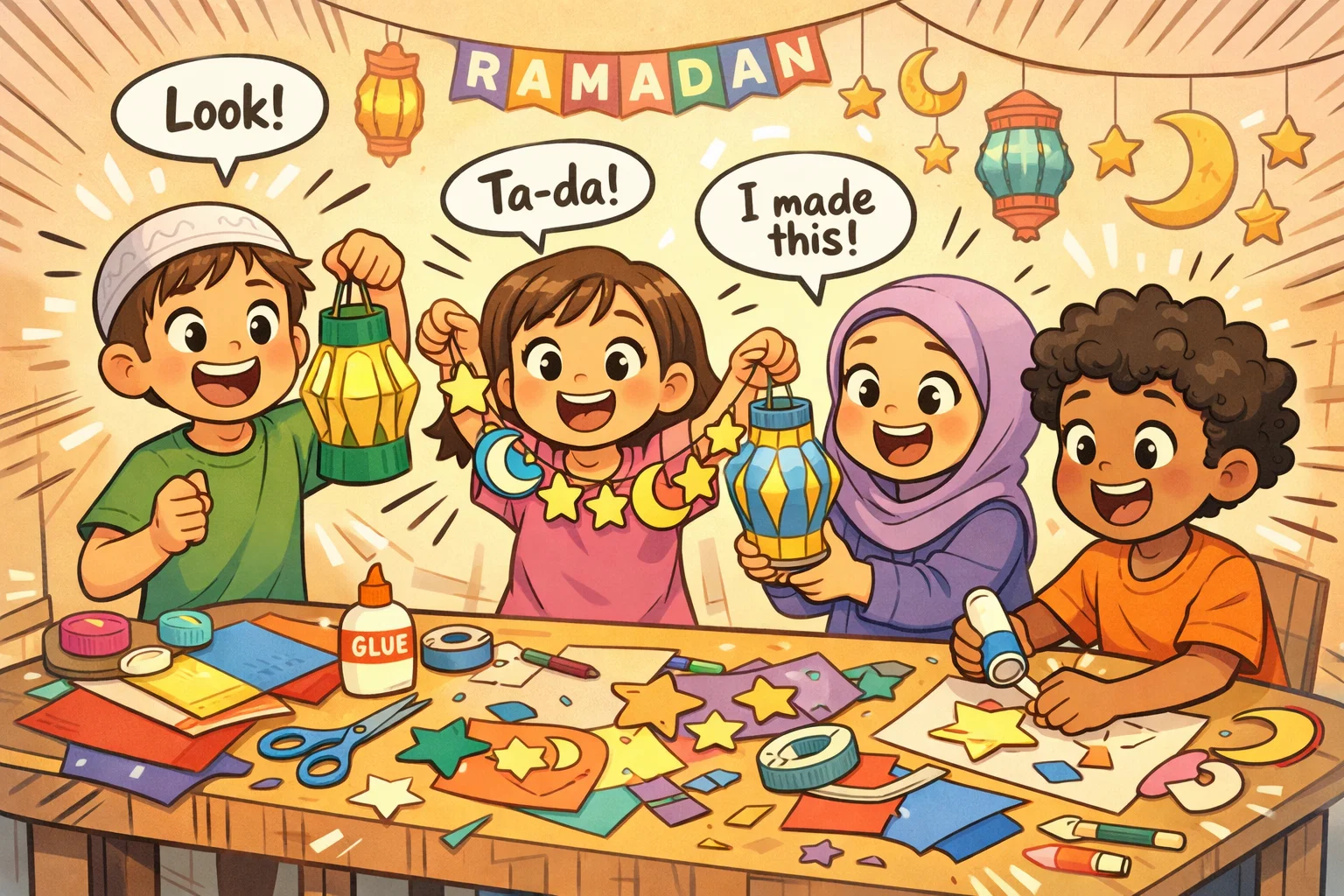
Hands-on craft activities allow children to engage with ramadan themes while developing fine motor skills, creativity, and patience. These projects transform abstract concepts into tangible creations that decorate homes and reinforce learning.
Ramadan Lantern Crafts
The Ramadan lantern (fanous) holds special significance across many Muslim cultures, making lantern crafts particularly meaningful. Paper lanterns remain the most accessible option – children can fold and cut colored paper into intricate designs, adding tissue paper for a stained-glass effect when placed near light.
Mason jar lanterns offer another simple ramadan craft: kids paint glass jars with translucent paint or glue on tissue paper pieces, creating colorful vessels for LED tea lights. This activity works well for children ages 6 and up with appropriate supervision. Salt-dough lanterns, in which children sculpt three-dimensional designs that harden when baked, provide a more permanent decoration that can be reused yearly.
Safety considerations: Always use battery-operated lights rather than real flames. Discuss fire safety and the symbolic meaning of light in Islam – how it represents knowledge, guidance, and divine presence.
Moon and Star Decorations
The crescent moon and star hold deep symbolic meaning in Islamic tradition, making them popular ramadan decoration themes. Children can create moon necklaces using cardboard cutouts painted gold or silver, hung on yarn or ribbon. Star garlands made from origami, foam sheets, or even salt dough can stretch across rooms or windows.
Window clings featuring moons and stars allow light to filter through, creating beautiful effects during the day. Kids can design these using contact paper and tissue paper or purchase reusable vinyl versions. Hanging mobiles with various-sized moons and stars suspended at different heights create dynamic decorations that move gently with air currents.
These craft activities for kids teach patience and precision while producing decorations that transform living spaces into environments celebrating the holy month. Older children might research the Islamic lunar calendar’s significance, adding educational depth to their creative work.
Masjid and Islamic Building Models
Building three-dimensional mosque models helps children appreciate Islamic architecture while developing spatial reasoning skills. Cardboard mosque crafts can range from simple folded structures for younger kids to elaborate multi-piece models for older children involving cutting, assembly, and detailed decoration.
Printable templates for famous mosques – like the Prophet’s Mosque in Madinah or the Dome of the Rock – provide structured projects that teach Islamic history. Children can research the mosque they’re building, learning about its location, architectural features, and historical significance.
Shoebox dioramas depicting prayer scenes or Ramadan celebrations allow kids to create miniature worlds. These projects often become ongoing activities throughout Ramadan, with children adding new elements daily – tiny prayer rugs, miniature Qurans, or small figures representing worshippers.
Ramadan Home Decorations with Kids
Decorating together transforms your home into a welcoming Ramadan environment while giving children ownership of their living space. These collaborative activities strengthen family bonds and create visual reminders of the holy month’s presence.
Ramadan Banners and Garlands
DIY ramadan banners allow families to personalize their celebrations. Children can create letter banners spelling “Ramadan Mubarak” or “Eid Mubarak” using cardstock, markers, and string. Each family member might decorate one letter, creating a collaborative piece that reflects everyone’s artistic style.
Name garlands featuring each family member’s name in Arabic and English help children practice letter recognition while feeling included in decorations. Moon-phase garlands showing the lunar cycle throughout Ramadan’s 30 days serve both decorative and educational purposes, helping kids understand how Muslims determine the month’s beginning and end.
Placement ideas:
- Strung across doorways welcoming guests
- Above the iftar table as a focal point
- In children’s rooms as personal ramadan spaces
- Across mantels or shelves in common areas
Table Decor for Iftar
Involving kids in iftar table preparation gives them meaningful responsibilities while teaching hospitality. Children can create placemats by decorating cardstock with ramadan themes, writing family members’ names, or illustrating favorite foods. Laminating these preserves them for use throughout the month.
Table name cards folded from cardstock allow kids to assign seating, practice writing, and welcome guests. Small centerpieces made from craft supplies – paper flowers, painted rocks with Islamic phrases, or miniature lanterns – add personal touches to the iftar spread.
Older kids can help set the table according to Islamic etiquette, learning about starting with dates and water, placing items within easy reach, and creating an attractive presentation that honors the meal’s significance.
Room Decoration Ideas
Giving children autonomy over their personal space during Ramadan reinforces the month’s importance. Wall art created by kids – paintings of mosques, calligraphy practice, or collages representing ramadan themes – personalizes rooms while showcasing their efforts.
Battery-operated fairy lights strung in crescent moon shapes or around windows create gentle ambiance suitable for bedtime routines. Themed corners in children’s rooms might feature prayer rugs, small bookshelves with Islamic stories, and cushioned areas for reading or reflection.
Removable wall decals featuring stars, moons, and Islamic patterns allow temporary decorating that won’t damage walls, perfect for rental homes or changing tastes. Kids appreciate seeing their spaces acknowledge Ramadan’s presence without overwhelming their everyday environments.
Learning Ramadan Values Through Activities
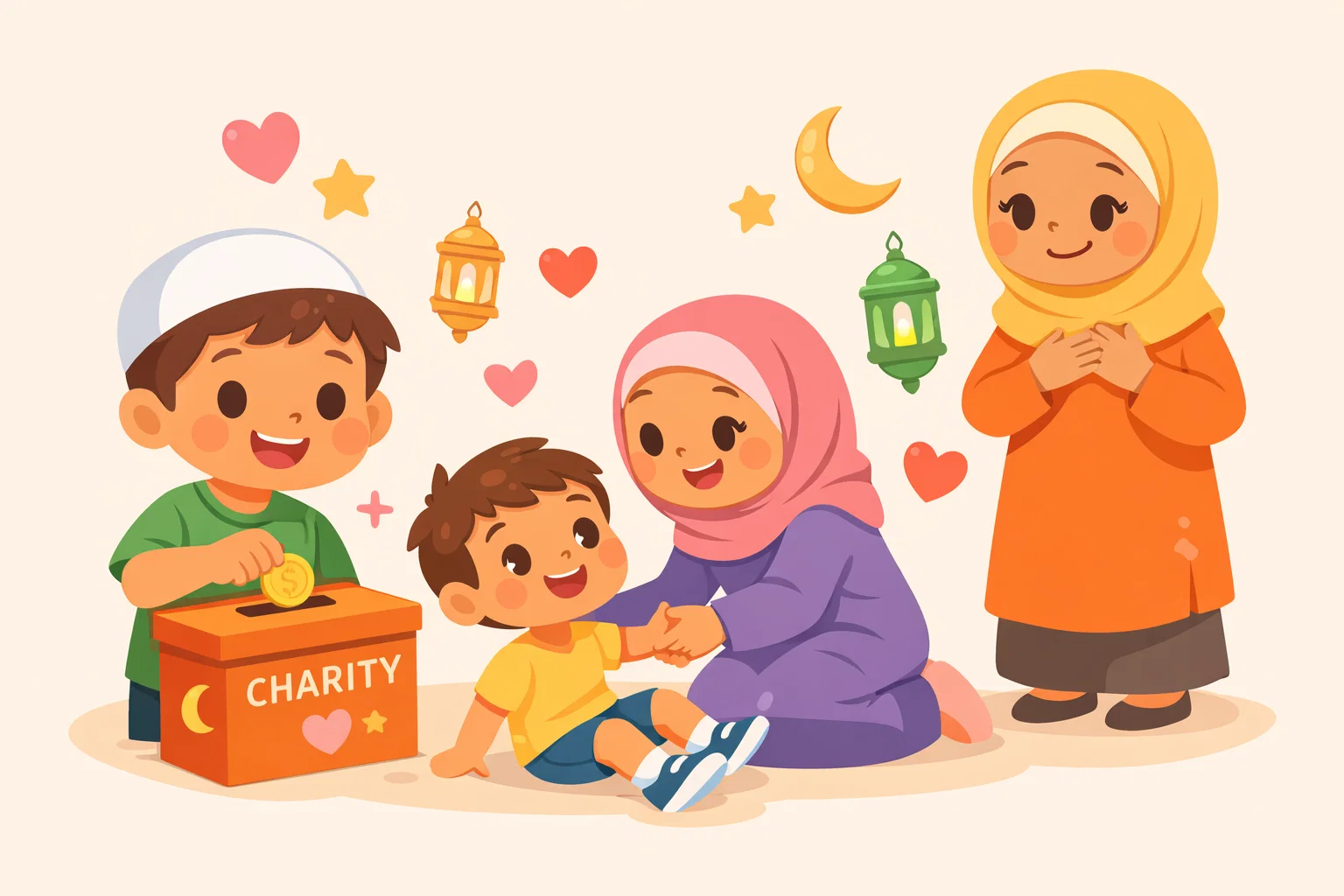
Activities gain deeper meaning when they connect to Ramadan’s core values. These experiences help children internalize lessons about compassion, gratitude, patience, and community service.
Kindness and Good Deeds Activities
Kindness jars provide visual representations of Ramadan good deeds. Each time a child performs an act of kindness – helping a sibling, sharing toys, speaking kindly – they add a marble, bead, or paper note to a clear jar. Watching the jar fill throughout Ramadan creates tangible evidence of their efforts.
Daily kindness challenges posted on a family board might include: “Compliment three people today,” “Help with chores without being asked,” or “Call a relative you miss.” These specific, achievable tasks make abstract concepts like charity and compassion concrete for young minds.
Charity boxes decorated by children can collect coins for causes they care about – helping hungry people, supporting orphans, or funding community projects. Children who participate in charitable giving often develop stronger empathy and social awareness.
Setting up a “helping chart” where kids track tasks like setting the table, reading to younger siblings, or organizing toys connects good deeds to family responsibility, showing that charity begins at home.
Reasons for Fasting Crafts
Visual projects explaining why Muslims fast help children understand Ramadan’s deeper purpose. Younger kids might create posters illustrating patience (waiting for iftar), gratitude (appreciating food and water), and empathy (understanding hunger others face).
Comparison drawings showing “life with food” versus “the fasting experience” allow children to process their own feelings about hunger while developing compassion for those experiencing food insecurity year-round. These conversations, guided sensitively, can be powerful learning moments.
Older children can research and present on fasting’s health benefits, spiritual rewards, and social equality aspects – how fasting unites rich and poor in shared experience. Creating informational displays for home during Ramadan reinforces their learning while educating younger siblings or visiting relatives.
Storytelling and Reading Time
Ramadan stories about prophets, companions of the Prophet Muhammad (peace be upon him), and contemporary Muslim children create narrative connections to faith. Bedtime reading during Ramadan becomes special when featuring books specifically about the holy month – stories explaining its origins, depicting children’s Ramadan experiences, or teaching Islamic values through age-appropriate tales.
Discussion prompts following stories to deepen comprehension: “How did the character show patience?” “What would you do in that situation?” or “How does this story connect to what we’re learning about Ramadan?” These questions, supported by literacy research, enhance critical thinking beyond passive listening.
Some families create storytelling rituals where parents share their own childhood ramadan memories, grandparents recount family traditions, or older siblings read to younger ones. This intergenerational sharing preserves cultural and religious heritage while strengthening family bonds.
Ramadan Calendar and Countdown Ideas
Countdown activities build anticipation while providing daily structure throughout Ramadan. These tools help children grasp the month’s length and progression in tangible ways.
DIY Ramadan Calendar
Envelope calendars numbered to represent each day of Ramadan can hold daily surprises – small toys, stickers, ramadan stories, or good deed challenges. Children open one envelope each day after iftar, creating a ritual they anticipate. This activity for kids teaches delayed gratification and counting while maintaining engagement throughout the month.
Box calendars constructed from small gift boxes or matchboxes arranged in rows create visual countdowns. Kids can decorate each box with ramadan themes before filling them with treats or activities. The physical act of opening boxes and seeing their number decrease makes time’s passage concrete for young children who struggle with abstract concepts like “30 days.”
Daily surprise ideas:
- Printable activity sheets
- Small chocolate or healthy treats
- Kindness challenge cards
- Dua cards to memorize
- Stickers for ramadan journals
- Toy figurines building a scene
Moon Tracking Activities
Moon phase observation connects children to the Islamic lunar calendar in experiential ways. Create simple moon journals where kids draw the moon’s shape each night, noting changes throughout Ramadan. This scientific observation aligns with Islamic tradition of sighting the new moon.
Print moon phase charts showing predicted shapes throughout the month, then compare predictions to actual observations. Older kids can photograph the Ramadan moon with smartphones or tablets, creating digital journals documenting the cycle from new crescent to full moon to Eid’s final crescent.
Families might schedule “moon watching nights” several times during Ramadan, going outside after iftar to observe together. According to astronomy educators, direct observation significantly enhances children’s understanding compared to pictures alone.
Daily Activity Scheduling
Planning one small daily activity prevents overwhelm while ensuring consistent engagement. A weekly schedule might include:
| Day | Activity Type | Example |
| Monday | Craft | Make paper lanterns |
| Tuesday | Learning | Read ramadan story |
| Wednesday | Service | Help prepare iftar |
| Thursday | Game | Islamic trivia |
| Friday | Reflection | Journal writing |
| Saturday | Creative | Decorate cookies |
| Sunday | Family | Share favorite moments |
This structure provides variety while allowing flexibility. Some days might be more elaborate while others involve quiet activities – balance prevents exhaustion for both children and parents during a month that can feel demanding.
Ramadan Games and Interactive Play
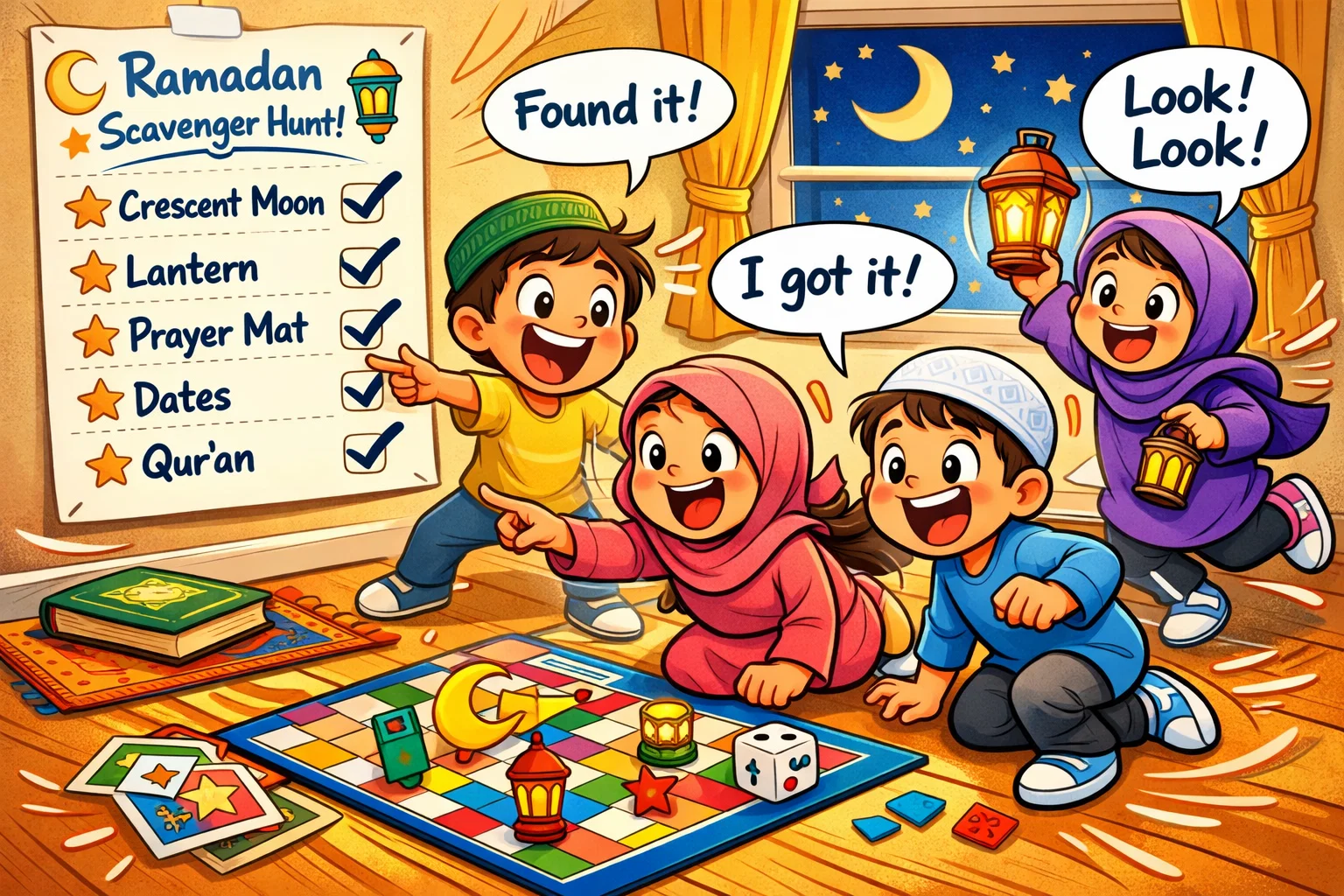
Playful activities help kids to learn while releasing energy, especially important when fasting children may feel less active but still need engagement.
Indoor Ramadan Games
Ramadan-themed scavenger hunts work well for various ages. Hide items related to ramadan around the house – toy lanterns, moon cutouts, prayer beads, Islamic books – then provide clues. Younger kids might follow picture clues while older children solve riddles referencing Islamic knowledge.
Islamic charades where players act out actions like praying, giving charity, reading Quran, or fasting creates movement and laughter. This game naturally leads to discussions about these practices’ importance and proper performance.
Role-play activities allow children to enact Ramadan scenarios: setting up a pretend mosque, serving iftar to stuffed animals, or playing “family” where they take turns being parents preparing for Ramadan. Imaginative play helps children process experiences and develop social skills.
Group Activities for Siblings
Cooperative games build unity among siblings during ramadan. Partner craft projects where two children work together on one lantern or decoration require communication and compromise. Shared puzzle-building where siblings collectively complete ramadan-themed puzzles teaches patience and teamwork.
“Sibling challenges” encourage kids to work together toward goals: prepare one meal component for iftar, clean a room together, or create a performance for family. Ramadan presents opportunities to strengthen sibling bonds through shared purpose rather than competition.
Group storytelling where each child adds a sentence to create collaborative ramadan tales sparks creativity while requiring active listening. These stories often become family favorites retold in subsequent years.
Quiet Time Activities
Not every moment during Ramadan needs high energy. Quiet time activities provide necessary rest, especially as the month progresses. Ramadan-themed puzzles ranging from simple 12-piece options for toddlers to complex 500-piece challenges for older kids offer calm engagement.
Ramadan coloring books or individual pages with detailed designs provide meditative activities. Adult coloring books featuring Islamic geometric patterns work well for older children seeking more intricate challenges.
Reading corners with cushions, soft lighting, and Islamic books create peaceful retreats. Encourage kids to spend 15-30 minutes daily in quiet reading, choosing books matching their interests and reading levels.
Ramadan playdough activities using homemade or store-bought dough allow sensory exploration. Children can shape lanterns, stars, moons, or mosques, engaging tactilely without screens or noise.
Ramadan Activities by Age Group
Tailoring activities to developmental stages ensures appropriate challenge levels and meaningful engagement for kids of all ages.
Toddler-Friendly Ramadan Activities
Toddlers (ages 1-3) need sensory-rich, short-duration activities. Ramadan playdough in festive colors allows squishing, rolling, and shape-making. Sensory bins filled with dried beans, scoops, and ramadan-themed toys provide exploratory play.
Simple crafts like gluing pre-cut stars onto paper, placing stickers on ramadan coloring pages, or painting with large brushes suit toddler coordination levels. These activities should last 5-15 minutes maximum before transitioning to other play.
Visual activities help toddlers recognize Ramadan’s presence. Point out the crescent moon during evening walks, show pictures of mosques, or let them hold safe decorations. Repetition builds familiarity – reading the same ramadan board book nightly creates comforting routines.
Activities for Preschool and Primary Kids
Children ages 4-8 can handle more structured craft activities and simple learning tasks. This age group benefits from:
- Crafts: Cutting, gluing, painting projects with multiple steps
- Learning: Memorizing short duas or surahs with repetition
- Games: Following rules, taking turns, completing challenges
- Responsibility: Small tasks like setting dates on plates
Preschoolers enjoy repetitive activities that build mastery – making multiple paper lanterns with slight variations, reciting the same dua until perfect, or playing the same ramadan game repeatedly. Primary-aged kids seek variety and complexity, appreciating new challenges daily.
This age particularly benefits from praise and recognition. Displaying their crafts prominently, celebrating memorization achievements, or documenting good deeds creates positive associations with ramadan activities.
Activities for Older Kids
Children ages 9-12 can take on significant responsibilities, leading younger siblings in activities, helping substantially with iftar preparation, or managing their own ramadan journals with minimal prompting.
Older children appreciate understanding “why” behind traditions. They can research Ramadan’s history, compare practices across cultures, or explore scientific aspects of lunar calendars. This cognitive stage thrives on deeper analysis beyond surface participation.
Leadership opportunities matter for this age group. Let them plan a family activity, teach younger siblings a craft, or organize a ramadan game night. These experiences build confidence while contributing meaningfully to family observance.
Independence becomes important – older kids might maintain personal ramadan goals, design their own good deeds tracker, or create original craft ideas. Providing autonomy within structure honors their developing capabilities.
Preparing Kids for Eid Celebration
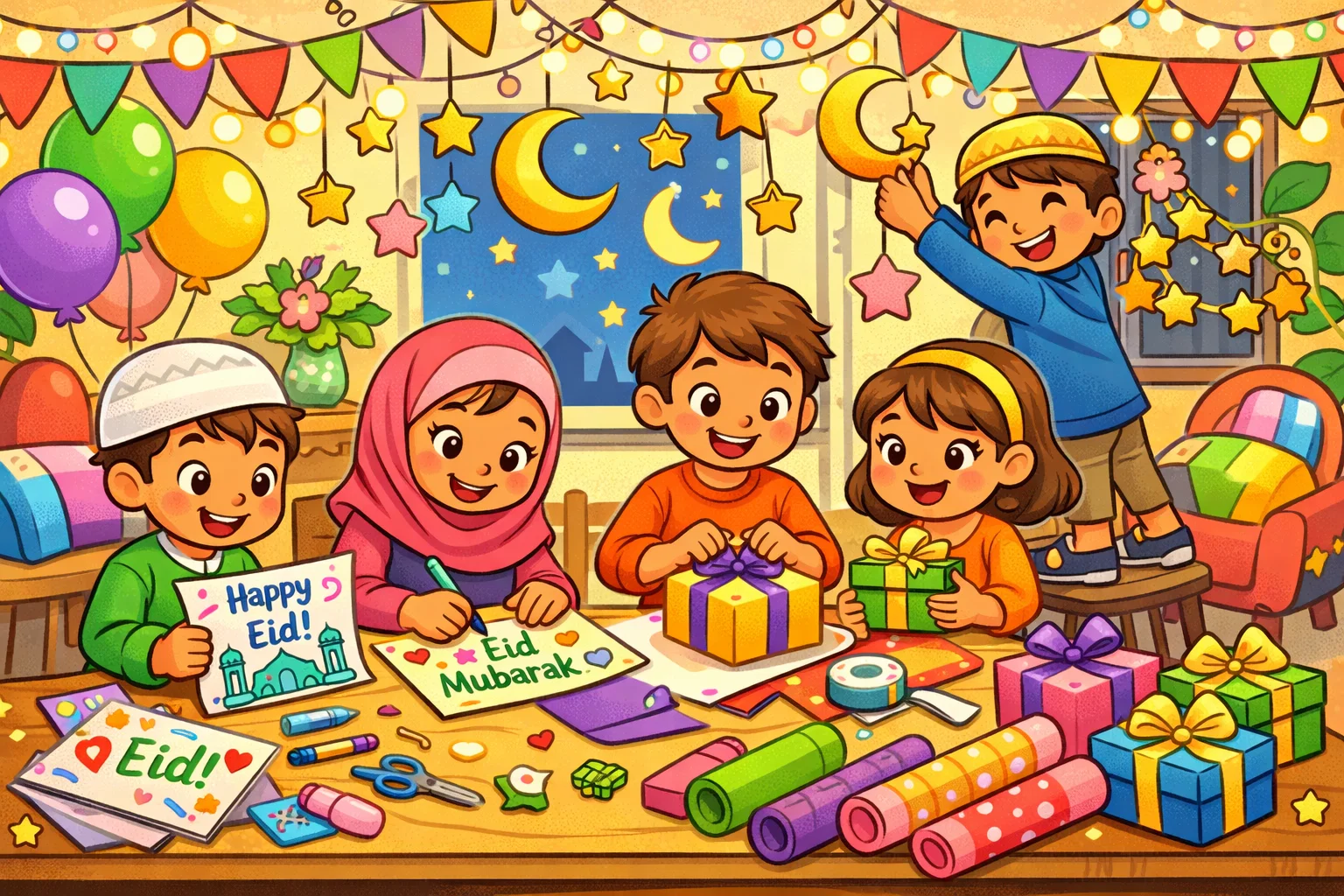
As Ramadan’s last day approaches, activities transition toward Eid al-Fitr preparation, maintaining momentum while shifting focus toward celebration.
Eid Cards and Gift Crafts
Handmade Eid cards for family and friends become cherished keepsakes. Kids can design cards using ramadan and eid themes – lanterns, moons, mosques – adding personal messages inside. This practice teaches thoughtfulness while developing writing skills.
Gift wrapping becomes an art project when children decorate plain paper with stamps, drawings, or stickers before wrapping presents. Even simple gifts gain special meaning when wrapped with care and creativity.
Small gift crafts kids can make for others include decorated bookmarks, painted rocks with inspiring messages, friendship bracelets in Islamic colors (green, white), or handmade ornaments. The process of creating for others reinforces Ramadan’s lessons about generosity and thinking of others’ happiness.
Eid Decoration Projects
Switching decor from ramadan themes to Eid celebration aesthetics marks the transition. While keeping some Ramadan decorations, add Eid-specific elements: “Eid Mubarak” banners, colorful balloon arrangements, or festive tablecloths.
Children can create Eid countdown chains, removing one link daily during Ramadan’s final week. This visual countdown builds anticipation for the celebration while teaching patience – good deeds and worship continue until the end.
Table decorations for Eid morning breakfast might include place settings kids designed, centerpieces they crafted, or special touches like homemade party favors for each family member.
Reflection and Celebration Activities
Before Eid arrives, reflection activities help children process their Ramadan experiences. Family discussions might explore: “What was your favorite Ramadan memory?” “Which good deed made you feel happiest?” or “What do you want to remember for next year?”
Creating “Ramadan Reflection Books” where each family member contributes a page about their experience produces collaborative keepsakes. Kids might draw favorite moments, list lessons learned, or write about challenges they overcame.
Sharing sessions where everyone mentions something they’re grateful for from Ramadan teaches appreciation while valuing each person’s perspective. Gratitude-focused activities can enhance well-being and strengthen family connections.
Planning how to continue positive habits after Ramadan – daily duas, Quran reading, kindness practices – helps children understand that growth shouldn’t end with the holy month but rather extend throughout the year.