

The arrival of a new child is a monumental milestone for any family, but for a 2-year-old, it represents the first major upheaval of their world. At twenty-four months, your child is dancing on the edge of independence while still being deeply rooted in a need for total parental devotion. They are biologically territorial, viewing your attention as their primary source of emotional security. When a new sibling enters the picture, it isn’t just a lifestyle change; it is a fundamental shift in their sense of security.
Helping your toddler navigate this huge change requires a blend of developmental insight and practical strategy. Because a 2-year-old lacks a complex grasp of time and abstract concepts, they cannot truly imagine life with a new infant until the newborn arrives. Your role is to bridge that gap with empathy, consistency, and a “toddler-first” approach that ensures your older child feels like a valued part of the new addition rather than a displaced observer.
Toddler Preparation Before New Baby Arrival
Preparing a toddler for a new baby is less about “breaking the news” and more about slowly weaving the idea of a new brother or sister into their daily reality. For a 2.5-year-old, the world is concrete. They need to see, touch, and hear things to understand them. Early preparation should focus on simple information and physical cues rather than long-range planning.
Role of Routine Stability
The best gift you can give your toddler before the baby is born is a rock-solid schedule. Toddlers thrive on predictability. If their nap time, mealtime, and bedtime rituals remain consistent, they will feel safe even when the house becomes chaotic. Try to finalize any changes to their daily rhythms at least three months before the birth. This stability acts as an emotional anchor, preventing the toddler from feeling like their whole world has dissolved when the new sibling finally comes home.
Language Toddlers Can Process
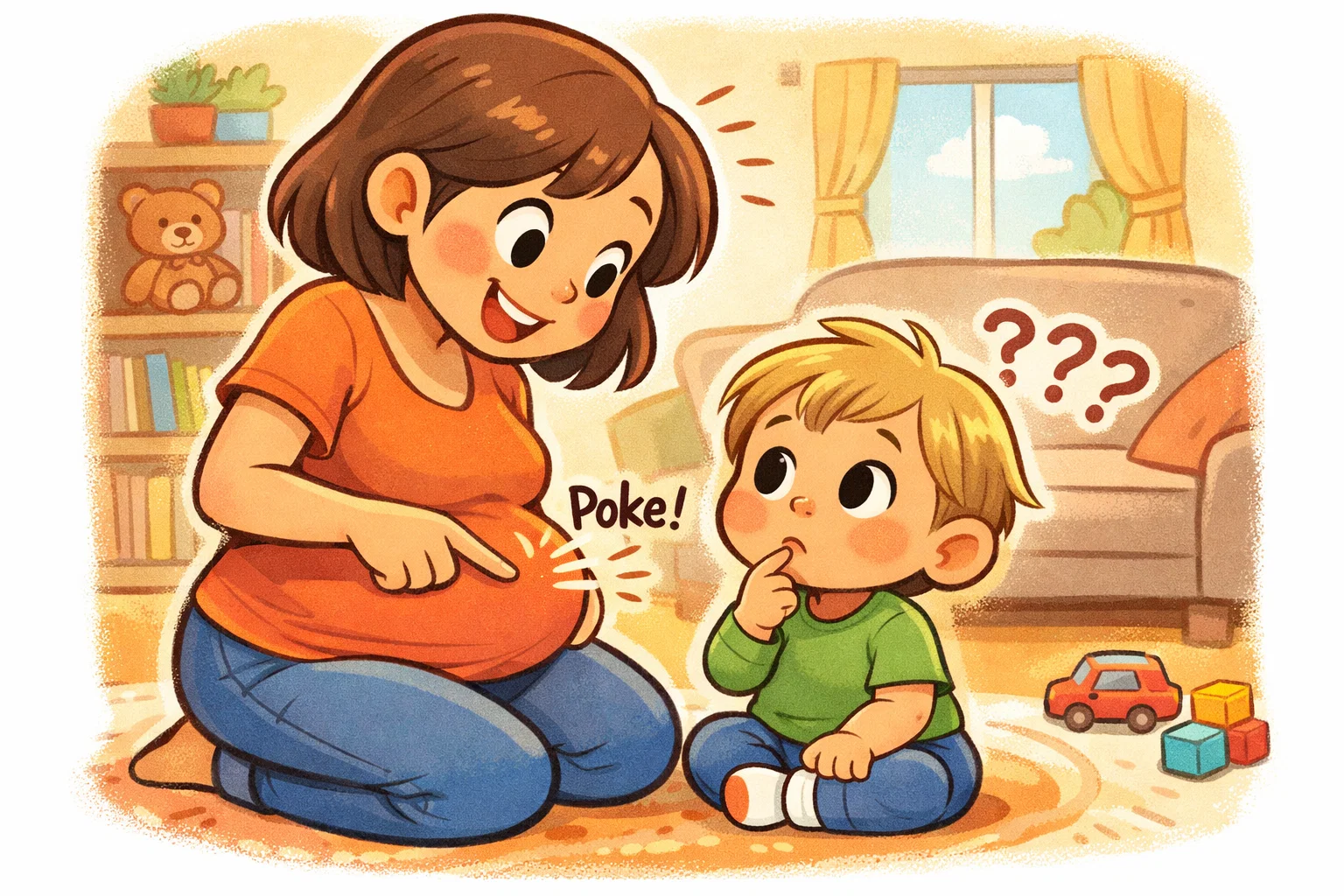
When you tell your toddler about the little one growing inside you, use short, concrete phrases. Instead of saying, “You’ll have a new best friend in six months,” try, “There is a baby growing in Mommy’s tummy. When the newborn comes, they will be very small and cry a lot, but they will love to hear you sing.” Using words like “our baby” or “your baby sister” helps build a sense of belonging, but be careful not to “oversell” the baby as a playmate. A 2-year-old expects a playmate who can kick a ball; they may feel let down when the new sibling mostly sleeps and eats.
Timing Preparation Activities
Timing is everything. For a child who is 20 months old or even 2.5 years old, nine months is an eternity. Experts often suggest waiting to tell your child until your physical “bump” is visible or until you start getting a new nursery ready.
- Early Pregnancy: Focus on your own health.
- Mid Pregnancy: Show them pictures of themselves as babies and talk about how they used to sleep in a bassinet.
- Late Pregnancy: Start the “heavy” prep, like reading books and setting up baby clothes.
Involving Toddler in Baby Preparation
Involvement breeds investment. When you let your toddler participate in the ‘work’ of the new arrival, they transition from a passive spectator to an active big brother or big sister.
Simple Helper Tasks
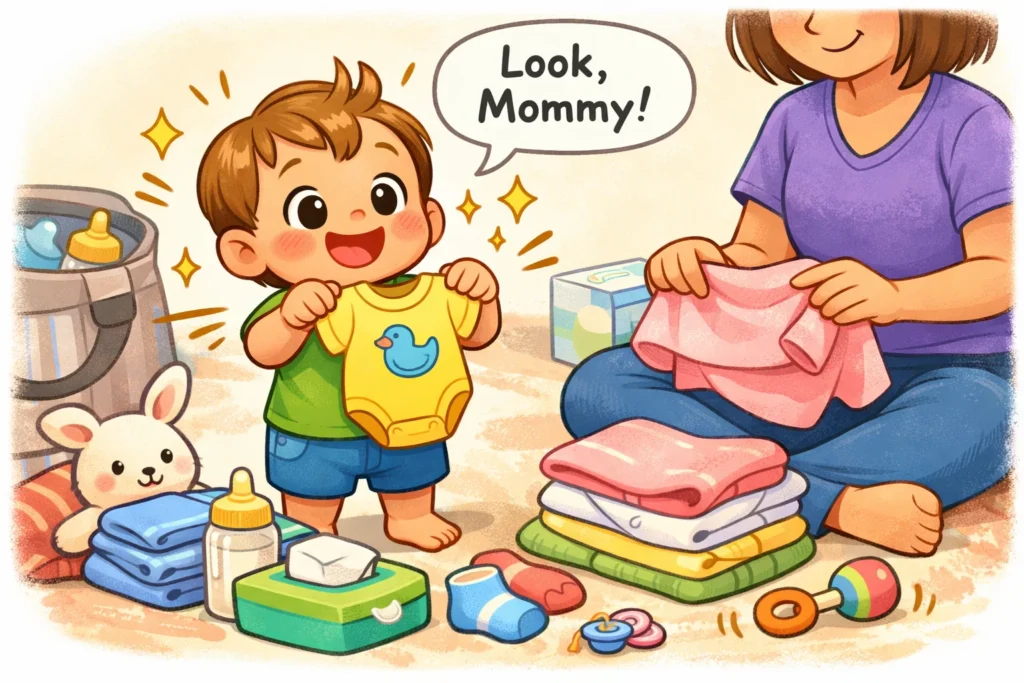
Give your older sibling “jobs” that feel important but require zero actual skill. This might include:
- Helping you pick out a soft toy for the new sibling.
- Opening baby clothes packages.
- “Testing” the baby’s new blankets to see if they are soft enough.
- Choosing which diaper the baby brother should wear (even if they are all the same!).
Modeling Care Through Play
Use a doll or a stuffed animal to prep your toddler for the baby’s arrival. Practice how to hold the infant (always sitting down on the floor or a sofa) and how to use “gentle hands.” Show them how you will be feeding the baby or putting the baby in a bassinet. This “rehearsal” makes the baby’s arrival feel more familiar rather than a foreign invasion.
Avoiding Forced Participation
It is vital to try to stay neutral if your toddler shows no interest. If they don’t want to touch the belly or look at the ultrasound, don’t force it. Forcing engagement can backfire, leading the toddler to feel resentful of the “chore” that is the new sibling. Respect their boundaries and wait for their natural curiosity to kick in.
First Meeting With New Sibling
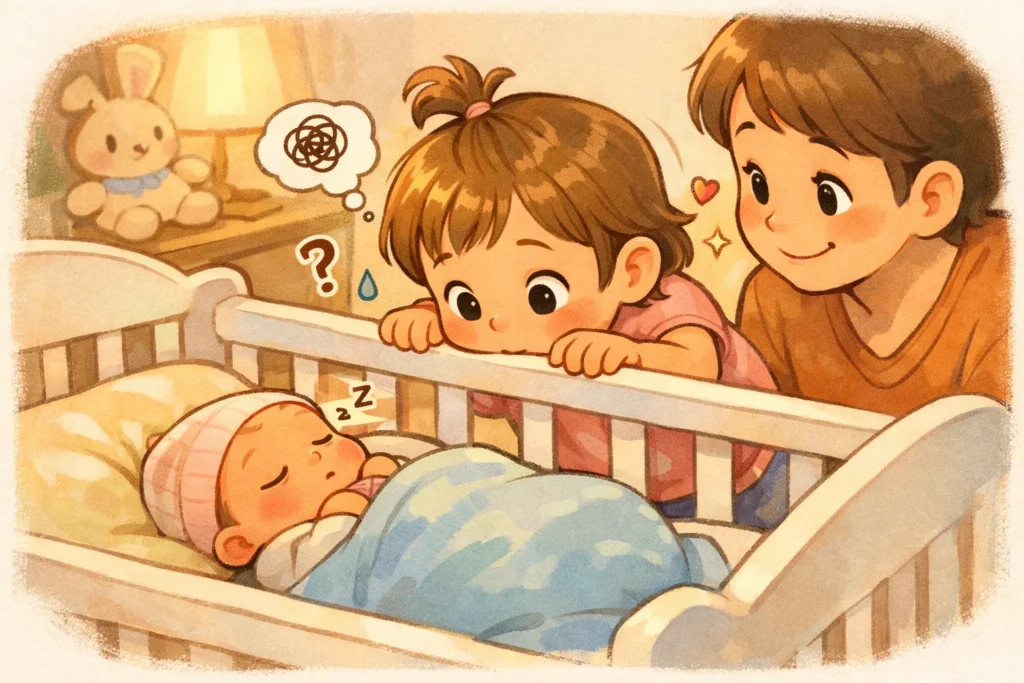
The moment the older child meets the new addition is an emotional touchstone. To adjust to a new family dynamic, the first interaction should be carefully managed to minimize jealousy.
| Strategy | Action Step | Why it Works |
| Hands-Free Greeting | Ensure Mom isn’t holding the baby when the toddler walks in. | The toddler needs reassurance that they are still a priority. |
| Gift Exchange | Have a small gift “from the baby” ready for the toddler. | Creates an immediate positive association. |
| Level Playing Field | Place the baby in a bassinet or on a neutral surface. | Reduces the feeling of the baby “taking” the parent’s lap. |
Neutral Environment Introduction
While some families love the hospital meeting, many experts suggest the first meeting happen at home in a calm, familiar space. Hospitals can be scary, and seeing a parent in a hospital bed with medical equipment can be distressing. A home meeting allows the 2-year-old to feel in control of their own environment.
Managing Physical Contact Safely
When it’s time to hold the newborn, guide your toddler to sit on the floor with a nursing pillow. Instead of saying “Don’t touch the head!” (which can cause panic), use positive modeling: “Let’s use one finger to touch the baby’s soft foot.” Teaching gentle touch through your own actions is far more effective than verbal warnings for a 2-year-old with limited impulse control.
Emotional Responses from a Two-Year-Old
Expect a wave of change in your child’s behavior. It is developmentally normal for a toddler to regress when a second child joins the family.
Common Toddler Reactions
You might notice your 2-year-old acting like a baby themselves. Common signs include:
- Toilet training accidents (even if they were previously dry).
- Wanting to drink from a bottle or use a pacifier again.
- Increased tantrums or extra cuddles and clinginess.
- Refusing to walk and wanting to be carried like the baby.
Validating Feelings Without Blame
If your child is upset, acknowledge the difficulty. You might say, “It’s hard when Mommy has to be feeding the baby and can’t play blocks right now. I miss our block time too.” This validates their experience without making them feel like a “bad” big sister.
Avoiding Comparison Language
Never ask, “Why can’t you be quiet like the baby?” or “Look how good the baby is.” Comparisons breed rivalry. Instead, reinforce their toddler identity by highlighting things only they can do: “I love how you can jump so high! The baby can’t do that yet.”
One-on-One Time After Baby Arrival
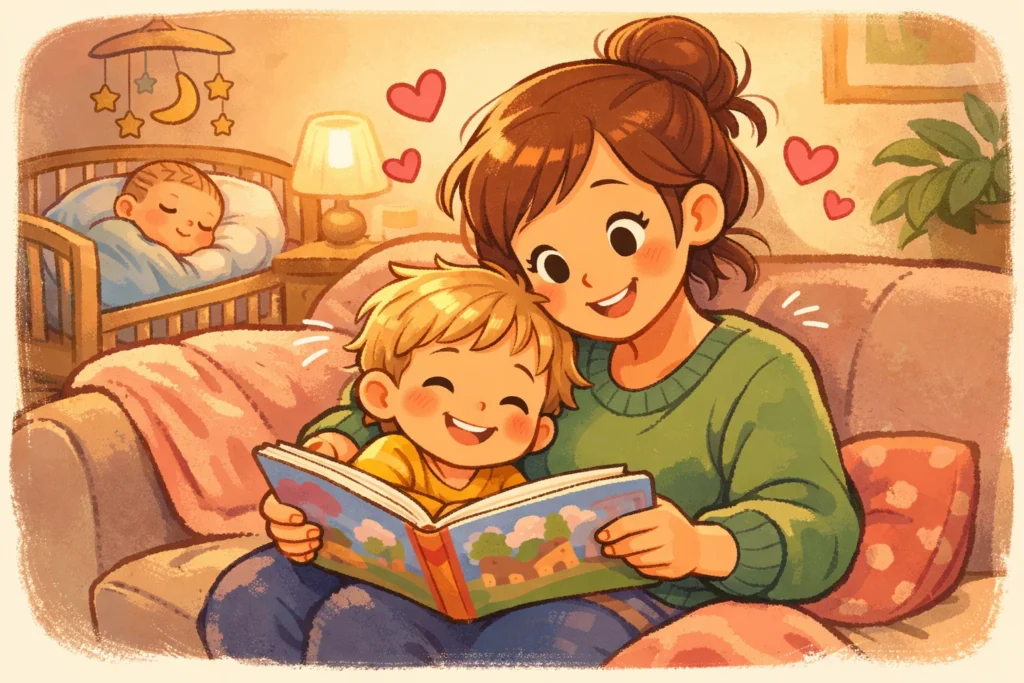
The antidote to sibling resentment is one-on-one time with your toddler. This doesn’t require hours of effort; it’s about quality and predictability.
Daily Micro Moments
Aim for at least 15 minutes of “Special Time” per day where the new baby is not in the room. During this time, let your toddler lead the play. No phones, no baby talk—just attention and love focused entirely on them. This “fills their cup” and makes them more patient when you have to attend to the infant later.
Maintaining Pre-Baby Rituals
If you always read three books before bed, try to keep that ritual alive. If Mom is busy feeding the baby, Dad or another caregiver should step in to maintain the sequence. Toddlers like knowing that while the family is bigger, their specific “spot” in the routine is safe.
Language Parents Use Around Baby
How you talk to the baby in front of the toddler matters immensely.
Narrating Baby Needs Aloud
Instead of always telling the toddler “Wait, I’m busy with the baby,” try “talking” to the baby so the toddler hears:
“Baby, you have to wait just one minute. I am helping your big brother with his puzzle right now. It’s his turn!”
This simple shift shows the 2-year-old that the baby also has to wait sometimes, and the toddler’s needs are prioritized.
Avoiding Baby Blame Phrases
Try not to blame the baby for things you can’t do.
- Instead of: “We can’t go to the park because the baby is sleeping.”
- Try: “Our hands are busy right now, but we will go to the park after lunch!”
This prevents the toddler from viewing the new sibling as a permanent roadblock to their fun.
Books and Social Stories About New Sibling
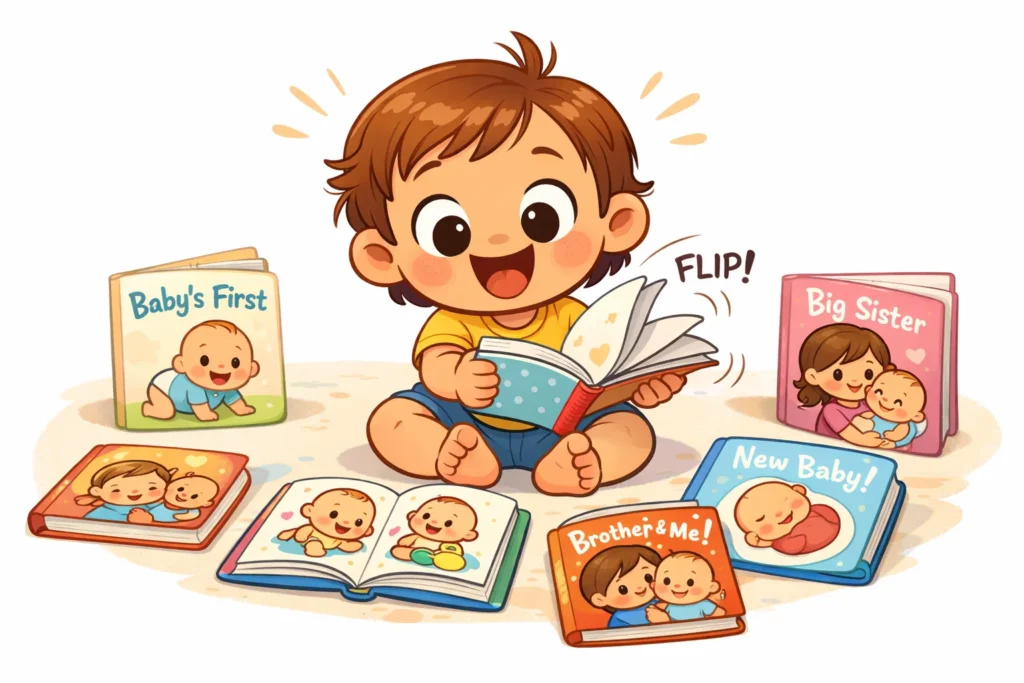
Visual storytelling is one of the best ways to prepare a young mind. Because a 2-year-old is a visual learner, seeing other children become a big brother or big sister in a book helps them process their own feelings.
Selecting Age-Appropriate Books
Look for books with simple illustrations and minimal text. The goal is to show the reality: babies cry, they poop, they sleep, but they are part of the family.
- Peter’s Chair by Ezra Jack Keats (Great for displacement).
- The New Baby by Mercer Mayer.
- I’m a Big Sister/Brother by Joanna Cole.
Managing Transitions Around Birth
The transition period—roughly two months before and two months after birth—is not the time for “big leaps” in development.
Avoiding Major Life Changes
If you were planning on starting a new preschool, moving to a big kid bed, or finishing toilet training, do it well in advance or wait until the baby arrives and the “dust has settled.” Stacking transitions can lead to a total emotional meltdown.
Preparing for Parent Absence
If you will be in the hospital, tell your toddler who will be staying with them. Use “sleeps” to measure time: “Mommy will be away for two sleeps, and Grandma will play with you.” Give them a “transitional object,” like a photo of you or one of your t-shirts, to keep them feeling connected.
Encouraging Safe Affection and Interaction
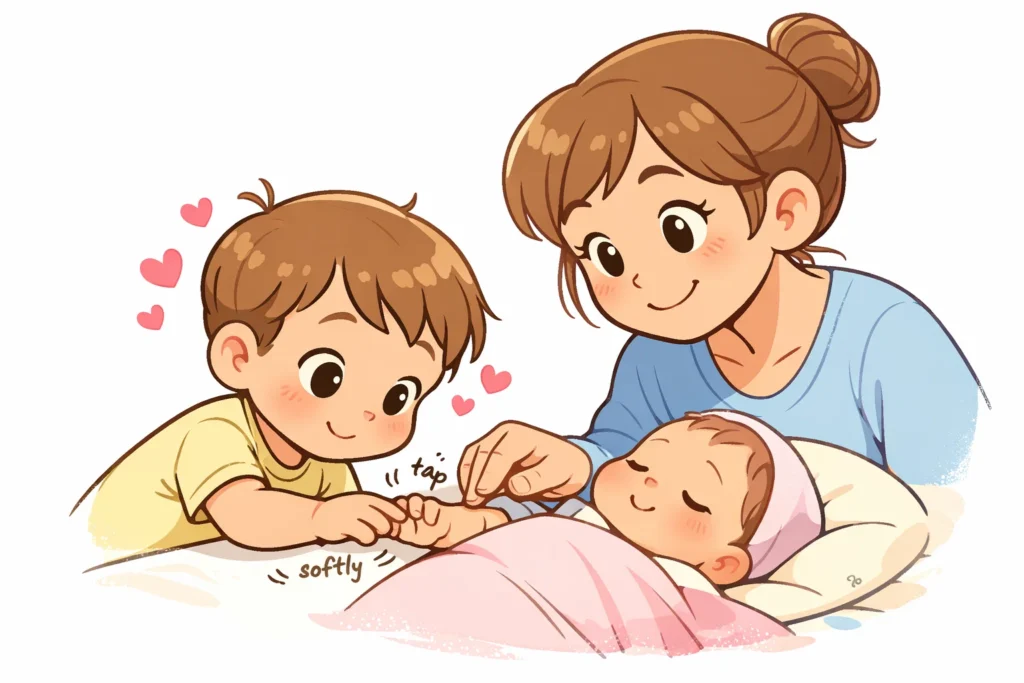
Safety is the top priority. A 2-year-old doesn’t understand their own strength or the fragility of a newborn.
Teaching Gentle Touch Through Modeling
Always show, don’t just tell. Stroke the baby’s arm gently and say, “Soft… soft touches.” If the toddler might be getting too rough, calmly intervene without shaming. “I won’t let you hit. If you are feeling frustrated, you can squeeze this pillow.”
Praising Positive Interaction
Catch them being good! If they bring you a diaper or simply watch the baby in a bassinet quietly, offer specific praise: “You are being such a helpful big sister! I love how you showed the baby your truck.”
Toddler Development Stage Considerations
It’s helpful to remember that a 2-year-old’s brain is still under construction. Their impulse control is practically non-existent, and their language development often lags behind their big emotions.
- Separation Anxiety: This often peaks around age 2. The new baby arrives just as the toddler is most afraid of losing you.
- Egocentrism: They aren’t being “mean”; they literally cannot understand that the baby has needs separate from their own desires.
Long-Term Adjustment Expectations
Adjustment to a new sibling is a marathon, not a sprint.
- Months 1-3: Expect the most regression and emotional volatility.
- Months 4-6: A “new normal” begins to emerge as the baby becomes more interactive.
- 1 Year+: Real sibling play starts to happen.
If your child shows signs of extreme aggression, prolonged withdrawal, or if you feel unable to cope, don’t hesitate to reach out to a pediatrician or child behavioral specialist. Most of the time, however, these “growing pains” are simply proof of a deep bond being reshaped.
Final Thoughts for Parents
Becoming a parent of two is a big change for you, too. It’s okay if the house is messy, if the 2-year-old watches a bit more TV than usual, and if you feel stretched thin. Your older child doesn’t need a perfect transition; they just need to know that your love for them hasn’t shrunk—it has grown to encompass the whole family.
Take it one “sleep” at a time. With extra cuddles, a bit of patience, and a lot of one-on-one time, your toddler will eventually stop seeing the baby as a rival and start seeing them as their lifelong companion.