

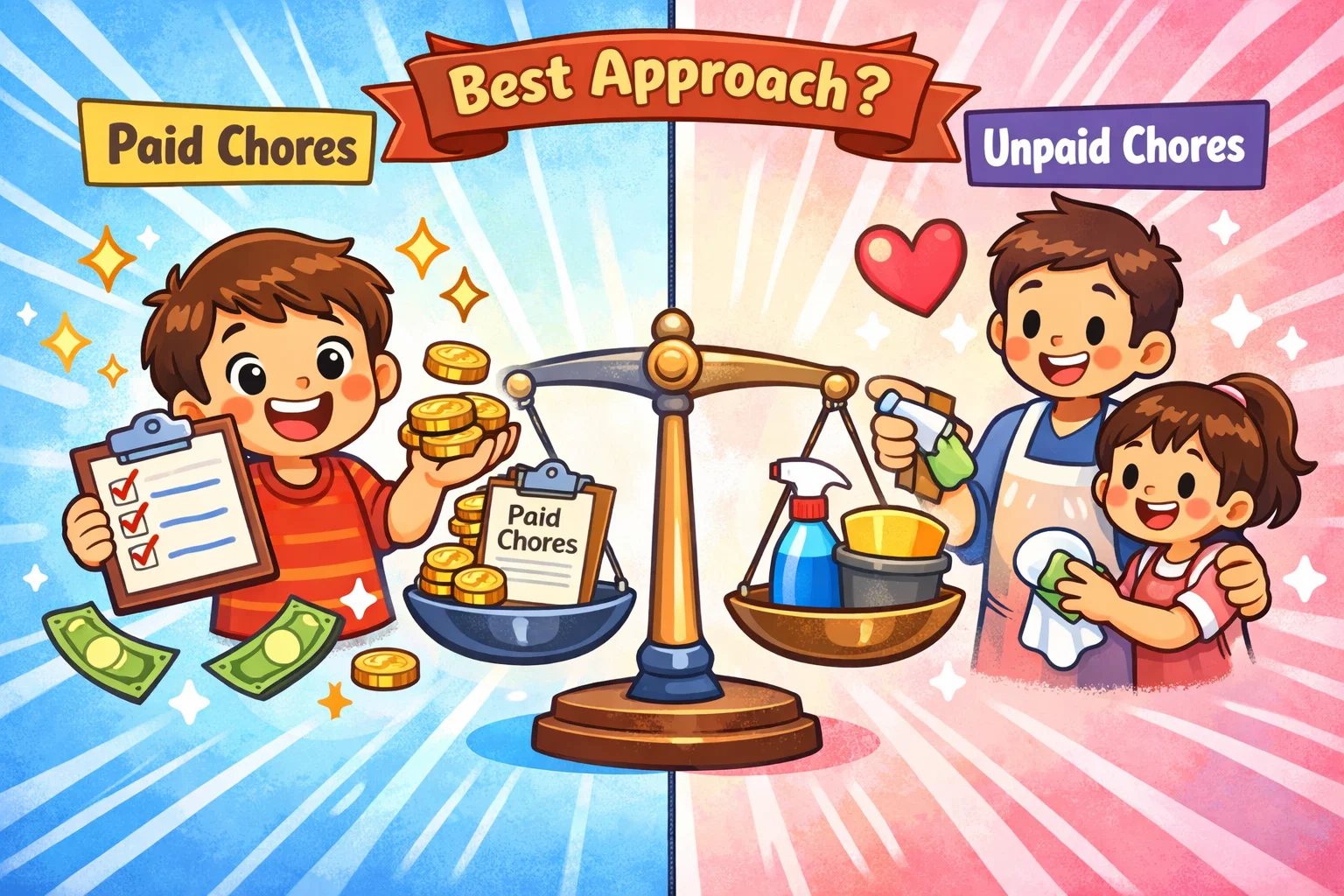
How families handle household responsibilities is more than a logistical decision; it shapes a child’s future relationship with work, community, and money. The debate over paid versus unpaid chores has sparked discussion among developmental experts for decades. On one hand, introducing a financial reward for household tasks is seen as a practical way to teach kids about money management. On the other hand, many argue that paying your child for every small act of helpfulness risks destroying their intrinsic motivation to support the family unit.
In modern parenting, the goal is to create a system that helps children understand both their role in the family and how money works. Whether you decide to give your kids a weekly allowance or expect them to contribute to the household for free, the underlying objective is the same: fostering a healthy work ethic and ensuring kids learn the value of work and money. This article explores different perspectives, psychological considerations, and practical hybrid models to help you decide the best path for your home.
Should Kids Do Chores?
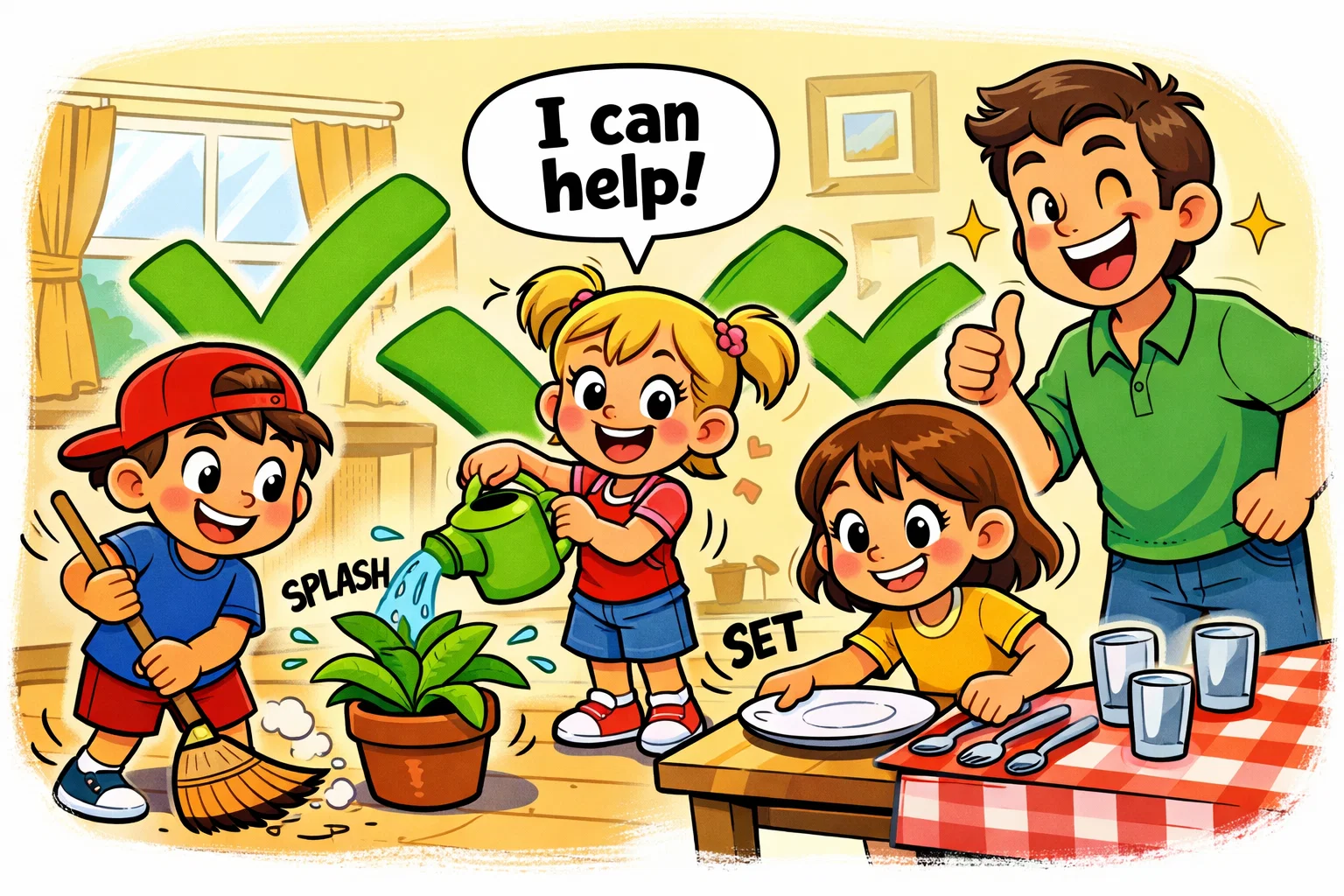
Before we dive into the “paid vs unpaid” debate, we must establish why involving children in domestic upkeep is non-negotiable for their development.
Why chores build responsibility
Domestic responsibilities serve as a “training ground” for adult life. When kids do chores, they are practicing executive functions: planning, organization, and task initiation. By managing assigned tasks, children learn that their environment requires active maintenance. This builds accountability – the understanding that if an assignment is neglected, there is a tangible consequence for the whole group.
Role of chores in family teamwork
A home is not a hotel, and parents are not concierge staff. When children contribute to the family, they shift from being passive consumers of household services to active participants. This sense of shared effort reinforces a child’s sense of belonging and teaches them that a functioning community relies on the cooperation of all its members. When kids do chores without being asked, it shows they have moved from mere obedience to genuine stewardship of their home.
Early chores and long-term success
Many experts observe that children who take on responsibility early often develop skills that support later personal and professional success.
Children who learn to work early tend to be more resourceful, better at collaborating, and more resilient when facing challenges in the workplace. The act of completing chores early in life creates a “can-do” attitude that persists through university and into the boardroom.
Paid Chores vs Unpaid Chores: What Parents Think
Parental perspectives often reflect their own upbringing and cultural values regarding work and money. In many modern households, the decision to pay kids is seen as a rite of passage, while in others, it is viewed as an unnecessary commercialization of family love.
Reasons parents support paid chores
- Financial Literacy: It is difficult to teach kids about money management if they have no money to manage. Paid chores provide a steady stream of “practice capital” for real-world scenarios.
- Real-World Parity: In the adult world, labor equals income. Paying for chores gives children a realistic preview of the economic system they will eventually enter.
- Autonomy: Having their own money allows children to make purchasing choices (and mistakes) early on, teaching them that every dollar represents effort.
Reasons parents prefer unpaid chores
- Civic Duty: Many think kids should help simply because they are part of the family. Unpaid chores for kids emphasize communal love over transactional gain.
- Avoiding Negotiation: If you pay kids for every task, they may start refusing to help unless there is a financial incentive. This can turn a simple request to “pick up that toy” into a contract negotiation.
- Intrinsic Values: It encourages children to help because it feels good to be useful, not because they are “clocking in” for a shift.
Benefits of Paid Chores
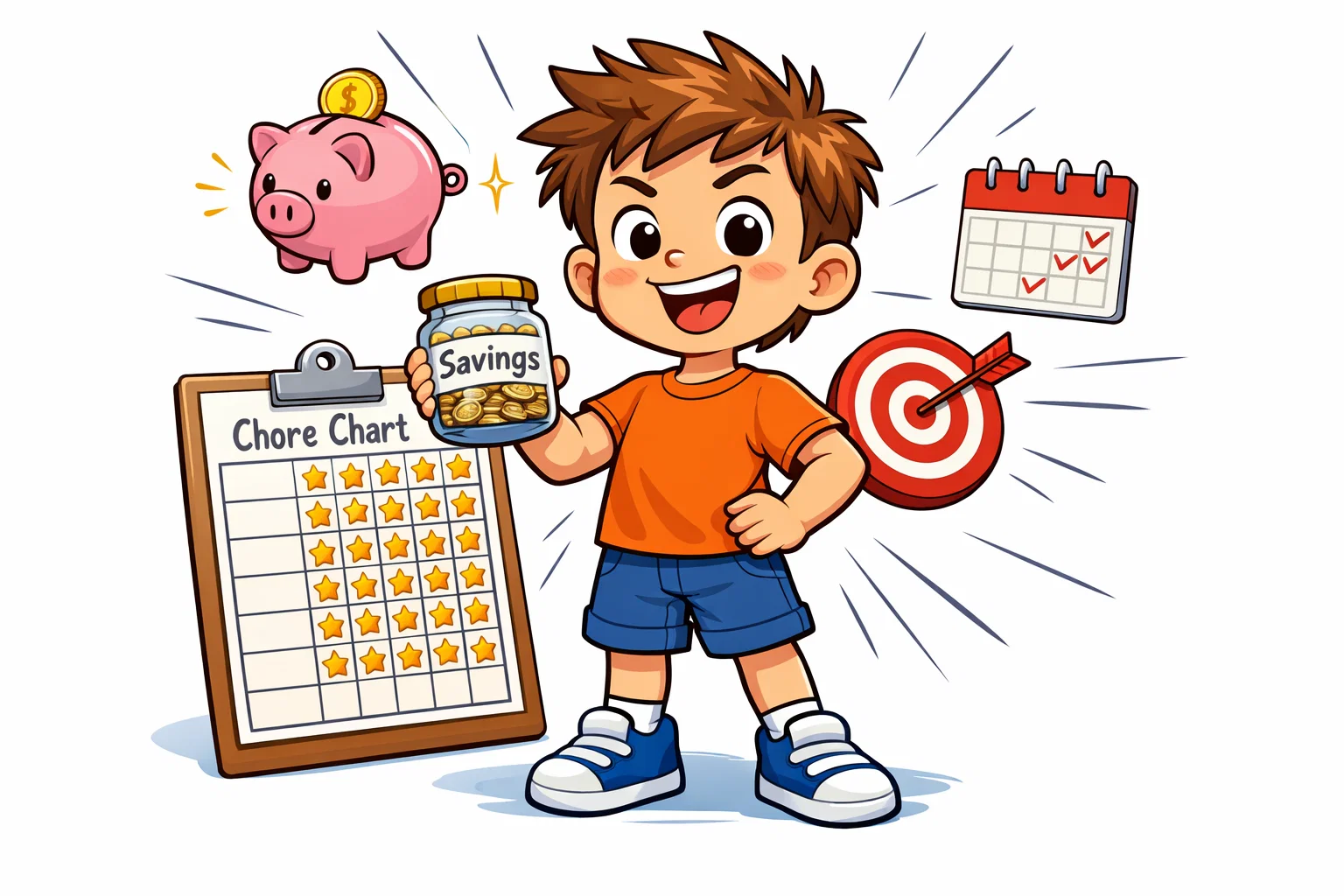
Implementing a system where kids earn money for their labor can be an incredibly effective educational tool if managed with clear boundaries.
Paid chores teach money management skills
By tying an allowance to chores, parents create a mini-economy at home. Children learn the basics of budgeting: how much to save, how much to spend, and how much to give to charity. This hands-on experience is often more effective than any classroom lesson because the stakes are personal. When children receive their first payment, they begin to see the world through the lens of cost and value.
Paid chores strengthen work ethic
When a child sees a direct link between the quality of their effort and the amount of allowance they receive, they are motivated to perform better. It reinforces the idea that extra effort can lead to extra rewards, a principle often associated with career growth. This link between completing their tasks and receiving a reward mirrors the adult employment market.
Paid chores encourage goal setting
If a child wants an expensive video game, earning money through specific jobs provides a roadmap. They learn the power of delayed gratification – waiting and working for weeks to achieve a target, rather than demanding immediate satisfaction.
| Category | Impact on Child |
| Savings Habits | Teaches the 50/40/10 rule (Spend/Save/Give). |
| Decision Making | Forces them to choose between competing wants. |
| Confidence | They feel proud of items bought with “their own” funds. |
| Market Value | They learn that harder assignments pay more. |
Cons of Paid Chores
Despite the benefits, there are significant psychological risks associated with a purely transactional approach to household work.
Rewards buy temporary compliance
The “overjustification effect” suggests that when we provide an extrinsic reward for a task a child might have done anyway, we can actually decrease their long-term interest in that task. Once the money for chores stops, the behavior often stops too, because the internal “why” has been replaced by a dollar sign.
Risk of eroding intrinsic motivation
If a child is only motivated by the weekly allowance, they may never develop the internal drive to be helpful. They might stop looking for ways to contribute to the household and only focus on the “minimum viable effort” required to get paid. This creates a “mercenary” mindset in the home.
Risk of Entitlement
There is a subtle danger that paying kids leads to an expectation of reward for basic human decency. If the system isn’t carefully defined, kids feel they should be compensated for every move they make, from clearing their own plate to picking up their own socks.
Resentment and bargaining behavior
A highly transactional approach can create a constant negotiation mindset within the family. When you give your kids a price list for every job, they might start arguing over the “market rate” or refusing to do daily chores because the pay is too low compared to the effort involved.
Benefits of Unpaid Chores

The “service to the family” model is favored by many psychologists who believe that some work should be done out of love and duty.
Builds family responsibility mindset
Unpaid chores for children teach them that they are part of a “we,” not just an “I.” It reinforces the idea that we take care of our space and each other because it is the right thing to do, fostering a lifelong habit of community service. It helps kids learn that life isn’t always about a direct payout.
Encourages intrinsic motivation
Helping because it matters creates a sense of internal satisfaction. When younger kids help their parents clean up, they aren’t looking for a nickel; they are looking for a smile and a “thank you.” Preserving this is vital for healthy emotional development.
Teaches non-material values
When children work without a paycheck, they are more likely to notice the emotional rewards of their labor: a clean room that feels peaceful, a happy parent, or a well-fed pet. These internal rewards are more sustainable than monetary ones and prevent a transactional mindset.
Challenges of Unpaid Chores
While noble, the unpaid model often leads to daily friction in the modern home.
Lower short-term motivation
Without the “carrot” of money, getting your kids to move can be exhausting. Parents often find themselves stuck in a cycle of nagging and reminders, which can lead to a negative home environment.
Power struggles and refusal
Conflict management becomes a daily struggle. When kids don’t want to do their assigned duties, and there is no financial consequence, parents must rely on disciplinary measures that can feel heavy-handed.
Limited financial education exposure
If children receive money without linking it to responsibility, they may miss an opportunity to connect effort with reward. They may reach adulthood without understanding the basic relationship between productivity and financial stability.
What Research Says About Paid vs Unpaid Chores

To settle the debate, we look to the fields of behavioral economics and child psychology.
Self-determination theory and motivation
This theory suggests that humans have three basic needs: autonomy, competence, and relatedness. A system that relies solely on paying for chores can satisfy the need for “competence,” but it often fails to build “relatedness” (connection to family) because the motivation is external rather than internal.
Longitudinal studies on early chores
Research suggests that participation in household responsibilities may be more important than whether children are paid for them. However, the most resilient and successful adults are those who were taught that work is an expected part of life, not an optional activity for hire. These kids who were rewarded only for extra effort, while doing basic help for free, showed the highest levels of adult independence.
Financial socialization findings
Teaching kids about money through a chore chart is most successful when parents talk about the process. Simply giving money is not enough; parents must mentor their children on how that money interacts with their future goals. Children need to understand the value of money as a tool, not just a reward.
Age-Appropriate Chores: A Comprehensive Guide
For any system to work, the amount of housework must align with the child’s developmental stage.
Chores for preschool children (Ages 2-5)
At this stage, the focus is on “helping habits” rather than efficiency. These should always be unpaid tasks.
- Matching socks in the laundry.
- Putting toys back in their designated bins.
- Clearing their own plate after a meal.
- Dusting low surfaces with a cloth.
Chores for elementary children (Ages 6-11)
This is the ideal time to introduce a chore chart and the concept of earning money for extra effort.
- Feeding and walking pets.
- Loading and unloading the dishwasher.
- Vacuuming high-traffic areas.
- Taking out the recycling and trash.
- Simple chores like sweeping the porch or watering plants.
Chores for teens (Ages 12-18)
Older children and teens should handle more complex household responsibilities and perhaps manage a larger weekly allowance that covers their own social expenses.
- Preparing one family meal per week.
- Doing their own laundry from start to finish.
- Yard maintenance (mowing, weeding).
- Washing the family car (an excellent way to earn extra money).
- Cleaning bathrooms and managing specific chores in the kitchen.
How to Balance Paid and Unpaid Chores: The Hybrid Model
The most successful parents often use a “Two-Tier System” that combines the best of both worlds. This model ensures that kids are expected to help while still allowing them to earn money.
Core unpaid family responsibilities
These are the “Citizen of the House” assignments. Kids learn to do these because they live there. No payment is offered.
- Keeping their bedroom tidy.
- Personal hygiene (homework, teeth, etc.).
- Basic cleanup after themselves in common areas.
- Basic chores like helping carry groceries or clearing the table.
Optional paid extra jobs
These are “Professional Level” projects. These are specific chores that a parent might otherwise pay a professional to do.
- Cleaning out the garage or attic.
- Deep cleaning the baseboards or windows.
- Detailed gardening or snow shoveling.
- Assisting with major chores around the house like painting a fence.
Why this works
This model prevents the transactional mindset while still allowing kids to learn money management skills. It teaches that some work is a gift to the family, while other work is a path to financial gain. It creates a healthy balance between responsibility and money management.
How Much to Pay for Chores: Practical Models
If you decide to pay kids, you need a predictable structure to avoid constant “bargaining.”
- The Weekly Allowance Model: Many parents give $0.50 to $1.00 per week for every year of the child’s age. A 10-year-old gets $10. This provides a predictable allowance money flow for them to manage.
- The Per-Task Payment Model: Each extra chore has a set price (e.g., $5 for mowing the lawn). This is great for older kids with an entrepreneurial streak.
- The Three-Bucket System: Regardless of the amount, require that children split their money into Spending, Saving, and Giving. This is the foundation of teaching kids about money.
Common Mistakes to Avoid
- Paying for basic self-care tasks: Never pay your child for brushing their teeth or doing homework. These are personal obligations, not family chores.
- Inconsistent payment structure: If you don’t follow through with the allowance each week, the child will stop following through with the work. Inconsistent payment breeds distrust.
- Using money as punishment: If you dock pay for bad grades or backtalk, you confuse the “work-for-pay” lesson with general discipline.
- Ignoring money education component: Just giving the cash isn’t enough. You must teach them money management so they don’t spend it all immediately.
How to Motivate Kids Without Paying for Chores
If you prefer the unpaid chores model, use these alternative motivators:
- Praise and recognition: A simple “I really appreciate how you helped with the dishes” goes a long way.
- Natural consequences: If the laundry isn’t placed in the basket, it doesn’t get washed. This is a powerful way for kids to learn the value of work.
- Gamification and reward charts: Use a system where points lead to a “family reward” like a pizza night or extra screen time.
- Parental modeling: If you complain about your own work around the house, your kids will too. Show them that contributing to the household is part of a happy life.
Raising Responsible Adults
Ultimately, the paid chores vs unpaid chores debate is about the long-term outcome. We want to raise adults who develop a strong work ethic, understand the value of money, and are willing to contribute to the households they will one day lead.
Work ethic and adult financial habits
Childhood habits are the blueprint for adult success. By associating chores with a mix of duty and earning, you give them the tools to handle both a salary and a family.
Gradual independence development
As kids and teens grow, the amount of chores and the amount of allowance should increase. This scaffolded approach ensures they are ready for the financial and domestic realities of the real world.
Healthy money mindset formation
A balanced system ensures kids learn that money is a resource earned through effort, but also that being a good human being involves helping others for free.
Final Thoughts on Paid Chores vs Unpaid Chores
There is no “one size fits all” answer to whether you should pay kids. The best approach is often the one that aligns with your family values and the personality of your child. If you want to foster intrinsic motivation, keep basic chores unpaid. If you want to teach money management skills, introduce paid chores for “extra” work.
By creating a clear structure – whether it’s a list of duties on the fridge or a digital app – you give your children the gift of competence. They learn that their actions matter, their effort has value, and their contribution to the family is meaningful.