


Choosing the right educational app for children in 2026 can feel like navigating an endless digital playground. With numerous options promising to boost “IQ” or “language skills,” parents often weigh two heavyweights: Lingokids and LogicLike. While both high-quality platforms are widely available on the App Store and Google Play, they serve fundamentally different developmental purposes.
This neutral comparison evaluates how each app fits into a family’s routine, budget, and educational goals. Whether you seek a learning app kids enjoy emphasizing English immersion or a structured logic-based approach to problem-solving, understanding these nuances is the first step toward high-value screen time.
Lingokids vs LogicLike: Why This Comparison Matters to Families
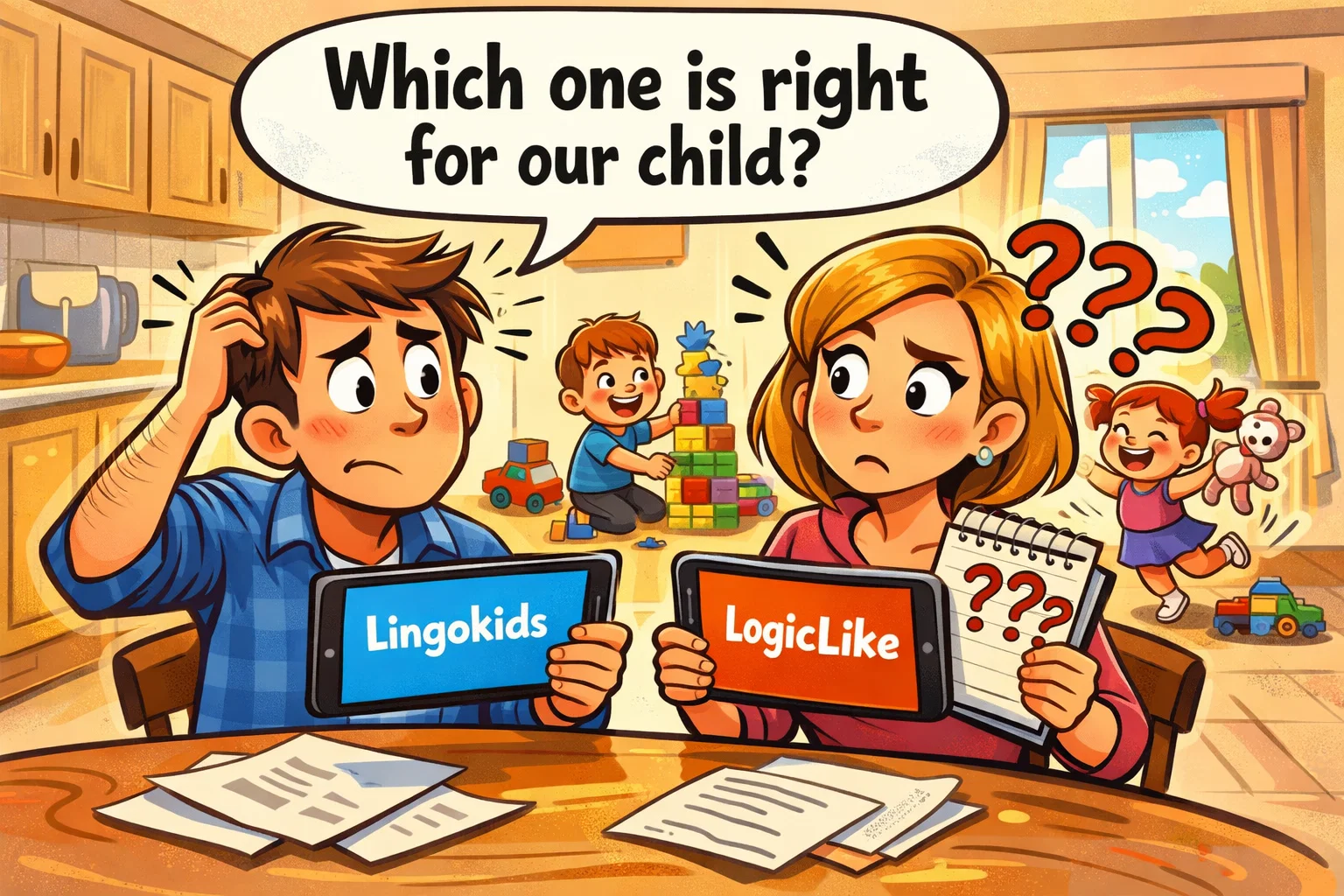
The search for the best learning apps often leads parents to a crossroads: should the priority be academic fundamentals like literacy, or cognitive “soft skills” like logic and critical thinking? Lingokids and LogicLike represent these two distinct paths.
Modern parents don’t just want “distraction” tools; they seek educational apps children find useful that offer a clear learning path and measurable progress. By comparing these two, this review addresses a common parental goal: finding an app designed to support children’s growth while balancing engagement with genuine skill development.
What Parents Look at in Educational Apps
When evaluating a learning app, several key factors consistently rise to the top of the priority list:
- Age Suitability: Does the content grow with the child?
- Safety: Is it an ad-free, secure environment?
- Curriculum Depth: Is there a research-backed framework (akin to Khan Academy Kids or ABCmouse)?
- Engagement: Do the animation and interactive games keep the child coming back?
- Parental Oversight: Can you track progress via a dedicated dashboard?
Evaluation Criteria Used in This Comparison
To ensure a fair review, both apps were evaluated based on:
- Pedagogical Foundation: The “why” behind the tasks.
- Usability: Interface simplicity tailored to young kids.
- Cost-to-Value Ratio: Whether the subscription is worth your money.
- Platform Versatility: Performance on iOS and Android devices.
Learning Focus: Language Development vs. Logic and Math Skills
The most striking difference between these two platforms is their primary mission.
Lingokids Focus: English Literacy and Communication
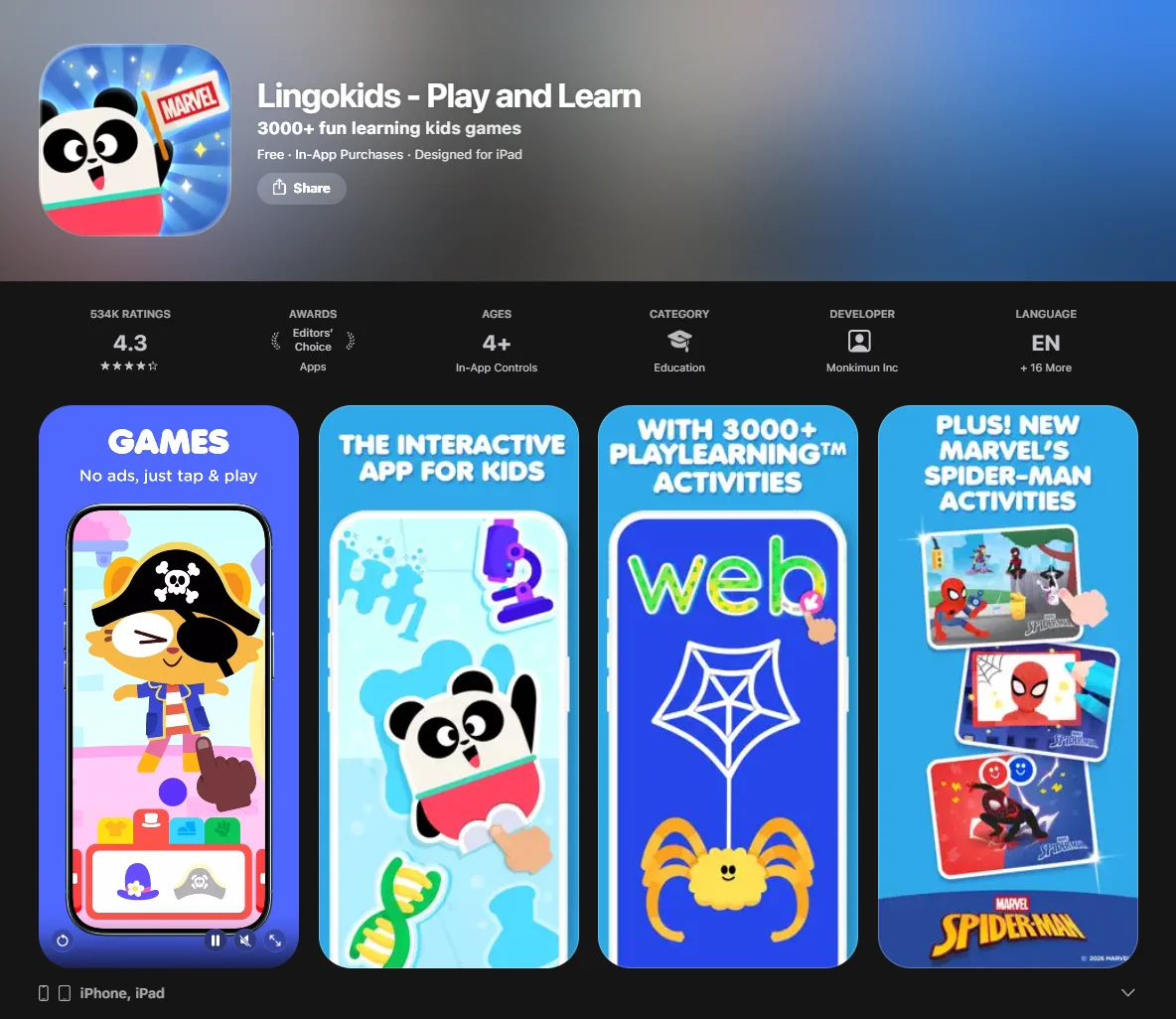
Lingokids is widely regarded as a comprehensive early learning app that includes English language development alongside math, science, creativity, and life skills content. It utilizes its “Playlearning™” method, immersing kids aged 2 to 8 in phonics, sight words, vocabulary, as well as broader early childhood learning topics. It functions much like a popular language-learning app (think Duolingo tailored to the preschool set), using songs, animation, and interactive games to build communication confidence.
LogicLike Focus: Logic Puzzles and Mathematical Thinking
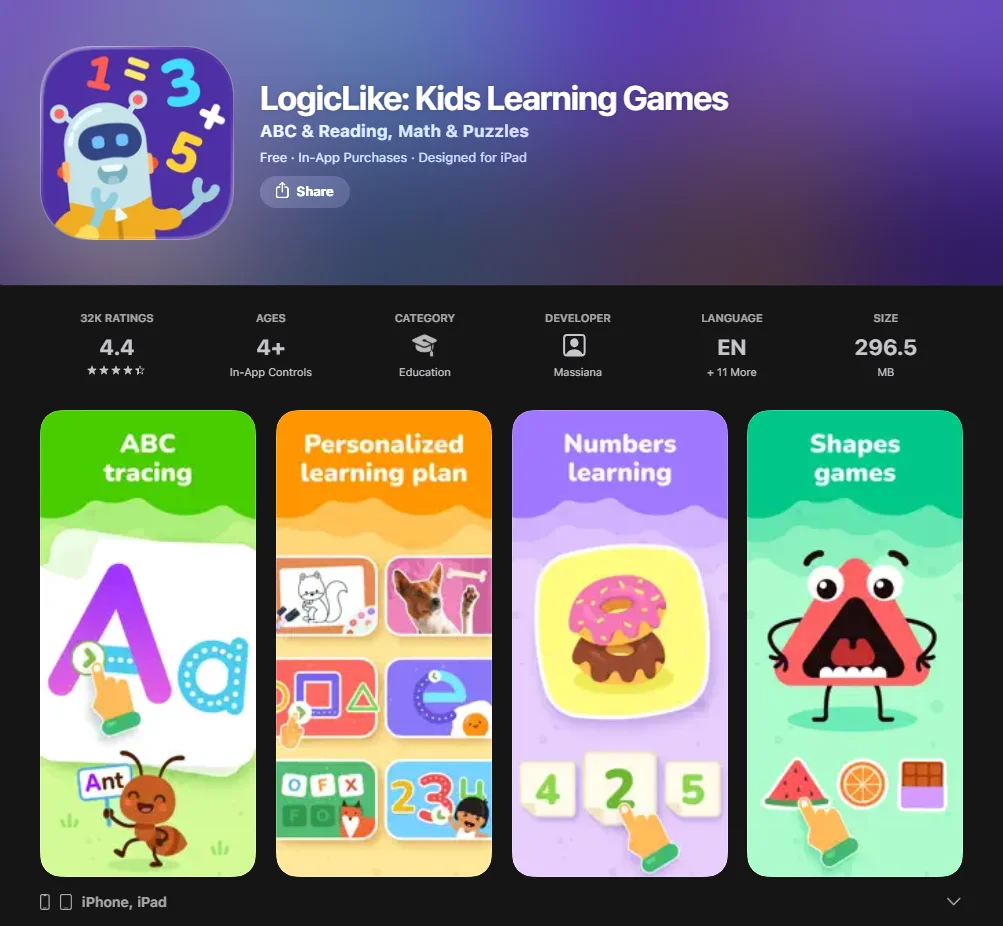
In contrast, LogicLike is a “gym strengthening the brain.” It focuses on logic, math, pattern recognition, and analytical problem-solving rather than structured programming or formal coding instruction. Instead of reading stories, children solve puzzles, recognize patterns, and develop spatial reasoning. It focuses heavily on app-based cognitive development, preparing children for the analytical demands of later schooling.
Learning Goals Each App Supports Best
| Feature | Lingokids | LogicLike |
| Primary Goal | Communication & Literacy | Logic & Mathematical Thinking |
| Secondary Goal | SEL (Social-Emotional Learning) | Memory & Attention Training |
| Methodology | Immersive Playlearning | Structured Brain Training |
| Best Target | Young kids starting English | Kids aged 5+ school prep |
Content Structure and Curriculum Depth

Lesson Organization and Progression Model
Lingokids uses a thematic approach. Lessons are grouped into categories like “Animals,” “Emotions,” or “Daily Routines.” This helps children build associations between words and real-world contexts.
LogicLike follows a level-based progression system where children unlock increasingly complex tasks, though it is not presented as a formal school-aligned curriculum. It feels like a learning path where you must master “Level 1” puzzles before unlocking “Level 2.” This structure satisfies children thriving on achievement and clear milestones.
Variety of Activities and Task Formats
- Lingokids app features: High-quality animation, catchy songs, and videos (similar to YouTube Kids but curated and ad-free).
- LogicLike features games and puzzles, 3D geometry tasks, and beginner-level chess activities.
Balancing Entertainment and Academic Challenge
While Lingokids leans heavily into “edutainment” (fun-first), LogicLike provides more “academic challenge.” You might notice Lingokids suits “wind-down” learning, while LogicLike fits “active-brain” sessions.
Age Suitability and Developmental Fit
Preschool Children (Ages 2–5)
For children aged 2 to 4, Lingokids is generally more accessible. Its easy-to-use interface and emphasis on music make it particularly appealing for this age group. LogicLike also offers a preschool track, but it usually requires parental guidance initially to explain the logic behind puzzles.
Primary School Children (Ages 6–9)
This is the “sweet spot” concerning both apps. Lingokids helps kids in grades 1 and 2 with advanced phonics and reading, while LogicLike gradually introduces more advanced logic tasks and complex arithmetic but does not position itself as a structured coding curriculum.
Older Children (Ages 9+)
LogicLike has a much longer “shelf life” benefiting older kids. Its logic challenges can remain engaging even for older children, making it a strong STEM-supporting app focused on reasoning and mathematical thinking rather than formal coding education. Lingokids may feel less challenging once a child outgrows early elementary content, particularly if they already have strong English proficiency.
Engagement, Motivation, and Screen Experience

Game Mechanics, Rewards, and Progress Tracking
Both apps use gamification differently. Lingokids uses adorable characters (like Billy the Chick) to create an emotional bond. LogicLike uses a “star” and “certificate” system mirroring school achievements, which motivates competitive children.
Independent Learning vs. Guided Parent Involvement
Lingokids is exceptionally simple to use independently. LogicLike provides voiceovers to read instructions, which helps, but the inherent difficulty might occasionally require a “hint” from a parent.
Pricing Comparison and Subscription Models
Note: Pricing is subject to change. Always check the App Store or Google Play for the latest free trial offers.
| Feature | Lingokids Plus | LogicLike Premium |
| Free Version | Limited (3 activities/day) | Limited (Basic puzzles) |
| Monthly Cost | Approx. $14.99 | Approximately $7.99 per month (pricing may vary by region and promotional offers) |
| Annual Value | Best value long-term | Approximately $49.99 per year, with occasional promotional discounts depending on region and timing. |
| Free Trial | Usually 7 days | Usually 3-7 days |
Both apps are free to download and offer a limited free-access tier, but full access to most educational content requires a paid subscription. Access to the full range of educational content generally requires a subscription. Lingokids is available free in its most basic form, but the daily limits are quite strict.
Pros and Cons Overview
Lingokids: Strengths and Limitations
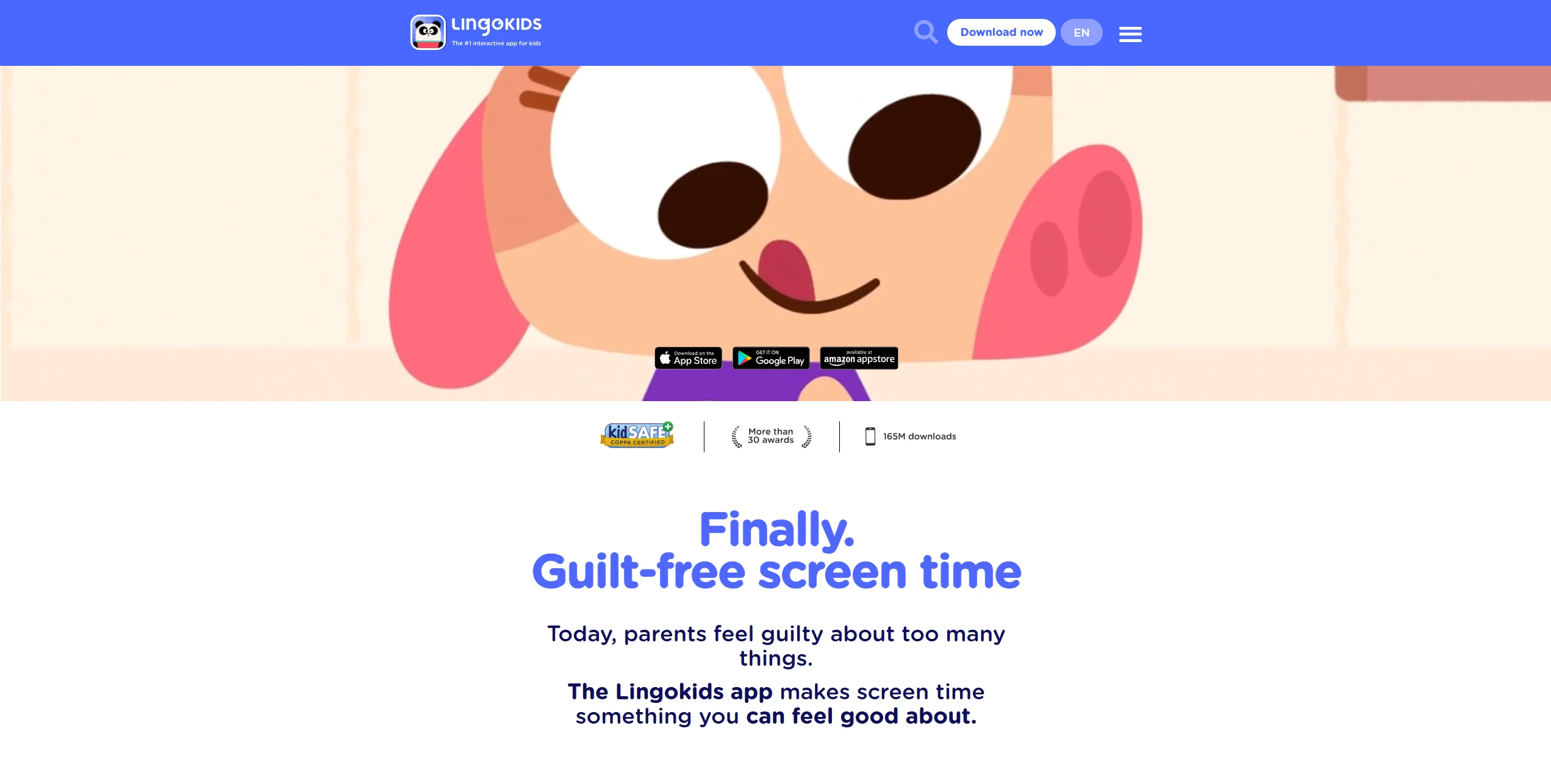
- Pros: High-quality animations; strong English learning tool; covers mindfulness.
- Cons: Can feel “too young” to older kids; subscription price is higher.
LogicLike: Strengths and Limitations
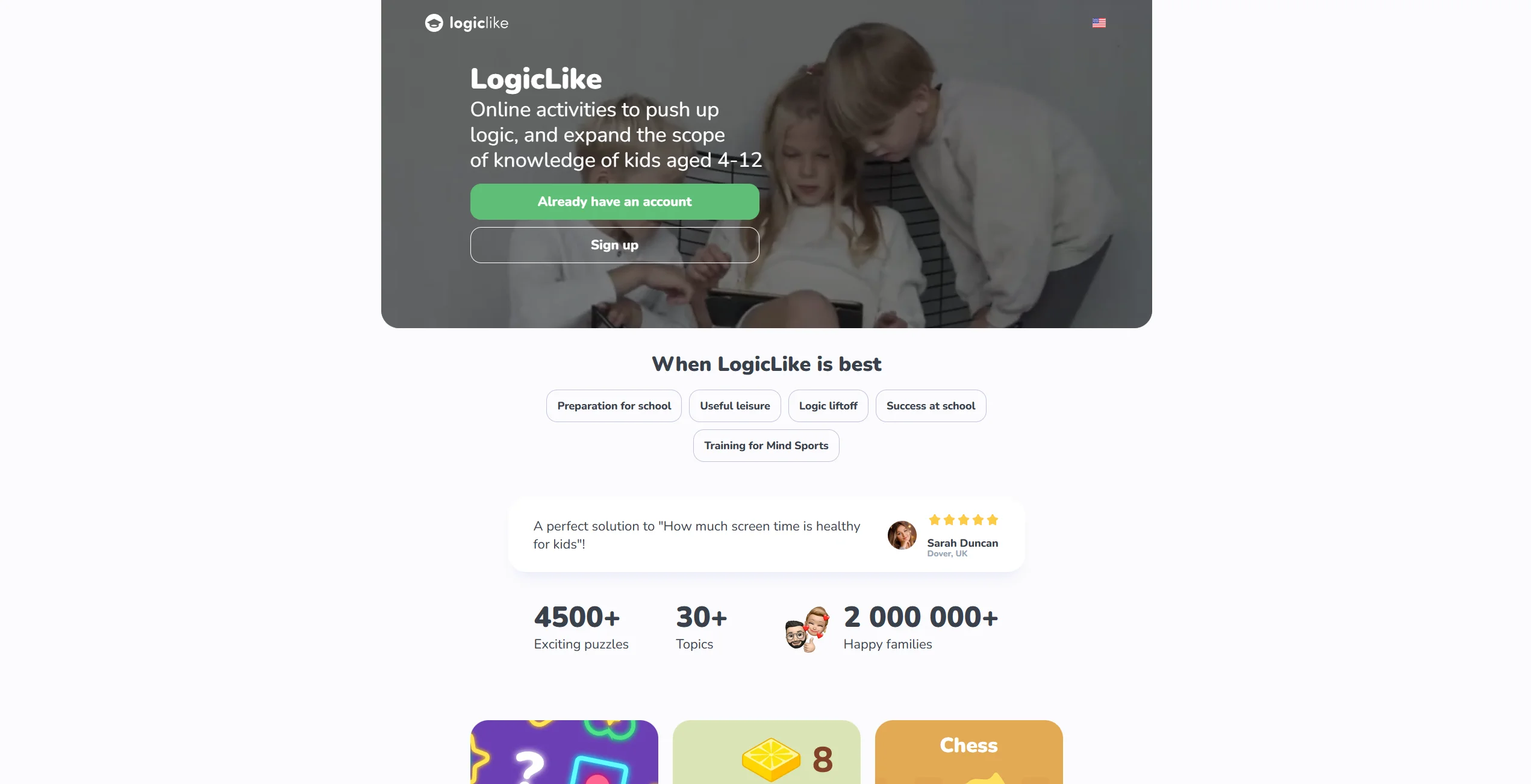
- Pros: Teaches logic and math effectively; includes over 6,200 tasks; supports cognitive development.
- Cons: Visuals are less “glossy” than Lingokids; focus remains cognitive rather than creative.
Safety, Ads, and Parental Controls

Both platforms are completely free of third-party ads post-subscription, creating a safe “walled garden” protecting young kids.
- Lingokids: Offers a “Parent Center” where you can see words learned and download worksheets intended for offline use.
- LogicLike: Provides a detailed breakdown showing which “cognitive sectors” (e.g., 3D thinking, logic, math) your child excels in.
How to Choose the Right App to Help Your Child
Choosing between these two depends on your child’s learning needs:
- If the priority is English and communication: Go with Lingokids. It is especially strong in vocabulary and oral confidence development, while also covering broader early learning skills.
- If the priority is math and logic: Choose LogicLike. It provides a structured challenge often lacking in educational games.
- If budget is the main concern: Start with Khan Academy Kids (which is completely free) and then move to a free trial evaluating these paid apps.
- If the child loses interest quickly: Lingokids is generally more “fun” initially due to the animation and music.
Lingokids vs. LogicLike Final Comparison Summary
Key Differences at a Glance
Lingokids is a strong option for promoting learning through storytelling and song. It’s an educational app kids love prioritizing the “heart” and “tongue.” LogicLike is a powerhouse supporting the “mind,” focusing on problem-solving methods.
When Combining Both Apps Makes Sense
Many families find these apps don’t compete—they complement. Some families use Lingokids in the morning to build language skills and LogicLike in the afternoon for more focused cognitive practice.