


Choosing the right digital learning environment for your child often feels like navigating a maze of subscription models, flashy animations, and varying educational philosophies. In the realm of early childhood education, two names consistently rise to the top of the App Store and Google Play rankings: Lingokids and Khan Academy Kids. While both are designed to captivate young minds, they serve different primary purposes—one acts as a gateway to English-language immersion and “playlearning,” while the other provides a comprehensive, standards-aligned academic foundation.
As a parent, your priority is likely to find the right balance between engagement and real learning outcomes. This comparison takes a closer look at both platforms, examining their curriculum depth, pricing structures, and age suitability. Whether you are looking for a completely free resource to supplement schoolwork or a gamified learning app to keep your toddler occupied with meaningful content, understanding the nuanced differences between these two powerhouses is the first step in optimizing your child’s screen time.
Lingokids vs Khan Academy Kids Quick Overview

At a high level, both apps target children aged 2 to 8, covering the critical transition from toddlerhood to early elementary school. However, their missions diverge significantly. Lingokids was developed by Monkimun and focuses heavily on “Playlearning™” a methodology that prioritizes fun and engagement to foster a love for learning, particularly for those acquiring English as a second language.
Khan Academy Kids, on the other hand, is a product of the Khan Academy nonprofit. It was created by the team behind the award-winning Duck Duck Moose apps and is designed to provide a “world-class education” that is completely free. Its primary mission is to offer a structured, standards-aligned curriculum that prepares children for the academic rigors of kindergarten and beyond.
Lingokids Learning Concept and Background
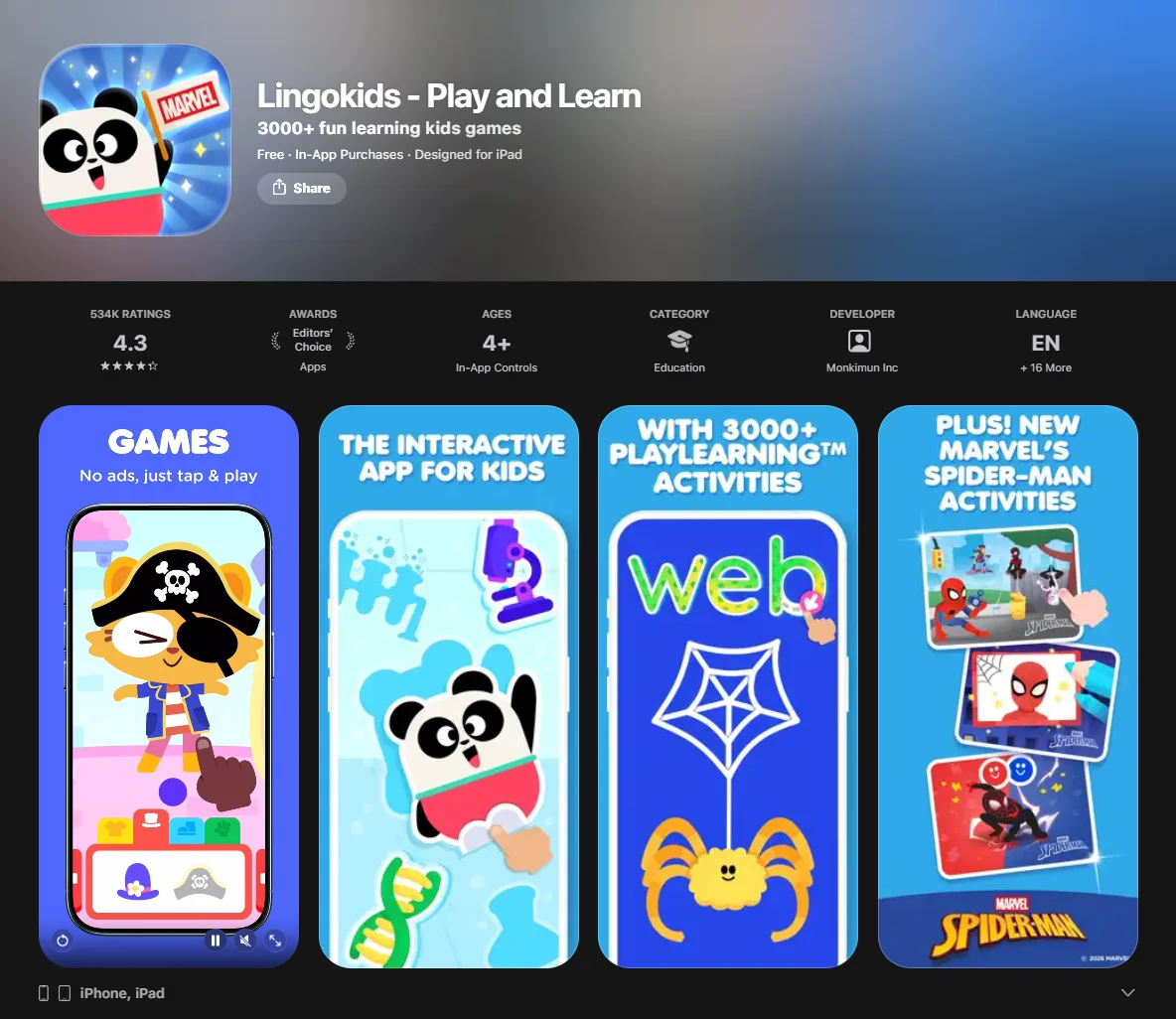
Lingokids is built on the idea that young children learn best when they do not even realize they are studying. The app utilizes a gamified learning environment filled with original characters like Billy the Chick and Cowy the Cow. Its original focus was language acquisition, but the platform has expanded into a broader early-learning curriculum that includes literacy, STEM basics, life skills, music, and creative activities. The content is vibrant, fast-paced, and highly interactive, using songs and short games to build children’s vocabulary and communication skills.
Khan Academy Kids Learning Concept and Background
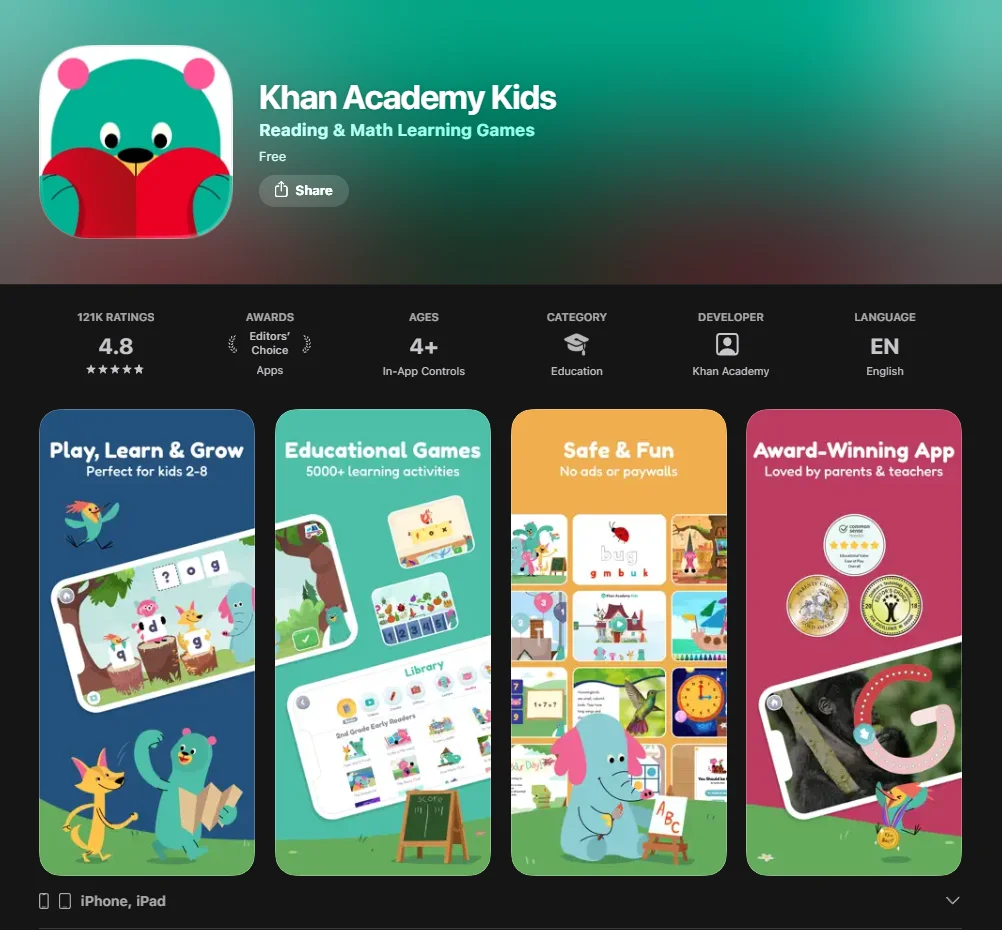
Khan Academy Kids takes a more holistic, academic approach. Developed in collaboration with experts from the Stanford Graduate School of Education, the app aligns its content with the Head Start Early Learning Outcomes Framework and Common Core standards. It features a cast of characters—led by Kodi the Bear—who guide children through a structured learning path. Because it is a nonprofit project from Khan Academy, the app remains completely free with no ads or in-app purchases, offering learning activities across literacy, math, and social-emotional development.
Core Differences at a Glance
| Feature | Lingokids | Khan Academy Kids |
| Primary Goal | Language immersion & “Playlearning” | Comprehensive academic foundation |
| Cost | Free limited version / Paid subscription | 100% Free (No ads or IAP) |
| Curriculum Alignment | General early learning goals | Common Core & Head Start aligned |
| Engagement Style | High-energy, gamified exploration | Story-driven, structured progression |
| Best For | ESL learners and high-engagement play | Mastery of reading, math, and logic |
Target Age Range and Development Fit
Understanding where your child is on the developmental spectrum is important when choosing an educational app. Both apps claim to support children from ages 2 to 8, but the way they handle these stages differs.
Age Range Supported by Lingokids
Lingokids is particularly strong for younger kids and preschoolers who are just starting to explore digital interfaces. The app’s design supports independent learning, allowing even a three-year-old to navigate songs and simple tap-and-play games. For older children (ages 6–8), the app introduces more advanced topics related to modern life skills such as environmental awareness and empathy, though the primary hook remains its language-based learning games.
Age Range Supported by Khan Academy Kids
Khan Academy Kids offers a highly adaptive experience that scales from “Preschool” to “2nd Grade.” As children grow, the app transitions from basic letter recognition and counting to more advanced math skills, such as regrouping and advanced literacy (reading comprehension). The app includes a large library of interactive books and stories, including titles from publishers such as National Geographic and Bellwether Media, which support early reading development.
Developmental Stage Comparison
For toddlers, Lingokids may feel more immediately rewarding due to its musical focus and reactive animations. However, as a child reaches 5 or 6, Khan Academy Kids provides more “academic meat.” While Lingokids keeps kids hooked with rewards and character-driven stories, Khan Academy Kids focuses on structured learning paths that ensure a child meets specific early learning outcomes. Parents of older kids may find that Khan Academy Kids sustains interest longer through its diverse library of non-fiction content.
Curriculum Scope and Educational Content

When comparing an educational app for kids, the breadth and depth of the “what” is just as important as the “how.”
Subjects Covered in Lingokids
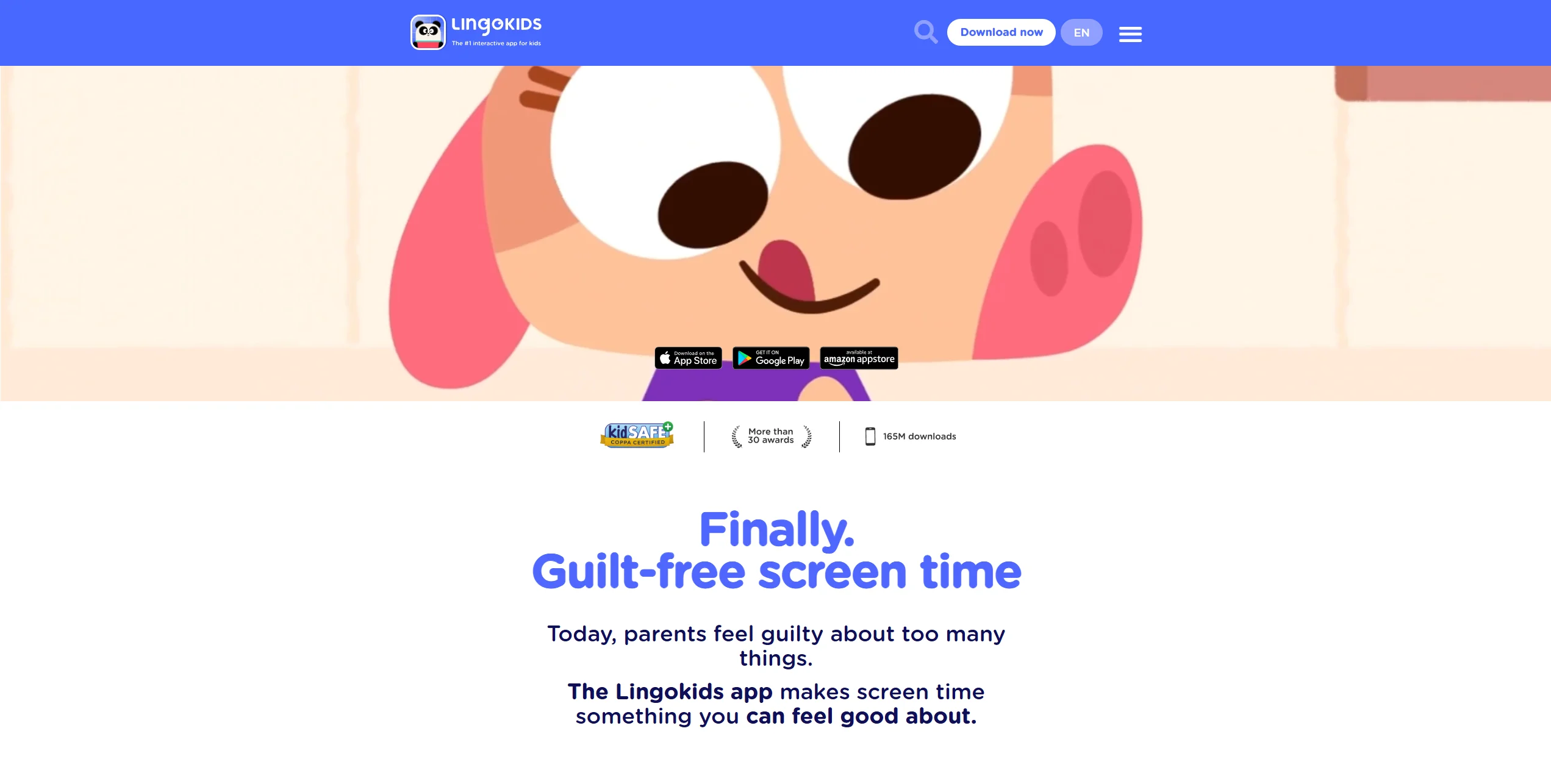
The Lingokids curriculum covers a range of early-learning topics including literacy, vocabulary development, STEM basics, life skills, music, and creative play.
- English Language: More than 3,000 learning activities covering vocabulary topics such as colors, food, animals, and everyday situations.
- STEM: Basic introduction to numbers, shapes, and scientific concepts.
- Modern Life Skills: Lessons on mindfulness, recycling, and social-emotional intelligence.
- Physical Activity: Lingokids games that encourage children to move and dance.
Subjects Covered in Khan Academy Kids

The educational content here is more traditional and deeply structured.
- Reading and Phonics: A complete phonics progression from letter sounds to complex sentences.
- Mathematics: Counting, addition, subtraction, measurement, and basic geometry.
- Executive Function: Activities designed to improve memory, focus, and logic.
- Social-Emotional Learning: Lessons on sharing, identifying feelings, and friendship, often narrated by the characters to help children relate to real-world situations.
Skill Progression and Learning Path Structure
Lingokids uses a gamified progression system where children complete activities and earn rewards such as stickers and collectibles while exploring different learning topics. Khan Academy Kids uses a sophisticated adaptive learning system. If a child struggles with a particular math concept, the app’s algorithm “notices” and serves up more practice in that specific area before moving forward. This helps ensure that children build a solid foundation rather than simply clicking through levels.
Academic Depth and Long-Term Value
In terms of long-term value, Khan Academy Kids is often viewed as a core part of a homeschooling or supplemental school routine. It provides a level of academic depth that mirrors a classroom environment. Lingokids works well as a supplementary early-learning platform that reinforces vocabulary, basic academic concepts, and life skills through games, songs, and interactive activities, although it is generally less structured than full curriculum-based learning programs.
Learning Methods and Engagement Style
Engagement is a key factor in the success of any educational app for children. If children do not enjoy the learning experience, they are unlikely to keep using the app.
Gamification and Rewards Systems
Lingokids is the “flashier” of the two. It uses a high-intensity gamified learning model where every action is met with positive reinforcement—stars, badges, and high-energy animations. Khan Academy Kids is more understated. Its rewards come in the form of “collectible” items for the characters’ rooms (like a hat for Peck or a snack for Ollo), which fosters a sense of caring and responsibility rather than just high-score chasing.
Interactive Formats and Media Types
- Lingokids: Features a heavy emphasis on catchy songs and fast-paced learning games. It feels more like an interactive cartoon.
- Khan Academy Kids: Balanced between games, video lessons, and interactive storybooks. The “Read to Me” feature in their library is a standout for younger kids who are not yet independent readers.
Independent Learning vs Parent Involvement
Both apps promote self-directed learning. Children can safely use both apps without constant supervision, as they are 100% ad-free. However, Khan Academy Kids offers more robust “Teacher Tools” and “Parent Dashboards” that allow adults to assign specific lessons, making it easier to be involved in the learning progress.
User Experience and Interface Design
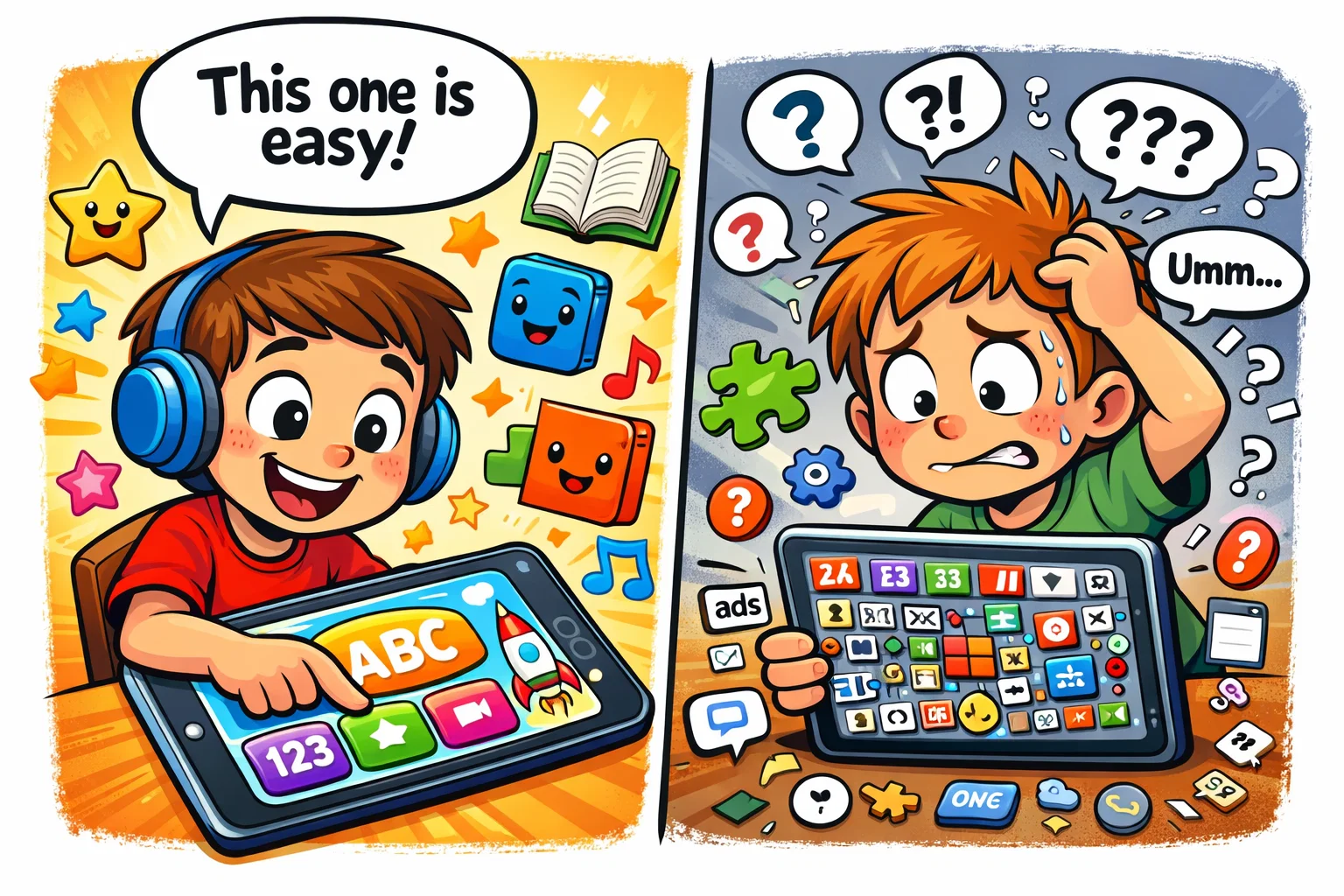
A good learning app must be intuitive enough for a three-year-old while still offering useful features for parents.
Child-Friendly Navigation
Both apps excel at “non-reader” navigation. They use large icons and voice-guided instructions. In Khan Kids, the big “Green Play Button” on the home screen is the easiest way for a child to jump straight into their personalized learning path. Lingokids uses a more “map-like” interface that allows kids to explore subjects like science or math by tapping on different “islands” or buildings.
Parent Dashboard and Progress Tracking
The Khan Academy Kids dashboard is highly detailed, showing exactly which Common Core standards your child has practiced. Lingokids provides weekly reports and “Parent Progress” emails that highlight the new words your child has learned, which is particularly helpful for families focused on language learning.
Device Compatibility and Offline Access
| App | iOS/Android | Tablet Optimized | Offline Mode |
| Lingokids | Yes | Yes | Available with Plus |
| Khan Academy Kids | Yes | Yes | Available (Library) |
Pricing Comparison and Subscription Value
This is often the deciding factor for families. The difference between a free educational app and a recurring monthly expense is significant.
Lingokids Pricing Structure
Lingokids operates on a “freemium” model.
- Free Version: Provides limited access to content and features, while the Plus subscription unlocks unlimited activities and additional functionality.
- Plus Subscription: About $13.49–$14.99 per month, or about $71.88 per year with annual billing (prices may vary by region and promotions). This unlocks unlimited play, additional features such as offline content downloads, and expanded progress reports for multiple child profiles.
Khan Academy Kids Pricing Model
As a nonprofit project from Khan Academy, the app is completely free with no subscriptions, ads, or in-app purchases. There are no “Plus” tiers, no locked content, and no free trial that turns into a paid charge. It is sustained by donations and grants, meaning all learning materials are accessible to every family regardless of income.
Value for Money Analysis
If budget is your primary concern, Khan Academy Kids is the clear winner. However, many parents find the Lingokids subscription worth it for the high-quality English learning immersion and the variety of original content that feels more like premium entertainment.
Safety, Ads, and Data Privacy
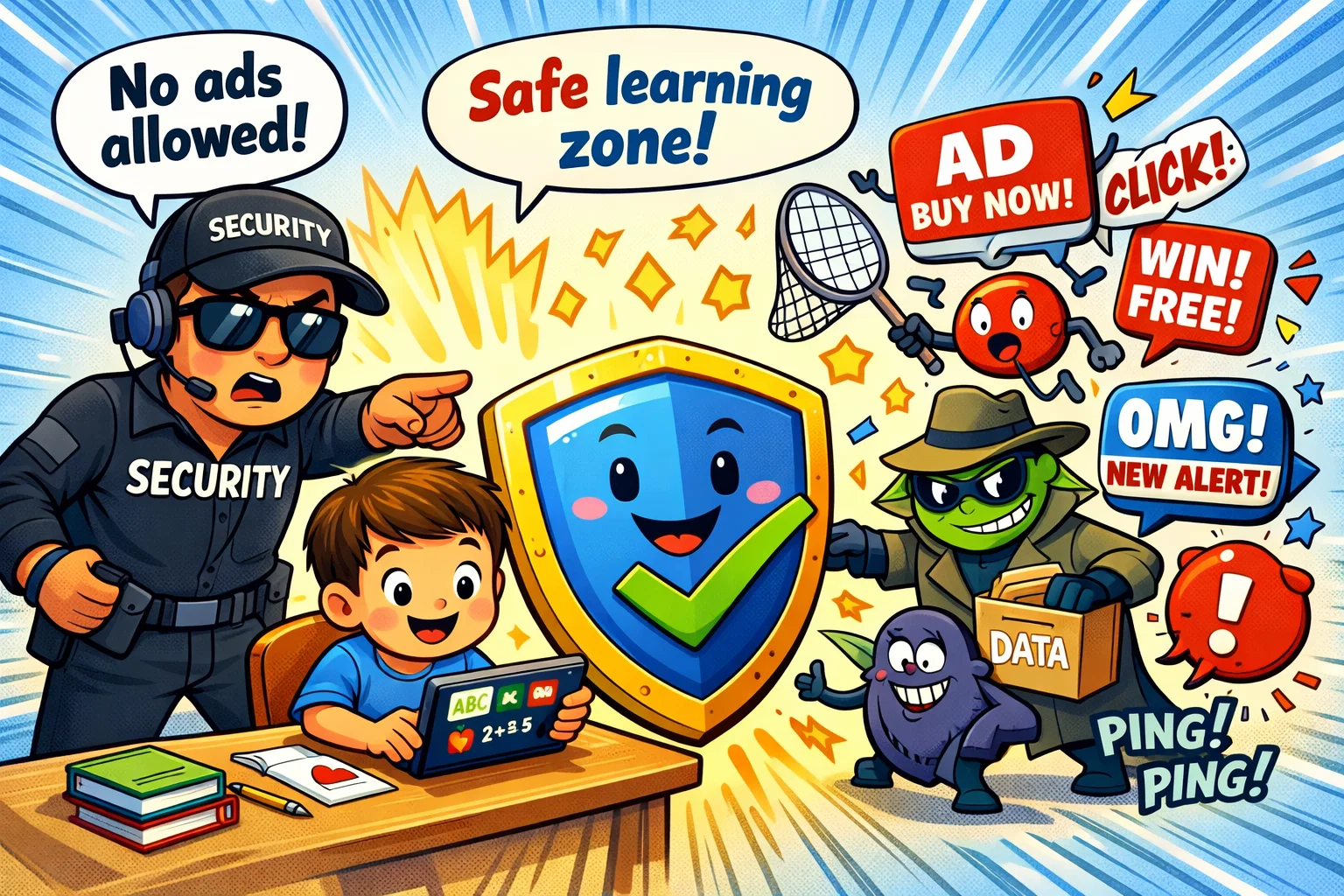
Both apps are exemplary in their approach to safety. They are COPPA-compliant and certified by organizations like KidSAFE. You will not find third-party ads in either app, which helps prevent children from clicking on inappropriate content or being targeted with advertising.
Pros and Limitations of Lingokids
Strengths of Lingokids
- High Engagement: The animations and music are top-tier, keeping kids interested.
- ESL Focus: Excellent for families where English is not the primary language.
- Modern Skills: Includes content on hygiene, emotional regulation, and the environment.
Limitations of Lingokids
- Cost: The subscription is relatively expensive compared with many other learning apps for children.
- Limited Depth: It can sometimes feel more like entertainment than serious academic preparation.
Pros and Limitations of Khan Academy Kids
Strengths of Khan Academy Kids
- 100% Free: No barriers to entry; completely free access to all features.
- Academic Rigor: Strong focus on literacy, math skills, and logic.
- Huge Library: Hundreds of high-quality books and videos from trusted sources.
Limitations of Khan Academy Kids
- Academic Feel: Some children might find it “too much like school” compared to Lingokids.
- Interface: The library is massive, and young kids might feel overwhelmed without the “Green Button” guidance.
Which App Fits Different Family Needs?
- Best for Preschool English Learners: Lingokids is the superior choice here. Its repetition and musicality are perfect for building a vocabulary “head start.”
- Best for Comprehensive Early Education: Khan Academy Kids wins for parents who want to ensure their child is hitting specific learning outcomes for kindergarten and 1st grade.
- Best for Budget-Conscious Families: Khan Academy Kids is the undisputed champion as the best free educational resource available.
Alternatives to Lingokids and Khan Academy Kids
If neither of these apps fits your needs, you might also consider:
- ABCmouse: A very structured, subscription-based learning program for ages 2 to 8.
- Duolingo ABC: A completely free app focused specifically on helping kids learn to read through phonics.
- PBS Kids Games: Great for familiar characters and diverse learning activities.