


Navigating the landscape of early childhood education in 2026 can feel like a full-time job. With tablets now common in many households, the question is no longer whether children will use apps, but which educational app will genuinely support their development rather than becoming just another digital distraction. Parents typically look for high-quality content that balances fun with fundamental life skills while keeping screen time purposeful.
In this guide, we dive deep into two heavyweights of the learning app world: Lingokids and Keiki. Both platforms have established a strong presence in the App Store, but they cater to slightly different needs and developmental stages. Whether you are looking for a comprehensive English vocabulary builder or a toddler-friendly platform for fine motor skills, this comparison will help you decide which learning platform is the right fit for your family.
Quick Comparison: Lingokids vs Keiki
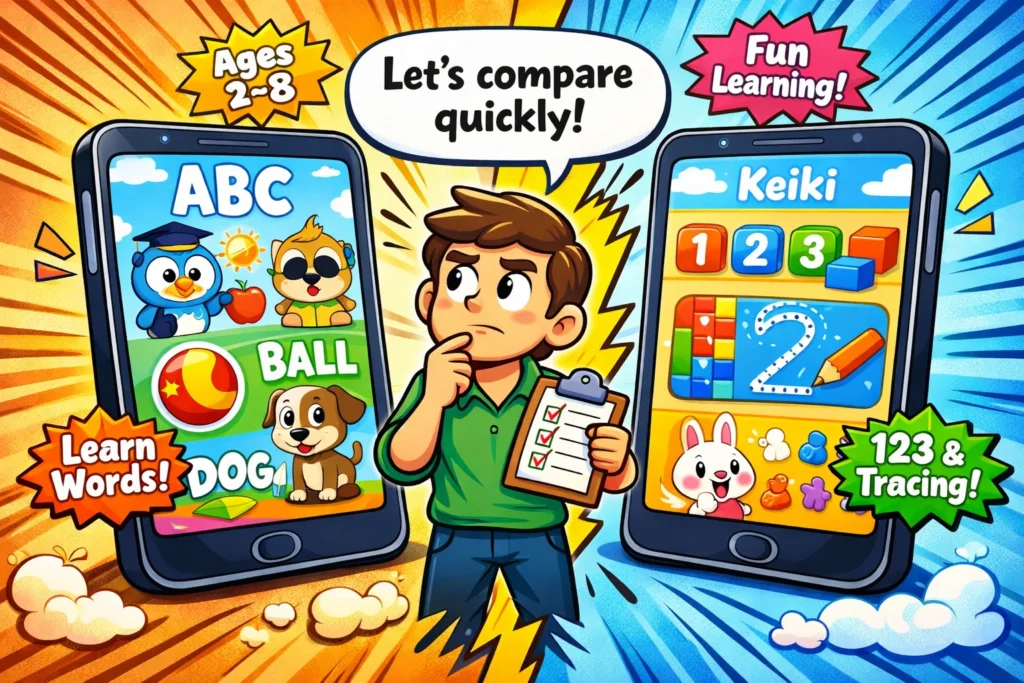
If you are looking for a rapid-fire overview, the following table highlights the essential differences between Lingokids and Keiki. Both are ad-free and focus on interactive learning, but their scope and depth vary.
| Feature | Lingokids | Keiki (Keiki World) |
| Primary Age Focus | Children aged 2-8 | Children aged 2–6+ (Toddlers & Preschool) |
| Core Subjects | Literacy, Math, STEM, Social-Emotional | Phonics, Tracing, Early Math, Logic |
| Content Volume | 3,000+ activities, games, videos, and songs | 1,500+ interactive activities and 500+ printables |
| Partnerships | Oxford University Press, NASA, BBC Earth, and other educational content partners | Internal educational experts |
| Learning Style | Immersion and “Playlearning™” | Play-based learning and repetition |
| Offline Access | Yes (Plus version) | Yes (Worksheets & Printables) |
| Free Version | Limited (daily access to a capped number of games in the Basic version) | Limited free trial only |
Target Audience
Lingokids: The Broad Spectrum
Lingokids is designed for children aged 2-8, making it a versatile choice if you have a toddler and an early elementary student in the same house. The app uses an adaptive algorithm to adjust the difficulty based on the learner’s progress. While it starts with simple colors and shapes for children aged 2 to 5, it scales up to complex problem-solving and reading comprehension for older children.
Keiki: The Early Childhood Specialist
Keiki (often listed as Keiki World) focuses more specifically on early childhood, specifically children aged 2–6+, with its content most effective for toddlers and preschoolers. While its marketing sometimes mentions ages up to 8, the interface and game mechanics are most effective for young learners who are still mastering fine motor movements and basic literacy skills. It can serve as an ideal first learning app for children transitioning from passive video watching to interactive educational play.
Content Focus
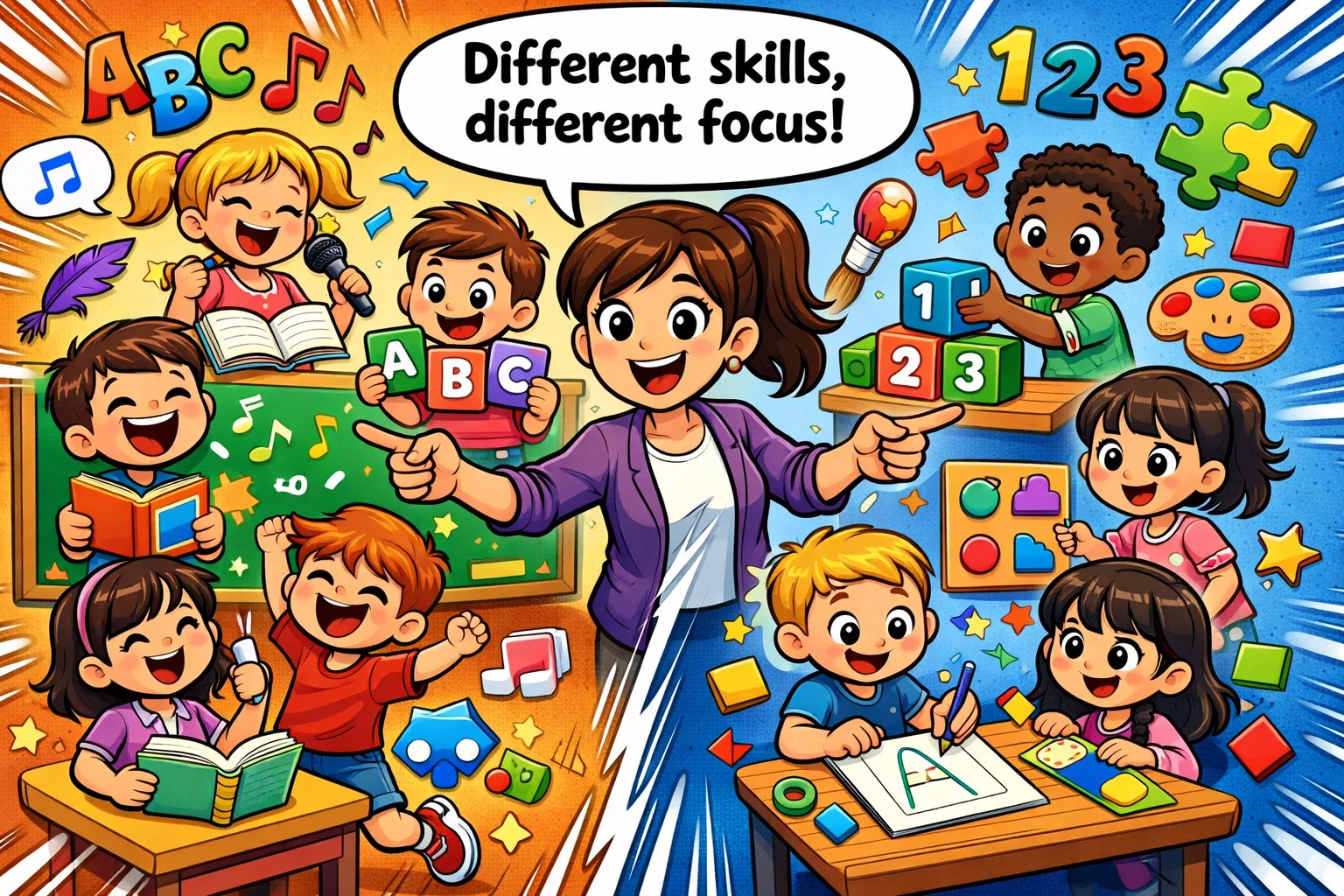
Lingokids: Holistic and Academic
The educational content in Lingokids is notably broad. Thanks to its collaboration with Oxford University Press, it excels at language learning and literacy. Beyond the basics, it introduces:
- STEM: Basic science concepts and math.
- Social Skills: Lessons on empathy, teamwork, and responsibility.
- Life Skills: Practical knowledge like healthy eating and hygiene.
Keiki: Foundational and Developmental
Keiki prioritizes the building blocks of early childhood education. The app places strong emphasis on:
- Tracing: Helping toddlers develop hand-eye coordination and fine motor skills.
- Phonics: Using interactive games to teach letter sounds.
- Cognitive Skills: Sorting, matching, and memory games that sharpen logical thinking.
Learning Style
Gamification vs. Repetition
Lingokids employs a “Playlearning™” philosophy. It resembles a high-quality animated experience in which the child plays an active role. The interactive educational games are fast-paced and use a variety of characters to keep kids engaged.
Keiki uses a more traditional play-based learning model centered on repetition. For a 3-year-old, repeating a tracing exercise in different formats helps reinforce skill mastery. Keiki’s pacing is generally a bit slower, which can be better for children who get overstimulated by high-intensity animations.
Free vs Paid Access

It is important to note that while both are free to download, they are primarily subscription-based.
- Lingokids: Offers a “Basic” free version that allows for 3 activities per day. It provides a way to explore the app, though many families find the daily limit restrictive. The Plus version unlocks the vast library and offline mode.
- Keiki: Usually offers a 7-day trial period, after which full access requires an active subscription; the app does not provide a permanent free tier comparable to Lingokids Basic. Some users report that Keiki does not offer a permanent free tier comparable to Lingokids Basic.
What Is Lingokids?

Lingokids is an award-winning learning app for kids that reports having been used by over 160 million families globally, according to company data. It isn’t just a collection of games for kids; it is a structured learning platform designed to provide a “safe hub” for exploration.
Core Features
The app offers a multi-sensory experience. It combines catchy songs (that are designed to be memorable), interactive games, and high-quality animated videos. One of its standout features is the personalized learning paths, which ensure that if a child excels at math and science, they are challenged appropriately rather than stuck on basic counting.
Curriculum Structure
The curriculum is organized by levels:
- Beginner (Ages 2-3): Focuses on listening and basic vocabulary building.
- Intermediate (Ages 4-6): Introduces early literacy, phonics, and simple sentences.
- Advanced (Ages 7-8): Focuses on reading comprehension and complex essential skills.
Strengths
- English Immersion: Exceptionally strong for families where English is a second language.
- Safety: A strictly ad-free environment with no external links.
- Depth: The vast library of 3,000+ activities, games, videos, and songs reduces repetition and keeps content feeling fresh.
Limitations
- Cost: The monthly subscription is higher than some competitors, especially when compared to apps offering weekly or discounted long-term plans.
- Stimulation: Some parents find the bright colors and high energy a bit much for right before bedtime.
What Is Keiki?

Keiki World is a specialized educational app that focuses on the “magic window” of early childhood. Developed by Benipol Limited, it has gained a reputation for being an intuitive app that helps toddlers transition into the world of digital learning.
Core Features
Keiki excels at “screen-to-paper” transitions. While the app helps with digital tracing and phonics, it also provides over 500 printables. This is a significant advantage for parents looking to reduce screen time while keeping the educational momentum going.
Curriculum Structure
Unlike the academic levels of Lingokids, Keiki organizes its content by “Skill Groups.” You can navigate directly to:
- The ABC Room: For literacy skills and spelling.
- The Math Room: For counting and shapes.
- The Logic Room: For puzzles and problem-solving.
Strengths
- Toddler-Centric: The interface is incredibly simple; even a 2-year-old can often navigate it with minimal adult assistance.
- Motor Skills: Excellent focus on fine motor skills through tracing and “drag-and-drop” mechanics.
- Visuals: Clean, calm, and visually less overstimulating than many comparable apps.
Limitations
- Longevity: Once a child hits 6 or 7, they may find the content too “babyish.”
- Breadth: It doesn’t cover the same range of life skills or STEM topics as Lingokids.
Learning Approach Comparison
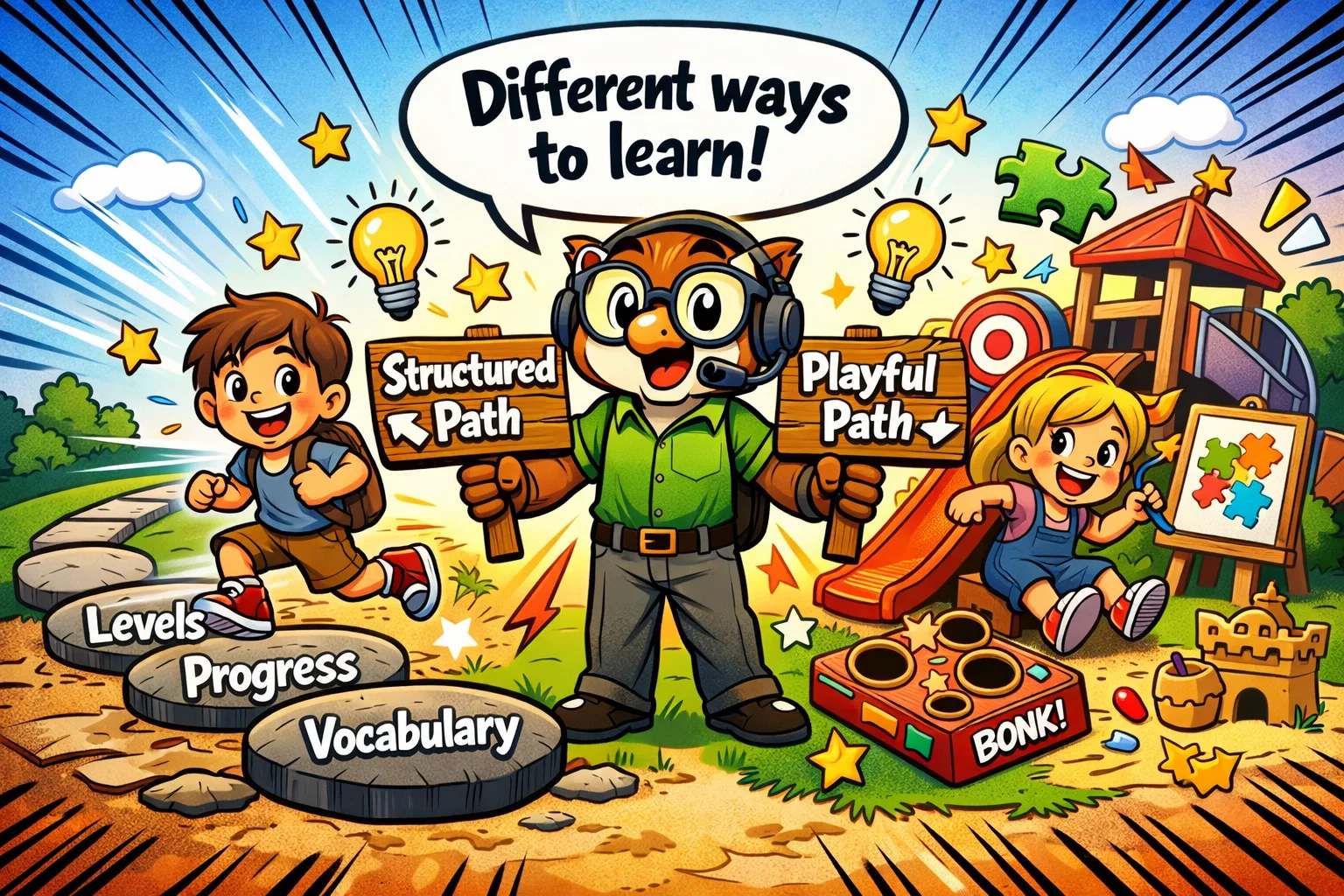
A comparison of these apps reveals two distinct instructional approaches.
Gamification Mechanics
Lingokids uses a heavy reward system. Children earn stickers and unlock new levels, which mirrors the mechanics of popular non-educational games for kids. This approach can make language learning feel more engaging and goal-oriented.
Keiki uses more subtle motivation. The “win” is usually an adorable animation or a positive audio cue. This approach helps toddlers stay focused on the task at hand rather than just clicking through to get a digital prize.
Skill Development Model
In terms of literacy, Lingokids focuses on vocabulary and grammar through immersion. Keiki focuses on the mechanics of writing and sound recognition.
As one review noted in 2025, Lingokids emphasizes immersive language exposure, while Keiki focuses on phonics and letter formation.
Independent vs Guided Learning
Both apps claim to support independent play. However, due to its simpler navigation, Keiki is slightly better suited for a 3-year-old to use solo. Lingokids, with its deeper menus and variety of content types, may indicate a need for occasional parental guidance for younger users.
User Experience for Children and Parents
Interface Simplicity
Keiki wins on simplicity. The buttons are large, and the “back” button is always in the same place. Lingokids is also user-friendly, but the sheer volume of content can sometimes feel overwhelming for a very young learner.
Parental Controls
Both apps provide robust parental dashboards. You can:
- Track which essential skills your child is practicing.
- Set daily screen time limits.
- Access “Parents Only” sections for tips and extra resources.
Device Compatibility
Both are available on the App Store and Google Play. They perform best on tablets (iPad/Android tablets) where the larger screen allows for better hand-eye coordination during tracing activities.
Pricing and Subscription Models
Pricing can be the deciding factor for many families. Please note that prices may vary based on regional currency and active promotions.
| App | Monthly Cost | Annual Cost | Trial Period |
| Lingokids | ~$13.49–$14.99 per month (depending on region and promotion) | ~ $71.88 annually (equivalent to $5.99/month when billed yearly) | 7 Days |
| Keiki | ~$7.99–$9.99 per week | including multi-month plans (such as $39.99–$59.99) | 7 Days |
Note: Keiki occasionally offers promotional long-term subscription discounts upon initial download, though availability varies by region.
Pros and Cons Overview
Lingokids
- Pros: Huge variety of content, high production value, excellent English vocabulary building, covers social skills.
- Cons: Higher price point, can be overstimulating for some, free version is very limited.
Keiki
- Pros: Perfect for toddler development, focus on fine motor and tracing, includes hundreds of printables, calmer pace.
- Cons: Content becomes too simple for older children, narrower subject range, subscription required for almost all content.
Safety and Child Suitability
Safety is often a primary concern for parents. Lingokids explicitly states COPPA compliance and operates in a strictly ad-free environment. Keiki is also ad-free and kidSAFE certified; parents should review its privacy policy for region-specific compliance details.
Data Privacy: Both apps are transparent about data collection, primarily using it to power their personalized learning paths. They do not sell data to third parties.
Independent Use: Both apps have a “Child Lock” on settings and parental sections, ensuring your child won’t accidentally stumble into the subscription menu or delete their progress.
Final Verdict: Lingokids vs Keiki
Choosing between Lingokids and Keiki shouldn’t be about finding a “winner,” but about matching the app to your child’s current needs.
Keiki may be a strong choice for children aged 2 to 5 who are just beginning their educational journey. It is a fantastic tool for early literacy, math, and developing the physical skills needed for writing.
Choose Lingokids if you want a comprehensive, multi-year learning platform that grows with your child up to age 8. Its focus on immersion and wide-ranging subjects such as STEM and life skills makes it a comprehensive option for families seeking a holistic approach.