

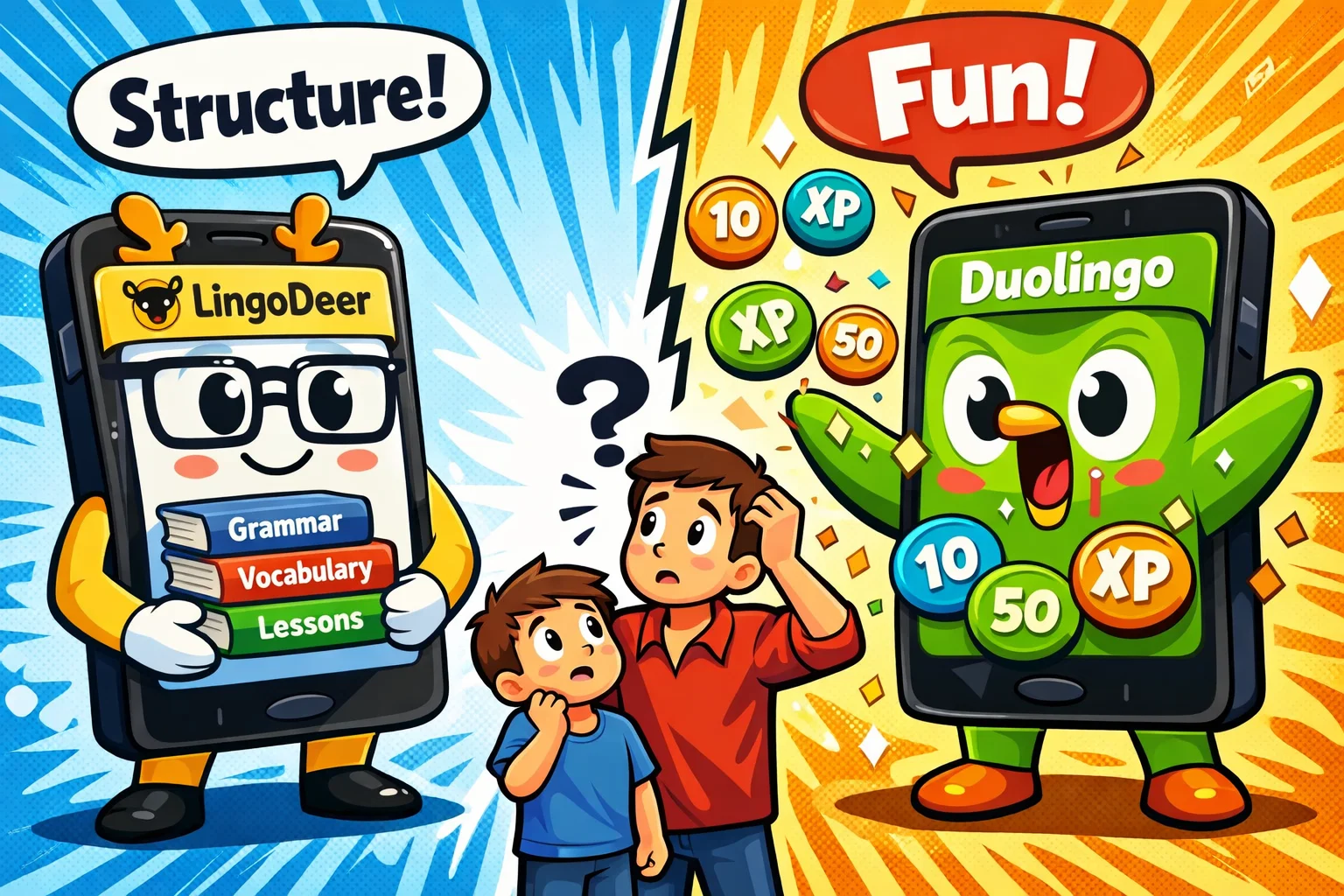
In the rapidly evolving landscape of digital education, parents and independent learners alike are often faced with a pivotal choice: which language learning app actually delivers results? For families, this decision isn’t just about the number of languages available; it’s about finding a platform that balances engagement with a solid educational foundation. In practice, the “best” app is rarely the one with the most bells and whistles, but rather the one that aligns with a learner’s specific stage and cognitive needs.
This article provides a comprehensive comparison between two major platforms: LingoDeer and Duolingo. While Duolingo has long been the household name for gamified learning, LingoDeer has carved out a prestigious reputation for its structured approach, particularly in Asian languages. This review will evaluate both platforms through a neutral, parent-centric lens—examining their curriculum depth, pricing, and suitability for different age groups to help you decide which learning app deserves a spot on your family’s devices.
LingoDeer vs Duolingo Overview
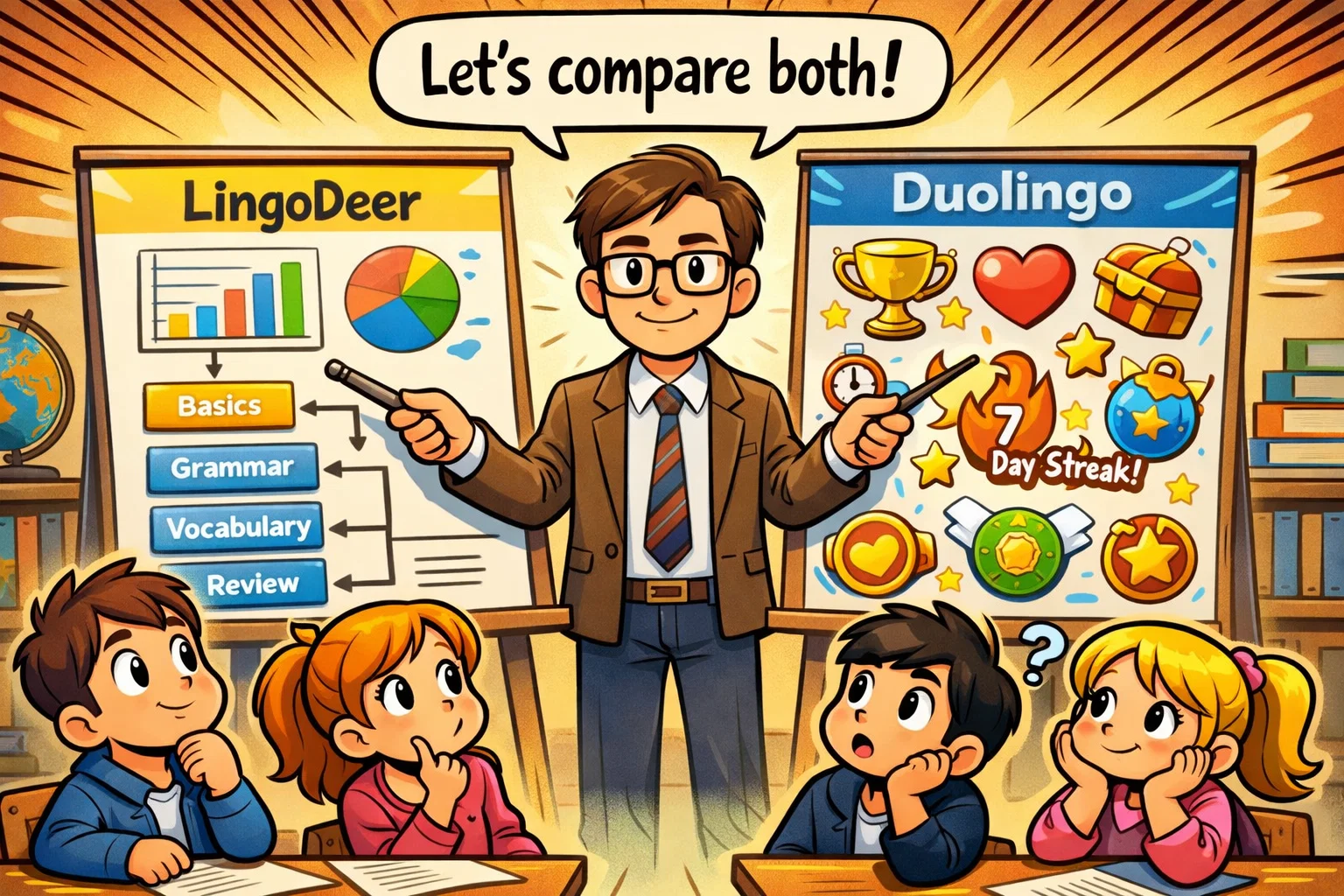
At their core, both LingoDeer and Duolingo aim to make a new language accessible. However, their instructional philosophies differ significantly. Duolingo leans heavily into the “streak” culture, using social features and game-like mechanics to encourage daily practice. It functions as a fast-paced, gamified practice environment.
In contrast, LingoDeer provides a more academic, “textbook-in-your-pocket” experience. It focuses on building a logical learning path from the ground up, prioritizing grammar and vocabulary in a way that helps the learner understand the “why” behind the language. While neither app is likely to produce full fluency on its own, both can serve as useful supplements to traditional instruction or as introductory tools for beginners.
What is LingoDeer?

LingoDeer is a language learning platform that gained recognition for its strong Japanese, Korean, and Chinese courses. Unlike many competitors that use a “one-size-fits-all” template, LingoDeer focuses on language-specific curricula. It offers structured lessons that include clear grammar explanations, high-quality audio from native speakers, and an offline mode that is useful for travel or limited internet access.
What is Duolingo?

Duolingo offers a massive catalog of over 40 languages, ranging from Spanish to High Valyrian. It is widely known for its free version, which allows users to access course content without an upfront cost, although it includes ads and a “hearts” system in the free tier. The language app uses translation-based exercises, speech recognition, and competitive leagues to keep users coming back. Its learning experience is designed to feel like a game, which can make it highly engaging for younger users.
LingoDeer vs Duolingo at a Glance
When choosing between Duolingo and LingoDeer, the primary trade-off is often between engagement and structured instruction. Duolingo is incredibly engaging for a casual learner who might otherwise struggle with motivation. Its interface is bright, the animations are playful, and the streak system creates a psychological incentive to log in. However, Duolingo does not consistently provide explicit explanations of sentence structure, which may create confusion for learners who want to understand grammatical changes.
LingoDeer wins in the category of pedagogical depth. LingoDeer includes “Learning Tips” before every unit, which are essentially mini-lessons on grammar. For a student who needs to understand the mechanics of a new language, LingoDeer does a great job of scaffolding information. While it may not have the same social buzz as the green owl, its focus on pronunciation and speaking practice—using real-world dialogues—often results in a more cohesive understanding of the language.
Course Structure and Content Depth

A significant difference lies in how these apps organize their content. Duolingo mixes vocabulary and grammar into a singular “Path,” where you move from one bubble to the next. The repetition level is high, reinforcing words and phrases until they are retained. However, some sentences may appear nonsensical (e.g., “The horse is eating a pink apple”), as they are designed to test grammar patterns rather than reflect real-world usage.
LingoDeer teaches through themed modules that are strictly sequenced. Each module introduces a set of words and phrases, followed by a grammar lesson that applies them. LingoDeer allows you to see the logic of the language as it unfolds. For school-age children, this mirrors the structured lessons they encounter in a classroom setting, making it easier to transfer their digital skills to their homework.
Language Options and Specialization
- Duolingo: Offers a vast array of languages, including minority languages like Gaelic and Navajo.
- LingoDeer: Smaller selection (the app advertises around 20 languages, though availability may depend on interface language and course structure), but widely regarded as especially strong for Asian languages.
Platform Availability
Both apps are available on the App Store and Google Play. They sync across devices, but LingoDeer offers a more robust offline mode for premium users, allowing for study in “dead zones” like airplanes or cars.
How LingoDeer Works

LingoDeer operates on a “building block” philosophy. The course follows a structured path, but learners can use the “Test Out” feature to skip ahead if they already know the material.
Lesson Organization and Sequencing
The app uses a linear learning path. A typical unit involves:
- Learning Tips: A text-based explanation of the grammar rules.
- Vocabulary Introduction: Learning new words through images and native audio.
- Practice Exercises: Multiple-choice, matching, and sentence-building.
- Story/Dialogue: An immersive reading and listening exercise using the unit’s content.
Grammar Explanations and Language Structure
This is where LingoDeer is the better choice for serious students. Instead of relying on implicit pattern recognition, it provides clear charts and explanatory notes. This is particularly helpful for languages with complex scripts, as it teaches you the sentence structure from day one.
Speaking and Pronunciation Practice
LingoDeer includes speaking exercises that require the user to record their own voice. It uses recognition technology to compare your attempt with the native speaker’s audio. The audio quality in LingoDeer lessons is consistently high and primarily features recordings from native speakers rather than synthetic voices.
How Duolingo Works
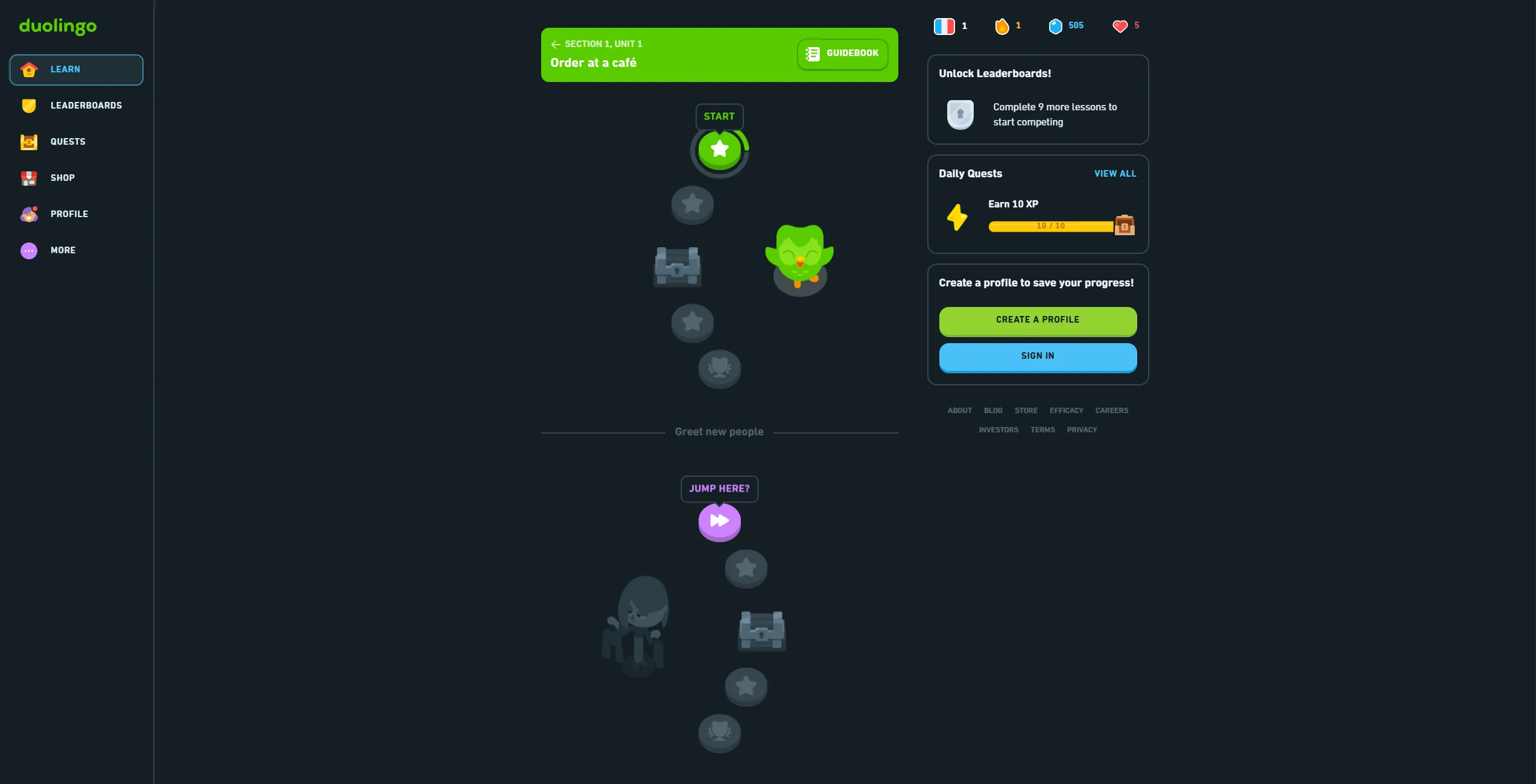
Duolingo is widely recognized for its gamified approach. It is designed to be low-friction, making it suitable for learners who have only a few minutes a day to practice.
Gamification and Engagement Mechanics
For kids, the social features are a major draw. They can add friends, compete in weekly leagues, and earn “Gems” to buy outfits for the mascot, Duo. The “Hearts” system (in the free plan) limits how many mistakes a user can make before they must wait or “buy” more with practice, which can be frustrating for a beginner but teaches accuracy.
Speaking Feedback and Accuracy
Duolingo also uses voice recognition, but it is generally more “forgiving” than LingoDeer’s. While this builds confidence in a beginner, it might not catch subtle pronunciation errors.
Adaptive Learning System
One of Duolingo’s strengths is its ability to recycle your “weak” words. If you consistently miss a specific verb, the app helps by slipping that word into future lessons more frequently.
LingoDeer vs Duolingo for Kids

| Feature | Duolingo | LingoDeer |
| Best For | Casual daily habit / Younger kids | Academic study / Teenagers |
| Engagement | Very High (Leagues, Streaks) | Moderate (Achievement badges) |
| Grammar | Intuitive / “Guess and Learn” | Explicit / Detailed Notes |
| Safety | High (Accounts for users under 13 automatically have certain social features, such as leaderboards and leagues, disabled. Additional privacy settings are available.) | High (Private learning environment) |
| Cost | Generous free version | Limited free content |
Preschool and Early Readers
For children under 7, Duolingo definitely has the edge. The bright colors and immediate rewards are highly stimulating. However, since both apps require some level of reading, parents will likely need to sit with the child to explain the prompts.
Elementary School Children
In this age bracket, the choice depends on the child’s learning style. If they love competition, choose Duolingo. If they are the type of student who asks “but why is it said that way?”, choose LingoDeer.
Teenagers
For teens preparing for exams or looking for fluency, LingoDeer is a language learning tool that offers more “meat.” The grammar explanations and real-world dialogues provide a much stronger foundation for high school language classes.
Plans and Pricing Comparison
Money is often the deciding factor for families. Here is how the costs break down as of early 2026:
- Duolingo’s Free Version: Offers full access to all courses but includes ads and the heart limit.
- Super Duolingo (Premium): In the U.S., pricing is often shown around $12.99/month or approximately $84/year, though exact prices vary by country, platform (iOS/Android/Web), taxes, and promotional offers. It removes ads and provides unlimited hearts.
- Duolingo Family Plan: Typically around $120/year in the U.S. for up to 6 accounts (one manager plus five members), though pricing varies by region and platform. This is often the most cost-effective option for families.
- LingoDeer Premium: On the official website, pricing is often listed around $14.99/month or approximately $95.99/year, though discounts and regional pricing may apply.
- LingoDeer Lifetime: LingoDeer offers a one-time “Lifetime” purchase (often listed around $199.99), though availability and promotional pricing may vary by region and time period.
For learners studying Asian languages, LingoDeer Premium may offer additional value due to its character-writing tools and detailed grammar explanations. In some regions, Duolingo also offers a higher-tier subscription called Duolingo Max, which includes additional AI-powered explanation features and roleplay exercises. Availability and pricing vary by country.
Pros and Cons
LingoDeer
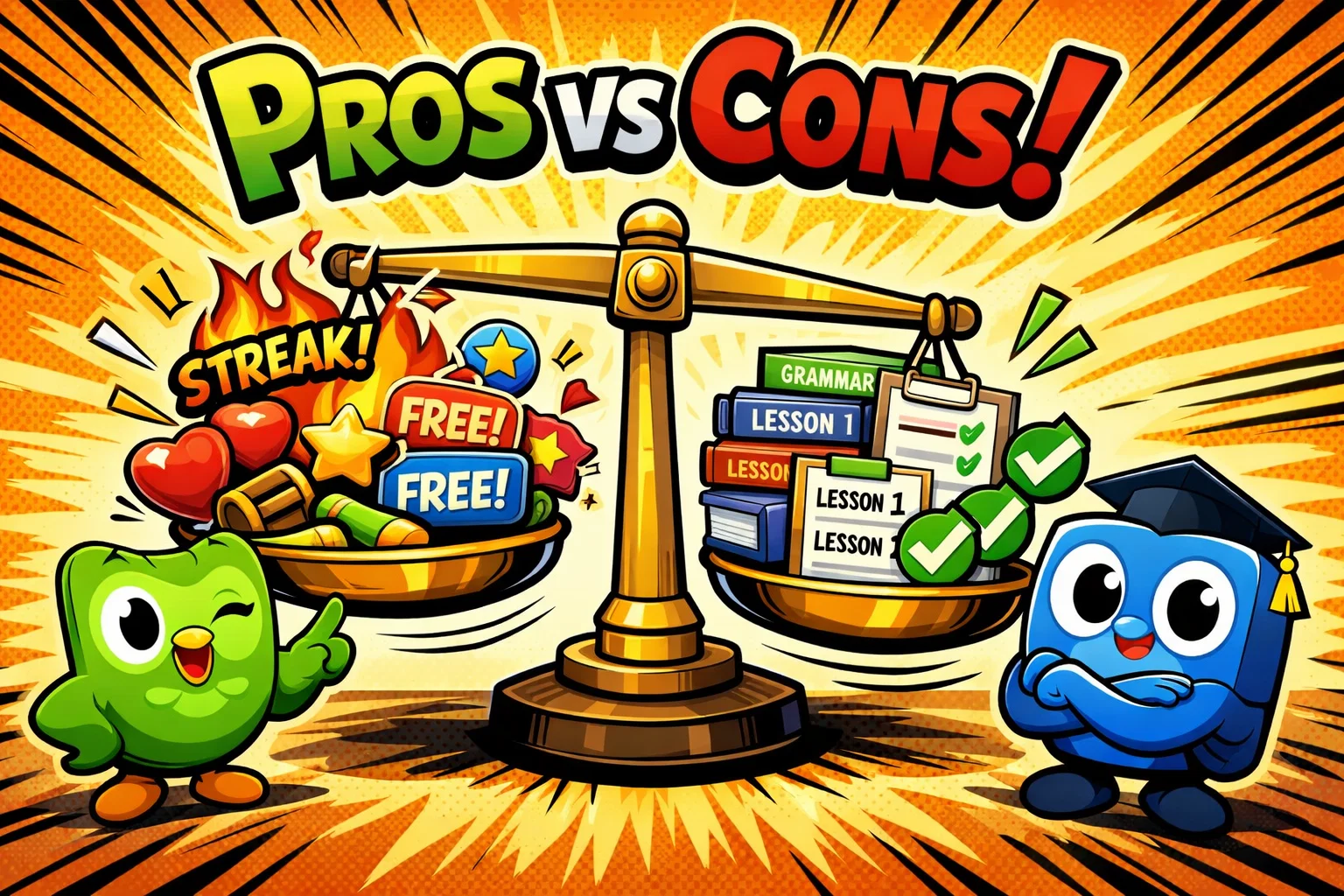
- Pros: Exceptional grammar notes; high-quality native audio; excellent for Japanese/Chinese/Korean; offline mode.
- Cons: Smaller language list; the free version is limited (Alphabet and Unit 1 are free, along with Phrasebook and Test-Out features, but full course access, offline learning, and cross-device sync require Premium).
Duolingo
- Pros: Massive language variety; free plan is very functional; high engagement; great for building a daily habit.
- Cons: Lacks deep grammar instruction; audio quality and naturalness can vary depending on the language course; includes ads in the free version.
Which App Should You Choose?
In the end, choosing the right app boils down to your goals. Duolingo may appeal more to casual learners who want consistent, low-pressure practice. It’s a fantastic way to introduce a child to the idea of a new language without any financial commitment.
However, if a learner is serious about achieving fluency or is studying a language such as Japanese, LingoDeer may provide a more structured framework. Many successful learners actually use either app in tandem—using LingoDeer for the heavy lifting of grammar and Duolingo for a quick, fun review of vocab.