

Choosing the right early learning app in 2026 can feel like navigating a vast digital landscape. With screen time becoming an integral part of modern parenting, the focus has shifted from simply keeping kids entertained to choosing a learning platform that supports developmental milestones. Two prominent names in this space, ABCmouse and Kiddopia, both gear their content toward the same foundational years, yet they offer remarkably different philosophies on how kids learn.
This guide provides a neutral, in-depth comparison of how these apps perform. Whether you seek a highly structured learning environment or a playful, creative “sandbox” to engage your toddler, understanding the nuances of their educational content, subscription models, and learning approach is essential. Let’s dive into the details to help find the best fit matching your family’s educational journey.
Kiddopia vs ABCmouse: Key Differences
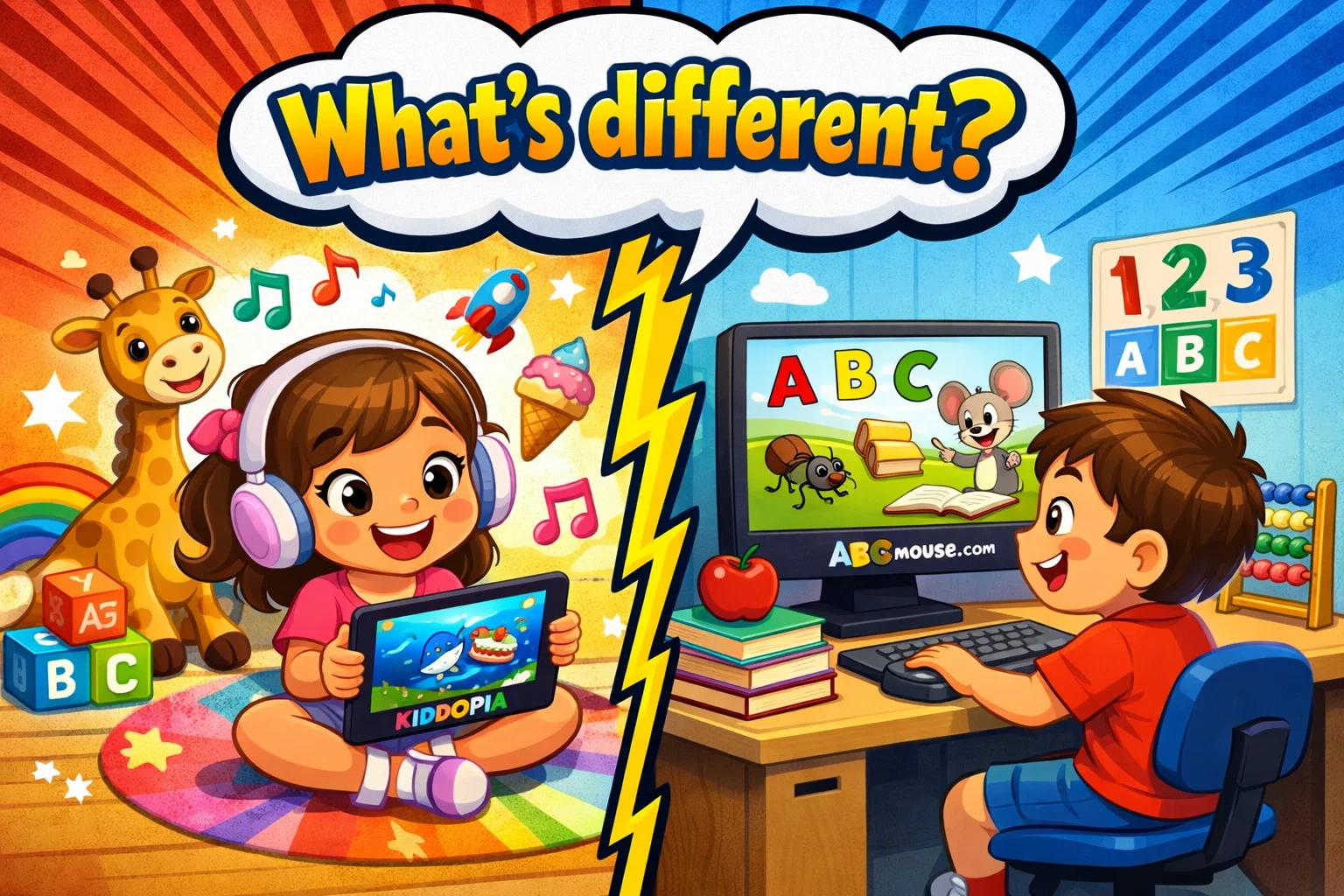
While both apps aim to create engaging learning experiences, they serve distinct niches. ABCmouse, developed by the Age of Learning, is a comprehensive learning program mirroring a traditional school curriculum. It focuses on a step-by-step learning path guiding children aged 2 to 8 through subjects like literacy, learning math, and social studies.
In contrast, Kiddopia functions more as an interactive playground. This popular early learning app targets children aged 2 to 7, emphasizing creativity, role-playing, and “implicit” learning. While it covers basic learning blocks like ABC and numbers, its primary draw remains the variety of games encouraging problem-solving through play rather than a rigid academic sequence.
Overview of Kiddopia
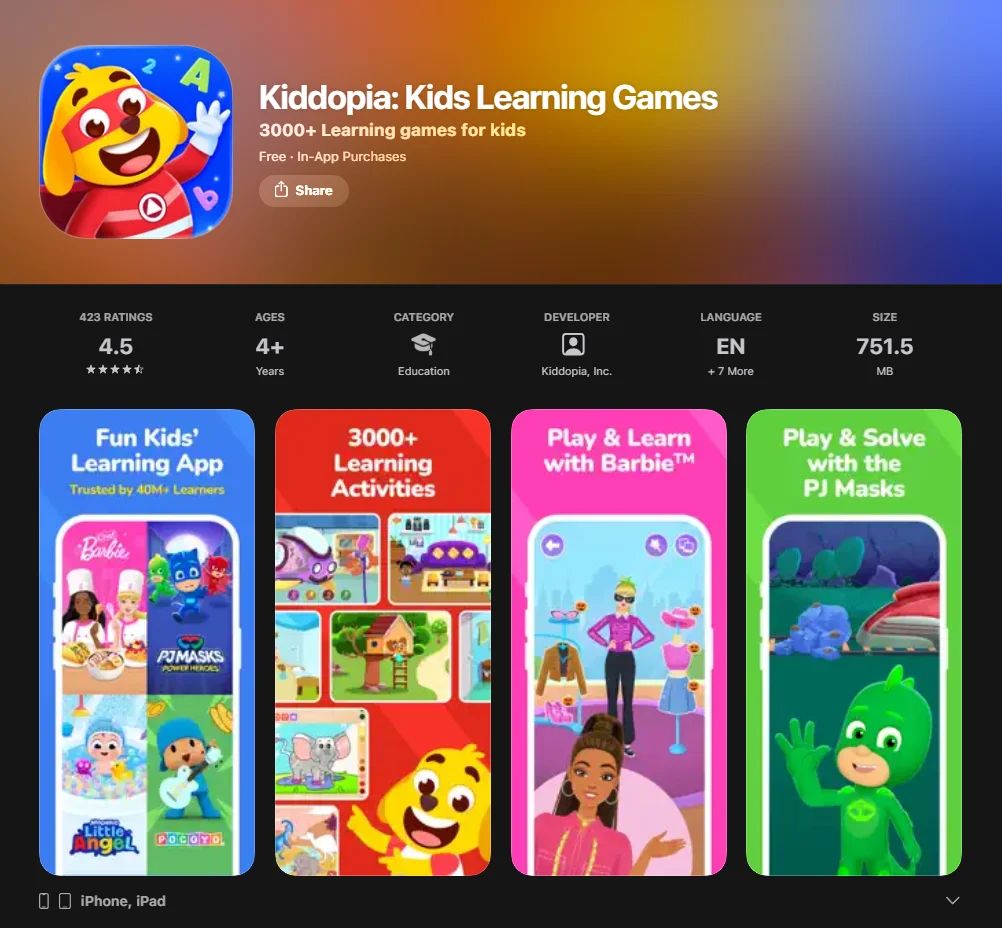
Parents often describe Kiddopia as a “joyful blend” of games and activities. It boasts over 1,000 learning activities designed to foster self-expression. The app is widely recognized for its vibrant graphics and the inclusion of popular characters from brands like Barbie™, Pocoyo, and PJ Masks. It provides a kid-safe environment that requires minimal supervision, making it a favorite among younger children who enjoy exploring at their own pace.
Overview of ABCmouse
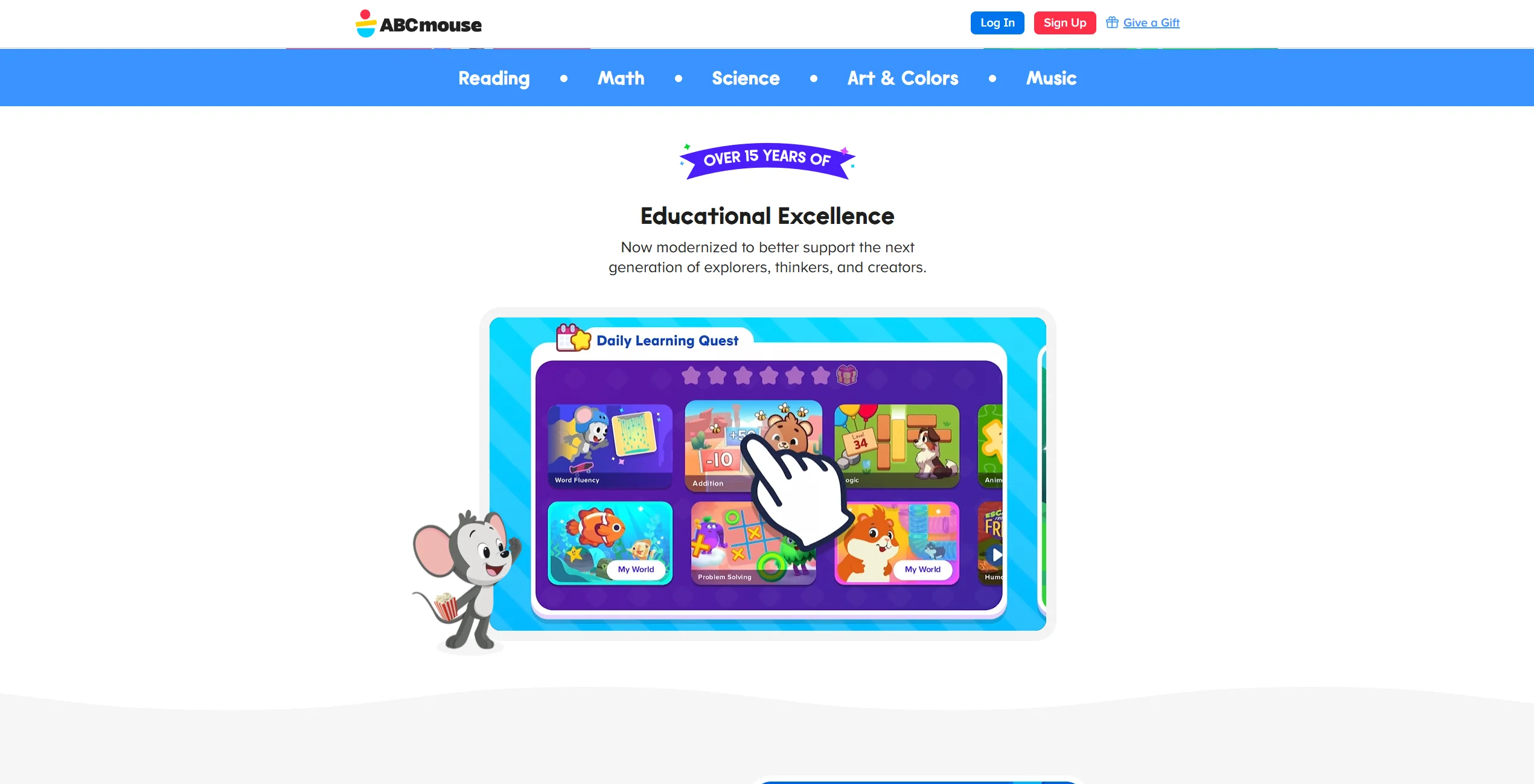
ABCmouse is perhaps the most established educational app on the market, used in over 600,000 classrooms. It offers a massive library of over 10,000 learning activities, including games, songs, and digital books. The app’s structure revolves around a “Learning Path” with 10 levels. As kids practice, they earn tickets to spend in a virtual store, which helps keep kids motivated through a sophisticated adaptive learning and rewards system.
Strengths of Kiddopia
- Creative Focus: Excellent role-playing opportunities, where children can be a chef, doctor, or astronaut.
- Intuitive UI: The learning environment allows toddlers to navigate without parental help.
- Engagement: Well-known characters and “surprise” updates keep the content fresh.
- Broad Skill Development: Goes beyond academics to nurture life skills and global values.
Strengths of ABCmouse
- Academic Depth: Deep coverage of social studies, science, and language learning.
- Progress Tracking: Excellent tools allowing parents to see exactly where their child excels.
- Comprehensive Curriculum: The structured learning path helps prevent gaps in a child’s educational foundation.
- Versatility: One subscription covers up to three children, each with their own unique profile and learning level.
How Kiddopia and ABCmouse Cater to Different Age Groups
Understanding a child’s developmental needs is the first step in choosing an early learning app. A four-year-old’s educational needs differ vastly from those of a seven-year-old starting elementary and middle school transitions.
Kiddopia Preschoolers’ Suitability
Kiddopia is a powerhouse when it comes to preschoolers. Its learning games focus on “frustration-free” experiences. The app utilizes “implicit learning,” where children pick up concepts like logic and pattern recognition while “baking” a cake or “fixing” a car. It is particularly effective for children aged 2 to 5 who are still developing the fine motor skills needed to navigate complex interfaces.
ABCmouse: Pre-K and Beyond
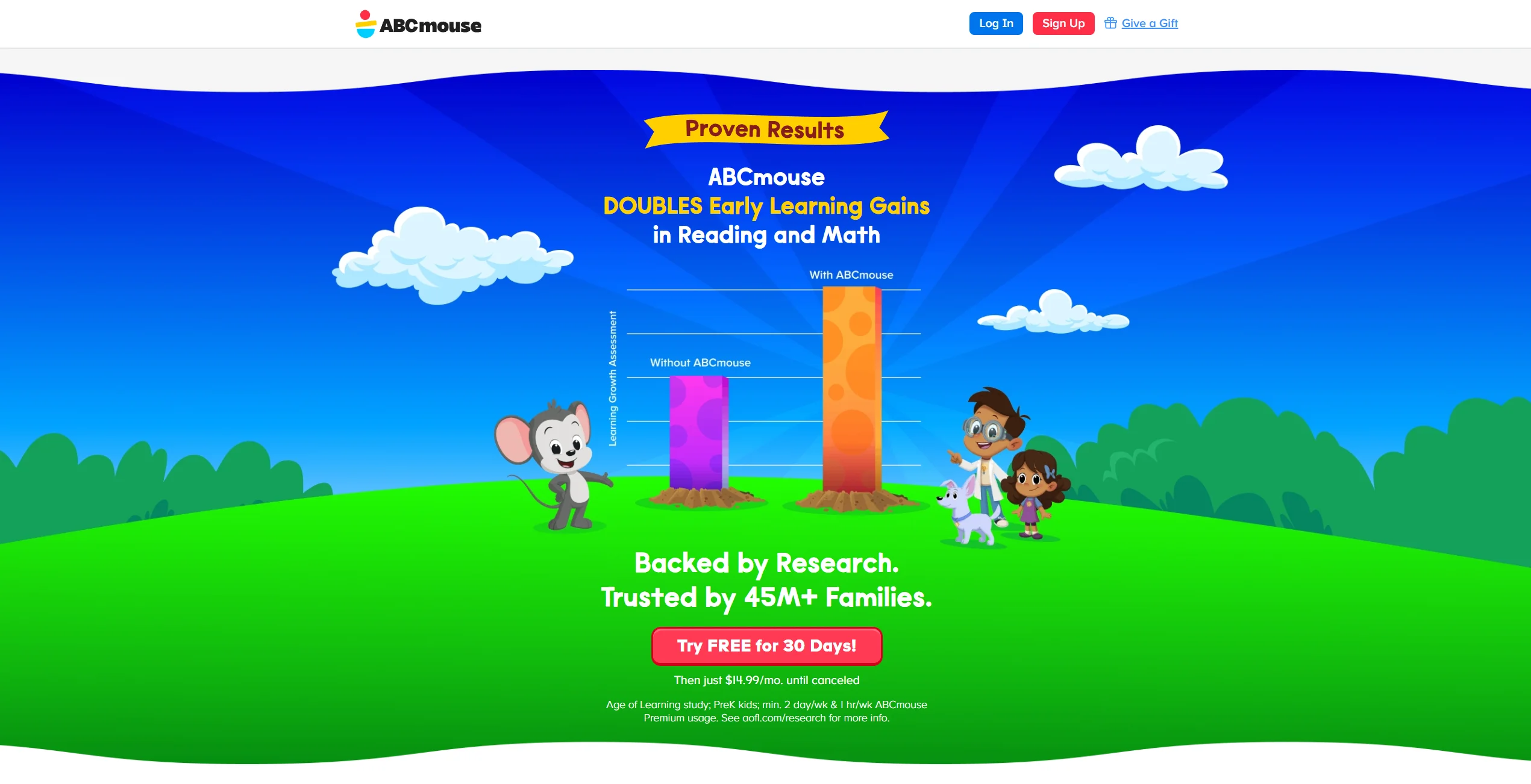
While ABCmouse starts at age 2, many educators suggest it truly shines in supporting kids in grades Pre-K through 2nd grade. The structured learning environment better serves older kids ready to follow directions and complete specific tasks to level up. Including learning materials like 1st and 2nd-grade math and science makes it a longer-term investment in academic support.
Age-Appropriate Features for Each App
| Feature | Kiddopia (Ages 2–7) | ABCmouse (Ages 2–8) |
| Primary Method | Open-ended play & role-play | Step-by-step curriculum path |
| Math Content | Number recognition, basic shapes | Addition, subtraction, fractions |
| Literacy | Phonological awareness, tracing | Phonics, sight words, reading books |
| Science/Social Studies | Basic themes in games | 850+ dedicated lessons |
| Offline Access | Limited game downloads | Comprehensive printable activities |
Pricing Comparison: Kiddopia vs ABCmouse
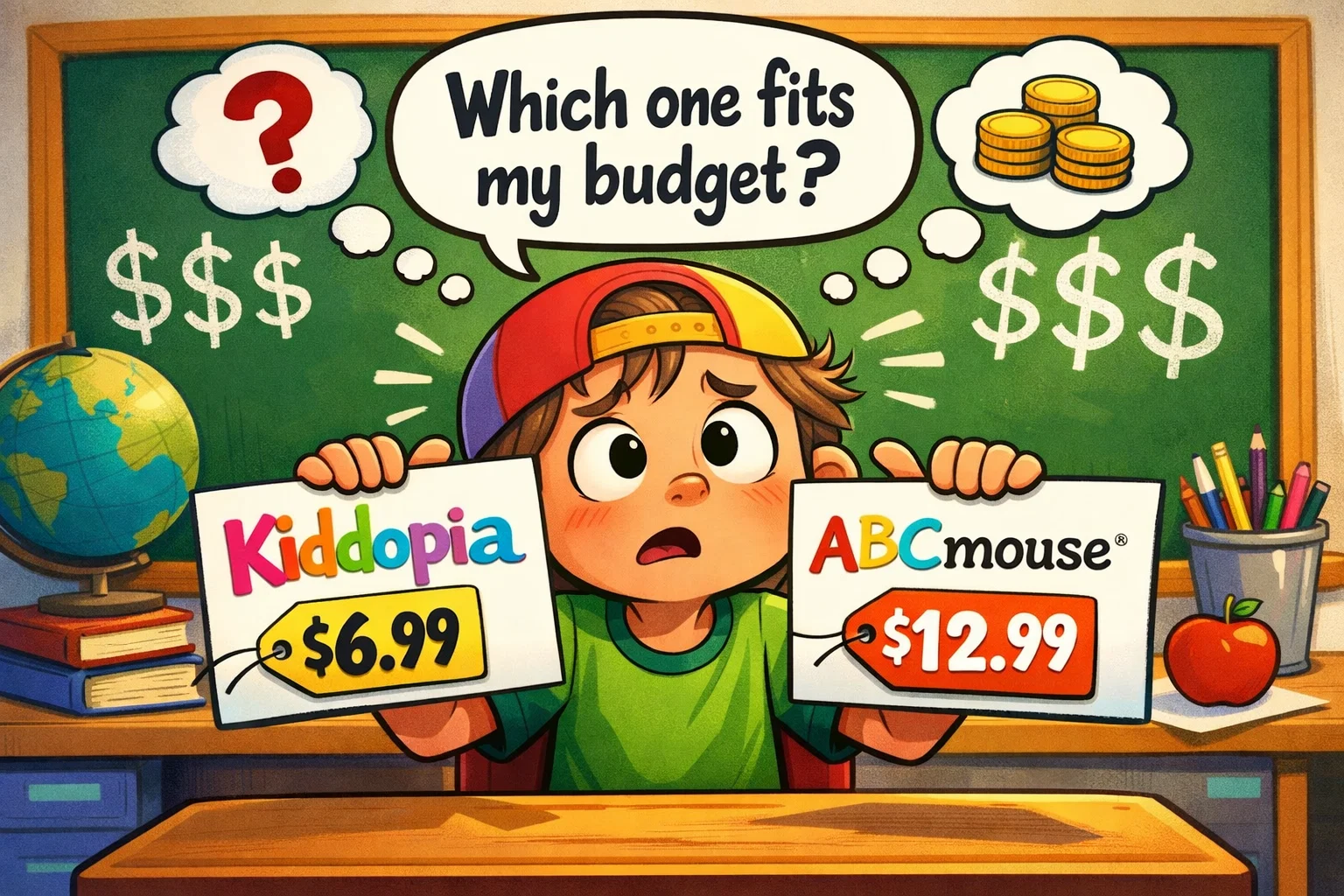
Cost is a major factor when families select a subscription service. Both apps offer various billing cycles and occasionally provide a 30-day free trial or 7-day trial period to let kids explore before committing.
Kiddopia Pricing Breakdown
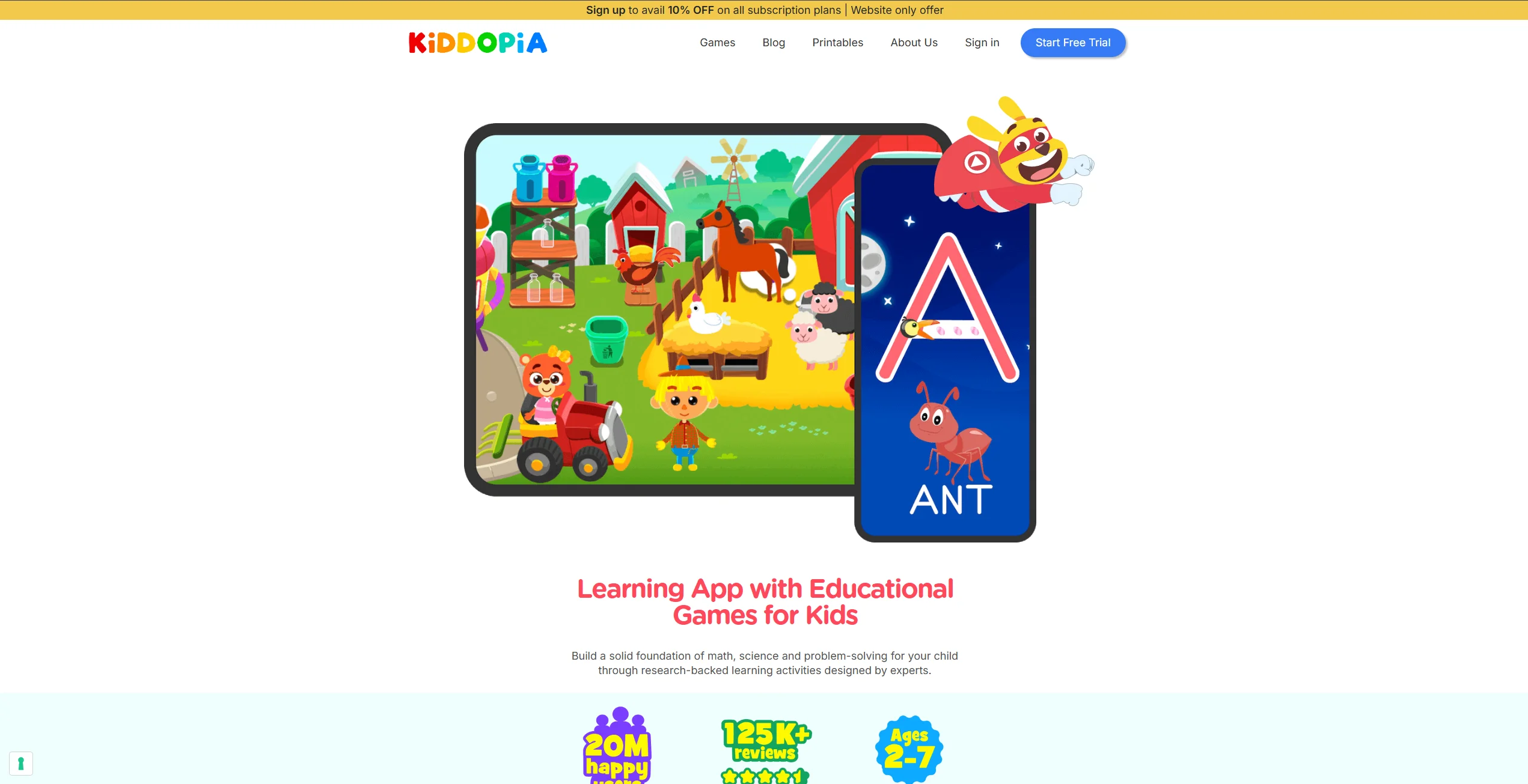
In 2026, Kiddopia operates on a premium subscription model:
- Monthly Subscription: $12.99 per month.
- Annual Plan: Priced around $79.99 per year ($6.67 per month equivalent).
- Family Sharing: One subscription covers multiple household devices.
- Free Trial: Typically offers a 7-day free trial.
ABCmouse Pricing Breakdown
ABCmouse offers flexible pricing, with frequent discounts for annual subscriptions:
- Monthly Subscription: Around $14.95 per month.
- Short-term Plan: $29.99 every 6 months.
- Annual Plan: Frequently discounted to $45.00–$59.99 per year.
- Assessment Center: Sometimes requires an additional fee to access advanced testing tools.
- Free Trial: Often provides a full 30-day free trial.
Value for Money
When assessing value, it’s important to consider the number of children using the app. ABCmouse is often cited as the better value among larger families because it allows three separate student profiles under one account. However, Kiddopia is frequently praised for its high “replay value,” as children rarely get bored of the sandbox-style games and activities.
Features Comparison: What Sets Kiddopia and ABCmouse Apart
The learning experiences on these two platforms are distinct. While one feels like a digital schoolhouse, the other resembles a digital toy box.
Educational Content: Math, Reading, and More
ABCmouse provides a massive learning platform with 10,000+ activities. It covers learning basic reading skills and learning math through a pedagogical lens. If the goal is ensuring a child meets state standards, ABCmouse is the more direct route.
Kiddopia, while less vast, focuses on “holistic” growth. It includes educational content related to environmental awareness, self-care, and basic coding logic. This app focuses on developing “soft skills” alongside traditional academics.
Fun and Interactive Elements
In Kiddopia, interactive educational elements take center stage. Kids don’t just “do a lesson”; they join a character’s mission. The animations are high-quality, providing instant, encouraging feedback.
ABCmouse uses a “Tickets and Rewards” system. As kids can play and learn, they earn virtual tickets to decorate a digital room or buy pets. Many children find this gamification a major hook that keeps them returning to their learning path.
User Interface and Ease of Use
Kiddopia is arguably the more “toddler-friendly” choice. Large icons and minimal text make it an ideal app for kids who cannot yet read. ABCmouse, because of its sheer content volume, can sometimes feel cluttered. Some parents note that kids get the best results when an adult helps navigate the various menus initially.
Kiddopia vs ABCmouse: Reviews from Parents and Educators
To provide a truly neutral overview, it is important to look at community feedback regarding these top educational apps.
Kiddopia Reviews
Kiddopia is a learning app that keeps toddlers engaged without the concern of excessive screen time. My daughter loves the ‘dentist’ game; she’s even stopped being afraid of her real checkups.
Common Pros:
- High engagement to keep boredom at bay.
- Safe, ad-free environment.
- Regularly updated learning games.
Common Cons:
- Some parents find the “impatient” characters (tapping feet) slightly stressful.
- Lacks the deep progress tracking found in competitors.
ABCmouse Reviews
ABCmouse provides structured learning that aligns well with school curricula, making it an excellent supplement for home use.
Common Pros:
- Proven learning program with results supported by research.
- Massive variety—kids rarely “finish” the app.
- Great tool to assist homeschooling and elementary and middle school prep.
Common Cons:
- The interface can feel “dated” compared to newer ipad apps.
- The reward system can sometimes distract from actual lessons (e.g., over-customizing an avatar).
Final Verdict: Which App is the Best for Your Child?
Ultimately, ABCmouse and Kiddopia are both excellent tools, but they cater to different educational needs. There is no “one size fits all” in online learning, as every child’s learning process is unique.
Kiddopia is Best for…
- Toddlers and preschoolers (ages 2–5).
- Encouraging creativity and role-playing.
- Children who prefer “sandbox” style games over structured tasks.
- Families looking for a simple, easy-to-navigate kids app.
ABCmouse is Best for…
- Kids in grades K–2 (ages 5–8).
- Providing a rigorous, curriculum-based learning journey.
- Tracking detailed academic progress.
- Budget-conscious households with multiple children using one subscription.
Related Articles and Resources
If you are still exploring educational apps available in 2026, consider checking out these additional resources:
Best Educational Apps for Kids
Beyond these two, many other learning apps for kids might fit your needs. Popular alternatives include Khan Academy Kids (a free educational platform) and PBS Kids, which features familiar characters.
Learning Apps Comparison for 2026
For a broader perspective, our 2026 roundup of the top 10 learning apps compares platforms like Duolingo ABC (for literacy), Prodigy (for math), and Epic! (for digital reading). Each has a learning approach tailored to specific subjects.