


Welcoming a new baby into your family is a momentous occasion, but for an older child, the transition can feel like a major shift in their world. While parents are navigating the “fourth trimester” – a period of intense physical and emotional adjustment – the older sibling is often grappling with a change in their place in the family. Maintaining a sense of routine is not just about logistics; it acts as a psychological anchor that provides emotional security and reduces the likelihood of behavioral regressions.
When a new family member joins the household, the structural integrity of your daily life is tested. However, by prioritizing routine stability, you can mitigate the stressors of sleep deprivation and shifting identities. For the new family to thrive, you must view your schedule through a lens of “flexible consistency” – preserving the structural predictability essential for child development while respecting the biological needs of a newborn.
Preparing Family Before Baby Arrival

The practical decisions you make in the months before the baby arrives determine the stability of your home after the birth. Preparing your child for a new baby involves more than setting up a nursery; it requires protecting their existing world from unnecessary disruption.
Timing conversations with older sibling
When you tell your child about the new baby sibling depends largely on their age. For a toddler, telling them too early can lead to what many parents call “waiting fatigue” as they have little concept of time. In contrast, older children may benefit from knowing sooner so they can process the idea of a new sibling at their own pace. The goal is to keep the conversation reassuring. Use the months before the baby arrives to explain that while a new baby brother or sister is coming, their familiar “special times” with you will remain a priority.
Setting routine expectations early
Children thrive on routine because it makes the world predictable. Well before the baby arrives, start verbally reinforcing the “anchors” of their day. You might say, “Even when the baby comes home, we will still have our three books before bed,” or “Daddy will still take you to the park on Saturday mornings.” This kind of verbal mapping helps the older child feel secure in the knowledge that their core life remains intact.
Avoiding major transitions before birth
One of the most common mistakes when helping siblings adjust is attempting too many changes at once. If you need to move your older child to a new room or start potty training, do it at least two to three months before the baby’s arrival. If you haven’t started these milestones by the third trimester, it is often better to wait until the new baby has settled in. Introducing a big change simultaneously with a new sibling can overwhelm a child’s cognitive and emotional resources.
Emotional Preparation of Older Children
Welcoming a new baby is a normal developmental stressor. While we want our children to be excited about the new arrival, it is natural for them to feel a mix of curiosity and jealousy.
Addressing mixed emotions without disrupting routines
A child may experience a range of feelings when the arrival of a new baby becomes a reality. It is important to validate these emotions without overcompensating by relaxing household rules. If an older sibling expresses frustration, acknowledge it: “It’s okay to feel sad that Mommy is busy with the baby right now.” However, keep the routine firm. Maintaining boundaries shows the child that their world is still safe and guided by capable adults.
Using relatable tools and stories
Reading a book together about becoming an older sibling is a research-backed way to help a child visualize the future. Social stories and role-playing with a doll can help a toddler or older child practice gentle touch and understand baby care.
- Tip: Let your child pick out baby items, like a blanket or a rattle, to give them a sense of agency and involvement.
Creating safety through predictability
Consistent daily rhythms reduce anxiety. When the environment is predictable, the child’s “cognitive load” is reduced. They don’t have to wonder when they will eat or who will tuck them in, which frees them up to focus on the emotional task of joining the family in their new role.
Maintaining Daily Routines During Transition
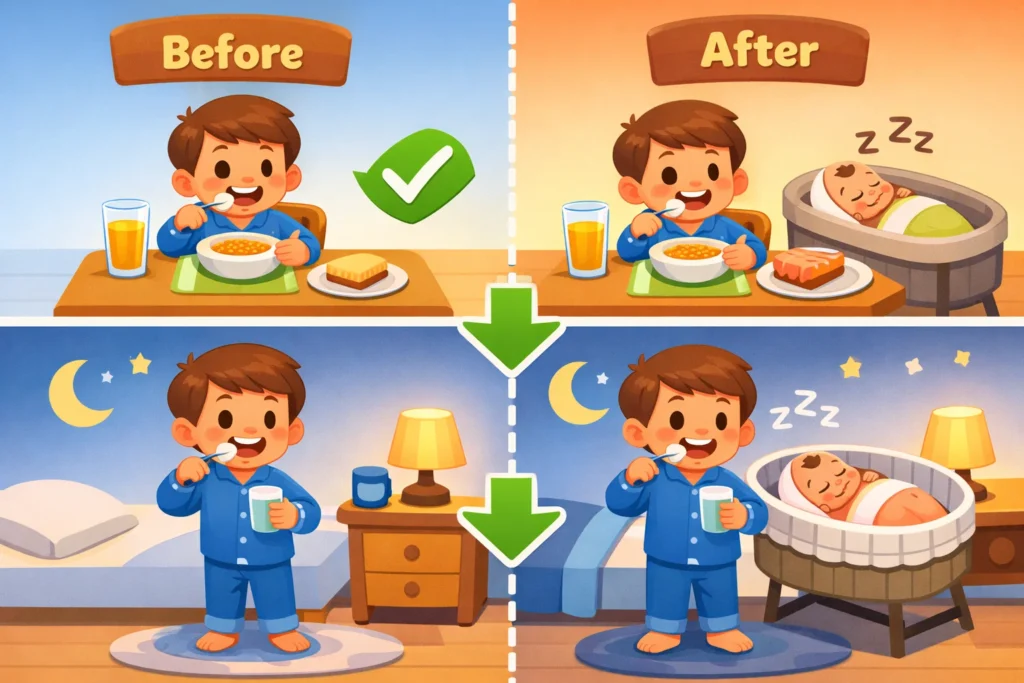
This is the core of a successful transition. Once the new baby arrives, the temptation to let the older child’s schedule slide is high due to exhaustion, but consistency is one of your strongest tools.
Protecting sleep routines for older children
Sleep deprivation is the biggest risk factor for household instability. While the newborn’s sleep is unpredictable, the older child’s bedtime and wind-down rituals should stay identical to their pre-baby life. If the older sibling usually has a bath and two stories, maintain that precisely. This reassures them that even though the new baby is here, their needs are still being met.
Keeping meal and activity schedules consistent
Children thrive on routine, especially regarding hunger. Aim to keep meals and snacks at the same time every day.
Expert Insight: “Both infants and older children are highly sensitive to the quality of their interpersonal environment. When parents maintain a predictable domestic environment, it reduces their own stress, allowing them to be more responsive to both the newborn and the older children.”
Using visual schedules and reminders
For a toddler, a visual routine board with pictures of their daily tasks (breakfast, teeth brushing, park time) can be a “game-changer.” It allows them to anticipate their day without needing to constantly ask for reassurance.
| Routine Pillar | Strategy for Success | Goal |
| Morning | Keep wake-up times and breakfast rituals identical. | Start the day with a sense of “normalcy.” |
| Playtime | Schedule 15 minutes of “Special Time” with the older child. | Reinforce their place in the family. |
| Bedtime | Protect the wind-down ritual at all costs. | Ensure the child feels secure before sleep. |
First Days After Bringing Baby Home
The period when you first bring home your newborn is the most fragile for family dynamics.
Managing first encounter with routine in mind
During the first meeting between the older child and the baby, try to have the newborn in a bassinet rather than in your arms. This allows you to give the older child a big hug first, reinforcing that they are still your priority. This small gesture can significantly help your child feel welcomed into the new family structure.
Balancing newborn care with existing structure
When the new baby comes home, try to align the baby’s “wake windows” around the older child’s existing anchors. While you can’t force a newborn onto a schedule, you can try to time the older child’s independent play during the baby’s longest nap.
Handling temporary disruptions
Some disruptions are inevitable. If the older child stays up 30 minutes late one night because the baby arrives home late from the hospital, don’t panic. The key is to return to the normal routine the very next morning.
Involving Older Children Without Disrupting Stability
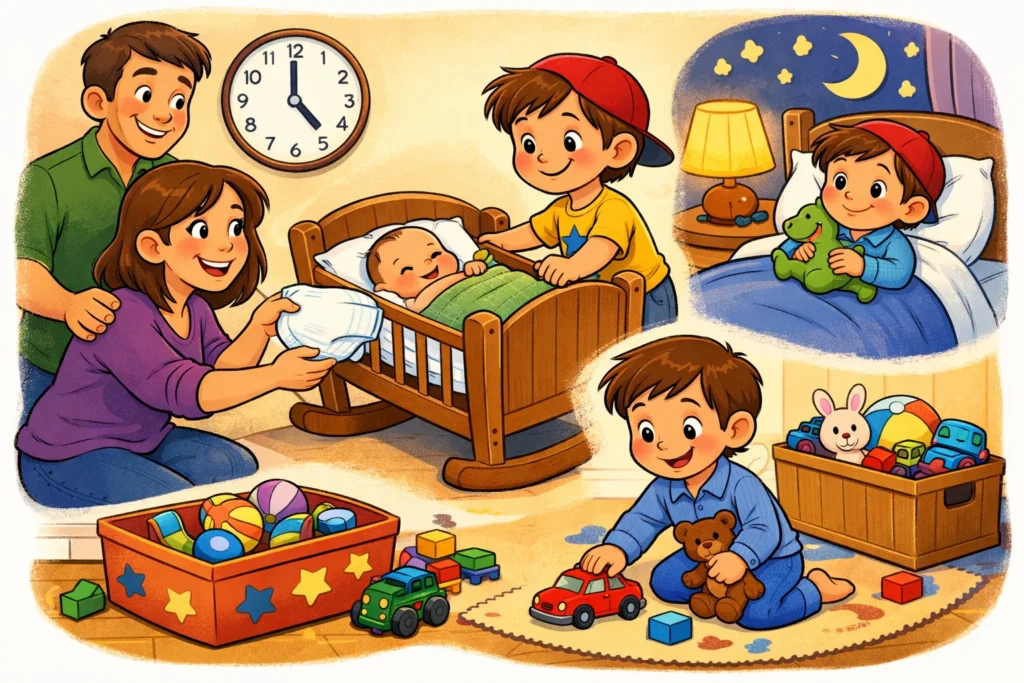
Inclusion should happen inside the routine, not instead of it.
- Predictable Tasks: Let older children help with small things, like bringing a diaper or singing to the baby during a change.
- One-on-One Time: Short, 10-minute blocks of undivided attention are more effective than one long “special event” that disrupts the day.
- Bonding: Encourage the child to hold the baby (with support) during a time they would normally be sitting with you anyway.
Managing Behavioral Changes While Keeping Structure
Older children may experience regressions – like “accidents” after being potty trained or using “baby talk.”
Responding to regressions calmly
When a child begins to express stress through regression, respond with “flexible consistency.” Validate the feeling (“You want to be a baby like your sister today? Let’s snuggle!”) but don’t abandon the routine. Shaming the child will increase their anxiety; instead, praise “big kid” behaviors when you see them.
Why consistency matters more than flexibility
While it feels kind to be flexible when your child is older and struggling, over-flexibility can actually increase their insecurity. They need to know that the rules haven’t changed just because a new baby has joined the family.
Long-Term Routine Stability for Growing Family
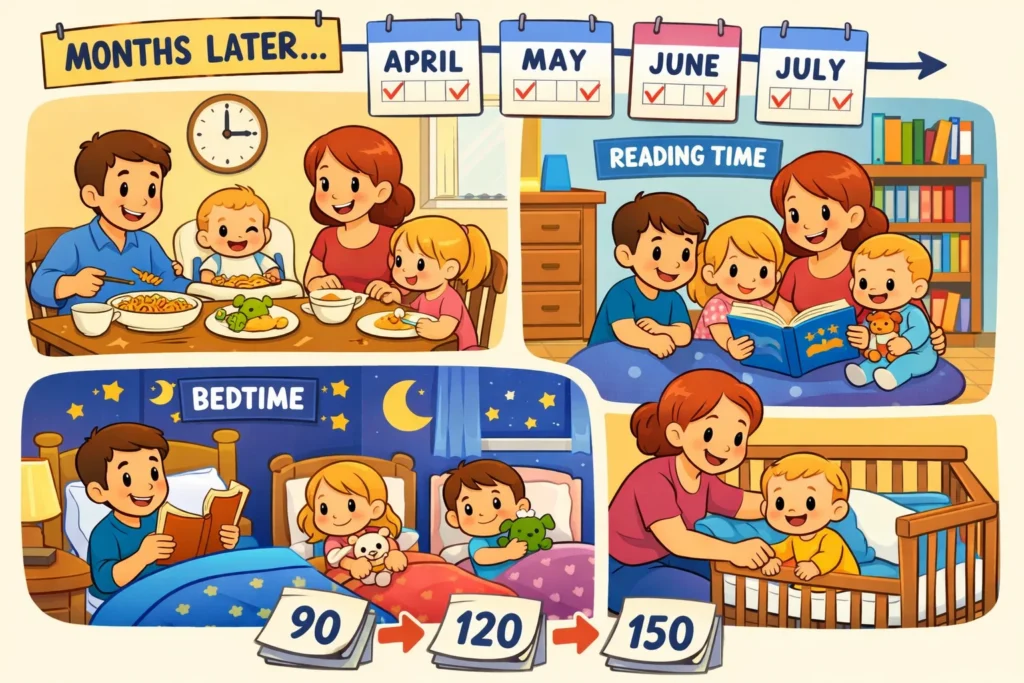
As the weeks pass, most families move from survival mode to a more sustainable family rhythm.
Adjusting routines gradually
As the new baby sibling grows, their naps will become more predictable. Gradually merge the children’s schedules – for example, having a shared “quiet time” in the afternoon.
Building family resilience
Stable routines months after the arrival of a baby support long-term emotional health. When children know what to expect, they are more resilient to the smaller stresses of daily life.
Routine Stability Tips by Child Age
Routines for toddlers
Toddlers rely on sensory predictability. Use the “3 Bs” (Bath, Book, Bed) and “Habit Stacking” – attaching a new behavior to an old one – to keep them grounded.
Routines for preschool and school-age children
Older children preparing for the arrival of a sibling can take on more responsibility. They might help “manage” the routine by checking off the visual schedule, giving them a sense of pride in their new role.
FAQ About Welcoming A New Baby
Ideally, no. While the adults’ lives will change drastically, the older child’s core routine (meals, school, bedtime) should remain as stable as possible to provide a sense of security.
Most families find a “new normal” within 6 to 12 weeks. Using tools like smart technology (AI sleep trackers or automated grocery delivery) can help shorten this transition by reducing the parents’ cognitive load.
The “anchor routines” are most vital: sleep, meals, and the one-on-one time you spend with the older child.