

If you are searching for an effective way to support your child’s literacy development, you have likely come across a variety of digital tools. Families and educators often consider structured literacy platforms a strong option because they are designed to support children who struggle with reading and spelling, particularly those with dyslexia. By combining a structured educational approach with engaging game-based practice, these programs can help students build foundational skills with less frustration than traditional phonics drills may cause.
In this review, we will look at whether this platform works well as a structured, child-focused literacy tool for educational use. We’ll look at its alignment with the Science of Reading, the age groups it serves, and how its game-based interface supports learning. Whether you are a parent navigating home education or a teacher looking for classroom support, this guide will help you decide whether a learner account is the right fit for your child.
What Is Nessy Learning Platform?
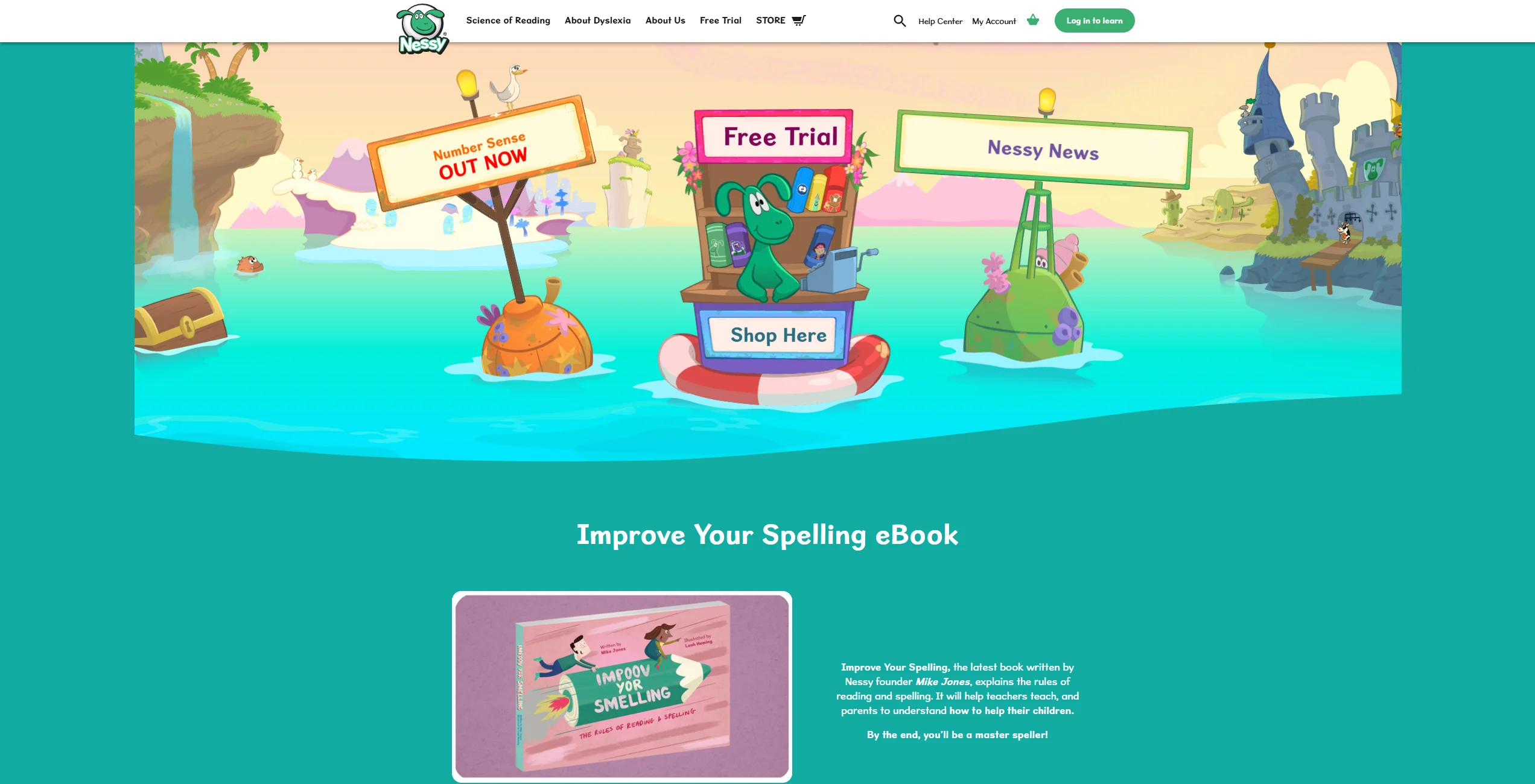
Nessy is an educational platform focused on helping children develop reading and spelling skills, with additional programs for writing, typing, and other learning areas. Unlike many edutainment apps that emphasize entertainment first, this software is built around structured literacy instruction and language-based teaching principles. It is especially associated with support for children with dyslexia, though it may also be useful for other early readers and for some students learning English as an additional language (EAL).
The system is built around the idea that learning to read should be a positive, stress-free experience. It moves away from dry, repetitive worksheets and instead uses animation, quirky characters, and interactive games to explain complex rules of the English language. Over time, the program has grown from a specialist literacy tool into a resource used by families and schools in multiple countries.
Nessy Reading and Spelling
The flagship product, Nessy Reading and Spelling, is the core literacy program within the platform. It is a structured reading program that breaks literacy learning into manageable units. Each island represents a different level of difficulty, covering everything from basic phonological awareness to advanced spelling and morphology. The learning plan is sequential, meaning students build foundational skills before moving on to more complex tasks.
Learning Areas Covered
The software covers the essential pillars of literacy required for academic success:
- Phonics: Mapping sounds to letters through systematic instruction.
- Spelling Skills: Understanding the “why” behind word construction rather than rote memorization.
- Reading Fluency: Supporting speed and accuracy through repeated practice and interactive learning games.
- Vocabulary: Expanding the student’s word bank through contextual usage.
- Comprehension: Helping the child understand what they read and respond to written language.
- Morphology: Learning suffixes, prefixes, and root words to decode longer terms.
Kids and Age Groups
Nessy Reading and Spelling is primarily designed for children ages 6–11, while younger children may be better suited to other Nessy programs and some older students with literacy gaps may also benefit. However, because it addresses specific learning gaps rather than just “grade levels,” it is frequently utilized by older students with learning difficulties who need to revisit foundational literacy skills. It may be particularly useful when a child is struggling with standard school reading methods or showing signs of frustration.
Home Education and School Use
One of the reasons for the platform’s popularity is its flexibility. Some home-educating families use it as a core reading resource, while teachers may also use Nessy in the classroom for targeted literacy support. Access to the same learning environment at school and at home can make it easier to maintain a consistent routine.
Is Nessy Good for Kids?
For many families, the answer may be yes. This is a well-known literacy platform used for structured reading and spelling support, especially for learners with dyslexia. One of its strengths is that it tries to address the emotional side of learning as well as the academic side. For a child who has struggled with reading, the software is designed to make early steps feel achievable, which may help rebuild confidence over time.
| Feature | Benefit for the Child |
| Gamified Practice | May reduce frustration and encourage more time on task. |
| Structured Progression | Can help keep complex rules from feeling overwhelming. |
| Multisensory Input | Uses visual, auditory, and interactive input to reinforce learning. |
| Immediate Feedback | Provides immediate feedback so students can adjust mistakes right away. |
Why Kids Enjoy the Program
Children may feel less as though they are doing formal study when they log in. The learning experience is wrapped in a world of quirky characters and funny animations. The learning games are fast-paced and include virtual rewards that help make practice feel more engaging. This game-based model uses rewards and interactive activities to help maintain motivation while students practice reading and spelling.
Why Parents Like the Approach
Parents often appreciate that the software allows for individualized learning without requiring the caregiver to be a trained reading specialist. Parent-facing resources and online support materials can make it easier for non-specialists to support their child. The availability of a free trial also allows families to see whether the program is a good fit before committing to a subscription.
Why Teachers Choose These Tools
For educators, this may be a useful resource because it follows a structured literacy approach and presents itself as aligned with the Science of Reading. It can support differentiated instruction, allowing one student to work on early decoding while another focuses on spelling or morphology within the same classroom.
Best Fit for Struggling Readers
The program may be especially helpful for hesitant readers. These are children who might guess at words based on pictures or avoid reading aloud entirely. By using game-based practice, the system can make reading feel less like a high-stakes performance and more like guided exploration.
Is Nessy Safe for Kids?
Safety is a primary concern for any online learning platform. The environment is designed as a child-focused learning space rather than an open social platform, with adult-managed access and a strong emphasis on educational use.
Child-Friendly Learning Environment
The focus remains strictly on literacy program goals. Children do not use the platform as an open social space, and the content is designed for educational use rather than general entertainment browsing. Their learning experience is private and focused entirely on their own learning plan.
Age-Appropriate Content and Design
The visuals and humor are specifically curated for younger audiences. The design is clearly aimed at children, with friendly characters and an encouraging tone. The interface is intuitive, meaning even a young learner can navigate the learning games with minimal adult assistance.
Parent and Teacher Oversight
When setting up a Nessy account, the adult retains full control. You can see exactly how much time the child has spent on the app, which spelling patterns they are struggling with, and their overall reading development. This level of visibility can help caregivers feel more confident about how the platform is being used.
Safe Screen Use for Learning
While many parents worry about screen time, the platform is built around active participation rather than passive viewing. Instead of passively consuming video, the child is actively solving puzzles and practicing phonics. Because the program is often used in shorter sessions, many families may find it easier to fit into balanced screen-use routines.
How the Program Works
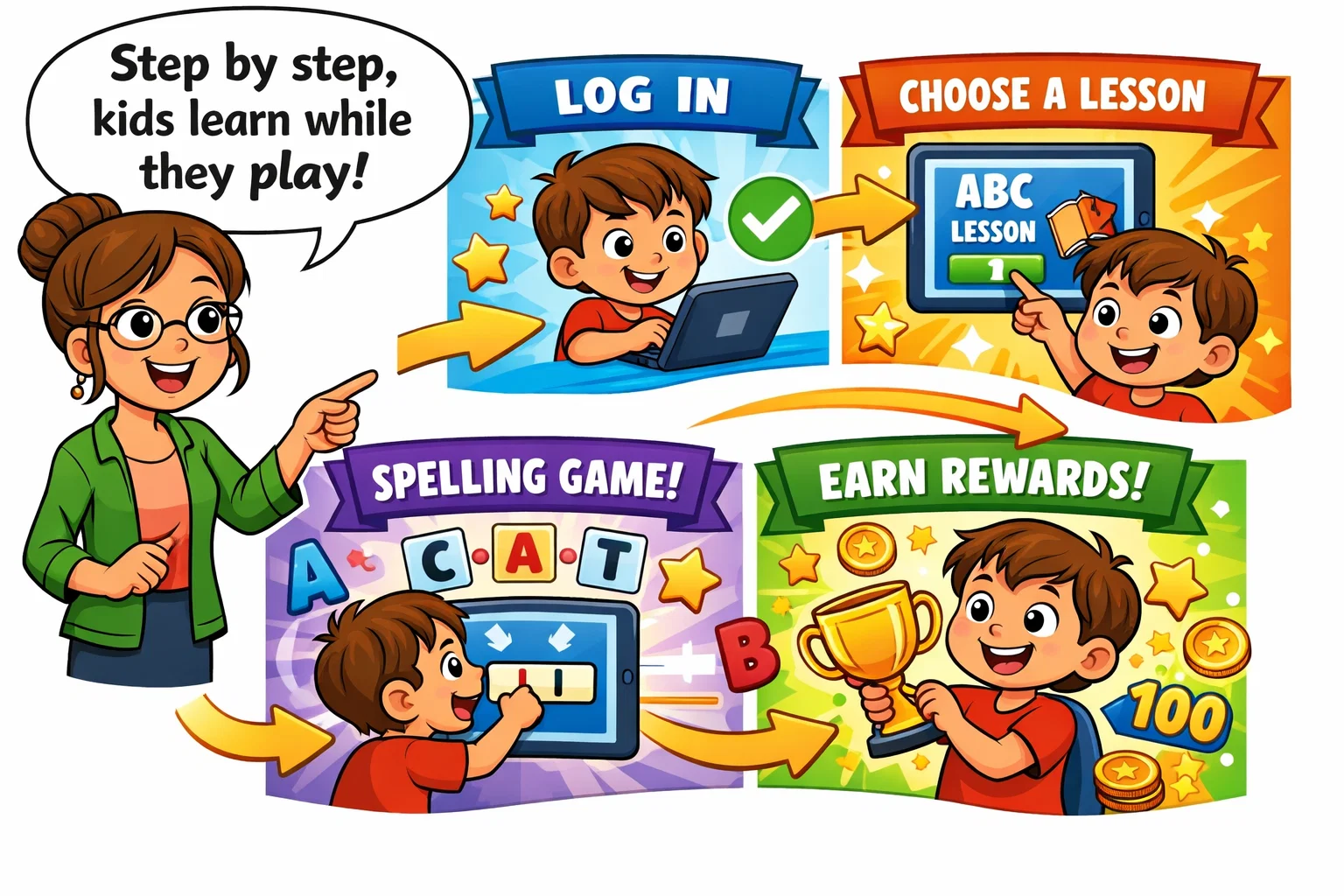
The approach to learning is systematic and logical. It doesn’t leave literacy to chance; it explicitly teaches the rules of English in a way that makes sense to a child’s brain.
- Baseline Assessment: When a child first starts, the platform may use screening or initial activities to identify starting points for reading and spelling practice.
- Customized Learning Plan: Based on the student’s starting point, the program can guide them through a path that targets their current literacy needs.
- Instructional Videos: New concepts are often introduced with short videos that explain spelling or reading rules in a child-friendly way.
- Practice Games: The student plays interactive games to reinforce the rule they just learned.
- Rewards: Mastery is rewarded with trophies and virtual currency, providing a sense of achievement.
Creating a Management Profile
Setting up the system is straightforward. An adult creates the main account, which then acts as a hub for managing one or more student profiles. This keeps billing and administrative tasks separate from the child’s learning environment, ensuring the student remains focused on their tasks.
Adding Students and Customizing Profiles
Once the adult account is active, you can add individual learners. For each profile, you can manage learner settings and monitor progress based on the child’s needs. This customization is vital because it ensures the content is never too easy (leading to boredom) or too hard (leading to frustration).
Completing Lessons Step by Step
Each lesson is a building block. The child follows a map that guides them through different “islands.” Each island contains several lessons, and each lesson concludes with a game that tests what was learned. This step-by-step progression is the hallmark of structured literacy.
Building a Daily Routine
Consistency is the most important factor in effective learning. Many families and educators use structured literacy tools in short, regular sessions, often several times a week. Integrating this into an after-school or homeschool routine ensures that the literacy skills become second nature.
Structured Literacy Methodology
The platform presents itself as grounded in the Science of Reading, which emphasizes explicit and systematic reading instruction.
Science of Reading Alignment
The program follows a phonics-first approach. It starts with the smallest units of sound (phonological awareness) and gradually builds up to syllables, whole words, and sentences. This approach is widely associated with evidence-based reading instruction and is often supported by literacy research.
Orton-Gillingham Connection
Many parents of kids with dyslexia look for “Orton-Gillingham” (OG) based programs. While this software is its own proprietary system, it appears to draw on principles commonly associated with Orton-Gillingham-style instruction. It uses multisensory, sequential, and cumulative teaching elements, which may make it appealing to families looking for a digital alternative to structured tutoring.
Why Structure Helps Children
Predictability is key for children with specific learning difficulties. Knowing what to expect in each lesson reduces cognitive load, allowing the child to focus entirely on the new spelling patterns being introduced. Explicit teaching removes the “guessing game” that many struggling readers rely on.
Dyslexia Support and Learning Differences
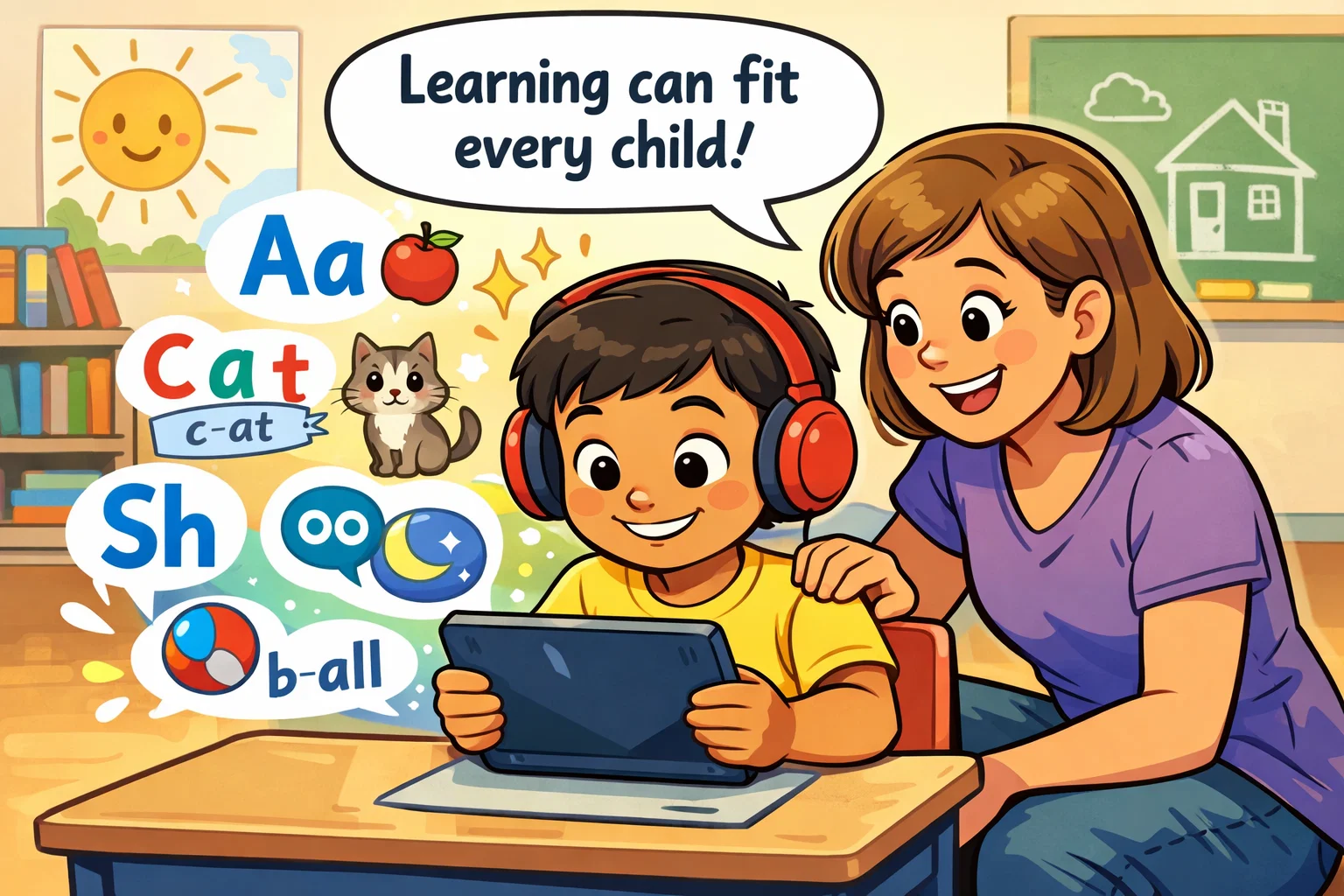
The platform has a strong public association with dyslexia support, which is reflected in how it presents its teaching approach and resources. Children with dyslexia learn differently; they often need more repetition and a more visual way of “seeing” how words are constructed.
Why the Design Works for Dyslexia
The program uses a multisensory approach. A child sees the letter, hears the sound, and interacts with the screen to move the letter into place. This combination of sensory input may help support learners who benefit from multisensory practice, including some children with dyslexia and other learning differences.
Support for All Students
You don’t need a specific diagnosis to benefit from structured literacy. Many early readers who need a different pace or style of instruction may find the software helpful for additional practice. It may also be useful for broader literacy support beyond dyslexia-focused use.
Multi-Sensory Learning Elements
By engaging multiple senses, the software may support children who respond well to visual, auditory, and interactive instruction. Visual learners benefit from the animations, auditory learners benefit from the clear pronunciation of sounds, and kinesthetic learners benefit from the interactive nature of the learning games.
Building Confidence for Hesitant Readers
Reading failure can lead to a “fixed mindset” where a child believes they are simply “bad at school.” By breaking the curriculum into small, achievable goals, the platform may help children feel more capable and willing to keep trying. Each small success contributes to a larger sense of reading confidence.
Game-Based Learning Features and Benefits
Gamification is not just about fun; it’s about engagement. When a child is engaged, they are more likely to persevere through difficult tasks.
Gaming Elements That Improve Skills
The games are designed to require the use of the specific phonics or spelling skills taught in the lesson. For example, a game might require the student to “catch” the correct vowel team to move a character across a bridge. This kind of reinforcement may help make practice more memorable and engaging.
Interactive Activities and Engagement
Movement, sound, and vibrant colors keep the learner focused. Unlike a static page, the screen responds to the child’s input, creating a more interactive learning experience.
Motivation Through Rewards
The system of badges and milestones creates a clear sense of progress. When a child sees visible progress over time, it can be motivating, especially for students who have struggled with reading.
Key Features of the Platform
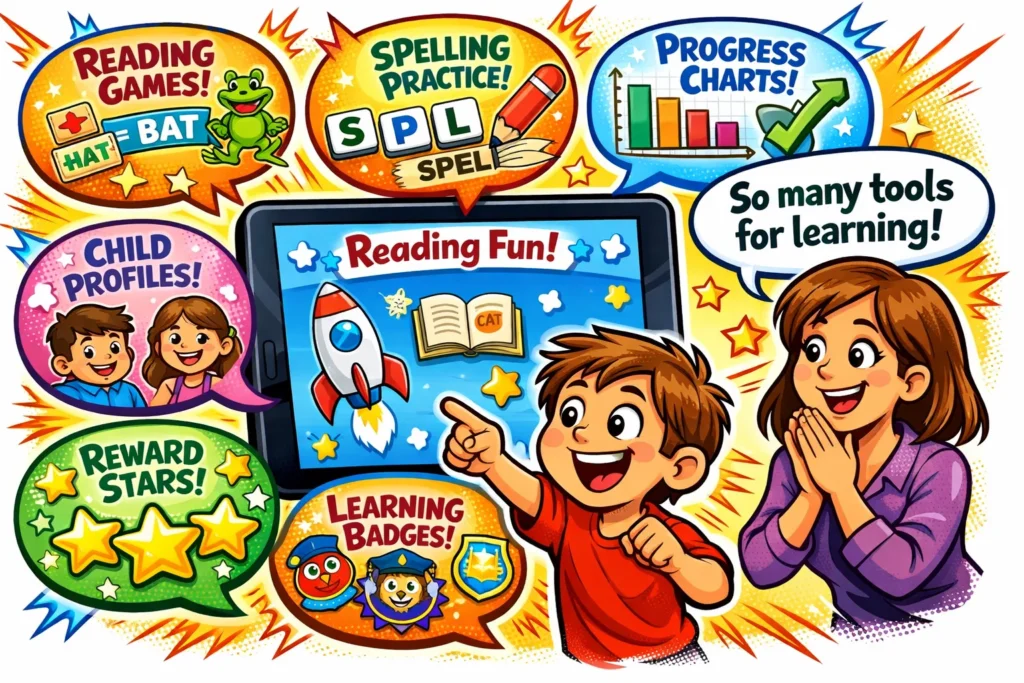
- Personal Word Lists: If a child has a specific “Friday Spelling Test” at school, parents can enter those words to create targeted spelling skills practice.
- Progress Reports and Tracking: Reporting tools can show where a child is doing well and where they may need more support.
- Multiple Learning Programs: Beyond reading, Nessy also offers additional programs, including typing and other learning resources.
- Free Resources and Extra Materials: The website provides a wealth of printable worksheets and card games that can be used to reinforce lessons away from the computer.
Implementation at Home and in Classroom
Whether you are a parent or a teacher, the software is designed to integrate seamlessly into your existing educational setup.
Use in Home Education
For homeschoolers, the program can serve as a structured reading resource within a wider literacy plan. It reduces the burden on the parent to “know it all” and allows the child to take some ownership of their learning plan.
Use in Schools
In a classroom, teachers can use Nessy for small group instruction or as an independent station. It may also be useful for some English Language Learners (ELLs) who need extra practice with English sounds and spelling patterns.
Customization for Student Needs
The settings allow you to adjust the speed of the games and the level of the content. This can help the learning environment feel better matched to the individual’s needs, whether they work independently or need more guided support.
Monitoring Progress and Growth
One of the most valuable aspects of using a digital literacy program is the data it generates.
Reporting Features
Adults can access reports that show “time on task,” percentage of correct answers, and the specific lessons completed. This may be useful for school documentation, including IEP-related monitoring, or simply for peace of mind at home.
Identifying Areas for Improvement
If a child repeatedly struggles with a specific activity, reports may help adults spot the spelling pattern or skill that needs more attention. This allows the parent or teacher to step in with printable worksheets or one-on-one help to clear up the confusion.
Celebrating Successes
The platform makes it easy to celebrate milestones. Printing a certificate for finishing an “island” can feel like a meaningful milestone for a child who has struggled with reading and spelling.
Final Verdict: Is it Worth it?
When compared with private tutoring or other structured literacy programs, a Nessy account may offer good value for some families. It offers a structured literacy approach that may be more affordable than one-to-one specialist tutoring. For families with children who have dyslexia or who need extra support in early reading, it may be a worthwhile option to consider.
The program fits kids so well because:
- It is predictable and structured.
- It is visually engaging without being distracting.
- It builds confidence through small, frequent rewards.
- It follows a structured approach that many parents and teachers may find more purposeful than general screen-based activities.