

Choosing a learn-to-read program is one of the most important digital decisions you may make for your child’s early education. With the rise of gamified learning, two major platforms – Homer and Reading Eggs – have emerged as leading contenders for parents looking to build foundational literacy skills at home. Both apps promise to transform screen time into a productive learning journey, but they approach the art of reading from different pedagogical angles.
In this neutral comparison, we will explore how each program approaches phonics instruction, fluency, and comprehension. Whether you are a homeschool parent looking for a core curriculum or a busy caregiver seeking a supplement to school lessons, this guide provides a deep dive into pricing, age suitability, and the specific skills your child will master. Our goal is to help you determine which app aligns best with your child’s unique learning style and your family’s goals.
Quick Comparison Overview
If you are short on time, this table provides a high-level snapshot of how these two heavyweights stack up in 2026.
| Feature | Homer (by Begin) | Reading Eggs (by 3P Learning) |
| Primary Age Range | 2–8 years old | 2–13 years old |
| Core Focus | Interest-based, personalized literacy | Structured, systematic phonics |
| Subjects Included | Literacy, Math, SEL, Creativity | Literacy, Phonics, Spelling, Math |
| Trial Offer | 30-day free trial (as listed on the official site) | 30-day free trial (as listed on the official pricing page) |
| Price (Monthly) | Typically around $12.99 USD per month (pricing may vary by region and promotion) | $9.99/month for Reading-only OR $13.99/month for Reading & Math (plan-based) |
| Price (Annual) | Typically around $79.99 USD per year (equivalent to $6.66/month when billed yearly) | $99.99/year for Reading & Math (as listed; plans vary) |
| Best For | Early engagement & personalization | Long-term academic progression |
Target Age Range
Homer primarily targets the preschool and early elementary years, specifically ages 2 to 8. Its interface and content are designed to grow with a child from their first letters and sounds to more complex stories. Reading Eggs offers a much broader age range, covering children from age 2 all the way to 13. While Reading Eggs Junior serves toddlers, Reading Eggspress is specifically designed for older kids (ages 7–13) who are transitioning from basic decoding to complex textual analysis.
Core Focus Areas
While both apps prioritize early reading skills, their scope differs. Homer reading integrates Social-Emotional Learning (SEL) and critical thinking alongside literacy. Reading Eggs, however, follows a more traditional academic path, with a heavy emphasis on phonics, sight words, spelling, and reading comprehension.
Learning Approach
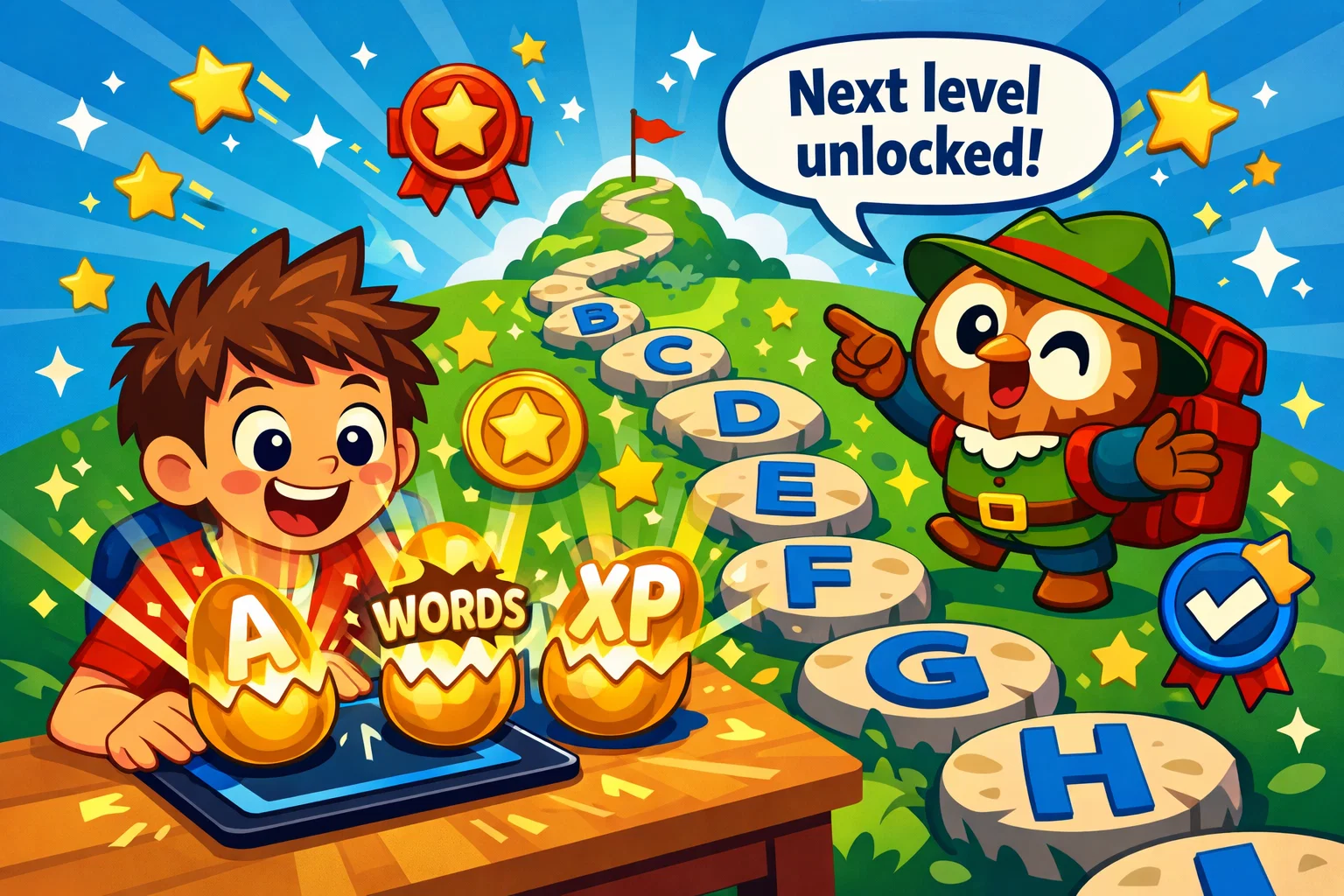
Homer uses an adaptive, interest-based pathway. When you set up the app, you select your child’s interests (e.g., dinosaurs, space, or princesses), and the journey is tailored to those themes. Reading Eggs utilizes a highly structured “map” system. It is a program to teach through a step-by-step linear progression where children earn “golden eggs” as rewards, providing a clear sense of achievement.
Platforms and Device Compatibility
Both programs are highly accessible across modern technology. They are available on the App Store (iOS), Google Play (Android), and via web browsers. Most families find that both apps support multiple devices, allowing a child to learn on a tablet during a car ride or on a desktop during homeschool hours.
Free Trial Options
Both companies offer a free trial to allow parents to test the interface. In 2026, both platforms typically offer a free trial, though promotional periods may vary. These trials usually grant full access to the learn-to-read program, including digital libraries and progress trackers.
How Homer Works
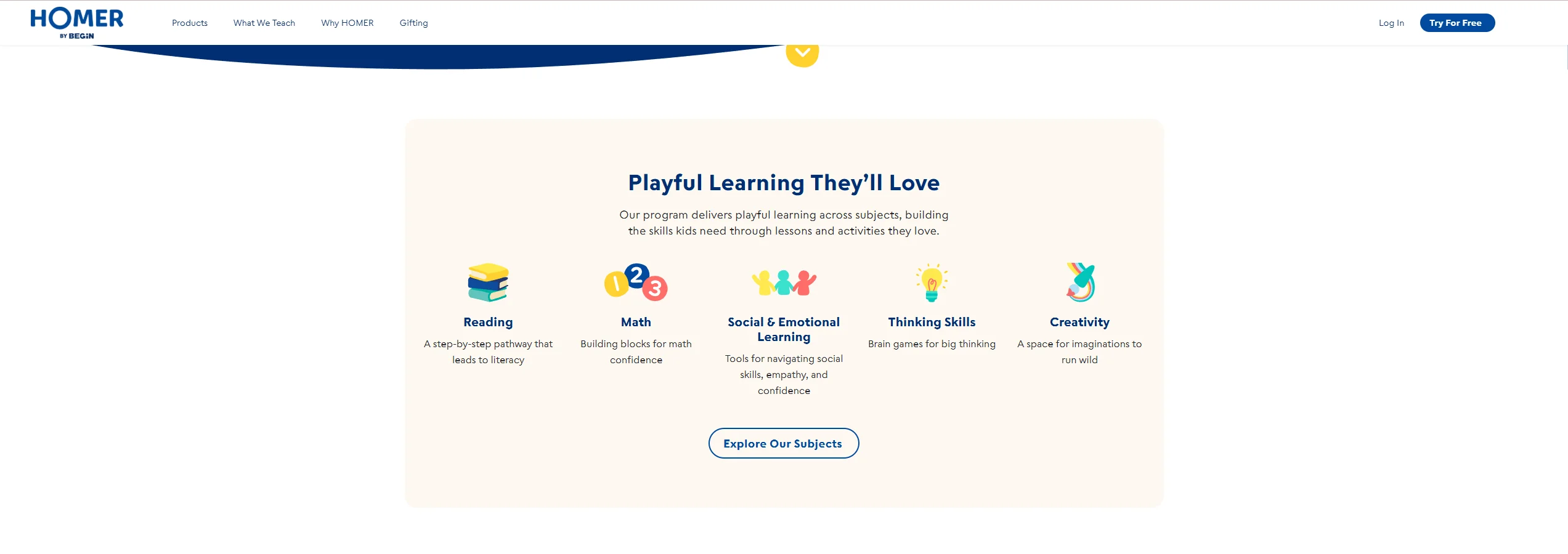
Homer is operated under BEGiN/Begin Learning (the company behind the HOMER brand). It aims to make teaching feel like a personalized adventure.
Curriculum Structure
Homer and Reading Eggs differ most in their lesson structure. Homer’s curriculum is “scaffolded,” meaning it introduces a concept, allows for practice, and then asks the child to apply that skill. The path is not strictly linear; it adapts based on how quickly a child’s learning progresses in specific areas.
Phonics and Early Literacy Focus
Homer’s phonics lessons focus on the “Big 5” of literacy: phonemic awareness, phonics, fluency, vocabulary, and comprehension. For a child learning the basics, the app emphasizes phonemic mastery—the ability to hear and manipulate sounds in words—before moving into complex blending.
Interactive Features and Engagement
The Homer interface is known for its high-quality aesthetics. The visuals are modern and less “cluttered” than some older apps. It uses songs, stories, and characters to keep kids engaged without being overly stimulating. The inclusion of familiar characters and licensed content (availability may vary) often makes it a favorite for younger kids.
Progress Tracking for Parents
The parent dashboard in Homer provides a clear view of which literacy skills have been mastered. Parents receive regular updates on levels and can see exactly where their child’s progress stands in relation to the app’s internal skill levels.
Offline Materials and Printables
To combat excessive screen time, Homer provides a robust library of worksheets and offline activities. These printables mirror the digital lessons, allowing children to practice tracing and spelling with a physical pencil—a crucial skill for second grade readiness.
How Reading Eggs Works
Reading Eggs is often described by parents as a highly structured learn-to-read program for parents who want a rigorous, “school-like” structure in a digital format.
Structured Learning Map
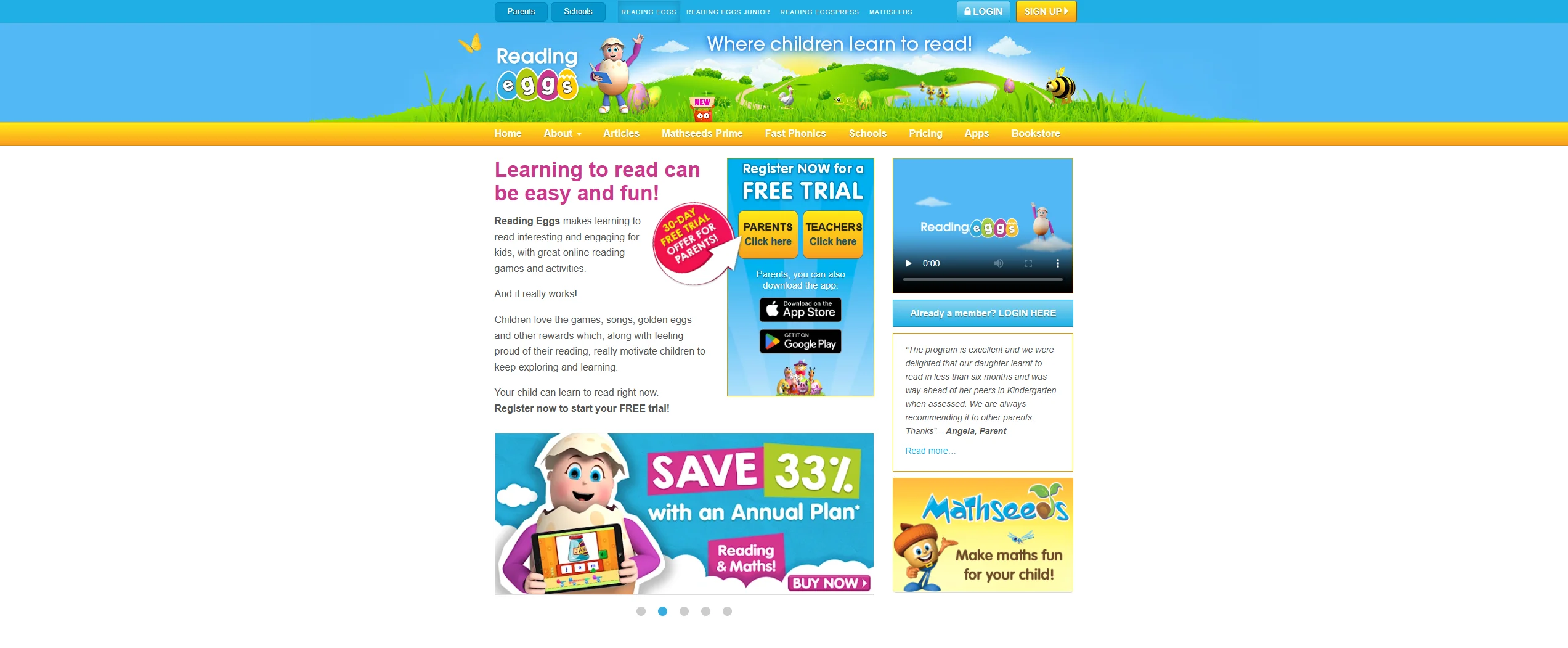
The learning journey in Reading Eggs is famously organized into “maps.” Each map contains 10 lessons, and each lesson ends with a quiz. This step-by-step approach ensures that no gaps are left in the child’s literacy development.
Phonics System and Reading Stages
The software uses a systematic phonics approach. It breaks down into four distinct stages:
- Reading Eggs Junior (Ages 2–4): Pre-literacy skills and letter sounds.
- Reading Eggs (Ages 3–7): Core phonics instruction and sight words.
- Fast Phonics (Ages 5–10): An accelerated synthetic phonics module.
- Reading Eggspress (Ages 7–13): Focused on comprehension and fluency.
Games and Rewards System
Kids love the “golden egg” economy. Completing lessons earns eggs that can be spent on “buying” items for their avatar’s house or playing side games. This gamification is a powerful way to teach children who need external motivation to stay on task.
Parent Dashboard and Reports
Reading Eggs’ reporting is incredibly detailed. It provides skill-level estimates and mastery reports that show exactly which phonemic awareness skills or basic phonics rules the child has conquered.
Additional Programs: Spelling and Math
A unique selling point is that Reading Eggs and Mathseeds often come as a bundle. Mathseeds covers numeracy for ages 3–9, while the spelling component helps children transition from decoding words to writing them accurately.
Homer vs Reading Eggs Feature Comparison
Curriculum Breadth
While Homer covers a variety of subjects (Math, SEL, Thinking Skills), Reading Eggs covers a much deeper range of literacy-specific content. Reading Eggs states its digital Library includes over 4,000 titles.
Adaptability to Child Skill Level
Homer vs Reading Eggs adaptability is a frequent point of debate. Homer is more inherently adaptive; if a student struggles, the path adjusts subtly. Reading Eggs uses a placement test at the start to find the right level for your child, but once they are on a map, the progression is fairly fixed unless the parent manually moves them.
Content Variety and Library Size
- Homer: Offers about 1,000+ activities Across Subjects.
- Reading Eggs: Boasts 4,000+ e-books and thousands of interactive activities across its various sub-programs.
Ease of Use for Young Children
Homer’s interface is generally considered more intuitive for preschool children to navigate independently. The alternative includes more on-screen options, which may require additional parental guidance at first.
Support for Different Learning Styles
Both apps use a “multi-sensory” approach (visual, auditory, and interactive). However, Homer’s focus on interest-based content often helps “reluctant students” who need to be engaged by a specific topic to stay focused.
Homer vs Reading Eggs Cost Comparison 2026
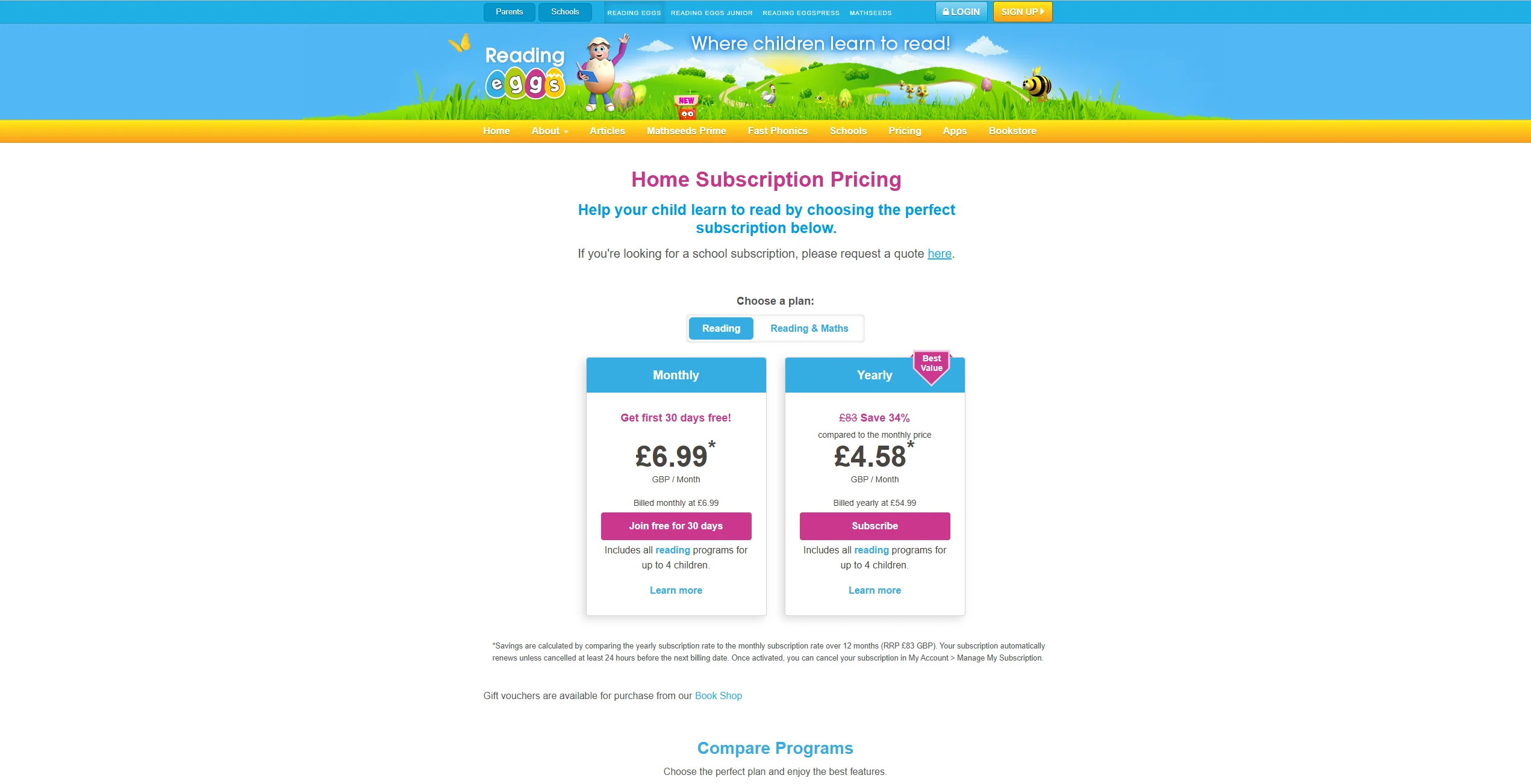
In the current market, both apps are priced competitively, though Reading Eggs may represent a higher long-term investment depending on the subscription plan.
| Plan Type | Homer Pricing | Reading Eggs Pricing |
| Monthly Subscription | ~$12.99 | ~$13.99 |
| Annual Subscription | ~$79.99 | ~$99.99 |
| Family Plan | Up to 4 profiles | Up to 4 profiles |
| Bundles | Often bundled with Begin kits | Includes Mathseeds & Eggspress |
Value for Money: If you have multiple children across a wide age range, the program developed by 3P Learning may offer broader coverage across age groups because one subscription can cover a toddler in Junior and a 5th grader in Eggspress. However, if you have one child under age 6, Homer’s lower annual cost and SEL integration may be more appealing.
Pros and Cons of Each App

Homer Pros

- Highly Personalized: The interest-based path is a major win for engagement.
- Modern Interface: Very clean, ad-free, and easy for tiny fingers.
- Holistic Approach: Includes SEL and creativity, not just academics.
Homer Cons
- Limited Age Ceiling: Once a child hits 8, they have effectively “aged out.”
- Less Rigorous: Some parents feel the progression is “too slow” compared to school standards.
Reading Eggs Pros
- Massive Content Library: You will almost never run out of books or modules.
- Academic Rigor: Follows a systematic phonics framework used in many schools.
- Long-Term Utility: Designed to support learners from early childhood through upper elementary levels.
Reading Eggs Cons
- Repetitive: Some children find the format “boring” or repetitive over time.
- Visual Clutter: The older parts of the app can feel a bit dated compared to Homer.
Reviews from Parents: Reddit and Trustpilot Insights
Recent feedback from online communities highlights that every child is different, and what works for one may not work for another.
What Parents Like About Homer
On Reddit, parents frequently praise Homer for its “gentle” introduction to letters. One user noted:
“Homer didn’t feel like ‘work’ for my 4-year-old. She just thought she was playing with Elmo and learning about space, but suddenly she was blending sounds.”
What Parents Like About Reading Eggs
Online reviews often highlight the effectiveness of the program to teach the basics quickly. Parents of homeschoolers often call it the “gold standard” for ensuring a child hits second grade proficiency on time.
Common Complaints About Both Apps
The most common grievance for both is the subscription model. Parents also express concerns about screen time, with some noting that their children get “hooked” on the games rather than the actual ability portions of the lessons.
Which App Fits Different Age Groups?
Best Option for Preschoolers Ages 2–4
Homer may be a better fit for this age group. Its visual simplicity and focus on “readiness” (like tracing letters and sounds) are perfectly pitched for toddlers. Reading Eggs Junior is good, but Homer’s personalization feels more modern for this age.
Best Option for Kindergarten Ages 5–6
This is a tie. If your child needs a lot of structure and thrives on rewards, choose Reading Eggs. If your child is a “reluctant learner” who needs to be enticed by stories and characters, choose Homer.
Best Option for Early Elementary Ages 6–8
Reading Eggs begins to pull ahead here. Its comprehension modules and the “Fast Phonics” section provide the depth needed for a child to build fluency at a school-appropriate level.
For Advanced Readers
Reading Eggs may be more suitable for advanced readers. Reading Eggspress provides a challenge level that Homer simply does not offer, focusing on complex vocabulary and literary analysis.
Alternatives to Homer and Reading Eggs
If neither of these feels like the best reading program for your family, consider these alternatives:
- Hooked on Phonics: A classic, highly linear learn to read program that often includes physical books sent to your home.
- Teach Your Monster to Read: A well-regarded gamified phonics option that is often free on web browsers.
- ABCmouse: A massive “full curriculum” app that covers all subjects, though its literacy portion is less specialized than Reading Eggs.
Choosing the Right Reading Program for Your Child
Before you hit “subscribe,” ask yourself these three questions:
- What is my child’s attention span? If they need constant variety, Homer’s personalized path is better. If they like knowing “what comes next,” the alternative’s map is superior.
- What is my long-term goal? Are you looking for a program to last one year or five years?
- How much do I want to be involved? While both promote independent play, Reading Eggs’ structured path often makes it easier for a parent to “set it and forget it” while knowing the child is following a proven method.
Regardless of which app you choose, remember that digital tools are most effective when paired with “lap time”—sitting together and looking at a physical book.