

Choosing the right learning app for your child can feel like navigating a digital maze. As a parent or educator, you want a tool that doesn’t just “babysit” with flashy lights but actually helps kids build a foundation for academic success. Two of the most well-known early learning platforms are Homer and ABCmouse, both designed to help kids learn through play, repetition, and structured curricula.
While both platforms are highly regarded, they approach the learning journey from different angles. One leans heavily into a research-based, personalized learning path specifically for reading, while the other offers a massive, all-encompassing learning environment covering everything from art to science. This guide will break down the nuances of Homer vs ABCmouse to help you decide which educational app best fits your family’s needs and your child’s learning style.
Quick Comparison
When evaluating a kids learning app, the decision often comes down to depth versus breadth. Homer offers a specialized, interest-led experience that focuses deeply on literacy and social-emotional learning. In contrast, ABCmouse offers a comprehensive curriculum that feels more like a virtual classroom, covering a wide array of subjects for kids ages 2 to 8.
| Feature | Homer (Learn with Homer) | ABCmouse (Early Learning Academy) |
| Primary Focus | Reading, Literacy, & Personalization | All-in-one Multi-subject Curriculum |
| Subjects | Reading, Math, SEL, Creativity | Reading, Math, Science, Social Studies, Art |
| Personalization | High (Interest-based & skill-level) | Moderate (Linear Learning Path) |
| Pricing | ~$12.99/mo or $79.99/yr | $14.99/month; annual plans are frequently offered at discounted rates (often around $45/year, depending on the promotion). |
| Free Trial | 30-day free trial (as listed on the official pricing pages; terms may change). | 30-day free trial (as listed on the official pricing pages; terms may change). |
| Profiles | Up to 4 child profiles | Up to 3 child profiles per account (plus a parent profile). |
Learning Focus Overview
The core difference lies in their educational DNA. Homer is often called a reading app first and foremost. It promotes what it calls the “HOMER Method,” focused on early literacy skills such as phonemic awareness and phonics..
ABCmouse is designed as a complete preschool learning through 2nd-grade resource. Its step-by-step learning path is more rigid and classroom-oriented. While Homer provides a tailored experience based on what your child already knows, ABCmouse aims to cover a broad range of foundational academic subjects, including science and music, which are often absent from other learning materials.
Best For
- Homer: Best for younger kids who need focused help with reading or children who are easily overwhelmed by too many choices.
- ABCmouse: Best for parents looking for a one-stop-shop that covers a full school curriculum and for kids who love reward-based, gamified progress.
Free Trial and Subscription Model
Both apps offer a chance to test the waters before committing. Both platforms typically offer a 30-day free trial. The Homer subscription structure is generally straightforward, whereas ABCmouse frequently offers a discounted annual plan (often listed at $45/year), depending on the promotion and signup method.
What Is Homer Learning App
Homer (often called Homer or Learn with Homer) is an early learning program for kids that emphasizes the “right” way to learn to read. It doesn’t just throw games at a child; it creates a personalized learning path after an initial onboarding quiz where parents input the child’s current reading skills and interests.
Educational Philosophy

Homer states that its methodology is informed by research in early childhood education. It focuses on synthetic phonics, teaching kids to decode letters into sounds and then blend those sounds into words. This approach to learning is systematic and sequential, which many educators consider an effective way to build reading comprehension.
Learning Formats
The homer app utilizes:
- Interactive stories and folk tales.
- Phonics lessons that require active participation.
- Learning games that reinforce math and reading.
- Physical printables to take the learning experience offline.
Personalization Process
When you first start using Homer, the app asks about your child’s hobbies. If your child likes animals, their reading lesson might feature lions and tigers. This keeps kids like yours engaged because the content feels relevant to them.
Pros and Limitations
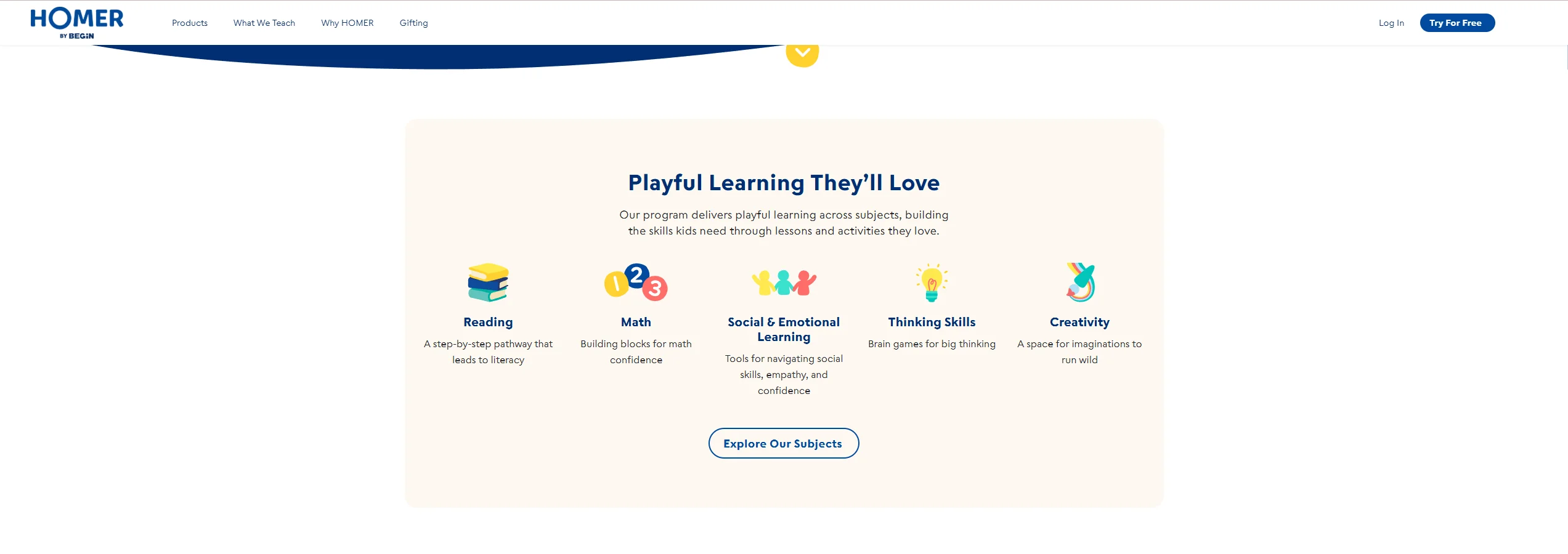
- Pros: Exceptional focus on reading and literacy; very user-friendly for younger kids; high-quality illustrations.
- Limitations: Smaller subject variety compared to ABCmouse; less focus on science or social studies.
What Is ABCmouse
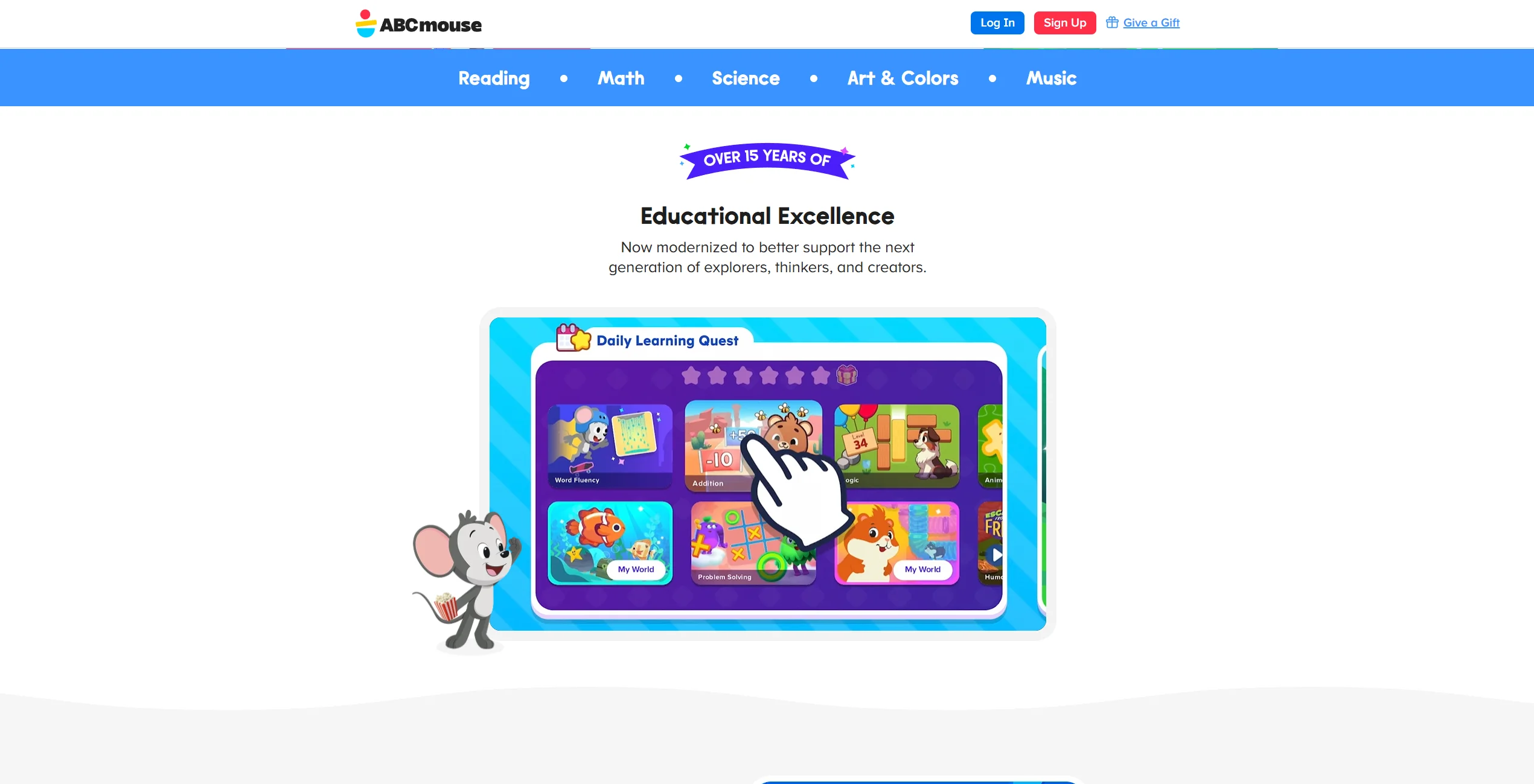
ABCmouse is a powerhouse in the kids learning app industry. It is a large digital learning platform that advertises over 10,000 individual activities. It is highly structured, moving children through Levels 1–10 as they progress from preschool through 2nd grade.
Curriculum Structure
The abcmouse app uses a step-by-step learning path. As kids complete one activity, the next one in the sequence unlocks. This is designed to reduce potential gaps in learning, mimicking a traditional school learning journey.
Subjects Covered
Unlike Homer, which is specialized, abcmouse covers:
- Reading and Math
- Science and Health
- Social Studies
- Art and Music
Gamification and Rewards
Kids love the “Ticket” system in ABCmouse. Every time they finish a task, they earn tickets to spend on their avatar, a virtual pet, or an in-app aquarium. This learning environment is highly motivating for children who enjoy tangible rewards.
Pros and Limitations
- Pros: Incredible breadth of content; excellent math and reading balance; strong incentive system.
- Limitations: The interface can feel a bit “busy” or dated to some; the sheer volume of choices might distract easily-stimulated children.
Side-by-Side Overview
Learning Approach Differences
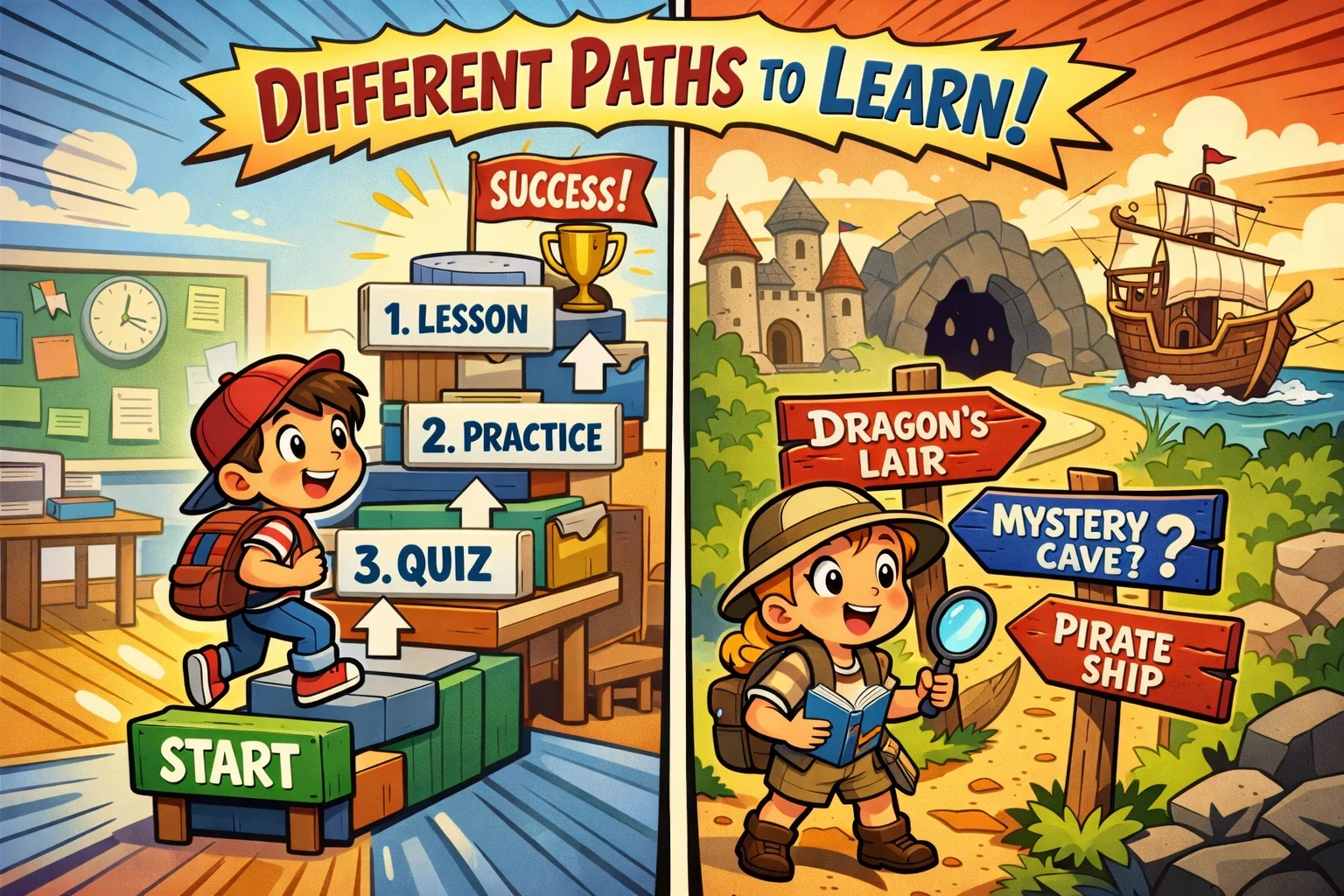
Homer provides a more tailored learning experience that adapts as a child masters a skill. ABCmouse uses a more linear, “one size fits all” path that, while thorough, may not skip ahead as quickly if a child is already advanced in a specific area.
Content Depth vs Breadth
If your child needs to learn to read specifically, Homer may feel more focused and skill-specific. However, if you want them to know about the solar system or the human body, abcmouse and homer offer different levels of exposure—with ABCmouse offering a broader subject variety.
Parent Involvement Level
Both apps allow for independent play, but younger kids using ABCmouse might initially need help navigating the “Map” because there are so many places to click. Homer’s interface is more streamlined, often making it easier for younger children to navigate independently.
Price Comparison: Homer vs ABCmouse
Note: Prices are subject to change based on seasonal promotions. Always check for a 30-day free trial before the full charge.
| Plan Type | Homer Pricing | ABCmouse Pricing |
| Monthly | $12.99 | $14.99 |
| Annual | $79.99 (~$6.66/mo) | $45.00 – $59.99 (~$3.75 – $5.00/mo) |
| Multiple Children | Up to 4 profiles | Up to 3 profiles |
While the Homer subscription is competitive, ABCmouse is frequently free for 30 days and then offers steep discounts for annual memberships, making it one of the most budget-friendly apps for kids if you pay upfront.
Age Range Comparison
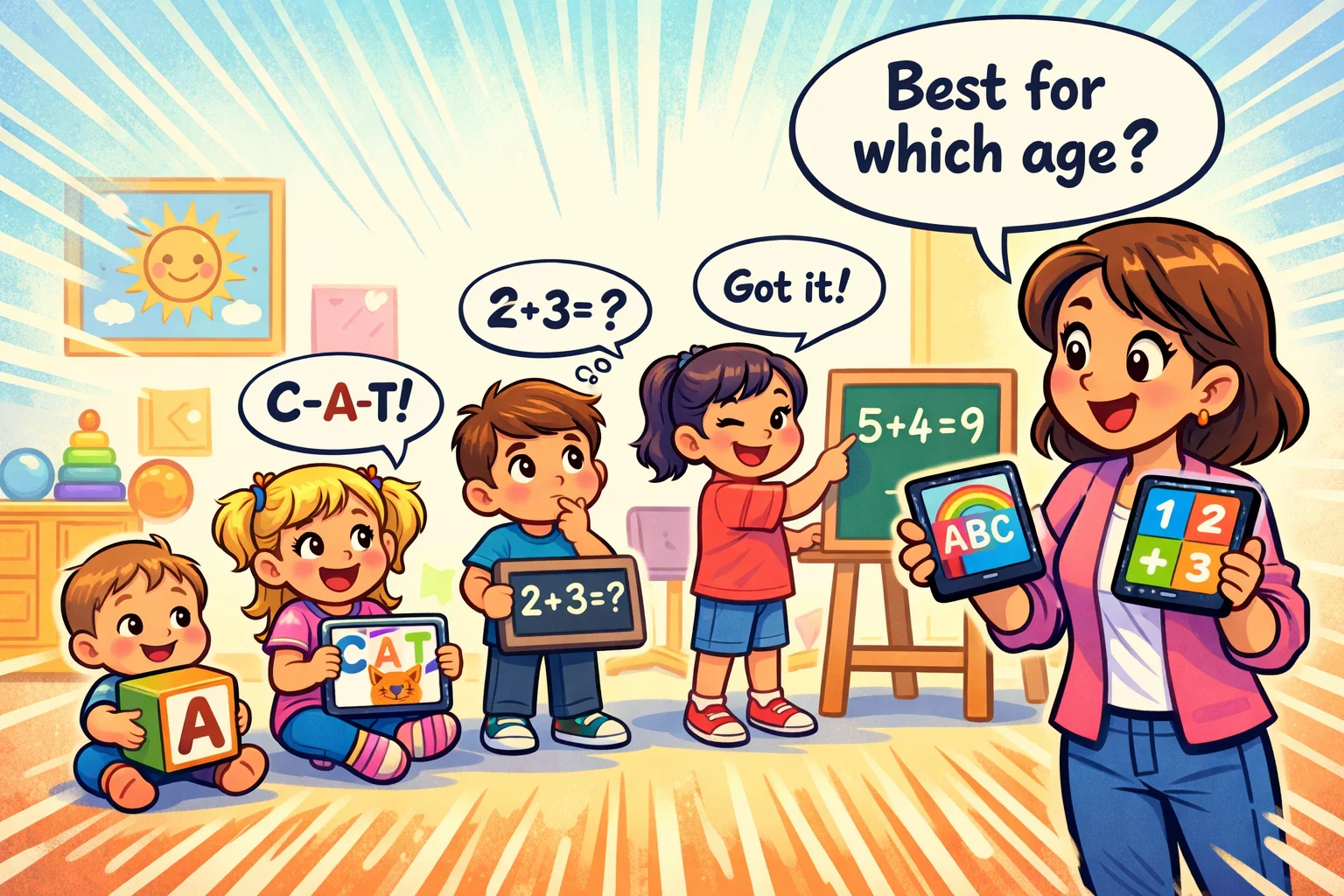
Both apps officially target kids ages 2 to 8 (kids in grades Pre-K through 2nd).
- Toddlers (Ages 2–3): Both are marketed for ages 2–8, with content that starts at early preschool skill levels. Homer also emphasizes nursery rhymes and basic vocabulary, which feels very gentle.
- Preschool (Ages 3–5): This is the “sweet spot” for both. They both help kids prepare for the structure of kindergarten.
- Early Elementary (Ages 6–8): Older kids might find ABCmouse more engaging due to the advanced science content and the “Pet Town” area in the My World section (a virtual pet environment that encourages imaginative play).
Assessment Tools and Progress Tracking
Monitoring your child’s learning is vital for knowing where they need extra help.
- Homer: Provides a “Parent Dashboard” and sends regular email updates. It focuses more on milestones reached in the reading skills path.
- ABCmouse: Offers an Assessment Center available as a paid add-on for Premium plans (pricing varies by plan).
Safety and Privacy
It is a relief for parents to know that both Homer and ABCmouse state that their core learning environments are ad-free. Both companies state that they comply with COPPA regulations. You won’t find external links or “chat” features that could put your child at risk. The learning environment is entirely self-contained.
Efficacy Studies and Learning Outcomes
- Research Behind Homer: Homer references research studies suggesting positive outcomes for early literacy when used consistently; specific results may vary.
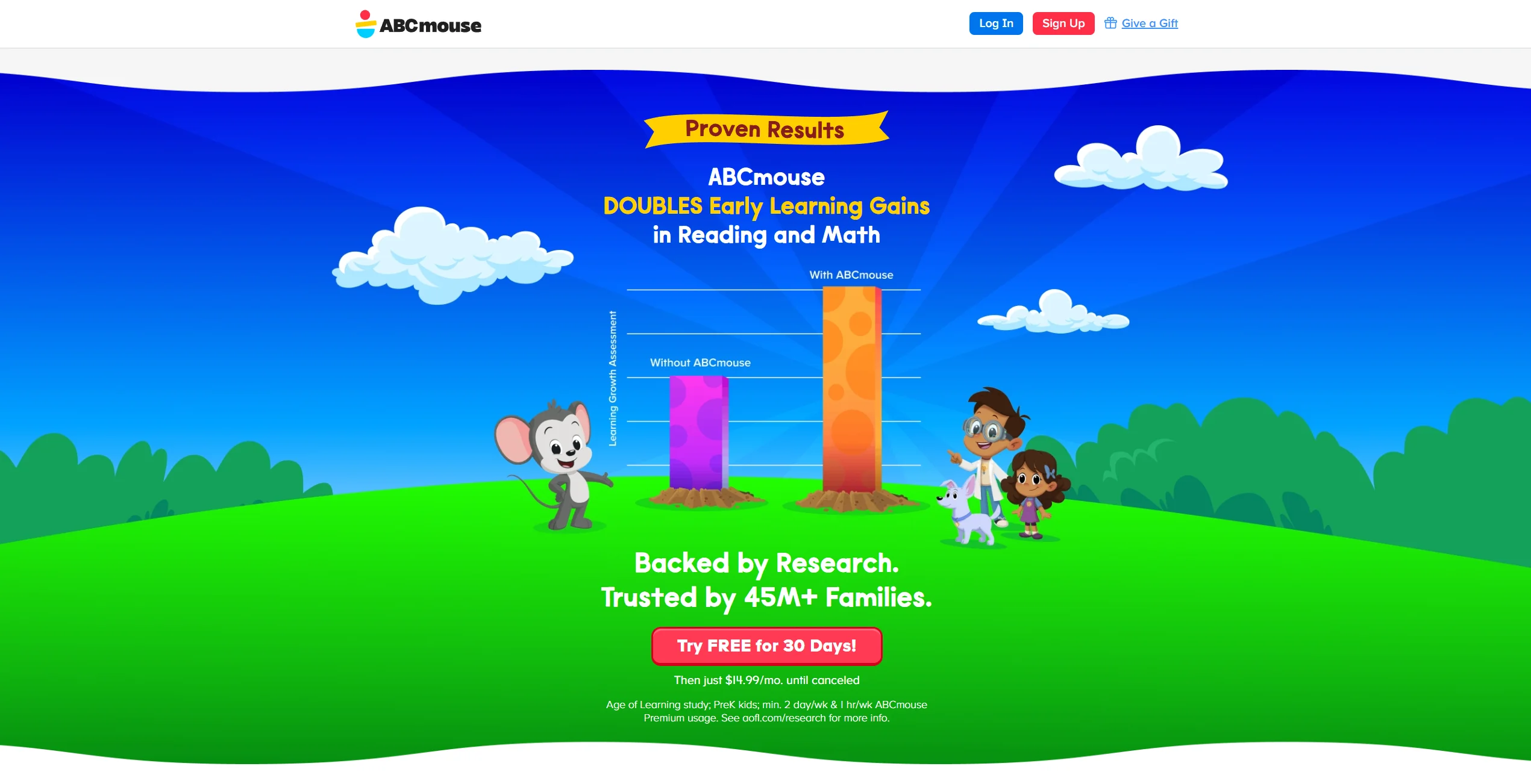
- Research Behind ABCmouse: ABCmouse references research indicating potential improvements in kindergarten readiness and summer learning retention.
Main Differences Between Homer and ABCmouse
- Instructional Style: Homer is adaptive and interest-based; ABCmouse is curriculum-based and linear.
- Subject Matter: Homer learn is literacy-heavy; ABCmouse is a full-spectrum academy.
- Engagement: Homer uses storytelling; ABCmouse uses a “Ticket and Shop” gamification model.
- Aesthetics: Homer has a modern, hand-drawn feel; ABCmouse has a classic, “Disney-esque” animation style.
Overall Comparison: Learning Style Fit
If you are looking for a reading app that will help with reading through a personalized learning path, Homer may be the better choice for those specific needs. It feels less like “school” and more like a curated library of games.
However, if you want a kids learning app that provides a total learning experience across all subjects, or if you have a child who is highly motivated by winning prizes and tickets, abcmouse vs homer tilts in favor of ABCmouse.