

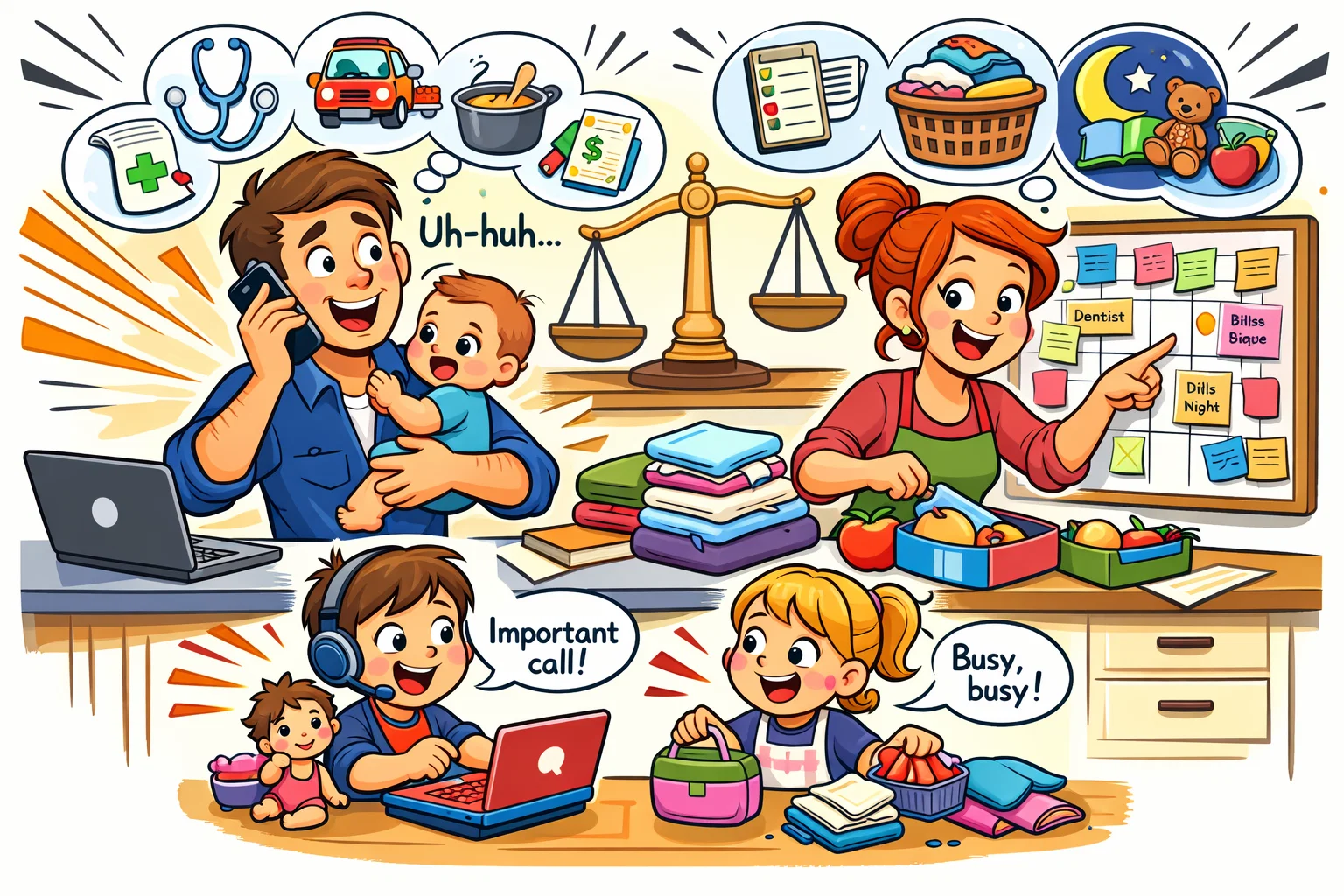
The landscape of modern parenting is undergoing a significant transformation as traditional structures meet evolving societal expectations. Understanding gender roles in parenting requires an analysis of how mothers and fathers distribute childcare, financial responsibilities, and the often-invisible mental load. This article explores the intersection of gender and parenting, examining how parental influence shapes child development and how children are socialised into gender roles.
Gender and Parenting
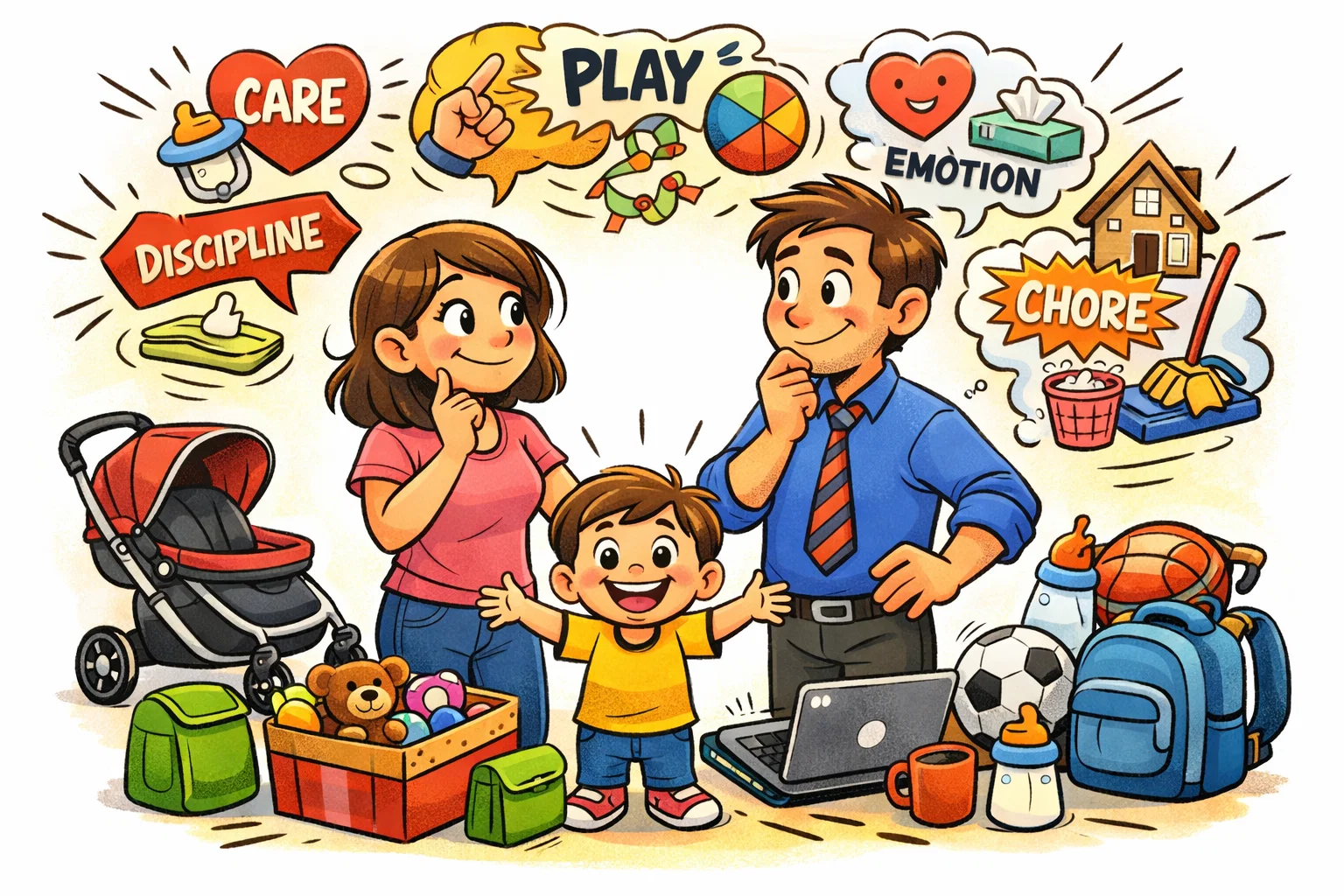
Gender and parenting are inextricably linked through a complex web of social and cultural expectations that shape how individuals are expected to behave based on their gender. While biology provides the starting point for reproduction, the majority of parenting practices are shaped by gender norms that influence everything from career choices to the emotional climate of the home.
Traditional Roles vs Flexible Roles
The traditional gender model typically positions the mother as the primary emotional caregiver and the father as the primary financial provider or “breadwinner”. In contrast, flexible working and evolving attitudes about gender have popularized a collaborative model where parental duties are distributed based on individual strengths and availability. Adopting more flexible parenting roles can make it easier for families to maintain a healthy work-family balance and reduce parental stress.
Gender Expectations Across Family Types
Gender role expectations manifest differently across various family structures, including dual-earner households and single-parent homes. In households headed by same-sex parents, studies often show a more egalitarian distribution of childcare than in heterosexual couples, as these families must consciously negotiate parenting roles without relying on traditional gender norms. Blended families also navigate unique challenges, as societal expectations of “stepmothering” or “stepfathering” can create friction with established parenting styles.
Why Topic Matters for Modern Families
Addressing gender equality in the home is critical due to the rising costs of childcare and the increasing pressure on women in the workplace. As fathers have become more involved in their children’s lives, the conversation has increasingly shifted towards the mental load – the cognitive labour of managing a household. Understanding these dynamics is essential for fostering emotional intelligence and critical thinking in children who are observing these patterns daily.
What Is Gendered Parenting?
Gendered parenting refers to the intentional or unintentional ways parents reinforce gender stereotypes through their interactions with boys and girls. It encompasses both explicit gendered messages and the subtle, “invisible” patterns of behavior that children internalize as the standard for women and men.
Everyday Parenting Choices Shaped by Gender
Daily decisions often reflect deep-seated gender bias, such as which parent stays home when a child is sick or who manages the school’s social calendar. Mothers are more likely to be the primary point of contact for teachers and doctors, a phenomenon known as the “default parent” dynamic. These parenting practices reinforce the idea that caregiving is a female-typed responsibility while administrative or financial oversight remains male-typed.
Caregiving, Breadwinning, Emotional Labor
The division of labor in the home is generally categorized into three domains: direct childcare, financial provision, and emotional labor. While many couples strive for gender equality in financial contributions, the emotional labor – noticing a child’s anxiety or planning a birthday party – frequently remains unbalanced. Groeneveld (2011) noted that even when physical tasks are shared, the “executive function” of the household often rests with one parent.
Gendered Parenting vs Equal Parenting
| Aspect | Gendered Parenting | Equal Parenting |
| Task Allocation | Based on traditional gender roles | Based on skill and schedule |
| Decision Making | Divided by “domains” (e.g., dad handles finances) | Collaborative across all domains |
| Child Socialization | Reinforces gender-stereotypical behavior | Encourages a sense of identity beyond gender |
| Mental Load | Heavily skewed towards the mother | Explicitly discussed and shared |
Direct Gender Messages to Sons and Daughters
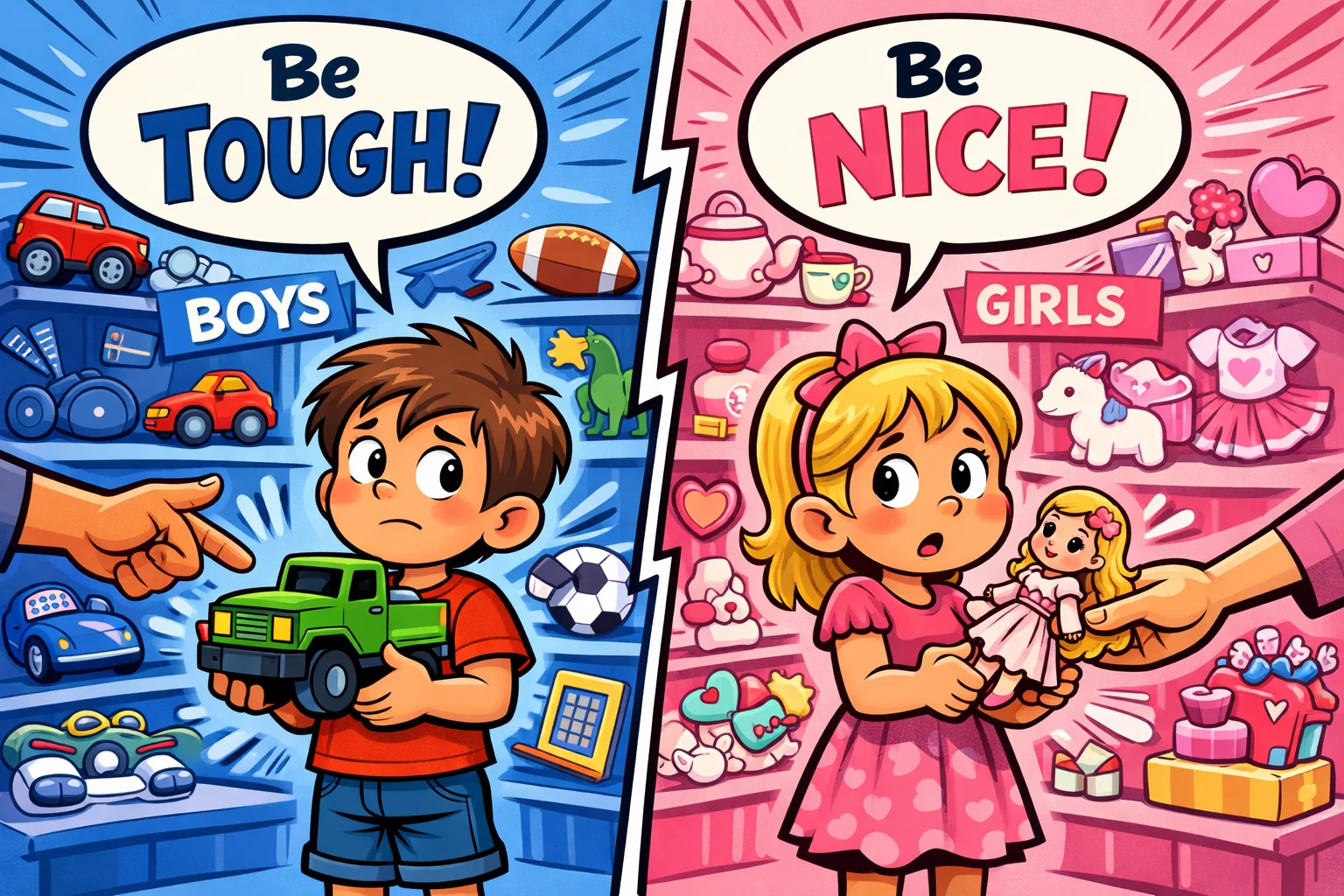
Parents serve as primary agents of socialisation, giving school-aged children direct messages about how boys and girls are expected to behave. These messages often dictate the boundaries of acceptable behavior, emotional range, and social ambition.
Language Parents Use With Boys and Girls
The vocabulary used by parents often differs based on the children’s gender. For instance, boys and girls receive different linguistic cues: boys are often told to “be tough” or “man up,” while girls are encouraged to be “sweet” or “helpful.” This socialisation can restrict boys’ emotional range and girls’ assertiveness, affecting their development and shaping their future relationships at home and at work.
Toys, Clothes, Activities, Rules
Gendered ideas are physically manifested through the choice of pink or blue clothing, toys, and extracurricular activities. Parents influence their children’s interests by providing “action-oriented” toys to boys and “nurturing-oriented” toys to girls. These gender-stereotyped choices can limit the development of spatial skills in girls and empathy in boys, reinforcing gender differences from an early age.
Praise, Discipline, Emotional Expression
Parental control and discipline styles may sometimes differ depending on the child’s gender, with some parents being firmer with sons and more protective of daughters. Mothers and fathers often praise girls for their appearance or cooperation, while boys receive praise for physical strength or autonomy. This differential reinforcement teaches children which traits are valued in women and men, shaping their gender-stereotypical behavior.
Indirect Messages About Behavior of Others
Children are astute observers of the parental relationship, learning about gender norms by watching the daily routines and power dynamics within their home. These indirect signals are often more powerful than direct verbal instructions.
How Children Read Parent Roles at Home
When children receive consistent signals – such as seeing the father handle car maintenance while the mother handles laundry – they form a “gender script.” This socialization to gender roles suggests that certain tasks are inherently tied to being a man or a woman. Children’s socialisation into gender roles often happens through observation, as repeated patterns come to feel like rules about “how the world works”.
School, Relatives, Media, Community Signals
The home does not exist in a vacuum; cultural background and community influences also play a major role. Schools, doctors, and extended family members often reinforce gender-role expectations by addressing the mother for care-related issues. Media and advertising further complicate this by presenting gender-stereotyped images of “supermoms” or “bumbling dads,” which children must reconcile with their own family experience.
Online Communities and Parenting Norms
Digital spaces like TikTok and Instagram have created new arenas for socialization. “Mommy bloggers” often emphasize caregiving and aesthetics, while “Dad influencers” might focus on play or “helping out.” These online parenting niches can either reinforce traditional gender roles through curated content or provide a platform for more equal, modern forms of parenting.
Biology or Nurture?
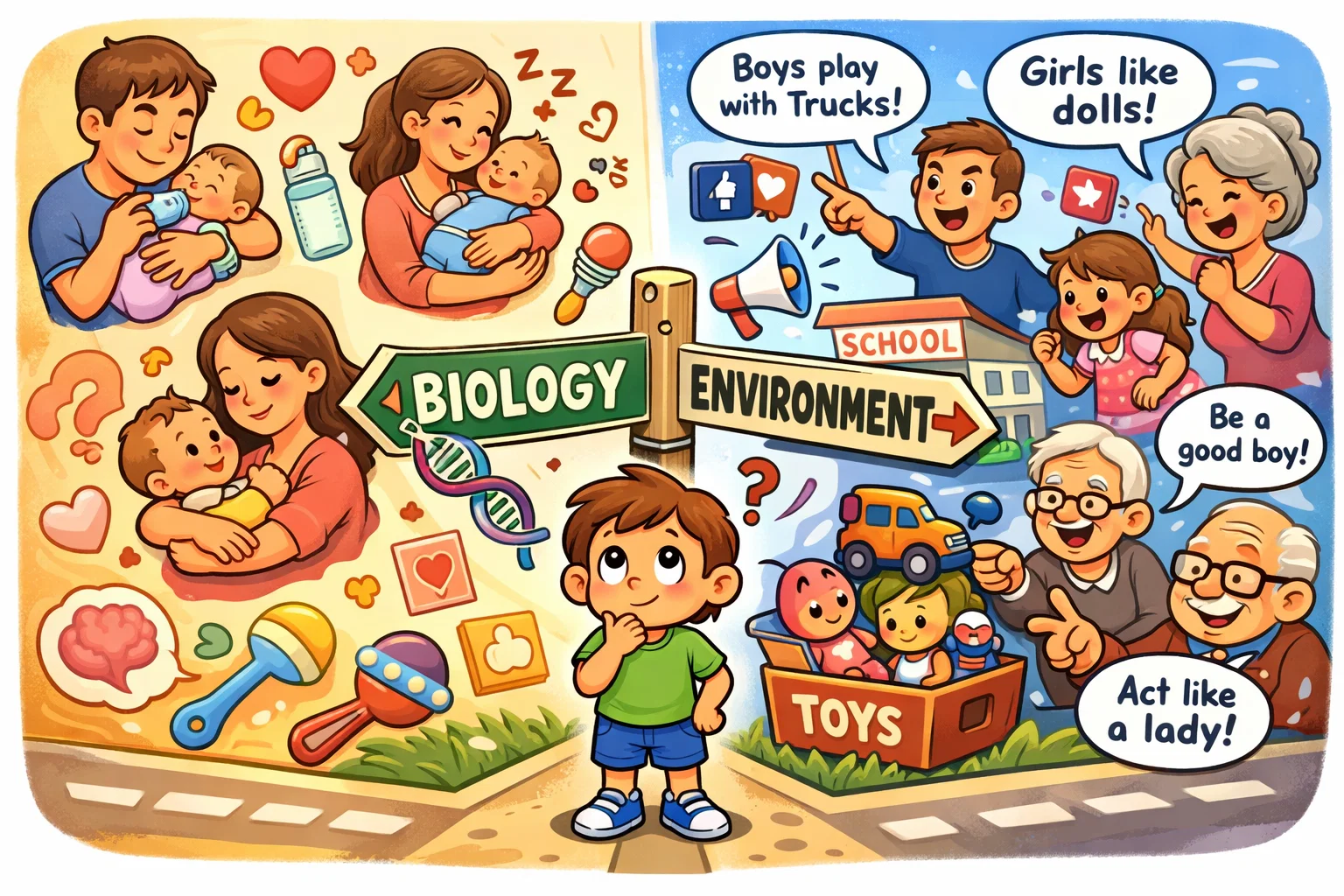
The debate over whether gendered behavior is innate or learned is a central pillar of child development research. While biological factors exist, the environment in which a child is raised significantly amplifies or dampens these traits.
Pregnancy, Breastfeeding, Early Bonding
Biological realities such as pregnancy and breastfeeding often mean that mothers are more likely to be the primary caregivers during infancy. This early bonding period can establish a “lead” in childcare knowledge that persists long after the biological necessity has passed. Paid parental leave policies often reflect this, sometimes unintentionally reinforcing the mother as the “default” through longer leave periods for women than men.
Socialization, Modeling, Repetition
The process of children’s socialization to gender occurs through constant repetition. Even if a child has a biological predisposition toward certain behaviors, parental influence and environmental modeling provide the “software” that runs on the biological “hardware.” Mesman notes that the more a behaviour is modelled, the more “natural” it can feel to a child, regardless of its biological origin.
Where Biology Ends and Norms Begin
| Feature | Biological Basis | Social/Cultural Construct |
| Infant Feeding | Lactation/Nursing | “Who” holds the bottle |
| Physical Strength | Hormonal (Puberty) | Sports participation |
| Nurturing | Oxytocin response | Choice of dolls/toys |
| Risk-Taking | Brain development | Encouragement/Rules |
Parent Beliefs and Gender Socialization
There is often a gap between what parents say they believe about gender equality and how they act in their daily lives. This dissonance significantly impacts children’s gender development.
Beliefs vs Daily Behavior
Parents may identify as egalitarian but still default to traditional gender roles under stress or time constraints. For example, a father may believe in gender equality but never volunteer for the “sick child” pickup because his work and family balance is prioritized by his employer. Children notice these discrepancies, and research suggests that parental behavior is a stronger predictor of a child’s attitudes about gender than parental words.
Mother Influence and Father Influence
Both parents influence the child, but they often do so in different ways. Fathers have often been found more likely to differentiate their behaviour based on the child’s sex, often pushing sons towards autonomy more than daughters. Mothers and fathers both play a role in socialization, but the father’s involvement in “non-traditional” tasks is often cited as a key factor in raising children with fewer gender-stereotypical biases.
Career Scripts and Future Roles
The way parents divide parental duties shapes a child’s expectations about future work-family balance. If children see a fair division of childcare and household labor, they are more likely to pursue diverse career aspirations and expect equity in their own future relationships. Conversely, gender discrimination in the home can limit a child’s perception of what they are capable of achieving in the professional world.
Moms and Dads Differ in Parenting Approach
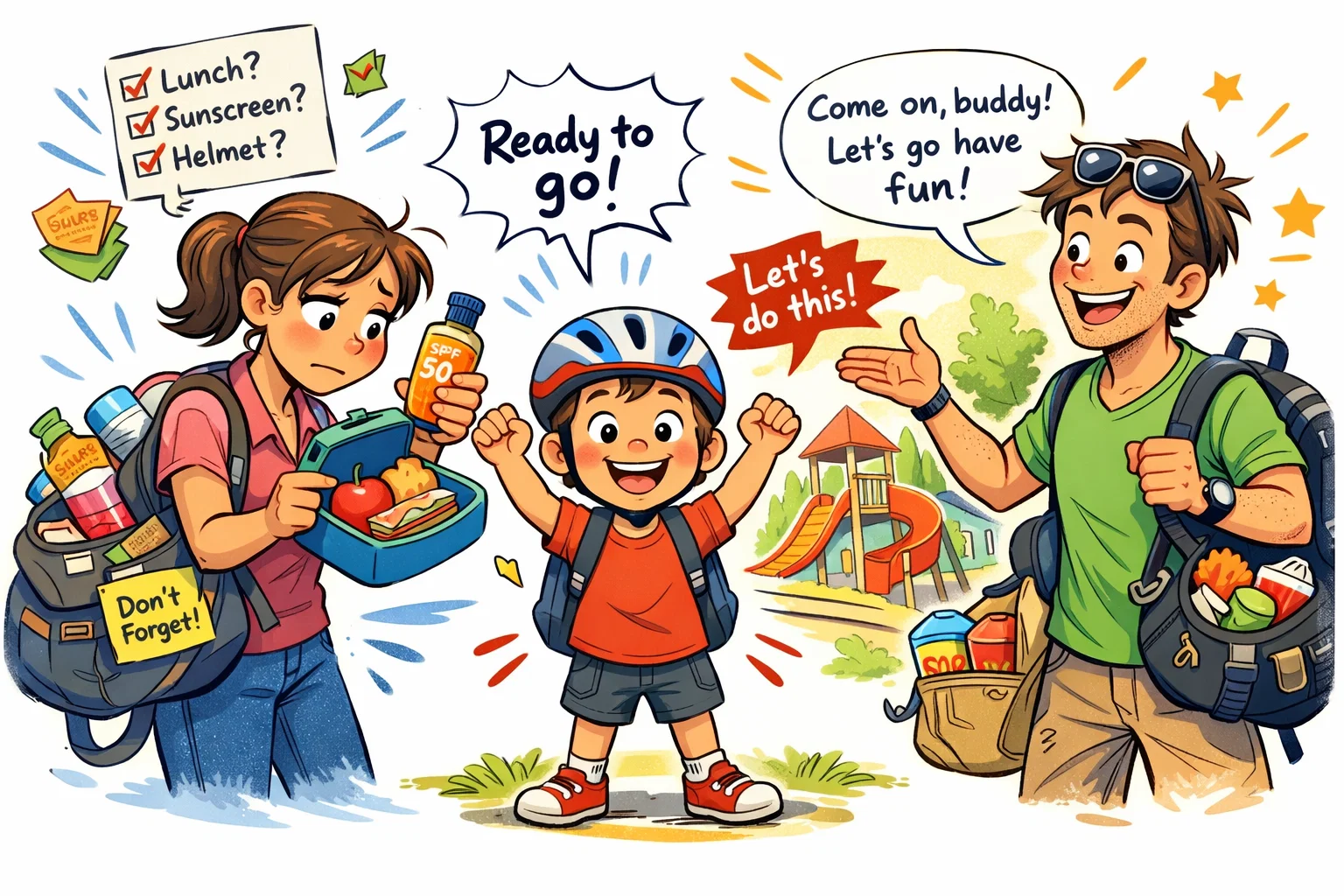
While individual styles vary, broad trends show that mothers and fathers often perceive their roles and stresses differently, influenced by societal expectations.
Protection, Freedom, Praise, Discipline
Data from the Pew Research Center suggests that mothers are more likely to emphasize protection and emotional support, while fathers may lean toward encouraging risk-taking and independence. These differences are often a result of gender-role socialization that the parents themselves experienced, leading them to approach parenting differently based on their own gender identity.
Parenting Identity, Stress, Judgment
Motherhood is often more central to a woman’s identity due to intense social and cultural pressure to be the “perfect” parent. This leads to higher reported levels of parenting stress and fear of gender discrimination or social judgment. Fathers, while increasingly involved, often report feeling like “helpers” rather than equal parents, which can lead to detachment or a lack of confidence in caregiving.
Worries About Safety, Mental Health, Future
Parental worries are often gendered. Parents may worry more about the physical safety of daughters and the financial stability or “toughness” of sons. This gendered pattern of anxiety can lead to overprotection of girls and emotional neglect of boys, affecting the well-being and mental health of both.
Child Care Division and Default Parent Dynamics
The “Default Parent” is the one who is instinctively turned to for every need, from finding lost socks to managing school-aged children’s medical appointments. This role is very often shaped by gender.
Schedule Management, Homework, Emotional Support
The mental load involves the invisible tasks of parenting: remembering library books, tracking vaccinations, and providing emotional support. Even in “equal” households, the mother often manages the schedule while the father carries out specific tasks. This division can create a hierarchy in which one parent becomes the “manager” and the other the “assistant”, leading to tension and resentment.
Why Mothers Become the Default Parent
Several factors contribute to this dynamic:
- Maternity Leave: Longer initial periods at home establish the mother as the “expert.”
- Institutional Bias: Schools and doctors calling the mother first.
- Workplace Assumptions: Employers may be less flexible with fathers.
- Gatekeeping: Some mothers may struggle to relinquish control due to societal expectations.
Perception Gaps Between Partners
A common source of conflict is the “perception gap.” Many fathers believe they are doing 50% of the work because they do 50% of the tasks, while mothers feel they are doing 90% because they do 100% of the planning. Bridging this gap requires making the invisible parental influence visible through open communication.
Work, Leave, Child Care, Institutional Bias
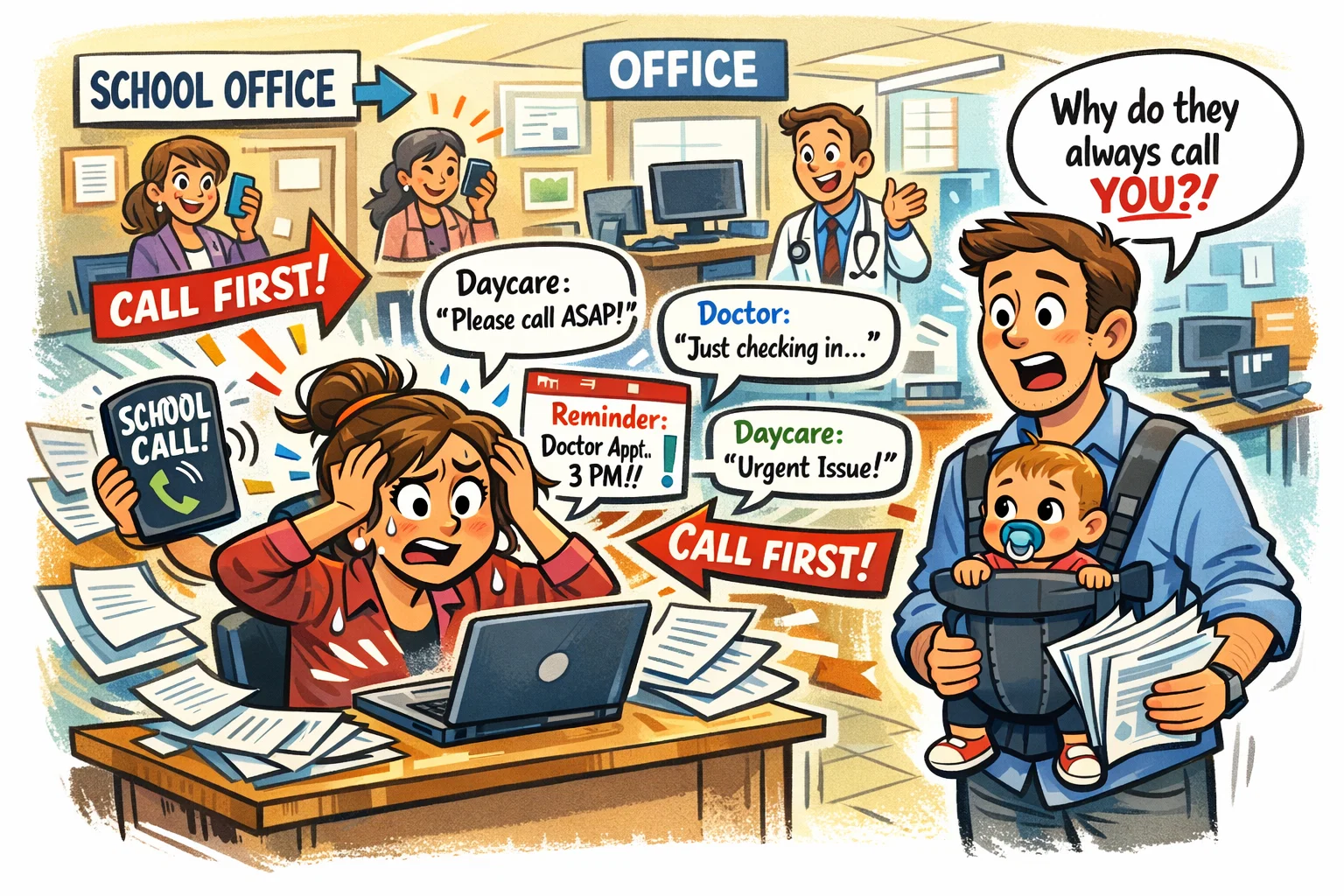
Gender roles in parenting are not just a private family matter; they are reinforced by the institutions surrounding the family unit.
Parental Leave and Work Schedule Decisions
The lack of paid parental leave for fathers in many regions reinforces the idea that childcare is a woman’s job. When a couple decides who will take time off or work flexible working hours, they often choose the partner with the lower salary – which, due to the gender pay gap, is frequently the woman. This economic reality cements traditional gender roles within the family.
Testing the Default: Who Gets Called First?
A simple test of gender bias is observing who the school or daycare calls first in an emergency. Even when both parents provide their contact information, schools and childcare providers often contact the mother first. This socialization to gender roles by external institutions forces families back into traditional gender patterns even when they strive for equality.
Schools, Doctors, Coaches, Childcare Providers
Childcare providers and coaches often speak to parents differently. A coach might discuss a son’s “potential” with a father but talk about a daughter’s “behavior” with a mother. These external gendered messages reinforce the idea that parents have different domains of expertise based on their gender.
Impact on Child Social Development
The way gender and parenting are handled at home has profound effects on a child’s sense of identity and future success.
Self-Image, Skills, Confidence
Children raised in homes with rigid gender roles may feel limited in the skills they can acquire. A boy may not learn basic household competence, while a girl may lack confidence in technical or physical domains. Equal parenting encourages a broader range of skills and a more robust self-image that isn’t tied to gender-stereotypical limitations.
Career Aspirations and Relationship Expectations
Parents are a child’s primary model for future relationships, work, and caregiving. If a daughter sees her mother balancing work and caregiving, she may be more likely to pursue ambitious career goals. If a son sees his father providing caregiving and emotional support, he will enter his own future relationships with a healthier understanding of partnership and gender equality.
Aggression, Emotional Range, Well-Being
Rigid socialization to gender roles can harm a child’s well-being. Boys who are discouraged from showing vulnerability may struggle with aggression or repressed emotions. Girls who are taught to be “people-pleasers” may struggle with setting boundaries. Expanding the allowed emotional range for all children is a key benefit of modern parenting.
Traditional Gender Roles: Benefits, Risks, Trade-Offs
While many move toward equality, traditional gender roles still hold sway in many cultural backgrounds. It is important to weigh the implications of this model.
Stability, Predictability, Cultural Fit
- Pros: Clear expectations can reduce daily negotiations and conflict over “who does what.”
- Order: Some families find a sense of structure and predictability in defined roles.
- Community: In certain cultures, adhering to these roles provides a sense of belonging and support from the extended family.
Limits on Talent, Identity, Opportunity
- Cons: Both parents may feel trapped in roles that don’t suit their actual talents.
- Burnout: The “primary caregiver” often faces extreme isolation and exhaustion.
- Stunted Growth: The “provider” may miss out on deep emotional connections with their children.
Class, Culture, Support Systems
The feasibility of equal parenting often depends on socioeconomic circumstances. Families with high incomes can outsource childcare, making equality easier to achieve. For lower-income families, work and childcare decisions are often forced by shift patterns and lack of flexible working, which can unintentionally reinforce gender-role silos.
Equal Parenting in Practice
Moving toward gender equality in the home requires intentional action and constant renegotiation as children grow.
Task Division Before Baby Arrives
Couples should discuss their expectations around parental leave, night shifts, and financial management before the baby is born.
- The “Lead” Parent: Rotate who is the “expert” on specific baby needs.
- Financial Planning: Ensure both partners have access to and knowledge of family funds.
- The Mental Load: List all invisible tasks (e.g., “thinking about the next diaper size”) and assign them.
Scripts for Weekly Check-Ins
A 15-minute weekly check-in can prevent resentment from building.
- “What is one thing you handled this week that I might not have noticed?”
- “Do you feel like you have enough ‘off-duty’ time?”
- “Is there a task you’d like to trade or share?”
Renegotiation During Career or Care Changes
Parenting is dynamic. When one parent gets a promotion or a child starts school, the old arrangement often needs to be reconsidered and rewritten. This flexibility prevents gender-stereotypical patterns from hardening into permanent resentment.