

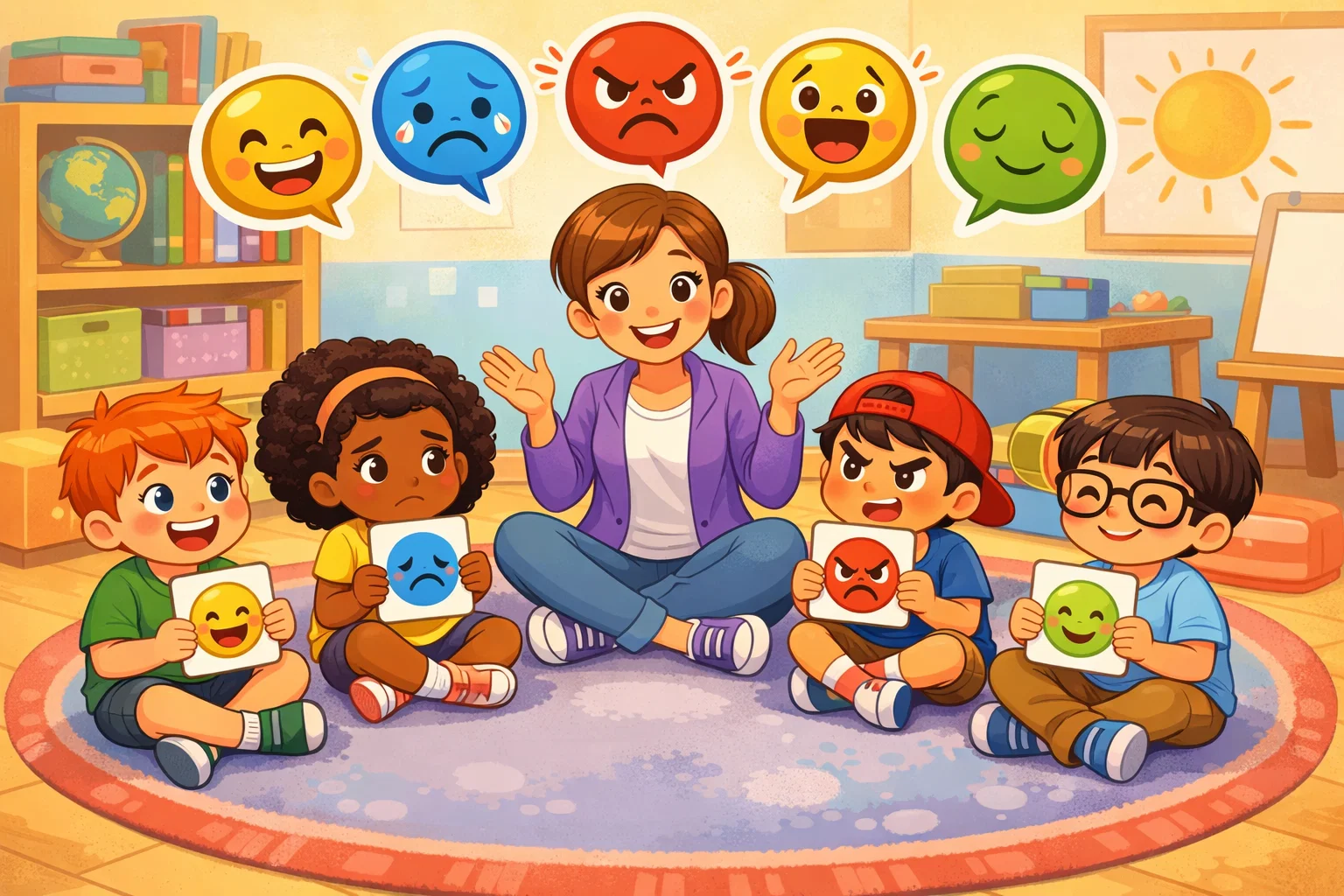
Navigating the whirlwind of childhood emotions can feel like a full-time job for both children and the adults who support them. Whether you are a parent helping a four-year-old through a meltdown or a teacher guiding early years children through their first friendships, understanding different emotions is the cornerstone of healthy development. This guide provides practical, age-appropriate activities that help children recognise, name, express, and manage their emotions in a way that feels like play rather than a lesson.
By integrating these strategies into your daily routine, you provide parents and carers – as well as educators – with a toolkit to foster wellbeing and social and emotional resilience. From emotion cards and printable resources to interactive games, these activities are tailored to ensure that every child understands how to express their emotions safely and confidently.
Why Feelings Matter for Kids
Role of emotions in child development
Emotional development is not just a “soft skill”; it is a foundational pillar of a child’s overall growth. In the early years, children are learning to interpret the world through their feelings. According to the EYFS (Early Years Foundation Stage) framework, social and emotional development is a prime area of learning because it dictates how a child interacts with others and learns new concepts. When children develop emotional intelligence, they are better equipped to handle stress and build lasting friendships.
Connection between emotions and daily behavior
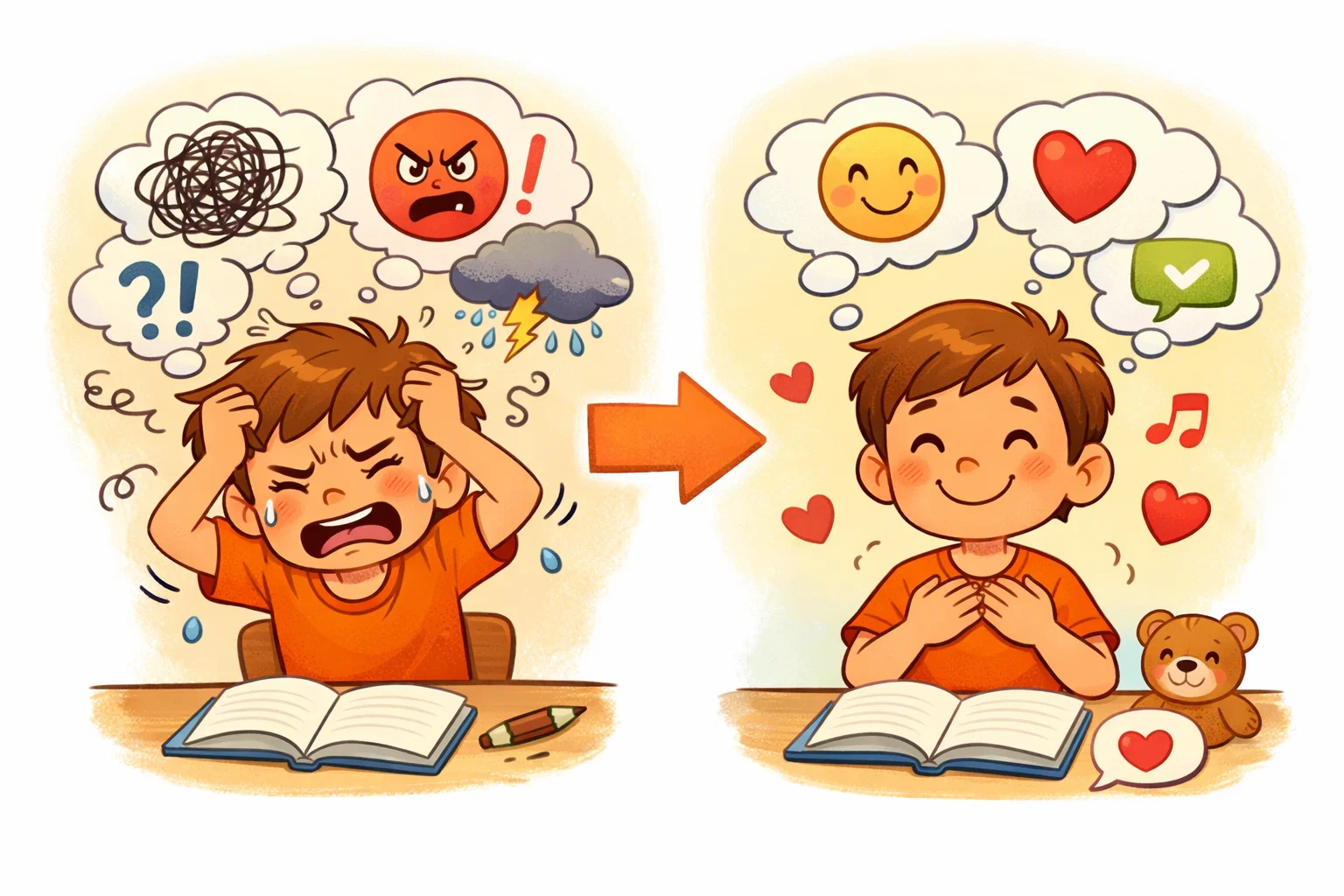
Children often lack the vocabulary to explain why they are upset, which frequently leads to “acting out.” A tantrum is often just a plea for help with big emotions that the child cannot yet regulate. The American Academy of Pediatrics emphasises that children’s behaviour often serves as a form of communication, particularly when they do not yet have the language skills to express their emotions. By teaching them to talk about their feelings, we bridge the gap between internal sensation and external behavior.
Benefits of feelings activities in early years
Engaging in emotions activities helps children learn that all feelings are valid, even the uncomfortable ones. Structured play:
- Builds emotional awareness and self-esteem.
- Increases the ability to show empathy toward peers.
- Reduces anxiety by making “scary” feelings predictable and manageable.
- Helps children feel confident in their ability to solve social conflicts.
Personal, Social and Emotional Development
Emotional growth in early childhood
From birth to age five, the brain undergoes rapid maturation. While a toddler might simply feel “good” or “bad,” an older child begins to distinguish between nuanced states like “frustrated,” “lonely,” or “excited.” Support children’s emotional growth by acknowledging that learning about emotions takes time. It is a marathon, not a sprint.
Social skills built through feelings activities
When kids play a game that requires taking turns or identifying how a peer might feel, they are practicing essential life skills. These activities teach them to read body language and facial expressions, which are key to successful social and emotional integration.
Emotional skills linked to learning readiness
A child who cannot regulate their emotions will struggle to focus on phonics or math. Emotional stability acts as a “buffer,” allowing the brain to move from a state of survival (fight or flight) to a state of executive function. This is why early years settings prioritise wellbeing; a happy, secure child is a child who is ready to learn.
Feelings Activities Categories
Art activities for feelings expression
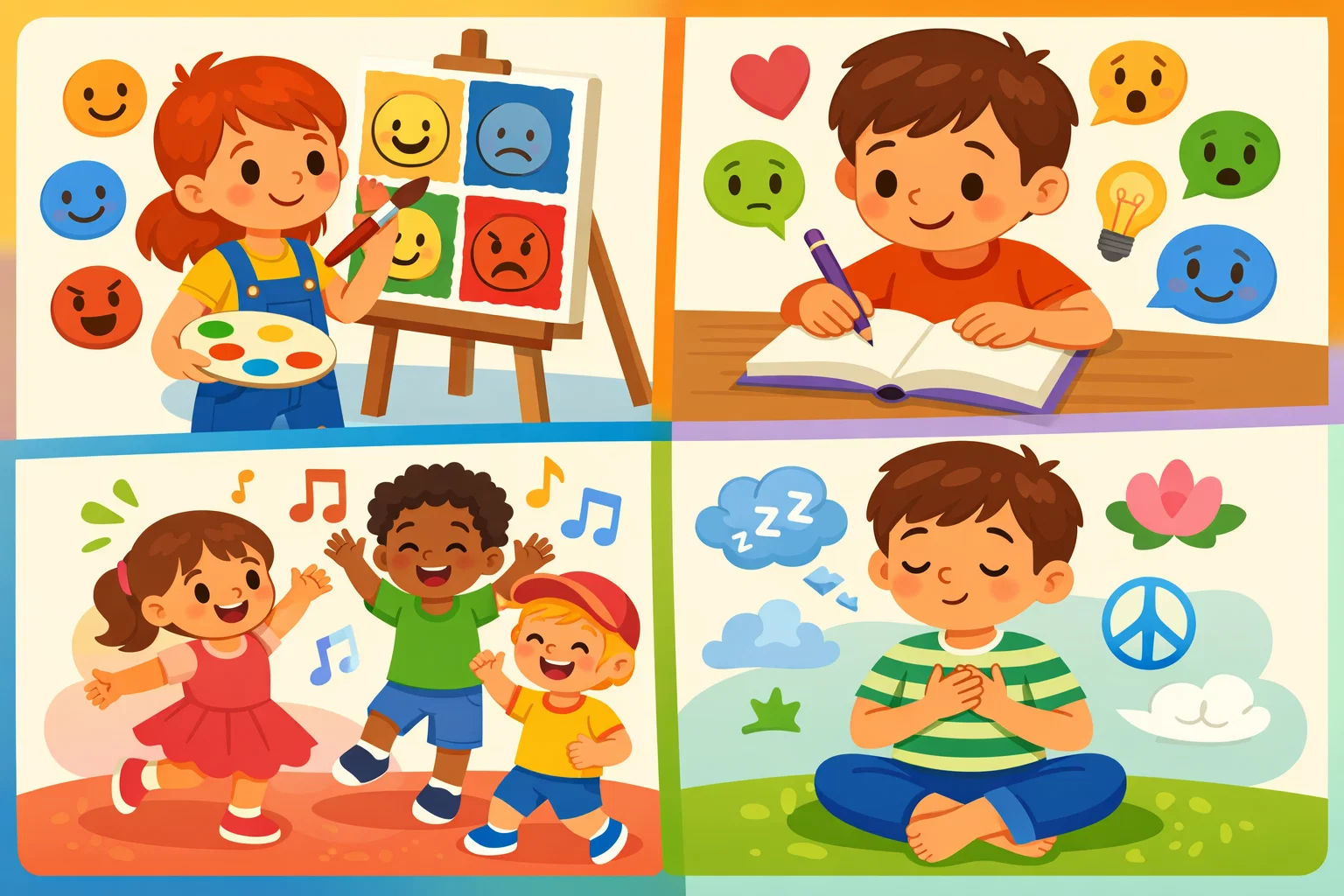
Art is a powerful medium for children to talk without using words.
- Draw an emotion: Ask the child to draw what “anger” looks like. Is it a red scribble? A spiky monster?
- Emotion Masks: Use paper plates to craft different faces.
- Feeling Collages: Use old magazines to find pictures of people looking happy, sad, or surprised.
Writing activities for emotional vocabulary
For older children, keeping a “Feelings Journal” can be a playful yet profound way to explore emotions.
- Sentence Starters: “Today I felt brave when…” or “I feel sadness when…”
- Emotion Word Bank: Create a list of “feeling words” to help them expand their vocabulary beyond just “happy” or “sad.”
Music activities for feelings recognition
Music often bypasses the logical brain and speaks directly to emotions.
- Mood Matching: Play different genres of music and ask the child to dance how the music makes them feel.
- The Drumming Game: Use a drum to express emotions – loud, fast beats for anger; soft, slow taps for calm.
Movement activities to explore feelings
Physical movement helps release the “energy” of big emotions.
- Emotion Yoga: Assign a pose to a feeling (e.g., “The Brave Lion” for confidence).
- Freeze Dance: When the music stops, the adult shouts an emotion, and the child must freeze with that facial expression.
Feelings Identification Games
| Game Type | Description | Recommended Age |
| Charades | One person acts out a feeling; the other guesses the emotion. | 4+ Years |
| Emotion Matching | Use a printable set of emotion cards to match faces to words. | 3+ Years |
| The Feel-O-Meter | A sliding scale or worksheet to show intensity of feelings. | 5+ Years |
Board games focused on emotions
There are many excellent board games commercially available, but you can also create a DIY version. Use a simple path of squares; when a player lands on a color, they must share a time they felt that specific emotion.
Digital and printable emotion games
In a digital age, interactive apps can help kids visualize feelings. However, printable resources like “Emotion Bingo” remain a favorite for parents and carers because they encourage face-to-face conversation about feelings.
Pretend Play Activities for Feelings
Role-play scenarios for emotional expression
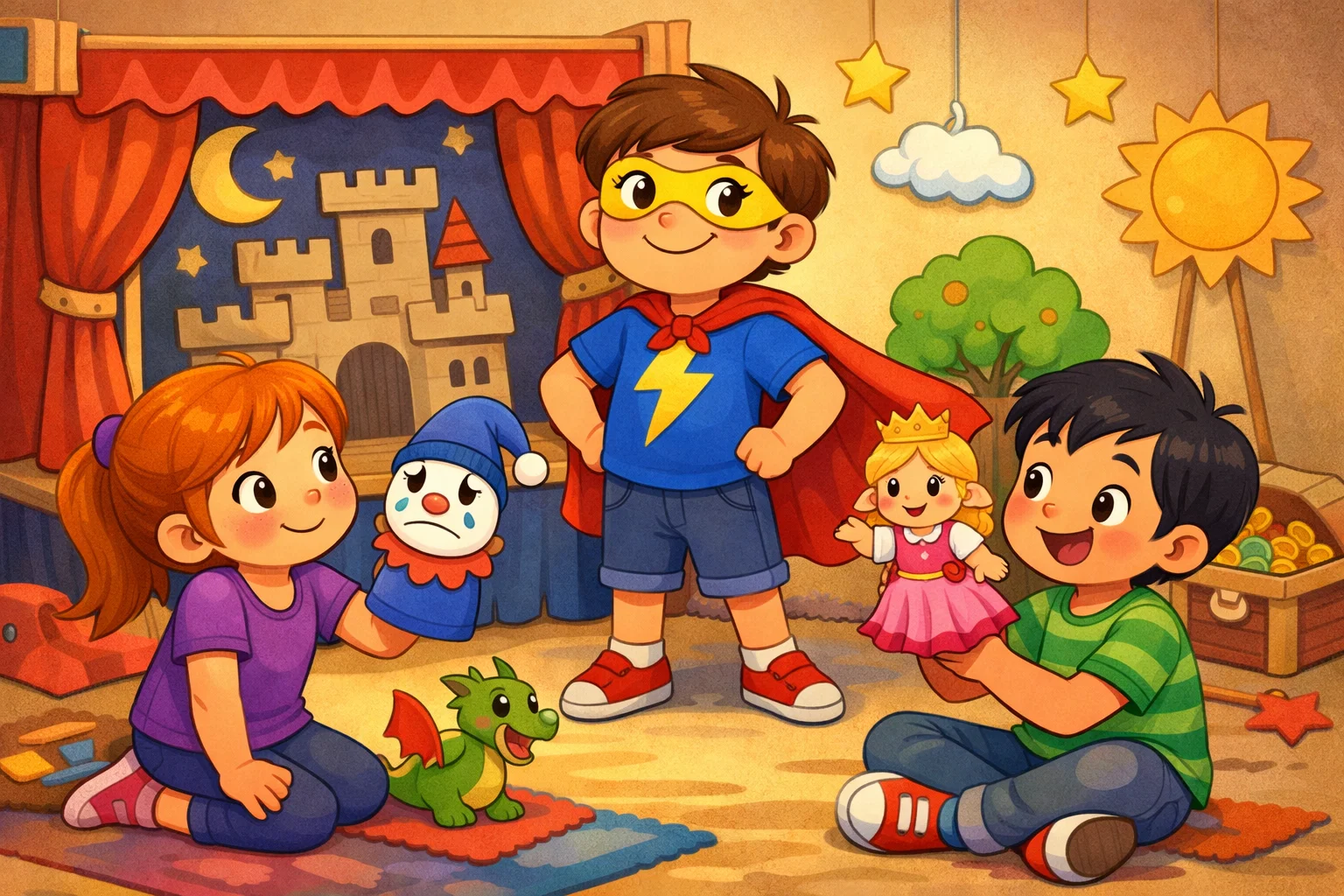
Role-playing helps children practice for “real life.” You might say, “Let’s pretend your toy broke. How would you feel? What could you say to ask for help?” This builds the neural pathways for emotional learning before the crisis actually happens.
Puppet play for feelings exploration
Puppets provide a “buffer.” It is often easier for a child to say, “The Mr. Bear is scared,” than to say, “I am scared.” Using puppets allows children to explore sensitive topics from a safe distance.
Video and Visual Feelings Activities
Visual charts and emotion wheels
An “Emotion Wheel” is a helpful tool for getting a sense of your child’s day. Displayed on the fridge, it allows a child to point to how they’re feeling when they don’t have the words.
“Visual aids act as an emotional anchor, providing children with a concrete reference point for abstract internal sensations.” — Child development specialist
Suggested Feelings Activities by Age
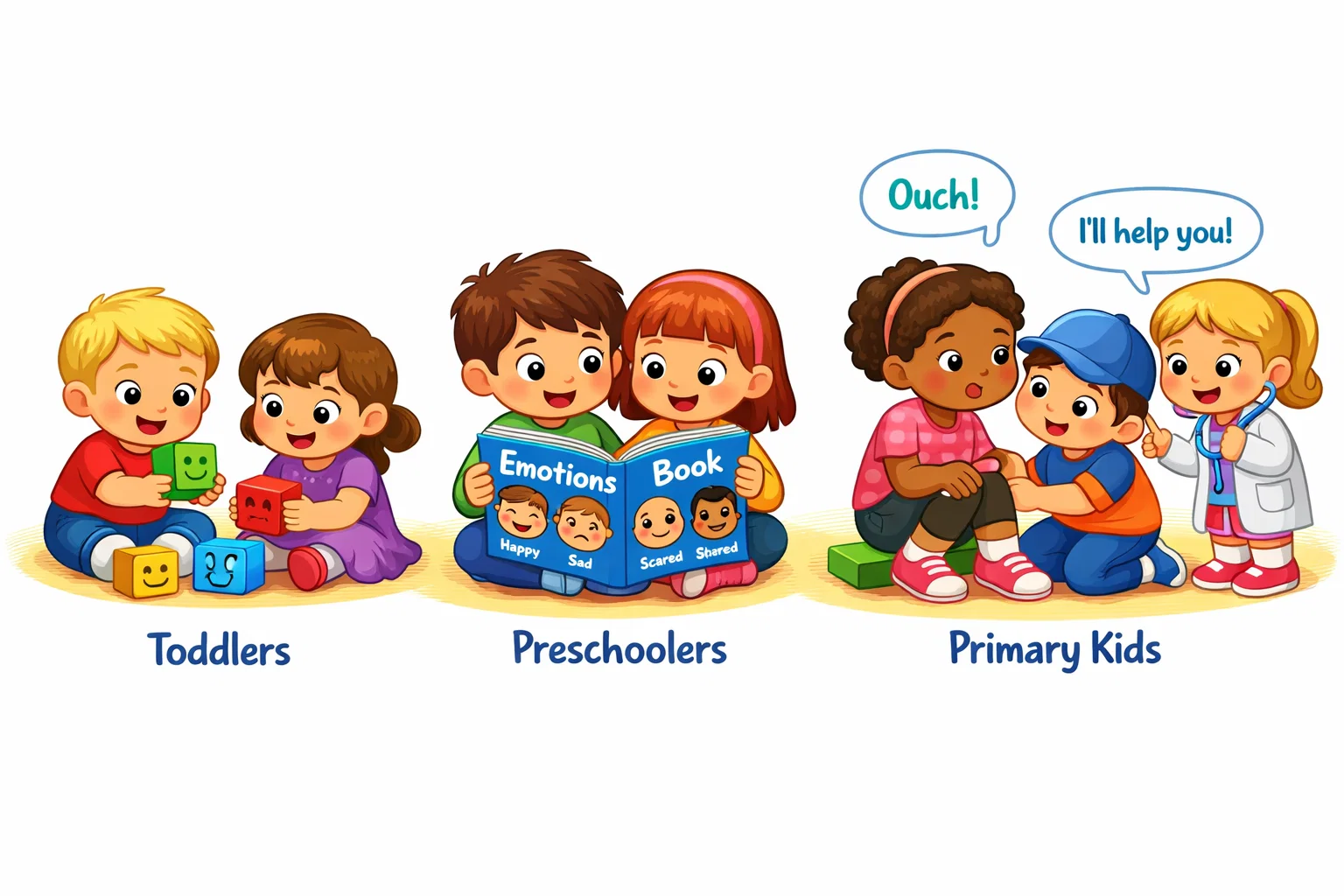
Feelings activities for toddlers (1-2 years)
Focus on the basics. Point to your face and say, “Look, Mommy is smiling! I am happy.” Use mirrors so they can see their own body language.
Feelings activities for preschool children (3-4 years)
At this age, a four-year-old is starting to understand the concept of others’ feelings. Simple games such as “Emotions Charades” work especially well at this stage. Focus on the four core emotions: Happy, Sad, Angry, and Scared.
Feelings activities for primary school kids (5-8 years)
Older children can handle more complexity. Discuss “mixed emotions” – like feeling both nervous and excited for a school play. Use worksheet activities that involve thoughts and feelings mapping.
Feelings Activities at Home
Everyday moments for emotions learning
You don’t need a formal lesson plan. Use grocery shopping, bath time, or car rides to get to know your child’s inner world. “I noticed you looked a bit frustrated when you couldn’t find your shoes. Is that how you felt?”
Calm-down activities for strong emotions
Create a “Calm Down Kit” containing:
- A “glitter jar” to watch the sparkles settle.
- Stress balls to squeeze.
- A list of deep-breathing exercises.
Feelings Activities in Educational Settings
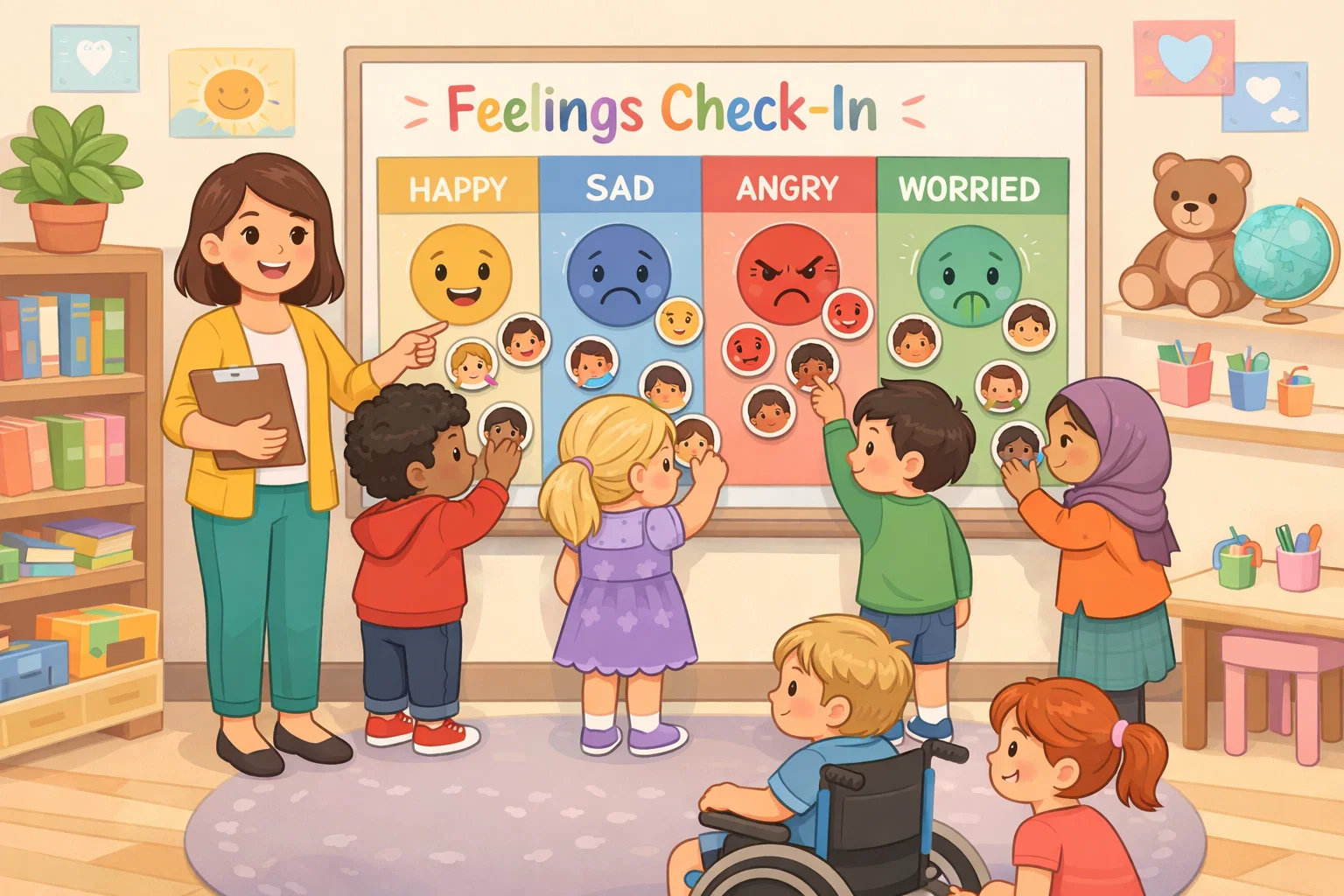
Classroom feelings routines
Many teachers use a “Morning Check-in.” Each child places their name tag on an emotion poster as they enter. This helps the teacher identify which children might need extra emotional support that day.
Linking feelings activities to learning goals
Emotional literacy can be woven into literacy (analyzing a character’s motives) or history (how people felt during significant events). This makes mental health a natural part of the curriculum rather than an add-on.
What Practitioners and Parents Use Successfully
Adaptations for different needs
For neurodiverse children, particularly those on the autism spectrum, emotion cards with real photographs are often more effective than cartoons. These children may need more explicit instruction on how to recognise subtle body language cues.
Next Steps for Supporting Emotional Skills
When to seek extra support
While big emotions are a normal part of growing up, some signs might feel more serious. If a child’s emotional distress interferes with their sleep, eating, or ability to attend school for an extended period, it may be time to consult a professional.
Building routine
Make emotions activities a regular part of your parenting or teaching toolkit. Whether it’s a printable chart or a nightly check-in, the goal is to make emotional learning a lifelong habit.
Summary of Feelings Activities for Kids
By giving children the tools to express emotions, we are giving them a higher quality of mental health and the ability to navigate life’s ups and downs with grace. Let us help our children feel confident in their hearts so they can succeed in their minds.