

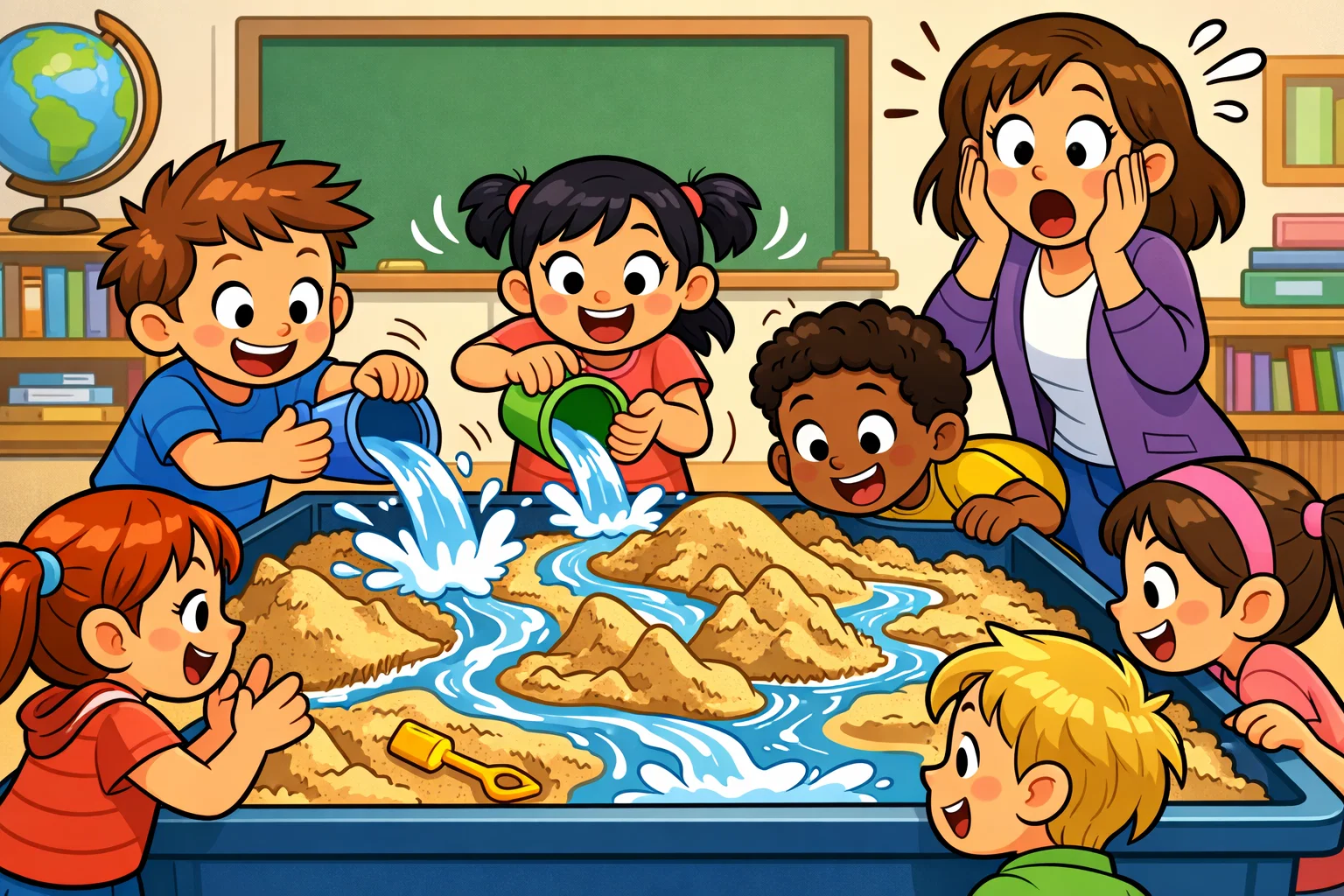
Have you ever noticed how a perfectly crafted sandcastle slowly vanishes as the tide comes in, or how a backyard path develops tiny “rivers” after a summer rain? These moments are nature’s classroom in action. For children, the concept of a changing Earth’s surface can feel abstract until they see it happen right before their eyes. Engaging in a hands-on erosion experiment allows kids to think like geologists, using simple materials to witness the powerful forces that shape our world.
By using beach sand, water, and a few household items, you can transform a simple play session into a robust STEM activity. These science activities do more than just entertain; they foster critical thinking and environmental awareness. Whether you are a teacher looking for lesson plans or a parent seeking a rainy-day science experiment, modeling land and water interactions provides a visual, tactile way for kids to explore the dynamic nature of our planet.
Explore Erosion With Sand and Water Experiments
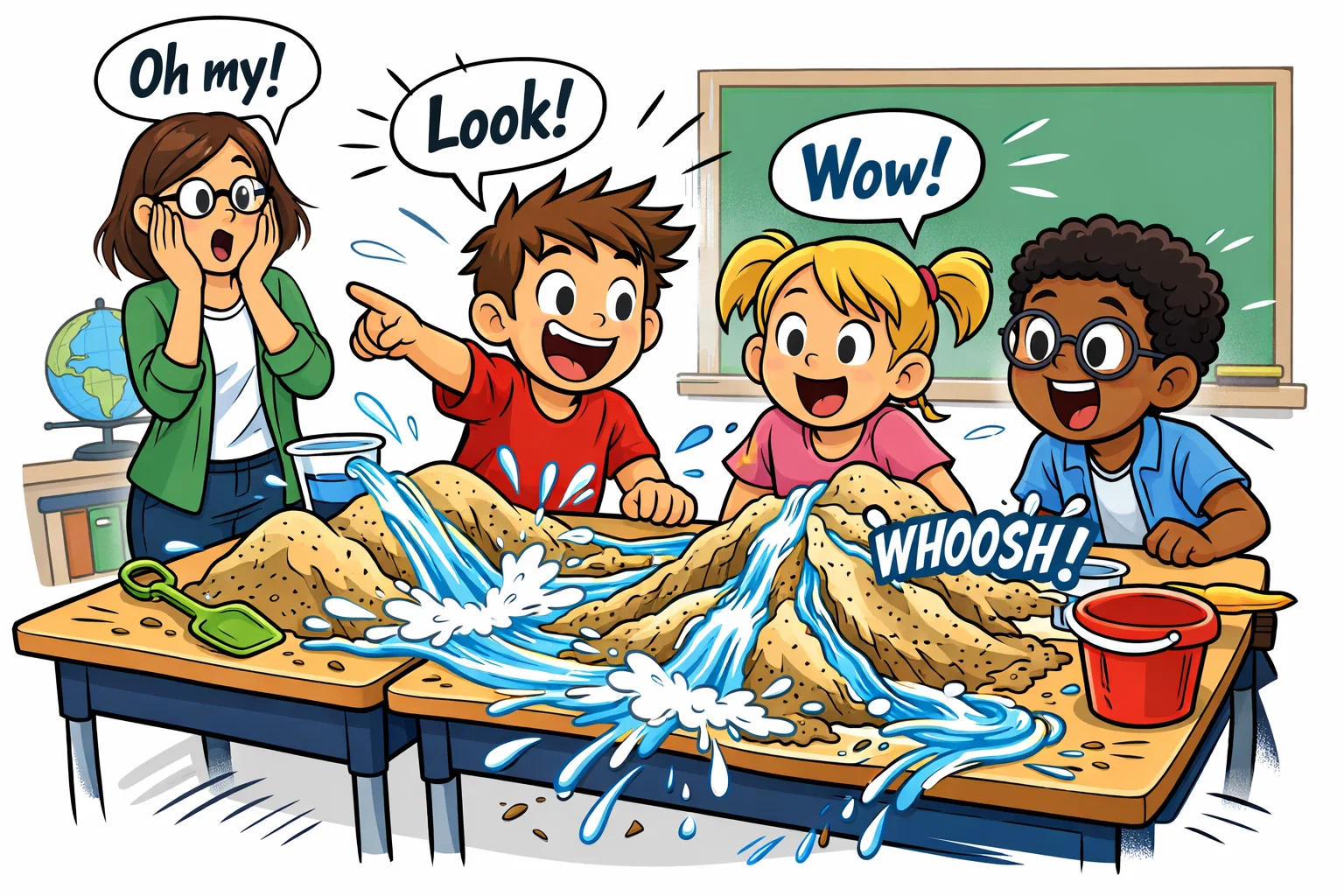
Exploring the relationship between moving water, rocks, and soil helps children understand that the Earth is not static. Through hands-on learning, students can see how water flows and reshapes the terrain.
Erosion Process Using Sand and Flowing Water
In a typical erosion activity, moving water acts as the primary agent of change. When children pour water over a mound of sand or loose soil, they observe the physical displacement of loose particles. As the liquid gains momentum, it picks up speed, carrying tiny grains away from their original location. This real-time observation helps kids grasp that erosion is essentially earth in motion.
Natural Landscapes Modeled With Sand and Water
Using a large tray or bin, you can help students identify how different landforms are created. By manipulating the earth materials, you can build a simple model of:
- Coastlines: Where ocean waves meet the shore.
- River Valleys: Carved out by a steady stream.
- Deltas: Where sediment begins to deposit as the flow slows down.
- Canyons: Showing how deep canyons can form over long periods of constant flow.
Difference Between Weathering Activities and Erosion Experiments
It is common for young learners to confuse weathering and erosion. To clarify the distinction between these geological processes:
- Weathering is the process of breaking things down (like cracks in rocks forming from ice or chemical weathering from acid rain). This can be demonstrated using sugar cubes that dissolve in liquid.
- Erosion is the process of those broken pieces being carried away.
Think of it this way: Weathering is the “hammer” that breaks the rock, and erosion is the “truck” that drives the debris away.
What Is Erosion In Sand and Water Activities
At its core, erosion is the transport of loose particles. In these experiments for kids, we focus on how the earth’s surface is constantly being reshaped by natural forces.
Erosion Caused by Water Flow
The volume and speed of the stream significantly impact how much sediment is moved. When kids use a cup to pour a tiny trickle, the displacement is minimal. However, simulating a flash flood by pouring a large container rapidly creates a dramatic landslide effect. This helps children develop a hypothesis about how a big storm might affect a real-world coastline.
The Role of Gravity in Sand Erosion
Gravity is the silent partner in landscape change. By tilting the experiment tray to create a steeper landform, kids will see that water flows faster, causing more significant “damage.” This demonstrates why mountain sides are more prone to landslides than flat plains.
Real-World Erosion Examples Kids Recognize
To make the learning stick, connect the tray to the real-world:
- The Beach: Why do we have to rebuild castles every day?
- Playgrounds: Why do puddles form in certain spots after rain?
- Roadwork: Why do construction crews put up black fabric fences (silt fences) near Rocks and soil (optional)?
Sand and Water Erosion Experiment Setup
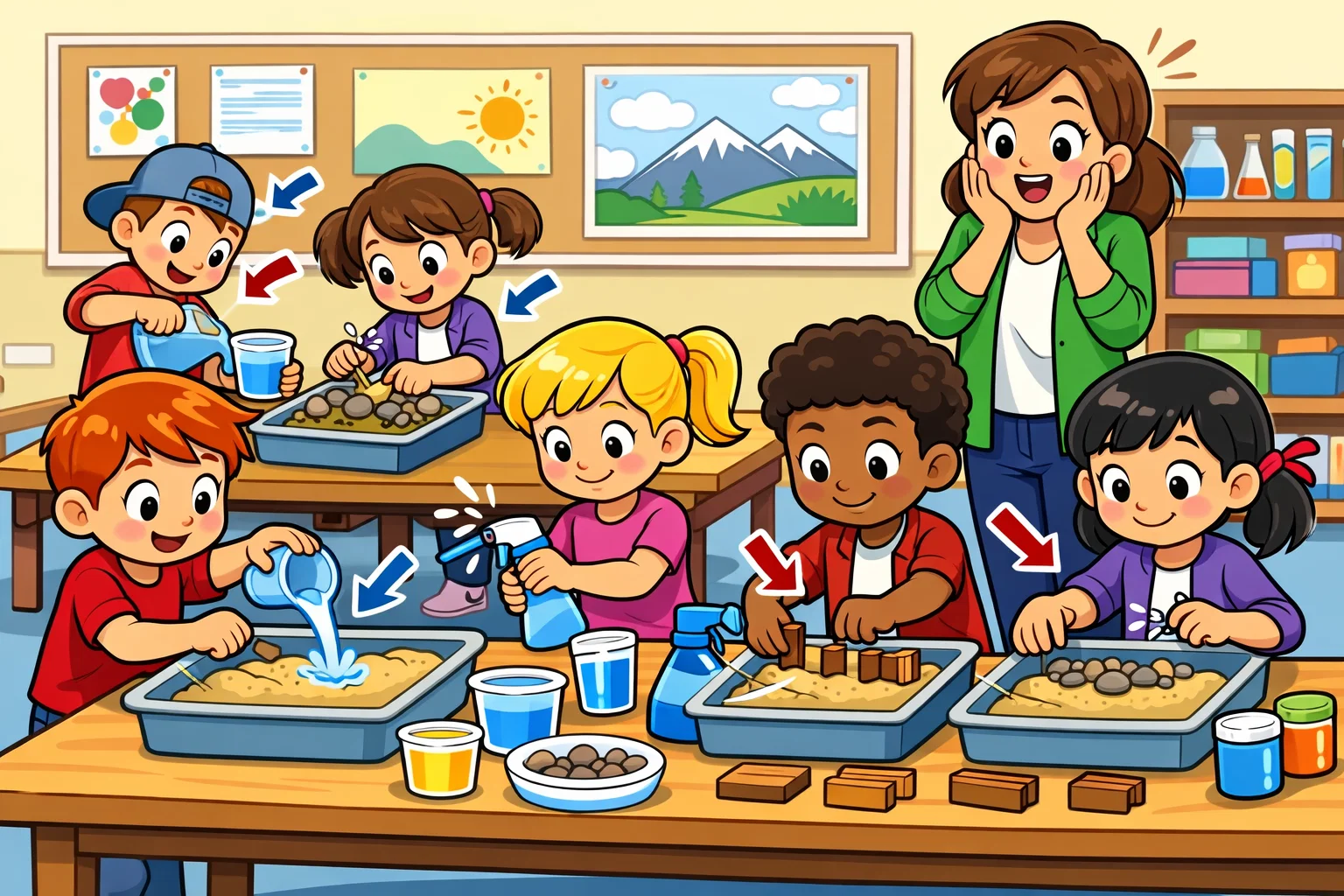
Preparation is key to a successful hands-on stem session. You don’t need a professional lab – just a few basics from the kitchen and garden.
Materials Needed for Sand and Water Erosion Experiments
| Category | Items |
| Foundation | Beach sand, rocks and soil, modeling clay |
| Tools | Spray bottle, two plastic cups, jar with water, tray |
| Simulators | Blue food coloring, sugar cubes, small rocks |
| Protection | Small plant cuttings, sponges, or sticks |
Safe Workspace Preparation
Since this involves moving water and gritty materials, things can get messy!
- Outdoor Option: A sandbox or a sloped driveway is perfect.
- Indoor Option: Use a deep plastic storage bin. Lay down towels and ensure adult supervision to prevent slips.
Time Required for Experiment Completion
- Setup: 15 minutes to gather materials and build a small landscape.
- Activity: 30–45 minutes of exploration and taking turns.
- Cleanup: 10 minutes (if using trays properly).
Beach Erosion Model With Sand and Water
Coastal erosion is a major environmental concern. Creating a beach erosion model is a fantastic way to visualize this threat to our shores.
Building a Mini Beach With Sand Layers
Start by piling the sediment on one side of a long container. Use modeling clay to create a firm “base” for a lighthouse or a structure on the higher ground. This represents the dune system.
Simulating Waves Using Water Pouring Techniques
Fill the empty side of the tray with water (add blue food coloring for effect!). Use a piece of cardboard or a plastic lid to gently push the liquid toward the shore, creating ocean waves.
Observing Shoreline Changes Over Time
As the waves hit the “shore,” kids will see the sand dunes begin to erode. The water will pull the particles back into the deeper end of the tray, demonstrating how beaches lose ground during storms.
Water Erosion Science Experiment Activities
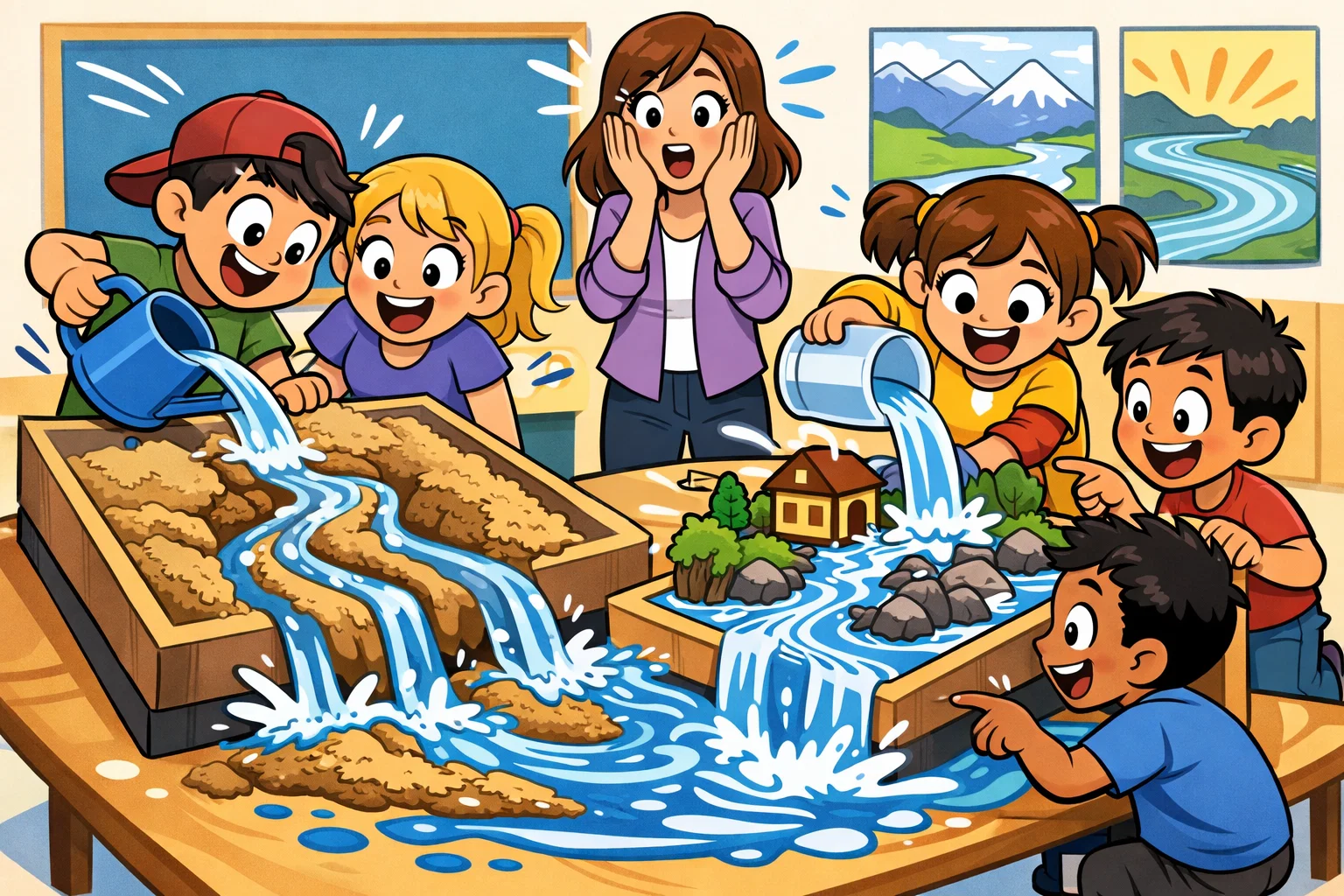
River Channel Erosion Experiment
Give the kids a spray bottle to create “rain” over a miniature hill. Ask them to observe where the first tiny cracks in rocks or paths in the soil appear. Eventually, these paths join to form a valley.
Flood Erosion Simulation With Increased Water Volume
What happens during a big storm? Use a large pitcher to pour water rapidly. This flash flood simulation shows how quickly topsoil can be washed away, leaving behind only the large boulders.
Delta Formation Using Slow Water Release
As the “river” reaches the flat end of the tray, the water flows more slowly. The silt it was carrying will deposit in a fan shape. This is a delta.
Erosion Station: Sand and Water Exploration
Station Setup for Group Learning
If you are in a classroom, set up three distinct stations to diversify the experience:
- The Coast: Focus on beach erosion and waves.
- The Mountain: Focus on steep slopes and landslides.
- The Prevention: Focus on how to slow down erosion.
Guided Observation Prompts for Kids
- “Where did the sediment go?”
- “Which moved faster: the grains or the small rocks?”
- “What happens if we add rocks to the slope?”
Recording Results Using Drawings or Photos
Encourage kids to draw a “Before” and “After” picture of their landform. Documentation is a vital part of the scientific method and helps them see the reshaping process clearly.
How To Stop Sand Erosion In Experiments
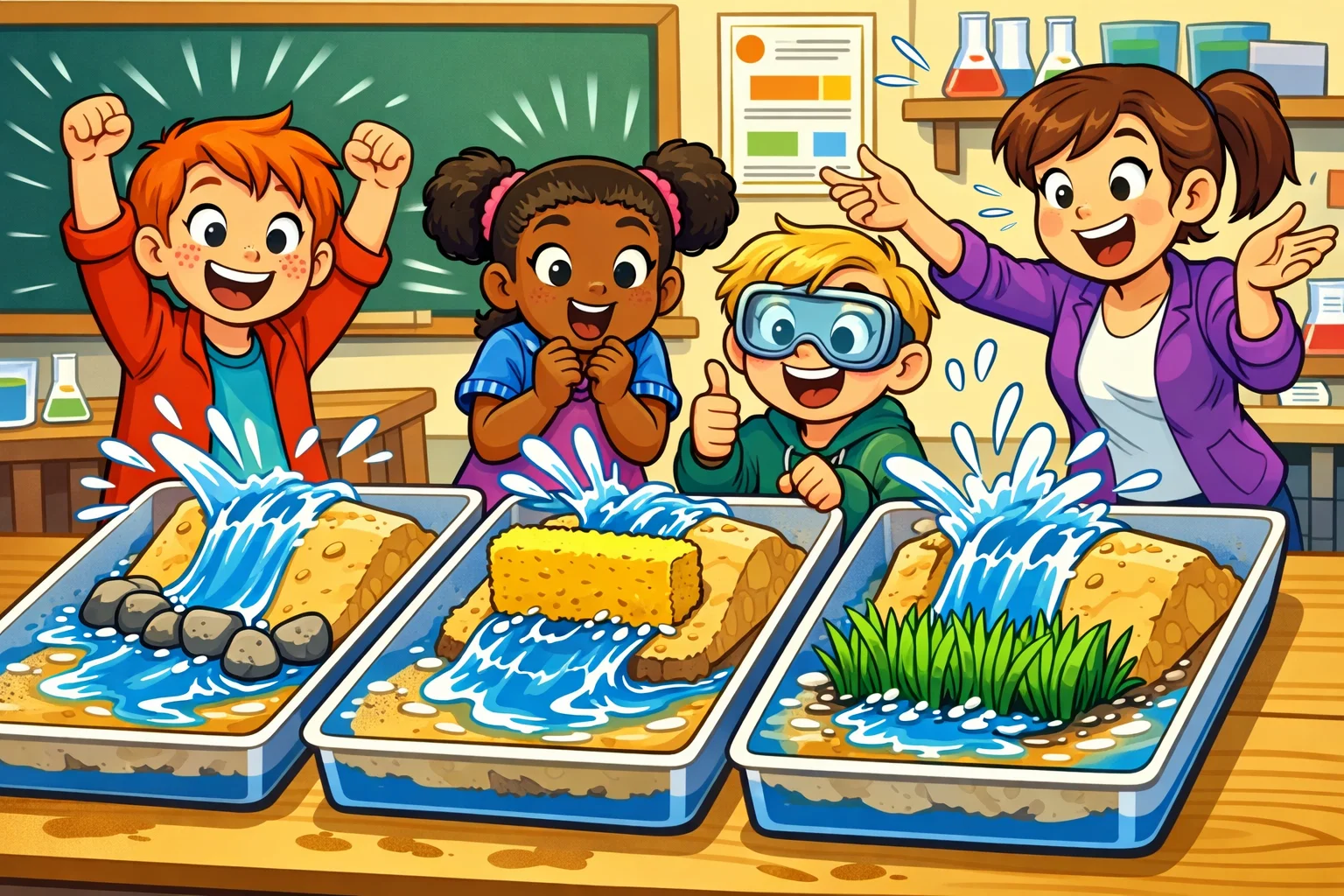
This is the STEM challenge portion. Now that the kids have destroyed the landscape, they must learn to save it using engineering principles.
Barriers and Breakwaters Using Simple Objects
Ask the children to build a simple jetty or seawalls using large boulders (stones) or popsicle sticks. Does this help prevent the earth from washing away?
Vegetation Simulation With Grass or Fabric
Use small plant cuttings or scraps of felt to represent grass and trees. The “roots” help hold the loose particles of topsoil in place. This demonstrates the importance of forests in preventing a landslide.
Comparing Protected and Unprotected Sand Areas
Run a side-by-side test. Compare results between a bare hill and one covered in “plants” and rocks.
Vegetation is one of the most effective ways to prevent or slow the movement of soil during heavy rain.
Classroom Tips for Sand and Water Erosion Experiments
Grade Level Adaptations
- Preschool: Focus on sensory play – how the wet material feels in their hands.
- Elementary: Introduce the hypothesis and measure the depth of the canyons that can be formed.
- Middle School: Calculate the rate of displacement based on liquid volume and slope angle.
Mess Management Strategies
Use two solo cups – one with holes in the bottom (the “rain” cup) and one without. This limits the amount of liquid used at any one time and keeps the mess localized.
Linking Experiments to Curriculum Standards
These activities align with common earth science learning goals related to Earth’s systems.
Hands-On Erosion Experiments for Kids
Beach Erosion Project
Create a “Save the Lighthouse” challenge. Place a heavy object near the water’s edge and challenge the kids to build a defense system using only the materials provided.
Save the Structure Water Challenge
Can they protect a building from a “flood” using a drip stick or a seawall? This encourages engineering-based thinking and creative problem-solving.
Free-Play Exploration With Guided Goals
Sometimes, the best learning happens when kids just play. Provide a tray, water, materials, and tools, the materials, and the tools, and let them reshape the land as they see fit.
Deepening Learning Through Observation and Discussion
Predicting Outcomes Before Water Flow
Before a single drop hits the surface, ask: “What do you think will happen?” Writing down a hypothesis makes the eventual result more impactful for the student.
Comparing Results After Multiple Trials
Science is about repetition. If the first seawall failed, ask why. Encourage them to tweak their design and try again to prevent or slow the damage.
Encouraging Cause-Effect Reasoning
Help them connect the dots: “Because the water was moving fast, the sediment moved far.”
Erosion Experiments for Home and Classroom Use
Indoor Sand and Water Experiments
A simple dish tub and a bag of play material from the hardware store are all you need for an indoor erosion station.
Outdoor Sand Erosion Activities
In a sandbox, you can work on a much larger scale, creating entire mountain ranges and observing how they reshape over a week of natural weather.
Small Group Versus Individual Experiments
Small groups encourage collaboration and “engineering meetings,” while individual work allows for quiet sensory play and focused observation of water flows.
More Erosion and Earth Science Activities for Kids
Wind and Sand Erosion Experiments
Use a straw to blow on dry particles. This shows how sand dunes move in the desert. Compare this to water erosion – which is faster?
Ice and Water Erosion Demonstrations
Freeze a “glacier” (a block of ice with small rocks inside) and slide it across the surface to show how glaciers carve out landscapes.
Combined Weathering and Erosion Activities
Start with sugar cubes (weathering) and then wash the “sediment” away (erosion) to show the full cycle of landscape change.