

Choosing the right reading app for your child is a big decision — and it truly is. With so many digital libraries competing for attention, two names consistently stand out: Epic and ReadingIQ. Both are apps designed to help kids fall in love with reading, but they take noticeably different approaches to get there.
This app review compares both platforms honestly — no hype, no hidden agenda — so you can determine which one best fits your child’s needs, budget, and your household’s approach to screen time.
Key Features of Epic Reading App
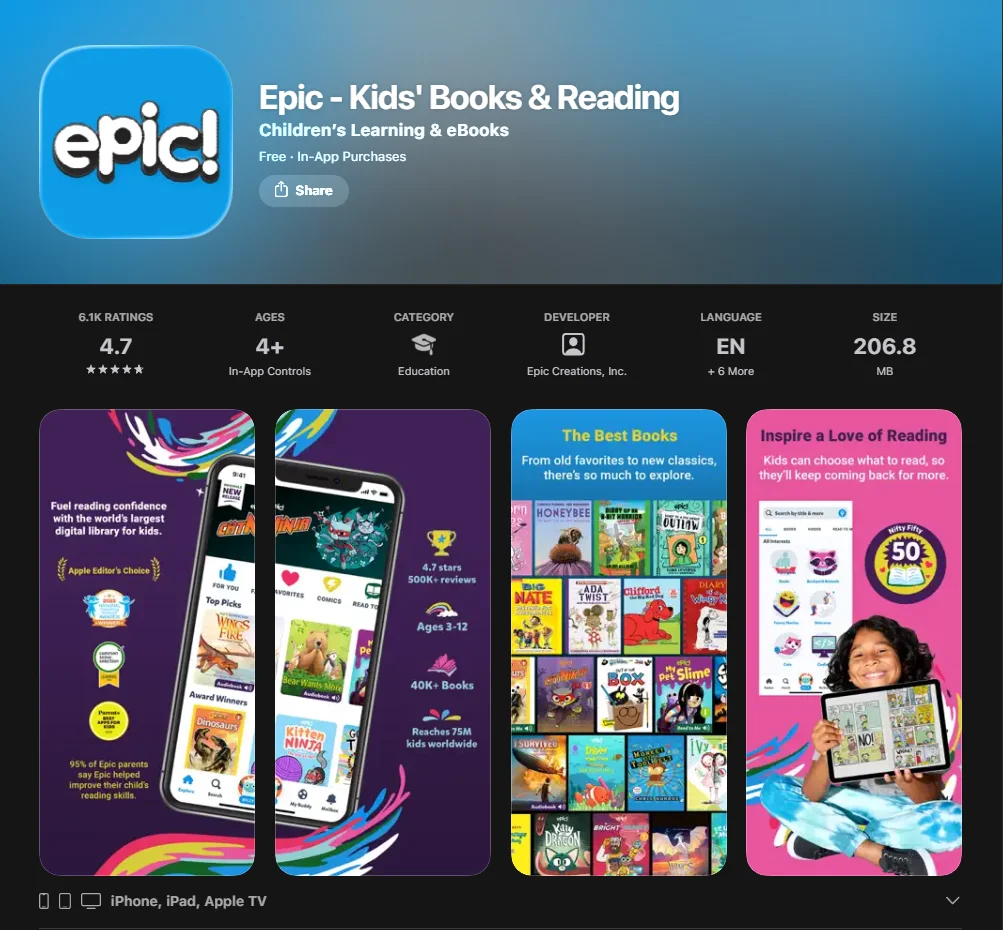
Epic positions itself as a digital library for kids, centered around access and volume. The core pitch is simple: give children thousands of high-quality books in one place and let them explore. As an educational app aimed at ages 2–12, it focuses on making reading feel like fun rather than schoolwork.
Book Variety and Quality
Epic’s library of books contains over 40,000 titles — picture books, early readers, chapter books, audiobooks, and non-fiction. The app offers book titles for kids from publishers like National Geographic Kids, Scholastic, and HarperCollins, covering every major genre and topic.
The sheer breadth of books available is Epic’s biggest selling point. Kids who love dinosaurs, kids who prefer fantasy, reluctant readers who respond better to comics — there’s something here for almost every child. Quality is generally high, though parents should note that content varies since it includes both curated picks and self-published works.
Interactive Features and Engagement
Epic goes beyond a simple digital bookshelf. Learning fun is baked into the experience through features like:
- Read-to-me books with audio narration for younger or struggling readers
- Educational videos embedded alongside relevant book topics
- Comprehension questions tied to specific titles to test understanding
- Read-along highlighting that follows the text as audio plays
The interface is colorful and kid-friendly, making independent navigation relatively easy. That said, the sheer number of titles to choose from can occasionally feel overwhelming without parental guidance.
Age Appropriateness
Epic is ideal for children aged 2–12. Younger kids (2–5) benefit most from read-aloud features and picture books. Children in the 6–10 range get the most out of leveled readers and non-fiction content. For older readers (10–12), the chapter book selection is solid but less comprehensive than dedicated middle-grade platforms.
Key Features of ReadingIQ: Supporting Early Literacy Development
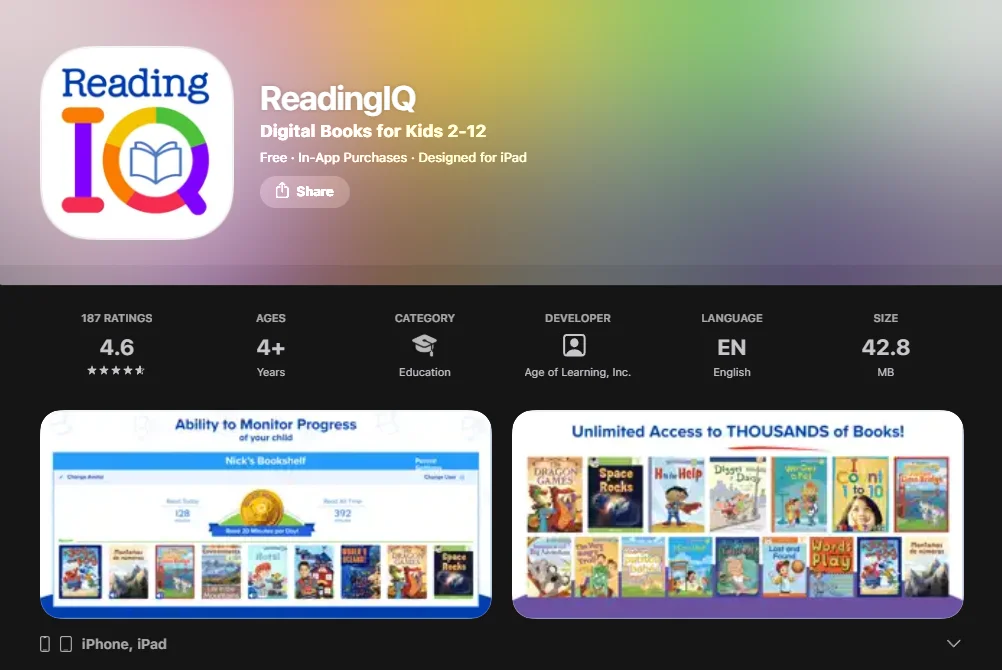
ReadingIQ adopts a more structured, curriculum-based approach. Rather than overwhelming kids with options, it guides them through reading at their specific level — which appeals strongly to parents and educators looking for measurable literacy development.
Content Selection and Educational Value
ReadingIQ is an educational technology platform offering around 1,000 books — significantly smaller than Epic’s but more carefully curated. Developed by Age of Learning (the company behind ABCmouse), the app is explicitly designed to support literacy development as a formal reading program.
Book levels are organized using recognized systems — Lexile, DRA, and guided reading levels — making it easy to match a child to appropriate material. For parents and students who want structure, this clarity is genuinely useful. The focus stays firmly on literacy skills: phonics, vocabulary, comprehension, and fluency.
Tracking Progress and Parental Controls
This is where ReadingIQ genuinely stands out. The app provides:
- Detailed reading progress reports showing time spent and book titles completed
- Comprehension questions after books to monitor understanding
- Parental dashboards to support learning over time
- The ability to assign specific books at appropriate grade levels
For homeschooling families, as well as parents and educators who want to treat reading as a structured activity, this level of oversight is a significant advantage.
Age Range and Adaptability
ReadingIQ targets children ages 2–13, with a particularly strong focus on early literacy (ages 4–8). The app tailors recommendations based on reading level rather than just age — a 9-year-old reading at a 2nd-grade level receives content suited to their ability, without embarrassment. This learning style-sensitive approach makes it a thoughtful option for students who need personalized pacing.
Epic vs Reading IQ: Comparing Pricing Models
Pricing is often the deciding factor, so here’s what you actually need to know.
Epic’s Subscription and Free Access
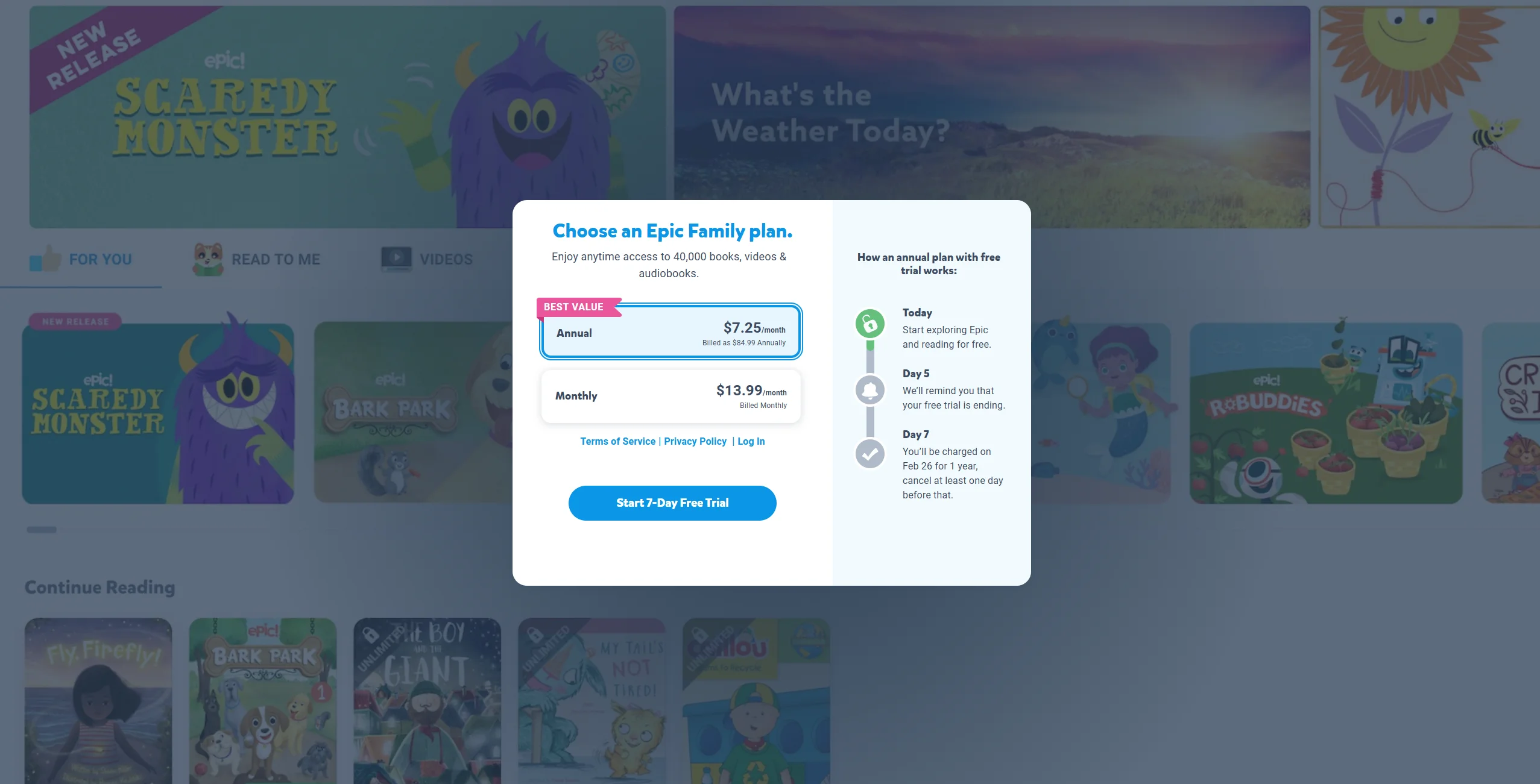
Epic offers free access to teachers through Epic School, providing the full library at no cost for classroom use — a feature that has made it immensely popular in schools. For families, the app is priced at approximately $13.99/month or around $11.99/month depending on promotions. The annual subscription is about $84.99/year, but discounts may apply during certain times of the year.
There is a 30-day free trial for new family subscribers. After the trial, the full paid plan kicks in. There is no permanently free family tier with full access — it’s free only for verified educators.
Reading IQ Pricing and Free Features
ReadingIQ costs $7.99 a month (approximately $39.99/year billed annually). Like Epic, it offers a 30-day free trial — and given that the free version gives full library access during that period, it’s a genuine way to test whether your child engages before committing.
Teachers can access ReadingIQ free through school accounts, but this feature is not as explicitly outlined on their website, and the signup process may not be as straightforward as Epic’s. If you’re evaluating apps that offer both family and classroom use, both platforms deliver — just with different levels of polish on the teacher side.
Which App is Better for Children’s Learning?
Neither app is universally better — they serve different goals. Here’s how they compare across the dimensions that matter most.
Educational Tools and Resources
| Feature | Epic | ReadingIQ |
| Comprehension questions | ✅ Selected titles | ✅ Most titles |
| Reading level tracking | Basic | Detailed |
| Assign books to child | ❌ | ✅ |
| Educational videos | ✅ | ❌ |
| Printable activities | Limited | Limited |
ReadingIQ pulls ahead on structured educational tools. Epic compensates with multimedia features and the sheer volume of digital books.
Reading Level Adaptation
ReadingIQ dynamically adjusts recommendations to match a child’s reading level, which supports targeted literacy development. Epic allows filtering by level but doesn’t actively guide children toward appropriate material — parents and students need to do more of that work manually.
For children who need reading support, ReadingIQ’s guided structure may be more effective. For strong, independent readers who want to explore on their own outside of school, Epic’s vast library is likely more appealing.
Fun and Interactive Reading Experience
Epic wins on pure engagement — it makes learning feel like leisure. The visual design, variety of content types, and breadth of book titles make it easier for children to self-direct and discover what they love. ReadingIQ is more purposeful: children follow a learning path. Both approaches have genuine merit depending on your child’s temperament and goals.
Epic vs Reading IQ: Pros and Cons
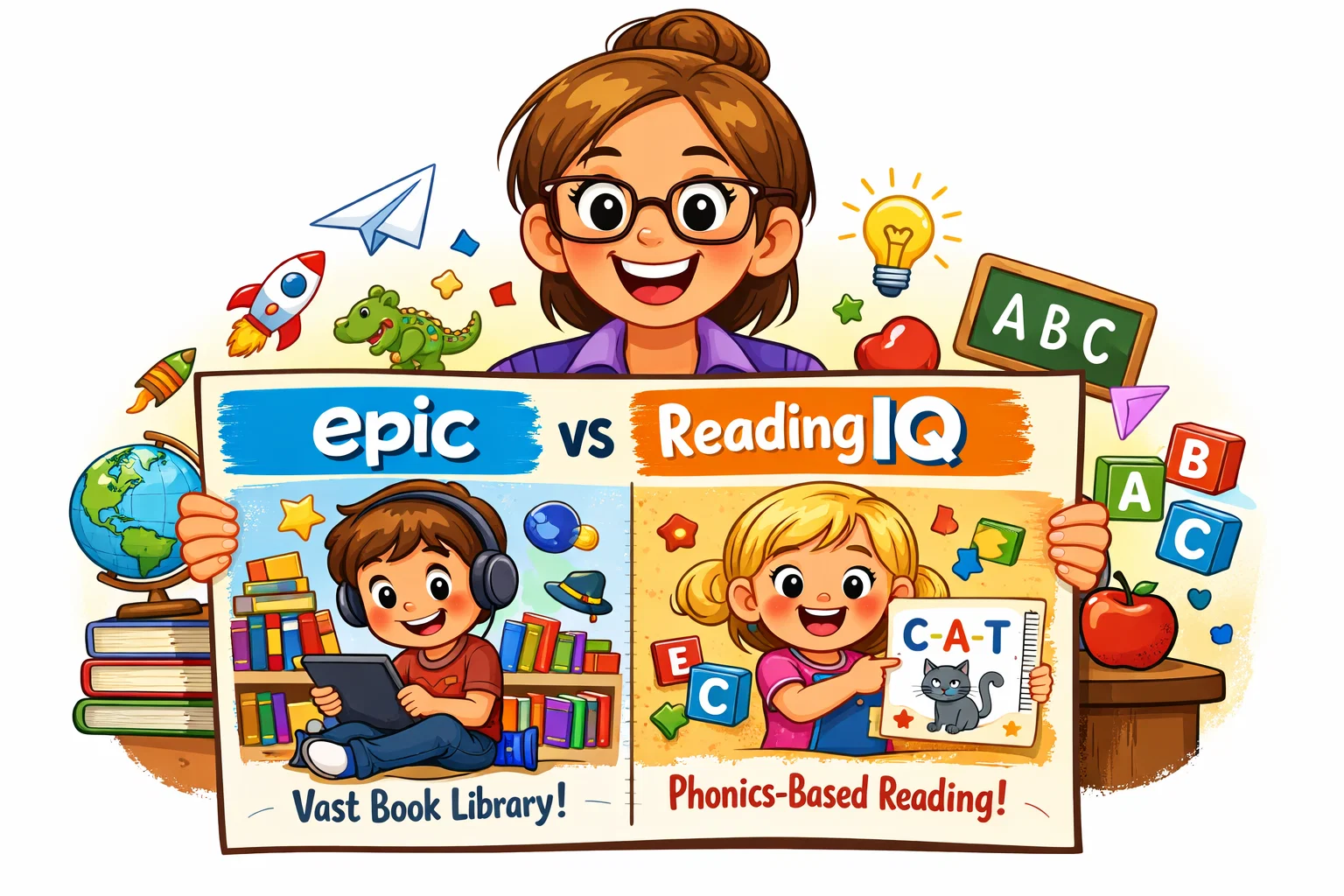
Epic’s Advantages
- Enormous library of books (40,000+ titles)
- Completely free for teachers — a great option for classroom use
- Strong multimedia features (video, audio, read-aloud)
- Easy for young children to navigate independently
- Ideal want-an-app choice for choice-reading at home
Epic’s Drawbacks
- Less structured educational progression
- Parental oversight features are basic
- Can be overwhelming for children who need guidance
- Family subscription slightly more expensive
Reading IQ’s Advantages
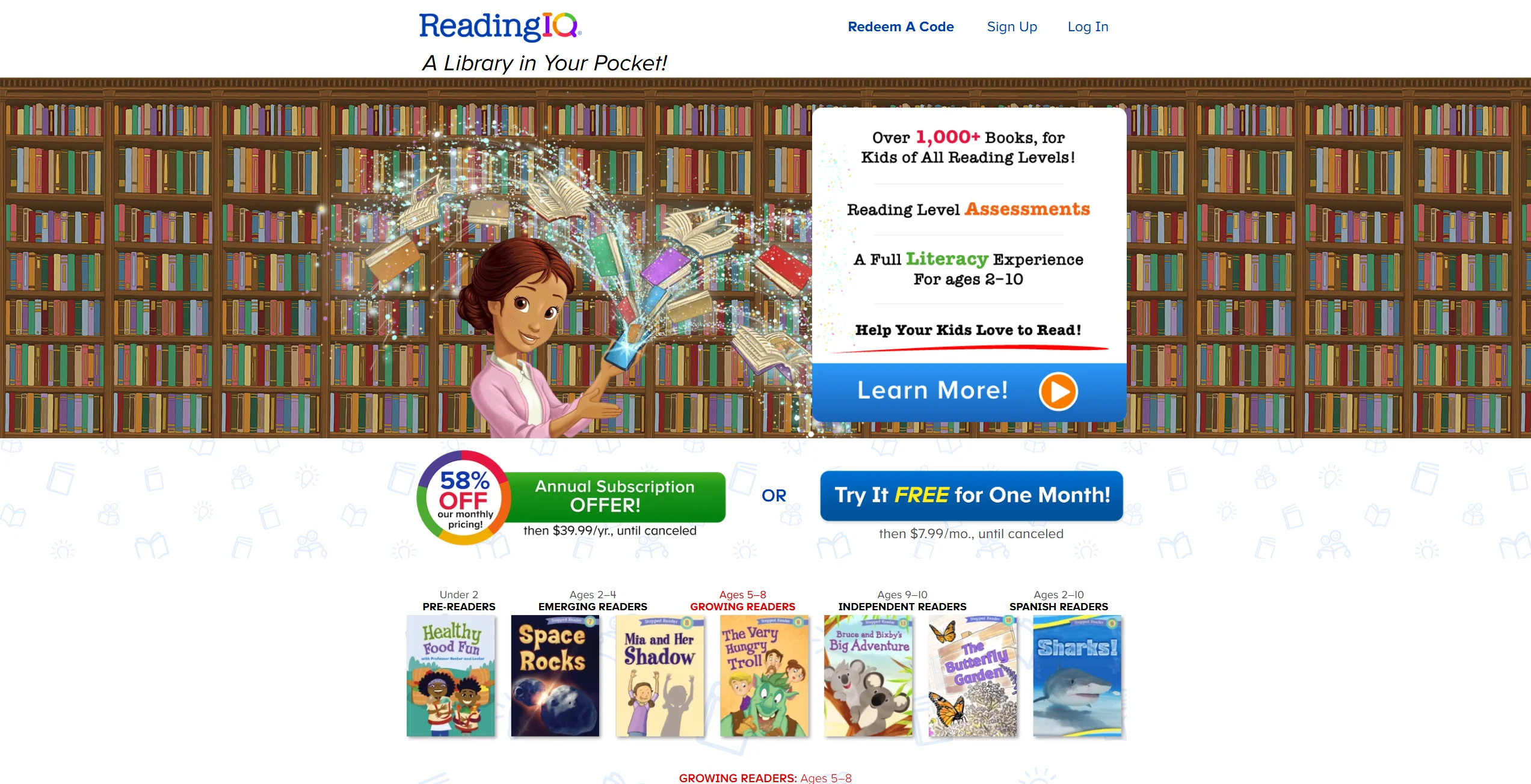
- Strong reading level matching and progression
- Detailed progress tracking and comprehension questions
- Better suited for structured learning, school library supplementation, and homeschool use
- Lower monthly price ($7.99/month vs $13.99/month)
- Curriculum-aligned content — students should know where they stand, and this app helps
Reading IQ’s Drawbacks
- Smaller library (~7,000 titles)
- No embedded videos or multimedia extras
- Less intuitive for self-directed browsing
- Interface is functional but less visually engaging
Price Comparison of Epic vs Reading IQ
Subscription Plans
| Epic | ReadingIQ | |
| Monthly price | $13.99/month | $7.99 a month |
| Annual price | ~$84.99/year | ~$47.99/year |
| Free for teachers | ✅ Yes | ✅ Yes |
| Family plan | Up to 4 kids | Up to 3 kids |
| App is free? | Teachers only | Teachers only |
ReadingIQ is significantly cheaper over the course of a year — with a difference of roughly $40 annually.
Free Trial and Discounts
Both apps offer a 30-day free trial, which is generous enough to genuinely evaluate whether your child engages. Neither app currently offers a permanently free family tier with full access — it’s free only in the educator tier.
Epic occasionally offers promotional pricing through the App Store. ReadingIQ has offered discounted annual rates through Age of Learning promotions. When you download the app, check both stores directly before subscribing — offers do change.