

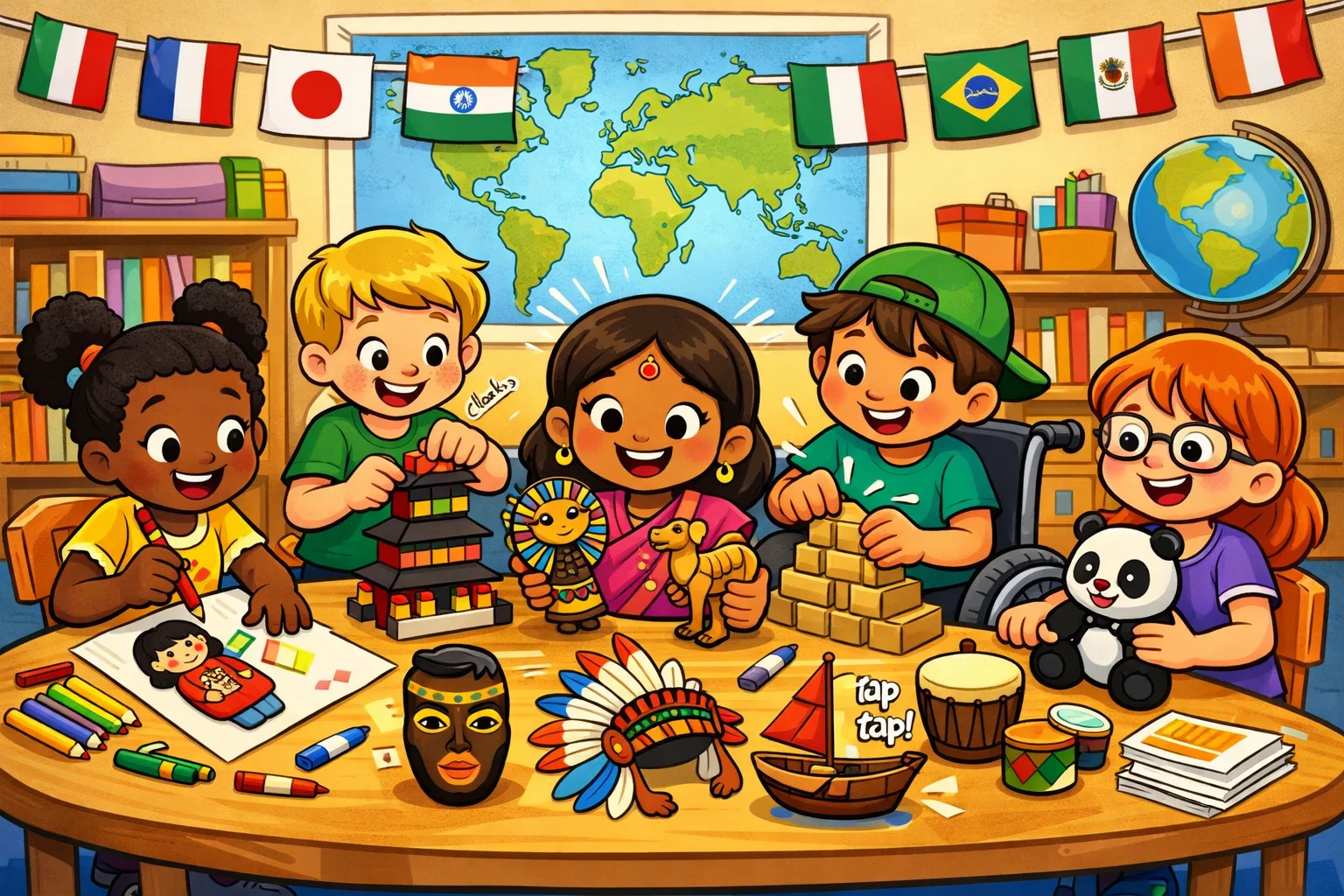
In an increasingly interconnected world, introducing children to the beauty of human difference is one of the greatest gifts a parent or educator can provide. Diversity activities for kids are not about checking a box for a holiday; they are about fostering a lifelong mindset of curiosity, empathy, and respect. From the vibrant colors of a Chinese New Year parade to the rhythmic beats of West African drumming, these experiences provide a window into the diverse world we inhabit. Through hands-on learning, children from different backgrounds can see their own lives reflected while gaining insight into cultural nuances they might not encounter in everyday life.
Whether you are a teacher looking for a comprehensive lesson plan or a parent wanting to enrich your home environment, this guide offers practical, age-appropriate strategies to explore cultural diversity. This guide covers a range of cultural diversity activities, from sensory play for preschoolers to community-based explorations for older children. The goal is simple: to help every child feel seen and valued while teaching them to embrace and celebrate the unique ways of life that make our global community so rich.
Meaning of Diversity for Kids
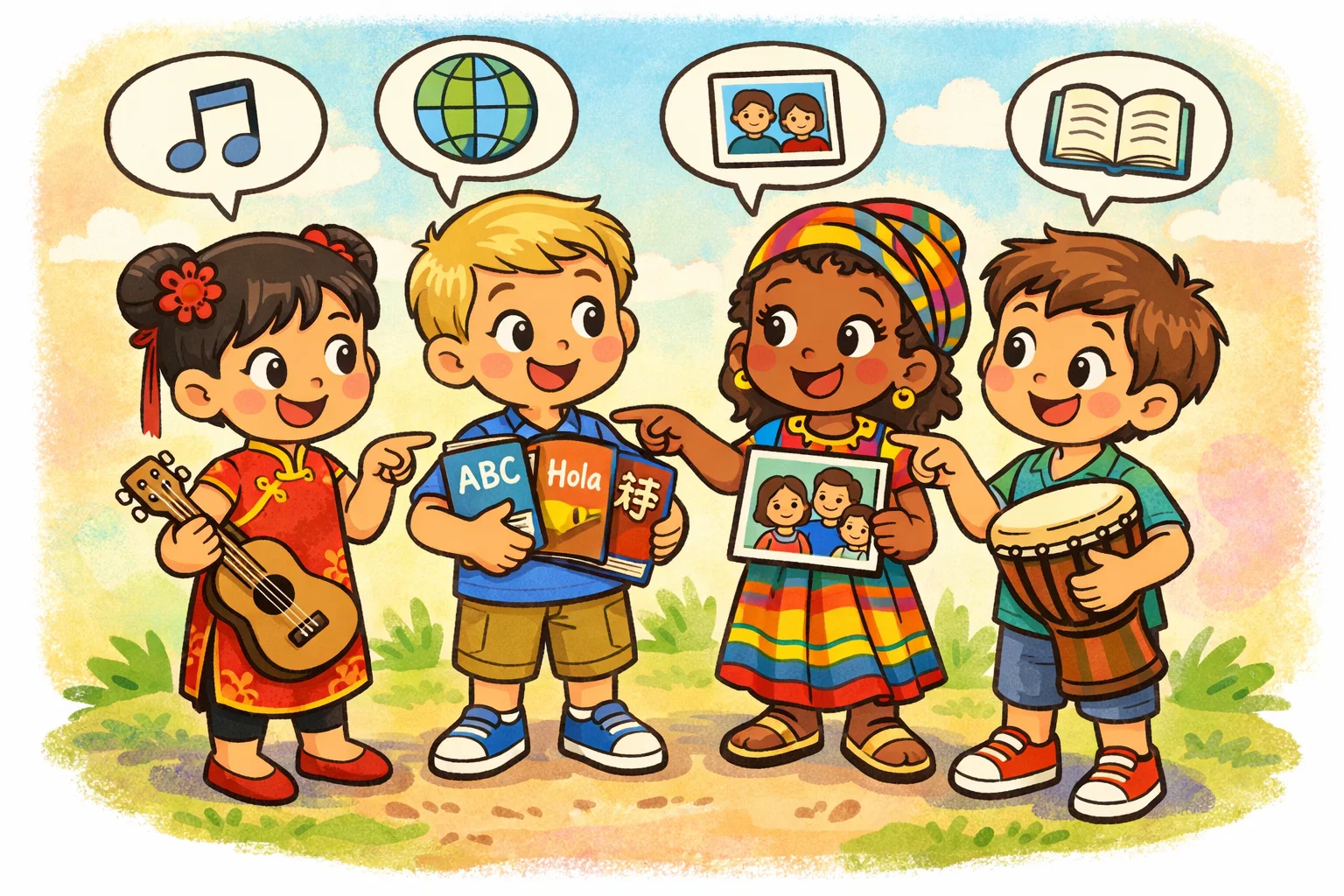
To a child, diversity means that everyone is a unique piece of a giant puzzle. It is the understanding that while we all share common needs – like love, food, and play – we express those needs in beautifully different ways. Teaching diversity and inclusion starts with acknowledging that the world is made up of many different cultures, skin tones, abilities, and family structures.
Cultural Differences in Daily Life
Children notice differences early. They might see a friend wearing a hijab, a neighbor celebrating Chinese New Year, or a classmate bringing a bento box for lunch. These moments offer natural opportunities for cultural learning. By explaining that cultural traditions represent different – but equally valid – ways of being “normal” we help children move from “that’s weird” to “that’s interesting!” Exploring different parts of the world through the lens of daily habits – like how people sleep, eat, or travel – makes the concept of a diverse world tangible.
Family Structures and Backgrounds
Diversity also extends to who lives in our homes. Some children have two moms or two dads; others live with grandparents, foster parents, or in single-parent households. Using diversity activities to highlight these family structures ensures that all children feel seen. When we discuss different backgrounds, we validate each child’s unique story, fostering a deep sense of belonging within the group.
Language and Communication Variety
Hearing different languages is often a child’s first encounter with cultural diversity. Even if they don’t understand the words, they can appreciate the sounds and rhythms. Introducing basic greetings like “Hola,” “Kon’nichiwa,” or “Jambo” can be a fun activity that builds confidence in communication and shows that there are many ways to introduce oneself to the world.
Importance of Diversity Activities in Early Years
From an early age, children begin to notice physical differences, such as skin tone, and gradually develop social preferences as they grow. Cultural diversity matters because it helps lay the foundation for social and emotional intelligence.
Social Skills Development Through Play
When children engage in meaningful play that includes diverse cultures, they learn to navigate the world with fewer prejudices. Diversity games and cooperative play require children to negotiate, share, and respect different perspectives. This interaction is a primary way to teach tolerance; it moves the concept of “the other” into the category of “my friend.”
Emotional Growth in Group Activities
Social development is intrinsically linked to how a child feels about themselves. Activities that celebrate diversity allow children from minority cultural backgrounds to feel seen and valued, which is vital for their emotional development. For others, it builds the “empathy muscle,” helping them understand that their perspective is just one of many.
Classroom and Home Benefits
In an inclusive learning environment, behavioral issues often decrease because every child feels a sense of belonging. Educational studies and classroom observations suggest that settings prioritising multicultural education often report higher levels of student engagement.
Diversity Activities for Kids
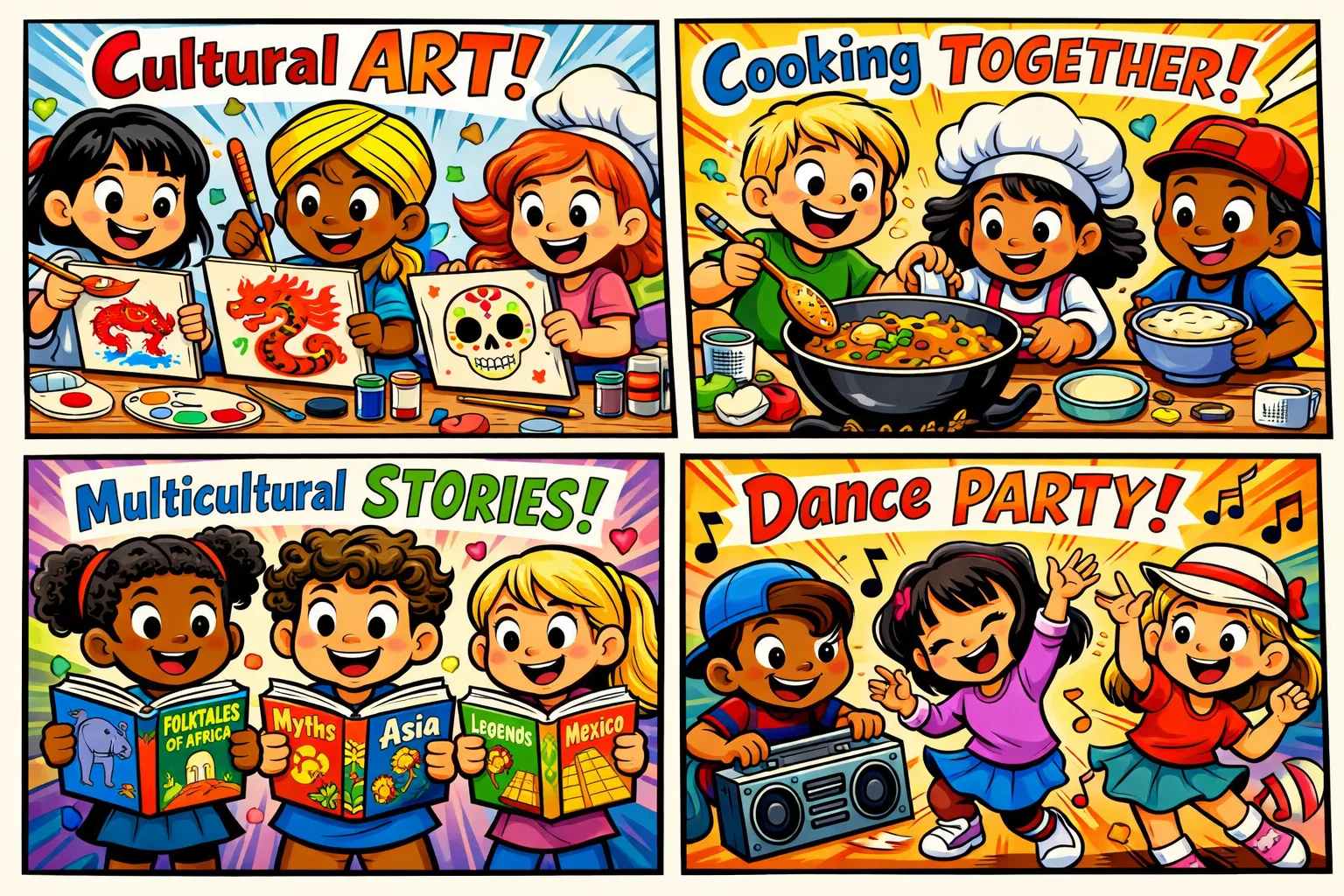
One of the most effective ways to engage children in cultural learning is through creative, hands-on activities that involve the senses. Here are some cultural diversity activity ideas that work well in both school and home settings.
Art Projects Inspired by Global Cultures
Art activities are a universal language. You can encourage students to explore:
- Australian Aboriginal Dot Painting: Use cotton swabs to create patterns.
- Indian Rangoli: Use colored sand or rice to create geometric floor designs.
- Mexican Papel Picado: Cut intricate designs into colorful tissue paper to practice fine motor skills.
Cooking Activities from Different Cultures
Food is one of the most accessible ways to explore a new country or culture. Try these fun ideas:
- Dumpling Discovery: Compare how different cultures prepare dumpling-style foods (such as pierogi, gyoza, or ravioli).
- Spice Smelling Station: Let children smell cinnamon, cumin, and turmeric, and discuss where they come from.
- Flatbread Friday: Make tortillas, pita, or naan to show how a simple staple varies globally.
Language and Greeting Games
Create a “Greeting Map.” Place a world map on the wall and attach strings from specific countries to the words for “Hello” in their different languages. This cultural diversity activity helps students to learn about geography and linguistics simultaneously.
Music and Dance from Around the World
Physical activities like dance are excellent for young children learning through movement. Play music from different cultures around the world – from Celtic fiddling to Caribbean Reggae – and ask the children how the music makes their bodies want to move.
| Activity Type | Skill Developed | Best For |
| Art/Crafts | Fine Motor & Appreciation | All Ages |
| Cooking | Sensory & Math | Preschool + |
| Music/Dance | Gross Motor & Rhythm | Toddlers + |
| Language | Cognitive & Memory | Preschool + |
Multicultural Activities for Preschoolers
For preschoolers, diversity activities should be short, sensory-driven, and highly visual. At this age, teaching diversity is about normalization and joy.
Storytime Featuring Diverse Characters
Select books that reflect a wide array of ethnicities, abilities, and family structures. When reading, ask open-ended questions: “How is their breakfast different from yours?” or “What do you think that cultural celebration feels like?” This encourages conversations about different lives.
Sensory Play with Cultural Themes
Fill sensory bins with items of cultural significance. For example, a bin for Chinese New Year might include red silk scraps, plastic gold coins, and dried noodles. This allows for an inclusive play experience where children can explore cultural textures.
Role-Play and Dress-Up Activities
Include traditional clothing (not as costumes, but as representations of everyday clothing from other cultures) in the play corner. Providing items like a Kente cloth wrap or a Japanese Yukata allows children to embrace and celebrate different styles through imaginative play.
Cultural Diversity Activity Ideas for Toddlers
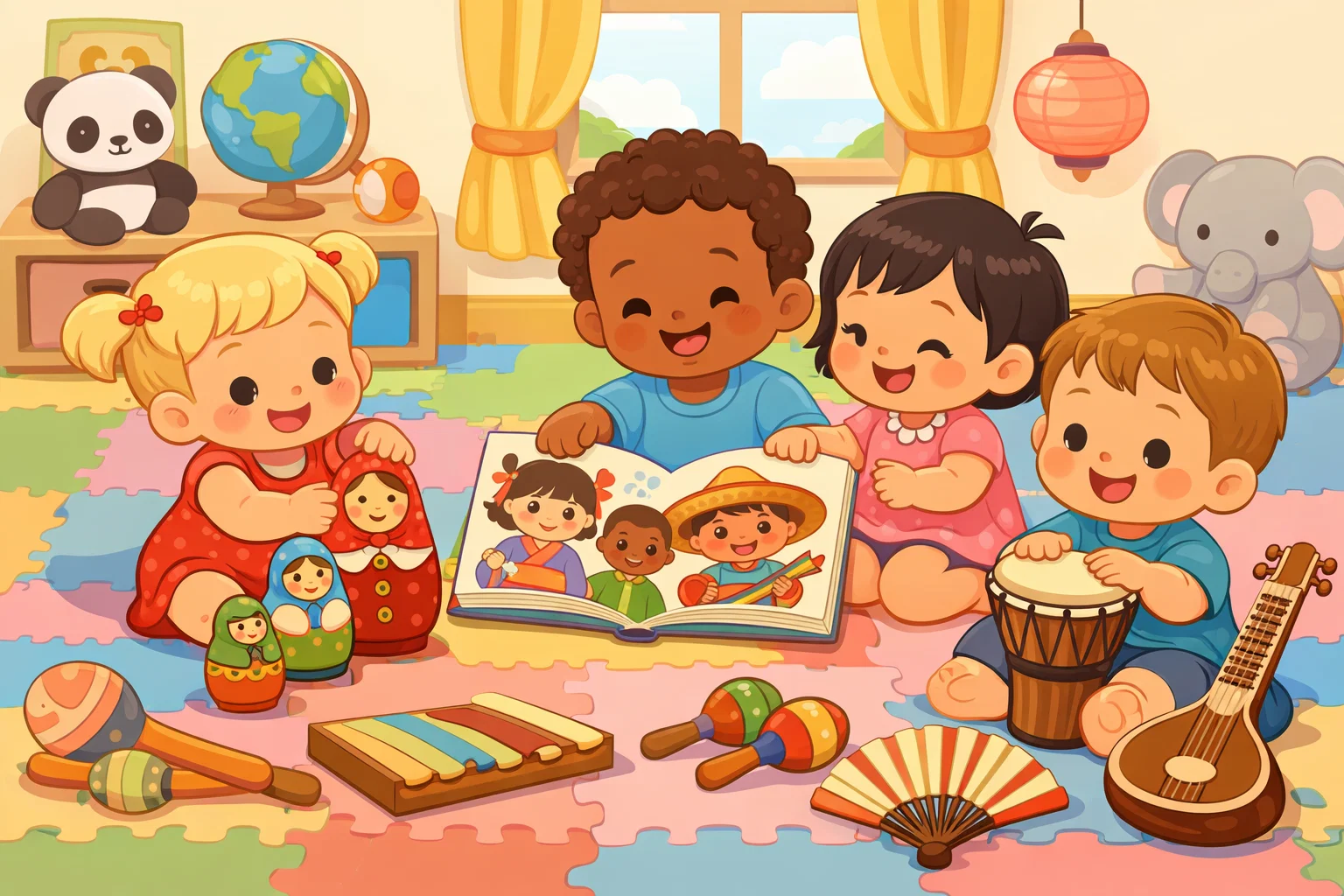
Toddlers learn through repetition and simple imitation. Diversity activity ideas for toddlers and young preschoolers should focus on the “same/different” concept.
- Multicultural Art for Toddlers: Provide “skin-tone” crayons or paints. Let them explore the different shades, helping them see that skin tone comes in many different shades.
- Singing in Different Languages: Teach simple songs like “Frère Jacques” or “De Colores.”
- The “Global Baby” Photo Album: Create a book with photos of babies from different cultural backgrounds. Toddlers love looking at faces!
Creative Art Activities About Diversity
Peace Quilt Group Project
Give each child a square of fabric or paper to decorate with things that represent their family’s cultural traditions. When taped together, it creates a “Peace Quilt” that symbolizes how individual pieces form a beautiful whole.
Family Tree Art Projects
Instead of a traditional tree, teach kids about diversity by having them create a “Roots and Branches” map. This helps them visualize their cultural backgrounds and how they are connected to different parts of the world.
Everyday Diversity Activities Outside Classroom
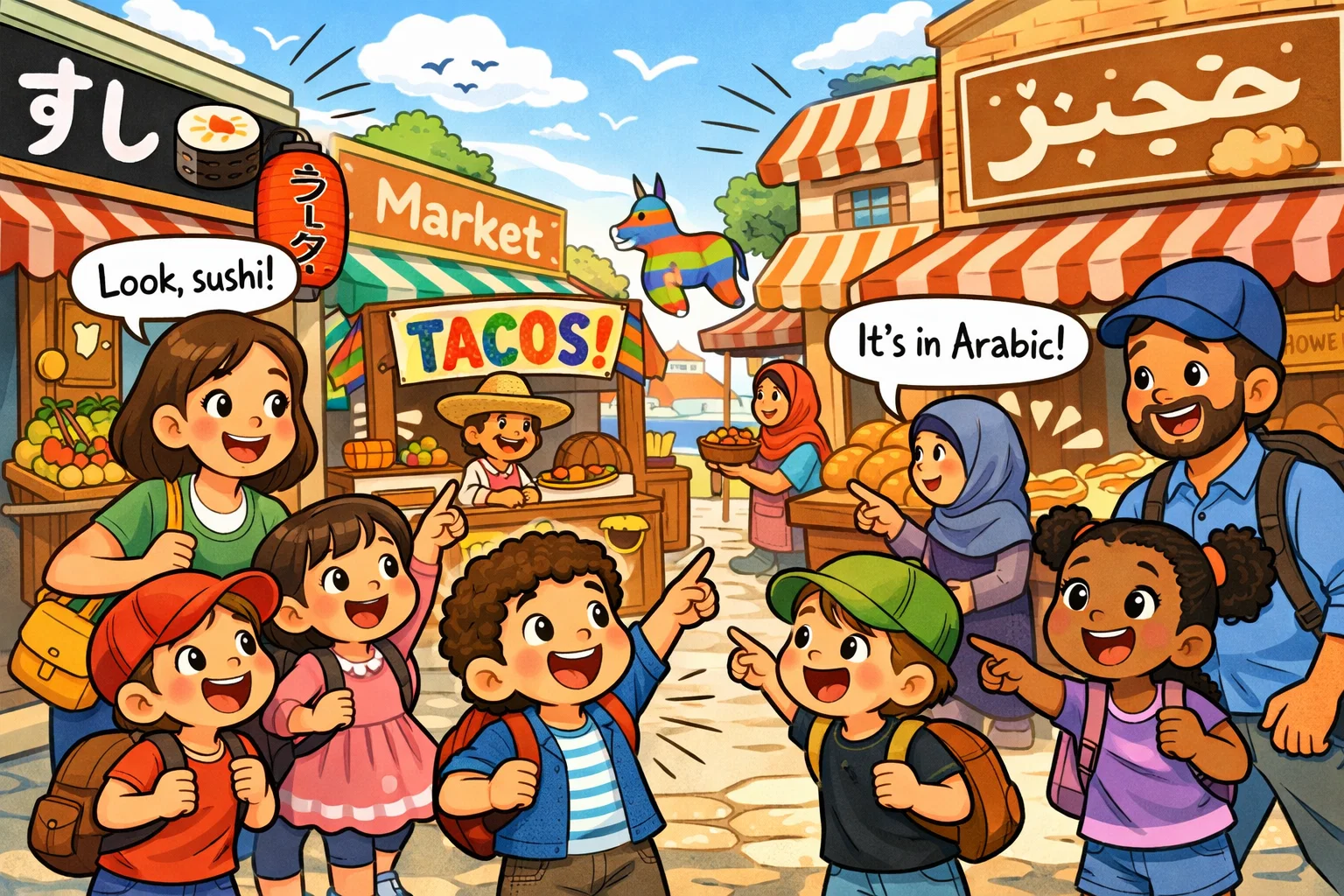
You don’t need a lesson plan to expose them to different cultures. The real world is the best classroom.
- Virtual Field Trips: Use technology to take virtual field trips to the Louvre in France or the Great Wall of China.
- Neighborhood Exploration: Visit a local ethnic grocery store. Look at the labels in different languages and try a fruit you’ve never seen before.
- Community Events: Attend cultural festivals in your city. Hearing the music and smelling the food in person is a powerful way to introduce new concepts.
Diversity Lesson Plan Structure
For educators, a structured way to teach can ensure all students receive a balanced perspective on different cultures.
1. Lesson Goals and Outcomes
- Identify the specific country or culture being studied.
- Goal: Students will be able to say one greeting and identify one cultural tradition.
2. Materials and Preparation
- Gather inclusive books, maps, and hands-on materials (e.g., clay for pottery, ingredients for a snack).
3. Activity Flow and Timing
- Intro (5 mins): Hook the students with a song or artifact.
- Core Activity (20 mins): The fun activity (art, cooking, or game).
- Discussion (10 mins): Conversations about different aspects of the activity.
4. Reflection and Follow-Up
- Ask students to draw one thing they learned. How did this make them feel? This supports social and emotional reflection.
Inclusive Environment at Home and Nursery
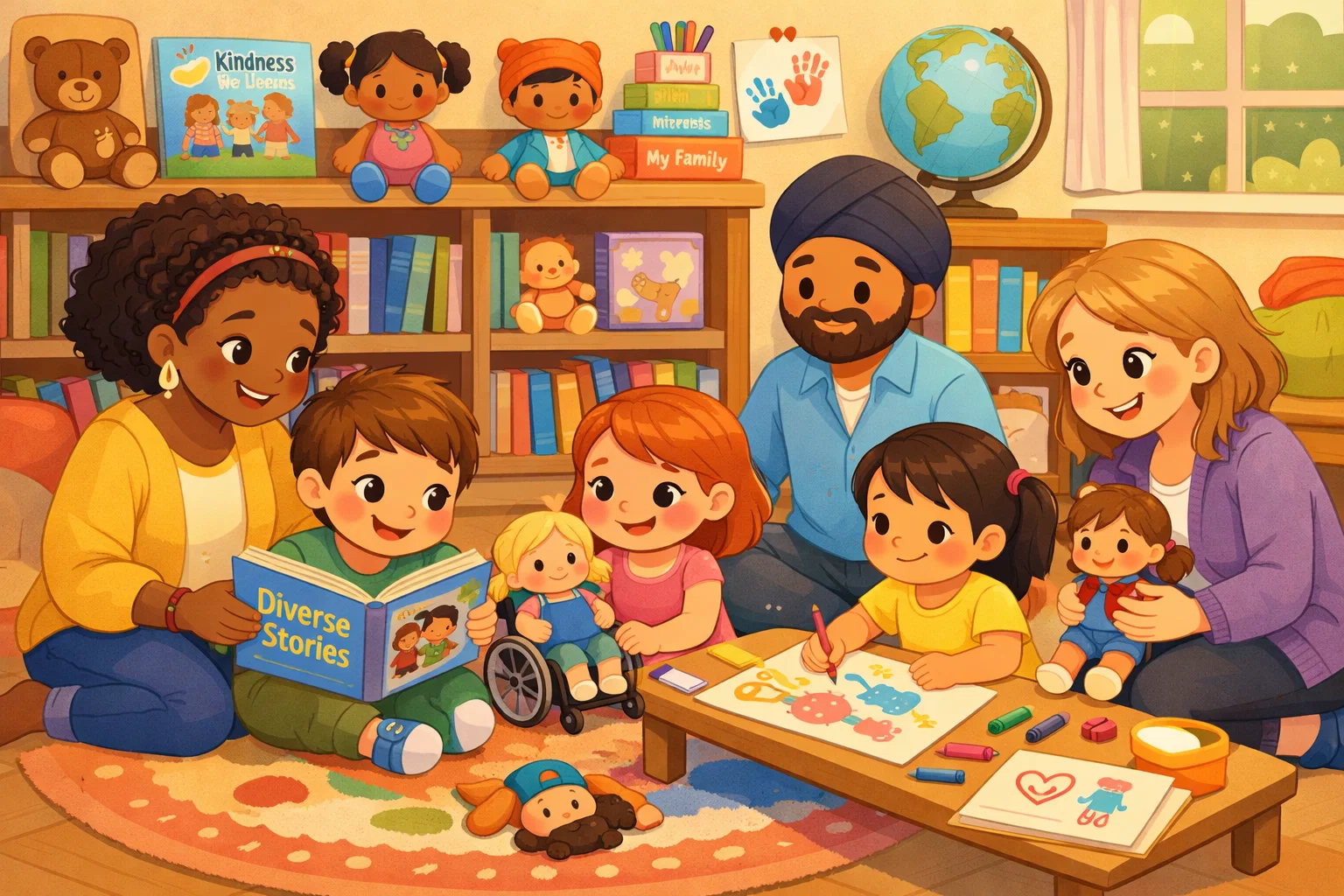
Creating an inclusive learning environment is an ongoing process shaped by communication and everyday language.
- Books and Toys: Audit your toy box. Do the dolls have different skin tones? Do the puzzles show diverse cultural landmarks?
- Role Modeling: Children listen to how you talk about others. Use respectful language and show curiosity rather than judgment.
- Celebrating Cultural Dates: You don’t have to belong to a culture to acknowledge its holidays. Marking cultural festivals on a family calendar is a great way to explore the year.