

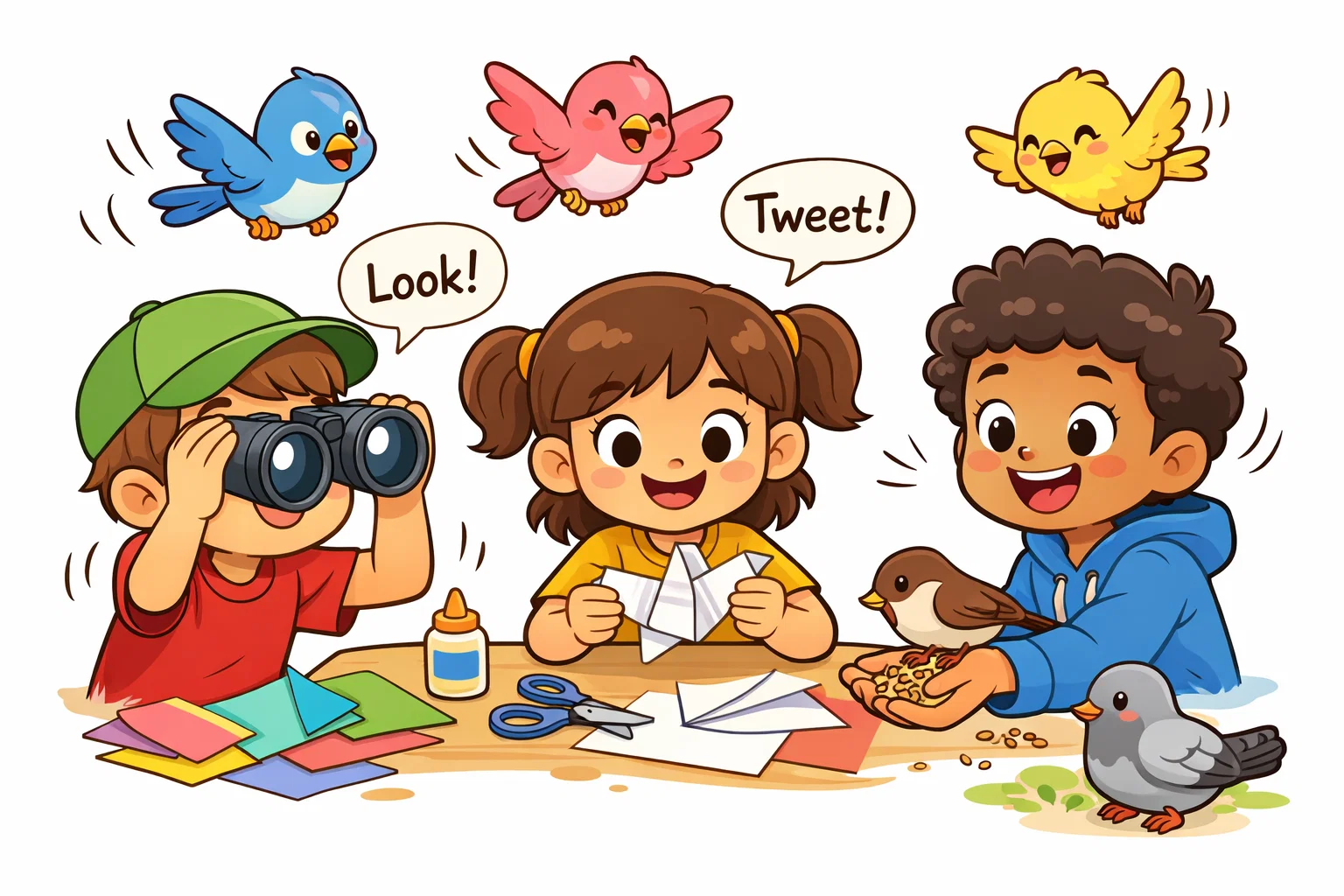
Introducing children to the avian world is one of the most rewarding ways to foster a lifelong love for nature. Engaging with winged creatures blends the excitement of outdoor play with the curiosity of early science learning, providing a holistic approach to child development. Whether you are exploring a local park, relaxing in the backyard, or looking for a rainy-day project indoors, these projects encourage youngsters to observe, create, and empathize with the living things in their environment.
Engaging with feathered friends is a multi-sensory experience. From the soft texture of a feather to the rhythmic song of a robin, children get to practice mindfulness and observation skills without even realizing they are “learning.” These initiatives are versatile and can be adapted for the home, the classroom, or a simple walk through the woods. By participating in bird-themed activities, families can bond over shared discoveries while helping children understand their role in protecting the ecosystem. When focusing on the lives of these small animals, kids begin to see the interconnectedness of all living beings, from the tiny insects they eat to the trees where they sleep.
Get to Know Birds

Bird basics for kids
Before heading outside, it helps to understand what makes these creatures unique. Every type of bird shares specific characteristics, but they vary wildly in how they use them. For instance, flight is a primary trait, but the mechanics of how a pigeon flies compared to an owl are vastly different due to wing shape and muscle structure.
- Feathers: These aren’t just for show. They help birds stay dry, keep warm, and generate lift for flight.
- Beak: This is a primary tool. Some are sharp for birds of prey, while others are flat for straining water or pointed for sipping flower nectar.
- Eggs: All species hatch from eggs, which come in a variety of colors and sizes.
When children look at a feather, they are looking at a masterpiece of engineering. These structures are made of keratin, the same protein in our fingernails. You can explain that while humans use coats, these animals use their plumage to regulate temperature. This is why you might see a creature looking “puffy” on a cold day; it is trapping air between its layers to stay cozy.
Common backyard birds
You don’t need to travel to a zoo to see different birds. Many species live right in your neighborhood. Common visitors include:
- Robin: Known for their red breasts and pale blue eggs. They are often the first sign that spring has arrived.
- Pigeon: Found in cities and parks, they are excellent navigators and have been friends to humans for centuries.
- Chickadee: Small, energetic creatures with a very distinct call that sounds like their name.
- Crow: Highly intelligent animals that can solve puzzles and even recognize human faces.
Identifying the local fauna is like meeting new neighbors. Each has a personality. Some songbirds are diligent and alert, often seen pulling worms from the grass. Urban birds are often social and bold, often gathering in groups to find food. By naming them, children transition from seeing a “flying thing” to recognizing a specific living individual with a life story.
Bird body parts activities
To help kids get a better grasp of anatomy, try these hands-on bird activity ideas:
- Beak Matching: Set out various “foods” (marbles for snails, sponges for nectar, tweezers for seeds) and have kids use different tools to see which “tool” works best for which creature. This illustrates why an egret has a different face shape than a sparrow.
- Move Like a Flyer: Ask them to “preen” their arms like a bird cleaning its feathers or “tuck” into a nest to stay warm.
- Labeling: Use a printable diagram to label the wings, tail, and beak.
You can also discuss how the owl’s eyes are fixed in its head, requiring it to turn its whole neck to see. Contrast this with a sparrow, whose eyes are on the side of its head to watch for danger from all angles. These comparisons make biological concepts much more relatable for young minds.
Bird Watching Activities
Beginner bird watching tips
Watching birds requires patience – a skill that is wonderful for child development. Start by finding a “sit spot” where these animals come frequently. Teach children to move slowly and speak in whispers so they don’t startle the wild birds. Using a pair of child-safe binoculars can help them see birds up close without needing to be right next to them. This distance is important to ensure the animals don’t feel threatened in their natural habitat.
When children use binoculars, it changes their perspective. It allows them to see the tiny details, like the texture of a feather or the way a songbird tilts its head to listen for worms. Encourage them to notice the “field marks” – special colors or patterns that help identify the bird species. Is there a white ring around the eye? Are there bars on the wings? These are the clues that young detectives love to solve.
Listening to bird song
Not all bird watching involves the eyes. Bird-related activities can also include “sound walks.”
- Identify the Call: Listen for the “Cheer-up, cheer-ily” melody of a robin.
- Sound Maps: Have the child sit in the center of a paper and draw a mark every time they hear a chirp or song, indicating which direction the sound came from. This develops spatial awareness and auditory focus.
Listen for the rhythmic drumming of a woodpecker on a tree branch. Explain that this isn’t just noise; it’s communication. They are either looking for insects or telling others that this is their territory. By understanding the “language” of the trees, children feel more connected to the ecosystem around them.
Family birdwatch challenges
Turn observation into a fun activity with a backyard bird count. These observations can help children understand how bird populations are monitored.
| Challenge Level | Activity | Goal |
| Easy | Color Match | Find a creature for every color of the rainbow. |
| Medium | Behavior Hunt | Find one eating, one flying, and one singing. |
| Hard | Species ID | Identify five different types of birds using a field guide. |
This table serves as a roadmap for progress. As children become more adept, they can start looking for more elusive creatures like a heron or a specific raptor. Recording these sightings in a journal makes the experience feel official and rewarding.
Bird Games and Movement Activities
Bird movement games
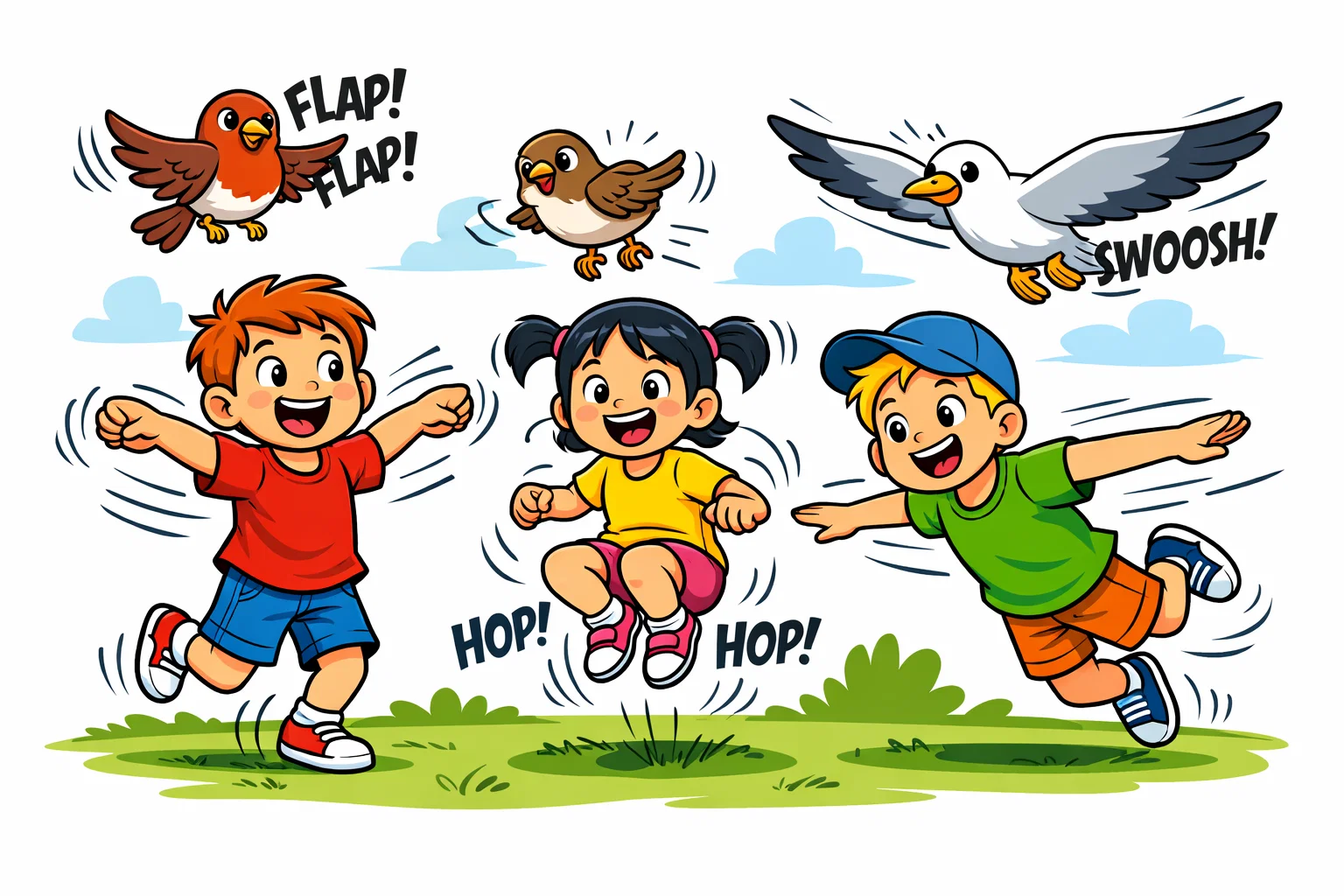
Physical activity is vital for younger children. Encourage them to:
- Soar like a Raptor: Stretch arms wide and glide on the wind, mimicking an eagle.
- Waddle like a Penguin: Keep feet together and shuffle (great for learning about animals in the Arctic and Antarctic regions).
- Stand like a Heron: Practice balance by standing on one leg in “shallow water,” mimicking the egret’s patience.
Movement helps internalize knowledge. When a child balances like a flamingo, they learn about the physical adaptations of wading animals. They aren’t just playing; they are performing a physical study of how birds and animals survive in various terrains.
Outdoor bird games
In a park or garden, play “Bird, Bird, Hawk” (a variation of Duck, Duck, Goose). Another fun bird game is “Nesting Materials Relay,” where kids race to collect dried grass, twigs, and yarn to “build” a bird nest in a designated area. This demonstrates the effort required for a little bird to create a home.
You can also set up a “Migration Obstacle Course.” Use hula hoops as “safe zones” where the travelers can find a source of food. Between the hoops, they must navigate “mountains” (benches) and “storms” (parents waving streamers). This physicalizes the long-distance journey many migrants take every year.
Indoor bird games
For inside and outside play, bird cards can be used for a game of Memory or Go Fish. You can also do a “Vocal Telephone” where one person mimics a whistle and the next tries to repeat it. This role-play helps children practice listening skills and sound imitation.
Using bird cards is an excellent way to introduce creatures that aren’t found in your local area. You might learn about the puffin or the albatross. It expands their world beyond the backyard and into the global habitat.
Bird Arts and Crafts
Paper and cardboard bird crafts
Recycling household items is a great way to make bird art while teaching sustainability.
- Egg Carton Creations: Cut out individual sections of a carton, paint them, and add googly eyes to create a chick.
- Toilet Paper Roll Owls: Fold the top edges down to create “ears” and glue on paper wings.
These projects show that art can come from anywhere. A simple juice carton can be transformed into a house for a little bird. This encourages creative thinking and a “maker” mindset, which are crucial for early childhood development.
Feather and texture crafts
Sensory exploration is key for preschool kids.
- Handprint Creations: Use paint to make a handprint on paper; the thumb is the head, and the fingers are the tail.
- Texture Collage: Use bits of sponge, felt, and real (cleaned) feathers to create a tactile animal. This allows children to feel the unique structure of a feather.
Using a handprint as a base for a drawing is a classic fun and educational technique. It personalizes the art – the animal is literally “made” of the child. It’s a wonderful keepsake for parents and a point of pride for the young artist.
Seasonal bird crafts
- Spring: Create a bird nest out of shredded paper and mud (playdough) to welcome baby birds.
- Summer: Paint bright red flowers to attract hummingbirds.
- Autumn: Use orange and brown leaves to create a collage of a robin.
- Winter: Create a bird feeder using a pinecone and birdseed to help birds survive the frost.
Bird Feeders and Bird Care
DIY bird feeders
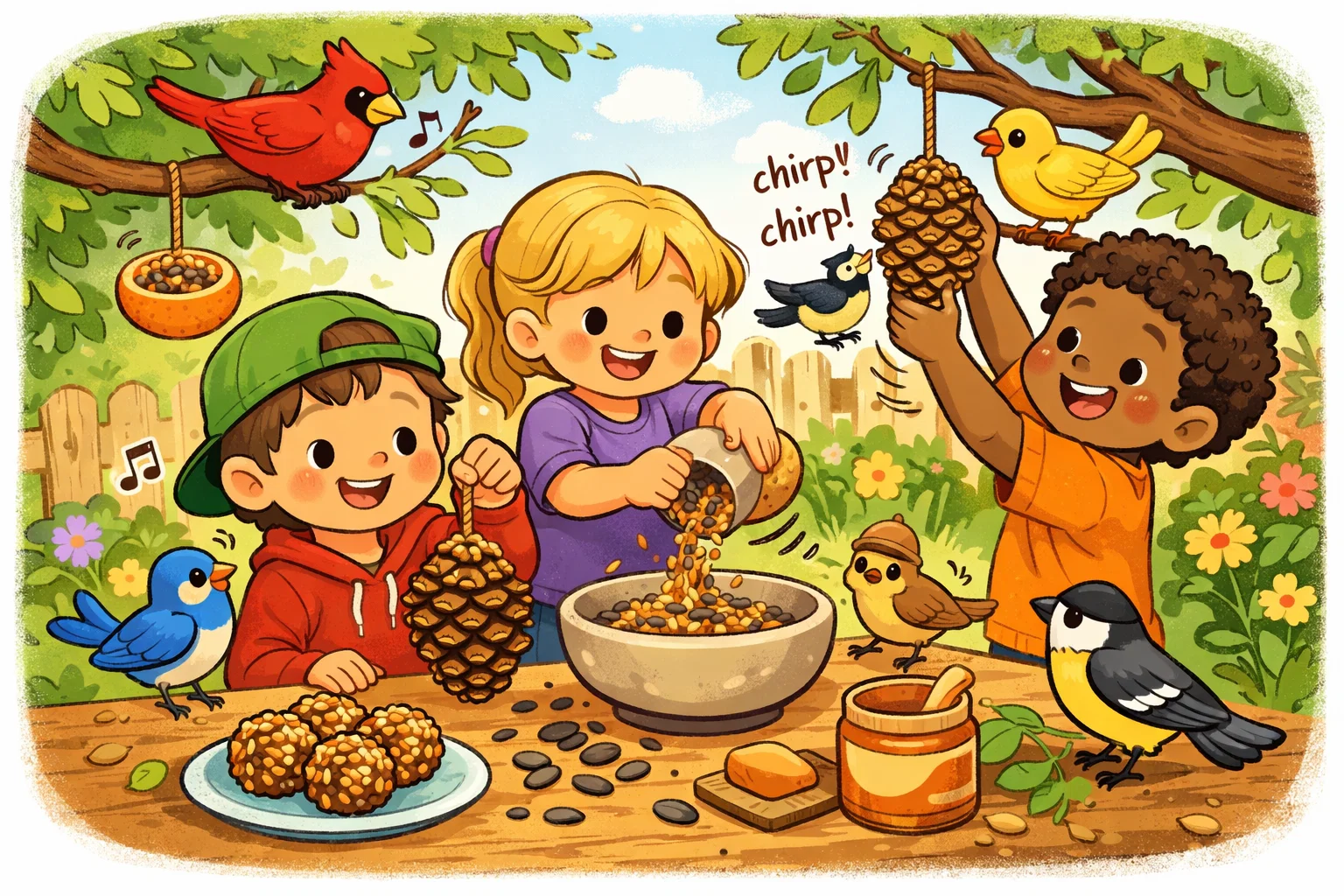
Learning how to set up a bird feeder is an excellent lesson in responsibility. It teaches kids that we are part of a community that includes wildlife.
- The Pinecone Feeder: Roll pinecones in sunflower butter and then in birdseed. Hang it from a tree branch.
- Milk Carton Feeder: Cut a hole in the side of a juice carton, fill the bottom with seeds, and poke a stick through for a perch.
Feeding birds safely
It is crucial to teach kids that wild birds have sensitive stomachs.
Important Note: Never feed these creatures bread. It lacks the nutrients they need and can make them sick. Instead, stick to high-quality seeds, suet, or fruit.
Explain to the children that wildlife needs protein and fats to have the energy for flying. Just like humans need healthy food to grow, these animals rely on us to provide the right snacks if we choose to feed them. This builds empathy and a sense of stewardship.
Bird baths and water stations
These creatures need water for drinking and cleaning their plumage. Ask your child to be the “Water Warden.” Their job is to change the water in the bird bath every few days to keep it fresh and prevent mosquitoes. Placing a water station near trees or shrubs ensures they have a safe space to explore.
A watering station doesn’t have to be fancy. A shallow ceramic saucer with a few stones for perching works perfectly. Watching them splash around is a fun activity that provides endless entertainment and observation opportunities.
Owl Activities for Kids
Owl facts for kids
The owl is a fascinating type of bird because it is nocturnal. Their eyes are large to gather light, and their ears are offset to help them pinpoint movement in the dark. Explain that an owl’s plumage is fringed, allowing for silent flight – making them exceptionally quiet hunters.
Children are often captivated by the mystery of the night. Discuss how the owl stays awake while we sleep. You can talk about the different kinds, from the tiny elf species to the great horned predator. Each has a unique hoot or screech that serves as its signature.
Owl crafts and games
- Owl Masks: Use paper plates to create masks with large, round yellow eyes.
- Night Hunt: Hide “paper mice” around a dark room and give the child a flashlight to simulate how an owl hunts at night.
Storytelling is also a great fun activity. Read myths about these hunters from different cultures. Are they wise? Are they protectors? This adds a literary element to scientific exploration.
Owl science activities
For older children, dissecting an owl pellet is a classic fun science project. It allows them to see what the predator ate by identifying tiny bones. This helps them understand the food chain and how birds of prey survive in the wild. It is a tactile way to make learning about biology truly memorable.
Handling a pellet might seem “gross” at first, but once children find a tiny skull or rib bone, their curiosity usually takes over. It’s a real-world puzzle that reveals the secret diet of these nocturnal hunters.
Birds on the Move
Bird migration activities
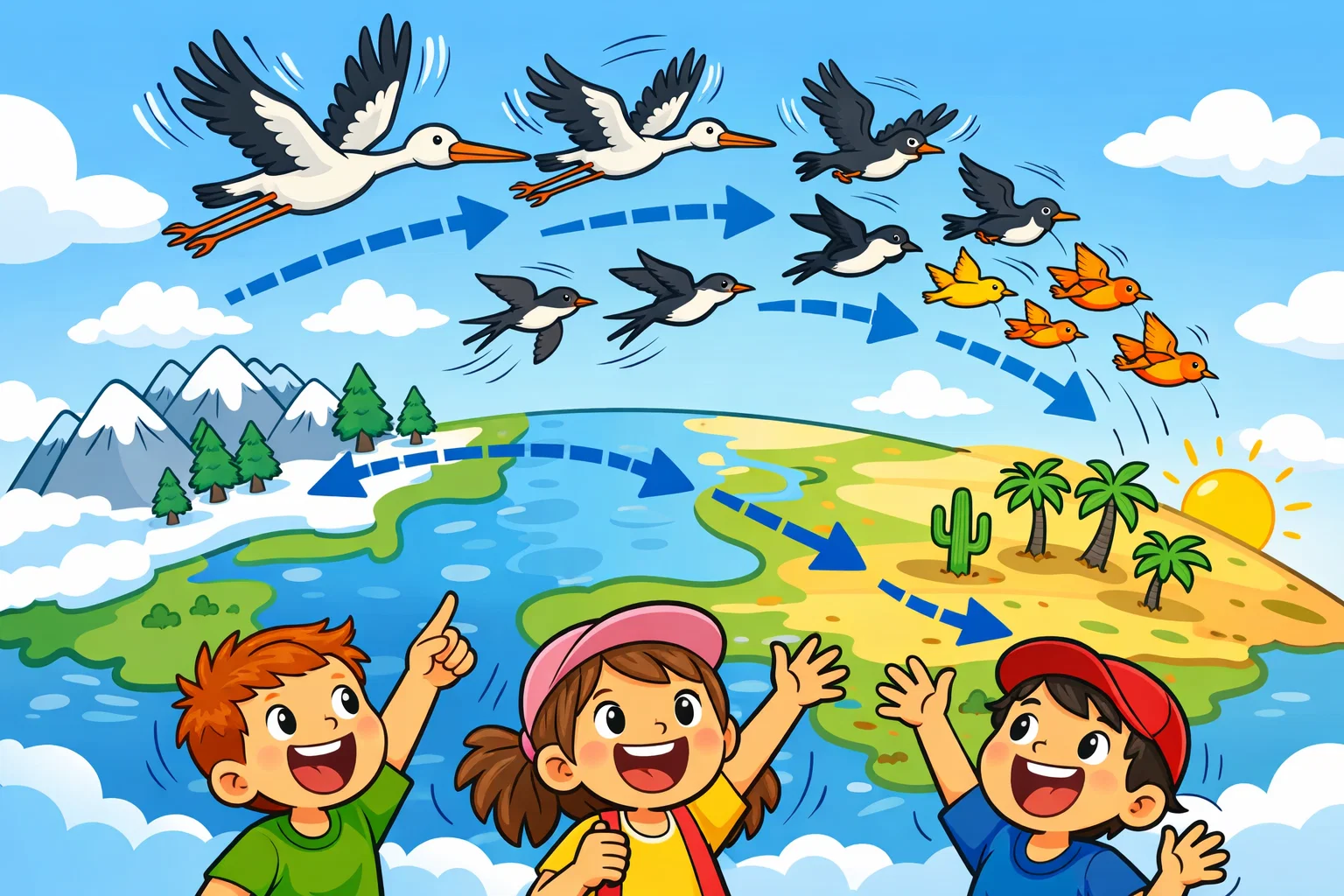
Many birds like the arctic tern travel thousands of miles. Use a map to show the “highways in the sky” that birds use. Have kids draw arrows on a map to show where local birds might go when the weather turns cold. Discussing how species navigate by stars or magnetic fields adds a layer of wonder to the lesson.
Bird travel games
Play a game of “Migration Tag.” Some kids are travelers trying to reach the “south,” while others are “obstacles” like tall buildings or bad weather. This physical fun activity illustrates the dangers these animals encounter.
Seasonal bird changes
Discuss how these creatures change their “outfits.” Some bird species grow thicker plumage in winter, while others change color entirely to blend in with their surroundings. This is a great time to watch the birds and notice how their behavior shifts as the temperature drops.
In the spring, you might see flocks return with brighter colors to attract mates. In the fall, they might gather in huge numbers to prepare for the trip south. Observing these patterns helps children understand the passage of time and the cycles of nature.
Hummingbirds and Small Birds
Hummingbird facts for kids
Hummingbirds are the only ones that can fly backward! They are attracted to bright colors, especially red. They use their long tongues to lap up nectar from flowers. They are among the smallest birds that eat constantly to maintain their high energy.
Imagine having a heart that beats 1,200 times per minute! That is the life of a hummingbird. Because they are so small, every flower nectar sip is vital. They are like tiny, feathered helicopters.
Nectar and flower activities
- Color Experiment: Place four different colored bowls of sugar water outside. Which one do the travelers come to first?
- Homemade Nectar: Mix 1 part white sugar with 4 parts water (boil and cool). Kids get to help stir and fill the reservoir.
Planting a “pollinator garden” is a long-term fun bird project. Choose tubular flowers that fit their beaks. This provides a natural source of food and gives the kids a permanent place to observe.
Small bird observation activities
Because small creatures move fast, have kids practice “quick sketches.” They have 30 seconds to draw the shape of the little bird before it flies away. This encourages fast observation and capturing the essence of different birds.
Birds of Prey Activities
Raptor facts for kids
A raptor is a predator that hunts for food. This group includes the eagle, hawk, and falcon. They have incredibly sharp eyesight – an eagle can see a rabbit from two miles away! These birds are best enjoyed from a distance and are masters of the sky.
Beak and claw activities
Use modeling clay to shape “talons.” Discuss how these sharp claws help the predator grip its source of food. Compare this to a heron’s long toes, which help it walk on mud without sinking. This bird activity ideas session highlights how form follows function in nature.
Flight and hunting games
“The Hawk and the Sparrow”: One child (the hawk) tries to tag others (the sparrows). The sparrows are safe if they can get to a “bush” (a hula hoop). This teaches kids about the predator-prey relationship within the ecosystem. It also gives them a chance to burn off energy while learning about survival strategies.
Water and Shore Birds
Wading bird activities
Birds like the egret and heron have long legs for wading.
- Activity: See who can stand the longest on one leg like a flamingo.
- Observation: Visit a local pond to see how these animals move slowly to avoid alerting fish.
Seabird learning activities
Seabirds like gulls and pelicans have waterproof feathers and often have webbed feet.
- Dive Game: Use sponges to show how an aquatic species’ plumage repels water compared to a non-aquatic one.
- Ocean Diet: Discuss the variety of fish and crustaceans these shorebird species rely on.
Many of these animals live on the boundary of two worlds: the air and the water. This makes them unique subjects for bird activity ideas. How do they stay dry? How do they see fish through the surface of the water? These questions lead to great scientific discussions.
Shore sharing lessons
When visiting the beach, teach kids to stay away from wild bird eggs or bird nest sites hidden in the sand. Explain that a shorebird needs space to explore and rest during its long journey. Respecting their space is a vital lesson in wildlife etiquette.
Bird Science and STEM Activities
Egg science experiments
Wild bird eggs are remarkably strong despite their delicate appearance.
- The Squeeze Test: Have a child gently hold an egg in the palm of their hand and apply light pressure.The dome shape distributes the pressure.
- Floating Egg: See how salt water affects buoyancy – a great lesson on how animals that live on the ocean stay afloat.
Feathers and flight experiments
Drop a feather and a stone at the same time. Why does the plumage drift? This introduces the concept of air resistance. You can also experiment with a variety of wing shapes using paper planes to see which stays in the air longest. This is fun science that feels like a game but teaches physics.
Citizen science for kids
Some nature organizations offer programs where children can share bird sightings and have programs where kids can submit sightings. This makes their observation part of a global scientific effort. Kids create real value for researchers by participating in the backyard bird count. It gives them a sense of importance – they are contributing to real science!
Sensory Bird Activities
Sensory bird play ideas
- Ice Eggs: Freeze small toy animals inside balloons filled with water. Kids must “hatch” them using warm water and salt.
- Sound Jars: Fill jars with different types of birdseed. Shake them to see which ones sound like pecking or flapping.
Sensory bins are great for toddlers. Fill a bin with dried grass, feathers, and small plastic eggs. Let them explore the textures with their hands. It’s a wonderful way to introduce the world of birds and animals to the youngest learners.
Fine motor bird activities
Building a home in the trees is hard work! Provide kids with dried grass, mud, and twigs. Using only two fingers (like a beak), they must try to weave a structure that can hold a “stone egg.” This improves coordination and shows how species use limited tools to build homes.
Calm bird activities
Bird-themed activities don’t always have to be high-energy. Coloring a detailed printable or sitting quietly to observe can help with emotional regulation. Listening to the quiet coo of a pigeon or the soft rustle of a feather can be very grounding.
Bird Books and Learning Resources
Bird books for kids
- The Burgess Bird Book for Children (Classic stories)
- National Geographic Kids Guide (Fact-based)
- Make Way for Ducklings (Fiction)
These learning materials provide a foundation for understanding the birds and animals in our world.
Printable activities
Many websites offer free bird checklists and bird cards for identification. These are great for keeping kids engaged during a long car ride or a nature hike. Having birds to enjoy in printed form helps reinforce species recognition and keeps them focused on the task.
Digital bird learning tools
Apps like Merlin ID allow kids to enjoy identifying species by sound or photo. Always supervise digital use to ensure it enhances, rather than replaces, the outdoor experience of watching birds.
Activities by Age Group
| Age Group | Recommended Activity | Why it Works |
| Toddlers | Handprint art and sensory bins | Focuses on tactile development and basic color recognition. |
| Preschool | DIY bird feeder and simple ID | Builds a sense of care and basic categorization of species. |
| School-Age | Nest building and pellet dissection | Encourages critical thinking and scientific inquiry. |
Climate and Bird Protection for Kids
Simple climate lessons
Explain that as weather patterns change, some visitors come back from migration too early. This is a gentle way to introduce environmental stewardship. When wildlife needs food that hasn’t bloomed yet, it shows the delicate balance of the ecosystem. It helps children understand that their actions, like recycling, can help the planet.
Helping birds at home
- Keep birds safe by putting stickers on windows so they can see the glass.
- Keep pet cats indoors, especially when there are baby birds or a chick on the ground learning to fly.
- Plant a tree for the birds to provide natural shelter and a bird nest site for years to come.
Nature respect activities
Teach the “Leave No Trace” principle. If you find a house in the branches, look but do not touch. Respecting the animals that live in our backyard is the first step toward global conservation. Kindness toward a little bird today can lead to a lifetime of environmental awareness.
Activity Ideas Recap
Quick activity list
- Make a pinecone feeder.
- Start a nature journal.
- Participate in a backyard bird count.
- Experiment with a variety of birdseed.
- Build a bird bath out of a shallow dish.
- Draw a handprint eagle.
Indoor and outdoor ideas
- Outdoor: Binocular hikes, bird bath cleaning, mud-nest building in the garden.
- Indoor: Owl pellet dissection, bird-themed recycling crafts using a carton, reading books. These bird activity ideas work for any weather and keep the interest alive all year long.
Creative and educational balance
The best learning materials are the ones that don’t feel like school. By mixing fun and educational elements – like playing a game of tag that mimics migration – you ensure the information sticks. Learning about the different species becomes a natural part of play, fostering a deep and lasting bond with the natural world.