

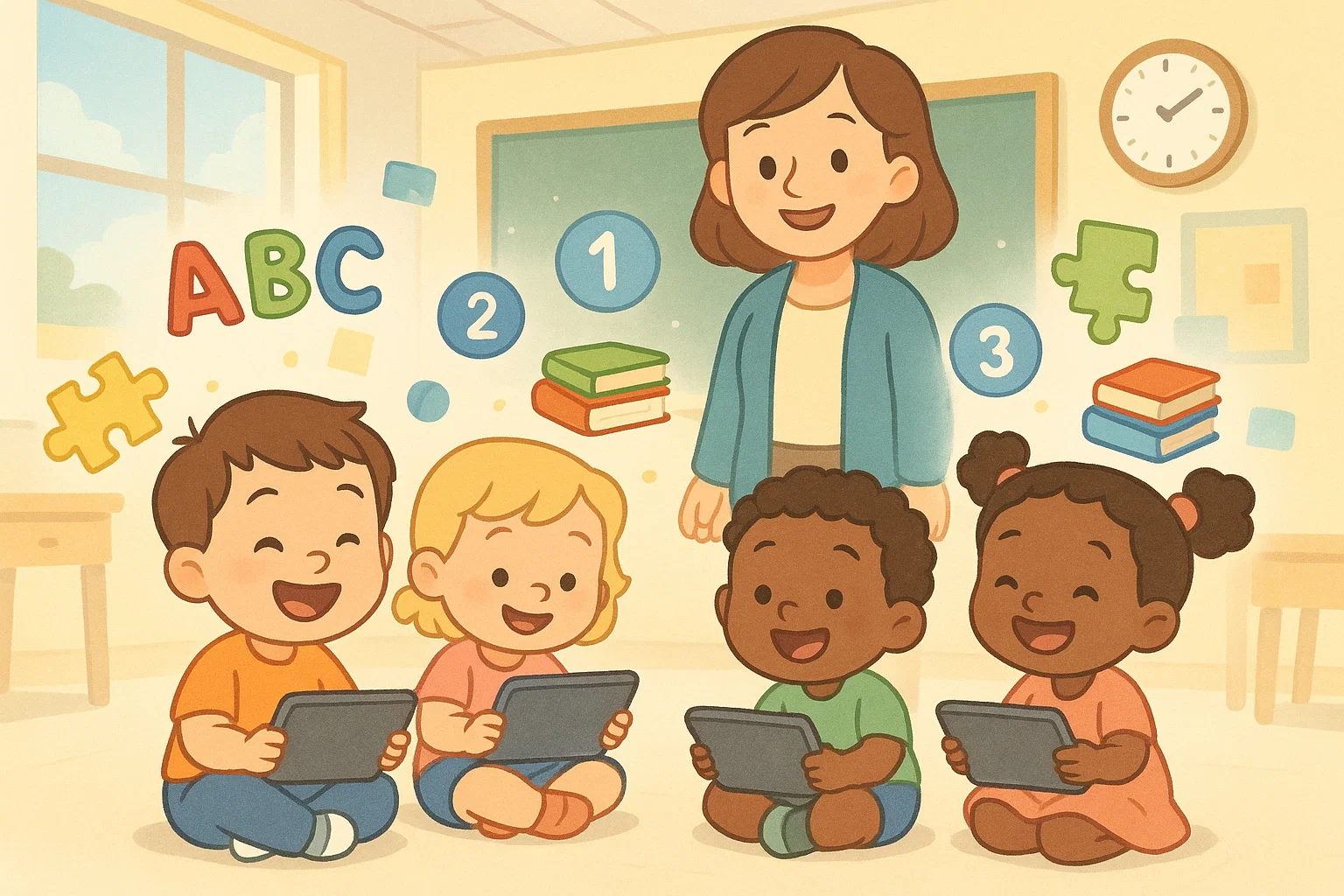
Finding the right educational app for your preschooler can feel overwhelming. With thousands of apps claiming to be the “best learning app,” how do you separate the truly valuable educational content from glorified entertainment? We’ve carefully selected and organized a collection of educational apps for children ages 2-8. In this guide, we will share the top-rated apps that have proven their educational value in real classrooms and homes.
The best educational apps for preschoolers create meaningful learning experiences that align with early childhood development principles. Research from the American Academy of Pediatrics confirms that high-quality educational apps can support skill development when used appropriately. Each recommendation here is based on extensive testing with children, feedback from early childhood educators, and alignment with developmental milestones for kids ages 3-5.
Top 7 Best Preschool Learning Apps (Ages 3-5) 📱
Khan Academy Kids
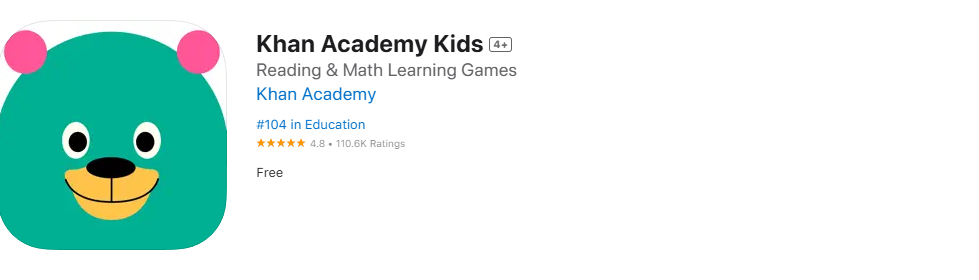
Khan Academy Kids stands out as the gold standard among free educational apps for young children. This comprehensive app covers everything from early literacy to math skills, making it perfect for children ages 2-8.
What makes it special:
- Completely free with no ads or in-app purchases
- Personalized learning paths that adapt to your child’s pace
- Created in partnership with Stanford Graduate School of Education
- Covers reading, math, social-emotional learning, and creativity
Key features:
- Thousands of educational games and activities
- Interactive stories featuring beloved characters
- Progress tracking for parents
- Available on both iOS and Android
Parents consistently rate this as their favorite app because it grows with children and maintains their engagement without overwhelming them with choices. The app’s focus on learning through play aligns perfectly with how preschoolers naturally absorb information.
Khan Academy Kids: App Store
HOMER: Fun Learning For Kid
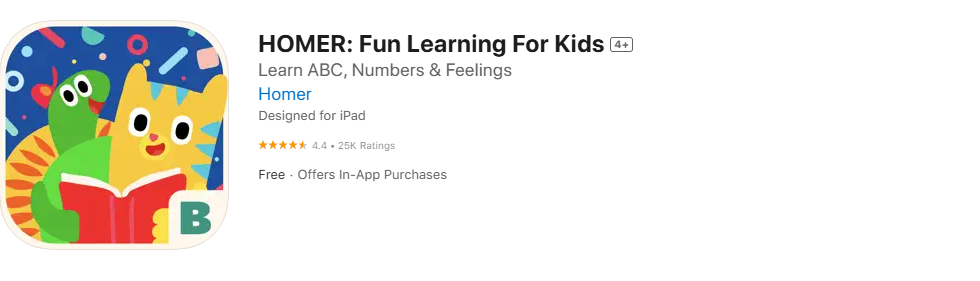
Designed specifically for early literacy development, HOMER: Fun Learning For Kid excels at teaching fundamental reading skills through personalized lessons tailored to each child’s interests and learning style.
Educational strengths:
- Phonics-based approach supported by reading research
- Customizable learning paths based on child’s interests
- Progress tracking shows reading level advancement
- Stories feature diverse characters and situations
Pricing: Subscription-based with free trial available
This app for kids has helped over 2 million children improve their reading skills, with 74% of users showing measurable reading gains within their first month of use.
HOMER: Fun Learning For Kid: App Store
Busy Shapes
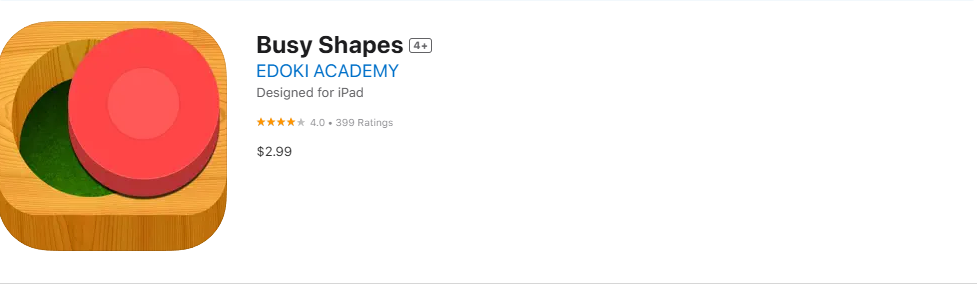
Busy Shapes transforms spatial reasoning and problem-solving into engaging puzzle adventures. This award-winning app challenges preschoolers to think critically while having fun.
Learning benefits:
- Develops spatial awareness and logical thinking
- Encourages persistence through progressively challenging puzzles
- No text required—perfect for pre-readers
- Builds fine motor skills through touch interactions
The app’s unique approach to learning through shape manipulation helps children develop skills that transfer to later math and science learning.
Busy Shapes: App Store
Endless Alphabet
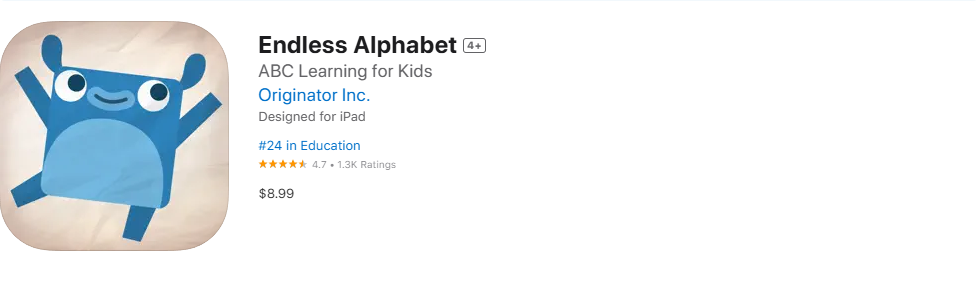
Endless Alphabet transforms letter learning into an engaging adventure with adorable animated monsters. This award-winning app has won multiple Editor’s Choice awards and helps children master the alphabet through interactive puzzles.
Educational value:
- Interactive letter recognition and phonics
- Vocabulary building with animated definitions
- No pressure or time limits—kids learn at their own pace
- Beautiful animations that illustrate word meanings
Key features:
- Each word becomes an interactive puzzle
- Talking letters provide phonetic guidance
- Short animations demonstrate word definitions
- No scoring system reduces performance anxiety
This educational app excels at making abstract concepts concrete through visual storytelling and hands-on interaction.
Endless Alphabet: App Store
Moose Math
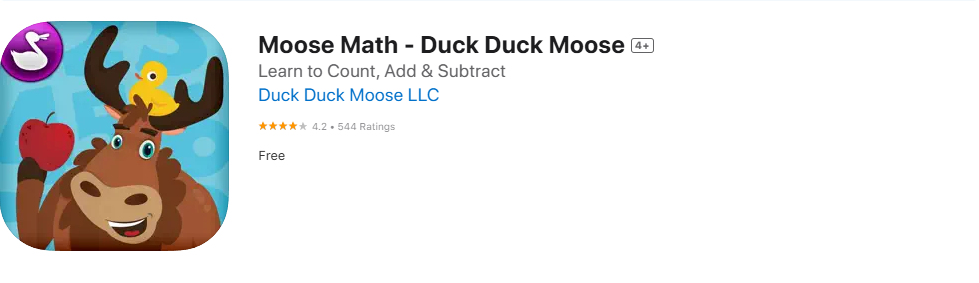
Created by Duck Duck Moose (now part of Khan Academy), Moose Math makes early math concepts accessible and enjoyable for preschoolers through game-based learning.
Mathematical skills covered:
- Number recognition and counting
- Addition and subtraction basics
- Sorting and patterns
- Geometry fundamentals
The app’s carnival theme keeps children engaged while building essential math skills that form the foundation for later mathematical learning.
Moose Math: App Store
Sago Mini School
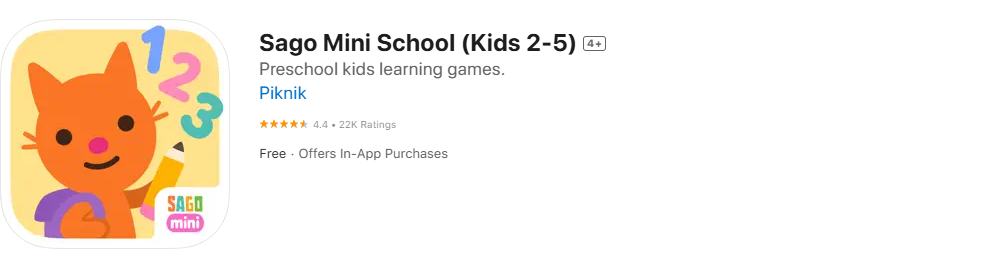
Sago Mini School provides comprehensive kindergarten readiness through over 300 learning games designed specifically for children ages 2-5. Created by award-winning developers, this app covers academic and life skills preparation.
Educational strengths:
- Comprehensive curriculum covering multiple subjects
- Focus on kindergarten readiness skills
- Safe, ad-free environment for independent exploration
- Progressive skill building across all learning domains
Learning areas covered:
- Early literacy and reading preparation
- Mathematical concepts and number recognition
- Science exploration and discovery
- Social-emotional learning activities
The app’s structured approach helps children develop confidence while building essential skills for school success.
Sago Mini School: App Store
PBS Kids Games
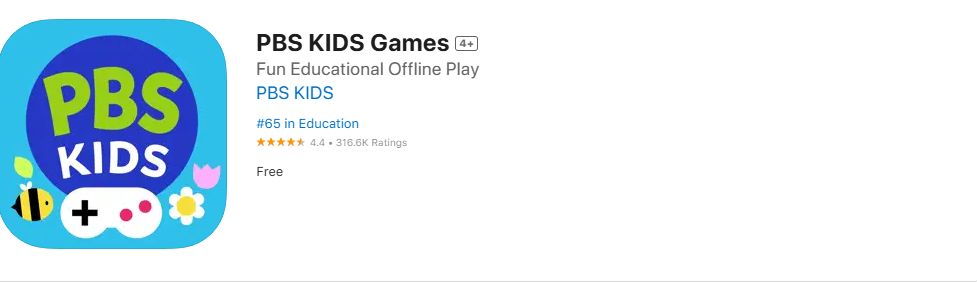
The PBS Kids Games app brings beloved PBS characters into educational gaming experiences that align with preschool learning standards.
Educational approach:
- Content created by educational specialists
- Familiar characters increase engagement
- Covers STEAM subjects (Science, Technology, Engineering, Arts, Math)
- Regular updates with new content
PBS Kids Games: App Store
Fish School
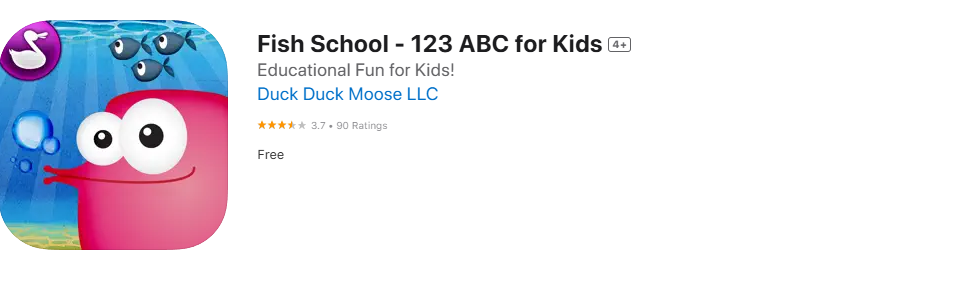
Fish School teaches letter recognition, numbers, colors, and shapes through simple, beautiful underwater scenes that respond to touch.
Unique features:
- Wordless interface perfect for any language background
- Teaches through imitation and repetition
- Beautiful, calming visual design
- Suitable for children as young as 18 months
Fish School: App Store
| App Name | Age Range | Cost | Key Strengths |
| Khan Academy Kids | 2-8 | Free | Comprehensive curriculum, no ads |
| Homer Reading | 3-6 | Subscription | Personalized reading instruction |
| Busy Shapes | 3+ | Paid | Spatial reasoning, problem-solving |
| Endless Alphabet | 3-6 | Paid | Letter recognition, vocabulary building |
| Moose Math | 3-7 | Free | Math fundamentals, engaging games |
| Sago Mini School | 2-5 | Subscription | Kindergarten readiness, comprehensive |
| PBS Kids Games | 2-8 | Free | Trusted characters, STEAM focus |
| Fish School | 2-6 | Paid | Visual learning, multilingual friendly |
What Makes These Apps Stand Out From the Rest? ⭐
Real Educational Value
The best educational apps share several key characteristics that distinguish them from mere entertainment. These apps focus on learning goals rather than just keeping children occupied. They present content in developmentally appropriate ways, building skills progressively rather than randomly.
Research from Common Sense Media indicates that truly educational apps should have clear learning objectives, provide meaningful feedback, and encourage active participation rather than passive consumption. The apps in our list meet these criteria by incorporating evidence-based teaching methods into their game design.
Skills development focus areas:
- Early literacy: Letter recognition, phonics, vocabulary building
- Mathematical thinking: Number concepts, patterns, spatial reasoning
- Social-emotional learning: Self-regulation, empathy, cooperation
- Critical thinking: Problem-solving, cause-and-effect reasoning
- Creativity: Open-ended exploration, artistic expression
Parent-Friendly Features
Safety First 🔒
All recommended apps prioritize child safety through carefully designed interfaces. They eliminate external links, inappropriate advertisements, and unsupervised communication features. Most importantly, they comply with COPPA (Children’s Online Privacy Protection Act) requirements for handling children’s data.
Parents can feel confident that these apps for young children create secure learning environments where children can explore independently without encountering inappropriate content or unsafe interactions.
Value for Money 💰
While some excellent educational apps require payment, the value they provide often exceeds traditional educational toys or materials. A single app can provide months or years of age-appropriate content that grows with your child.
Free vs. paid considerations:
- Free apps like Khan Academy Kids offer exceptional value with no hidden costs
- Premium apps often provide deeper, more comprehensive learning experiences
- Subscription models ensure regular content updates and ongoing development
Stress-Free Experience 😌
The best learning apps reduce rather than increase family stress. They include features like:
- Parental controls for screen time management
- Progress reports that help you understand your child’s development
- Offline capabilities for use during travel or without internet access
- Multiple user profiles for families with several children
Quick Start Guide for Parents 🚀
Setting Up for Success
Initial setup tips:
- Download together: Let your child watch you download and explore the app initially
- Set clear expectations: Establish screen time limits and app usage rules upfront
- Create routines: Integrate app time into daily learning routines rather than using as emergency entertainment
- Stay nearby: Remain available for questions and encouragement, especially during first sessions
Maximizing learning potential:
- Ask open-ended questions about what your child is doing in the app
- Connect digital learning to real-world experiences and activities
- Celebrate progress and effort rather than just completion
- Rotate apps regularly to maintain novelty and prevent over-dependence
Red Flags to Avoid ⚠️
When evaluating educational apps, watch out for these warning signs:
Content concerns:
- Excessive advertising interrupting learning flow
- In-app purchases prominently featured or easily accessible
- Violence, scary imagery, or inappropriate themes
- Overstimulating graphics or sounds that cause agitation
Educational red flags:
- No clear learning objectives or skill development
- Repetitive activities without progression
- Emphasis on rewards over learning process
- Claims that seem too good to be true
Technical issues:
- Frequent crashes or glitches
- Confusing navigation that frustrates children
- Lack of parental controls or progress tracking
- Poor reviews mentioning safety or privacy concerns
Age-Specific Recommendations
Ages 3-4 (Early Preschool): Focus on apps with simple interfaces, large buttons, and clear audio instructions. Khan Academy Kids, Fish School, and Bimi Boo work exceptionally well for this age group because they don’t require reading skills and provide immediate, positive feedback.
Ages 4-5 (Pre-K): Children this age can handle more complex challenges and benefit from apps that introduce early academic skills. Homer Reading, Busy Shapes, and Moose Math provide appropriate preparation for kindergarten while maintaining engagement through play-based learning.
Multi-age households: Khan Academy Kids and PBS Kids Games excel in families with children of varying ages because they offer content across multiple developmental levels, allowing siblings to use the same app with different activities.
The Bottom Line
The best educational apps for preschoolers combine entertainment with genuine learning value, creating experiences that children love while building essential skills for future academic success. Khan Academy Kids stands out as our top overall recommendation due to its comprehensive curriculum, safety features, and completely free access.
Remember that even the most excellent app works best when integrated thoughtfully into your child’s overall learning experience. Use these digital tools to supplement, not replace, real-world exploration, creative play, and human interaction.
Ready to get started? Download Khan Academy Kids or another app from our list today and explore its extensive library of educational games and activities designed specifically for your preschooler’s developmental needs. Your child’s adventure in fun education awaits, and you now have the tools to make it both fun and educationally meaningful.
Next steps:
- Choose 1-2 apps from our recommendations based on your child’s interests
- Set up parental controls and screen time limits
- Introduce the apps during calm, focused times
- Track your child’s engagement and learning progress
- Gradually explore additional features and content as your child grows
The journey of early childhood education doesn’t have to be complicated. With the right tools and approach, you can create rich learning experiences that your preschooler will treasure while building the foundation for lifelong success.