


Stepping into a babysitting job is a significant responsibility that requires a blend of safety awareness, emotional intelligence, and organizational skills. Whether you are brand new to babysitting or an experienced babysitter, providing high-quality care involves more than just supervising children; it requires building a foundation of trust with both the parents and the child.
According to the American Academy of Pediatrics (AAP), consistent routines and a safe environment are the two most critical factors in successful childcare. This guide provides a comprehensive checklist and practical babysitting tips to help you succeed in any babysitting job, ensuring the children in your care stay safe, engaged, and happy.
Key Takeaways
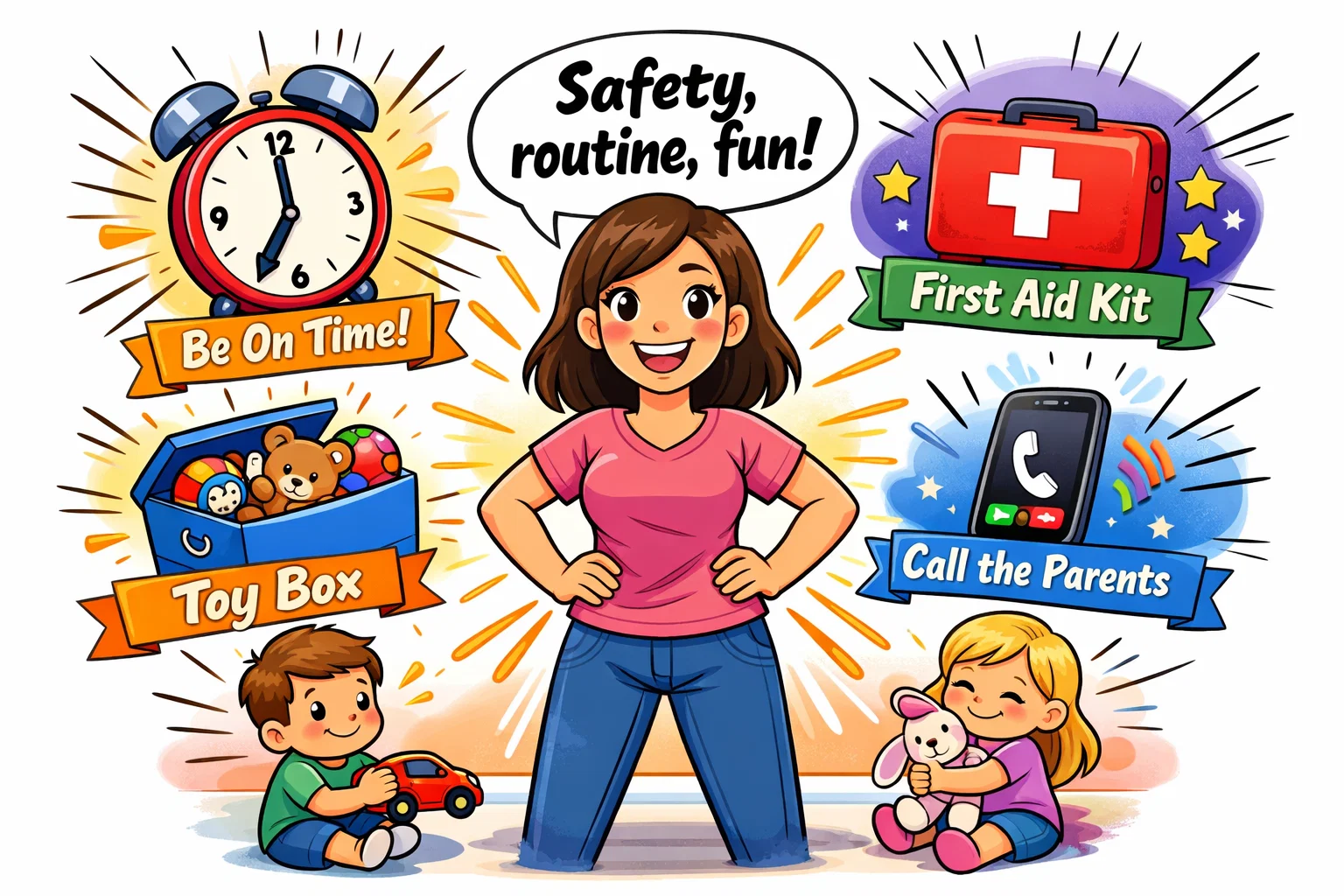
- Arrive Early: Aim to reach the home 5–10 minutes before the parents leave to receive detailed instructions.
- Prioritize Safety: Know the location of the first aid kit, emergency numbers, and the home address.
- Master the Routine: Adhering to the established bedtime routine and meal schedule prevents behavioral issues.
- Communicate Clearly: Ask parents about allergies, house rules, and emergency protocols before they depart.
- Stay Engaged: Minimize screen time for yourself and the children by focusing on favorite toys and creative play.
Safety Comes First
A sitter’s primary role is to ensure the physical and emotional safety of the children in their care. Constant supervision is mandatory, especially near water, stairs, or in the kitchen. Professional babysitters make sure they have quick access to the poison control number and a secondary emergency contact in case the parents cannot be reached.
Routine Prevents Problems
Children thrive on structure and boundaries, which provide a sense of security when their primary caregivers are away. Following the family’s existing schedule for meals and bedtime reduces separation anxiety and resistance. When you maintain consistency, the toddler or child feels more in control of their environment.
Preparation Builds Trust
Proactive preparation is what distinguishes excellent babysitters from casual caregivers. By creating a babysitting binder or bringing a kit of kids’ activities, you demonstrate professionalism and preparedness. This level of care often leads to new babysitting jobs and long-term relationships with families.
Preparing for the Job
Preparation begins long before the parents walk out the door. If it’s your first time working for a specific family, your goal is to minimize unknowns. Successful babysitters use the time before the shift to align their expectations with the family’s needs.
Review Family Schedule
Ask for a written breakdown of the day, including specific times for meals, naps, and homework. Knowing the exact bedtime is crucial; for example, the Sleep Foundation notes that school-aged children require 9–11 hours of sleep for optimal cognitive function. Having a photo of the schedule on your phone ensures that you can refer to it throughout the shift.
Plan Emergency Procedures
Locate the first aid supplies and confirm the home’s physical address for emergency services. Ensure you have the phone numbers for the parents, a trusted neighbor, and the family physician. It is also wise to know the location of fire extinguishers and all exit points in the home.
Learn House Rules
Every household has different house rules regarding screen time, allowed snacks, and off-limits rooms. Clarify whether the children are allowed to have friends over or play outside. Understanding these boundaries prevents “rule-testing” behaviors from the children later in the shift.
Confirm Job Details
Verify the expected return time of the parents and the agreed-upon payment rate. Confirm the number and ages of the children, as babysitting a toddler requires different skills than watching older children. Knowing whether you are responsible for additional tasks, such as light cleaning or pet care, helps prevent misunderstandings at the end of the shift.
Prepare Mentally for First Shift
If you are new to babysitting, it is normal to feel a bit of “first-day” anxiety. Focus on the fact that the parents chose you because they trust your ability to keep children safe. Start with shorter shifts or with an older child to build your confidence before taking on more demanding roles, such as caring for an infant.
Questions to Ask Parents Before Babysitting
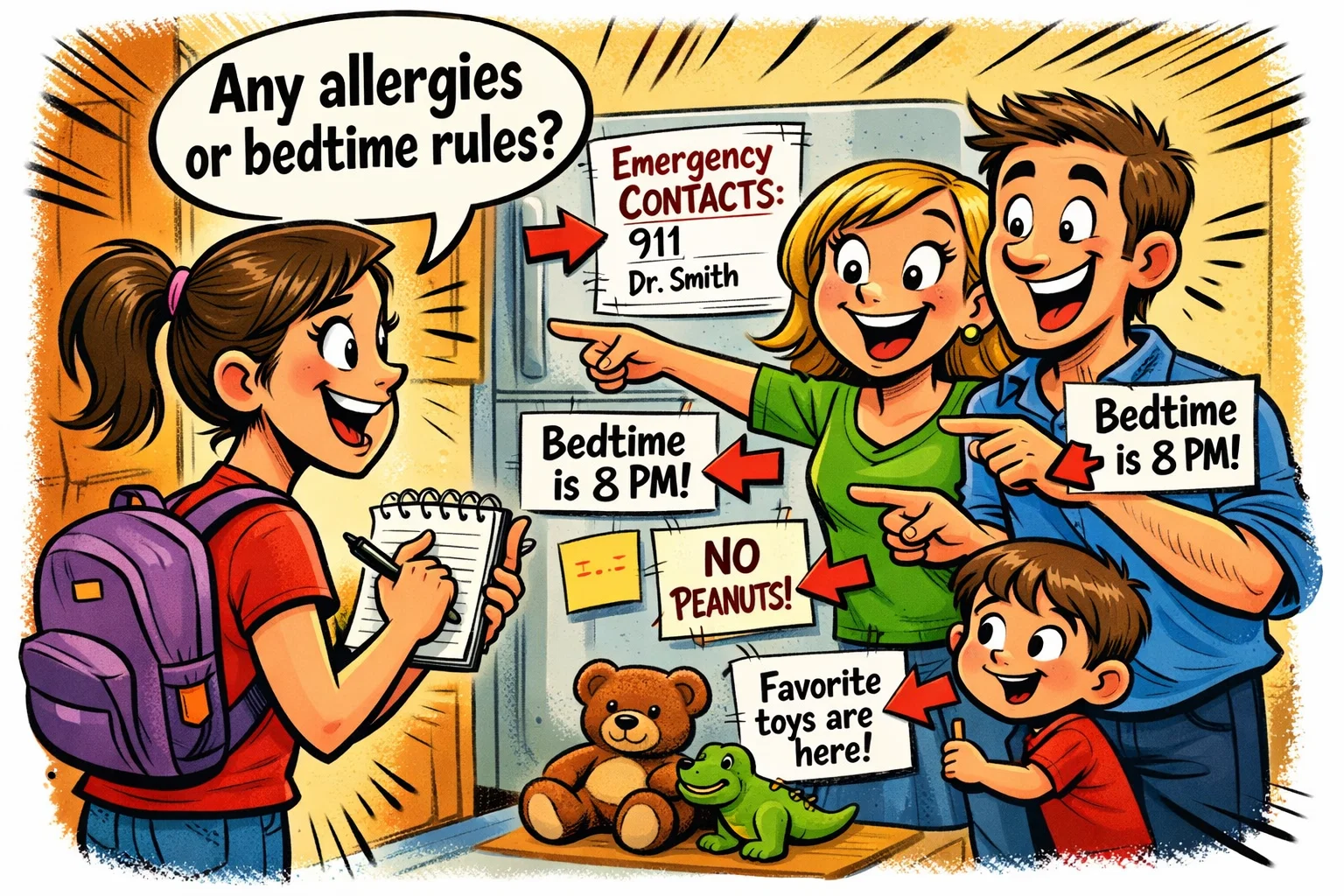
The babysitting interview and the minutes before the parents leave are the most critical times for information gathering. Use a checklist to ensure you don’t miss vital details that impact the child’s well-being.
Routine Questions
- What is the typical bedtime routine (e.g., bath, then two books)?
- Are there specific meals or snacks already prepared?
- What are the rules for screen time or video games?
- How do you usually get kids to bed if they resist?
Safety Questions
| Category | Requirement |
| Allergies | List all food, environmental, or latex allergies. |
| Medication | Document dosage, timing, and specific instructions. |
| First Aid | Locate the kit and any specific items like EpiPens. |
| Emergency | Confirm the primary and backup phone numbers. |
Behavior Questions
Ask about common triggers or “meltdown” scenarios and how the parents typically handle discipline. Knowing what calms a child down—such as a specific song or a favorite toy—allows you to respond effectively during a tantrum. Understanding the “house style” of discipline ensures you remain a consistent authority figure.
Comfort Questions
Identify the favorite toys, books, or “lovey” items that provide comfort. If a child experiences separation anxiety, ask the parents what soothing techniques work best. This might include a specific pillow fort setup or a transition activity that starts the moment the parents leave.
Parent Communication Questions
Establish expectations for updates throughout the night. Some parents prefer that you send a quick text when the kids are asleep, while others only want to be contacted if there is a significant issue. Clarify if you can send photos of the activities you are doing together to provide reassurance.
What to Wear for a Babysitting Job
Your attire should be functional, modest, and safe for the specific environment. Professionalism in appearance helps build trust with parents and ensures you can perform your duties without restriction.
Comfortable Clothing
Choose clothing that allows for a full range of motion, as you will likely be spending time on the floor or playing outside. Cotton t-shirts and leggings or flexible jeans are ideal for taking care of children. Avoid clothing with dangling strings or jewelry that a toddler could pull or choke on.
Shoes for Indoor and Outdoor Play
Wear closed-toe shoes like sneakers that provide traction and support. This is especially important for water safety near pools or for chasing younger children on a playground. Avoid flip-flops or high heels, which can lead to trips and falls when you are carrying a child.
Clothes to Avoid
Avoid wearing expensive “dry-clean only” garments or items that you would be upset to get stained. Babysitting involves crafts, cooking, and occasional accidents, so durability is key. Additionally, avoid clothing that is overly revealing or features inappropriate graphics, as you are a role model for the children.
What to Bring to a Babysitting Shift

Carrying a “Sitter Kit” or babysitting binder shows that you are preparing ahead of time. Having your own supplies ensures you are never caught off guard if the household lacks specific items.
Personal Essentials
- Charged Phone and Charger: Essential for staying reachable and for emergency use.
- Water Bottle and Snacks: Bring your own food so you don’t have to rely on the family’s pantry.
- Identification: Always carry a photo ID in case of an emergency.
- Notebook and Pen: Useful for jotting down instructions or leaving a “wrap-up” note.
Babysitting Kit
A pre-packed kit of kids’ activities can be a lifesaver when you’re babysitting. Include age-appropriate items like coloring pages, stickers, a few new books, or simple board games. These “surprise” items are excellent for distracting a child who is upset that their parents left.
Backup Items for Longer Shifts
For evening or overnight jobs, bring a change of clothes, a toothbrush, and a flashlight. If the family has a pool, bring a swimsuit only if the parents have specifically said that swimming is allowed. Never bring or administer your own medications to the children; only use what the parents have explicitly provided.
Making a Good Impression
The first few minutes of a babysitting job set the tone for the entire relationship. Professionalism and a warm demeanor help the parents feel confident in their choice to hire a babysitter.
Arrive Early
Arriving 5–10 minutes before the scheduled start time is a hallmark of experienced babysitters. This “handover” period allows you to see the children’s current mood and ask any last-minute questions. Punctuality is the number one trait parents look for when deciding to rehire a sitter.
Introduce Yourself to Kids
Get down to the child’s eye level when you first meet them. Rather than overwhelming them with questions, ask about what they are doing instead. “That’s an impressive Lego tower! Is that a dragon’s castle?” is a much better icebreaker than a generic “How are you?”
Show Calm and Confidence
Even if it’s your first babysitting gig, try to project calm confidence. Use a steady, warm tone of voice and maintain eye contact with the parents. Your confidence directly impacts how the children perceive your authority and how much the parents may relax during their time away.
Confirm Final Instructions Before Parents Leave
As the parents head to the door, do a quick verbal recap. “Okay, so dinner is at 6:00, bedtime is at 8:00, and I have both your cell numbers. Have a great night!” This final check ensures that everyone is on the same page and reduces the need for calls or texts later in the evening.
Babysitting Tips by Child Age
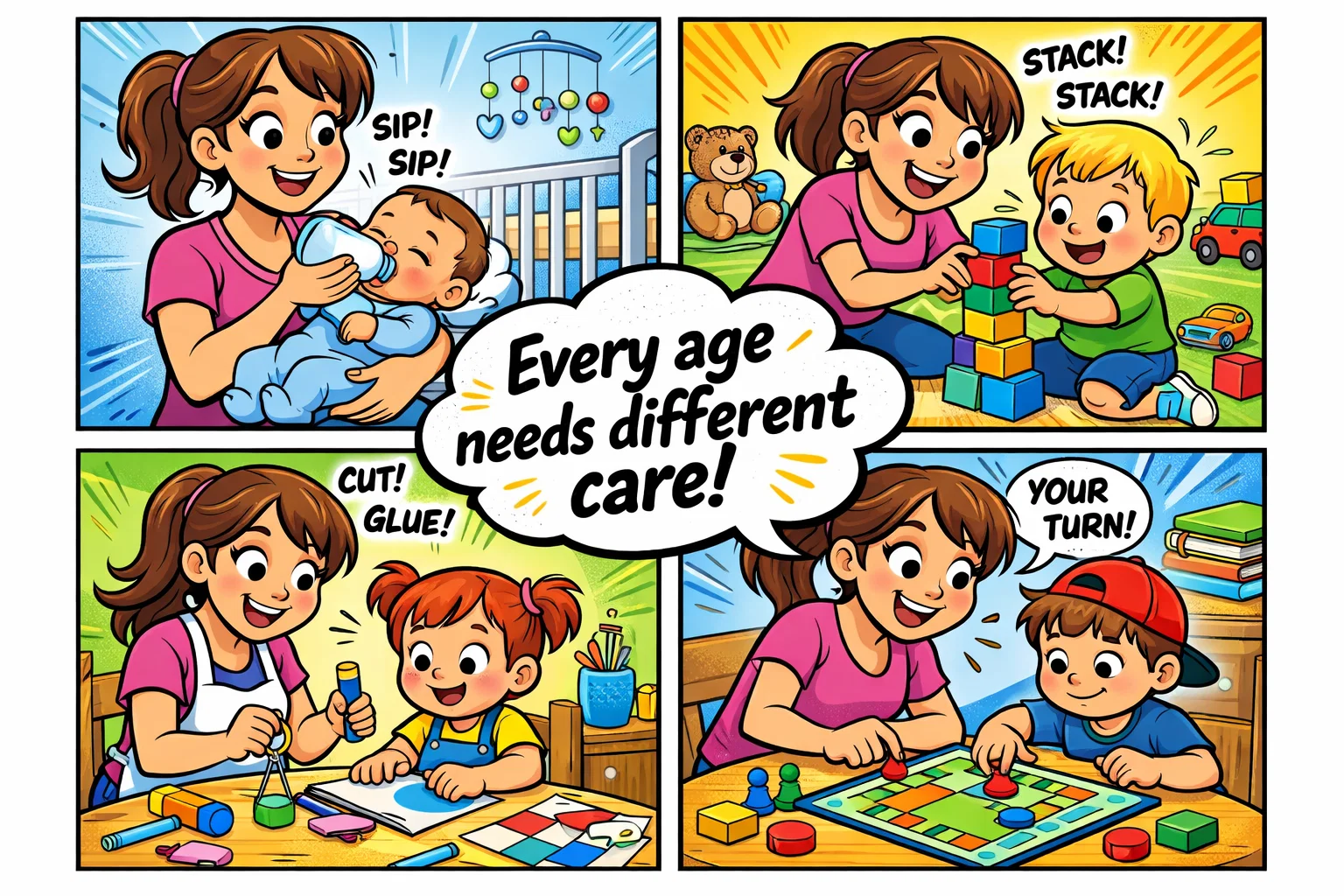
Developmental needs vary significantly across different age groups. Understanding these stages allows you to provide more effective and safer care.
Babysitting Infants (0–12 Months)
Infants require 100% constant supervision. Follow the “Back to Sleep” guidelines from the Red Cross to prevent SIDS: always place the baby on their back in an empty crib. Never leave a baby unattended on a changing table or sofa, and strictly follow the feeding and burping schedule provided by the parents.
Babysitting Toddlers (1–3 Years)
A toddler is naturally curious but lacks a sense of danger. Focus on toddler-care strategies such as redirection—if they are doing something unsafe, guide them toward a new activity rather than simply saying “no.” Keep toddlers away from small objects that could be choking hazards and maintain a high level of physical engagement.
Babysitting Preschoolers (3–5 Years)
Preschoolers love to exercise their independence. Give them simple choices, such as “Do you want to wear the blue pajamas or the red ones?” Use stories and pretend to play to keep them engaged. At this age, separation anxiety may still occur, so having a clear bedtime routine is vital.
Babysitting School-Age Kids (5–12 Years)
Older children often need homework help and enjoy more complex games. Build rapport by showing interest in their hobbies, whether it’s a specific video game or a sport. While they require less physical help, they still need structure and boundaries regarding screen time and house rules.
What to Do While Babysitting
The core of the babysitting job is the time spent directly with the children. Your goal is to be an active participant in their day rather than a passive observer.
Keep Kids Engaged with Activities
Instead of turning on the TV, suggest building a pillow fort, playing a favorite game, or doing a craft. Tailor the activity to the child’s energy level; a high-energy tag outside is great for the afternoon, while a quiet book is better for the hour before bedtime.
Follow Family Routine
Consistency is key to a smooth evening. If the family always has a “no-sugar after 5 PM” rule, stick to it even if the kids beg for a treat. Following the routine shows that you respect the parents’ authority and helps make bedtime smoother.
Supervise Without Hovering
Effective supervision means being close enough to intervene but giving children space to play. For older children, this might mean sitting in the same room while they do a puzzle. For younger kids, you should be within arm’s reach, especially during meals or outdoor play.
Handle Meals and Snacks
Always wash your hands and the children’s hands before eating. Be hyper-aware of allergy restrictions and only serve foods the parents have approved. For younger children, ensure food is cut into small, non-choking pieces (roughly the size of a chickpea).
How to Talk to Kids
Communication is the tool you use to build trust. Children are more likely to cooperate with a sitter they feel understands and respects them.
Start with What the Child Is Already Doing
Join their “world” by commenting on their current play. “I see you’re using the blue blocks for the base. That looks really sturdy!” This validates their efforts and makes you an ally in their play rather than just a supervisor.
Ask Easy Open Questions
Encourage conversation by asking questions that require more than a “yes” or “no.”
- “What is the funniest thing that happened at school today?”
- “If you could have any animal as a pet, what would it be?”
- “Which of your favorite toys should we play with first?”
Respect Quiet Personalities
Some children are naturally shy or slow to warm up. Don’t force them to talk or play if they aren’t ready. Sometimes, simply sitting nearby and doing your own quiet activity, like reading, shows them that you are a safe, non-threatening presence.
How to Handle Separation Anxiety
It is common for younger children to cry when their parents leave. Dealing with this requires patience, empathy, and a plan.
- Acknowledge Feelings: Say, “I know you’re sad that Mommy left. It’s okay to miss her.”
- Redirect Immediately: Offer a high-value distraction, like a new toy from your babysitting kit or a snack.
- Stay Calm: If you panic, the child will feel even more unsafe. Keep your voice low and soothing.
- The “Time” Rule: Never tell a child, “Mom will be back in five minutes,” if that is not true. Instead, say, “She will be back after you wake up from your nap.”
How to Put Children to Bed
Bedtime is often the most challenging part of a babysitting job. Success lies in the “wind-down” period.
Give Clear Time Warnings
Transitioning from play to sleep is hard for children. Give a “10-minute warning,” then a “5-minute warning” before you start the bedtime routine. This helps them mentally prepare for the change in activity.
Use Quiet Activities Before Sleep
Avoid “roughhousing” or high-energy games in the hour before sleep. Switch to quiet activities like reading, drawing, or listening to calm music. This naturally lowers the child’s heart rate and prepares their brain for rest.
Deal with Common Bedtime Delays
Children are experts at the “curtain call”—asking for one more glass of water or one more story. Be firm but kind. “We already had our water and two stories. Now it is time for your body to rest.” Maintaining this structure and these boundaries is essential.
What to Do After Children Are in Bed
Once the kids are asleep, your job is not over. You must remain vigilant and leave the home in good condition.
- Stay Alert: Keep the baby monitor nearby and your phone volume up. Never use headphones that block out the sound of a child waking up or crying.
- Tidy Up Lightly: Spend 15 minutes picking up the toys used during your shift and wiping down the kitchen counter. Parents love coming home to a house that is as clean (or cleaner) than they left it.
- Prepare a Recap: Write a short note or prepare a mental summary for the parents. Include what they ate, what time they fell asleep, and any notable positive moments or minor incidents.
Babysitting Safety Tips
Safety is a non-negotiable aspect of professional childcare. Following these protocols ensures that you are prepared for an emergency.
First Aid and CPR Basics
While not always required, having a Red Cross certification in First Aid and CPR significantly increases your value as a sitter. Knowing how to handle choking or a minor burn can prevent a small accident from becoming a major crisis.
Home Safety Check
Take a quick walk through the house to identify potential hazards. Make sure child safety gates are closed, the pool gate is locked, and cleaning supplies or other household hazards are out of reach. Check that all doors are locked once the parents depart.
Safe Sleep and Infant Safety
For infants, the crib must be empty. This means no pillows, no blankets, and no favorite toys inside the sleeping area. The AAP emphasizes that a firm, flat sleep surface is the safest sleep environment for a baby and helps reduce the risk of accidental suffocation.
Mistakes to Avoid When Babysitting
- Arriving Late: This creates immediate stress for the parents and shows a lack of professionalism.
- Ignoring House Rules: Letting kids stay up late or eat forbidden snacks might make you “the cool sitter,” but it will prevent you from being rehired.
- Using Your Phone Excessively: Your focus should be on the children, not your social media. Save personal calls for after the kids are asleep.
- Leaving Kids Unsupervised: Even “for a minute” to go to the bathroom can be dangerous for a toddler. Ensure they are in a safe, enclosed space before you step away.
Babysitting Checklist
Before Parents Leave
- Emergency contact numbers (Primary and Backup)
- Home address and nearest cross-street
- Allergy and medication list
- Bedtime and meal schedule
- Location of first aid kit and fire extinguisher
- House rules (Screen time, snacks, visitors)
During the Shift
- Keep phone reachable at all times
- Supervise all play and meal times
- Follow the “wind-down” routine for bedtime
- Send a “status update” text to parents if agreed
Before Parents Return
- Tidy up toys and kitchen area
- Ensure children are safe and/or asleep
- Prepare a brief summary of the evening’s events
By prioritizing child safety, following a consistent routine, and maintaining professional communication, you can become a trusted and reliable babysitter in your community. Each babysitting job is an opportunity to support a child’s development while gaining valuable hands-on experience.