

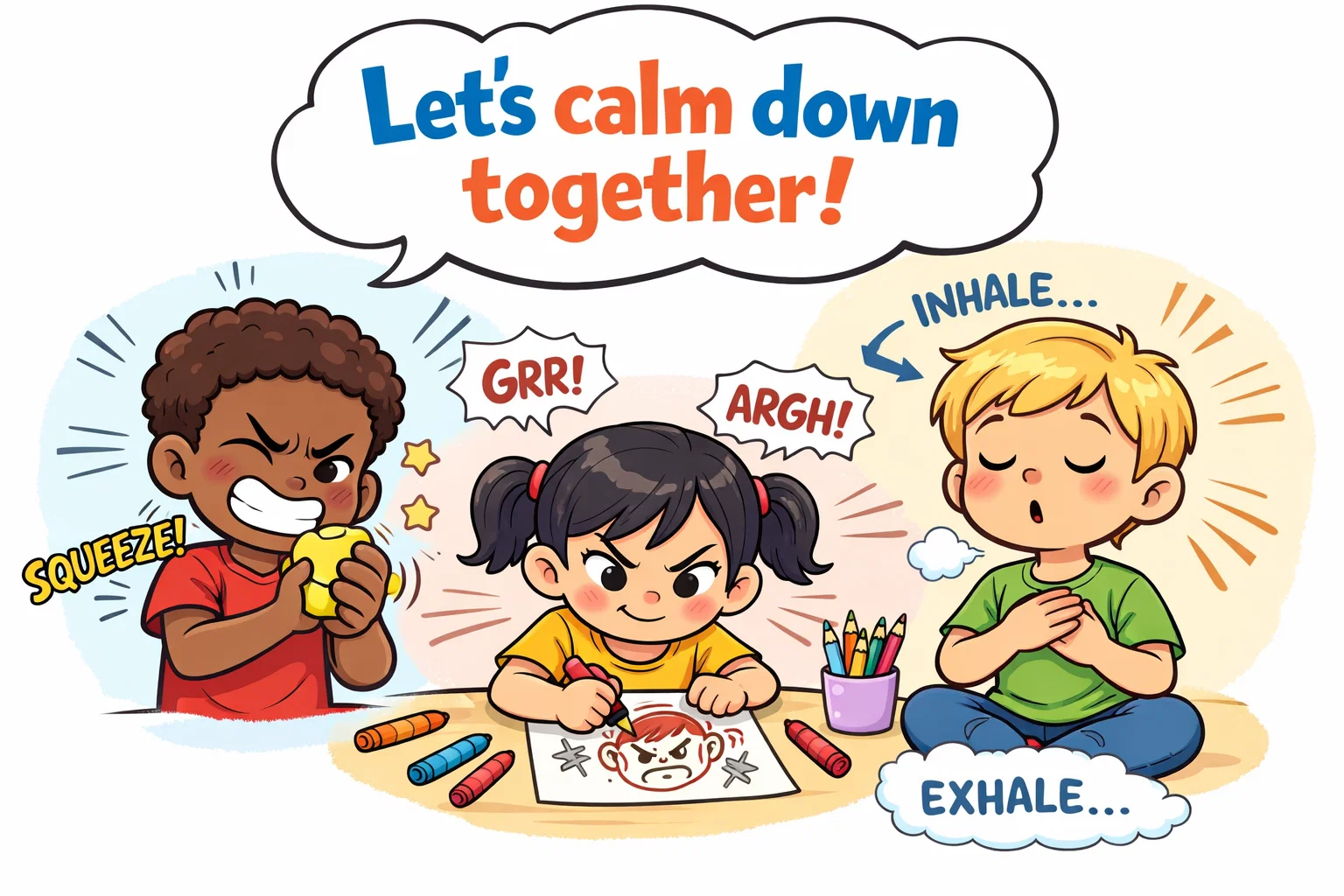
Helping children navigate big emotions is one of the most significant challenges — and opportunities — of caregiving. Whether you are a parent, educator, or therapist, you likely know that when a child feels angry, their ability to think logically often decreases, replaced by a “fight or flight” response that can be overwhelming for everyone involved. Anger management activities for kids are not about suppressing this natural emotion; rather, they are designed to help kids understand and manage their frustration in safe, healthy ways.
This guide provides a practical toolkit of strategies, creative games, and practical tools to foster emotional intelligence. By the end of this article, you will have a clear roadmap for teaching children how to recognize their physiological signs, utilize effective coping skills, and return to a state of calm. These activities transform abstract concepts into tangible skills, ensuring that self-regulation becomes a lifelong habit rather than a momentary struggle.
Anger Management Basics for Kids
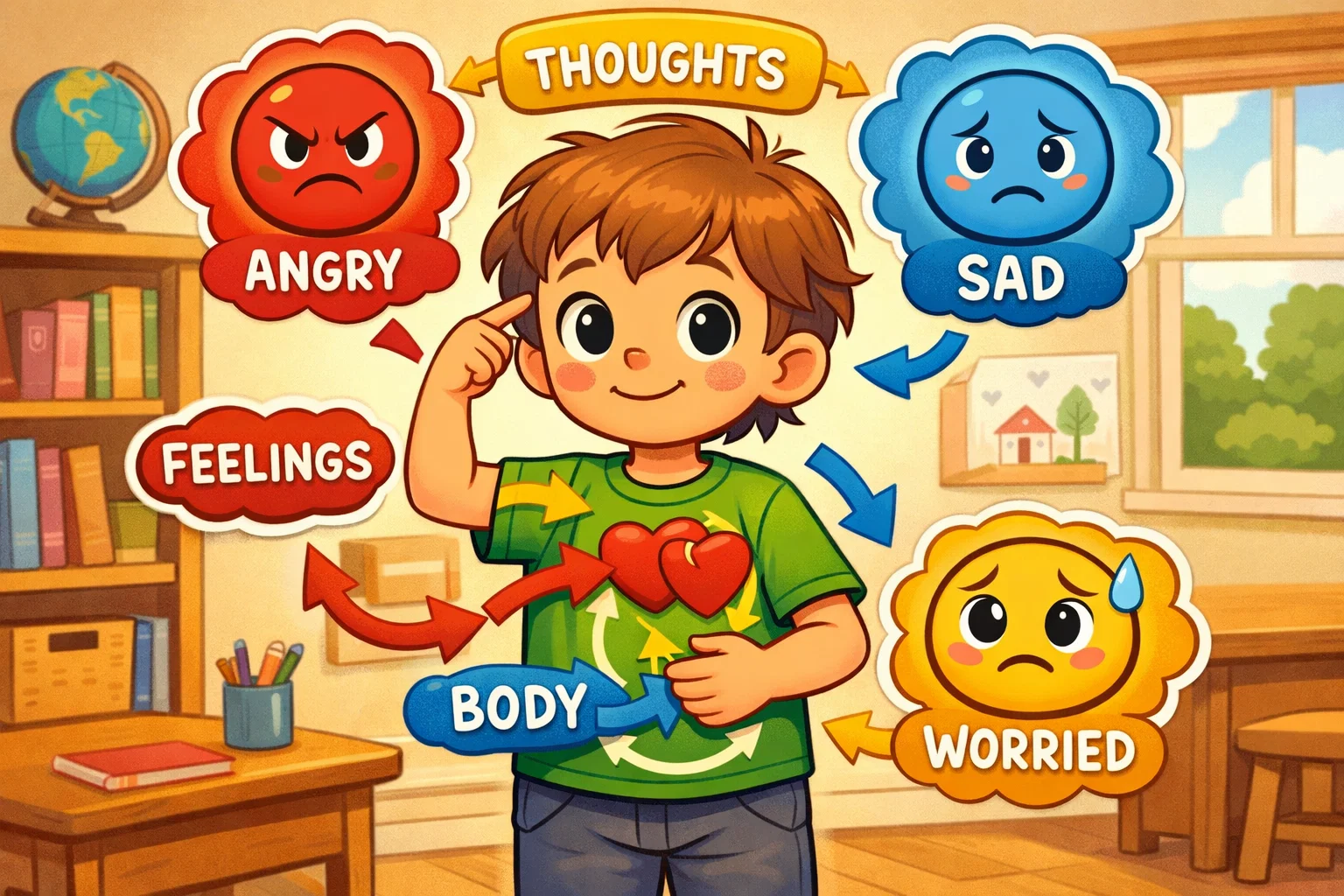
Before diving into specific exercises, it is helpful to understand how this powerful emotion fits into healthy development. Anger acts as a “messenger,” telling us when something feels unfair, hurtful, or overwhelming. For a child, however, this message can feel like a physical assault on their senses.
What Anger Feels Like in the Body
Children often experience the physiological symptoms of resentment before they can cognitively name the feeling. When a child feels threatened or overwhelmed, the amygdala (the brain’s alarm system) reacts before the thinking part of the brain can step in. Common anger signs in the body include:
- Rapid heartbeat: Feeling like a drum is beating in the chest.
- Heat: Redness in the cheeks or feeling “hot-headed.”
- Tension: Clenched fists, a tight jaw, or “knots” in the stomach.
- Breathing changes: Fast, shallow breaths that may lead to dizziness.
Why Anger Shows Up
Anger can show up for many reasons in a child’s daily life. It may be a reaction to:
- Frustration: Not being able to master a new skill or finish a task.
- Lack of Control: Being told “no” or having to stop a fun activity.
- Physical Needs: Hunger, exhaustion, or overstimulation (the “HALT” acronym: Hungry, Angry, Lonely, Tired).
- Underlying emotions: feeling embarrassed, sad, or unheard.
What Happens When Anger Builds
When unchecked fury begins to escalate, it follows a predictable pattern often described as an “escalation curve.” Without intervention, the child moves from “agitated” to “crisis.” At the peak of this curve, the “thinking brain” effectively goes offline. If a child learns that outbursts are the only way to be heard, these patterns can solidify into behavioral problems. Consistent practice of anger management skills helps interrupt this cycle before the “explosion” occurs.
Healthy Ways to Release Anger
It is a common misconception that big feelings should be “bottled up.” Instead, we must teach children safe outlets. A healthy way to release energy might include:
- Physical Movement: Jumping jacks or running in place to burn off adrenaline.
- Creative Outlets: Scribbling on paper or squeezing playdough.
- Verbalizing: Using “I feel” statements to express the “why” behind the heat.
Core Strategies to Teach Kids
To help children develop long-term emotional intelligence, we must move beyond “fixing” a tantrum and toward building a foundational skill set.
Identifying Triggers
An anger trigger is a specific event or situation that sparks a reaction. Helping a child identify their triggers empowers them. Common examples include:
- Losing a video game.
- A sibling touching their toys.
- Transitions (e.g., leaving the park).
Naming Feelings Beyond Anger: The Anger Iceberg
The anger iceberg is a visual representation showing that anger is often just the “tip” of what we see. Beneath the surface, the child may be feeling hurt, jealous, or anxious. When kids understand and manage these underlying feelings, the intensity often dissipates.
| Visible (The Tip) | Hidden (Under the Water) |
| Yelling | Loneliness |
| Hitting | Embarrassment |
| Stomping | Guilt |
| Avoidance | Fear of Failure |
Self-Talk Skills
Positive self-talk can act as an internal coach. Teach your child simple phrases to use when they feel angry:
- “I can handle this.”
- “It’s okay to be mad, but it’s not okay to hurt.”
- “Take a breath; stay calm.”
Building Pause Before Reaction
The goal of effective anger management is to widen the gap between the stimulus and the response. Techniques like counting to ten or taking three deep breaths create a “buffer zone” that allows the thinking brain to re-engage.
Anger Management Activities for Kids
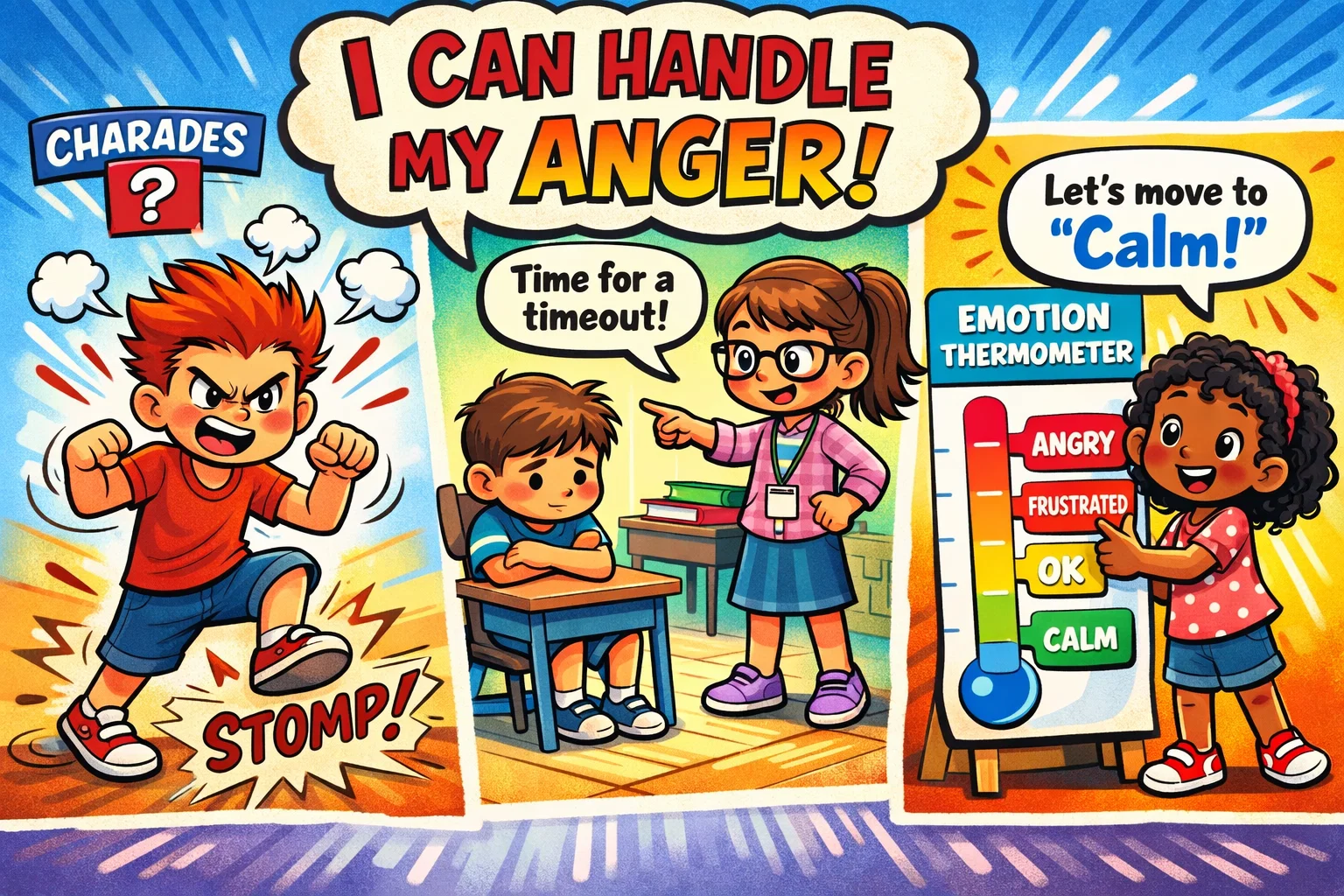
Practical anger activities for kids make learning about emotions fun and less intimidating.
Body Mapping Anger
Have the child draw an outline of a person on a large piece of paper or a worksheet. Ask them to color in where the feeling takes hold. Do they feel it in their hands (red fists)? Their heads (lightning bolts)? This helps build a child’s awareness of early physical cues.
Drawing and Art Activities
Art provides a non-verbal way to explore anger. Ask the child to “Draw what your anger looks like.” This externalizes the emotion, making it something they can look at rather than something they are.
Personifying Anger
Give the emotion a name, like “The Fire Dragon” or “Mr. Grump.” When the child’s anger flares up, you can say, “It looks like The Fire Dragon is trying to take over. What can we do to help him cool down?” This reduces shame and increases the child’s sense of agency.
Anger Charades
In this game, family members act out various emotions using only facial expressions and body language. This helps kids understand how others see anger and builds empathy.
Volcano and Explosion Games
Use a volcano metaphor to explain how internal pressure may build up if we don’t use our coping skills. You can even do the classic baking soda and vinegar experiment to show how “adding too many small frustrations” can lead to an eruption.
Fishing for Feelings Game
Create “fish” out of paper with different emotions written on them. Use a magnet “fishing pole” to catch a fish and discuss a time the child felt that way. This builds a robust emotional vocabulary.
Games That Help With Anger Control
Role-Play Scenarios
Role-playing is one of the best activities for practicing effective ways to manage conflict. Act out a common trigger, like a friend taking a toy, and let the child practice saying, “I’m still playing with that; please give it back.”
Card Games for Emotional Skills
Many printable card games are available that prompt kids to answer questions like, “What is one thing that helps you calm in the face of a problem?” These fun activities turn skill-building into a family game night.
Movement-Based Games
Games like “Red Light, Green Light” or “Freeze Dance” are excellent for practicing self-regulation. They require the child to stop their physical momentum instantly, which mimics the impulse control needed to manage their anger.
Biofeedback and Digital Games
Some anger management approaches for kids involve apps that use the tablet’s camera or a wearable to monitor heart rate. When the child stays calm, they progress in the game, providing immediate positive reinforcement for breathing exercises.
Tools to Help Kids Calm Down
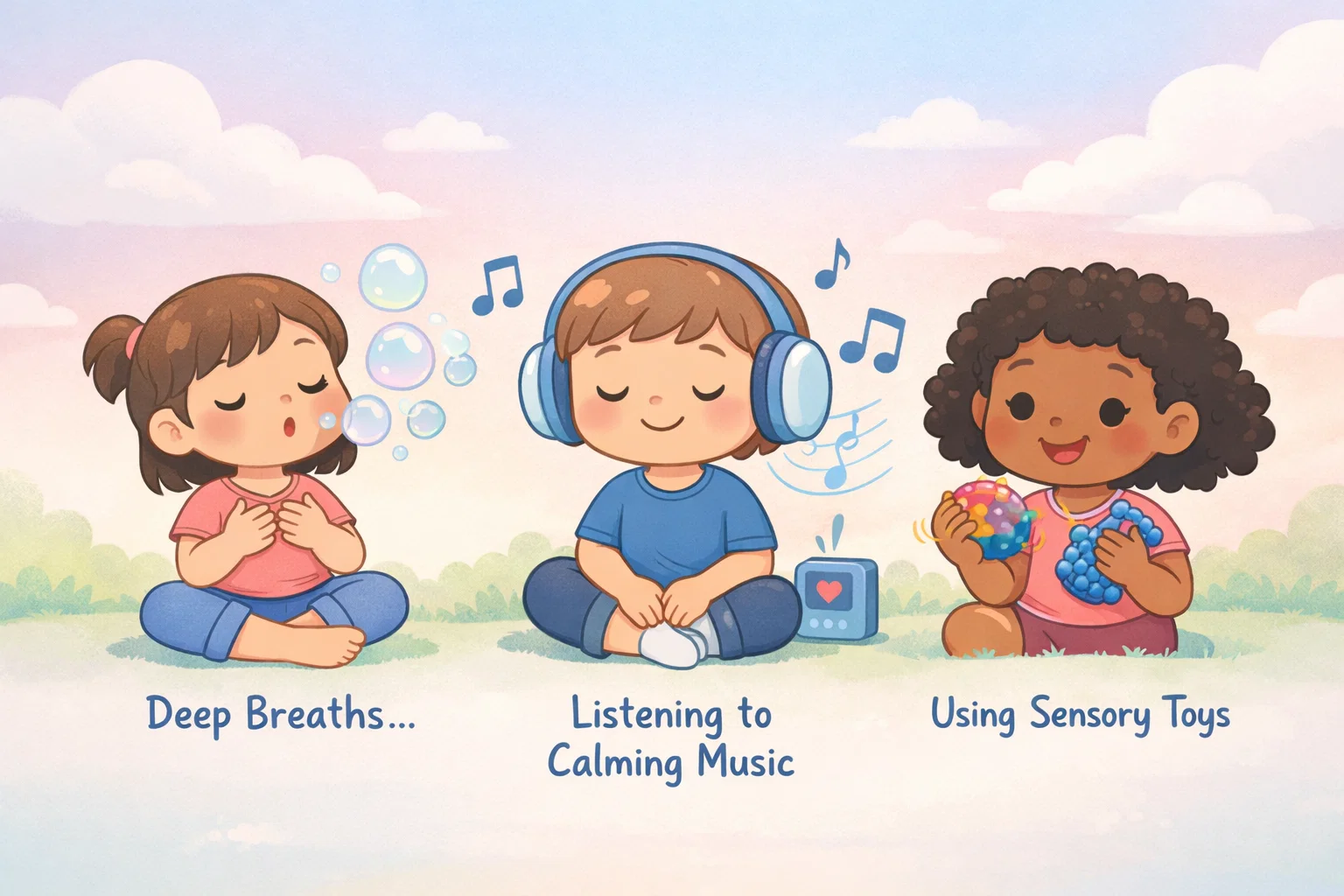
Breathing Activities
Deep breathing is the fastest way to signal the nervous system to relax.
- Balloon Breath: Imagine blowing up a giant balloon in the belly.
- Square Breathing: Inhale for 4, hold for 4, exhale for 4, hold for 4.
- Pizza Breath: Inhale the “smell” of the pizza; blow on it to “cool it down.”
Guided Meditation for Kids
Short, 3-minute visualizations can help your child calm down. Have them imagine a “quiet place,” like a beach or a soft cloud, where they feel completely safe.
Grounding Techniques
The “5-4-3-2-1” technique helps manage their emotions by focusing on the senses:
- 5 things you see.
- 4 things you can touch.
- 3 things you hear.
- 2 things you can smell.
- 1 thing you can taste.
Muscle Relaxation Activities
“Progressive Muscle Relaxation” involves tensing a muscle group (like squeezing a lemon in your hands) for five seconds and then releasing. This helps kids recognize the difference between tension and calm.
Emotional Thermometer and Scales
Identifying Levels of Anger
An anger thermometer (or anger scale) is a visual representation of emotional intensity. It usually ranges from 1 (Cool/Calm) to 5 (Exploding/Boiling).
Making Anger Thermometer
You can make an anger thermometer using a piece of cardboard and a slider.
- Blue (1): Relaxed.
- Green (2): A little bothered.
- Yellow (3): Frustrated.
- Orange (4): Very angry.
- Red (5): Out of control.
Using Thermometer in Real Time
Ask, “Where are you on the thermometer right now?” If they are at a 3, it’s time for a coping strategy before they hit a 5. This helps children catch and manage emotions early.
Calm-Down Spaces and Routines
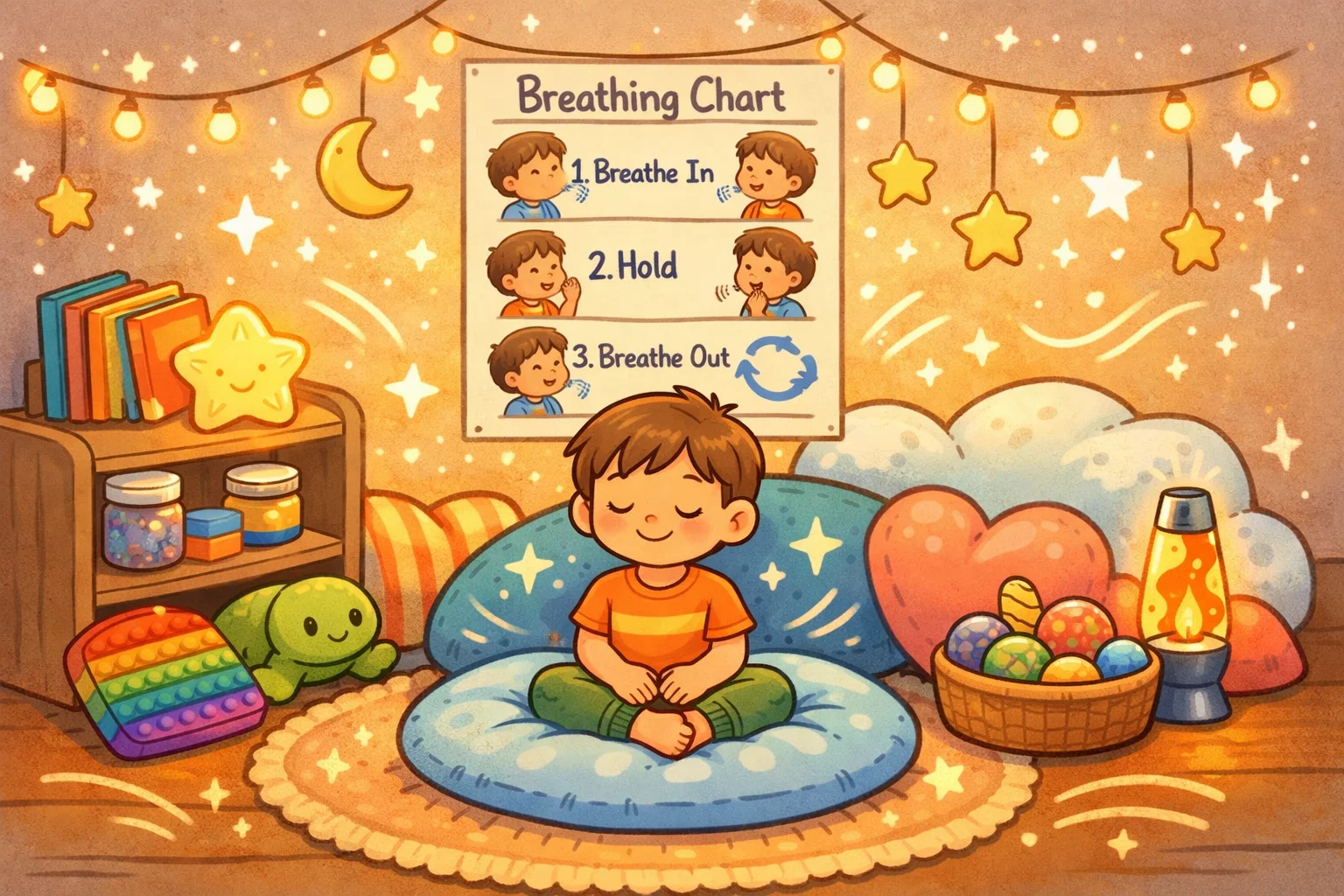
Creating Calm-Down Space
A calm-down corner is a designated “peace zone.” It should be comfortable, with pillows, blankets, and soft lighting.
Choosing Calm Tools
Include a kit of items such as:
- Sensory toys (stress balls, pop-its).
- An anger management workbook or helpful worksheets.
- Noise-canceling headphones.
- A “calm down jar” (glitter in water).
When to Use Calm Space
Crucial Note: Never use the calm-down space as a “time-out” or punishment. It should be a proactive choice. You might say, “It looks like your intense emotions are getting big. Do you want to go to your space to find your calm?”
Videos and Visual Learning Resources
Short Educational Videos
Visual learners benefit from seeing characters model anger management for children. Platforms like PBS Kids or specialized YouTube channels offer short clips on how to take deep breaths when frustrated.
Animation and Storytelling
Stories about characters who manage their anger in safe ways provide a blueprint for a child’s own behavior. Books like The Color Monster or When Sophie Gets Angry are excellent starting points.
Parent-Guided Viewing Tips
Always watch with your child. Afterward, ask: “How did the character know they were getting mad?” and “What coping skills did they use?”
Anger Management Toys and Physical Tools
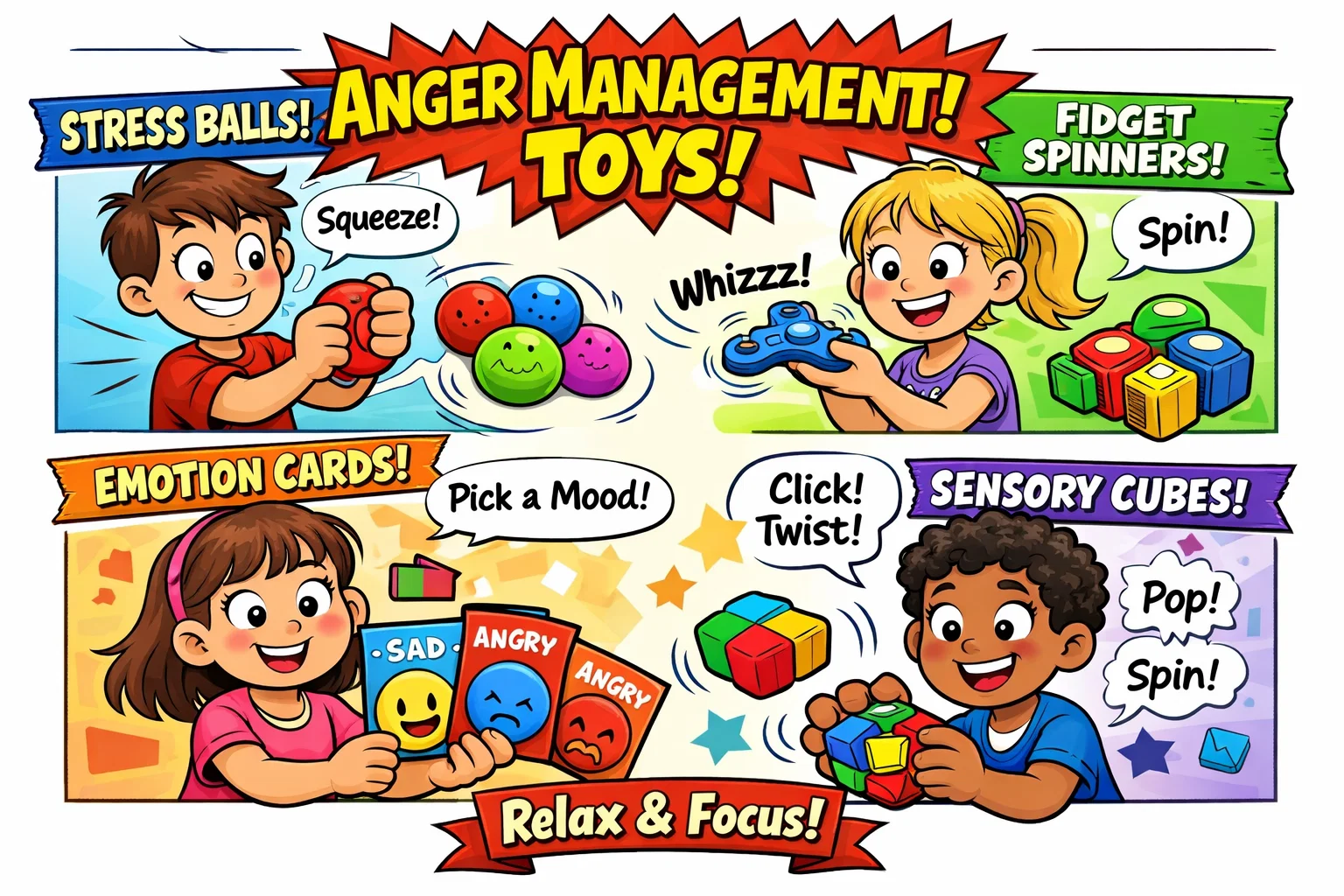
Sensory Toys
Tactile tools like “fidget spinners” or “weighted lap pads” provide the sensory input some children need to manage their anger.
Fidget and Stress Tools
Squishy balls or “tangle” toys give the hands something to do, which can redirect the physical energy of these moments stored in the upper body.
Games Designed for Emotional Skills
Board games like Friends and Neighbors or The Social and Emotional Competence Game are specifically designed by specialists to help them understand social cues and anger problems.
Preventing Anger Escalation
Keeping Communication Simple
When a child is “in the red,” they cannot process complex sentences. Use the “rule of three”: No more than three words. “I’m here,” “Breathe with me,” or “Safety first.”
Staying Calm as an Adult
Your “emotional thermostat” sets the tone for the room. If you yell, the child’s distress affects their ability to regulate. Modeling a calm response is the most powerful anger management tool you possess.
Routine and Predictability
Many anger issues stem from anxiety about what comes next. A visual schedule helps a child feel secure, reducing the likelihood of emotional outbursts during transitions.
School and Social Anger Situations
Conflict at School
Anger management for kids must extend to the classroom. Teach your child to find a “trusted adult” or a “buddy” when they feel a conflict with a peer escalating.
Anger During Transitions
Transitions are major anger triggers. Use “5-minute warnings” and visual timers to help the child prepare for a change in activity.
Social Skills Practice
Use role-play scenarios to practice what to do when a friend says something mean. Building these healthy coping skills in a “cold” state (when they are happy) ensures they are available in a “hot” state.