

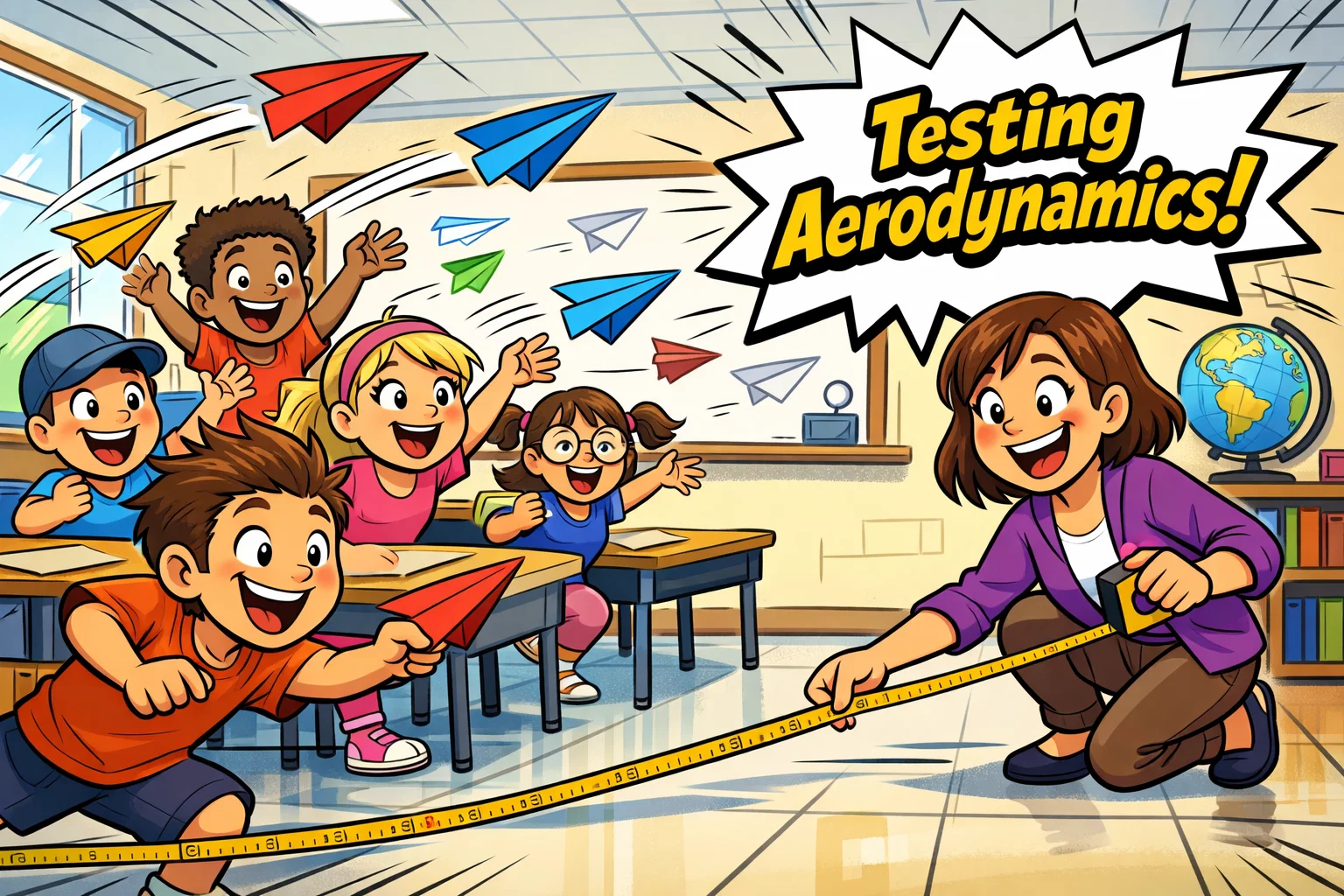
Engaging in aerodynamics experiments for kids through paper airplane testing is one of the most accessible ways to introduce complex physics. Unlike powered aircraft that rely on engines, a paper airplane serves as a glider. This means the flight success depends entirely on how the pilot manages the initial burst of energy and how the plane interacts with the air. By treating a simple piece of paper as a sophisticated engineering model, students can observe how subtle changes in geometry lead to vastly different flight outcomes.
Core Principles of Flight and Aerodynamics
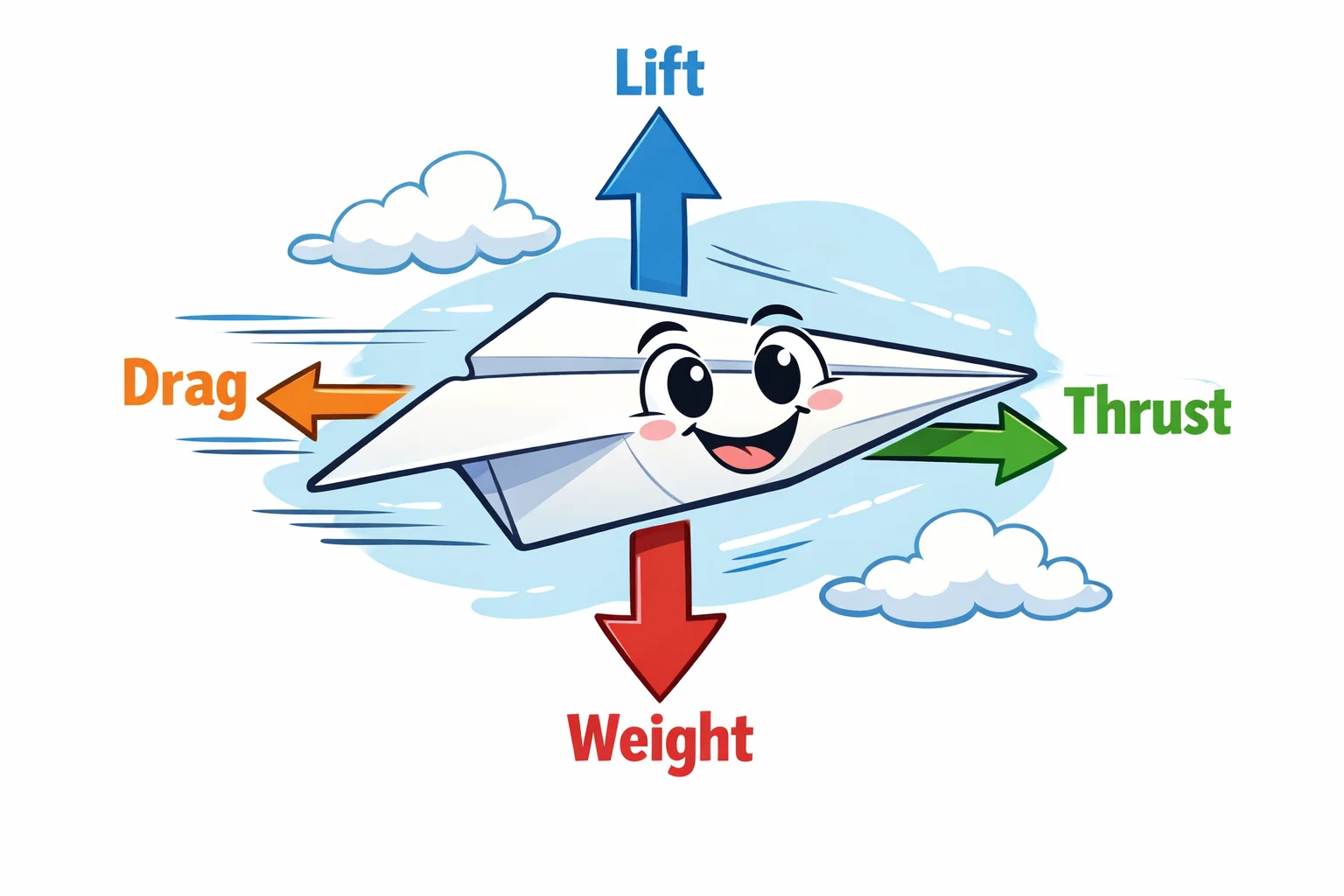
The scientific foundation of any flight experiment is built upon the management of four physical forces. For a paper airplane to remain airborne, these forces must reach a delicate balance.
Lift and Upward Pressure
Lift is the upward force that opposes the weight of the aircraft. It is generated primarily by the interaction of the wing surface with the surrounding air. Traditionally, this is explained through Bernoulli’s Principle, which indicates that as the velocity of a fluid like air increases, its internal pressure decreases. When making paper airplanes, the goal is often to create a shape where air moves faster over the top than the bottom, creating a low-pressure zone that “sucks” the plane upward.
Weight and Gravity Effects
Every experiment must account for the force of gravity, which pulls the aircraft toward the Earth. The total force of gravity, or weight, acting on the plane is the product of its mass and the gravitational constant (F = mg). To achieve a stable glide, the lift generated by the wings must sufficiently balance this weight. If the paper is too heavy, the lift will be insufficient to maintain altitude.
Thrust and Forward Momentum
Thrust is the initial impulse of energy provided by the student’s arm during the launch. According to Newton’s Second Law (F = ma), the force applied to the plane determines its initial acceleration. Because paper airplanes lack an internal engine, they rely on this starting thrust to overcome air resistance and begin their journey through the air.
Drag and Air Resistance
Drag is the mechanical force generated by the interaction of the solid body of the plane with the air molecules. It acts in the opposite direction of the flight path, slowing the aircraft down. In paper airplane testing, drag is the primary limiting factor for distance. Minimizing drag through sleek designs is essential for high-speed distance trials, while maximizing lift is the priority for staying in the air as long as possible.
Essential STEM Supplies and Materials
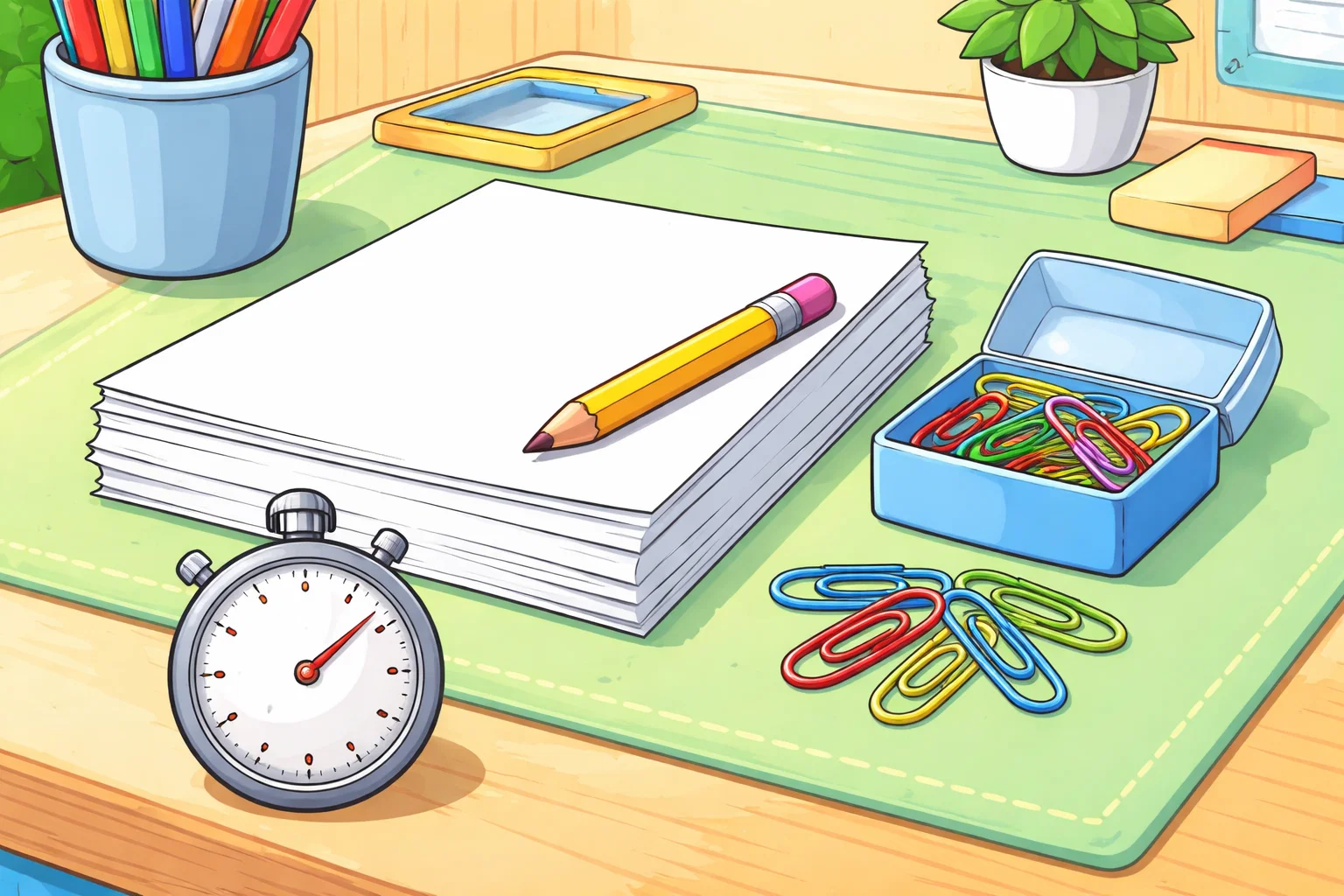
Before beginning an experiment, gathering the correct materials is vital for ensuring consistent and measurable results.
Paper Types and Weights
The density of the material used, measured in grams per square meter (gsm), significantly impacts the inertia and lift requirements.
| Paper Type | Grammage (gsm) | Performance Characteristics |
| Lightweight Newsprint | 35-50 gsm | Easy to launch; highly susceptible to wind; low durability. |
| Standard Printer Paper | 75-80 gsm | The industry standard; provides optimal balance of weight and stiffness. |
| Heavy Drawing Paper | 100-120 gsm | Higher inertia; better for high-speed darts but harder to fold. |
| Cardstock | 150-200 gsm | Very heavy; often requires excessive thrust to stay airborne. |
Measuring Tools for Data Collection
To turn play into a formal experiment, students need tools to quantify their findings. Successful data tracking typically requires:
- Long measuring tape for distance challenges
- Digital stopwatch for timing flight duration
- Protractor to measure the exact launch angle
- Notebook or chart for recording iterative results
Tape and Paper Clips for Weight Distribution
Minor adjustments can be made using external weights. Adding a paper clip to the nose of a plane can shift the center of gravity forward, which often stabilizes a plane that keeps stalling. Small pieces of tape can also be used to secure folds, ensuring the aerodynamic shape remains consistent throughout multiple test flights.
Launch Zone Marking Equipment
Consistency is a hallmark of the professional engineering workflow. Using masking tape to mark a specific “starting line” and “launch corridor” ensures that every test flight begins from the same point. This reduces environmental variables and makes the data collected more reliable for comparison.
Engineering Design Process for Flight Challenges
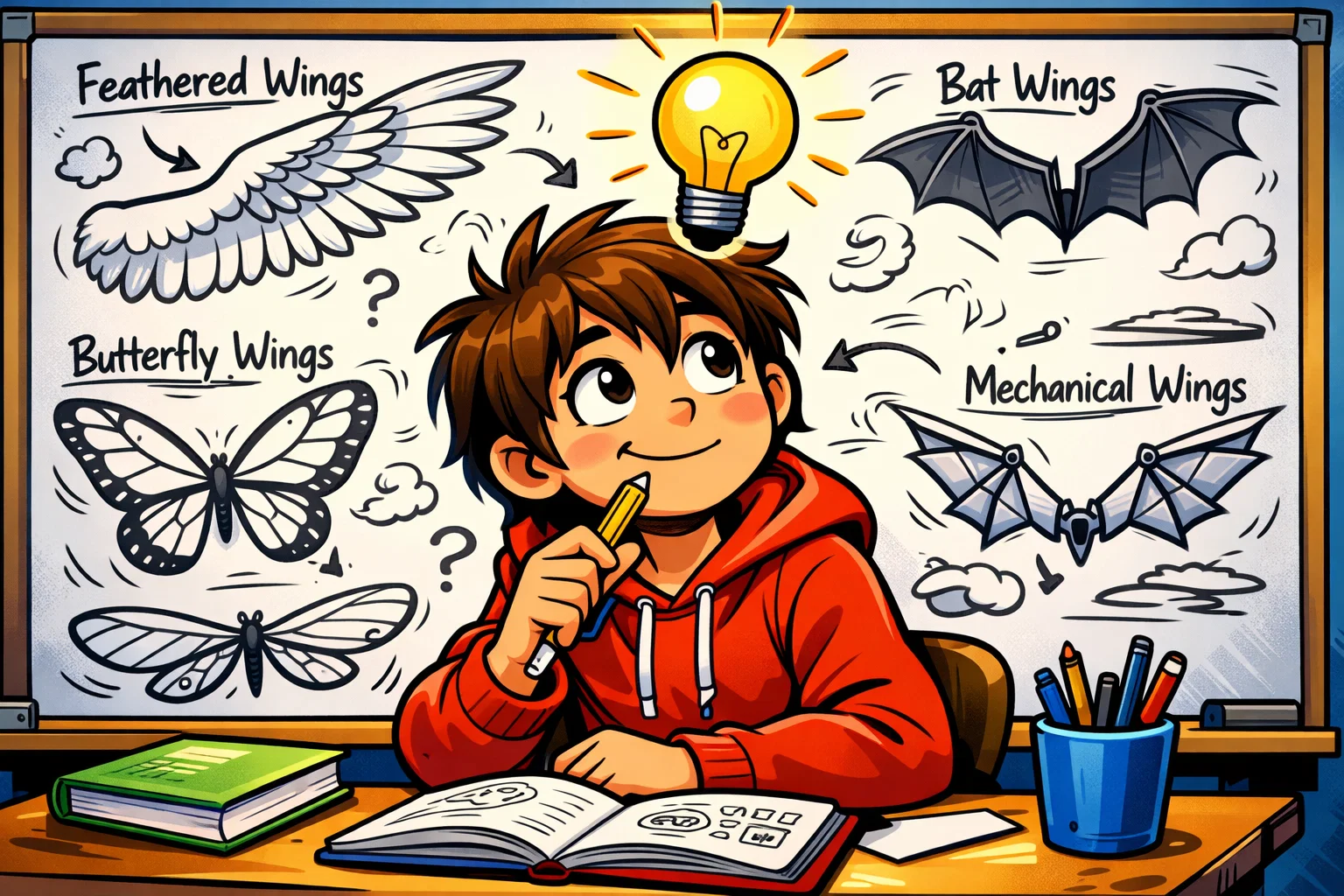
The process of designing a high-performance glider follows a specific cycle used by aerospace engineers worldwide.
Ask and Define Flight Problems
Every experiment starts with a question. You might ask, “Why does this specific design always veer to the left?” or “How can I make the plane stay in the air for more than five seconds?” Defining the problem allows you to focus your research and testing on a specific aerodynamic variable.
Imagine and Research Wing Shapes
Once the problem is defined, students can brainstorm potential solutions. Research suggests that high-aspect-ratio wings (long and narrow) are generally better for gliding, while low-aspect-ratio wings (short and wide) offer better maneuverability.
Plan and Select Initial Blueprints
Choosing a base design is the next step. Experts at NASA’s Langley Research Center often utilize paper airplane experiments to introduce students to the concepts of wind tunnel models. By planning the folds before touching the paper, students learn to visualize the 3D result of 2D changes.
Create and Build Prototypes
Construction must be precise. The quality of the creases directly impacts the structural integrity and aerodynamic efficiency of the aircraft. Using a ruler to flatten edges can prevent “parasite drag” caused by rough folds or imperfections.
Test and Launch Procedures
During the testing phase, safety is a critical consideration. Standard safety protocols include:
- Wearing safety goggles in confined testing spaces
- Using audible warnings like “clear for takeoff”
- Maintaining a consistent launch force and angle
- Avoiding pointing the aircraft at other participants
Improve and Iterate Design Variations
After the first flight, the data is used to make improvements. This iterative process is what separates a simple activity from a true scientific study. If a plane dives immediately, it may suggest that the center of gravity is too far forward, prompting a redesign of the nose folds.
Step-by-step Instructions for Base Designs
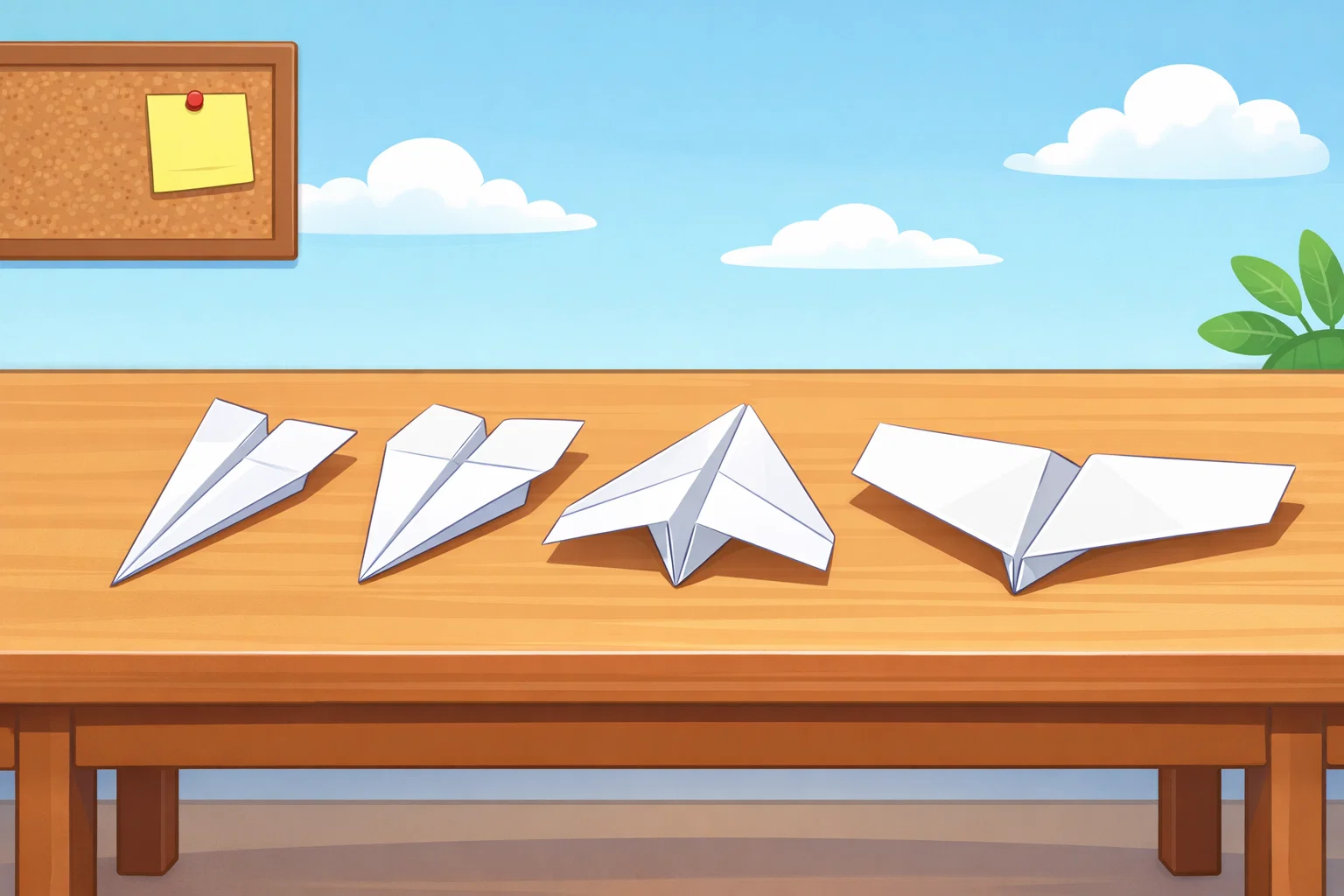
Different flight objectives require unique airplane designs. Here are four standard models used in school-level experiments.
Classic Dart for Speed
The dart is the most recognizable design. It features a narrow body and a pointed nose, which minimizes “form drag.” This design is ideal for high-speed, straight-line distance testing because it cuts through the air with minimal resistance.
Glider for Time Aloft
Gliders feature much larger wing surface areas. The goal here is to maximize the lift-to-drag ratio. By increasing the surface area, the plane can catch more air, allowing it to stay airborne longer even with a slower forward velocity.
Bullet Plane for Distance
The bullet design is a variation of the dart but focuses more on weight concentration. By folding more layers into the front, the “weighted nose” moves the center of gravity forward. This helps the plane maintain its momentum over longer distances without stalling.
Stunt Plane for Aerobatics
Stunt planes are designed for maneuverability rather than distance. They often include adjustable flaps (elevators and rudders) that allow the pilot to perform loops or circles. These designs are perfect for studying how air deflection affects flight direction.
Aerodynamics Experiment Variables and Testing
Scientific research into paper flight reveals that these thin, flat wings behave differently than the thick wings found on commercial jets. A landmark study conducted by researchers at NSF found that paper airplanes possess a self-correcting mechanism. Unlike traditional aircraft, the center of pressure on a paper wing shifts significantly as the angle of attack changes, which helps the plane maintain level flight even in unstable conditions.
Changing Wing Surface Area
By varying the size of the wings, students can see the trade-off between lift and drag. While larger wings provide more lift, they also increase skin-friction drag. Finding the “just right” balance is key to a successful flight.
Adjusting Elevator Angles for Pitch
Bending the rear edges of the wings upward creates an “up-elevator” effect. This deflects air upward, pushing the tail down and the nose up. This is a practical application of Newton’s Third Law: the downward deflection of air results in an upward push on the wing.
Modifying Center of Gravity with Clips
The relationship between the center of gravity (CG) and the center of lift is vital. If the CG is too far back, the plane will stall. Adding a paper clip to the front moves the CG forward of the center of lift, which Leif Ristroph, an author of the NYU study, notes is the secret to stable gliders.
Testing Different Launch Forces
The velocity of the launch affects both the lift and the drag. Students should observe several key reactions:
- Soft launches may lead to immediate stalls if lift is insufficient
- Medium launches often produce the most stable glide ratios
- Power launches can cause thinner wings to buckle or vibrate
- Extremely fast launches maximize initial distance but may sacrifice accuracy
Structured Flight Challenges for Kids
To keep engagement high, educators often turn testing into a competition. This format mirrors the outreach programs of the American Institute of Aeronautics and Astronautics (AIAA).
Longest Distance Competition
In this challenge, the goal is purely horizontal travel. Students use “dart” styles and measure the distance from the launch line to the point of first impact.
| Observation | Probable Aerodynamic Cause | Recommended Correction |
| Plane stalls/dives | Center of Gravity is too far back | Add a paper clip to the nose |
| Plane dives immediately | Center of Gravity is too far forward | Reduce nose folds or bend wings up |
| Plane veers to side | Lack of symmetry in folds | Re-crease folds using a ruler |
| Plane loops | Rear flaps are too high | Flatten the trailing edge |
Maximum Hang Time Challenge
This experiment focuses on the “time aloft.” Students must design gliders that resist the pull of gravity for as long as possible. This requires a high-lift design and a launch that maximizes altitude.
Target Accuracy Landing Trials
Accuracy challenges require the pilot to land the plane within a specific zone. This tests the symmetry of the build and the student’s ability to account for air currents within the testing environment.
Real World Aviation Connections
Paper airplane testing connects directly to global engineering. NASA STEM data shows hands-on engagement reaches 970K+ students annually, confirming active learning’s power to inspire STEM interest.
Commercial Jet Aerodynamics
While paper planes are gliders, the principles of lift and drag they demonstrate are the same ones used to design commercial airliners. Engineers use sub-scale models — much like paper planes — to test how new wing shapes might behave in a wind tunnel.
Modern Aerospace Engineering Practices
The demand for STEM-literate professionals is projected to grow by 10.4% through 2033. Engaging with paper flight at a young age prepares students for high-wage careers in aerospace:
- Projected growth in STEM job market: 10.4%
- Average median annual wage in aerospace: $101,000+
- Estimated NASA STEM student participants: Over 970,000 annually
- Economic output from advanced manufacturing: $200 billion
Biomimicry and Nature-Inspired Flight
Many airplane designs are inspired by birds. By observing how a hawk glides or how a hummingbird maneuvers, students can apply these natural “wing shapes” to their paper models, bridging the gap between biology and engineering.