

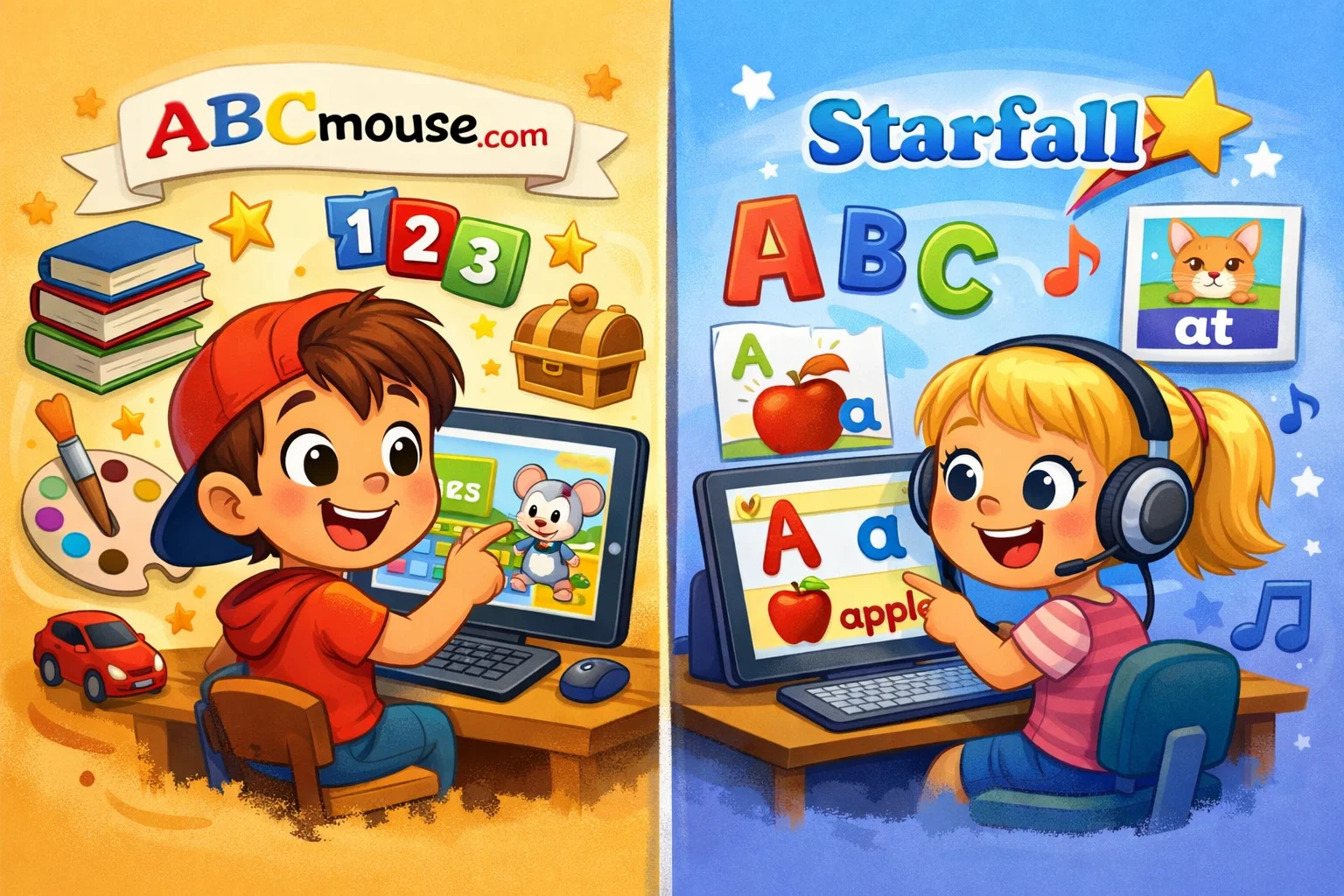
Selecting the right digital platform to support your child’s early education can be a challenging decision between ABCmouse and Starfall. Both are well-established names in the educational app industry, each with distinct pedagogical approaches. ABCmouse offers a comprehensive, all-encompassing curriculum, while Starfall is renowned for its simplicity and focus on phonics.
This guide breaks down the features, costs, and educational philosophies of both apps. Whether your child is just starting with preschool basics or moving into 1st and 2nd grade material, understanding these nuances is essential. Our goal is to provide a neutral, research-backed comparison to help you decide which learning app aligns best with your family’s educational goals.
ABCmouse vs Starfall: Quick Overview
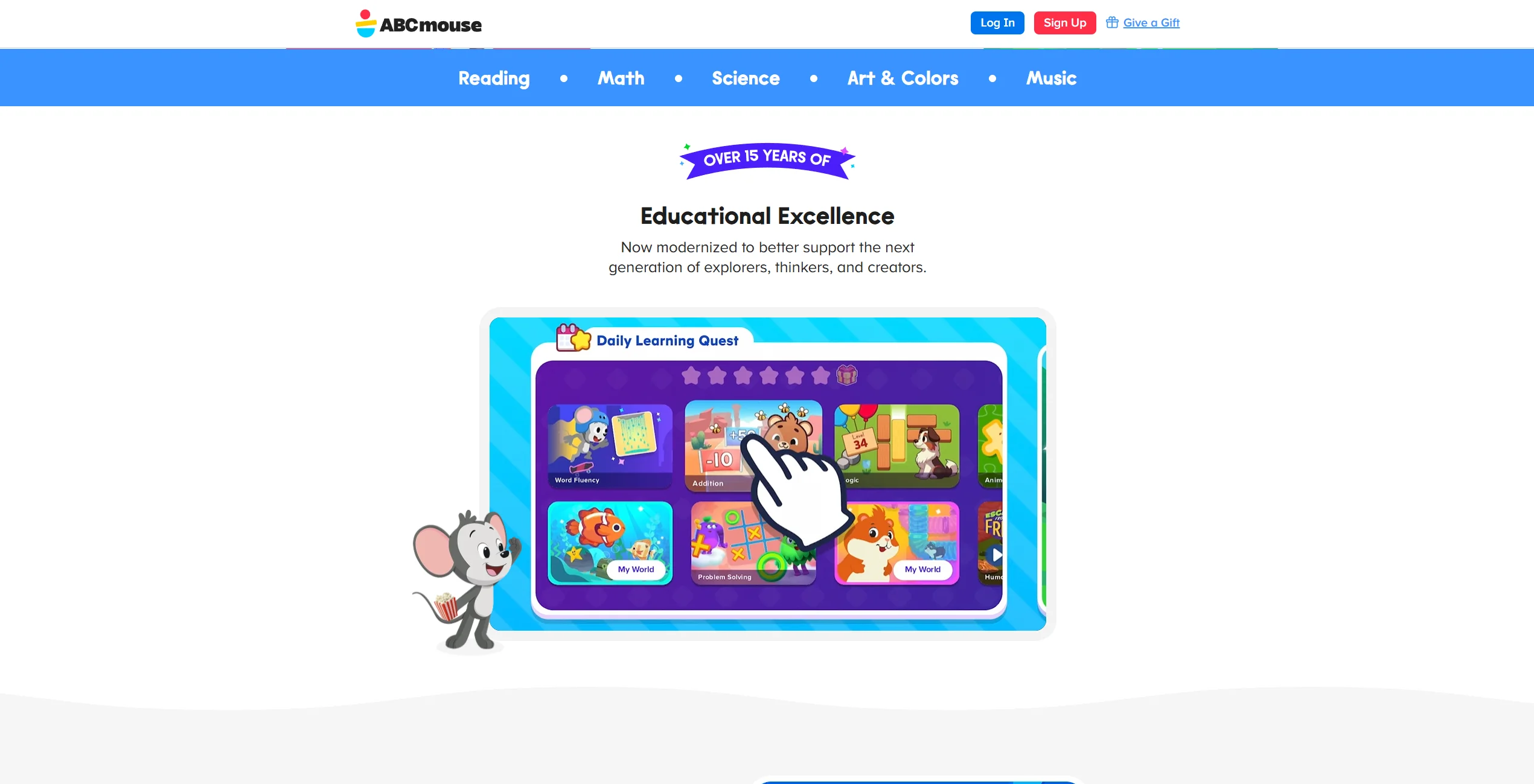
Neither ABCmouse nor Starfall is objectively “better”; they serve different educational needs. ABCmouse offers a comprehensive, “full-classroom” experience with a library of over 10,000 interactive activities. It covers various subjects from literacy to social studies and is designed as a one-stop-shop for boosting early childhood education.
On the other hand, Starfall and ABCmouse differ in their core focuses. Starfall began as a free public service to teach children to read using systematic phonics. It remains a leaner, more targeted tool. While it has expanded into math skills, its heart is in the reading curriculum. Parents often love Starfall because of its simplicity and lack of “gamified” distractions, whereas they choose ABC mouse to utilize its robust progress tracking and highly engaging reward systems.
ABCmouse vs Starfall: Quick Overview
For a bird’s-eye view of how these two giants stack up, consider the following summary. Both are among the top educational apps available today, but their delivery styles differ.
| Feature | ABCmouse (Age of Learning) | Starfall Education |
| Primary Focus | Comprehensive Curriculum (Reading, Math, Science, Art) | Literacy & Phonics (with supplemental Math) |
| Structure | Linear “Learning Path” | Open Exploration / Seasonal Units |
| Engagement | High (Tickets, Avatars, Virtual Pets) | Moderate (Simple Animations, Songs) |
| Subjects | Reading, Math, Science, Social Studies, Art | Reading, Phonics, Math, Music |
| Trial | Typically a 30-day free trial | Free limited version available (no trial needed) |
| Reporting | Detailed progress tracking and reporting | Basic progress saved in paid version |
Age Suitability for Both Apps
Developmentally, kids change rapidly between ages 2 and 8. Choosing a kids app that scales with them is crucial.
- ABCmouse: Primarily targets ages 2–8 (pre-k through 2nd grade). The interface is designed to grow with the child, starting with simple “point and click” tasks and moving toward more complex educational games as students age.
- Starfall: While it covers preschool through 3rd grade, it is arguably the best app during the “learning to read” phase (ages 4–7). The content intended for older kids (2nd and 3rd grade) is available but less extensive than the early literacy modules.
Key Learning Features
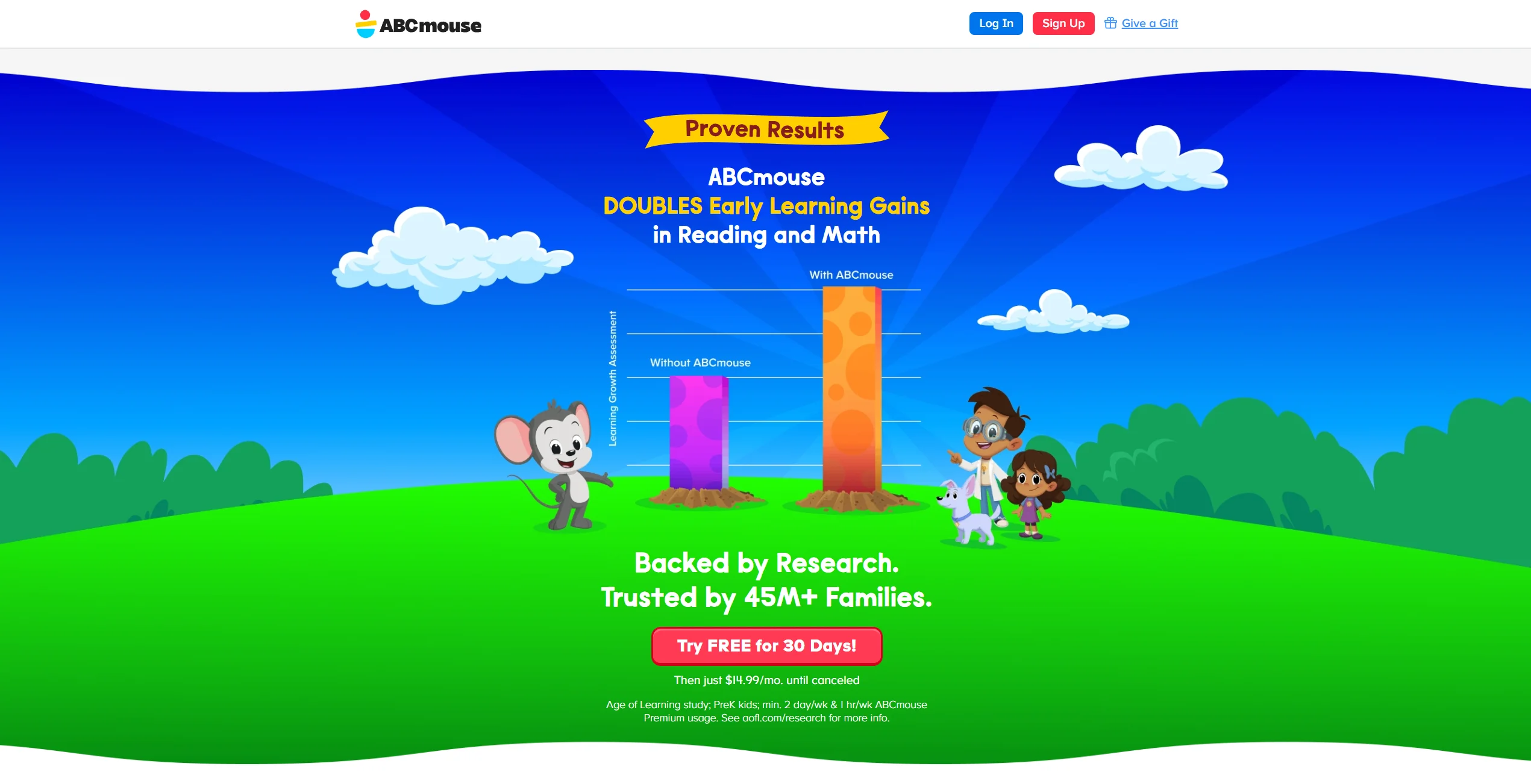
The learning approach of each platform determines how a child learns daily. ABCmouse offers a structured learning path that guides students through levels. This is excellent as a “hands-off” experience where the educational app decides what comes next.
In contrast, Starfall follows a modular approach. A child could play a phonics game, then jump to a song about the seasons, and then practice learning math. This fosters a sense of agency and is often preferred by parents and teachers wanting to target specific gaps in a child’s literacy or numeracy.
Pricing Comparison
Cost is often the deciding factor within many families. Both apps offer different ways to access their content.
- ABCmouse: A subscription costs approximately $14.99/month or $59.95/year. Periodic promotions (e.g., 50%-70% off) often reduce the annual cost. Additionally, some libraries offer free access to ABCmouse.
- Starfall: While much of the core content is available for free, the premium “Home Membership” costs around $35 per year, covering all children in a household.
Detailed Review of ABCmouse
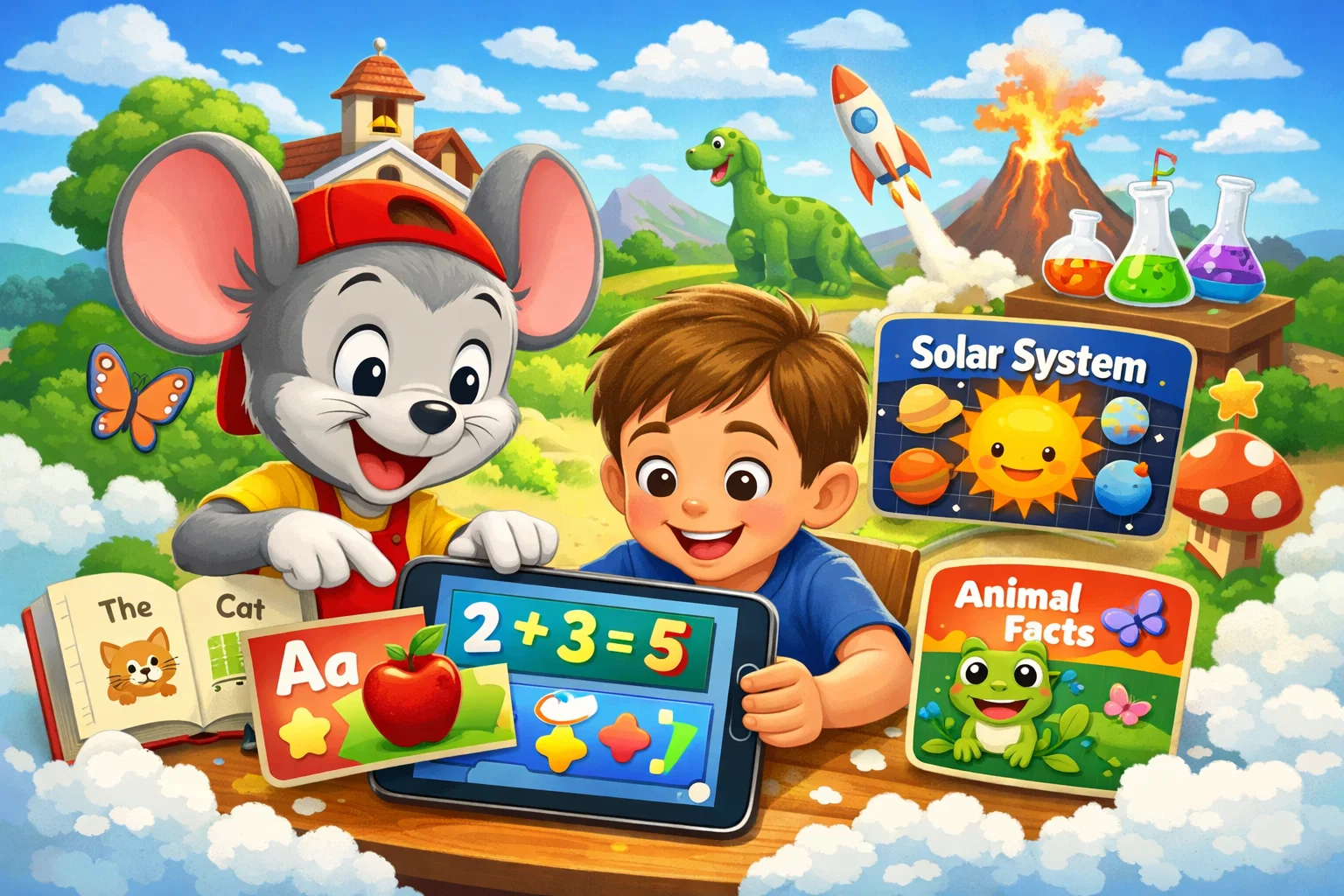
ABCmouse offers a deep, immersive learning experience. When a child learns here, they aren’t just doing drills; they are attending a virtual school. The app’s strength lies in its ability to keep children motivated through its “Ticket” system. As children complete interactive lessons, they earn tickets to buy items used in their virtual room or for pets.
Curriculum Structure and Subjects
ABCmouse offers a structured, progressive curriculum that aligns with early childhood benchmarks in reading, math, and other subjects. Notable features include:
- Science & Social Studies: Includes topics like the solar system, maps, and community helpers.
- Art & Music: Offers creative lessons in digital painting and music exploration.
- STEM & Coding: Newer modules introduce concepts like basic coding, logic, and sequencing for young learners.
Learning Path and Personalization
The learning path is perhaps the most praised feature of the learning platform. It consists of hundreds of lessons organized into levels. As your child learns to read, the app tracks which phonemes they’ve mastered and adjusts. This adaptive learning ensures they aren’t bored by too-easy content or frustrated by material that is too hard.
User Interface and Engagement
The interface is bright, colorful, and busy. Some children consider this the best educational app because it feels like a high-quality cartoon. Others, particularly those who struggle with overstimulation, might find the variety of games and flashing “ticket” notifications a bit much. It is definitely an app for learning that prioritizes keeping the child in the seat.
Detailed Review of Starfall
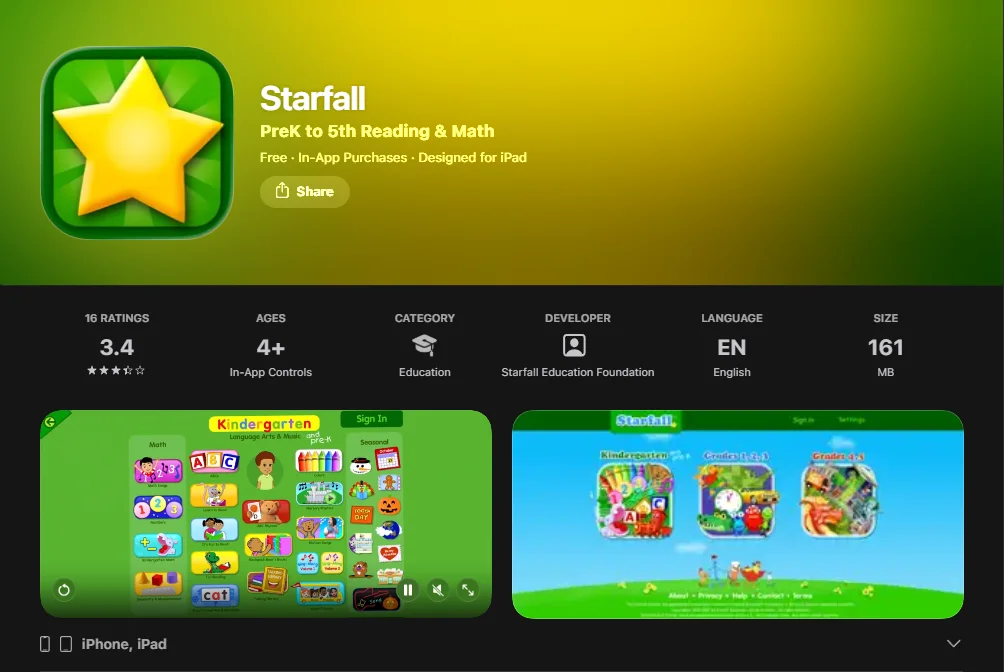
Starfall is the “calm” alternative. It doesn’t have the bells and whistles of ABCmouse, but its effectiveness in teaching phonics skills is highly regarded among educators. It was founded by Stephen Schutz, who struggled with reading as a child, and that empathy shines through in its learning approach.
Phonics and Reading Focus
If you want your children to read using a proven, systematic phonics method, Starfall is hard to beat. It breaks down the process into:
- ABCs: Letter recognition and sounds.
- Learn to Read: Word families and vowel sounds.
- It’s Fun to Read: Simple stories and riddles.
- I’m Reading: Short plays, fiction, and non-fiction.
Subject Variety and Expansion
Starfall excels in literacy, with a strong emphasis on phonics. It also offers a solid math curriculum, using visual tools like “ten-frames” and digital manipulatives to teach foundational math skills such as addition, subtraction, and basic geometry. It is very easy for kids to navigate without adult help.
Engaging Learning Tools and Features
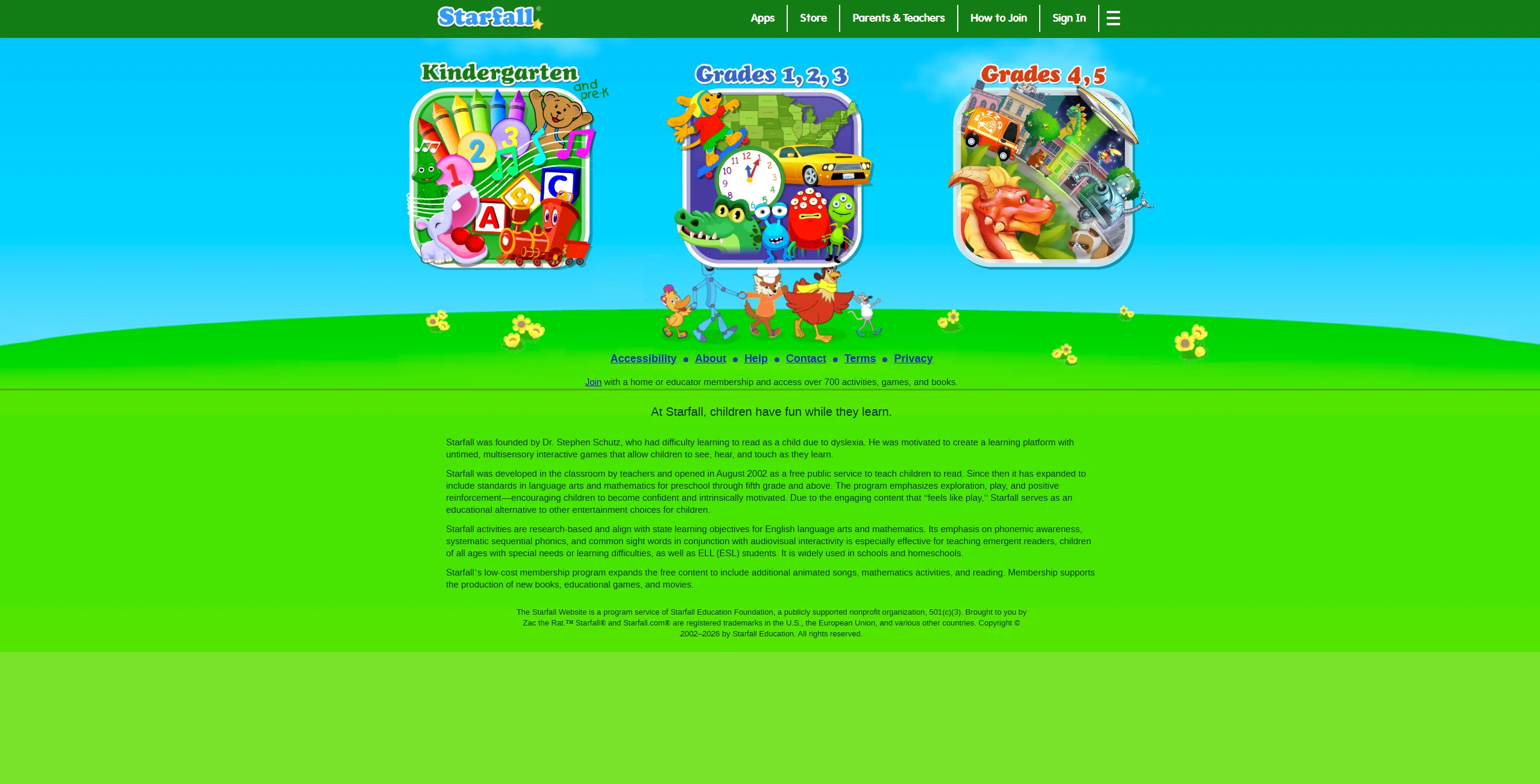
Starfall uses catchy songs and “clickable” animations. In a reading app session, a child might click a word to hear it sounded out phonetically (/c/-/a/-/t/) rather than just hearing the whole word. This subtle difference is vital in helping children understand the mechanics of language.
Price Comparison: Which App Offers the Best Value?
When we look at apps for kids, the “value” isn’t just the price tag; it’s the amount of quality screen time you get in exchange for your dollar.
| Pricing Breakdown | ABCmouse | Starfall |
| Free Version | Very limited (ABCmouse Basic) | A large portion of content is free |
| Monthly Cost | ~$14.99 | N/A (Yearly only via web) |
| Annual Cost | $59.95 (or $45 with discounts) | $35.00 |
| Trial Period | 30 Days | No trial (just use free version) |
Free Options vs Paid Subscriptions
Starfall offers substantial value without any cost. You can access the entire “ABCs” and “Learn to Read” sections for free on a web browser. ABCmouse has recently introduced a “Basic” free version, but it is much more restricted, often acting as a “teaser” to encourage a paid subscription.
Discounts and Trial Periods
ABCmouse provides frequent “70% off” or “$5 for 2 months” deals. It is highly recommended to wait for a sale before committing to a full year. Starfall’s pricing is consistently low and rarely fluctuates, as it is run by a non-profit foundation.
Choosing the Right App for Your Child: Key Considerations
Selecting the fit for your child depends on their personality. Does your child’s learning thrive on structure, or do they prefer to explore?
Age-Appropriate Content
Regarding a pre-k child, the simple interface of Starfall is often less overwhelming. For a child in 1st and 2nd grade who needs motivation to perform “extra” work after school, the reward-heavy abcmouse features might be more effective.
Screen Time and Parental Control Features
Both apps like these allow parents to monitor usage. ABCmouse has a more robust parent dashboard, showing exactly how much time was spent on math vs. reading. Starfall is more “low-tech,” which some parents find refreshing as it doesn’t require a complex account setup to access the free version.
Multi-Device Support
Both are available as ipad apps, Android apps, and via desktop browsers. ABCmouse provides a more seamless “sync” between devices—if a child earns tickets on the iPad, they are there when they log in on the computer.
Expert Opinions on Early Childhood Literacy Apps
Researchers suggest that the best educational apps are those that encourage “active” rather than “passive” learning.
A well-designed learning app should act as a scaffold, not a babysitter. Apps that use systematic phonics, like Starfall, align well with the ‘Science of Reading’ by emphasizing phonemic awareness.
Research-Based Approaches to Literacy
Children learn to read more effectively when digital tools are used alongside adult interaction. Both apps are effective learning tools, but they are most powerful when a parent sits with the child to discuss the stories.
Teacher and Parent Reviews
- Teachers often use Starfall on interactive whiteboards for group lessons because of its clear, focused animations.
- Parents often prefer abc mouse during long car rides or “independent work” time because the learning path keeps the child moving forward without getting stuck.
Final Verdict: Which App Is Right for Your Child?
Starfall: Strengths and Best Use Cases
- Best for: Children specifically struggling with phonics skills or those who are easily distracted by games.
- Budget: The clear winner for families seeking a low-cost or free reading app.
- Philosophy: Focuses on “The Joy of Reading” through simplicity.
ABCmouse: Strengths and Best Use Cases
- Best for: A child who needs a comprehensive curriculum covering all subjects.
- Engagement: Ideal for kids who are motivated by digital rewards and “leveling up.”
- Outcome: Provides the most thorough progress tracking and reporting for parents who want data on their child’s progress.