

Finding the right digital tools for your child’s early education can feel overwhelming for many parents. Parents typically want an educational app that supports the development of foundational skills such as literacy and math, rather than simply occupying a child’s time. Two of the biggest names you’ll encounter on the App Store are ABCmouse and Lingokids.
While both platforms target children ages 2 to 8, they offer vastly different learning environments. ABCmouse is known for its structured, school-style curriculum, while Lingokids champions a “Playlearning™” philosophy that prioritizes engagement and modern soft skills. This guide provides a neutral, in-depth comparison to help you determine which learning experience aligns best with your child’s personality and your family’s educational goals.
ABCmouse vs Lingokids: Quick Verdict
TLDR Snapshot
| Feature | ABCmouse | Lingokids |
| Core Philosophy | Structured “Learning Path” | Play-based “Playlearning™” |
| Academic Rigor | Structured and curriculum-based | Moderate (Vocabulary & Skills focus) |
| Engagement Style | Reward-based (tickets/virtual items) | Entertainment-led (songs/animations) |
| Best For | Families seeking structured academic practice | Reluctant learners and ESL students |
| Price (approx.) | $14.99/month; annual is $45 for first year, then renews at $59.99/year (plus tax) | $13.49/mo or $71.88 |
Who ABCmouse Fits Best
ABCmouse is the “classic” choice for parents who want a comprehensive curriculum. It is ideal for children who thrive on routine and a clear sense of progression. If you are looking for an app that feels like a virtual school—complete with a teacher avatar and a learning path to guide them through 10 levels of difficulty—this is likely the better fit. It’s particularly effective for kids in grades Pre-K through 2nd who need to practice specific state-aligned standards.
Who Lingokids Fits Best
Lingokids may be a better option for children who respond well to high-energy, game-based environments. It’s designed for kids who might resist “school-style” work but love music, colorful characters, and fast-paced learning activities. Because it emphasizes vocabulary and functional English, it’s also an exceptional choice for English Language Learners (ESL). The design resembles animated children’s programming, with learning elements integrated into interactive activities.
Key Differences at a Glance
The most significant difference lies in the learning environment. ABCmouse uses a map-based progression system in which children complete tasks sequentially to advance. Lingokids offers more freedom; while there is an adaptive learning path, the interface encourages exploration of games for kids and catchy songs.
ABC Mouse Overview as Structured Educational App for Kids
Learning Philosophy
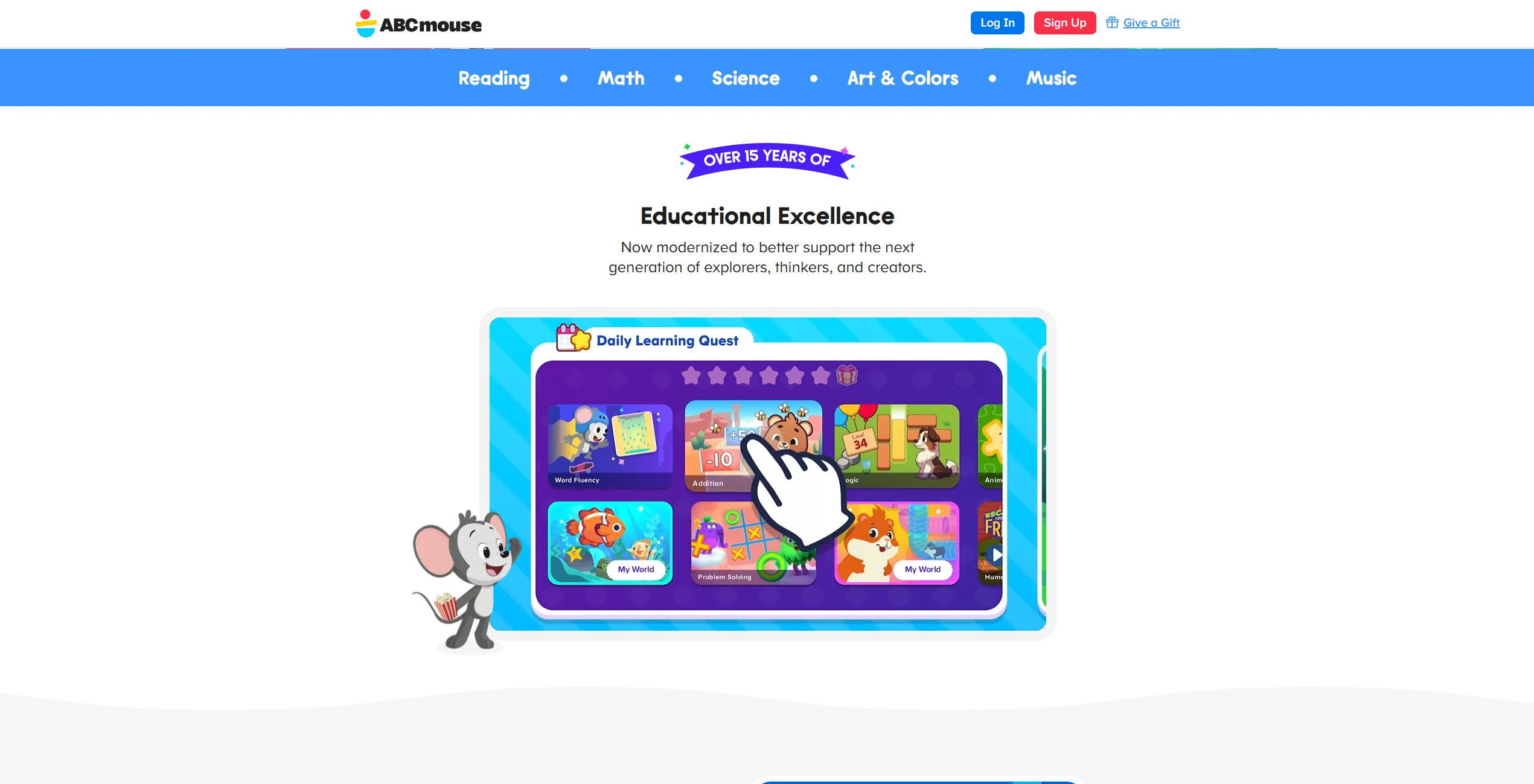
ABCmouse operates on the belief that a structured learning environment leads to better academic outcomes. Developed by Age of Learning, Inc., the app follows a “Step-by-Step Learning Path” that mimics a classroom syllabus. It is designed to be a high-quality supplement to—or even a foundation for—early childhood education.
Subjects and Curriculum Depth
ABCmouse offers a broad range of educational content, with over 13,000 activities.
- Literacy: Focuses heavily on phonics, sight words, and reading comprehension.
- Math Skills: Covers everything from basic counting to addition, subtraction, and measurement.
- Science & Social Studies: Includes interactive books and videos about the solar system, animals, and historical figures.
- Art & Music: Provides digital coloring books and music theory games.
User Experience and Design
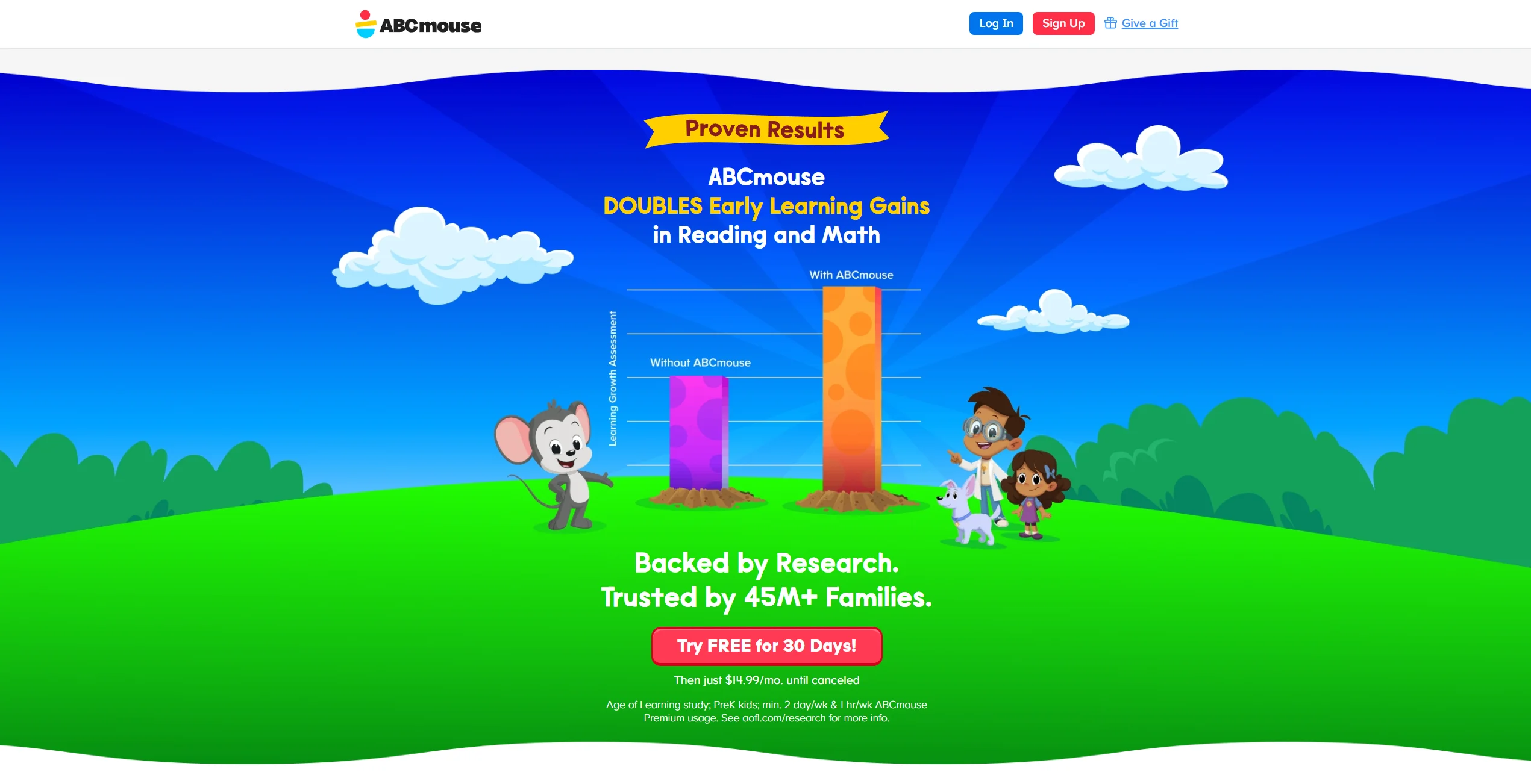
The interface of ABCmouse can feel a bit “busy” compared to modern, minimalist apps. However, the learning path is very easy for kids to follow once they get the hang of it. The reward system is a major draw: kids earn tickets for every activity they complete, which they can spend at a virtual zoo, farm, or to decorate their digital room.
Pros
- Comprehensive Curriculum: Covers all major school subjects in depth.
- Homeschool Support: Includes a massive library of 2,000+ printable worksheets.
- Clear Progression: The 10-level system is designed to provide gradual progression between grade levels.
Cons
- Dated Visuals: The animation style hasn’t changed much over the years.
- Potential Overload: 13,000 activities can be overwhelming for some toddlers.
- Subscription Management: Cancellation depends on where you subscribed (direct billing vs Apple App Store vs Google Play). If you cancel in the wrong place, it won’t stop billing—so follow the platform-specific steps.
Parent Feedback Themes
Parents often praise ABCmouse for its “guilt-free” screen time. Common reviews suggest it’s excellent for “filling in the gaps” left by traditional schooling. However, some parents note that the ticket system can sometimes make kids more interested in the “shopping” part of the app than the actual lessons.
Lingokids Overview as Play-Based Learning App for Kids
Learning Philosophy
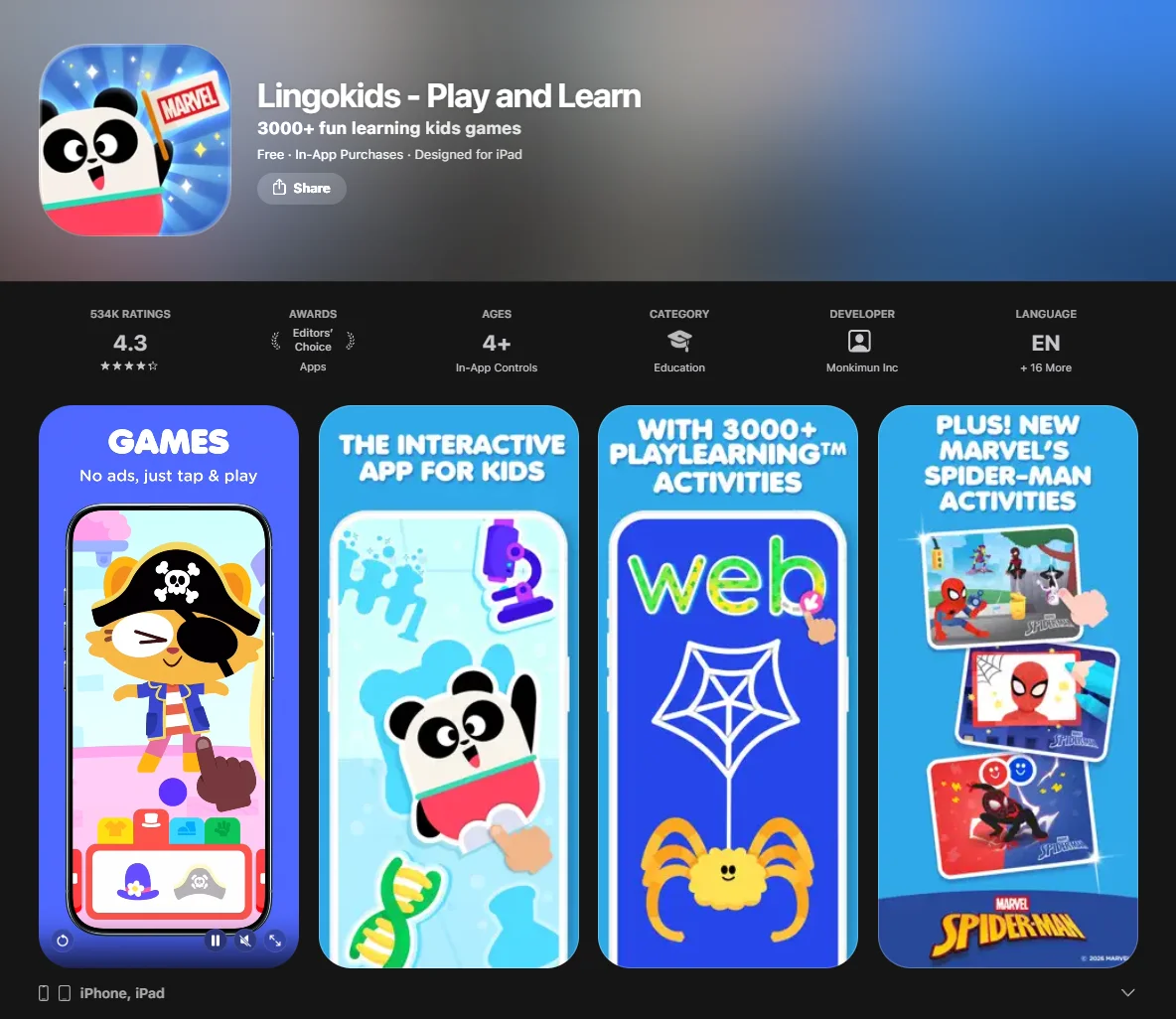
Lingokids uses a “Playlearning™” methodology. Their philosophy is that a love for learning is built when children are having fun. Instead of rigid levels, the app uses an adaptive learning engine that adjusts the difficulty of learning activities based on your child’s performance.
Skills and Activities
While it covers the basics like phonics and numbers, Lingokids also branches out into “21st-century skills.”
- Core Academics: Focused vocabulary building, basic math, and literacy.
- Soft Skills: Includes content on empathy, social-emotional learning, and global citizenship.
- Career-themed lessons, some developed in collaboration with organizations such as NASA, allow children to explore different professions.
User Experience and Engagement
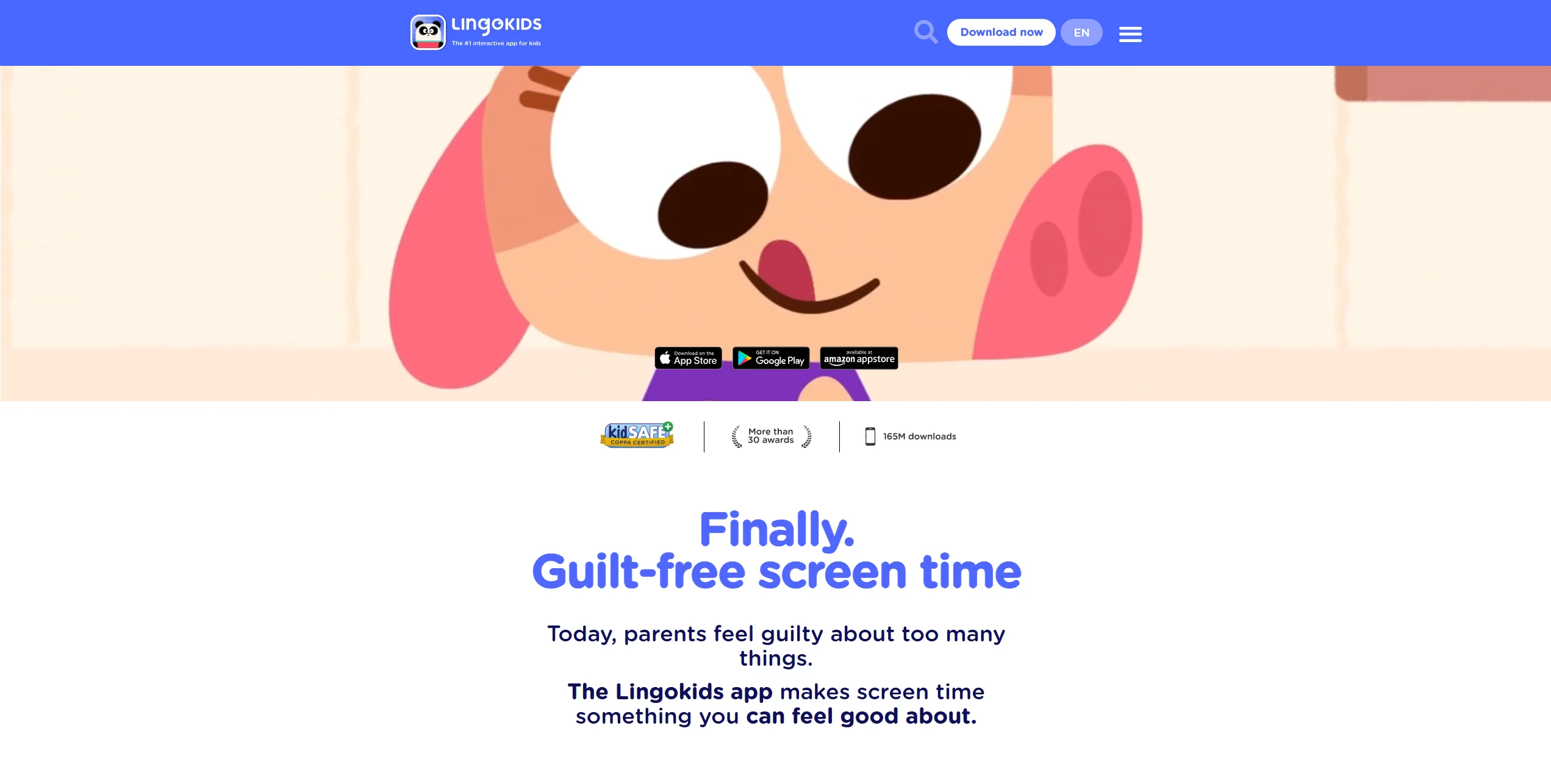
Lingokids is built with a “mobile-first” mindset. The graphics are vibrant, modern, and high-energy. The learning experience is broken down into micro-lessons—short bursts of activity that are perfect for younger children with shorter attention spans.
Pros
- Highly Engaging: The music and animations are top-tier and very catchy.
- Personalized Learning: The app adapts quickly to keep tasks from being too easy or too hard.
- Ease of Use: The interface is extremely easy for kids to navigate independently.
Cons
- Lighter Content: Not as academically rigorous as a full school curriculum.
- Premium Lock: Lingokids has a free tier (Lingokids Basic) with limited access and typically one child profile. Some Lingokids pages explicitly state ‘Only 3 activities a day’ for Basic.
Parent Feedback Themes
Many parents report that Lingokids is the only learning app that keeps their child’s attention. Reviews frequently mention that children start using new English vocabulary words after just a few sessions. Some parents do mention it can feel a bit “too much like a game” for older children.
Side-by-Side Comparison: Curriculum & Engagement
Structured Path vs. Flexible Exploration
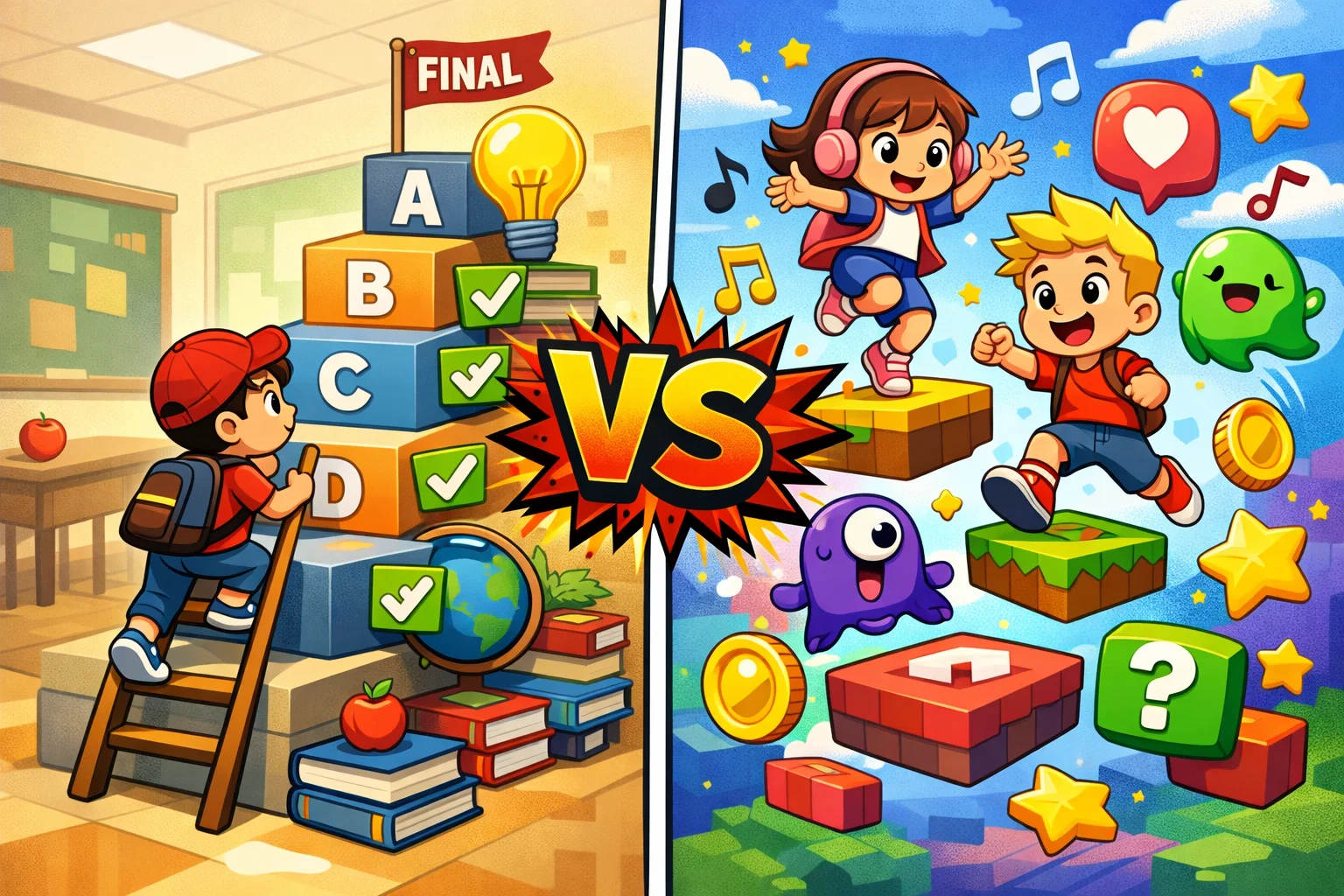
ABCmouse is a marathon; it’s a linear journey that spans years. Lingokids is more of a playground; while there is a path, the app is designed for kids to jump around between subjects like science, yoga, and reading based on their mood.
Academic Rigor vs. Play-Based Learning
If your goal is to ensure your child is ready for the Common Core standards in 1st grade, ABCmouse has the edge. If your goal is to foster curiosity and a love for learning without the pressure of a “classroom” feel, Lingokids takes the lead.
Math and Reading Approaches
| Feature | ABCmouse | Lingokids |
| Reading | Systematic phonics, levels 1-10, hundreds of digital books. | Interactive songs, sight word games, and vocabulary focus. |
| Math | Formal lessons on operations, geometry, and money. | Number recognition, patterns, and logic games. |
| Creativity | Dedicated Art Studio and music theory. | Dance-along videos, drawing, and storytelling. |
Age Suitability: 2 to 8 Years
Ages 2 to 3
At this age, some parents report that Lingokids is particularly engaging because of its “Toddler-safe” design and focus on songs and colors. ABCmouse does have a “Toddler Time” section, but the interface can sometimes be a bit tricky for tiny fingers.
Ages 4 to 5 (Pre-K & Kindergarten)
This is the “sweet spot” for both apps. ABCmouse excels at kindergarten readiness, while Lingokids is great for kids to practice social skills and basic vocabulary.
Ages 6 to 8 (Early Elementary)
ABCmouse provides more academically advanced content for older children within its target age range. By age 7 or 8, some children may find Lingokids a bit too “young” in its presentation style, though the newer career and STEM content helps bridge that gap.
Pricing Comparison and Subscription Value

| Plan | ABCmouse | Lingokids |
| Monthly | $14.99 | $13.49 |
| Annual | $45 first year (promo), then $59.99/year renewal (direct billing; taxes may apply) | Typically $71.88 billed yearly on Lingokids promo pages, but can display different yearly IAPs in app stores |
| Free Version | ABCmouse Basic Access is a true free tier (no payment/trial required) with up to 10 activities per day and one child profile | 3 activities/day |
| Free Trial | 30 days is offered on certain signup flows (commonly direct/website subscription). ABCmouse Basic has no trial because it’s simply free (10 activities/day) | 7 days |
| Child Profiles | Up to 3 | Up to 4 |
ABCmouse offers a significantly lower annual price if you pay for a year up front. This may make it a cost-effective option for families planning long-term use. Lingokids is more expensive but often runs promotions on their website.
Safety, Ads, and Parental Controls
Both companies state that their platforms are designed to comply with COPPA regulations. Lingokids states it does not include pop-up ads/advertising directed at children and is kidSAFE® certified/member; ABCmouse materials describe COPPA safe-harbor certification via kidSAFE and highlight no third-party ads/popups.
- ABCmouse: Features a robust “Parent Section” where you can see exactly which lessons your child has completed and how they performed on assessments.
- Lingokids: Offers a “Parental Dashboard” that provides weekly progress reports and suggestions for offline activities to reinforce what they learned.
Real Parent Experience: Screen Time Balance
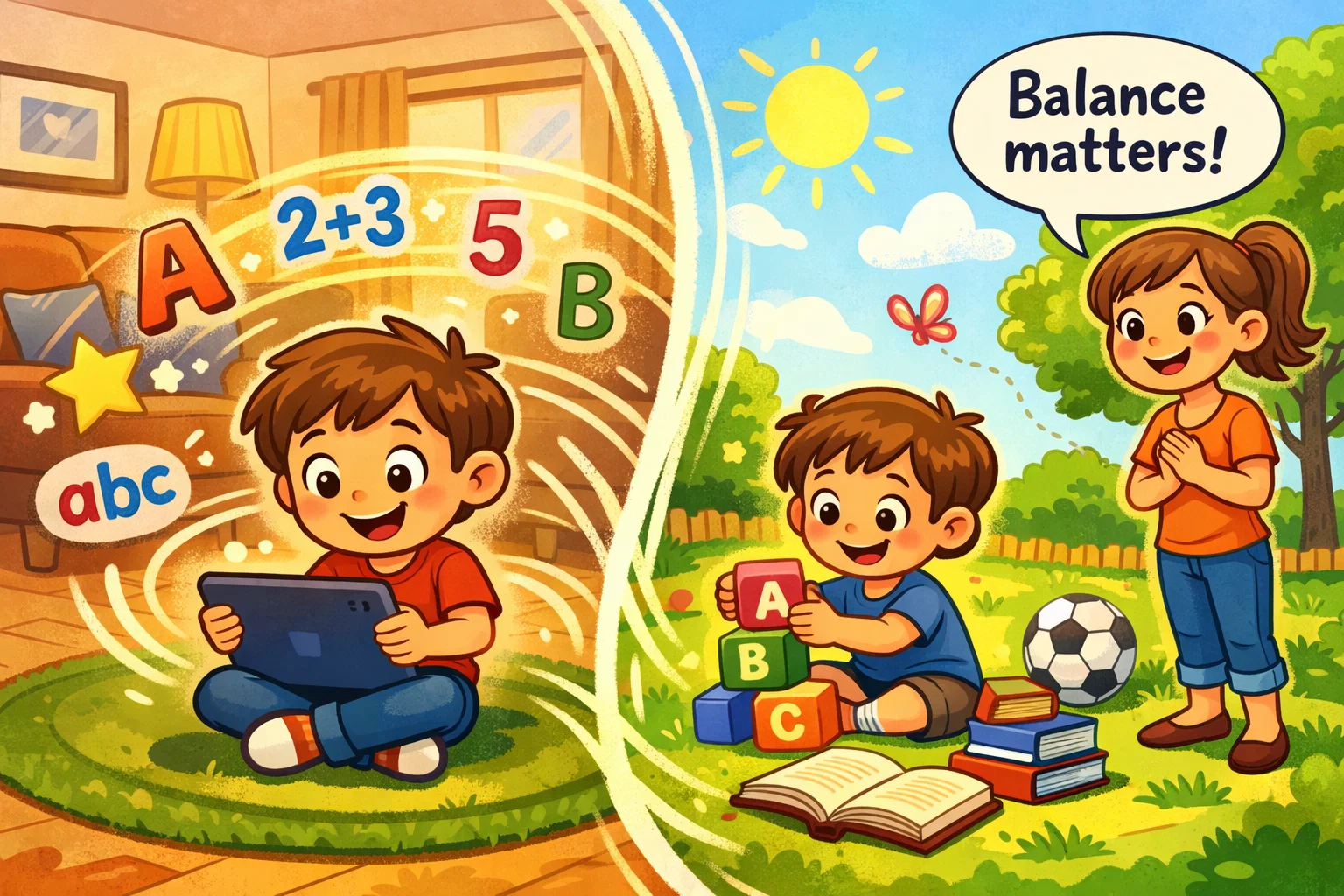
Some child development research suggests that the quality of screen time may be more important than the total duration.
Many parents choose to combine both apps. For example, using ABCmouse for 15 minutes of “homework” in the morning and allowing Lingokids for 15 minutes of “fun learning” in the afternoon.
How to Choose the Right Learning App for Your Child
Decision Framework
- What is your child’s personality? (Loves structure = ABCmouse; Loves music/variety = Lingokids).
- What are your goals? (Academic catch-up = ABCmouse; Engagement/Interest = Lingokids).
- What is your budget? (ABCmouse is generally cheaper for an annual commitment).
If Priority Is Structured Curriculum
Choose ABCmouse. It is the most comprehensive learning app designed to follow a school-like progression.
If Engagement Is the Main Challenge
Choose Lingokids. It is arguably the best educational app for getting a “reluctant learner” excited about picking up a device for education.
Final Thoughts: Which Learning App Delivers Better Value?
Both ABCmouse and Lingokids are top educational apps for kids, but they serve different masters. ABCmouse offers a comprehensive range of educational content that can serve as a primary supplemental resource. Lingokids is a visually dynamic platform designed to make learning fun and accessible through high-quality animation and music.
Ultimately, the “best” app is the one your child will actually use. Most families find that starting with a free trial of both allows them to see which interface resonates more with their child’s unique learning experience.