

Choosing the right educational tool for your child can feel like an important and sometimes overwhelming decision. As a parent or educator, you aren’t just looking for a “digital babysitter”; you are looking for a platform that fosters literacy, math skills, and a genuine love for discovery. In early childhood education, two platforms are frequently mentioned: ABCmouse and Khan Academy Kids.
This guide provides a neutral, side-by-side review of both platforms to help you determine which one aligns with your family’s unique needs. We will explore how these apps suit children of different ages, their specific learning goals, and how they fit into varying budgets. Whether you are a homeschooling parent or looking for a high-quality supplement to the classroom, this comparison covers everything from comprehensive curriculum details to real-world parent feedback and safety.
Quick Comparison: ABCmouse vs Khan Academy
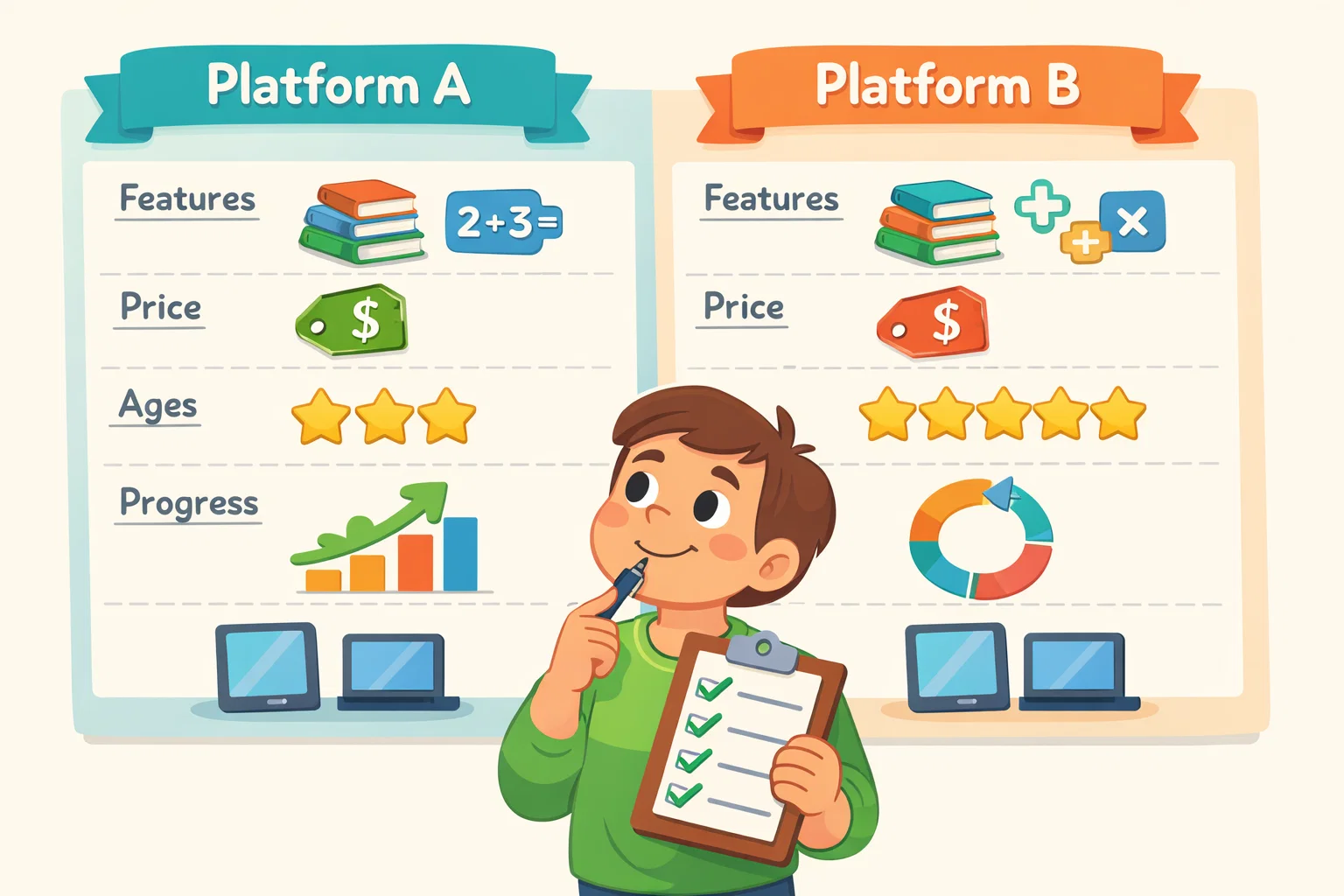
At a glance, both apps are well-known options in the early learning space, yet they operate on fundamentally different philosophies. ABCmouse is a subscription-based “digital school” that offers a step-by-step learning path, while Khan Academy Kids is 100% free—no ads, no subscriptions. The main Khan Academy platform is also free and accessible via web browsers on laptops and desktops.
| Feature | ABCmouse | Khan Academy Kids |
| Price | Paid subscription ($14.99/month on the official monthly plan; promos may vary) | Completely Free (Non-profit) |
| Age Range | 2 to 8 years old | 2 to 8 years old |
| Model | Linear, structured curriculum | Mastery-based, open library |
| Vibe | High energy, colorful, gamified | Calm, character-driven, academic |
| Subjects | Reading, Math, Science, Arts, Social Studies | Reading, Math, Logic, SEL |
| Device Support | iOS, Android, Amazon (Fire/Kindle Fire) + web (desktop/laptop) | iOS, Android, Chromebooks (with Google Play Store), Amazon |
Core Positioning and Learning Philosophy
ABCmouse positions itself as a guided journey. It uses a learning path to lead children through thousands of activities in a specific order, ensuring they don’t miss foundational steps. Its philosophy relies heavily on gamification, using a ticket-and-reward system to keep children motivated.
Khan Academy Kids focuses on mastery-based learning. While it does have an adaptive learning path, it encourages independent exploration through its library. Its philosophy is rooted in the belief that high-quality education should be a “free human right,” prioritizing academic rigor and social-emotional learning (SEL) over flashy reward mechanics.
Best Fit by Learning Goal
- Reading Foundation: If your child needs a rigorous, repetitive phonics-based approach with a clear sequence, ABCmouse’s reading program is highly structured.
- Math Reinforcement: For math practice that progresses from basic counting to more advanced operations, Khan Academy Kids’ adaptive system is effective at identifying and filling gaps.
- Independent Exploration: Khan Academy Kids is designed for the young learner to navigate freely, making it great for curious minds.
- Homeschool Support: ABCmouse provides more “traditional” school subjects like social studies and health, making it a broader supplemental curriculum.
Platform Access and Devices
Both apps are highly accessible on tablets and smartphones. However, ABCmouse has a robust web-based version that works well on laptops/desktops, which some parents prefer for a “desk-like” learning environment. Khan Academy Kids is primarily an app experience (iOS/Android) and is supported on Chromebooks with Google Play Store. If you need a full web experience on laptops/desktops, that’s typically the main Khan Academy website (not the Kids app).
What is ABCmouse?
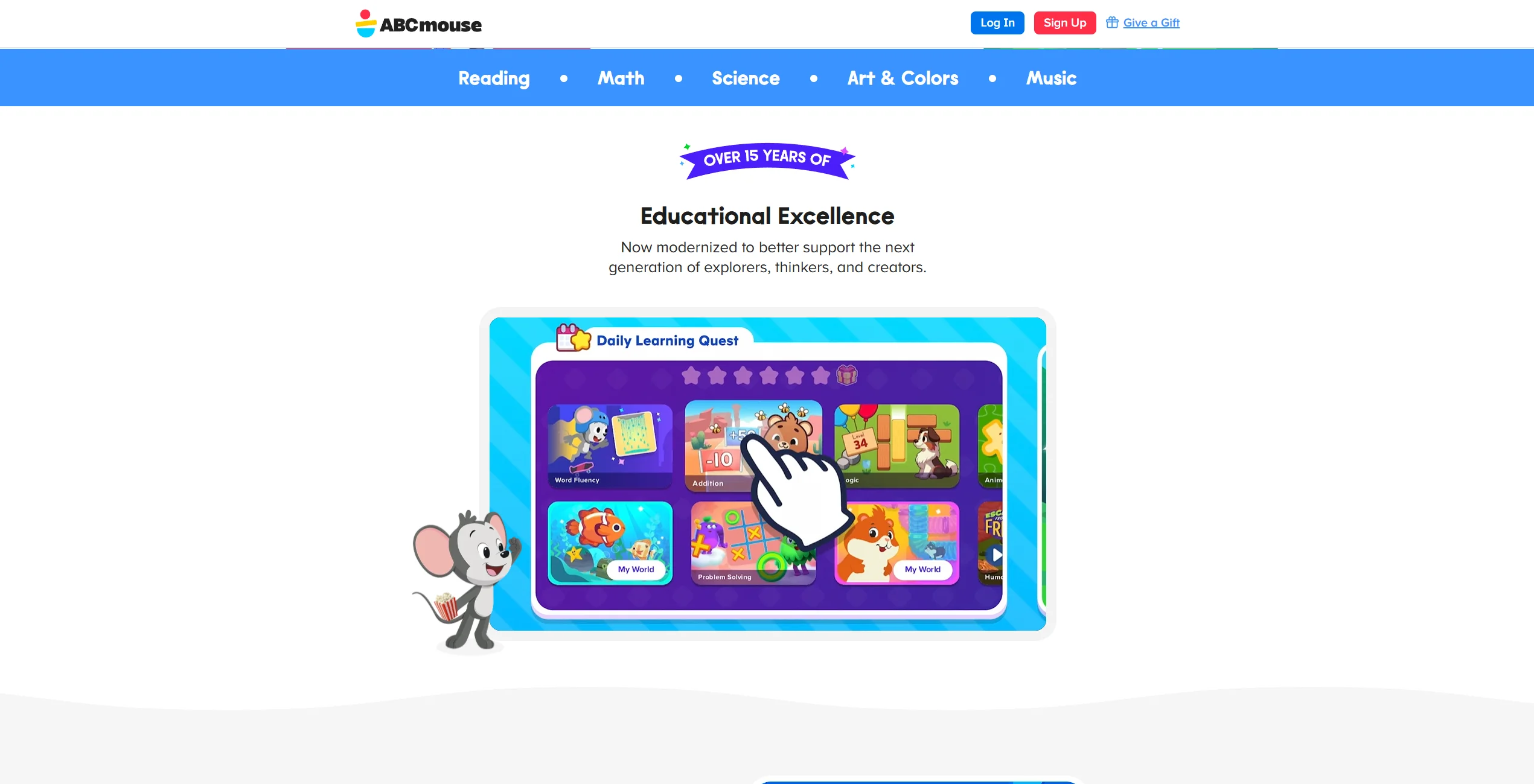
ABCmouse.com Early Learning Academy is a comprehensive digital education program produced by Age of Learning, Inc. It is one of the most well-known learning apps for kids on the market, designed to simulate the experience of a classroom within an app.
Curriculum Focus and Age Range
The platform is specifically designed for children aged 2-8. The content is divided into levels that correspond to Preschool, Pre-K, Kindergarten, 1st Grade, and 2nd Grade. It covers a massive breadth of subjects, including early literacy, basic math, science, and even music.
How ABCmouse Works
The core feature of the app is a step-by-step learning path that guides the child through lessons. As they complete lessons, they move along a colorful map.
- Tickets: Completing an activity earns the learner tickets.
- Avatar & Room: Tickets can be “spent” on virtual pets, clothes for their avatar, or items for a digital room.
- Interactive Games: The activities include animation, math games, and digital books.
Engagement and Teaching Style
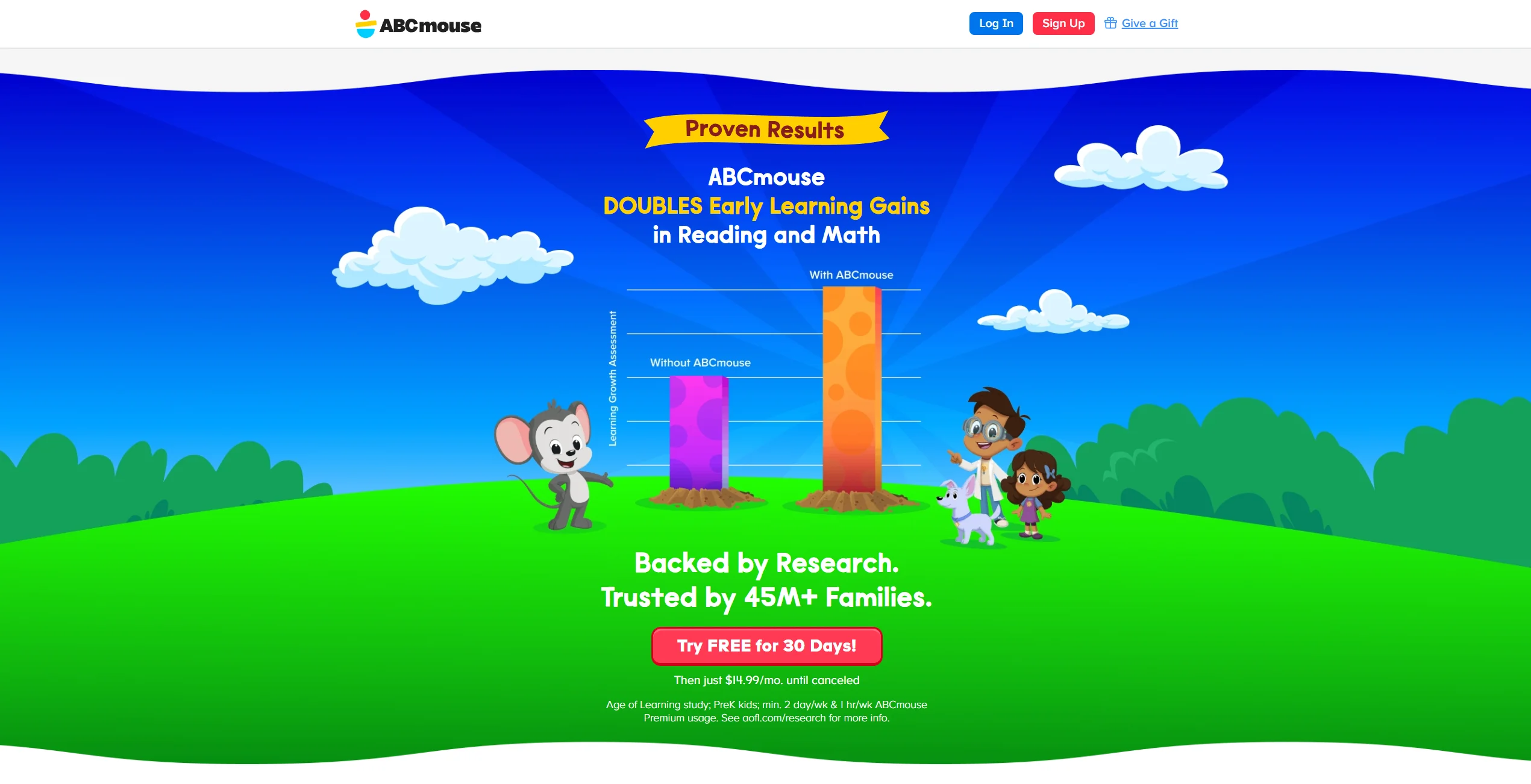
The teaching style is very energetic. It resembles a brightly animated children’s program, with interactive activities that require the child to tap, drag, and drop. For young kids who are easily bored, this high level of gamification is a major draw.
Personalization and Reports
Parents have access to a detailed dashboard. You can see how many minutes your child spent on reading and math, which skills they have mastered, and where they might need more practice exercises. You can also manually adjust the child’s level if the initial placement feels too easy or too hard.
Strengths and Weaknesses
- Pros: Extremely comprehensive; very engaging for children who enjoy rewards; covers “extra” subjects like art and music.
- Cons: The monthly subscription can add up; the interface can feel “busy” or overwhelming to some; the reward system can sometimes overshadow the actual learning.
What is Khan Academy?
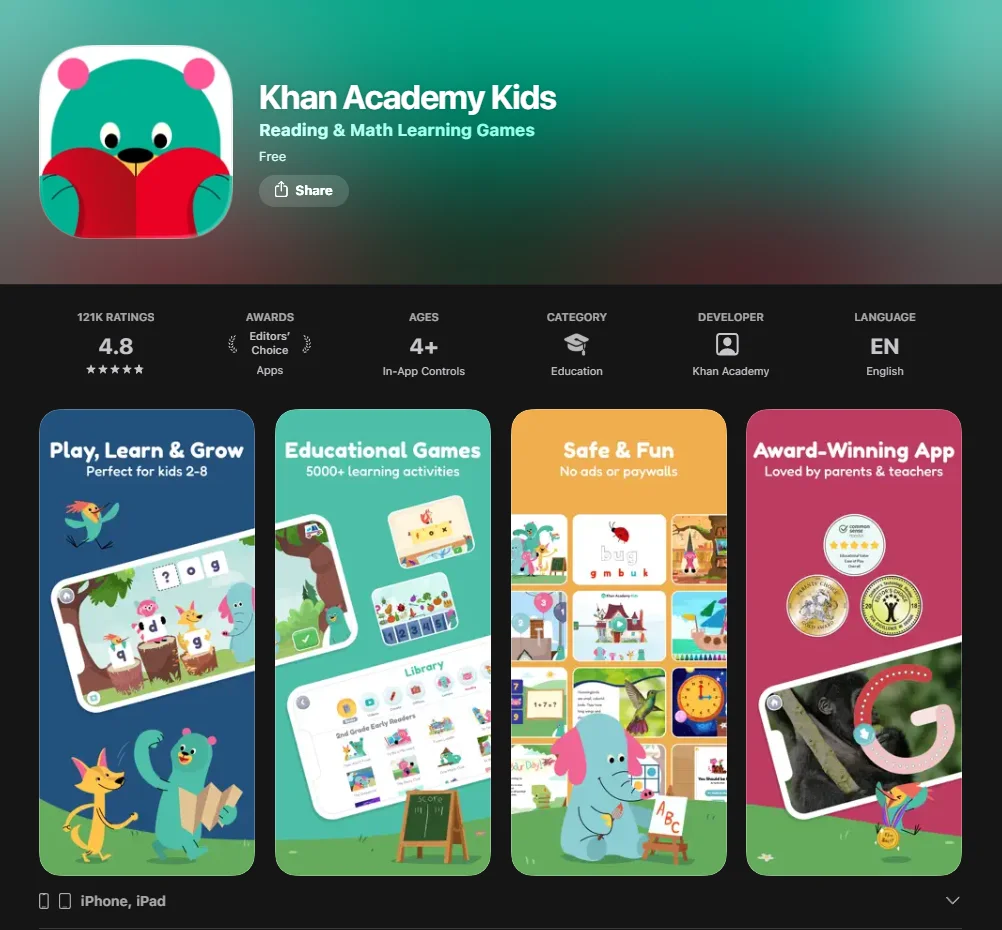
Khan Academy is a global nonprofit educational organization. While the main site is famous for high school and college prep, the Khan Academy Kids app is a standalone experience tailored specifically for the youngest students.
Curriculum Focus and Age Range
The Khan Academy Kids app targets children aged 2 to 8. It focuses heavily on reading and math skills, but it also includes a significant amount of social-emotional learning, teaching kids about empathy, sharing, and feelings.
How Khan Academy Works
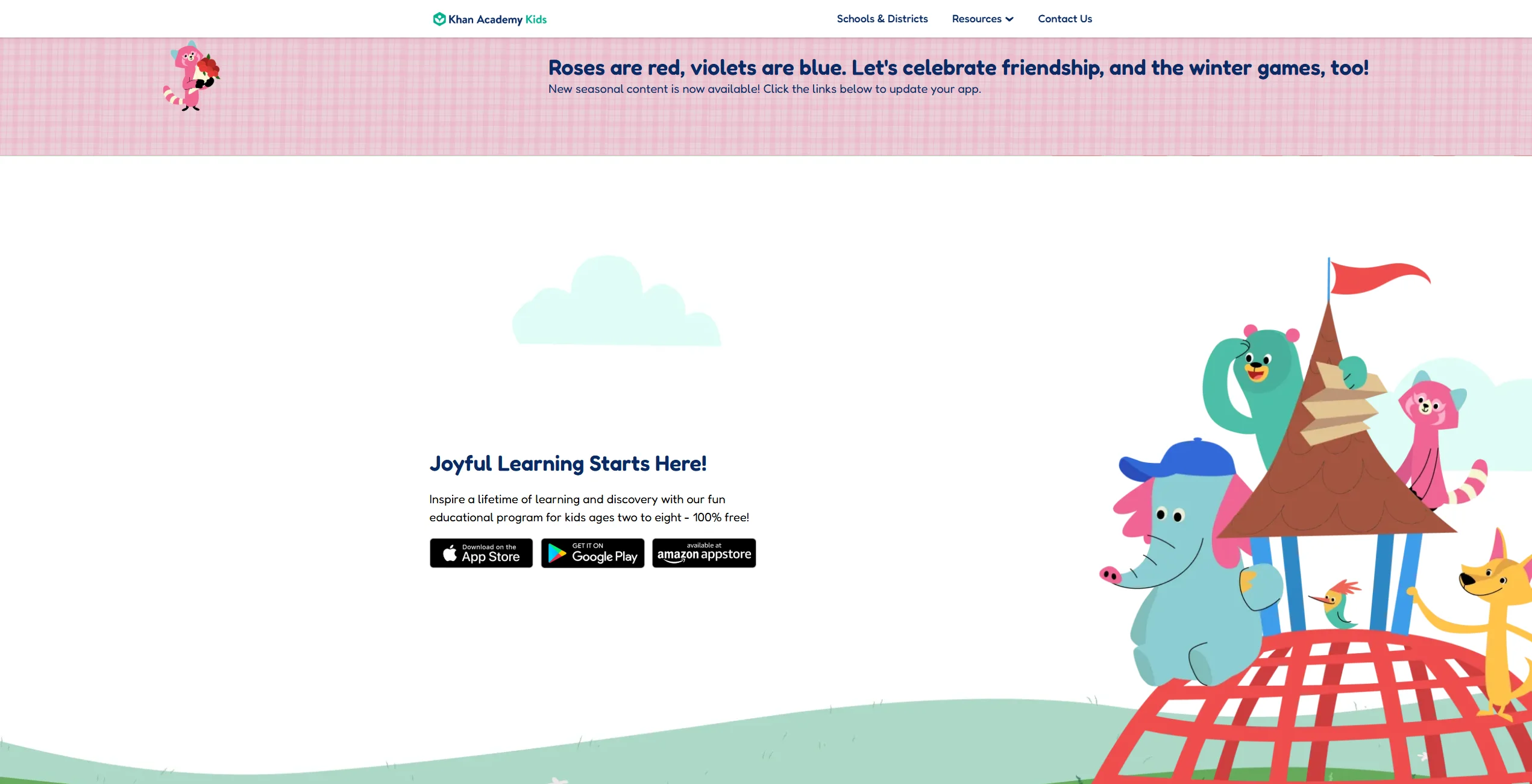
Unlike the linear path of ABCmouse, Khan Academy Kids uses a “Learning Path” button (the big green play button) that serves up adaptive learning content based on what the child has already done.
- Kodi the Bear: The app features a cast of original characters like Kodi the Bear and Ollo the Elephant who act as guides.
- The Library: At any time, a child can enter the library to choose specific math and reading activities, videos, or books.
Engagement and Teaching Style
The tone is noticeably calmer. While there are interactive games, the focus is on the content rather than the “prizes.” It includes instructional videos that explain concepts clearly, followed by practice exercises.
Personalization and Reports
The app is adaptive, meaning if a child struggles with letter recognition, it will provide more opportunities to practice that specific skill. Khan Academy Kids includes progress reporting/monitoring features (implementation differs for home vs classroom use). Parents access settings via ‘For Parents’ / ‘Grown-Ups Only’.
Strengths and Weaknesses
- Pros: Completely free with no ads or subscriptions; academically rigorous; excellent for building early reading and logic skills.
- Cons: Less “exciting” for kids who are used to high-octane gaming; doesn’t cover social studies or art as deeply as ABCmouse.
Curriculum Depth and Subject Breadth

When comparing ABCmouse and Khan Academy Kids, the “depth” often depends on which subject you are prioritizing.
Reading and Literacy Development
ABCmouse uses a very traditional phonics-first approach. It’s excellent for early literacy because it breaks down every sound and letter in a strict sequence. Khan Academy Kids also has a fantastic reading program that includes a huge library of “Read to Me” books and early reading exercises that focus on comprehension and vocabulary.
Math Progression and Skill Levels
Khan Academy Kids covers early math for preschool through early elementary (pre-K–2). As kids grow, they can transition to the main Khan Academy platform for later grades and advanced topics. ABCmouse math content is designed primarily for preschool through early elementary (up to grade 2).
Science, Arts, and Enrichment Content
This is where ABCmouse might have the edge. It includes a “Zoo,” a “Farm,” and an “Art Studio.” It offers a variety of subjects that go beyond the “big two” of reading and math, including health and geography.
Engagement, Motivation, and Screen Experience
Gamification Elements
The gamified nature of ABCmouse is its defining feature. Children earn tickets for everything. For some, this is a “game-changer” that keeps them coming back. For others, they might spend 5 minutes learning and 20 minutes “shopping” for their virtual avatar. Khan Academy uses a “collection” system where kids earn hats or toys for their characters, but it is much more subtle.
Attention Span and Pacing
The American Academy of Pediatrics emphasizes quality, context, and family routines rather than a universal strict hourly limit for all kids; families set boundaries that fit sleep, play, and co-use.
- Sessions in ABCmouse may extend longer because the structured path encourages children to complete additional activities.
- Khan Academy is easier to stop and start, with shorter, discrete activities that suit younger learners.
Pricing Comparison and Value
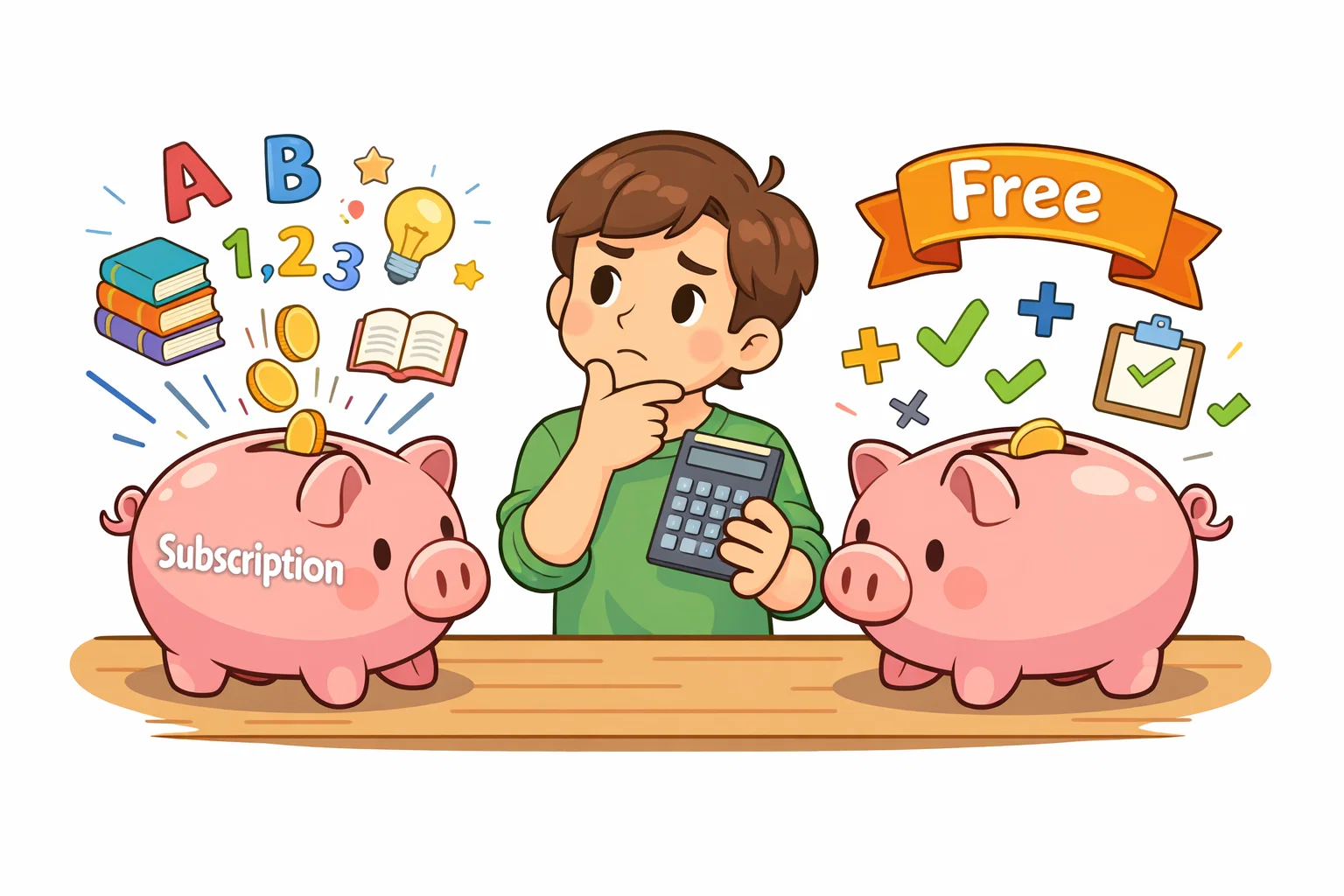
| Platform | Cost | Trial |
| ABCmouse | $14.99/month or approximately $45/year during promotional periods (pricing may vary) | 30-day free trial is offered when subscribing to the monthly membership |
| Khan Academy Kids | Available for Free | Free forever; no ads, no subscriptions |
Is ABCmouse Worth the Subscription?
For families on a budget, the cost of ABCmouse is a real consideration. However, many parents find it worth it because it acts as a comprehensive curriculum. It’s like buying a digital textbook, workbook, and toy set all in one.
Is Khan Academy Truly Free?
Yes. Khan Academy provides its entire library for free because they are a 501(c)(3) nonprofit. There are no hidden “pro” versions or paywalls.
Safety, Privacy, and Ads
Both apps are high-quality and safe. Both platforms state that they are designed to comply with COPPA and prioritize children’s privacy, according to their published policies.
- Advertising: Neither app shows third-party ads. You won’t find commercials for toys or other apps here.
- Parental Controls: ABCmouse includes parent settings/parent section for managing profiles and settings. Khan Academy Kids has a ‘Grown-Ups Only’ parental area; for hard time limits they often recommend using device-level controls (e.g., Guided Access/Screen Time).
Parent Reviews and Real-World Feedback

When comparing ABCmouse vs Khan Academy Kids, real-world parent feedback tends to focus on structure, engagement style, pricing, and overall learning experience rather than isolated features.
Common Strengths of ABCmouse
Clear Structure and Learning Path
Many parents appreciate that ABCmouse provides a predefined, step-by-step curriculum. The guided learning path reduces the need to plan lessons manually, which can be especially helpful for busy families or homeschooling parents who want a ready-made progression.
High Engagement Through Gamification
The ticket system, virtual rewards, avatars, and digital rooms make learning feel like a game. For children who are motivated by visual rewards and collectibles, this system can significantly increase participation and daily usage.
Broad Subject Coverage
Parents often note that ABCmouse goes beyond reading and math by including science, art, music, health, and social studies, making it feel closer to a full digital curriculum rather than a single-subject app.
Common Concerns About ABCmouse
Subscription Cost
While many families find value in the program, the recurring monthly fee can be a deciding factor. Budget-conscious parents sometimes question whether they are fully using all available features.
Interface Density
Some users feel the interface contains many visual elements, animations, and reward mechanics. For certain children, especially those who are easily overstimulated, this can feel overwhelming.
Common Strengths of Khan Academy Kids
Strong Academic Foundation
Parents frequently highlight the quality of early literacy and math content. The progression in phonics, number sense, and logic activities is often described as thoughtful and well-designed.
Calm, Minimalist Design
Khan Academy Kids emphasizes focus and clarity. The interface is generally considered clean, with fewer distractions and less emphasis on external rewards.
Completely Free Access
The fact that the app is free, with no ads or subscriptions, is consistently viewed as a major advantage. Families can use it long-term without financial commitment.
Common Concerns About Khan Academy Kids
Lower Gamification Level
Compared to more game-like platforms, the reward system is subtle. Some children who are accustomed to highly animated, fast-paced apps may initially find the experience less exciting.
Narrower Subject Breadth
While reading and math are strong, parents seeking extensive coverage of subjects like social studies, art, or science enrichment may find the selection more limited than in subscription-based platforms.
Overall Pattern in Parent Feedback
In practice, parent satisfaction often depends on the child’s personality:
- Children who thrive on structured progression and visible rewards often respond well to ABCmouse.
- Children who prefer calmer, more focused academic activities often engage more consistently with Khan Academy Kids.
For many families, the decision is less about which app is “better” and more about which teaching style aligns with their child’s motivation and attention span.
How to Choose the Best App for Your Child
There is no universally “best” app; the right choice depends on your child’s needs and learning style.
- Match to Age & Attention: For a 3-year-old just starting with letter recognition, the character-driven stories of Khan Academy are wonderful. For a 6-year-old who needs a structured reading program, ABCmouse’s levels are very effective.
- Budget Considerations: If cost is a primary concern, Khan Academy Kids offers a fully free alternative. It offers 90% of what paid apps offer at zero cost.
- Combine Both: Many families use Khan Academy for its logic and math while keeping ABCmouse for its science and social studies.
Quick Practical Test
Try this: Download the Khan Academy Kids app (it’s free, so there’s no risk) and sign up for the ABCmouse free trial. Observe your child for 20 minutes with each. Do they gravitate toward the “tickets,” or do they seem content with the “lessons”? Your child’s needs will be immediately apparent.