

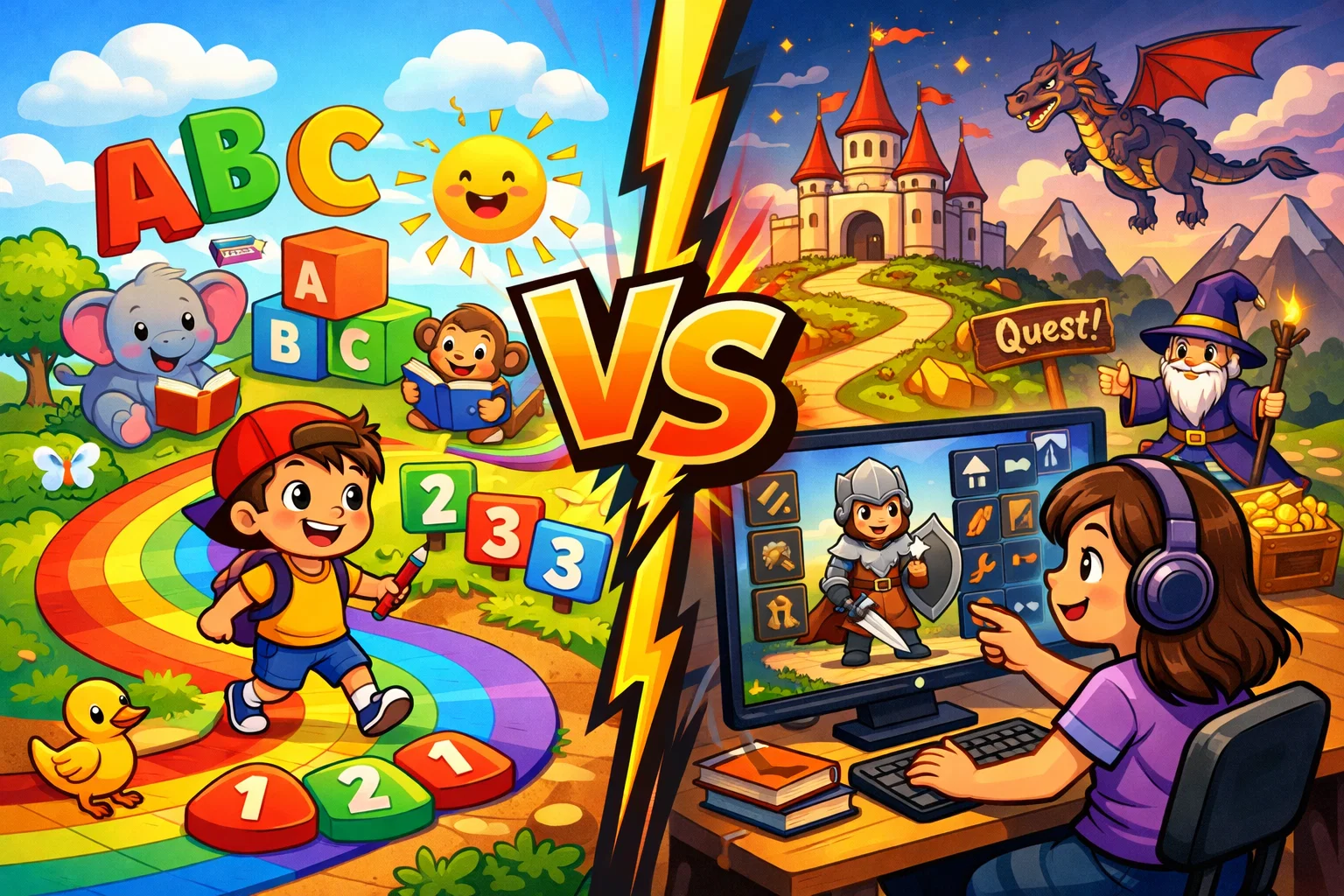
Choosing the right online learning platform can feel like navigating a maze, especially with the high-quality options available today from the Age of Learning. ABCmouse and Adventure Academy App are two well-known platforms from the same company, often compared by parents and educators when deciding which one better fits a child’s developmental stage. Although both are developed by Age of Learning, they are designed for different stages of a child’s education, offering distinct approaches to math and reading, science, and social studies.
This guide provides a neutral, comprehensive comparison of both platforms. We will dive into the nuances of their curriculum, user experience, and safety features to help you determine which learning app aligns with your child’s age and academic needs. Whether you are looking for a supplemental resource to support traditional schooling or a robust tool for homeschooling, understanding how these platforms function in 2026 is essential for making an informed investment in your child’s future.
What To Look For When Choosing Between Learning Apps
The decision between these two platforms is less about which one is “better” overall and more about which aligns with your child’s current needs. A kids learning approach evolves significantly as they transition from the foundational years of preschool into the more autonomous years of middle school.
When evaluating these options, consider your child’s level of independence, interest in educational games, and your goals for learning at home. Some children thrive on a rigid, guided path, while older kids often require the agency to explore a virtual world to remain engaged.
Age Range Expectations
Developmentally, a four-year-old and a ten-year-old occupy different worlds. Preschoolers and early elementary students (ages 2–8) generally need high levels of repetition, clear audio instructions, and predictable interfaces. As children enter the 8-13 age bracket, their knowledge and skills demand more complex storytelling and social interaction. ABCmouse caters to the former, while Adventure Academy is specifically built for children ages 8–13.
Structured Curriculum Vs Exploratory Learning
ABCmouse uses a Step-by-Step Learning Path built as a structured sequence across 10 learning levels; parents can adjust a child’s level. Conversely, Adventure Academy uses a quest-based system. While it follows a curriculum, it feels more like an open-world multiplayer online game, allowing kids to explore different zones and choose their own learning tasks.
Independent Learning Vs Social Interaction
For younger children, digital learning platforms are typically designed as solo experiences for safety reasons. ABCmouse is a closed environment where the child interacts only with the content. Adventure Academy introduces a multiplayer online component. It allows kids to play in a shared space, fostering a sense of community that is often a major draw for older kids who love video games.
Budget And Subscription Considerations
Both platforms are premium services. While they offer a free trial period, the long-term cost is a factor for many families. It is important to evaluate whether the depth of content justifies the subscription cost for your household, especially if you have multiple children in different age groups.
ABCmouse Overview: Platform, Content, and Learning Model
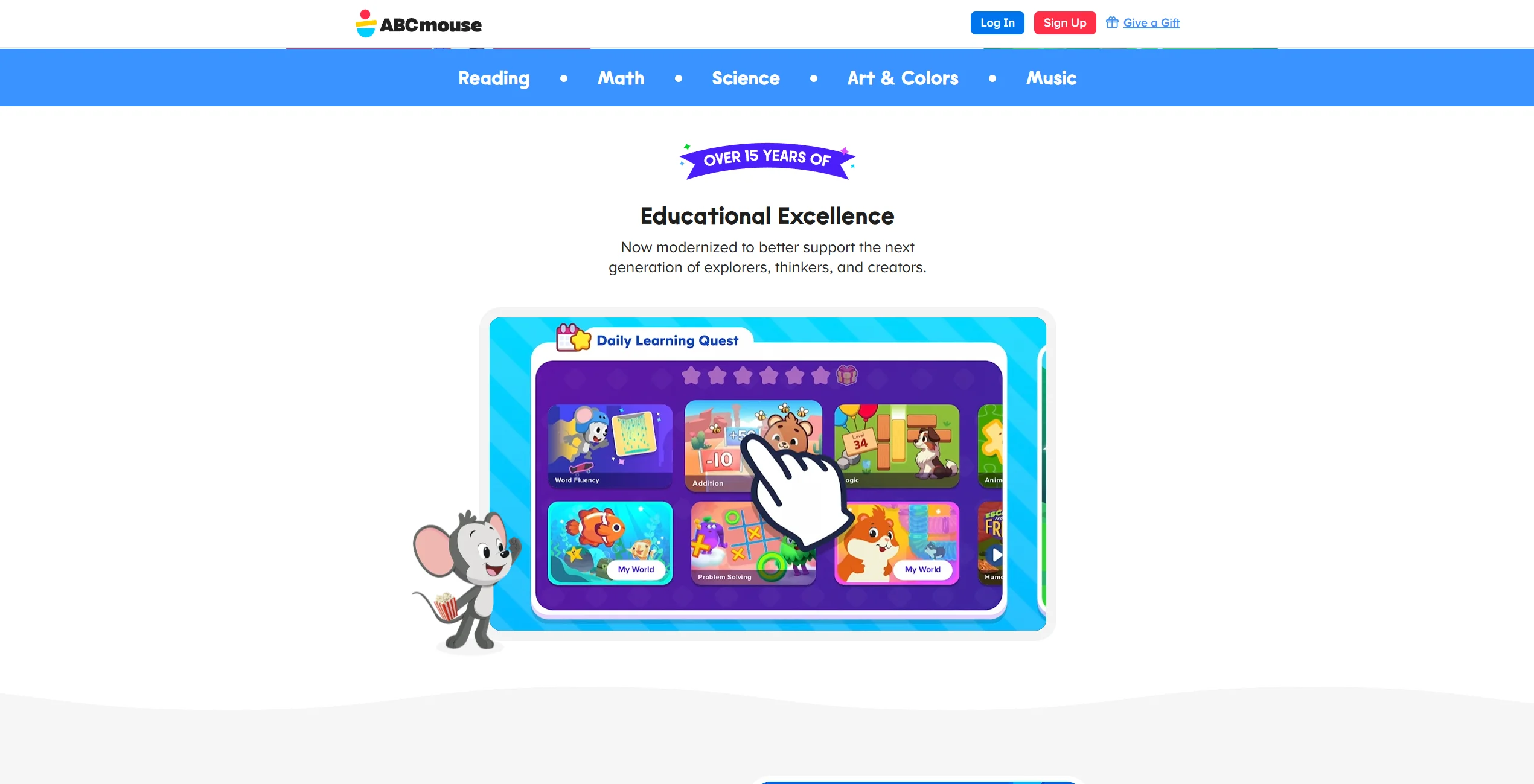
ABCmouse is widely recognized as a leading platform in early childhood digital education. It is designed to be a full learning program for children ages 2 through 8, covering the transition from toddlerhood through second grade.
Learning Approach And Curriculum Path
The hallmark of ABCmouse is its structured progression. The “Step-by-Step Learning Path” guides children through over 13,000 individual learning activities. As children complete one activity, they are automatically ushered to the next, which helps maintain momentum and ensures they cover all necessary math and reading milestones.
Subjects And Skill Development
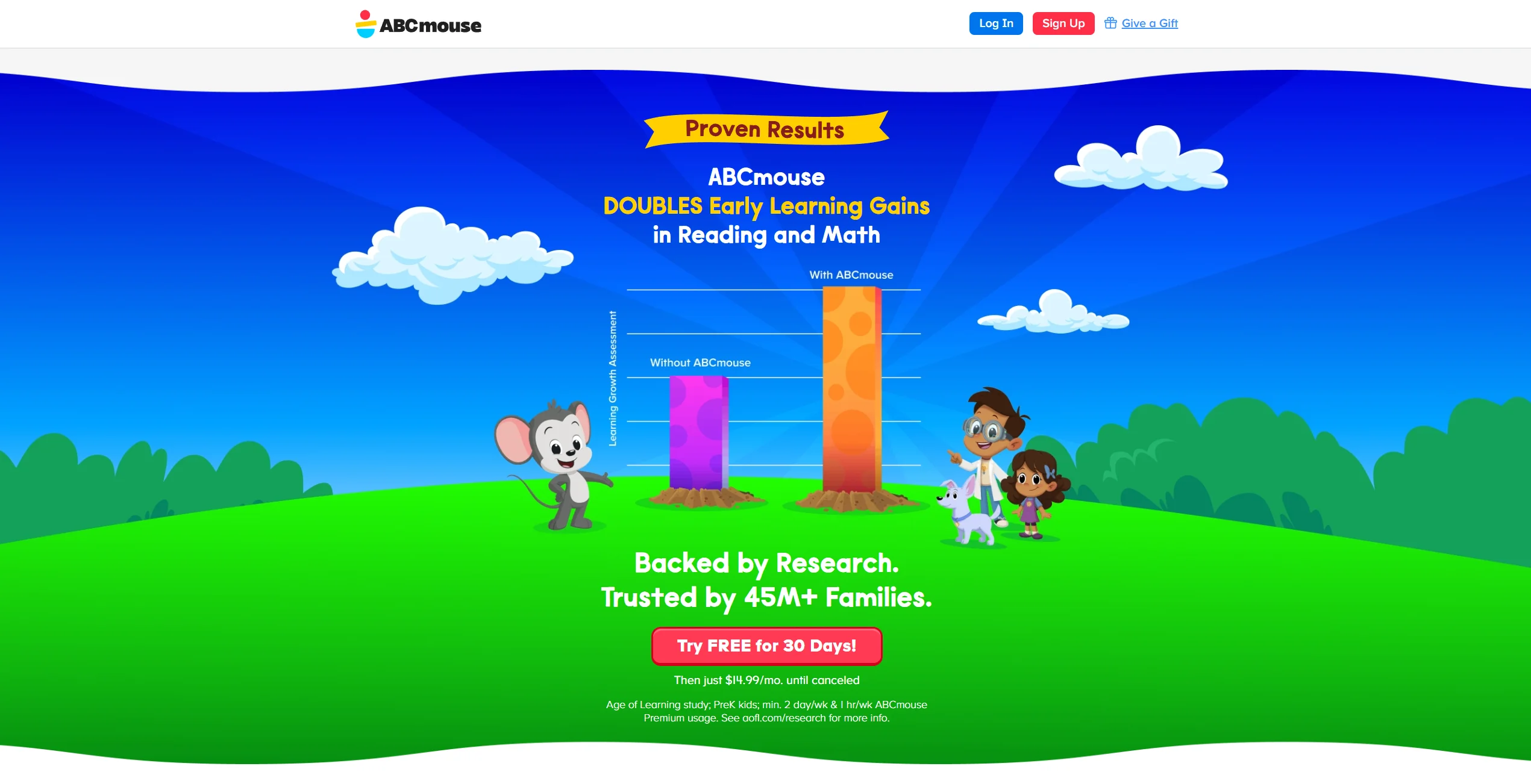
The platform covers a wide variety of subjects, including:
- Reading and Language Arts: Phonics, sentence structure, and vocabulary.
- Math: Counting, addition/subtraction, and basic geometry.
- Science & Social Studies: Life cycles, map skills, and community.
- Art & Music: Coloring activities and songs that reinforce academic concepts.
User Experience For Younger Children
The interface is intentionally bright, colorful, and highly vocal. Every button and instruction is read aloud, which is a fun way for non-readers to navigate the app without constant parental intervention. This helps foster independence, which is important for young learners.
Parent Dashboard And Progress Tracking
Parents can access a detailed dashboard to see which learning tasks their child has completed. This online program provides easy-to-read graphs that track progress across different subjects, making it simple to identify if a child is struggling with a specific concept like phonics or subtraction.
Adventure Academy Overview: Platform, Content, and Learning Model
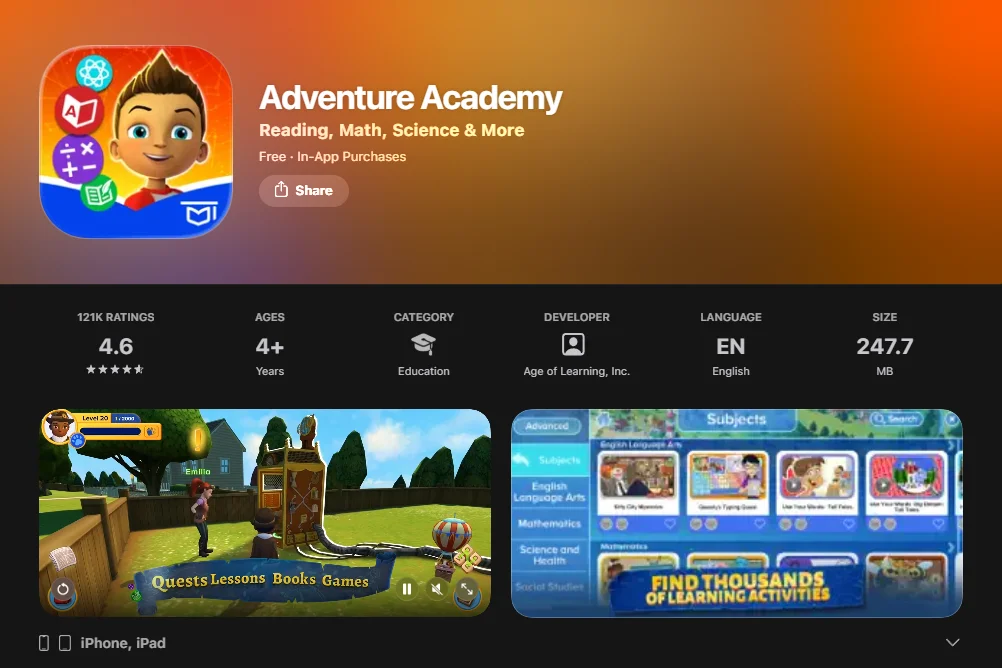
Adventure Academy is the “big kid” evolution of the Age of Learning ecosystem. Aimed at kids ages 8-13, it transforms supplemental learning into a high-fantasy, multiplayer online game.
Quest-Based Learning System
Instead of a simple list of lessons, kids get “quests.” To unlock new zones or earn items for their avatar, players must complete educational challenges. For example, to unlock a new part of the Math Wing, a student might need to complete a series of puzzles involving fractions or decimals.
Subjects And Academic Scope
The academic rigor shifts significantly here. The curriculum includes:
- Language Arts: Comprehension, main idea identification, and grammar.
- Math: Multiplication, division, and introductory algebra.
- Science: Physics, biology, and earth sciences.
- Social Studies: World history, economics, and civics.
Game Environment And Avatar Customization

The virtual world is a major hook. Kids can play as a customized avatar, interact with NPCs (non-player characters), and even play guitar or decorate their own “dorm room.” This level of personalization can make the platform feel more engaging and less like traditional schoolwork.
Parental Controls And Safety Tools
Because it is a multiplayer online game, safety is paramount. Adventure Academy includes parental controls such as filtered chat options and activity monitoring tools. Parents can choose “Safe Chat” (pre-written phrases only) or “Filtered Chat,” and they have the power to monitor all social interactions through the parent portal.
User Experience Comparison
| Feature | ABCmouse | Adventure Academy |
| Primary Age Group | 2–8 | 8–13 |
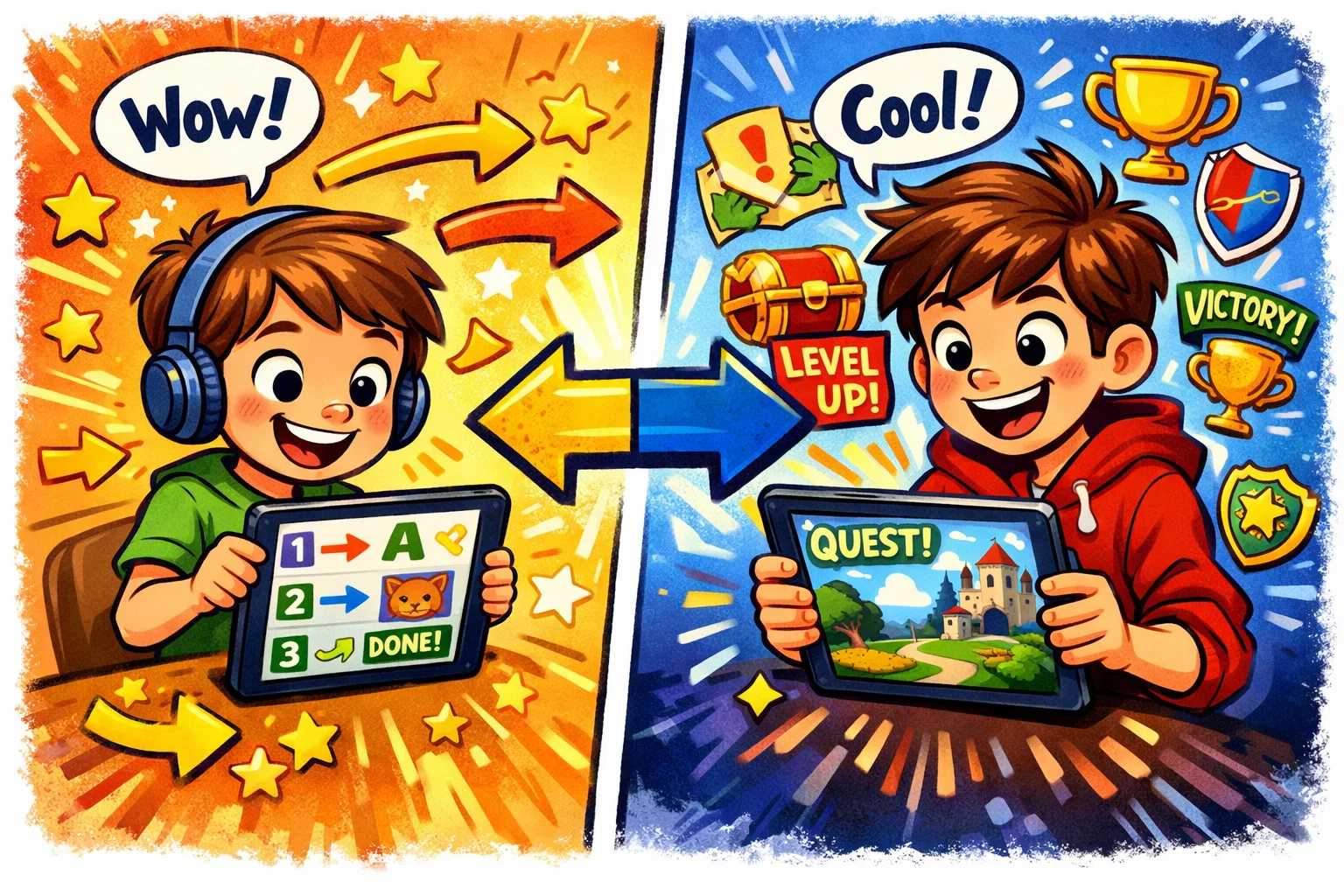
| Navigation | Guided & Linear | Open-World / Exploration |
| Social Features | None (Solo) | Multiplayer / Social Hubs |
| Instructional Style | Direct & Repetitive | Quest-based & Narrative |
| Device Compatibility | iOS, Android, Web | iOS, Android, Windows/macOS via downloaded app; Parents Section accessible via major browsers |
Account Setup And Onboarding
Both apps offer a relatively seamless registration process. You can typically start with a 30-day free trial to use the learning app for kids and see if it resonates with your child. Parents can set/adjust the child’s learning level; formal assessments are available via Assessment Center (optional add-on), while Adventure Academy starts with avatar creation to build immediate engagement.
Navigation And Interface Design
ABCmouse is simple; a child clicks a large icon and starts. Adventure Academy requires more “gamer” literacy. Students use an on-screen joystick (on mobile) or WASD keys (on computer) to move their character through the campus. For older kids, this is intuitive; for a 5-year-old, it might be frustrating.
Engagement And Motivation Systems
In ABCmouse, kids earn tickets to “buy” virtual pets or items for their room. Adventure Academy expands on this with experience points (XP) that allow players to advance to higher levels. This “leveling up” mechanic is a powerful motivator for the 8-13 age group, who often love video games.
Educational Content Depth And Learning Activities
When comparing Adventure Academy vs ABCmouse in terms of depth, the distinction is clear: one builds the foundation, the other builds the skyscraper.
Reading Development Approach
ABCmouse is heavily focused on phonics and “learning to read.” It includes thousands of books to read that utilize word-family repetition. Adventure Academy focuses on ‘reading to learn’ with comprehension and curriculum-aligned reading activities and an in-game book library.
Math Skill Progression
The Math Wing in Adventure Academy covers complex topics like ratios and geometry. In contrast, ABCmouse focuses on early elementary readiness, emphasizing number sense and basic operations.
Science And Social Studies Coverage
ABCmouse introduces these via videos and activities that explain basic concepts like the weather. Adventure Academy dives deeper into the scientific method and historical analysis, often presented through interactive games and online video content that feels like a documentary.
Pros And Cons Of ABCmouse
Strengths For Preschool And Early Elementary
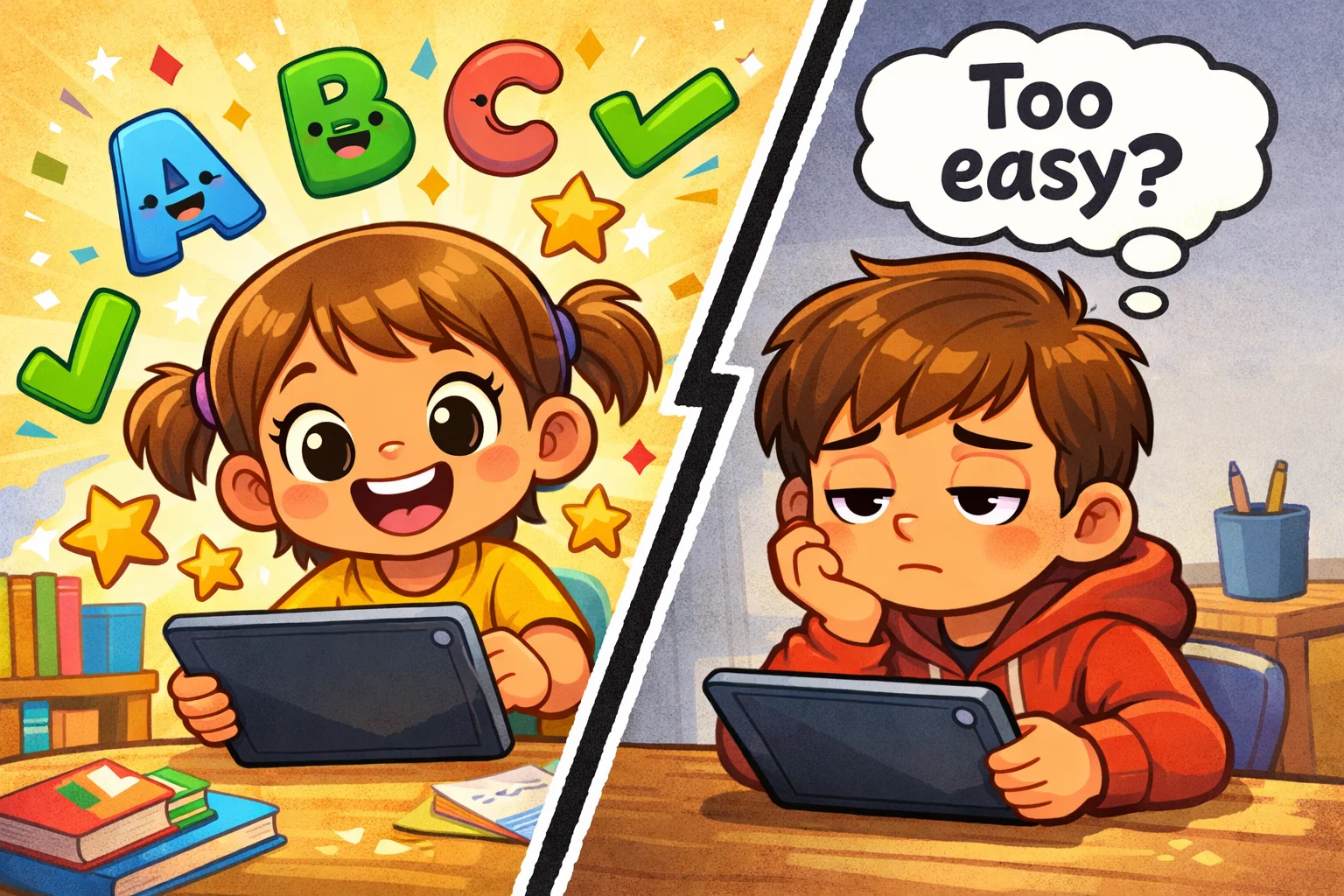
- High Structure: The learning path prevents “choice paralysis.”
- Audio Support: Excellent for children who cannot yet read instructions.
- Safe Environment: Zero social risk for young children.
Limitations For Older Children
- Visual Style: Older kids may find the “cartoony” aesthetic “babyish.”
- Repetition: The heavy focus on repetition can become boring for fast learners.
Pros And Cons Of Adventure Academy
Strengths For Independent Learners
- Immersion: The virtual world keeps kids coming back.
- Autonomy: Kids can play at their own pace and choose their subjects.
- Social Learning: The ability to join clubs or play with teacher friends adds a social layer.
Limitations For Structured Curriculum Needs
- Distractions: It is possible for a child to spend more time decorating their room than doing math and reading.
- Complexity: Some learning tasks might require adult explanation for younger users in the 8-13 bracket.
Pricing Comparison And Subscription Plans

Note: Prices are based on 2026 market standards and may vary based on promotional offers.
| Plan Type | ABCmouse | Adventure Academy |
| Monthly | ~$14.99 | ~$12.99 |
| Annual | ~$45 (varies) | ~$45 (varies) |
| Free Trial | 30 Days | Trial length depends on plan / offer |
| Multiple Children | Both services allow up to 3 child profiles per subscription | Both services allow up to 3 child profiles per subscription |
Value For Money Based On Age Span
Both platforms provide excellent value if used consistently. Neither platform offers a permanently free plan, though promotional free trial periods are commonly available. Because one subscription covers up to three children, families with multiple kids in the same age bracket will find the cost-per-child very low.
Alternatives Parents Also Consider
- Khan Academy Kids: A best free option for ages 2–8. It lacks the “game” feel of Adventure Academy but is academically rigorous.
- Reading Eggs: Specifically focused on literacy. It’s a strong supplemental tool if a child is struggling specifically with phonics.
- Prodigy: A great alternative for math-heavy learning, specifically for those who love video games.
- PBS Kids: Provides excellent educational games for free, though it lacks a structured curriculum path.
Final Verdict Based On Child Learning Needs
Overall, the “better” app depends largely on your child’s age and learning preferences.
- When ABCmouse Makes More Sense: If your child is between 2 and 7 and needs a guided, safe, and highly structured environment to master the basics of literacy and numeracy.
- When Adventure Academy Makes More Sense: If your child is 8 or older and is starting to lose interest in traditional learning apps. The multiplayer online game aspect provides the engagement needed to keep them practicing math and reading during school closures or as a homeschool supplement.