17 Dice Games for Kids: Easy, Fun, Skill-Building Ideas

 Discover a Free Education Video App for Kids
Pastory uses AI to personalize educational video content based on your child’s interests and personality. Safe, engaging, and built for curious young minds. Sign up now to stay updated and enjoy early access with a free trial
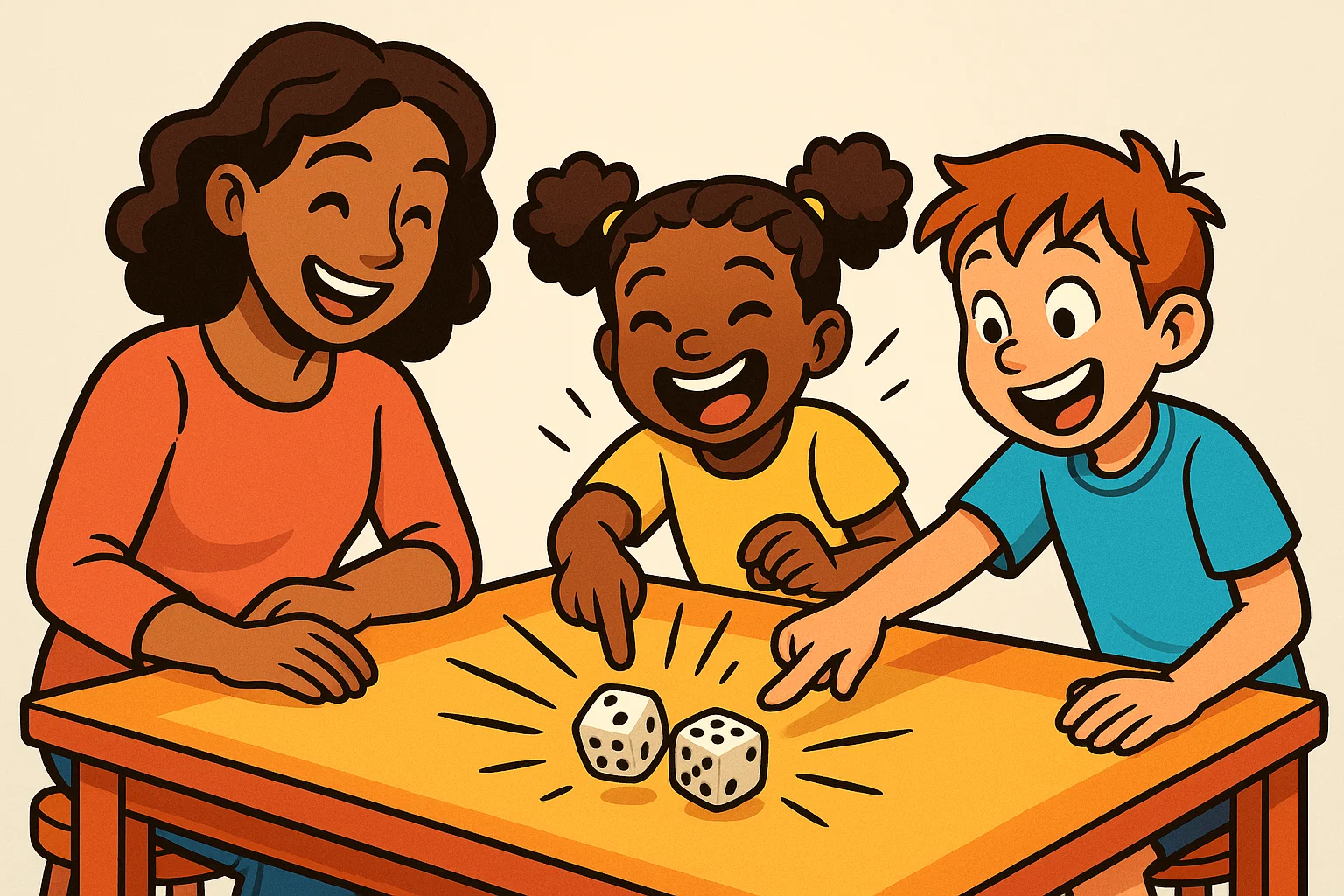
Finding engaging, low-cost activities that stimulate a child’s mind can be a challenge in a screen-heavy world. Dice games for kids offer a timeless solution, blending excitement, social interaction, and valuable learning. These easy dice games for kids need very little setup, which makes them ideal for home, the classroom, or a quick activity during a long trip. Whether you need a fun rainy-day activity or a simple way to sneak extra math practice into playtime, this guide offers dice games for kids of different ages and skill levels.
Why Dice Games for Kids Work
These activities stand out because they are accessible. Most of them require only a few dice and a score sheet, so you can usually start playing in under a minute.
Screen-Free Family Fun
Bringing a dice game to family night offers a break from devices and encourages face-to-face interaction. Traditional play can support brain development and stronger social connection, which is one reason dice games work well for family time.
Low-Prep Home Play
Most easy dice activities use materials you already have: a pair of dice, a pencil, and a sheet of paper. That low barrier makes it easy for parents to introduce simple tabletop play without buying expensive kits or more elaborate board games.
Classroom and Travel Value
Because a handful of dice fits easily into a pocket or bag, these games work well as quick classroom fillers and travel activities. They offer a fun way to pass time in waiting rooms, at restaurants, or during school transitions while keeping children mentally engaged.
Skills Kids Build With Dice Games
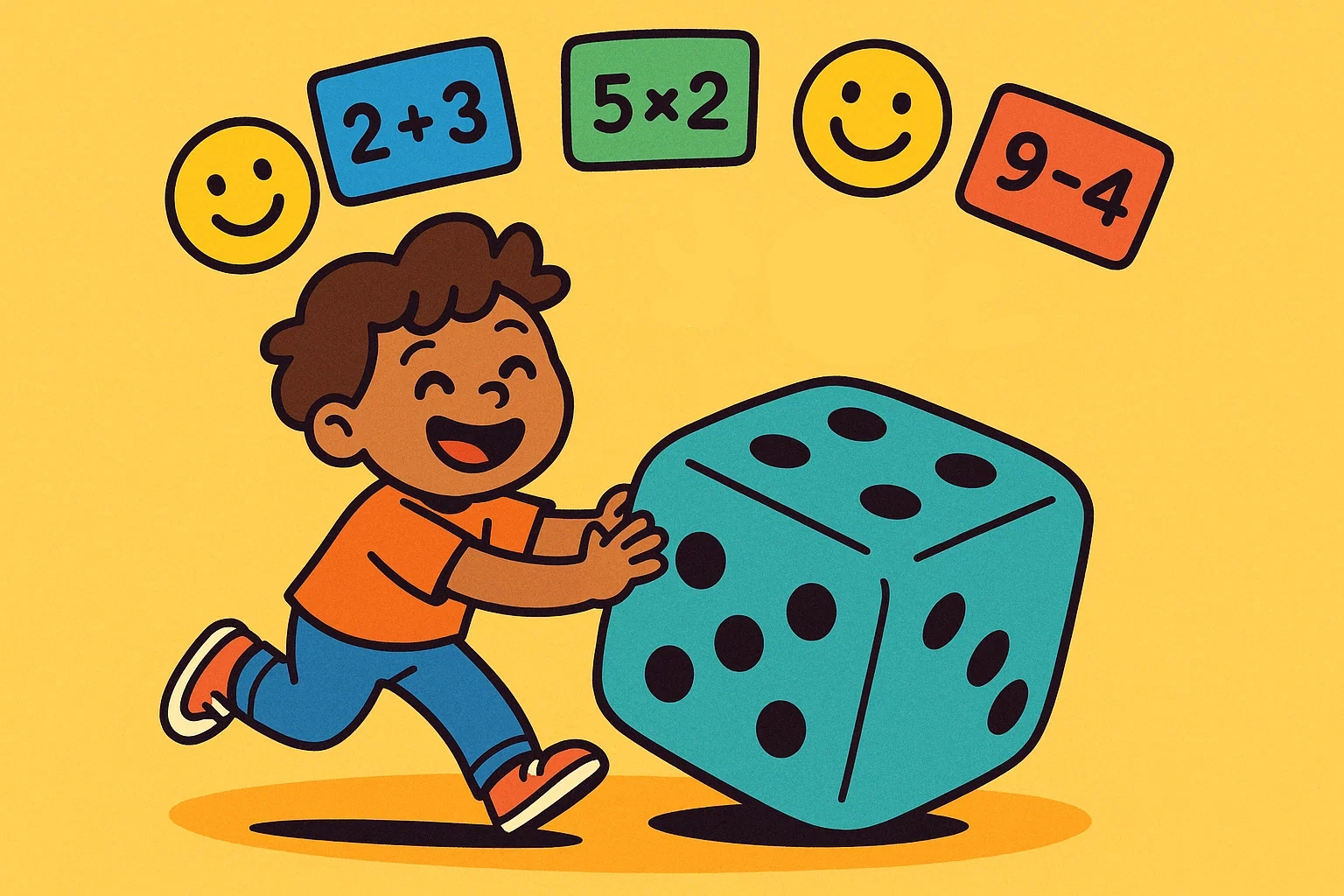
Beyond entertainment, using dice can support real skill development. Many of these activities can reinforce foundational skills that also appear in curricula such as the UK National Curriculum and the Common Core State Standards.
Number Sense and Counting
When a child rolls a die and recognizes the number of dots without counting each one, they practice subitizing. As kids roll a pair and add the results, they strengthen addition skills and overall math skill fluency.
Turn Taking and Patience
Playing with others requires turn taking, an important social-emotional milestone. Games where children wait, watch, and respond on cue help build impulse control and emotional resilience.
Strategy and Quick Decisions
Many math-focused dice games include a ‘press-your-luck’ choice in which the current player must decide whether to stop or keep going. This encourages critical thinking and basic probability awareness, as children weigh the risk of a bad outcome against the chance of a higher score.
How to Choose the Right Dice Games by Age
Choosing a dice game that matches a child’s developmental level helps keep play enjoyable instead of frustrating.
Preschool and Kindergarten
For younger learners, focus on activities such as roll and color or roll and cover. These support numeral recognition and fine motor control. These games should ideally use a single die to keep the math simple and the pace quick.
Early Elementary
Children ages 6 to 8 can usually handle games that include addition and subtraction. Adding a third die or a larger set of dice increases the challenge without making the rules overwhelming. At this stage, games like Pig or Going to Boston are excellent for building confidence with basic math concepts.
Older Kids and Mixed Ages
For older children, games with more detailed scoring such as Farkle or Zanzibar provide the right level of challenge. These often involve building combinations, which encourages stronger strategy and planning.
Bunco
Bunco is a lively, fast-paced game that is traditionally played in large groups but also works well in a simplified family version.
What You Need
- Three cubes
- A printable score sheet or plain paper
- At least 2 players (ideally 4 or more in teams)
How to Play
The game is played in rounds. In round one, the first player tries to roll 1s. Each 1 earns one point. If a player gets three matching target numbers at once – such as three 1s in round one – that is a “Bunco” worth 21 points. The turn continues until the player fails to roll the round number; then play passes to the next player.
Skills Kids Practice
This game emphasizes turn taking, rapid numeral recognition, and social cooperation. It also asks children to stay focused as the target number changes from round to round.
Easy Variations
For younger kids, remove the team structure and play to a total of 30 points. You can also cut the number of rounds from six to three for shorter attention spans.
Zanzibar
Zanzibar is a ranking game where the goal is to avoid finishing with the lowest result. It is one of the more fun dice games for kids who enjoy friendly competition.
What You Need
- Three cubes
- A way to keep score for the round
How to Play
The first player rolls all three dice up to three times to make the best possible combination. In one common version, 4-5-6 is the highest combination, followed by triples, and then by the total shown on the dice. Once the first player finishes, the next player must match or beat that result using the same number of rolls or fewer.
Skills Kids Practice
Zanzibar develops logical thinking and comparison skills. It also teaches addition as players total their numbers when they do not hit a special combination.
Easy Variations
Simplify the scoring by removing special ranks such as 4-5-6 and making the goal simply to get the highest score from all three values combined.
Sevens
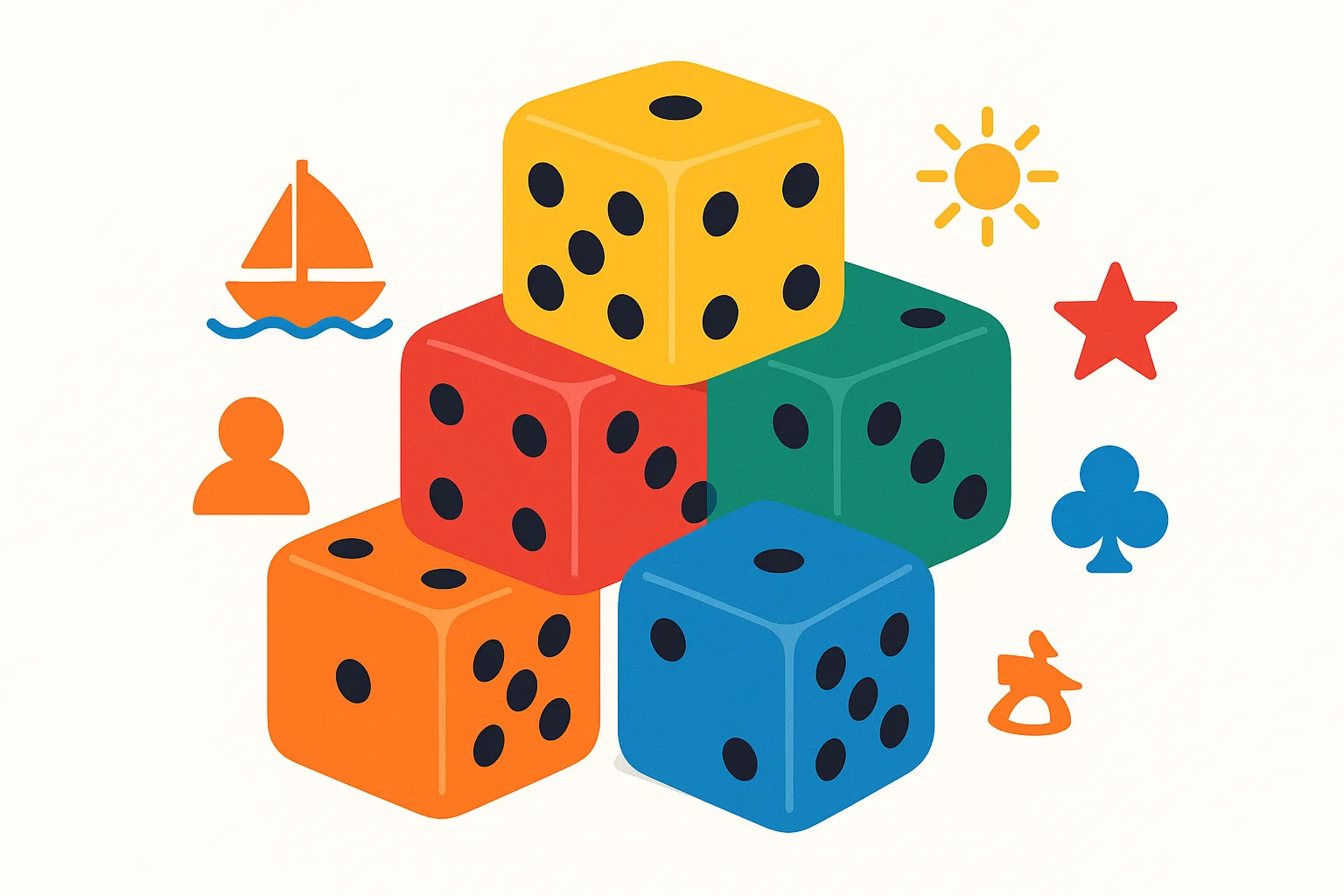
Sevens is an incredibly easy dice game built around the number seven, which makes it a great way to practice addition.
What You Need
- Six cubes
- Scoreboard
How to Play
The player rolls the full set. Any pairs that make 7 – such as 6 and 1 or 4 and 3 – are set aside. The player then rerolls the remaining dice to find more pairs that make seven. A round ends when all pieces are cleared or no more pairs can be made, and the player records a score for that turn based on completed pairs.
Skills Kids Practice
This is a dedicated math skill builder. It trains children to spot number bonds quickly, especially combinations that make 7.
Easy Variations
Change the target number to 10 for older children, or use a pair of cubes and play until a player reaches 100 points.
Beetle
Beetle is a classic “roll and draw” activity that combines chance with creativity.
What You Need
- One number cube per player
- Paper and crayons
- A simple key (for example: 6 = body, 5 = head, 4 = antennae)
How to Play
Players take turns rolling one cube. You must get a 6 to start the beetle’s body. Once the body is drawn, you can add parts based on the number shown: a 5 for the head, a 4 for antennae, and so on. The first player to complete the picture wins the round.
Skills Kids Practice
This activity supports fine motor skills and number recognition. It also teaches children to follow a sequence, which supports early logic and planning.
Easy Variations
Instead of a beetle, draw a monster where each number corresponds to a silly feature, making it a fun and easy dice activity for Halloween or parties.
Farkle
Farkle is a higher-stakes game that teaches children about probability and risk management.
What You Need
- Six cubes
- Score sheet
- Recommended for ages 8+
How to Play
A player rolls all six dice. Certain numbers – such as 1s and 5s – or combinations like three of a kind earn points. The player can bank their score for that turn or keep going with the unused pieces. However, if the next toss produces no scoring result, they “Farkle” and lose all points from that turn.
Skills Kids Practice
Farkle is excellent for critical thinking and impulse control. Players learn to decide when to stop, which introduces the idea of probability in a very practical way.
Easy Variations
Lower the winning threshold to a total of 500 points instead of 5,000 to keep the game under 15 minutes.
Going to Boston
Going to Boston (also known as Yankee Grab) is a foundational math game that teaches children how to identify the highest number.
What You Need
- Three cubes
- A pencil and paper to keep score
How to Play
The player rolls all three pieces and keeps the highest one. Then they reroll the other two and keep the higher value again. Finally, they roll the last remaining cube and add all three kept numbers for their score for that round.
Skills Kids Practice
This game focuses on comparison and addition. It is a fun way for kids to practice sequencing and make quick decisions.
Easy Variations
For very young children, skip the addition and simply award one point if a player’s final total beats the previous result.
Pig
Pig is one of the best-known easy dice games for introducing the idea of risk and reward.
What You Need
- One number cube
- Paper for scoring
How to Play
On a turn, a player rolls repeatedly and adds each result to a temporary total. They can stop at any time to bank those points. However, if they roll a 1, the turn ends immediately and all unbanked points from that turn are lost. The first player to reach 100 points wins.
Skills Kids Practice
Pig is excellent for mental math and addition. It also helps children manage frustration when luck suddenly changes.
Easy Variations
Use two cubes. If the player rolls both and gets double 1s, they lose their entire game score instead of only their turn score.
Ship, Captain, and Crew
This nautical-themed game makes tabletop play feel like a high-seas adventure.
What You Need
- Five cubes
- Score sheet
How to Play
Each player gets three attempts per turn. They are looking for a 6 (the Ship), a 5 (the Captain), and a 4 (the Crew) in that exact order. Once all three are secured, the remaining two values are added together to become the “cargo” score. The highest score wins the round.
Skills Kids Practice
The game reinforces order, sequencing, and conditional logic – you cannot keep the captain before you have the ship.
Easy Variations
Allow children to keep any 6, 5, or 4 in any order to make the game simpler and faster for younger players.
Chicago
Chicago is a structured dice game that lasts for exactly 11 rounds, making it a great way to practice consistent scoring.
What You Need
- Two cubes
- Scorecard with numbers 2 through 12
How to Play
There are 11 rounds. In the first round, the player rolls for a total of 2. In the second round, they aim for 3, and so on up to 12. If the total matches the round number, they earn those points. If not, they get zero. The player with the highest total at the end wins.
Skills Kids Practice
This promotes additionl skills and helps children recognize all the ways two numbers can make the same sum.
Easy Variations
Provide a printable game sheet where children can check off the numbers they hit, turning it into a roll and cover style activity.
Passage
Passage is built around a single ‘point’ die, which gives it a different rhythm from many other math games.
What You Need
- Two cubes
- Two or more players
How to Play
One die becomes the ‘point’ die, and players roll the other die against it. If the number matches the point value, they score. When one player reaches 11 points, every other player gets one final turn, and the highest score wins.
Skills Kids Practice
This game encourages matching and careful observation. Because the target stays constant, kids can focus on one-to-one correspondence.
Easy Variations
Use three cubes and award two points if a player matches the point value with two of them.
Run for It
Run for It is a sequence-based game that helps children understand number order.
What You Need
- Six cubes
- Score paper
How to Play
A player rolls the full set and looks for sequences such as 1-2 or 1-2-3. Each number in a valid sequence starting from 1 is worth 5 points. For example, a result of 1-2-3-5-6-6 earns 15 points for the 1-2-3 sequence because the 4 is missing.
Skills Kids Practice
This game is excellent for number sequencing and visual discrimination.
Easy Variations
Allow sequences to start from any number, such as 3-4-5, to make scoring easier for younger players.
Fifty
Fifty is a fast-moving game where players race to a specific total.
What You Need
- Two cubes
- Score sheet
How to Play
Players roll both cubes at the same time. You only score on doubles. Double 1s, 2s, 4s, and 5s are worth 5 points. Double 6s are worth 25 points, while double 3s reset the player’s total score to zero. The goal is to be the first to reach 50 points.
Skills Kids Practice
Fifty teaches doubling, pattern recognition, and simple risk assessment. It is a fun way to show that some outcomes are more valuable than others.
Easy Variations
For preschoolers, ignore the wipeout rule and just count how many doubles they roll in 10 rounds.
Knock Out
Knock Out is a competitive math game that adds a light elimination twist.
What You Need
- Two cubes
- A list of players
How to Play
At the start of the round, choose a knock-out number. Each player rolls on their turn. If they roll the knock-out number, they are out for that round; if not, they add the sum to their score. After the agreed number of rounds, the player with the highest total wins.
Skills Kids Practice
This game helps with mental addition and introduces the concept of elimination in a friendly format.
Easy Variations
Instead of removing players from the round, give a penalty point to anyone who hits the target number so everyone keeps playing until the end of the game.
Three or More
Three or More is a game about collecting matching sets, similar to simplified poker for children.
What You Need
- Five cubes
- Score sheet
How to Play
The player rolls all five pieces. If they get three or more of a kind, they score points – for example, 3 of a kind = 3 points and 5 of a kind = 12 points. If they only get a pair, they may reroll the other three pieces once more to chase a third match.
Skills Kids Practice
This game is fantastic for pattern recognition and basic probability.
Easy Variations
Award one point for a simple pair to make the game feel more rewarding for preschoolers.
Roll and Cover
Roll and Cover is a staple in early childhood classrooms because it neatly bridges the gap between dice and math.
What You Need
- Two cubes
- A printable game board with numbers 2-12
- Markers (buttons, cereal, or tokens)
How to Play
A player rolls both dice and calculates the sum. They then cover that number on the board. The activity works solo or with a partner. The first player to cover all numbers wins.
Skills Kids Practice
This game is especially useful for subitizing and addition fluency. Activities that connect numerals, quantities, and movement can also support early math development.
Easy Variations
Use a roll and color version where children fill in the numbers with crayons, adding an element of art and creativity.
Roll and Write
Roll-and-write games are designed to support number formation and handwriting practice.
What You Need
- One number cube
- A sheet with columns labeled 1-6
How to Play
The player rolls the die and writes the number – or the number word – in the matching column. The goal is to see which column reaches the top first.
Skills Kids Practice
This supports handwriting, fine motor control, and basic graphing or data collection.
Easy Variations
Use two cubes and have children write the full addition sentence each time they roll, such as 2 + 3 = 5.
Addition and Subtraction Practice
You can turn almost any dice roll into a targeted math-practice activity.
What You Need
- Two cubes (or three for a challenge)
- Paper and pencil
How to Play
For addition practice, the player rolls both dice and writes the sum. For subtraction practice, the child subtracts the smaller number from the larger one. For multiplication practice, the child multiplies the two numbers rolled.
Comparison of Math Focus
| Game Type | Primary Skill | Age Group |
| Addition | Summation & Number Bonds | 5-8 |
| Subtraction | Difference & Comparison | 6-9 |
| Multiplication | Equal Groups (Doubles) | 8+ |
Final Tips for Parents and Teachers
To keep dice games effective and enjoyable, try these strategies:
Start With Simple Rules
Begin with a one-cube mechanic. As the child becomes more comfortable with turn taking and counting dots, introduce a second cube to transition into more advanced math games.
Keep Score Only When Needed
For younger children, the sound and action of the roll can be reward enough. You do not always need a running tally; sometimes the goal can simply be to finish the bug drawing or cover the full board.
Rotate Games by Mood and Age
If a child is energetic, choose a fast-paced option like Bunco. If they need quiet time, a roll and color activity may fit better. Rotating developmentally appropriate games keeps play feeling fresh.
Playful practice such as dice games can strengthen mental-math fluency, especially when it is used alongside more structured instruction.
Frequently Asked Questions
How many dice do I need to start playing with my children?
The number of dice you need depends on the game you want to play. Most simple activities, like Pig, only require one die, while more complex games may use five or six dice to create different combinations. If your child is new to dice games, starting with two dice is usually best because it lets them practice adding the two numbers without feeling overwhelmed.
What is the best way to keep track of scoring in these games?
Scoring depends on the game: in some games, players collect points over several rounds, while in others they simply record the highest total for that turn. For example, in Going to Boston, a player rolls three dice, keeps the highest die, rerolls the remaining dice, and then adds the three kept values for the round score. You can simply add up the numbers on a piece of paper or use a printable game sheet. The first player to reach the agreed target score – or the player with the highest total after a set number of rounds – wins.
Can these games be played with only two players?
Yes, almost all of these games work well with two players, although some are even more fun in larger groups. In a typical two-player game, players take turns rolling and either try to beat each other’s score or race to reach a target first. If a game uses three dice and asks players to match a specific result, they simply take turns until one player finishes the round with the highest score.
What should I do if my child finds the rules too difficult?
If a child struggles when they roll two dice, simplify the mechanics immediately. For instance, if they roll a 4 and a 5, instead of asking them to add immediately, have them count the dots on the faces first. You can also reduce the complexity by not having them roll all the dice at once; let them roll the remaining dice one by one. Unlike many card games, dice games are highly flexible and can be adjusted mid-game to keep the experience fun and manageable.