

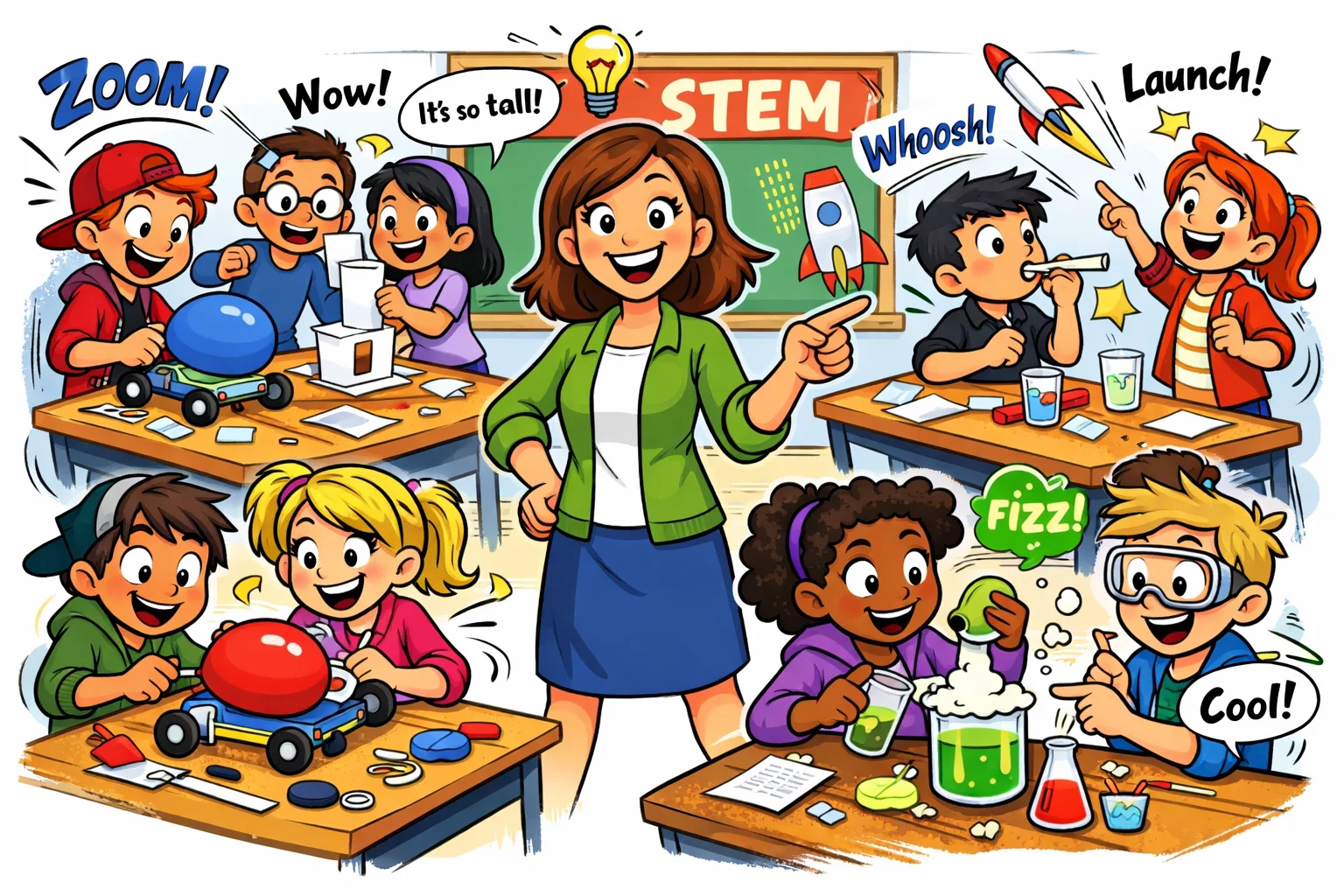
Middle school represents a critical developmental window where students transition from concrete to abstract thinking. Engaging middle school students in technical and creative challenges during this stage – specifically grades 6 through 8 – is essential for fostering long-term interest in science, technology, engineering, and math. These hands-on activities work well in the classroom, at home, or in an after-school club, requiring minimal preparation while supporting meaningful student growth.
By utilizing fun challenges like a design-based challenge or a long-term project, educators can help students develop vital problem-solving, teamwork, and creativity skills. This guide offers a wide range of low-cost ideas, quick challenges, and in-depth projects that use household and recycled materials to make STEM education accessible to all students.
What Is STEM
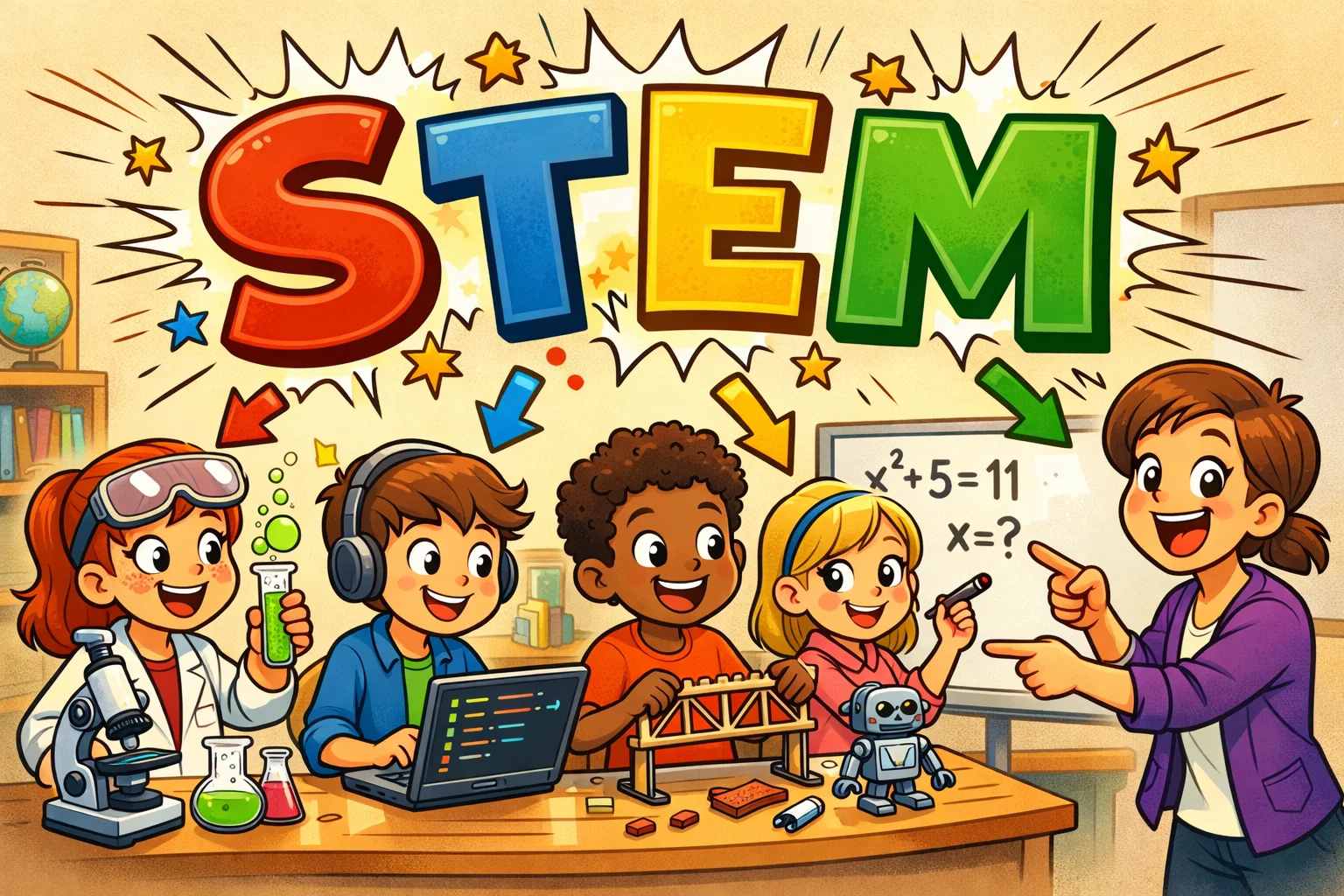
This interdisciplinary educational approach focuses on the integration of four specific disciplines into a single, cohesive learning paradigm based on real-world applications. Unlike traditionally siloed subjects, this approach focuses on applied learning and encourages students to use cross-disciplinary skills to solve complex problems. Integrated instruction can improve student engagement and help bridge the gap between classroom learning and future career demands.
What STEM Means for Grades 6–8
For middle schoolers, technical learning shifts from simple observation to active experimentation and iterative design. At this stage, STEM activities for middle school should push students beyond the “cool factor” of a science experiment; they should design, test, measure, and refine their solutions. Middle school education frameworks emphasize that at this level, the “Engineering” component – the process of creating a solution under specific constraints – becomes the glue that binds the other subjects together.
STEM vs STEAM
The primary difference between STEM and STEAM is the addition of the arts. While the former focuses on hard sciences and technical application, the latter incorporates design, prototyping, and creative presentation. Including an art element allows students to focus on the aesthetics and user experience of a project, such as the visual branding of a balloon-powered car or the architectural elegance of a straw skyscraper.
Why Middle School Is a Strong Stage for Discovery
The adolescent years are especially well suited to social learning and logical reasoning. Students aged 11–14 are developing the capacity for metacognition – thinking about their own thinking – which makes this an ideal stage for analyzing why a particular design or build failed. The hands-on nature of these tasks satisfies their need for autonomy and active participation.
Why Middle School Technical Programs Are Essential
Implementing robust programs in middle school is not merely about teaching facts; it is about preparing students for a rapidly evolving global economy. These subjects provide the foundational literacy required to navigate a world increasingly defined by data and technology.
Benefits of Integrated Education
The value of this approach lies in its ability to cultivate a growth mindset. By participating in interesting tasks, students gain:
- Critical Thinking: The ability to analyze a science experiment and derive logical conclusions.
- Persistence: Understanding that a failed tallest tower build is a data point, not a personal defeat.
- Data Literacy: Using measurements to compare the performance of different build a bridge designs.
Soft Skills Development
Beyond technical knowledge, fun projects develop essential interpersonal abilities. When middle school students work together on a technical challenge, they practice communication, role distribution, and reflection. Educational psychologists note that collaborative hands-on work reduces social anxiety by focusing student energy on a shared external goal.
Diversity in Technical Fields
STEM activities can serve as an equalizer by appealing to a wide range of learning styles. Whether a student excels in coding, building, or nature projects, a well-rounded program ensures everyone finds a point of entry. Providing simpler tasks alongside more complex ones helps ensure that students with different skill levels feel capable of contributing.
Real-World Career Connections
Technical learning provides a direct bridge to future careers. A popsicle sticks bridge project connects to civil engineering, while a binary code worksheet introduces software development. By making these connections explicit, teachers help students see themselves in roles such as architects, environmental scientists, or health tech innovators.
What STEM Education Looks Like in Middle School
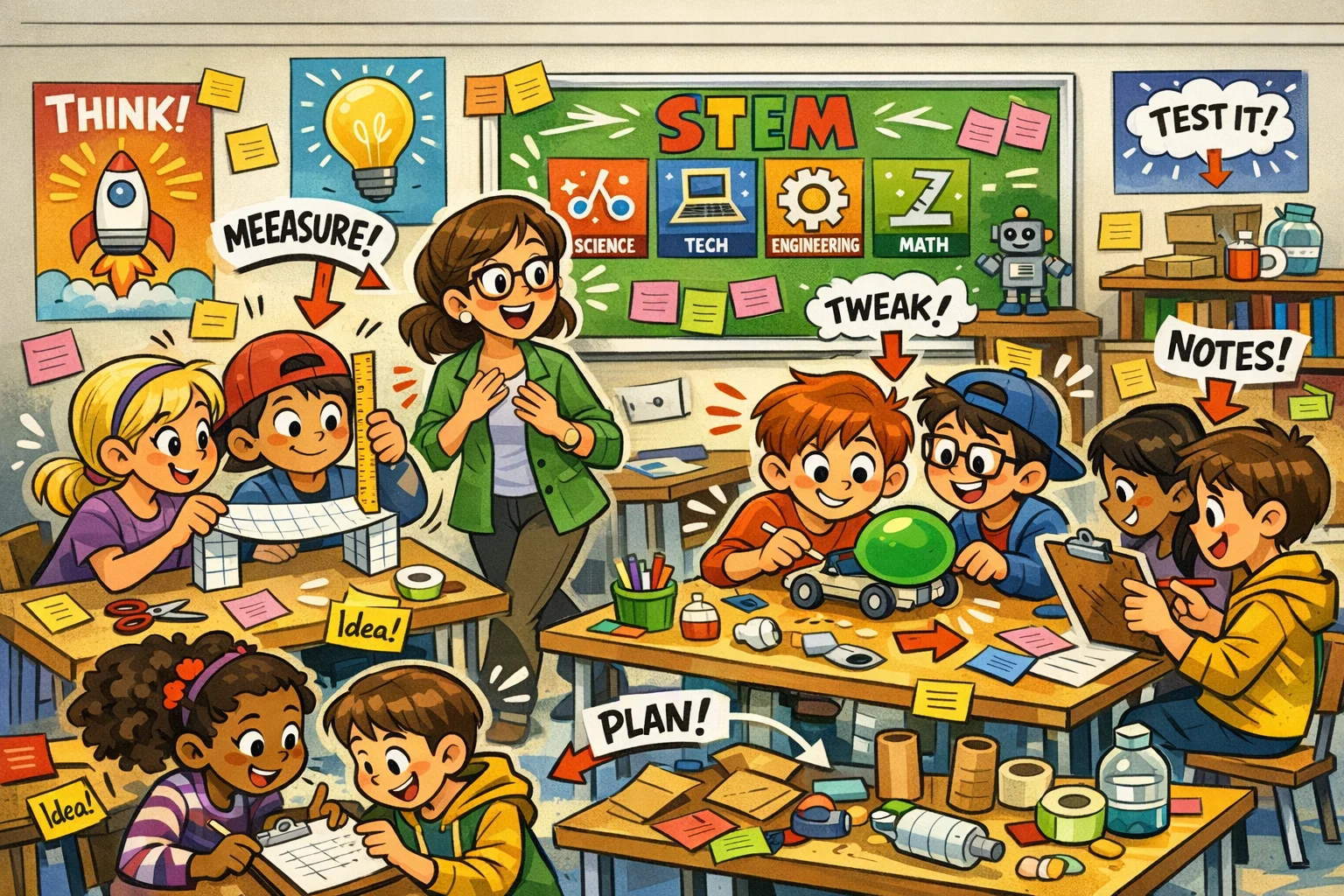
In middle school, STEM learning is often characterized by movement, discussion, and hands-on construction. It is a departure from the “lecture and listen” model, favoring a “do and discover” approach.
Hands-On Learning Format
A typical hands-on lesson follows a specific cycle:
- Identify: Presenting the problem (e.g., “Build the tallest tower”).
- Constraints: Defining limits (e.g., “You can only use paper and tape”).
- Action: The active construction of the model.
- Evaluate: Checking the results and making improvements.
45-Minute Class Model
To effectively teach students within a standard period, use this high-efficiency template:
- 5–7 Minutes: Introduction, objective setting, and safety briefing.
- 20–25 Minutes: The hands-on build and experimentation phase.
- 5–10 Minutes: Testing and data recording.
- 5–8 Minutes: Group reflection and cleanup.
Low-Cost Materials
Effective middle school activities do not require a massive budget. Many of the most effective activities rely on simple materials such as:
- Straws and plastic cups
- Balloons and rubber bands
- Craft sticks and paper clips
- Recycled materials like cardboard and plastic bottles
The Engineering Design Process
The Engineering Design Process (EDP) is the backbone of any successful engineering challenge. It provides a structured pathway for middle school students to think like professionals.
Ask and Define the Problem
The process begins by identifying the goal and the limitations. For instance, in a challenge, the teacher might ask students to design and build a way to move a paper ball 10 feet using only straws and tape. Defining success criteria early – such as “must be freestanding” – is crucial for meaningful results.
Brainstorm and Plan
Before touching any household materials, students should sketch their ideas. This phase encourages middle schoolers to weigh the pros and cons of different designs and allows them to take ownership of their approach. Planning helps prevent limited resources such as tape and straws from being wasted.
Build and Test
During this phase, students create their initial prototype. It is vital to challenge them to build something functional rather than perfect. Recording “failure points” – where the straw bent or the balloon popped – is encouraged as a healthy part of the learning journey.
Improve and Share Results
The final step is to refine the design based on test data. Groups then share results with the class, explaining their design choices. This helps students learn that there are multiple valid ways to solve the same project.
Engineering Activities for Middle School
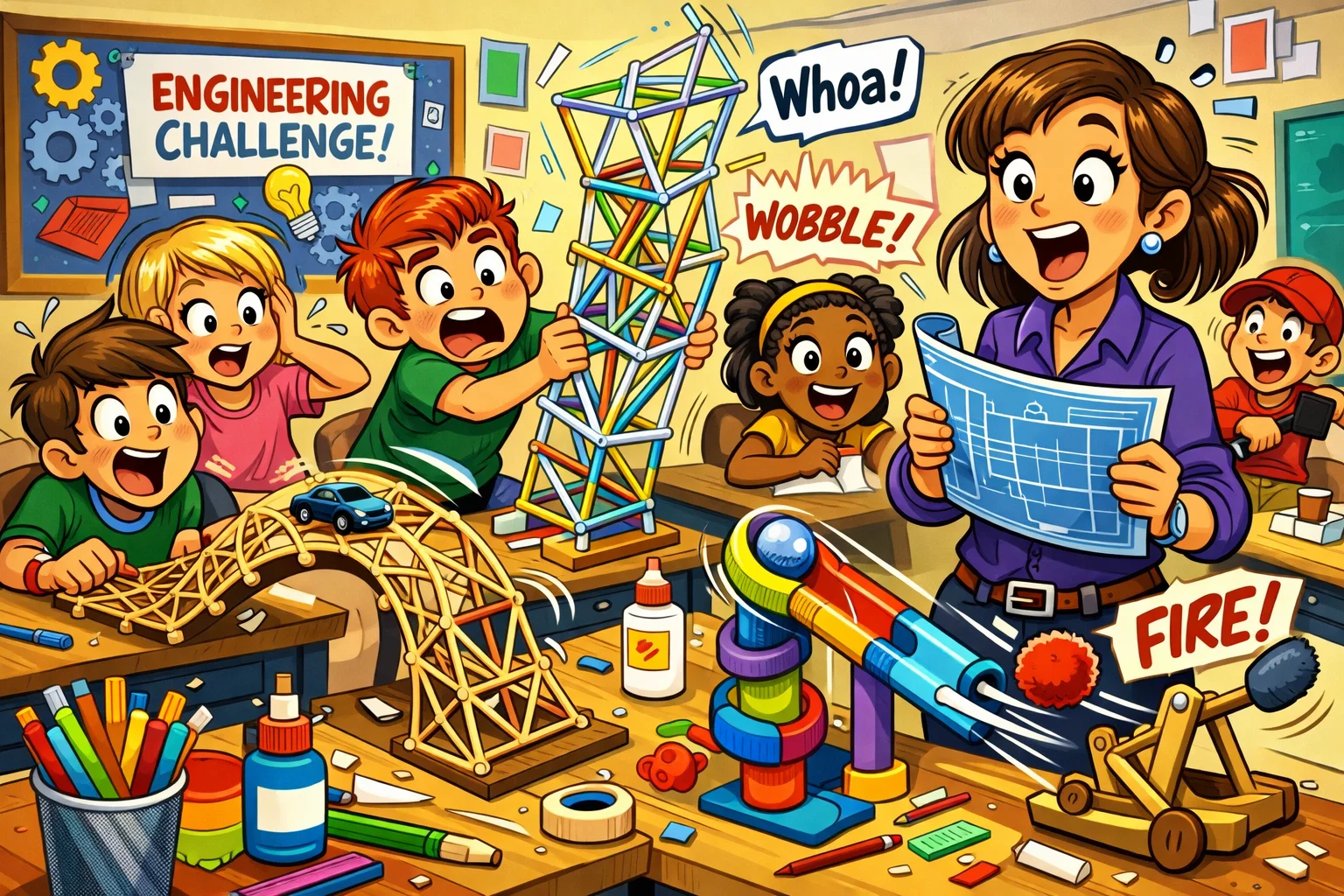
Engineering projects are especially popular with middle schoolers because they produce a tangible result and clear success criteria.
Balloon-Powered Cars
Using a plastic bottle, straws, and a balloon, students build a vehicle that demonstrates Newton’s Third Law of Motion.
- Design and Build: Focus on axle alignment to ensure the car travels straight.
- Variables to Test: Wheel friction, body weight, and nozzle size.
- Goal: Travel the greatest distance on a flat surface using only the air in the balloon.
Rubber Band Cars
This project focuses on stored energy. By twisting a rubber band around an axle, students learn about potential and kinetic energy.
- Key Materials: CD wheels, cardboard chassis, and rubber bands.
- Instruction: Challenge students to modify the axle to prevent the rubber band from slipping during release.
Toothpick Bridges
A classic task where students use toothpicks and glue to build a bridge that can support weight.
- Learning Focus: Truss patterns and weight distribution.
- Measurement: Ratio of bridge weight to weight supported.
Straw Skyscrapers
In this tallest tower challenge, students use straws and tape to build upward.
- Design Constraints: The structure must support a small weight (like a marshmallow) at the top.
- Physics Concept: Center of gravity and base stability.
Popsicle Stick Catapult
Students make a functional launching device using popsicle sticks, rubber bands, and a plastic spoon.
- Experiment: Test how the number of sticks in the fulcrum affects the launch distance of a paper ball.
- Precision: Create a target and see which team can hit it consistently.
Marble Roller Coaster
Using foam pipe insulation or cardboard tubes, challenge students to create a track with at least one loop.
- Gravity Focus: Potential energy at the start vs. kinetic energy in the loop.
- Goal: The marble must reach the finish line without flying off the track.
LEGO Marble Maze
For classrooms with existing sets, using LEGO bricks to build a maze is an excellent exercise in spatial reasoning.
- Constraint: The maze must have at least three “dead ends” and one clear path to the exit.
- Teamwork: One student designs the maze while another tests it blindly.
Science Experiments Using Household Materials
These science activities are designed for high engagement with easy setups using common items.
Egg Drop Landers
The objective is to protect a raw egg during a drop from height using recycled materials.
- Physics Focus: Impact force and air resistance.
- Successful designs: Use parachutes or cushioning systems made from straws or bubble wrap.
Water Filter Challenge
Middle school students design a filtration system using sand, gravel, and charcoal to filter dirty water.
- Real-World Connection: Environmental engineering and clean water access.
- Constraint: Use only a plastic bottle and natural materials.
Lemon Battery
By inserting a galvanized nail and a copper strip or copper coin into a lemon, students can create a simple circuit.
- Observation: Use a multimeter to measure the voltage.
- Scaling: Connect multiple lemons in a series to light a small LED.
Walking Water
This easy experiment uses cups, water, food coloring, and paper towels to demonstrate capillary action.
- Observation: Watch as the colored water “walks” up the towel and into an empty cup.
- Timeframe: Results are best observed over 2–4 hours.
Cloud in a Jar
Using hot water, ice, and hairspray, students simulate the condensation process.
- Concept: Understanding how air pressure and temperature interact to form weather patterns.
- Documentation: Have students draw and label the layers they see in the jar.
No-Prep Activities with Paper
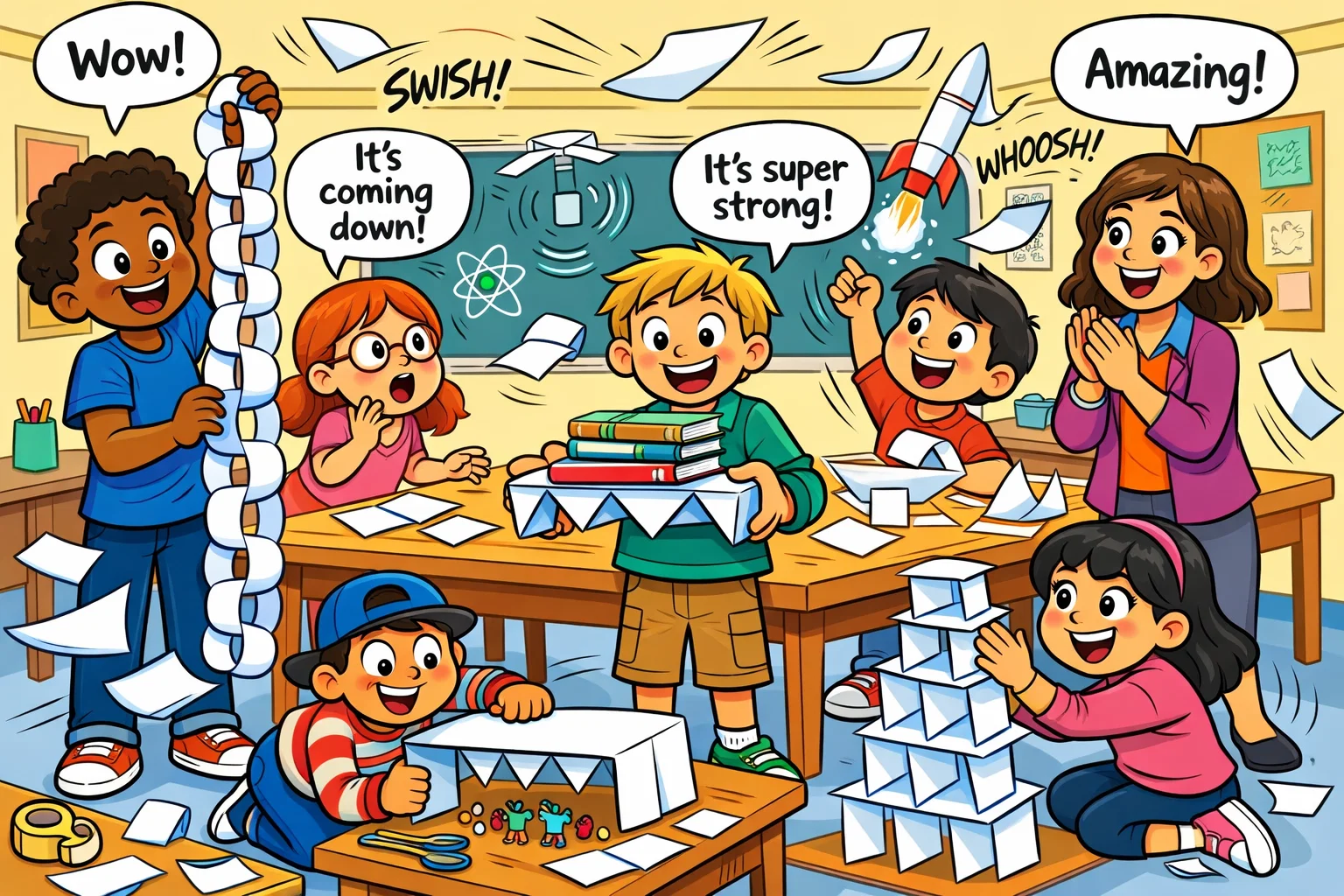
When you need middle school activities that require zero shopping, use paper.
| Activity Name | Primary Goal | Skill Developed |
| Paper Chain Challenge | Longest paper chain from one sheet | Spatial Reasoning |
| Paper Helicopter | Maximize air-time | Aerodynamics |
| Paper Bridge | Support the most pennies | Structural Integrity |
| Index Card Challenge | Fit your body through a card | Creative Thinking |
Paper Rocket
Using a straw and a small piece of paper, students create a “stomp” or “breath” rocket.
- Testing: Adjust the angle of the launch and the size of the fins.
- Goal: Achieve maximum flight distance.
Coding and Technology Activities
These tasks introduce middle schoolers to the “T” in the curriculum without always requiring a computer.
Pixel Art and Binary Code
Help students understand how computers represent images by creating art with 0s and 1s (binary code).
- Task: Use a grid to translate a binary sequence into a visual pattern.
- Concept: Data representation and encoding.
Light-Up Postcard
Combine art and engineering by creating a greeting card with a simple functional circuit using copper tape and an LED.
- Troubleshooting: Allow students to figure out why a circuit might be “open” or “shorted.”
Outdoor and Nature Discovery
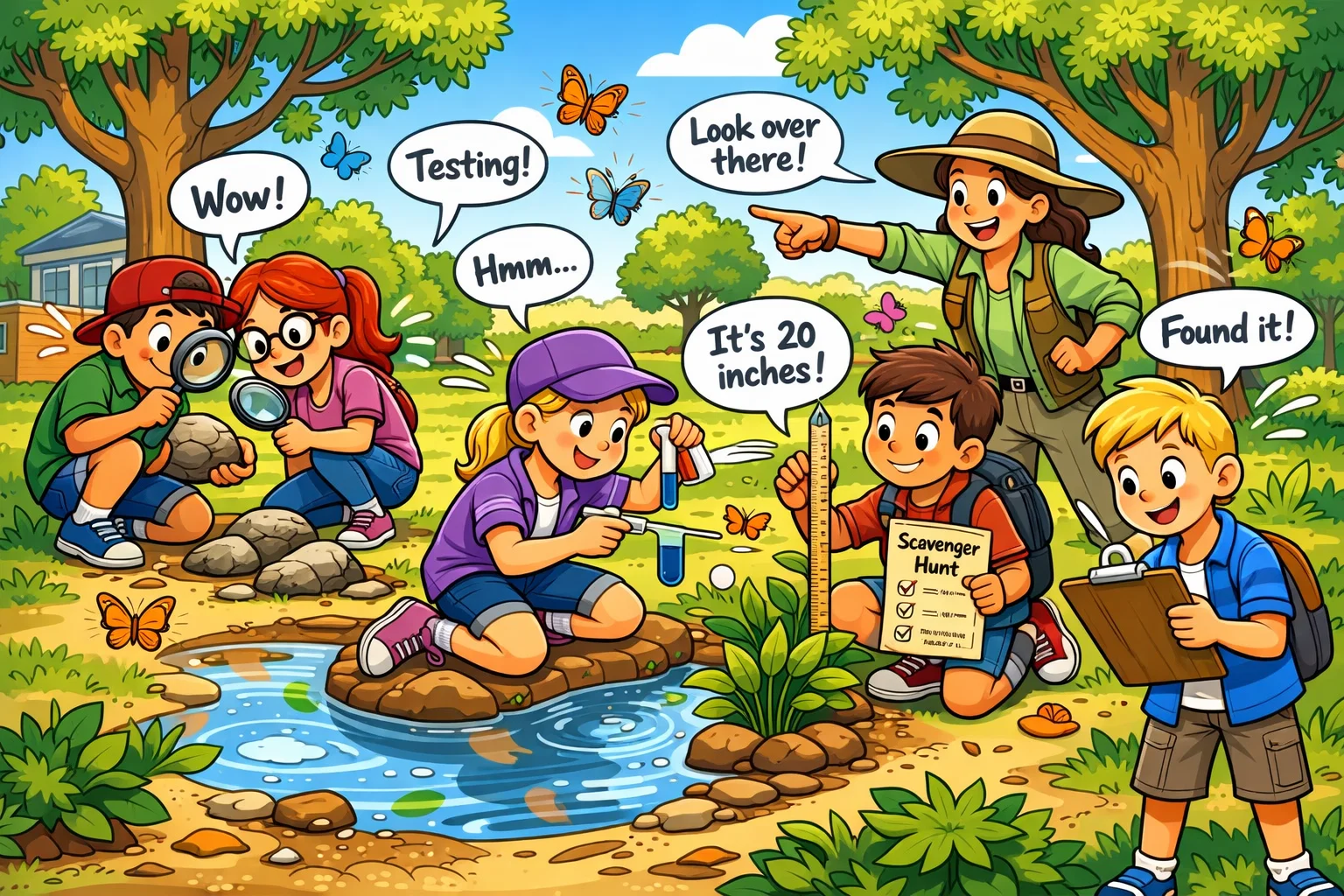
Taking STEM learning outdoors provides a fresh context for scientific exploration.
- Scavenger Hunt: Finding patterns in nature (Fibonacci spirals in pinecones).
- Soil Erosion Barrier Challenge: Ask students to build barriers using sticks or rocks to prevent water from washing away soil on a slope.
- Build an Insect Hotel: Design a habitat using recycled materials to support local biodiversity.
- Soil Erosion Comparison: Compare how different ground covers (grass, mulch, and bare soil) respond to a simulated rain event from a watering can.
More Challenges for Middle School
For classes that have mastered the basics, these interesting ideas offer deeper engagement.
Design Rube Goldberg Machine
A multi-step challenge where a simple task (like popping a balloon) is completed through a complex series of chain reactions.
- Materials: Books, toy cars, marbles, dominoes, and rubber bands.
- Benefit: Teaches cause-and-effect and persistence through failure.
Solar Oven
Using a pizza box and aluminum foil, students build a device to capture solar energy.
- Goal: Melt a marshmallow or chocolate using only sunlight.
- Science Concept: Reflection, insulation, and heat absorption.
Archimedes Screw
Using a PVC pipe and flexible tubing, students build a device to lift water against gravity.
- Historical Connection: Discuss how ancient civilizations moved water for irrigation.
- Measurement: Track how many rotations are needed to move 100ml of water.
Resources for Educators
To build a strong curriculum, teachers should use resources that simplify assessment and planning.
- Printable Science Sheets: Look for free printable STEM challenge sheets that include sections for a hypothesis, materials, and results.
- Lesson Plans: Websites like NASA or Science Buddies provide classroom-tested lessons and easy activities.
- Assessment: Use rubrics that reward creativity and teamwork rather than just the “success” of the build.
Integrating Activities Into the Middle School Classroom
Successful integration requires more than just a fun task; it requires a culture of inquiry.
Classroom Setup
Designate a “Maker Space” equipped with recycled materials, straws, and paper clips. Having a dedicated testing zone (like a cleared floor space or a water tub) keeps the mess manageable and the energy focused.
Group Roles and Collaboration
To prevent one student from doing all the work, assign specific roles for every challenge:
- Lead Engineer: Oversees the project and coordinates the build.
- Data Recorder: Writes down measurements and results.
- Materials Manager: Handles the household materials and cleanup.
Cross-Curricular Links
These activities and experiments should not exist in a vacuum. Connect a bridge-building task to a history lesson on the Industrial Revolution, or link a balloon experiment to a math unit on ratios and speed.