

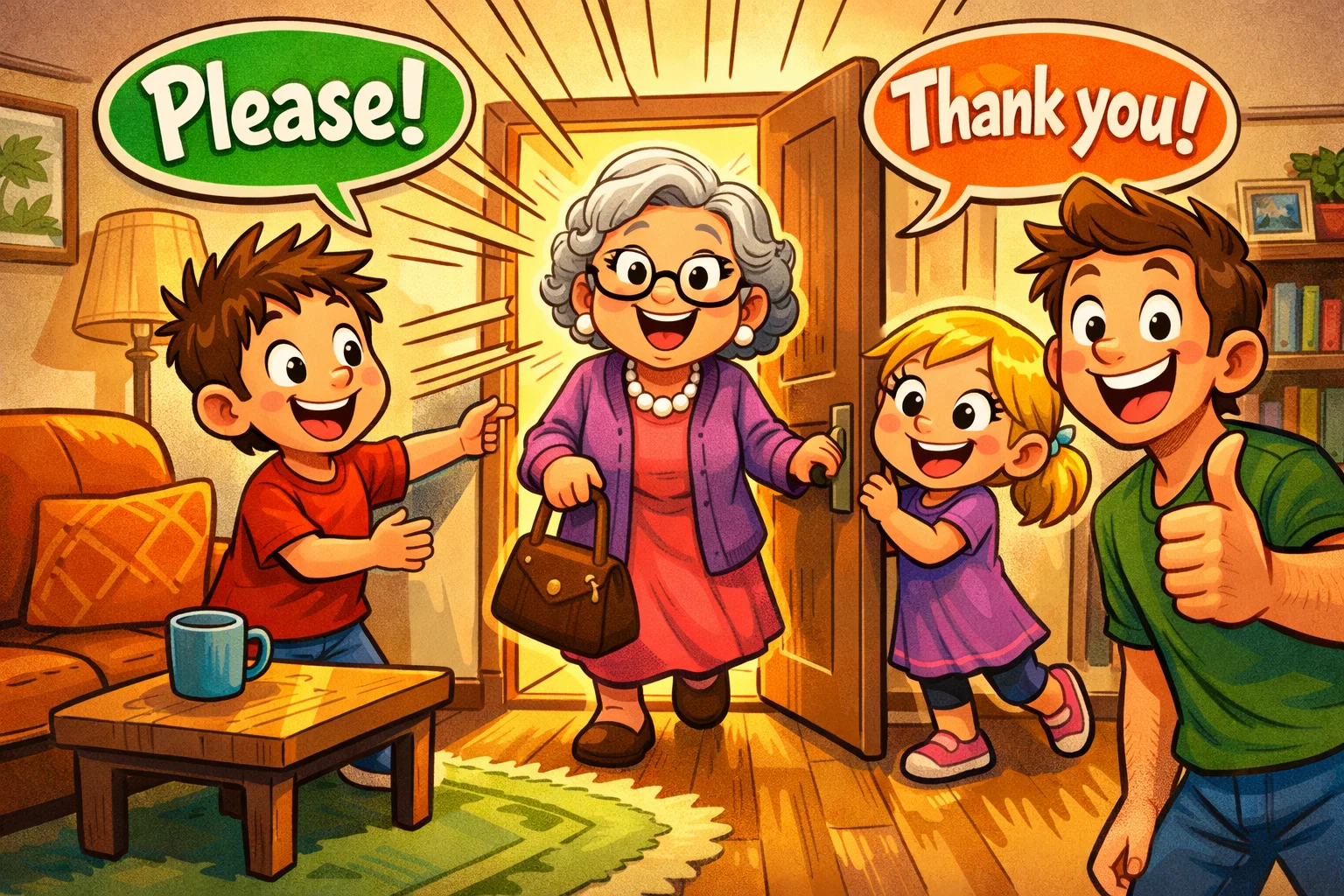
Teaching good manners is one of the most enduring gifts a parent can provide, serving as the foundation for a child’s social and emotional intelligence. While many view etiquette as a set of rigid rules, good manners at home are actually expressions of empathy and respect that facilitate smoother daily interactions. By focusing on how we treat others, families can transform their home environment into a sanctuary of mutual appreciation and positive behaviour.
Essence of Good Manners
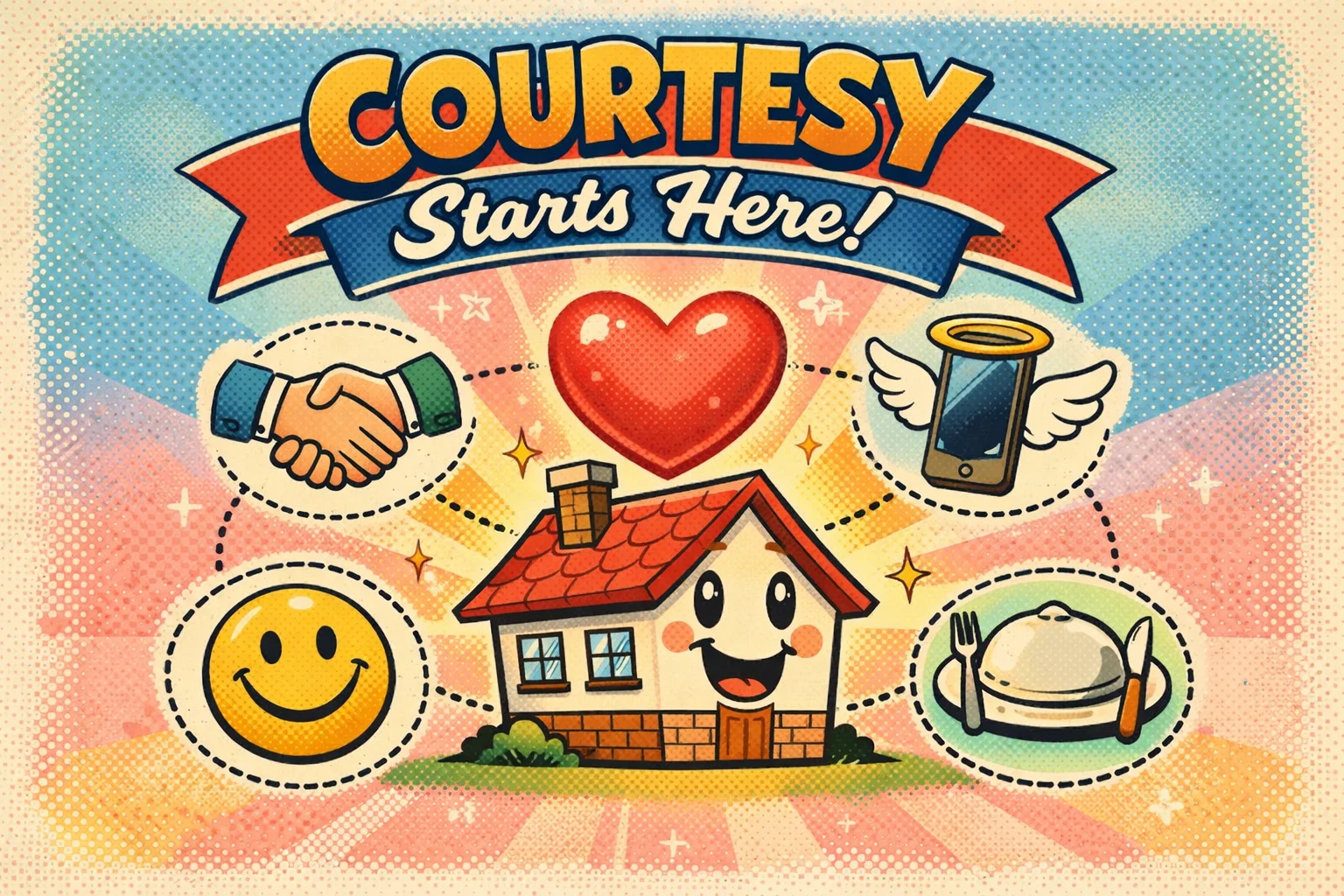
The essence of good manners lies in the intentional practice of making others feel valued and comfortable. It is not merely about using the correct utensil or sitting up straight; it is about developing a sense of fairness and a considerate mindset. When children learn that their actions impact the feelings of those around them, politeness becomes a natural extension of their character rather than a forced chore.
What Are Good Manners?
Good manners are defined as a set of social norms and behaviors that demonstrate respect and consideration for others. While specific rules, such as table manners or greeting styles, may vary by culture, the core purpose of etiquette remains universal: to minimise friction and promote considerate, hospitable behaviour. Experts suggest that polite behavior acts as a “social lubricant,” helping kids understand how to navigate complex human dynamics with grace.
Respect Mindset
A respect mindset is the internal engine that drives well-mannered actions. Children who are good at showing empathy typically see others as equals who deserve kindness, in keeping with the golden rule: treat others as you wish to be treated. This mindset shifts the focus from “following rules” to “valuing people,” ensuring that polite language is rooted in sincerity rather than performance.
Roots of Grace and Courtesy
The “Grace and Courtesy” framework, pioneered by Dr. Maria Montessori, posits that teaching good manners should be a formal part of a child’s education. Montessori observed that children between the ages of 2 and 6 have a “sensitive period” for learning social graces and etiquette. By incorporating these lessons into the home environment, parents help children internalise good manners until they become a natural part of their identity, much like a first language.
Benefits for Family Harmony
Implementing good manners at home yields significant dividends for household stability and emotional well-being. When family members speak politely and show respect for one another’s boundaries, the frequency of power struggles decreases. Positive daily interactions, such as expressing gratitude, help strengthen family relationships and make it easier to cope with stress.
Stronger Parent-Child Bond
A stronger parent-child bond develops when parents model respectful and considerate behaviour. When a parent uses “please” and “thank you” with their child, it validates the child’s autonomy and fosters a sense of mutual trust. This dynamic creates a “trust loop” where the child feels valued, making them more likely to apologise sincerely and take responsibility for their actions when mistakes occur.
Stress Reduction
Stress is reduced at home when clear behavioural expectations are established and maintained. Manners help children understand expectations, which reduces the cognitive load and anxiety associated with social uncertainty. A structured environment in which everyone knows to knock before entering and to wait their turn to speak creates a predictable, calming atmosphere for children.
Spreading Good Feelings
The act of expressing gratitude and using polite words creates a “ripple effect” of positivity throughout the household. Simple gestures, such as a cheerful “good morning” or an offer to help with a task, can create a positive sense of connection for both the giver and the receiver. This neurological response reinforces positive behaviour, making the home a place where family members feel emotionally replenished rather than drained.
Essential Manners List
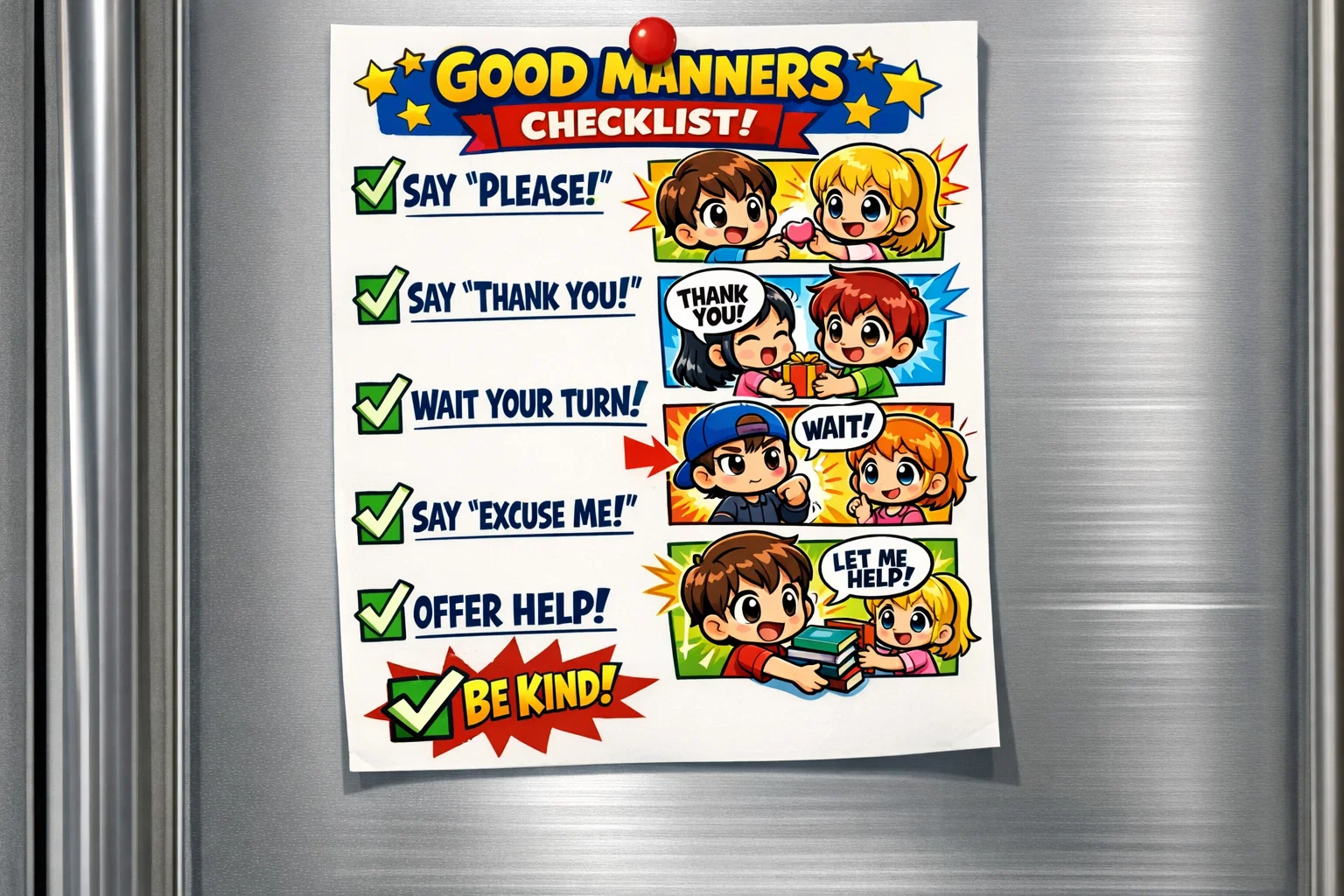
While there are countless social nuances, focusing on a core list of manners for children provides a manageable starting point. These essentials focus on everyday interactions and shared spaces at home, giving children a practical foundation they can apply elsewhere as well.
| Category | Essential Action | Primary Benefit |
| Communication | Say “please” and “thank you” | Shows appreciation and humility |
| Patience | Wait your turn to speak | Demonstrates self-regulation |
| Awareness | Cover coughs and sneezes | Protects community health |
| Respect | Ask permission before using items | Honors personal boundaries |
| Dining | Use utensils correctly | Makes mealtime pleasant for all |
Say Please and Thank You
Using “please” and “thank you” is the most basic form of politeness that acknowledges the effort of others. Teaching manners involves explaining that these aren’t just “magic words,” but tools for expressing gratitude. When a child says “thank you”, they are consciously recognising an act of kindness, which helps instil a lifelong habit of appreciation.
Wait Your Turn
Learning to wait your turn is a fundamental skill in self-regulation and social skills. In the home environment, this includes not interrupting adults or siblings during daily interactions. By practicing patience, children learn that their needs are important, but so are the needs of others, fostering a deep sense of fairness.
Use Excuse Me
The phrase “excuse me” is a versatile part of etiquette, useful in situations ranging from moving past someone to excusing oneself after coughing, sneezing, or making an interruption. Teaching children to use this phrase before walking between two people who are talking, or after an accidental bodily noise, shows that they are considerate of shared social space. It transforms a potential disruption into a moment of polite behavior.
Ask Permission
Asking permission shows respect for other people’s ownership and autonomy. Whether they are asking to use a tablet or to enter a room with the door closed, this habit teaches children about consent and boundaries. Parents should emphasize that closed doors represent a need for privacy, and respecting privacy is a non-negotiable part of good behavior.
Respect Personal Space
Respecting personal space involves teaching children to recognize and honor physical boundaries. Manners include keeping a comfortable distance during everyday interactions and avoiding unwanted physical contact. Helping kids understand social cues – like a sibling pulling away – empowers them to be more considerate friends and family members.
Practice Table Etiquette
Good table manners are about more than just which utensil to use; they are about making the dinner table a welcoming space. This includes sitting up straight, keeping elbows off the table, and engaging in pleasant mealtime conversation. Teaching kids good manners at the table ensures they feel confident in formal social settings later in life.
Offer to Help
To offer to help is a proactive form of politeness that demonstrates hospitality and initiative. Whether it is holding the door open for someone or helping to clear the table, these actions show that a child is thinking about the collective good. This positive behaviour helps children develop a service-oriented mindset that will benefit them throughout life.
Teaching Strategies for Parents
Teaching children good manners requires a blend of practical strategies, consistency, and patience. Parents must move beyond occasional reminders and integrate etiquette into the fabric of their daily interactions.
Model Good Behaviour
Children are biologically wired to imitate their primary caregivers through mirror neurons. To teach your children effectively, you must be a positive role model by using polite language yourself. If a parent yells but expects the child to speak politely, the child will prioritize the observed action over the spoken instruction.
Teach and Encourage, Avoid Assumptions
Do not assume that good manners come naturally to children; they must be taught explicitly. Use prompt reminders and clear explanations for why certain behaviors are preferred. For example, instead of saying “be nice,” say “Please ask permission before taking your brother’s toy so he doesn’t feel surprised or upset.”
Simple but Not Easy
While the concepts of etiquette are simple, the execution is often difficult due to a child’s developing self-regulation. Teaching manners is a marathon, not a sprint. Acknowledge that hurt feelings or lapses in politeness will happen, and use these as teaching moments rather than opportunities for punishment.
Positive Reinforcement
Positive reinforcement is more effective than nagging for instilling long-term habits. When you notice your child waiting their turn or making eye contact while greeting a guest, offer specific praise.
- Identify the specific polite behavior.
- Explain how it helped the other person.
- Offer a small gesture of encouragement (like a sticker or high-five).
Role Modelling and Practice
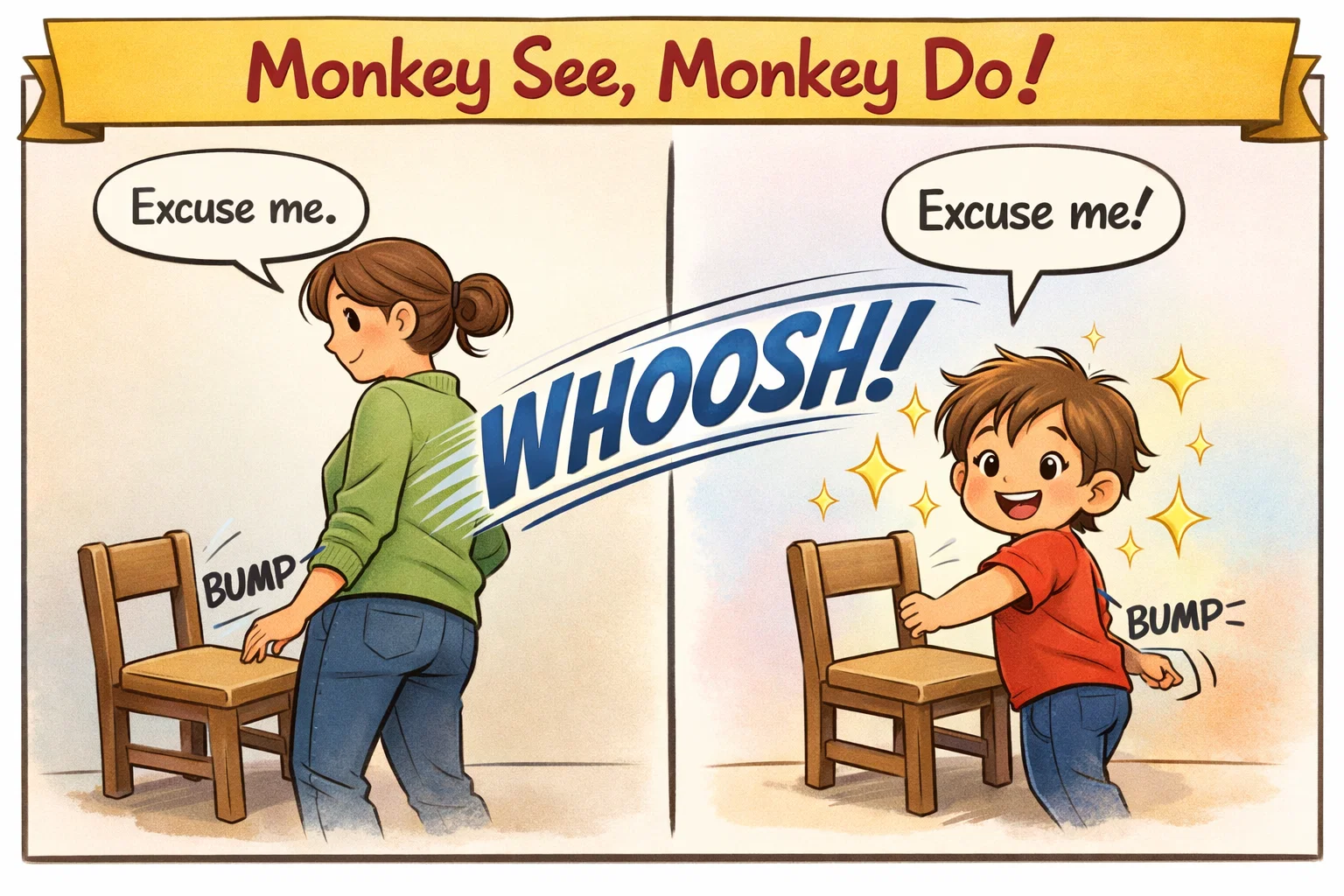
For good manners to become a natural part of a child’s life, they must move from conscious effort to subconscious habit. This requires daily micro-lessons and a commitment to practice good behavior even when no one is watching.
Daily Micro-Lessons
Make manners practice part of short, manageable moments throughout the day. At breakfast, practice passing the butter politely. At bedtime, reflect on one moment when someone was considerate that day. These everyday interactions are the building blocks of character, requiring only a few minutes of conscious effort.
Consistent Practice Through Conscious Effort
Consistency is key to behavioural development. Set a goal to practise good manners for a specific period, such as a “Manners Weekend”, during which everyone in the family – including adults – focuses on hospitality and interacting respectfully. This focused effort helps reinforce the habits that allow family members to get along.
Tracking Progress
Visual aids can be highly effective for kids learning new skills. Use a simple chart to track when a child remembers to apologise without being asked or uses a utensil correctly. Seeing their progress visually helps children learn to take pride in their well-mannered growth, turning etiquette into a rewarding personal achievement.
Mindfulness Practice for Manners
Mindfulness and good manners are deeply intertwined, as both require being present and aware of one’s impact. By teaching children to “mind their manners” through a lens of awareness, you help them develop the self-regulation necessary to stay polite even when they are frustrated.
Mind Your Manners
Encourage a “breathing pause” before a child reacts to a disagreement. This pause allows the child to move from an impulsive emotional response to a considerate one. Even a brief pause for deep breathing can help children feel calmer and respond more politely under pressure.
Be Kind to Your Mind
The way children talk to themselves – their inner dialogue – affects how they treat others. If a child is taught to speak kindly to themselves, they are more likely to extend that same kindness and respect to those around them. This inner foundation makes polite behaviour feel genuine rather than performative.
Emotional Regulation Exercises
To prevent hurt feelings during conflicts, teach age-appropriate calm-down techniques.
- The 5-4-3-2-1 Grounding Technique: Name 5 things you see, 4 you can touch, etc.
- Balloon Breathing: Ask the child to imagine that their belly is a balloon, expanding and deflating with each slow breath.
- The “Peaceful Place” Visualization: Thinking of a favorite quiet spot to regain self-regulation.
Respectful Conflict Resolution
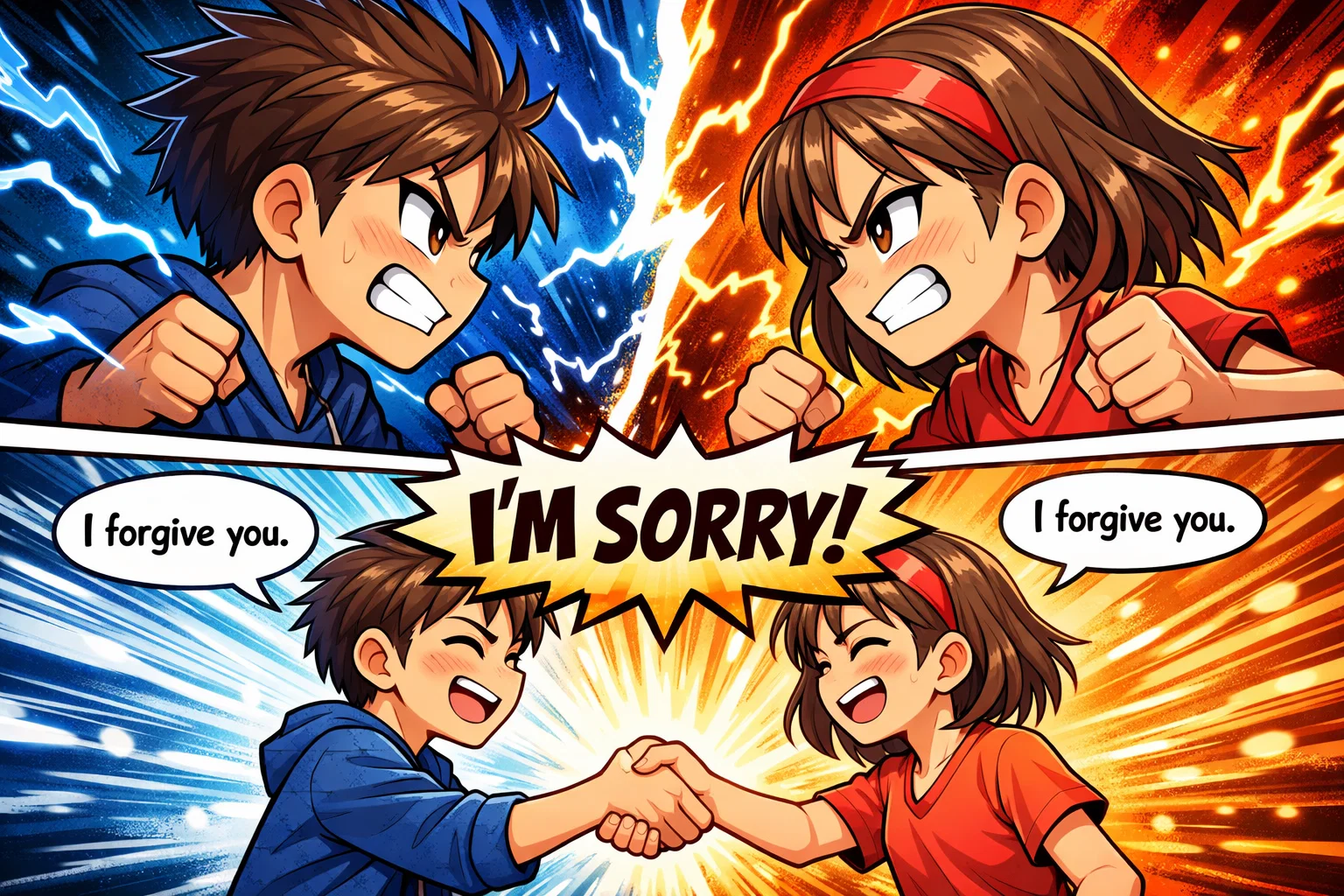
Good manners are most tested during a disagreement. Teaching children how to handle conflict respectfully ensures that even when they disagree, they do not tease or cause unnecessary hurt feelings.
Use I-Statements
“I-statements” are a hallmark of polite language in conflict. Instead of saying “You always take my toys,” teach the child to say, “I feel frustrated when my toys are taken without asking.” This shifts the focus to the speaker’s feelings and reduces defensiveness, making it easier to foster a resolution.
Active Listening Steps
Active listening is a high-level social skill that involves more than just being quiet.
- Making eye contact with the speaker.
- Waiting your turn until they are completely finished.
- Paraphrasing what was said (“So, you’re saying you’re sad because…”).
- Responding politely and respectfully.
Family Peace Corner
A “Peace Corner” is a designated space in the home environment where any family member can go to cool off. Unlike a “time-out,” which is punitive, the Peace Corner is a tool for self-regulation. It provides the privacy needed to process emotions before returning to the group to apologise or resolve the issue.
Age-Specific Guidance
Developmental milestones dictate what kind of good manners a child is capable of mastering. Tailoring your expectations ensures that teaching manners remains a positive experience rather than a source of frustration.
Toddlers: First Words of Politeness
For toddlers (ages 1–3), focus on the “big three”: “please”, “thank you”, and “hello/goodbye”. At this stage, children learn primarily through repetition and gestures. Use physical cues, like a wave for greeting, to reinforce the verbal etiquette.
Preschoolers: Sharing and Turn-Taking
Preschoolers (ages 3–5) are beginning to understand a sense of fairness. This is the ideal time to introduce waiting their turn and learning simple table manners. Games that require taking turns are excellent tools for helping kids understand that etiquette involves thinking about the group’s needs.
School-Age: Accountability and Apologies
School-age children (ages 6–12) should be taught to take responsibility for their actions. This includes learning how to offer a sincere apology – one that names the mistake and offers a way to put it right. At this stage, respecting privacy and closed doors becomes increasingly important as they seek more autonomy.
Teens: Social Media and Public Behaviour
For teens, etiquette shifts toward the digital world and public spaces. Discussions should focus on their “digital footprint” and the importance of good manners in job interviews or dating. Teaching them to treat others online with the same respect they would in person is a critical modern social skill.